
The T-17 'State Border' road sign, often seen with the A-30 warning sign, indicates that you are about to cross into another country. While border crossings within the Schengen Area are typically open, this sign serves as a crucial reminder that laws, speed limits, and vehicle requirements can change significantly. Drivers must be prepared to adjust their behaviour, especially when crossing external EU borders where customs checks may apply. Always be ready to present identification and be aware of new regulations.
The T-17 'State Border' sign is crucial for understanding changes in regulations and safety requirements upon entering a new country, even within the Schengen Area. Proper road sign meaning interpretation for this marker is vital for safe and legal driving, making it a frequent topic in theory test revision.
The T-17 plate is used with A-30 to mark the proximity of a national border. While within the Schengen Area these crossings are often open and require no stop, the sign reminds drivers that laws, speed limits, and even equipment requirements (like having a fire extinguisher or specific bulbs) may change immediately after crossing. It is also used at external EU borders where a full customs stop is required.
Informs you that the road is about to cross into another country.
Get clear, practical answers to the most common questions about the T-17 - State Border road sign. Learn how the sign works, what rules it represents, and how it affects real driving situations. This FAQ strengthens your understanding and supports accurate decision making for the Polish driving theory exam in Poland.
The T-17 sign's primary purpose is to inform drivers that they are approaching a national border. It alerts them that they will soon be entering a different country, where laws, speed limits, and vehicle regulations may differ from those they are accustomed to.
Upon seeing the T-17 sign, you should anticipate crossing a border. It's advisable to reduce your speed, particularly if the sign is accompanied by A-30. Be ready to check for new speed limit signs (like D-39) and ensure your vehicle complies with the regulations of the upcoming country. If it's an external EU border, have your identification documents readily available.
Yes, immediately after crossing the border, pay close attention to any new road signs, especially speed limit signs (D-39). Vehicle equipment requirements, such as lighting or the need for a fire extinguisher, might also change. Always ensure your vehicle and driving practices comply with the new country's laws to avoid penalties.
You should not stop on the border line itself unless instructed to do so by officials, such as during a customs inspection or border control. The T-17 sign is purely informational, indicating proximity to the border, not a place to halt your vehicle. Continue driving until you reach the designated control or inspection area if one exists.
Not necessarily. Within the Schengen Area, border crossings are typically seamless with no routine checks. However, the T-17 sign still serves as a reminder of potential legal changes. At external EU borders, you should expect customs and immigration checks, and stopping will be required.
A clear reference image of the T-17 - State Border road sign used in Poland.
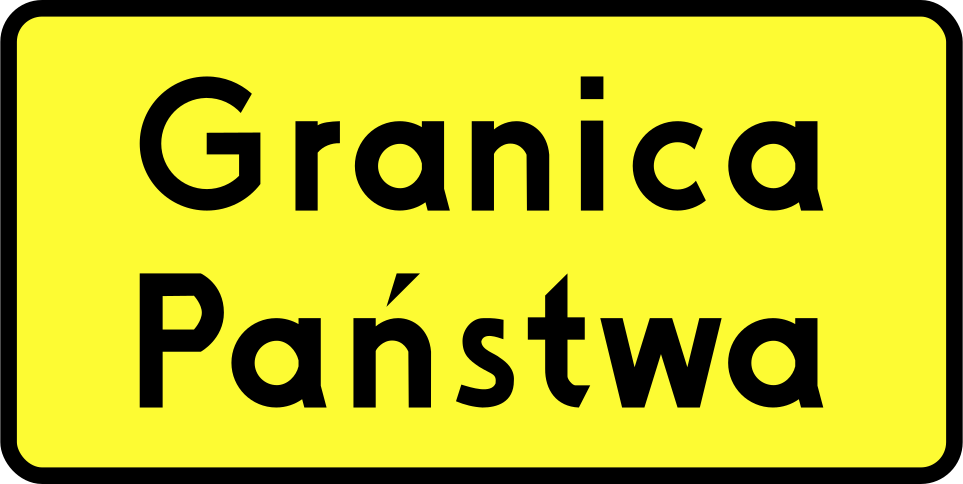
The T-17 - State Border road sign may also be known by these alternative names or terms.
The T-17 - State Border road sign is part of the Supplementary Plates (T) category, which groups together signs with similar rules and functions.
Reviewing similar road signs helps solidify your understanding and improves recall accuracy for the Polish theory test. Comparing these visual cues aids in sign recognition and reduces common mistakes during your exam preparation.
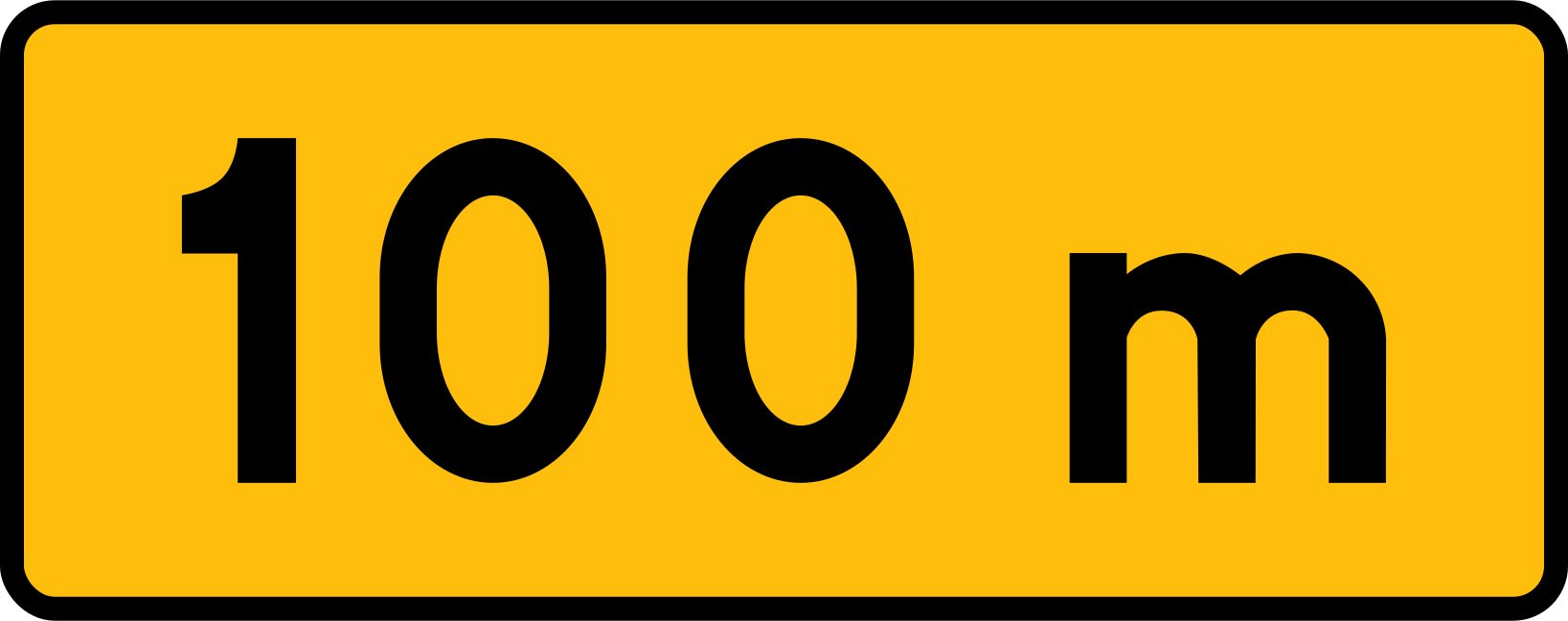
Understand the T-1 'Distance to Hazard' Plate for Safe Driving
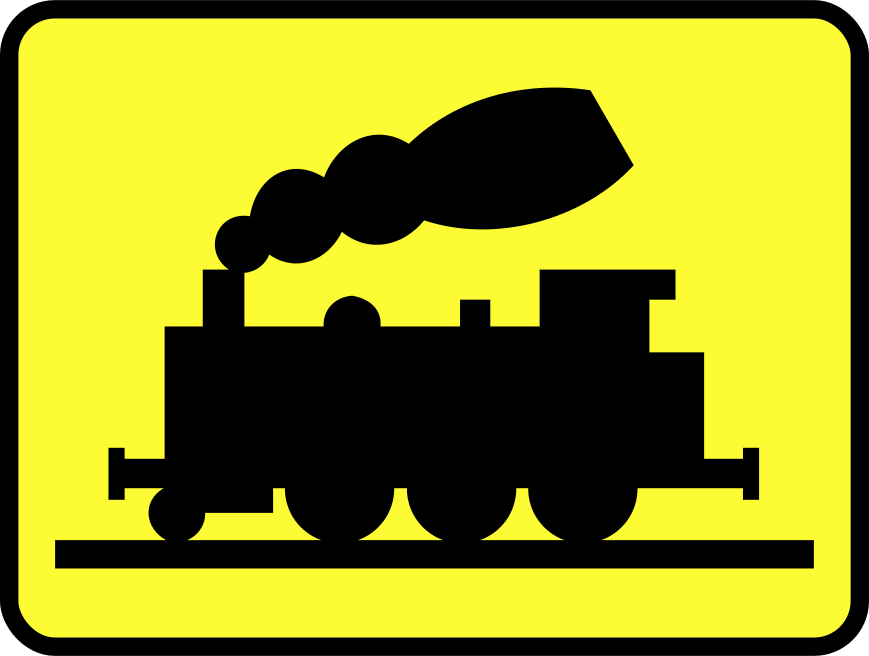
Beware of the T-10 sign: Industrial Railway Siding Ahead
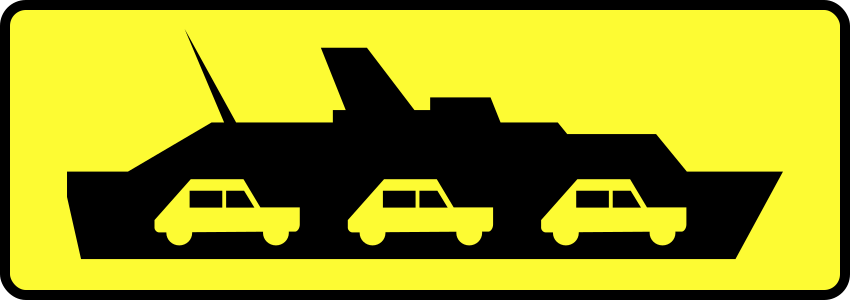
Prepare for a Ferry Crossing with the T-11 Warning Sign
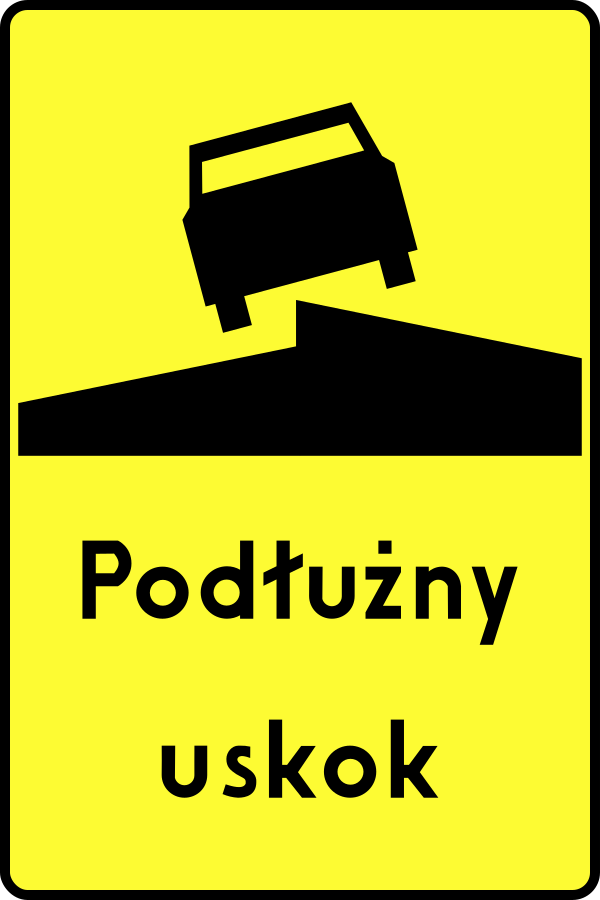
Watch out for the T-12 sign warning of a longitudinal step in the road surface!
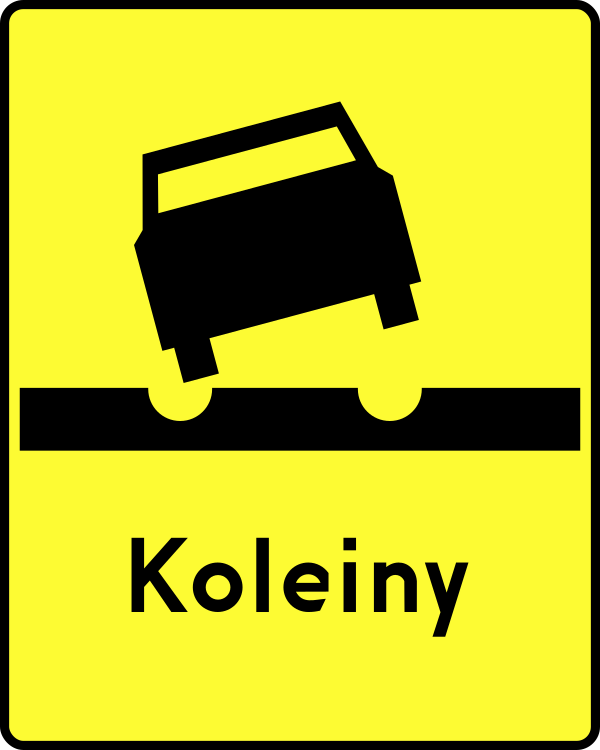
Warning: Deep Road Surface Ruts Ahead (T-13)
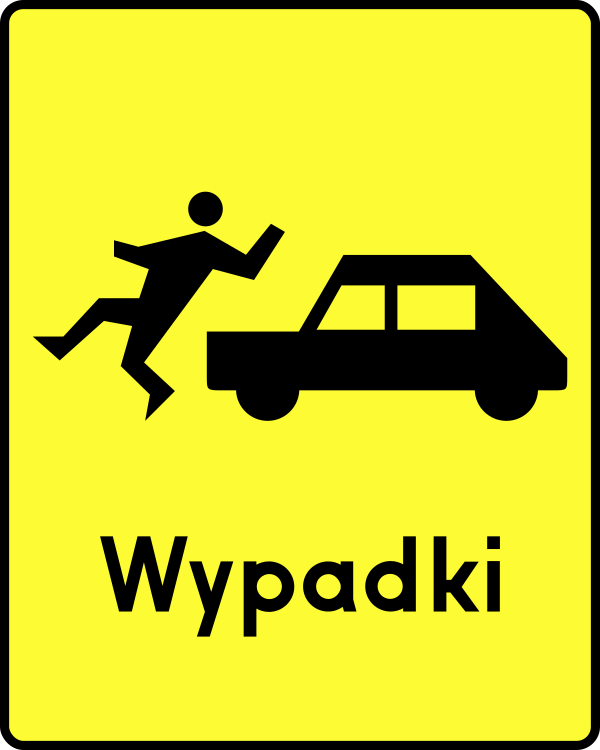
T-14: Beware of Frequent Pedestrian Accidents Ahead!
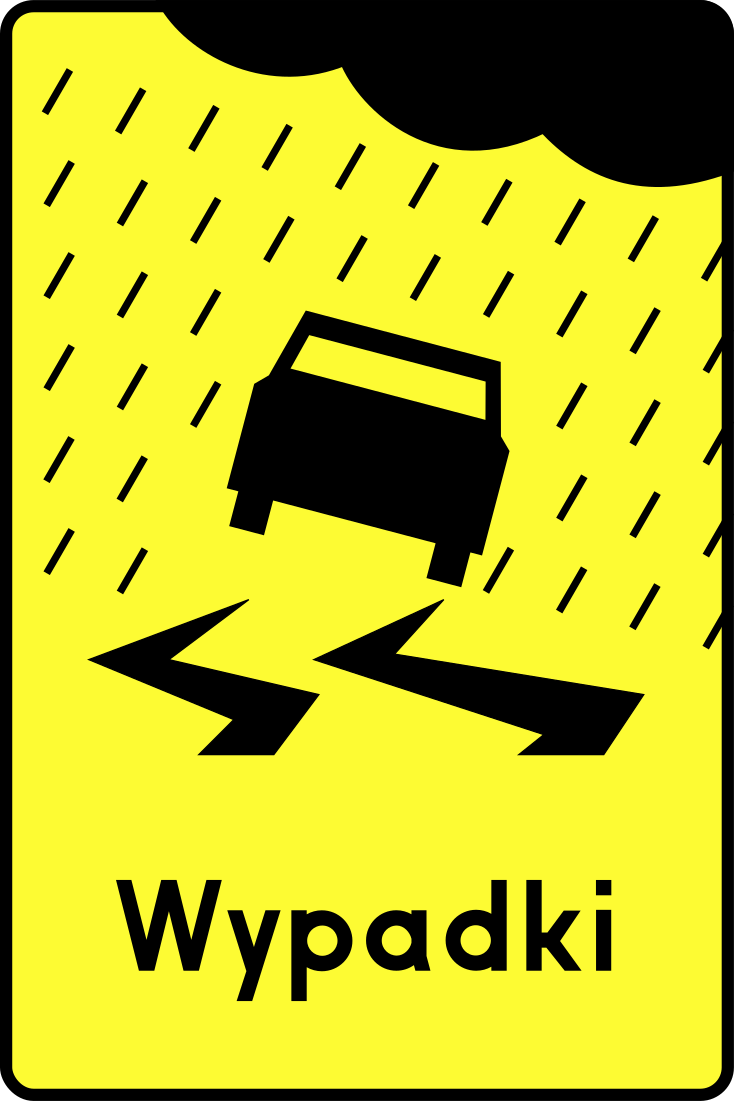
Beware: This Road Can Become Extremely Slippery When Wet!
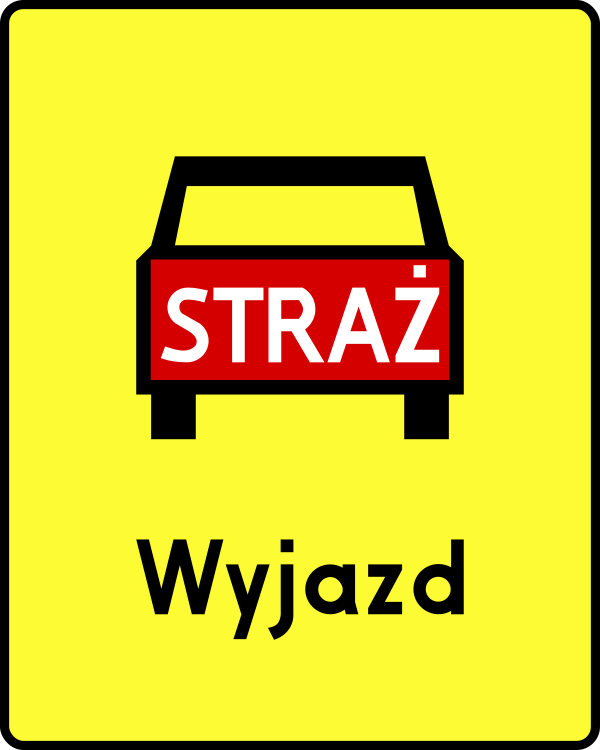
Prepare for sudden fire truck departures with the T-16 Fire Engine Exit sign.
Deepen your understanding of specific road signs by reviewing official Polish traffic rules and associated real-world driving scenarios. These expert-led resources help you bridge the gap between visual recognition and practical exam application.
When you start your car in Poland, you might notice the engine running at higher revolutions per minute (RPM). This article explains that while elevated RPMs are often a normal part of the engine's automated warm-up process, they can also signal underlying faults. Understanding this distinction is essential for safe driving and for preparing effectively for the Polish driving theory exam.
Being involved in a car accident in Poland requires immediate, specific actions to ensure safety and legal compliance. This guide clarifies your obligations, from securing the accident scene and rendering aid to reporting the incident correctly. Mastering these post-accident procedures is vital for safe driving and is a common focus area in the Polish driving theory exam.
Master Polish Crossing Markings for a Safer Drive and Exam Success.
Navigate Tram Intersections Like a Pro: Essential for Your Polish Driving Exam.
The T-6d plate is found on side roads. It indicates that the priority road is perpendicular to you and that there may be other subordinate roads at the same intersection that are offset or staggered. This gives the driver a full situational map. Since you are on a thin line, you yield to everyone on the thick line. You also need to coordinate with other drivers on thin lines using standard priority rules (like yielding to the right).
The D-39a sign is placed at border crossings to notify drivers that some roads (mainly motorways and expressways) are toll roads. It may indicate the methods of payment, such as electronic tolling systems (e-TOLL), vignettes, or traditional toll booths. For heavy vehicles, this is mandatory across a large network, while for passenger cars, it applies to specific sections of the A1, A2, and A4 motorways.
After reviewing the full list of Polish road signs, explore specific sign categories for in-depth understanding. Challenge your knowledge with practice questions focused on sign recognition and interpretation to solidify your preparation for the driving theory exam.
Browse All Polish Road Signs