
The D-1 sign, recognisable by its yellow diamond shape and thick white border, clearly indicates that you are on a priority road. This means you generally have the right of way at upcoming intersections with roads where drivers must yield or stop. Drivers on subordinate roads are expected to give way to you, so you can maintain your speed through junctions. However, always be prepared for the priority to change, especially if you see an 'End of Priority' sign or a supplementary plate indicating a turn.
This D-1 sign signifies you are on a priority route, granting you the right of way at upcoming intersections. Mastering its meaning is crucial for theory test revision and safe navigation in Polish traffic.
The D-1 sign marks the beginning or the continuation of a route where drivers have priority over vehicles entering from side roads. It is characterized by a yellow diamond shape with a thick white border. In urban areas, this sign is typically placed before every intersection where the priority is maintained, while on rural roads, it confirms the road's status over longer stretches. If the priority road changes direction at an intersection, it will be accompanied by a T-6 supplementary plate showing the actual flow of traffic.
This sign indicates that you are on a main road where you have the right of way at all upcoming intersections until otherwise signaled.
Get clear, practical answers to the most common questions about the D-1 - Priority Road road sign. Learn how the sign works, what rules it represents, and how it affects real driving situations. This FAQ strengthens your understanding and supports accurate decision making for the Polish driving theory exam in Poland.
The D-1 sign, also known as the 'Priority Road' or 'Main Road' sign, is a yellow diamond with a white border. It informs drivers that they are on a road where they have priority over vehicles entering from side roads at all upcoming intersections until this status is revoked by another sign.
When you see the D-1 sign, you must not stop or yield to vehicles coming from side roads if you clearly have the right of way. Additionally, on rural roads, parking on the roadway itself is generally prohibited. It's crucial to remember that priority doesn't continue indefinitely; if you see the 'End of Priority' sign (D-2), your right of way ends.
As you approach an intersection while on a priority road indicated by the D-1 sign, you should expect vehicles from side roads to yield to you. You can generally maintain your speed and proceed through the intersection. However, always be observant and ready to react if another driver fails to yield.
A common trap is assuming the priority road continues in the same direction if it bends at an intersection. If the priority road changes direction, a T-6 supplementary plate will show the actual path of the priority route. Failing to follow the correct path indicated on the T-6 plate means you might lose your priority. Always look for these supplementary plates at junctions.
Yes, smaller versions of the D-1 'Priority Road' sign are often used as reminders along the road. These are placed to reinforce the priority status, especially on longer stretches or before complex intersections, ensuring drivers remain aware of their right of way.
If the priority road changes direction at an intersection, the D-1 sign will usually be accompanied by a T-6 supplementary plate. This plate illustrates the layout of the intersection and clearly shows the path of the priority road. You must follow the thick line on the T-6 plate to remain on the priority route.
A clear reference image of the D-1 - Priority Road road sign used in Poland.
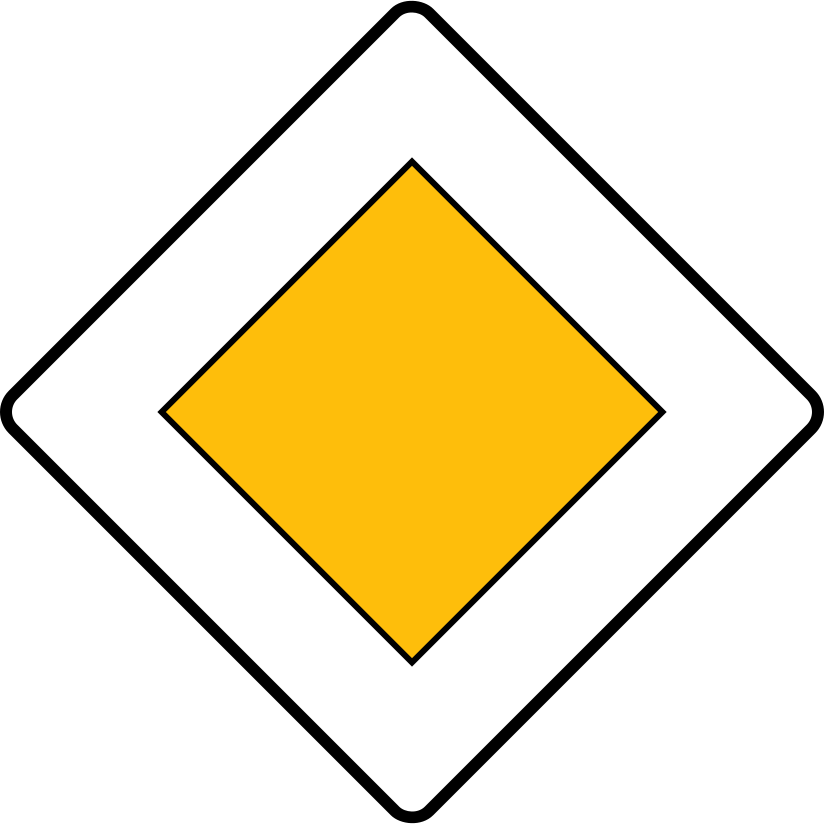
The D-1 - Priority Road road sign may also be known by these alternative names or terms.
The D-1 - Priority Road road sign is part of the Information Signs (D) category, which groups together signs with similar rules and functions.
Reviewing related road signs helps you distinguish subtle differences, improving your recognition and reducing errors on your theory test. Master similar road signs through focused traffic sign comparison for effective theory test revision.
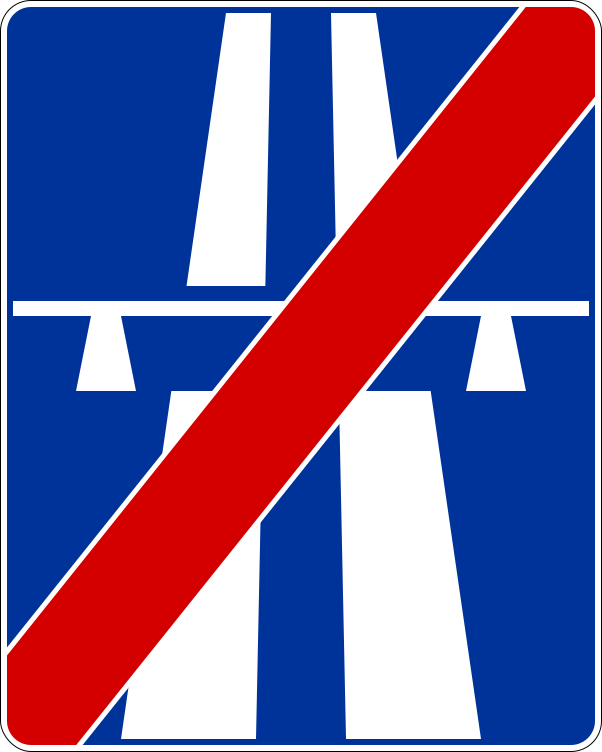
Prepare for the End of the Motorway with the D-10 Sign
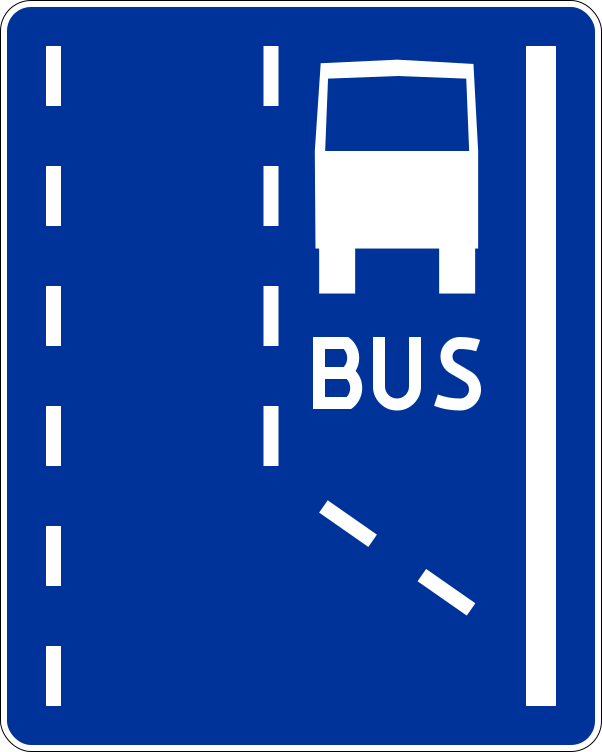
D-11 Road Sign: You're Approaching the Start of a Bus Lane
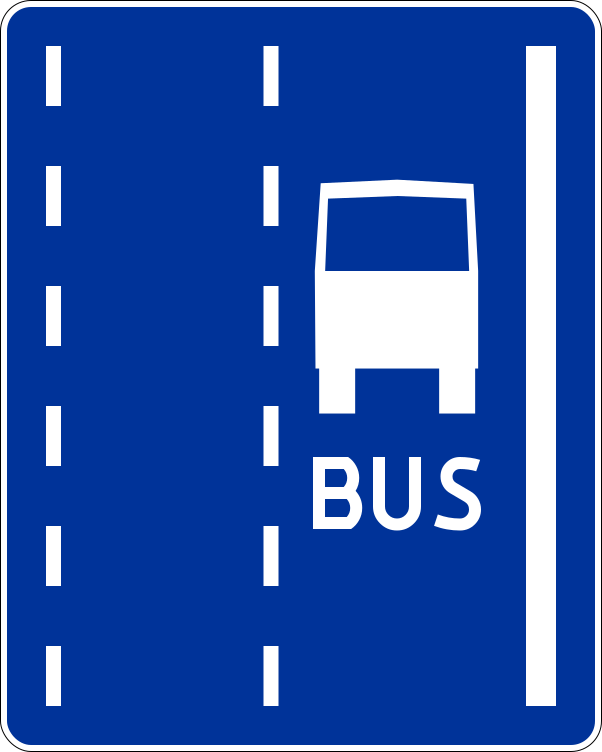
The D-12 'Bus Lane' sign confirms the lane remains exclusively for buses and authorized vehicles.
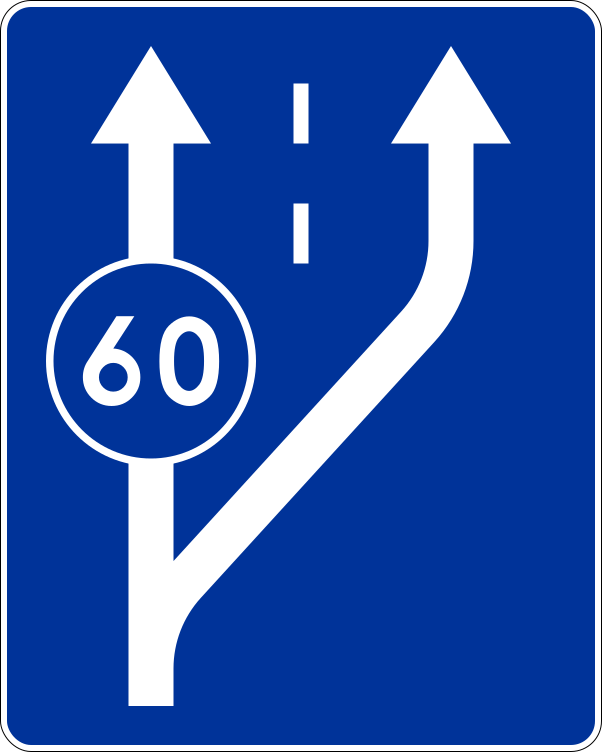
D-13 Sign: Prepare for the Start of a Slow-Moving Traffic Lane
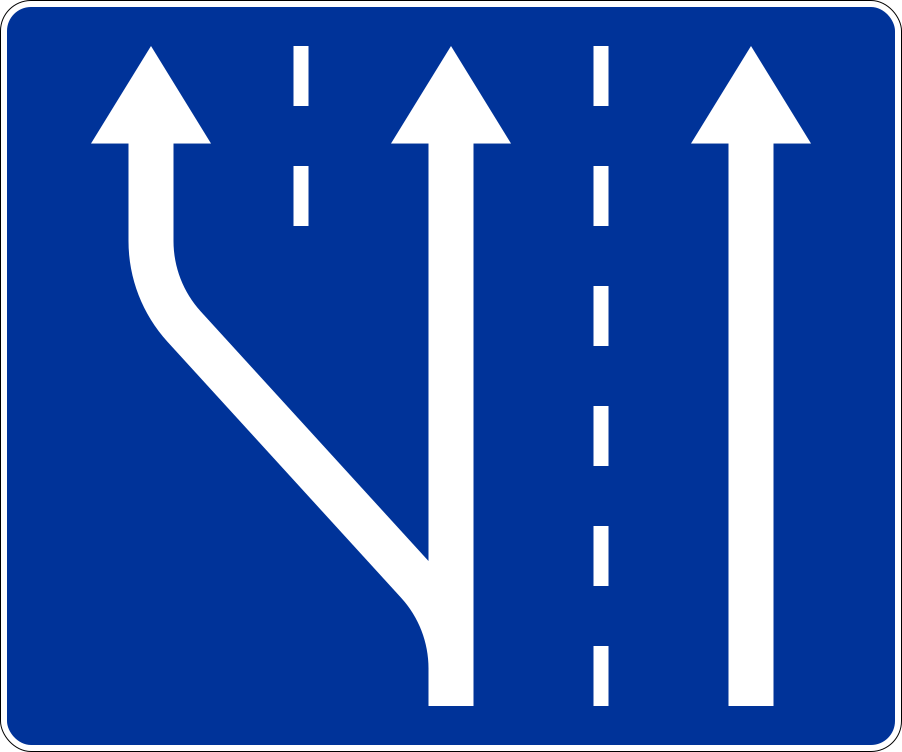
The D-13a 'Start of Lane' sign means a new lane is opening up ahead.
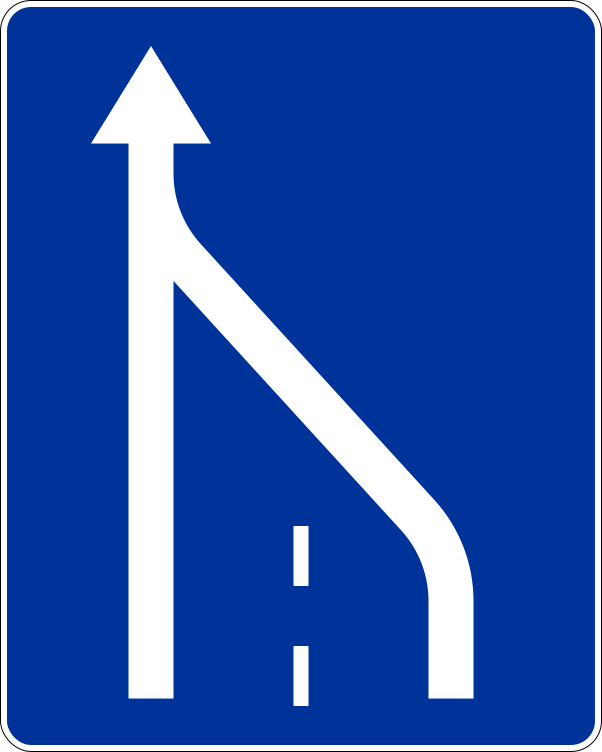
D-14 End of Lane: Know When and How to Merge Safely
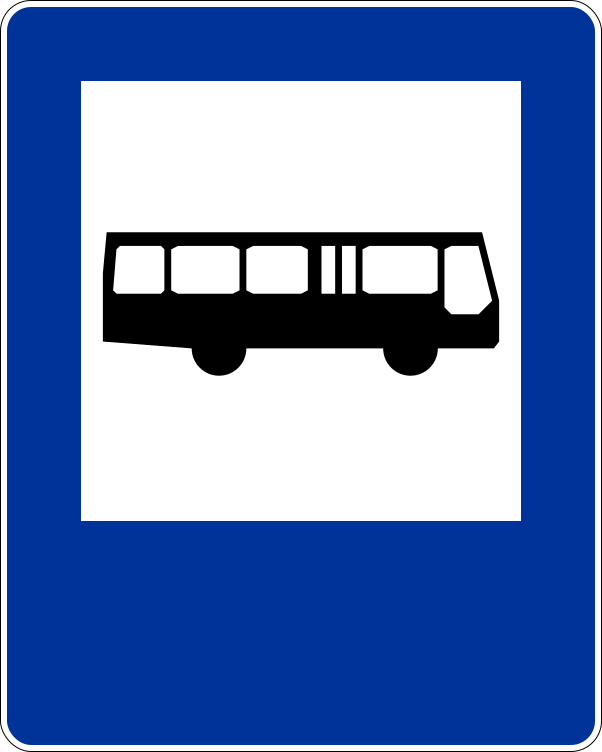
The D-15 'Bus Stop' Sign: Understanding and Reacting to Public Transport Stops
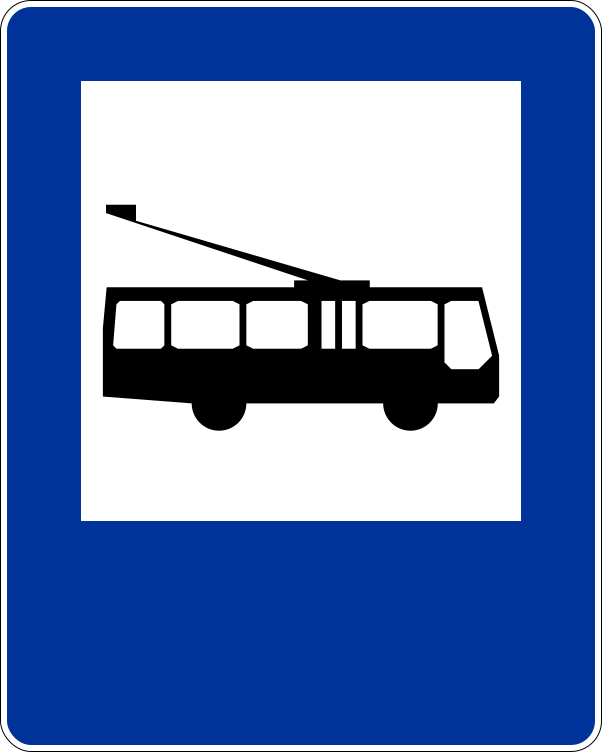
Understand the D-16 Trolleybus Stop Sign for safe city driving.
Deepen your understanding of specific road signs by reviewing official Polish traffic rules and associated real-world driving scenarios. These expert-led resources help you bridge the gap between visual recognition and practical exam application.
When exiting a driveway, residential zone, or internal road in Poland, you are legally classified as joining traffic, regardless of whether a yield sign is present. This article explains why the standard 'right-hand rule' does not apply in these situations and why you have an absolute obligation to yield to every other road user. Mastering this concept is essential for safety and for answering tricky priority-related questions on your official theory exam.
Don't Be a Road Block: Master Minimum Speeds and Smooth Traffic Flow for Your Polish Exam!
Learn how higher speed limits outside Polish built-up areas must be balanced with awareness of constant hazards. This article delves into risks like poor visibility due to inadequate lighting and unpredictable road conditions, emphasizing that actual driving circumstances, not just posted signs, determine a safe speed. Mastering this interplay is essential for both passing your theory exam and ensuring your safety on Polish roads.
Master Polish Intersection Priority Rules to Drive Confidently and Pass Your Exam.
The G-1c is the final marker post before the railway tracks, featuring a single diagonal red stripe. It is placed on the right side of the road at approximately 1/3 of the distance from the initial warning sign to the crossing. Passing this sign means you are usually within 50 to 80 meters of the tracks. At this stage, the driver should be at a slow, safe speed, ready to come to an absolute halt if required by lights, barriers, or a Stop sign.
The F-12 sign is used to guide through-traffic (transit) away from city centers or sensitive areas. It features a symbol of a specific vehicle (usually a truck) and an arrow. By following this sign, long-distance drivers can stay on roads designed for heavy traffic, avoiding narrow streets or residential zones. This sign is an advance warning placed before the junction where the turn must be made.
After reviewing the full list of Polish road signs, explore specific sign categories for in-depth understanding. Challenge your knowledge with practice questions focused on sign recognition and interpretation to solidify your preparation for the driving theory exam.
Browse All Polish Road Signs