
The D-14 End of Lane sign is an informational traffic sign that warns drivers their current lane is about to end and they will need to merge into another. This is crucial for maintaining smooth traffic flow, especially when the lane disappears after an intersection or due to road narrowing. You must prepare to merge safely, utilising techniques like the 'zipper merge' in heavy traffic as required by Polish rules.
This D-14 "End of Lane" road sign explanation is crucial for your theory test revision, detailing why this warning demands immediate attention and how to navigate lane changes safely. Mastering road sign meaning and traffic sign explanation for situations like this ensures you understand the correct procedure for merging, a key aspect of Polish road rules.
The D-14 sign warns drivers that a lane is tapering off and will soon disappear. It is most commonly found when a slow-moving traffic lane (D-13) ends, when an expressway lane is dropped, or after an intersection. The sign shows which lane is ending with a bent arrow. This requires the 'zipper merge' technique (jazda na suwak) in congested traffic, where drivers from the ending lane should be allowed to merge one by one into the continuing lane.
The lane you are in (or the one next to you) is ending; prepare to merge.
Get clear, practical answers to the most common questions about the D-14 - End of Lane road sign. Learn how the sign works, what rules it represents, and how it affects real driving situations. This FAQ strengthens your understanding and supports accurate decision making for the Polish driving theory exam in Poland.
The D-14 sign indicates that the lane you are currently in is tapering off and will soon end. It serves as a warning to prepare for merging into an adjacent, continuing lane. This sign is often placed before junctions or where roadworks cause lanes to disappear.
When you see the D-14 sign, you should check your mirrors and blind spots, signal if necessary, and prepare to merge into the continuing lane. The key is to do this smoothly and safely, anticipating the closure of your current lane.
The 'zipper merge' is a technique used in congested traffic where drivers in the ending lane continue until the merge point and then alternate with drivers in the continuing lane, much like a zipper. This method is a legal requirement in Poland during heavy traffic to improve traffic flow and is a common topic in the theory exam.
It is prohibited to speed up to block vehicles trying to merge, wait until the absolute last moment to merge in a dangerous way, or drive on the shoulder after your lane has ended. These actions are unsafe and can lead to accidents or traffic jams.
A common exam trap is not understanding the 'zipper merge' rule for heavy traffic. Learners might assume they must merge much earlier. The exam also tests whether you know it's illegal to block merging vehicles or to use the shoulder as an extra lane.
If traffic is moving at normal speeds and there's no congestion, it's generally safer and more efficient to merge earlier and smoothly rather than waiting until the last possible moment. This avoids sudden braking for others and helps maintain a steady traffic flow.
A clear reference image of the D-14 - End of Lane road sign used in Poland.
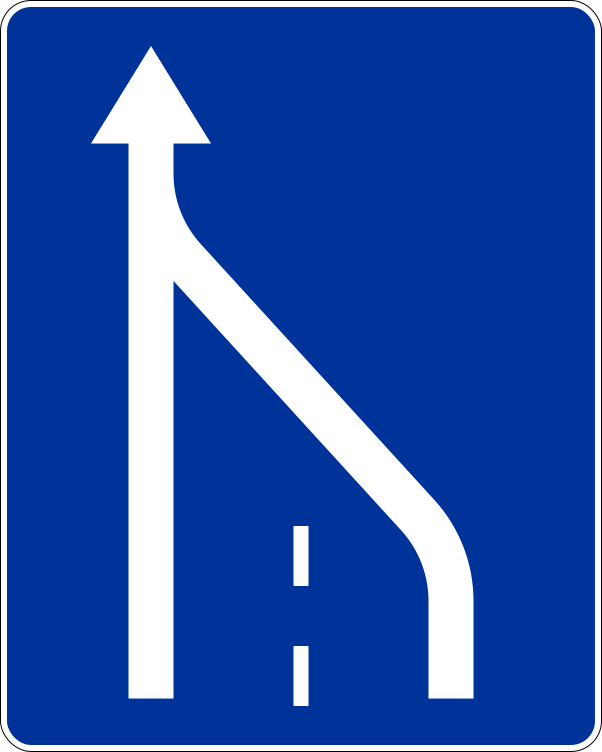
The D-14 - End of Lane road sign may also be known by these alternative names or terms.
The D-14 - End of Lane road sign is part of the Information Signs (D) category, which groups together signs with similar rules and functions.
Comparing signs like the D-14 End of Lane with similar ones sharpens your recognition skills, crucial for theory test revision. Understanding subtle differences aids in quick, accurate identification of traffic signs, reducing exam errors and improving road safety knowledge.
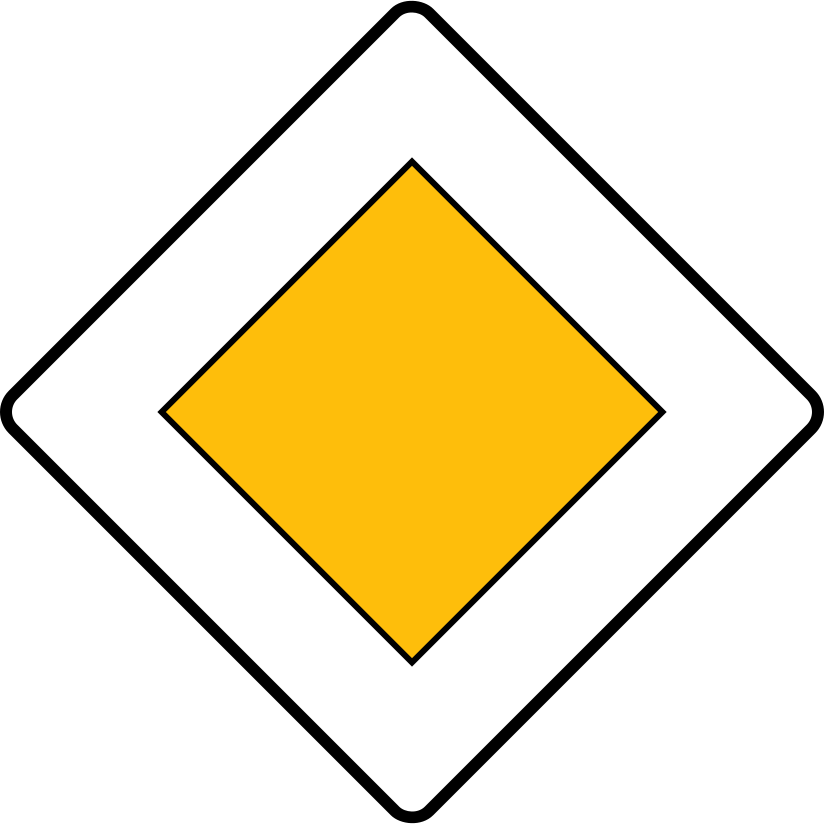
The D-1 Priority Road sign means you have the right of way.
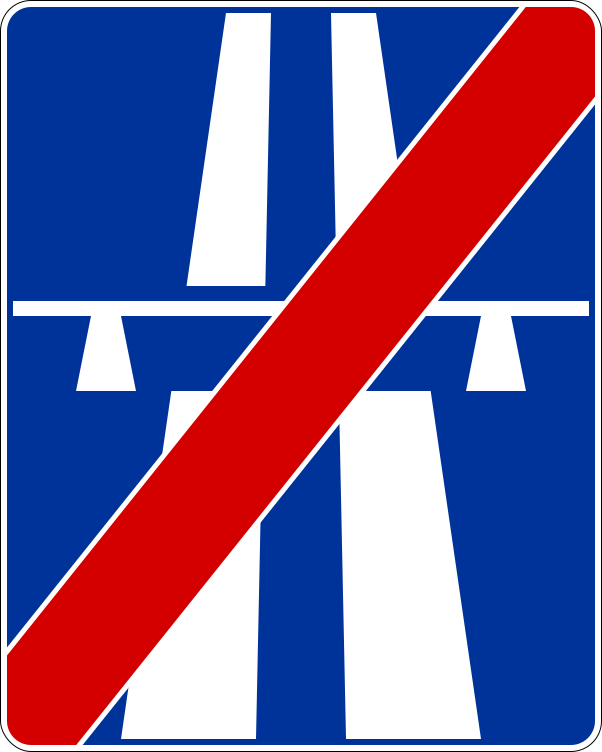
Prepare for the End of the Motorway with the D-10 Sign
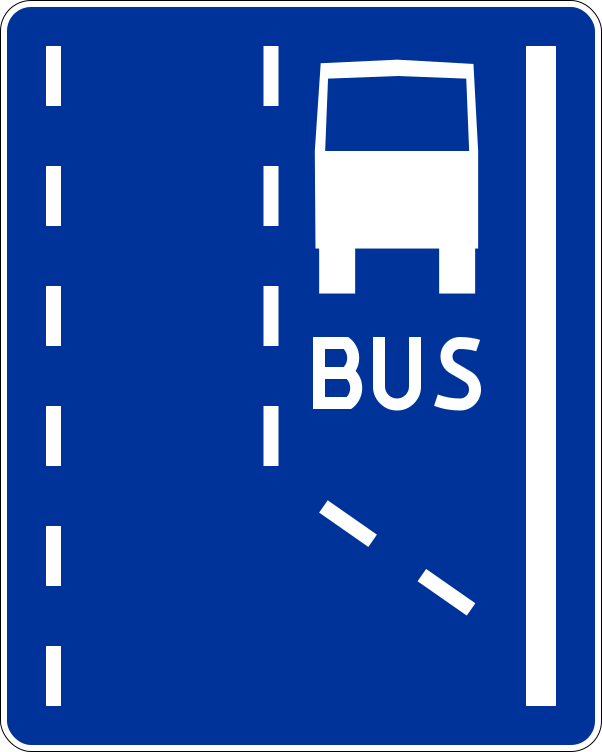
D-11 Road Sign: You're Approaching the Start of a Bus Lane
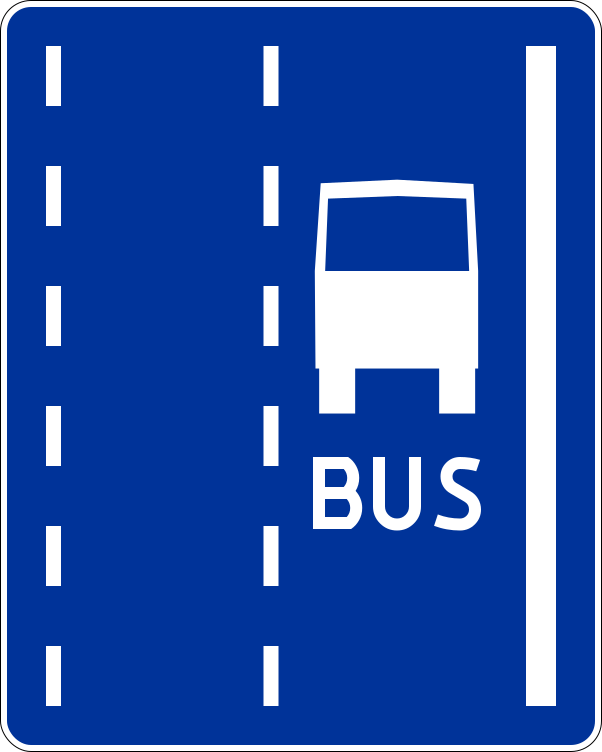
The D-12 'Bus Lane' sign confirms the lane remains exclusively for buses and authorized vehicles.
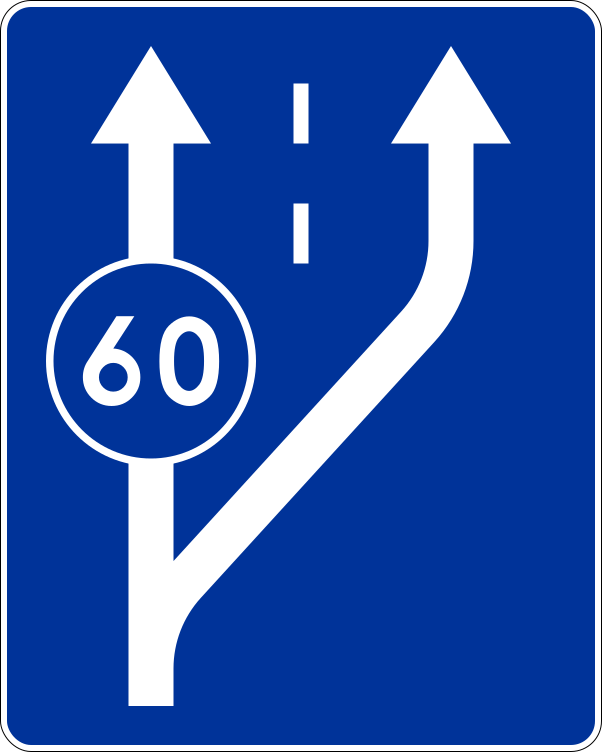
D-13 Sign: Prepare for the Start of a Slow-Moving Traffic Lane
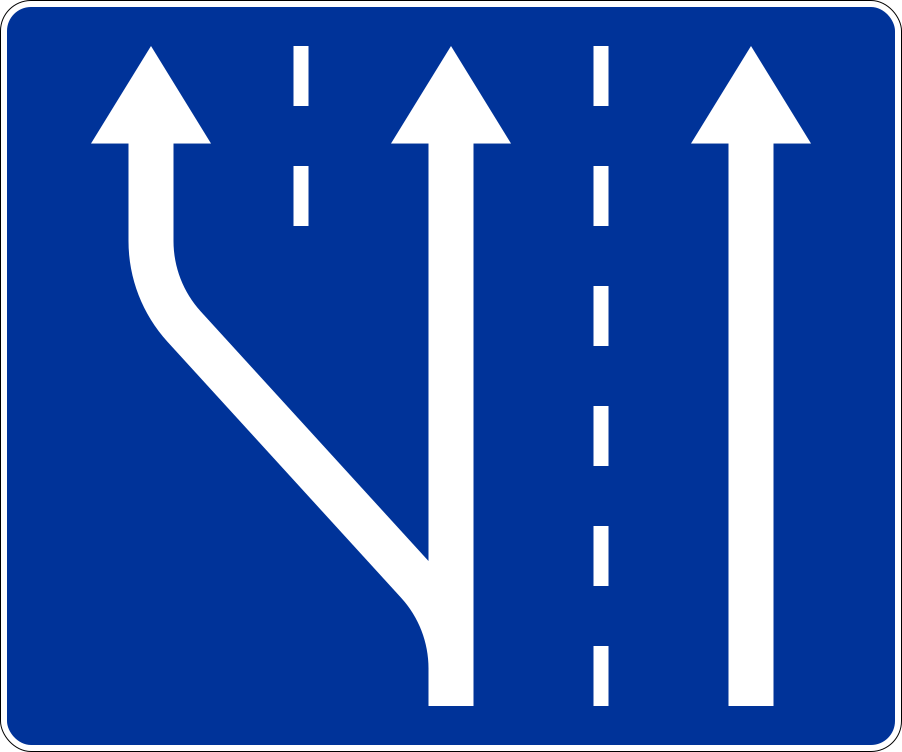
The D-13a 'Start of Lane' sign means a new lane is opening up ahead.
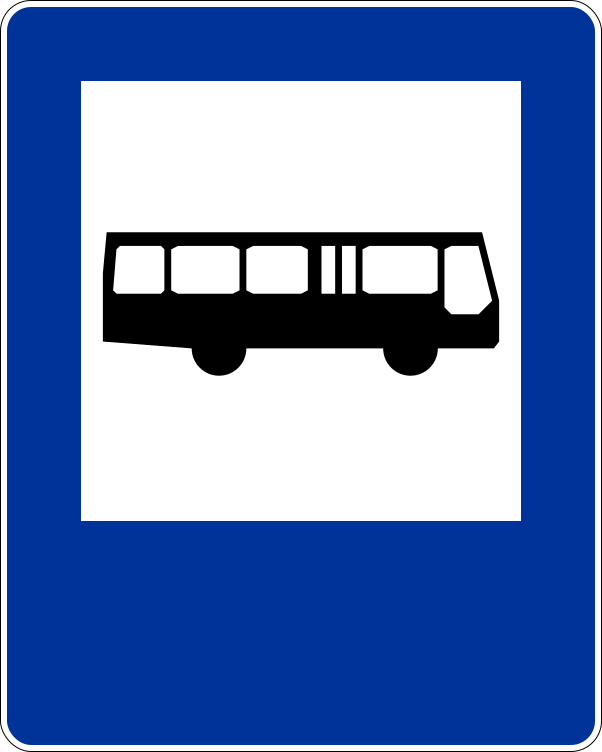
The D-15 'Bus Stop' Sign: Understanding and Reacting to Public Transport Stops
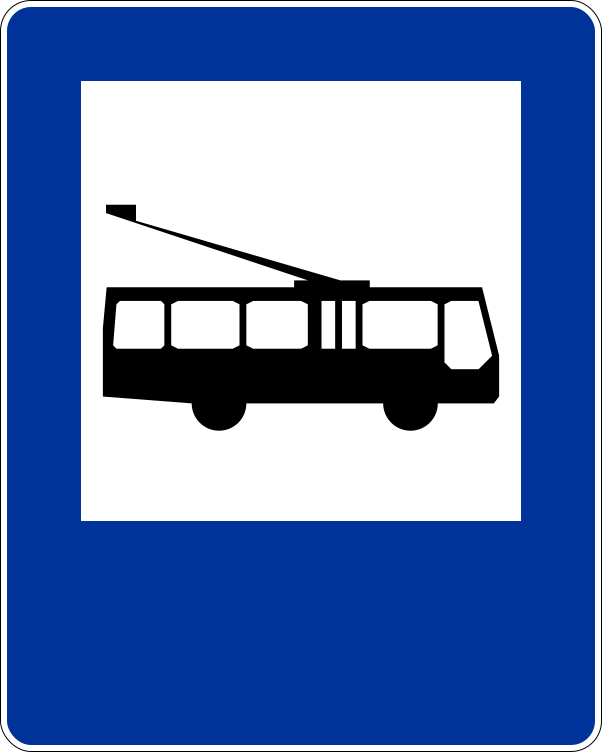
Understand the D-16 Trolleybus Stop Sign for safe city driving.
Deepen your understanding of specific road signs by reviewing official Polish traffic rules and associated real-world driving scenarios. These expert-led resources help you bridge the gap between visual recognition and practical exam application.
Know Your Obligations: What to Do After a Road Incident in Poland.
Don't Be a Road Block: Master Minimum Speeds and Smooth Traffic Flow for Your Polish Exam!
This article provides a comprehensive breakdown of vehicles and vehicle combinations permitted under the Polish Category T driving licence, directly referencing the "Prawo o ruchu drogowym". You will learn the exact definitions of agricultural tractors, slow-moving vehicles, and how trailers can be attached. Crucially, it addresses common confusions, distinguishing Category T from other vehicle categories to ensure you are fully prepared for your theory exam and safe driving practices.
The A-30 sign serves as a vital warning for drivers to prepare for unexpected hazards that fall outside standard category signs. This guide clarifies how the sign is paired with supplementary plates to indicate risks like blind or deaf pedestrians, and outlines the mandatory safety behaviors required by Polish traffic law. You will learn the legal expectations for driver conduct to ensure you are fully prepared for hazard perception questions in your theory exam.
The F-19 sign designates a lane for exclusive use by certain vehicles, most commonly buses (BUS), taxis, or emergency services. It is used to prioritize public transport and improve its efficiency in congested urban areas. Regular motorists are usually prohibited from driving in these lanes, though they may be allowed to enter briefly to perform a right turn at an intersection if markings allow.
The P-8a arrow is painted on the lane surface to regulate movement at an intersection. If you are in a lane with this arrow, you are legally forbidden from turning left or right. It is used to streamline traffic and prevent collisions that occur when drivers try to turn from a middle lane. Often, these arrows are combined (e.g., straight and right), meaning both directions are allowed from that specific lane.
After reviewing the full list of Polish road signs, explore specific sign categories for in-depth understanding. Challenge your knowledge with practice questions focused on sign recognition and interpretation to solidify your preparation for the driving theory exam.
Browse All Polish Road Signs