
Aspiring professional drivers must understand how emerging technologies, such as remote-operated vehicles, are reshaping the industry and the demands placed on operators. This overview explains the research findings from VTI and Trafikverket, providing context on how human cognitive tasks are changing as the sector addresses chronic driver shortages. Readers will gain insight into the distinction between traditional C-category requirements and the future remote-operator professional profile.
Article content overview
The Swedish logistics landscape is currently undergoing a significant shift. While traditional truck driving remains a pillar of our transport infrastructure, research led by institutions such as VTI (The Swedish National Road and Transport Research Institute) and supported by Trafikverket is uncovering how remote-controlled heavy vehicles are set to redefine the professional driver’s role. As the industry faces chronic driver shortages, understanding the transition from active, behind-the-wheel operation to remote oversight is essential for any aspiring professional in the Swedish transport sector.
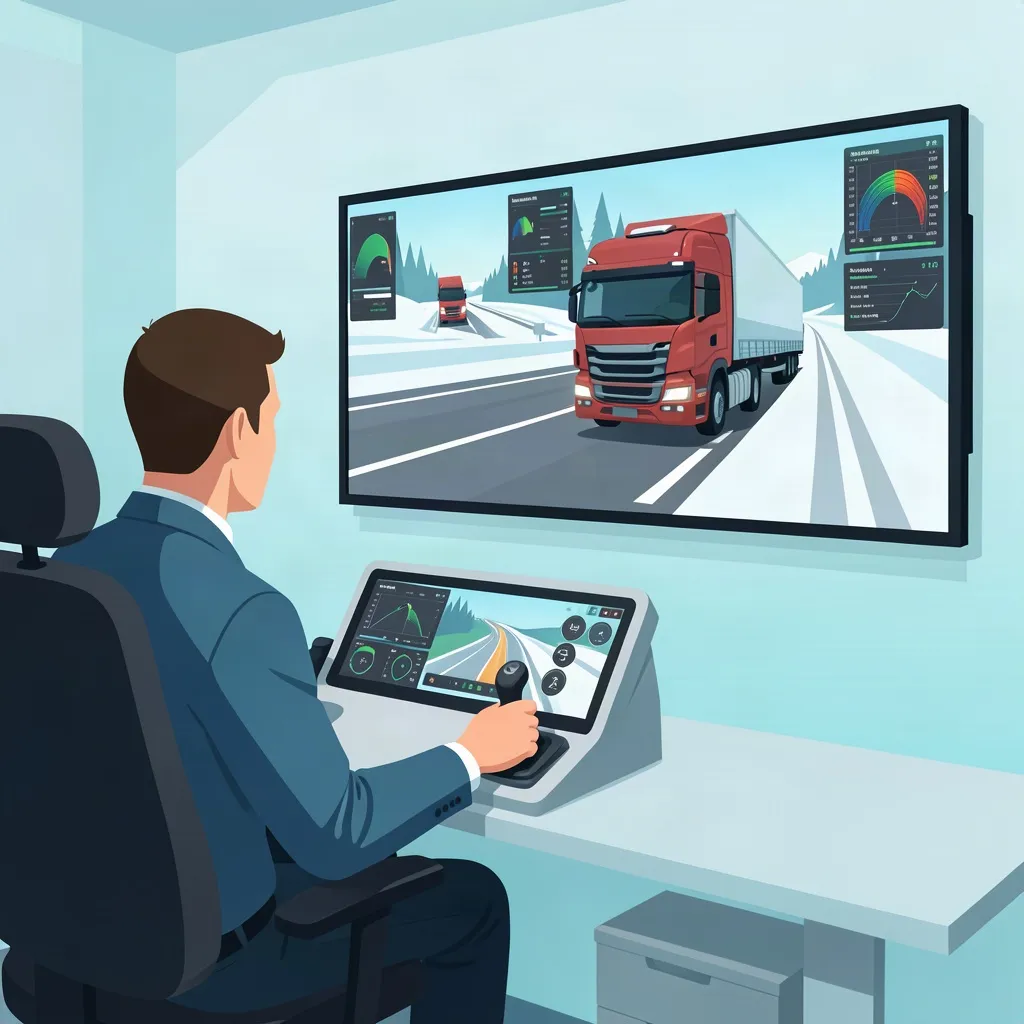
The core of the research project, "Förflyttning av förarens roll vid övergång till fjärrstyrning av lastbilar," focuses on how the cognitive load of a driver changes when they are no longer physically present in the cab. Using the Applied Cognitive Task Analysis (ACTA) method, researchers like doctoral student Christian Jernberg are mapping how professional drivers process traffic information, manage risk, and handle unexpected situations when their environment is mediated through screens and sensors.
Unlike standard driving, where physical feedback—such as the vibration of the road or the sound of the engine—informs the driver’s decision-making process, remote operation relies entirely on digital interfaces. This shift necessitates a new set of competencies. Drivers must learn to identify hazards without direct sensory input while managing potential latency issues that could affect reaction times in complex traffic scenarios.
Remote operation does not remove the need for deep knowledge of traffic regulations. Even in an automated or remote-controlled environment, a professional operator must understand priority rules, road markings, and the legal obligations inherent to heavy vehicles as defined by Transportstyrelsen.
It is a common misconception that automation will simply replace the driver. Instead, the research suggests that the profession is evolving toward a more "system-manager" role. While monotonous highway driving might become the domain of automated systems, the complex "last-mile" logistics—such as maneuvering into loading bays, navigating tight urban intersections, and managing cargo security—remain highly reliant on human judgment.
The transition to remote control is particularly promising for addressing the driver shortage in Sweden. By allowing one operator to oversee multiple vehicles or to work from a central hub, companies can reduce the need for drivers to spend long periods away from home. However, this convenience introduces new challenges, such as maintaining concentration and situational awareness across several active interfaces simultaneously.
In Sweden, the implementation of these technologies must align with the vision of zero fatalities, a core goal of the Swedish transport administration. As research progresses, Trafikverket and other authorities are carefully examining how remote operators maintain the same high standard of safety as traditional drivers. This includes strict adherence to road signs and priority rules, even when the human-machine interface is non-traditional.
Aspiring professional drivers should recognize that the "C-category" license remains the essential foundation of their career. Mastering the theory of weight distribution, load securing, and environmental driving is still mandatory. However, the future professional will also need to be tech-literate, capable of bridging the gap between traditional traffic rules and digital operational systems.
As we move forward, the integration of remote operation will likely change how we view road safety. While the technology changes, the fundamental requirement of understanding Sweden's traffic environment remains constant. Keeping updated on these industry shifts is just as important as mastering the current theoretical exam.
Article content overview
Explore related topics, search based questions, and concepts that learners often look up when studying Remote Truck Operation in Sweden. These themes reflect real search intent and help you understand how this topic connects to wider driving theory knowledge in Sweden.
Find clear and practical answers to common questions learners often have about Remote Truck Operation in Sweden. This section helps explain difficult points, remove confusion, and reinforce the key driving theory concepts that matter for learners in Sweden.
The research focuses on how the professional identity and work tasks of truck drivers change when transitioning from traditional behind-the-wheel driving to remotely operating multiple vehicles.
While traditional drivers handle real-time physical control, remote operators manage cognitive tasks like monitoring, decision-making, and addressing system issues across potentially multiple vehicles.
It addresses the ongoing driver shortage in Sweden by exploring how technology can optimize work environments and shift the focus of the profession toward more efficient, technology-assisted logistics.
No, traditional heavy vehicle licensing and competency requirements remain the foundation, while remote operation represents an emerging, distinct professional role within the evolving logistics industry.
Continue your learning journey by exploring more detailed articles and guides. Clarify specific traffic rules, understand complex road signs, or review safe driving practices. Our extensive content library supports your Swedish driving license theory preparation.