Drivers in Sweden must be prepared to encounter planned infrastructure maintenance that can temporarily affect traffic patterns at railway crossings and along public roads. This article provides essential knowledge on how to identify and respect temporary traffic management signs while prioritizing safety. You will learn the importance of planning for potential delays and adapting to changing conditions to ensure compliance with Swedish traffic regulations.
Article content overview
Driving in Sweden requires a comprehensive understanding of traffic safety, especially when encountering planned infrastructure maintenance. As Trafikverket works to modernize the rail network, drivers will frequently encounter temporary disruptions, such as railway crossing closures and construction zones. Understanding how to interpret these changes and prioritize safety is not only vital for your daily driving but is a common area for questions on the Swedish theory exam.
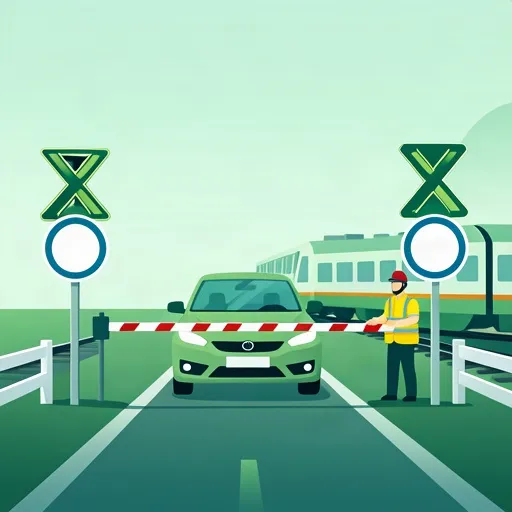
Railway crossings are high-risk environments where the consequences of an error can be catastrophic. Whether a crossing is guarded with booms and light signals or is an open, un-signaled crossing, the fundamental responsibility for safety remains with the driver. Always approach a crossing with caution and adapt your speed based on your visibility of the tracks in both directions.
When you approach a crossing, you must be prepared to stop if a train is approaching. Even if the warning lights are not flashing red, you are legally obligated to ensure the crossing is clear before proceeding. In situations where infrastructure maintenance is taking place—such as the track replacements currently affecting the Malmbanan railway—crossings may be closed for extended periods. When you see temporary signage indicating a closure, you must follow the official detour routes rather than attempting to bypass the construction area.
Road work, whether on the railway line or the road itself, is essential for maintaining a robust transport network. These zones are often characterized by reduced speed limits, narrowed lanes, and temporary traffic signs. The primary purpose of these measures is to protect the workers and ensure that traffic flows safely around the site.
Never enter a closed construction zone, even if it appears that work has paused. Heavy machinery and deep trenches, often hidden from view, can create extreme hazards for passenger vehicles.
When you encounter orange temporary signs or flaggers, they override existing permanent speed limits and right-of-way rules. Always slow down well in advance and maintain a safe following distance. Failing to adhere to these temporary measures can lead to dangerous situations and is a frequent cause of traffic accidents.
The theory exam administered by Trafikverket expects you to demonstrate "anticipatory driving." This means you must show that you can recognize a hazard, such as a construction zone or a closed railway crossing, before you are right on top of it. Questions may focus on how you should adjust your driving behavior when encountering specific warning signs or when road conditions are altered by maintenance.
To perform well on the exam, you must be familiar with the specific vocabulary used in Swedish traffic regulations. These terms appear frequently in both practical driving scenarios and theoretical questions.
Article content overview
Explore related topics, search based questions, and concepts that learners often look up when studying Handling Railway Crossing Closures. These themes reflect real search intent and help you understand how this topic connects to wider driving theory knowledge in Sweden.
Find clear and practical answers to common questions learners often have about Handling Railway Crossing Closures. This section helps explain difficult points, remove confusion, and reinforce the key driving theory concepts that matter for learners in Sweden.
You must obey all posted temporary traffic signs and signals. Follow any marked detour routes provided by the authorities, and never attempt to cross a closed or blocked railway crossing.
Yes, Trafikverket uses standard road work signage to alert drivers of changes to traffic patterns. You should always look for temporary information signs that indicate the nature of the closure and any required diversions.
Understanding how infrastructure work impacts traffic is part of being a safe, observant driver. The theory exam tests your ability to react correctly to road signs and temporary traffic management measures.
Continue your learning journey by exploring more detailed articles and guides. Clarify specific traffic rules, understand complex road signs, or review safe driving practices. Our extensive content library supports your Swedish driving license theory preparation.