
Supplementary plates often hold the key to understanding complex traffic rules, yet they are frequently overlooked by learners who focus solely on the main sign. This article details how these modifiers refine laws concerning time, vehicle types, and distance, ensuring you can accurately interpret official Swedish traffic regulations. Learning to read these signs from top to bottom is an essential skill for both passing your theory exam and driving safely on Swedish roads.
Article content overview
In the Swedish traffic system, the primary traffic sign often provides the general rule, but it is the supplementary plate, or tilläggstavla, that defines the specific conditions under which that rule applies. For learners preparing for the theory exam managed by Trafikverket, failing to account for these plates is one of the most common reasons for errors. A sign might prohibit parking, but a supplementary plate might clarify that this only applies during certain hours, for specific vehicle categories, or under particular circumstances.
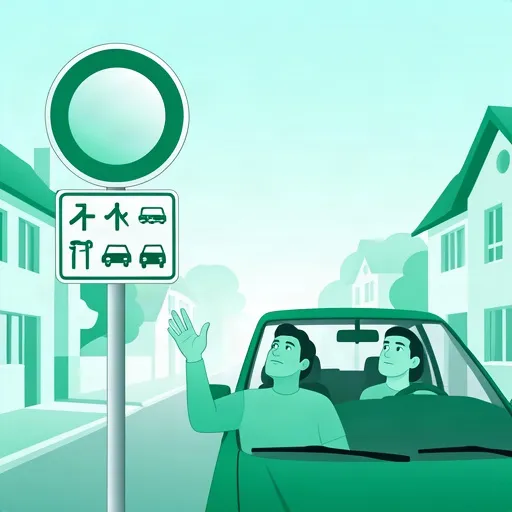
When you encounter a sign assembly, you must learn to read the information from top to bottom. The top sign is the primary message, such as a prohibition or a road condition, while the supplementary plates beneath it serve as filters. These filters modify the scope of the rule, turning a broad instruction into a highly localized one. If you ignore the supplementary plate, you are essentially ignoring half of the legal requirement, which is a common trap in theory exam scenarios.
If you see a "Parking Prohibited" sign without any additional information, the standard rule is that parking is generally restricted. However, in urban Swedish environments, you will almost always find supplementary plates defining the duration, the method of parking, or the permitted times.
Time-based plates are essential for navigating city traffic. For instance, a plate specifying a time interval means the rule only applies during those hours. If a sign indicates "No Parking" and has a plate showing "9-17" in black text, that prohibition is only active during those specific hours on weekdays. If the numbers are in parentheses, they represent Saturday, and if they are red, they represent Sunday or public holidays.
When it comes to parking discs (P-skiva), the rules are strict. If a sign shows the P-disc symbol, you are required to set your arrival time to the next half-hour. If you arrive at 13:02, you must set your disc to 13:30. This ensures that the system remains fair and enforceable.
The following table summarizes common supplementary plates you will encounter on the road and in your theory studies.
| Plate Type | Purpose | Key Rule |
|---|---|---|
| T6 | Time indication | Defines active hours for the primary sign. |
| T16 | Fee/Payment | Indicates that a parking fee must be paid. |
| T17 | Parking disc | Requires a P-disc; set to the next half-hour. |
| T18 | Max duration | Specifies the maximum allowed parking time. |
It is frequent to find multiple plates stacked under a single primary sign. When this happens, each plate adds a layer of logic. You might see a "No Parking" sign, followed by a time plate, followed by a "Resident" (Boende) plate. This means the area is restricted to residents only during the specified hours. Failing to connect these logical layers is a frequent cause of confusion. Always read the stack as a cohesive set of conditions: Who is affected? When are they affected? And are there any exceptions?
Swedish traffic signs use a hierarchy where primary signs establish the main rule and supplementary plates (tilläggstavlor) define specific conditions such as time restrictions, vehicle types, and permitted users. Time-based plates distinguish weekdays, Saturdays, and holidays through color coding, while parking disc rules require rounding arrival times up to the next half-hour. Multi-plate assemblies must be read as a logical whole, with each plate adding a layer of conditions that together determine the exact scope of the restriction. Mastering this top-to-bottom reading approach is essential for both passing the Trafikverket theory exam and interpreting real parking regulations correctly on Swedish roads.
A short set of high-value points that capture the most important ideas from this article.
Supplementary plates (tilläggstavlor) modify the scope of primary traffic signs, turning general rules into specific, localized requirements
Always read traffic sign assemblies from top to bottom—the primary sign gives the main rule, and each plate adds conditions or filters
Time-based plates use distinct colors: black for weekdays, parentheses for Saturdays, and red for Sundays and public holidays
The parking disc (P-skiva) must be set to the next half-hour—if you arrive at 13:02, set it to 13:30
Multi-plate assemblies require connecting all logical layers: who is affected, when, and whether any exceptions apply
The hierarchy principle: primary sign + supplementary plates = complete legal requirement; ignoring plates means ignoring half the rule
P-skiva rounding rule: always round up arrival time to the next full half-hour (e.g., 13:02 → 13:30)
Time plate color coding distinguishes weekdays, Saturdays, and Sundays/holidays in Swedish traffic law
Common plate types include T6 (time indication), T16 (fee/payment), T17 (parking disc required), and T18 (maximum duration)
When multiple plates are stacked, each one adds a layer of logic that must be applied together to determine the full restriction
Focusing only on the primary sign and completely ignoring supplementary plates, which are the most common source of theory exam errors
Misreading time plate notation by not distinguishing between black text (weekdays), parentheses (Saturday), and red text (Sunday/holidays)
Setting the parking disc to the exact arrival time instead of rounding up to the next half-hour
Failing to combine multiple plates logically and instead interpreting each plate as a separate, independent rule
Assuming a parking restriction applies 24/7 when it only applies during the hours specified on the supplementary plate
Article content overview
A short set of high-value points that capture the most important ideas from this article.
Supplementary plates (tilläggstavlor) modify the scope of primary traffic signs, turning general rules into specific, localized requirements
Always read traffic sign assemblies from top to bottom—the primary sign gives the main rule, and each plate adds conditions or filters
Time-based plates use distinct colors: black for weekdays, parentheses for Saturdays, and red for Sundays and public holidays
The parking disc (P-skiva) must be set to the next half-hour—if you arrive at 13:02, set it to 13:30
Multi-plate assemblies require connecting all logical layers: who is affected, when, and whether any exceptions apply
The hierarchy principle: primary sign + supplementary plates = complete legal requirement; ignoring plates means ignoring half the rule
P-skiva rounding rule: always round up arrival time to the next full half-hour (e.g., 13:02 → 13:30)
Time plate color coding distinguishes weekdays, Saturdays, and Sundays/holidays in Swedish traffic law
Common plate types include T6 (time indication), T16 (fee/payment), T17 (parking disc required), and T18 (maximum duration)
When multiple plates are stacked, each one adds a layer of logic that must be applied together to determine the full restriction
Focusing only on the primary sign and completely ignoring supplementary plates, which are the most common source of theory exam errors
Misreading time plate notation by not distinguishing between black text (weekdays), parentheses (Saturday), and red text (Sunday/holidays)
Setting the parking disc to the exact arrival time instead of rounding up to the next half-hour
Failing to combine multiple plates logically and instead interpreting each plate as a separate, independent rule
Assuming a parking restriction applies 24/7 when it only applies during the hours specified on the supplementary plate
Explore related topics, search based questions, and concepts that learners often look up when studying Mastering Swedish Supplementary Plates. These themes reflect real search intent and help you understand how this topic connects to wider driving theory knowledge in Sweden.
Find clear and practical answers to common questions learners often have about Mastering Swedish Supplementary Plates. This section helps explain difficult points, remove confusion, and reinforce the key driving theory concepts that matter for learners in Sweden.
A supplementary plate provides additional information or conditions that apply to the primary traffic sign, such as specific time frames, restricted vehicle classes, or distances.
Always read the main sign first, then interpret the supplementary plates from top to bottom. Each plate adds a layer of specific regulation that you must follow in addition to the main sign's intent.
Yes, but the supplementary plate often restricts or defines the main sign's scope. For example, a parking sign might be restricted by a time-limit plate, meaning the parking is only allowed under the conditions specified by the plate.
You must set the parking disc to the next upcoming half-hour from the time you arrive. If parking begins before a time-restricted zone starts, you should set the disc to the time the restriction begins.
Continue your learning journey by exploring more detailed articles and guides. Clarify specific traffic rules, understand complex road signs, or review safe driving practices. Our extensive content library supports your Swedish driving license theory preparation.