
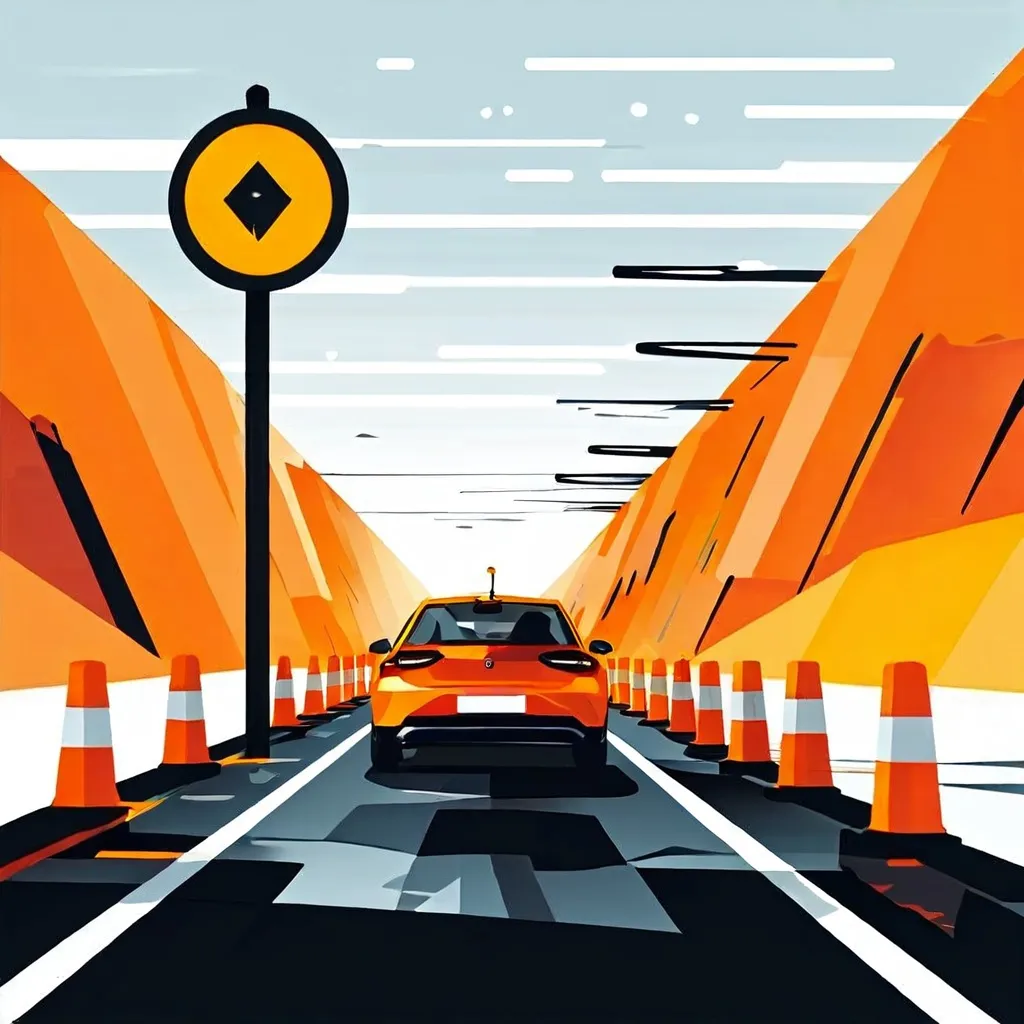
When navigating construction zones like those seen during major bridge renovations, you must be prepared to follow temporary traffic signals that override standard rules. This guide helps you understand the importance of immediate speed adaptation, correctly interpreting temporary road signs, and safely navigating single-lane sections managed by traffic lights. Learning to anticipate these hazards is a core component of defensive driving and success in your Swedish theory examination.
Article content overview
Navigating Swedish roadworks zones requires understanding that temporary traffic signs and signals supersede all permanent rules. Drivers must stop at signal-controlled single-lane sections, reduce speed well in advance of construction zones, and never attempt to beat a yellow light when stopping is safe. The Swedish theory exam frequently tests your ability to interpret non-standard situations like these, so remember that even an apparently empty road can have hidden oncoming traffic controlled by temporary signals. Showing consideration for workers and maintaining proper distance are core expectations for all licensed drivers in Sweden.
A short set of high-value points that capture the most important ideas from this article.
Temporary traffic signs always override permanent road rules when both are visible
In signal-controlled roadworks zones, stop at the stop line or at a position with clear visibility of the signal
Never attempt to 'beat' a yellow light when you can stop safely in a construction zone
Reduce speed well before entering any roadworks area, regardless of posted limits
You must respect signal-controlled lane restrictions even when the road appears empty
Trafikverket (Swedish Transport Administration) manages temporary road traffic measures during maintenance
The A20 roadworks sign warns you to reduce speed and prepare for temporary instructions
BK4 refers to high load-bearing class roads allowing vehicles up to 74 tons
Maintain a larger gap from the vehicle ahead in construction zones due to reduced road grip
Flaggers and portable traffic signals are legally binding instructions you must obey
Treating permanent speed limits as always valid instead of prioritizing temporary construction zone limits
Attempting to pass through a yellow light in a roadworks zone when stopping is feasible
Failing to stop properly at signal-controlled single-lane sections due to not seeing oncoming traffic
Not increasing following distance on temporary road surfaces with potentially less grip
Ignoring orange warning signs because the road 'looks fine' ahead
Article content overview
A short set of high-value points that capture the most important ideas from this article.
Temporary traffic signs always override permanent road rules when both are visible
In signal-controlled roadworks zones, stop at the stop line or at a position with clear visibility of the signal
Never attempt to 'beat' a yellow light when you can stop safely in a construction zone
Reduce speed well before entering any roadworks area, regardless of posted limits
You must respect signal-controlled lane restrictions even when the road appears empty
Trafikverket (Swedish Transport Administration) manages temporary road traffic measures during maintenance
The A20 roadworks sign warns you to reduce speed and prepare for temporary instructions
BK4 refers to high load-bearing class roads allowing vehicles up to 74 tons
Maintain a larger gap from the vehicle ahead in construction zones due to reduced road grip
Flaggers and portable traffic signals are legally binding instructions you must obey
Treating permanent speed limits as always valid instead of prioritizing temporary construction zone limits
Attempting to pass through a yellow light in a roadworks zone when stopping is feasible
Failing to stop properly at signal-controlled single-lane sections due to not seeing oncoming traffic
Not increasing following distance on temporary road surfaces with potentially less grip
Ignoring orange warning signs because the road 'looks fine' ahead
Explore related topics, search based questions, and concepts that learners often look up when studying Driving Through Swedish Roadworks. These themes reflect real search intent and help you understand how this topic connects to wider driving theory knowledge in Sweden.
Find clear and practical answers to common questions learners often have about Driving Through Swedish Roadworks. This section helps explain difficult points, remove confusion, and reinforce the key driving theory concepts that matter for learners in Sweden.
Yes, temporary traffic signs and signals placed for roadworks or construction override permanent signs and road markings at the location.
You must stop at the red light and wait for the green signal before proceeding. Ensure you maintain a safe distance and do not block the lane if you cannot clear the construction zone.
Reducing speed increases your reaction time, protects construction workers, and helps you handle sudden hazards, narrow lanes, or uneven surfaces common in work zones.
Drivers are legally required to show extra consideration for those working along the road, which includes reducing speed, maintaining high alertness, and following all temporary instructions.
Continue your learning journey by exploring more detailed articles and guides. Clarify specific traffic rules, understand complex road signs, or review safe driving practices. Our extensive content library supports your Swedish driving license theory preparation.