
When infrastructure projects like railway expansions temporarily alter the traffic environment, drivers must remain alert and responsive to changing conditions. This guide explains your responsibilities when encountering temporary signs, markings, and traffic controllers as mandated by Swedish law. You will learn how to prioritize temporary instructions to ensure safety and correctly answer related questions in your driving theory exam.
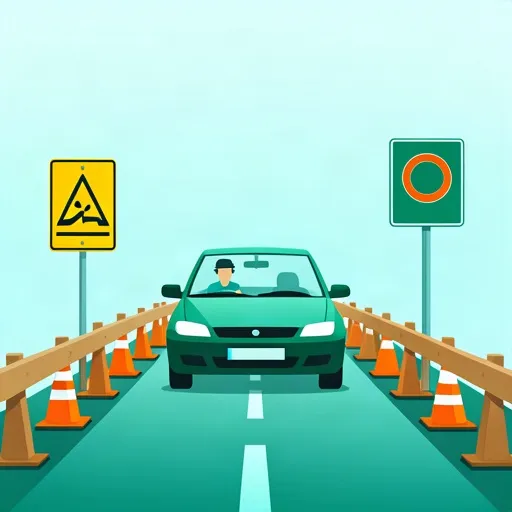
Article content overview
This article covers the essential Swedish traffic law principle that temporary signage, traffic controllers, and temporary light signals always take priority over permanent road markings and signs. When encountering roadworks, drivers must reduce speed well in advance, maintain heightened situational awareness, and follow any lane diversions or instructions without delay. The content emphasizes that Trafikverket implements these temporary measures to protect both road users and construction workers, and understanding this hierarchy is critical for both safe driving and success in the Swedish theory exam.
A short set of high-value points that capture the most important ideas from this article.
Temporary yellow-backed signs and traffic controller instructions always override permanent road signs and markings in Sweden.
Slow down well before reaching roadwork zones to give yourself time to process changing instructions and react to hazards.
Maintain a larger safety gap to the vehicle ahead in construction areas to account for sudden stops.
Never attempt to overtake in a construction zone unless explicitly permitted by signs or markings.
Stay alert for pedestrians, cyclists, and workers who may be present in areas where normal traffic flow has been altered.
Temporary signs take absolute precedence over permanent signs when both are visible (e.g., a temporary 30 km/h sign beats a permanent 70 km/h sign).
Traffic controllers and temporary light signals override all permanent signals and road markings.
Roadwork conditions can change daily, so do not assume a previously used route remains unaltered.
Trafikverket (the Swedish Transport Administration) is responsible for implementing temporary traffic management measures on state roads.
Lane changes in restricted construction areas are typically prohibited to protect workers.
Obeying a permanent speed limit sign while ignoring a temporary yellow-backed sign indicating a lower speed due to workers.
Attempting to overtake other vehicles in a construction zone where lane changes are restricted or prohibited.
Failing to reduce speed early enough when approaching roadworks, leaving insufficient time to react to instructions.
Assuming that road conditions and signage will be the same as on a previous journey through the same area.
Ignoring or questioning the authority of traffic controllers directing vehicles through work zones.
Article content overview
A short set of high-value points that capture the most important ideas from this article.
Temporary yellow-backed signs and traffic controller instructions always override permanent road signs and markings in Sweden.
Slow down well before reaching roadwork zones to give yourself time to process changing instructions and react to hazards.
Maintain a larger safety gap to the vehicle ahead in construction areas to account for sudden stops.
Never attempt to overtake in a construction zone unless explicitly permitted by signs or markings.
Stay alert for pedestrians, cyclists, and workers who may be present in areas where normal traffic flow has been altered.
Temporary signs take absolute precedence over permanent signs when both are visible (e.g., a temporary 30 km/h sign beats a permanent 70 km/h sign).
Traffic controllers and temporary light signals override all permanent signals and road markings.
Roadwork conditions can change daily, so do not assume a previously used route remains unaltered.
Trafikverket (the Swedish Transport Administration) is responsible for implementing temporary traffic management measures on state roads.
Lane changes in restricted construction areas are typically prohibited to protect workers.
Obeying a permanent speed limit sign while ignoring a temporary yellow-backed sign indicating a lower speed due to workers.
Attempting to overtake other vehicles in a construction zone where lane changes are restricted or prohibited.
Failing to reduce speed early enough when approaching roadworks, leaving insufficient time to react to instructions.
Assuming that road conditions and signage will be the same as on a previous journey through the same area.
Ignoring or questioning the authority of traffic controllers directing vehicles through work zones.
Explore related topics, search based questions, and concepts that learners often look up when studying Navigating Swedish Roadworks. These themes reflect real search intent and help you understand how this topic connects to wider driving theory knowledge in Sweden.
Find clear and practical answers to common questions learners often have about Navigating Swedish Roadworks. This section helps explain difficult points, remove confusion, and reinforce the key driving theory concepts that matter for learners in Sweden.
Yes. According to Swedish traffic regulations, temporary signs, markings, and signals specifically placed for roadworks always take precedence over permanent signs and general road rules.
You must follow the instructions of a traffic controller, such as a flagger or authorized worker, regardless of what other signs or markings indicate, as their primary role is to ensure safe passage through the construction zone.
Lowering your speed near roadworks is essential to protect workers, construction machinery, and yourself from unpredictable hazards, and it is a key safety expectation tested in the Swedish theory exam.
You can check the official Trafikverket website for real-time traffic information and status updates regarding infrastructure projects and planned traffic diversions across Sweden.
Continue your learning journey by exploring more detailed articles and guides. Clarify specific traffic rules, understand complex road signs, or review safe driving practices. Our extensive content library supports your Swedish driving license theory preparation.