Understanding the regulatory shift regarding private driving practice is essential for both learner drivers and their prospective supervisors. While the mandatory introductory course is no longer required, you must still fulfill all existing legal obligations to be authorized for private practice. This overview clarifies the current requirements to ensure your path to obtaining a Swedish driving license remains smooth and legally compliant.
Article content overview
Starting August 1, 2026, the Swedish transport authority, Transportstyrelsen, has introduced a significant shift in the regulations governing private driving practice for category B licenses. The previous requirement for both learners and prospective supervisors to complete a mandatory introductory training course, often referred to as handledarutbildning, has been officially abolished. This policy change is part of a broader effort to streamline the path to obtaining a driving license, reducing the administrative and financial burden on families while maintaining the high safety standards expected on Swedish roads.
It is important to clarify that this update only removes the mandatory nature of the introductory course. The fundamental legal framework regarding the qualifications of a supervisor and the requirements for the student remain strictly in effect. If you are planning to engage in private practice driving, you must still navigate the official administrative processes to ensure you are fully compliant with Swedish traffic law.
While the specific requirement to sit through a three-hour introductory course is being removed, the core safety requirements for private practice remain unchanged. The government's decision is based on assessments suggesting that the quality of private practice is not primarily determined by this single course, but rather by the consistent application of safe driving habits and high-quality "quantity training" (mängdträning).
To conduct private practice, you must still meet the following mandatory criteria:
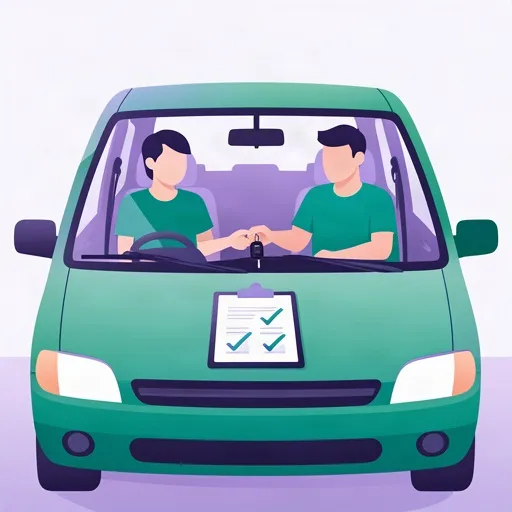
Do not assume that the removal of the introductory course exempts you from the registration process. You must still submit an application for supervisor approval to Transportstyrelsen and receive confirmation before you begin any practice sessions in a private vehicle.
Despite the regulatory change, the value of professional driving schools in Sweden cannot be overstated. Statistics consistently show that students who supplement their private practice with lessons from a professional traffic school have a higher success rate in the final förarprov (driving test). Professional instructors are trained to identify common errors early, such as improper mirror routines, incorrect steering techniques, or poor anticipation, which can be difficult for a parent or relative to spot after years of driving habits.
Many experts, including representatives from Sveriges Trafikskolors Riksförbund (STR), emphasize that the most effective learning path is a combination of quantity training at home and targeted lessons at a driving school. We recommend booking a few professional lessons shortly after you have mastered the basics—such as starting, stopping, and basic vehicle control—to ensure that you are learning the correct routines from the start.
When you are practicing privately, the supervisor is legally defined as the driver of the vehicle. This means that if a traffic violation occurs, the supervisor is held responsible. It is crucial that both the learner and the supervisor treat every practice session with the same level of seriousness as a professional driving lesson. Keep in mind that the Swedish nollvision (Vision Zero) regarding traffic safety remains the foundation of all driving education in the country.
Article content overview
Explore related topics, search based questions, and concepts that learners often look up when studying Changes to Private Driving Practice. These themes reflect real search intent and help you understand how this topic connects to wider driving theory knowledge in Sweden.
Find clear and practical answers to common questions learners often have about Changes to Private Driving Practice. This section helps explain difficult points, remove confusion, and reinforce the key driving theory concepts that matter for learners in Sweden.
Yes, as of August 1, 2026, the mandatory introductory training (introduktionsutbildning) for private category B driving practice in Sweden has been abolished.
Yes. Even though the training course is no longer required, the supervisor must still be officially approved by Transportstyrelsen and meet all age and experience criteria.
A supervisor must be at least 24 years old, have held a valid driver's license for the relevant vehicle category for at least five of the last ten years, and be approved by Transportstyrelsen.
Yes. While no longer mandatory, it is highly recommended to seek professional guidance from a driving school to ensure you learn correct habits, as studies show combined private and professional training often leads to better results.
Continue your learning journey by exploring more detailed articles and guides. Clarify specific traffic rules, understand complex road signs, or review safe driving practices. Our extensive content library supports your Swedish driving license theory preparation.