
Learn how modern Swedish road design aims to protect all road users by transforming through-roads into safer, community-focused environments. This guide breaks down the theory behind 'tättbebyggt område' designations and explains how environmental factors dictate your required speed and caution on rural roads.
Article content overview
Driving through rural Sweden offers a unique experience, but it also presents specific challenges for learner drivers preparing for the theory exam. While high-speed motorways dominate the headlines, the traffic environments in smaller communities—often referred to as tättbebyggt område—are where many critical safety decisions occur. Understanding how road design influences driver behavior is essential for passing your exam and staying safe on the road.
In Sweden, the term tättbebyggt område (built-up area) is not just a geographical description; it is a legal designation that carries significant implications for your driving. When you see a sign indicating the start of a built-up area, the default speed limit is 50 km/h unless otherwise posted. This is a deliberate policy intended to protect vulnerable road users, such as pedestrians, cyclists, and children playing near the roadside.
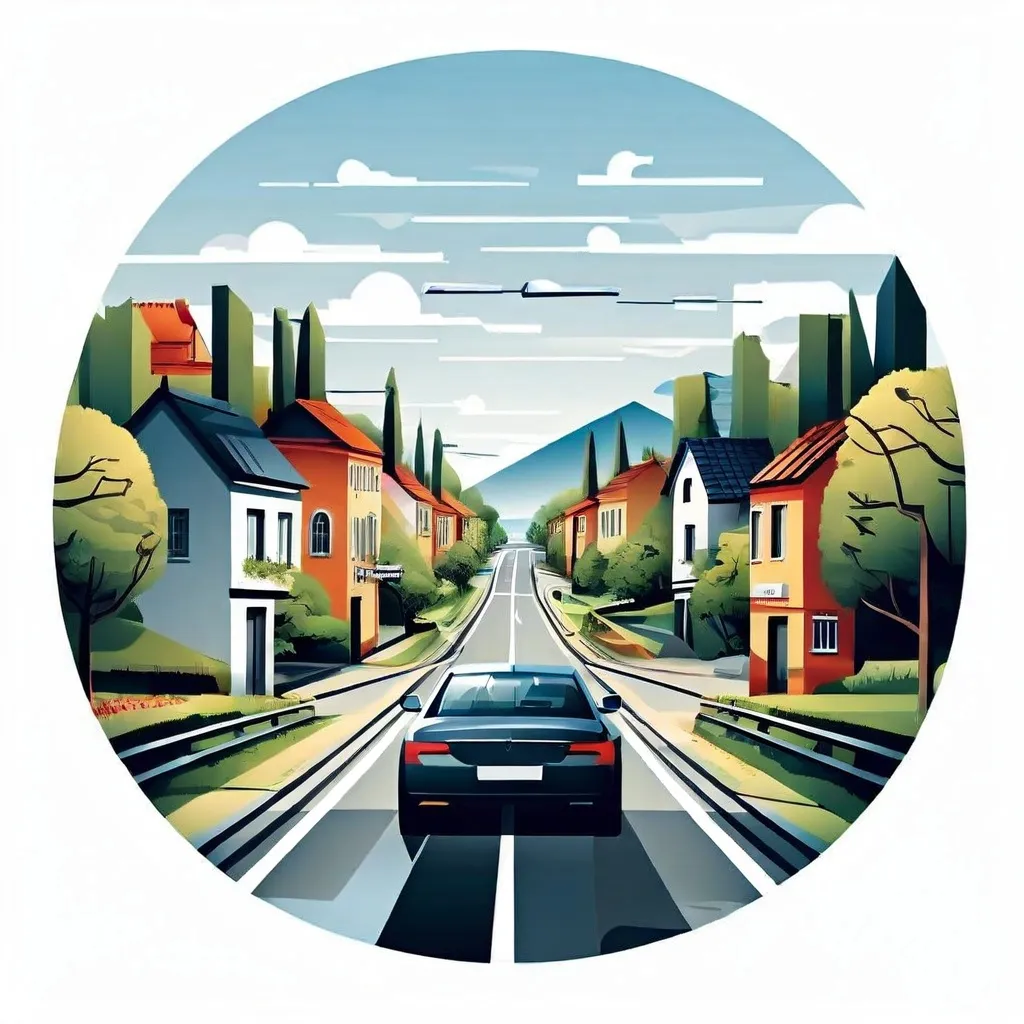
The transition from a high-speed rural road to a village environment often involves visual cues that you must learn to recognize. Traffic planners utilize design elements like narrowed lanes, raised pedestrian crossings, or road chicanes to naturally force drivers to decelerate. If you fail to adjust your speed according to these environmental cues, you risk failing your hazard perception tasks during the theory exam.
Historically, many Swedish villages were designed with roads that served as simple conduits for vehicle traffic, often splitting communities in two. This 1960s-era planning prioritized car flow, sometimes at the expense of safety for non-motorized residents. Modern traffic management, guided by authorities like Trafikverket, is shifting toward "livable villages."
This transition involves rethinking infrastructure to prioritize shared spaces. As a driver, you must understand that the modern road environment is designed to modify your behavior through physical obstacles rather than just reliance on speed limit signs.
One of the most common pitfalls in the theory exam is the misunderstanding between legal speed limits and the speed appropriate for current conditions. Even if a sign says 50 km/h, road conditions—such as heavy snow, poor visibility, or school zones—may dictate that you travel significantly slower.
When you encounter traffic calming measures, such as speed bumps or narrowed carriageways, view them as indicators of high-risk zones. These are locations where the risk of conflict between motor vehicles and vulnerable road users is significantly higher.
To succeed in your exam, you should be familiar with the following concepts related to road infrastructure and safety.
Anticipating hazards is a core component of the Swedish driving theory exam. When driving through rural villages, you should consistently scan for potential risks, such as bus stops, residential driveways, and schools. Each of these features suggests that there is a high probability of unexpected movement from pedestrians or other vehicles.
This article explains how Swedish rural villages are legally designated as tättbebyggt område with a default 50 km/h speed limit, but modern road design uses physical traffic calming measures to encourage slower speeds. The key distinction for the theory exam is that posted speed limits are maximums, not obligations—conditions like weather, visibility, and the presence of vulnerable road users always take priority. Learners should recognize design cues such as narrowed lanes and raised crossings as indicators of high-risk zones where anticipating pedestrian and cyclist movement becomes critical. Understanding these concepts demonstrates the shift from throughput-focused historical planning to modern community safety-oriented road design guided by Trafikverket.
A short set of high-value points that capture the most important ideas from this article.
Tättbebyggt område is a legal designation, not just a geographical description, carrying a default 50 km/h speed limit to protect vulnerable road users
Modern Swedish road design uses physical elements like narrowed lanes and raised crossings to naturally slow traffic, not just signs
Speed limits are maximums, not targets—actual conditions may always require slower speeds regardless of posted limits
Environmental cues in villages signal high-risk zones where pedestrian and cyclist conflicts are likely
The default speed in a built-up area is 50 km/h unless otherwise posted on a sign
Trafikverket's safety vision means infrastructure should forgive human error, prioritizing protection of all road users
Speed bumps, narrowed carriageways, and chicanes are indicators of zones requiring heightened caution, not just inconveniences
Legal speed limits can be overridden by conditions such as snow, poor visibility, or the presence of vulnerable road users
Key Swedish terms: oskyddade trafikanter (vulnerable road users), hastighetssäkring (traffic calming), sikttriangel (visibility triangle)
Assuming 50 km/h is always appropriate when entering a built-up area, ignoring that conditions may require significantly slower speeds
Viewing traffic calming measures as mere obstacles rather than signals indicating areas of high conflict risk
Failing to recognize environmental design cues like raised crossings or road narrowing that indicate the need to decelerate
Not scanning ahead for potential conflict points such as bus stops, residential driveways, and school zones when approaching villages
Article content overview
A short set of high-value points that capture the most important ideas from this article.
Tättbebyggt område is a legal designation, not just a geographical description, carrying a default 50 km/h speed limit to protect vulnerable road users
Modern Swedish road design uses physical elements like narrowed lanes and raised crossings to naturally slow traffic, not just signs
Speed limits are maximums, not targets—actual conditions may always require slower speeds regardless of posted limits
Environmental cues in villages signal high-risk zones where pedestrian and cyclist conflicts are likely
The default speed in a built-up area is 50 km/h unless otherwise posted on a sign
Trafikverket's safety vision means infrastructure should forgive human error, prioritizing protection of all road users
Speed bumps, narrowed carriageways, and chicanes are indicators of zones requiring heightened caution, not just inconveniences
Legal speed limits can be overridden by conditions such as snow, poor visibility, or the presence of vulnerable road users
Key Swedish terms: oskyddade trafikanter (vulnerable road users), hastighetssäkring (traffic calming), sikttriangel (visibility triangle)
Assuming 50 km/h is always appropriate when entering a built-up area, ignoring that conditions may require significantly slower speeds
Viewing traffic calming measures as mere obstacles rather than signals indicating areas of high conflict risk
Failing to recognize environmental design cues like raised crossings or road narrowing that indicate the need to decelerate
Not scanning ahead for potential conflict points such as bus stops, residential driveways, and school zones when approaching villages
Explore related topics, search based questions, and concepts that learners often look up when studying Rural Village Traffic Safety. These themes reflect real search intent and help you understand how this topic connects to wider driving theory knowledge in Sweden.
Find clear and practical answers to common questions learners often have about Rural Village Traffic Safety. This section helps explain difficult points, remove confusion, and reinforce the key driving theory concepts that matter for learners in Sweden.
The sign indicates you have entered a built-up area where the standard speed limit is 50 km/h unless otherwise posted. It signals an environment with higher traffic density and more vulnerable road users, requiring increased attention.
These are traffic calming measures designed to physically encourage drivers to lower their speed, ensuring a safer environment for pedestrians, cyclists, and residents while reducing the risk of severe accidents.
Modern road design uses environmental cues, such as narrower lanes or road markings, to signal appropriate driving behavior. Drivers are expected to adapt their speed and vigilance based on these cues, even if formal traffic signs are not immediately present.
Continue your learning journey by exploring more detailed articles and guides. Clarify specific traffic rules, understand complex road signs, or review safe driving practices. Our extensive content library supports your Swedish driving license theory preparation.