
Learning how to correctly identify and react to emergency vehicles is a critical skill for any driver in Sweden, as it directly impacts public safety and rescue efficiency. This guide details your legal obligations under Swedish traffic regulations to yield effectively and exercise particular caution, helping you avoid common mistakes during your driving journey and in your upcoming theory exam.
Article content overview
Navigating the Swedish road network requires more than just mastering standard traffic rules; it demands a high degree of situational awareness, especially when encountering emergency vehicles. Whether you are driving in a bustling urban environment like Stockholm or navigating rural roads, knowing exactly how to react to police, ambulance, or rescue services is a core competency for any licensed driver. In Sweden, regulations prioritize the efficiency of emergency response to save lives, placing a legal duty on all road users to facilitate their passage safely.
In Swedish traffic law, emergency vehicles—classified as utryckningsfordon—have special exemptions that allow them to bypass standard rules, such as speed limits or red lights, when the situation is urgent. As a fellow road user, your primary responsibility is to ensure that these vehicles can proceed without delay or risk. The law requires that you exercise "particular caution" when emergency services are in your vicinity. This is not merely a suggestion; it is a fundamental aspect of road safety that is frequently tested in the Swedish theory exam.
A vehicle belonging to the police, ambulance service, fire and rescue service, or other authorized emergency services, identified by blue flashing lights and/or a siren, which is exempt from certain traffic regulations when responding to an emergency.
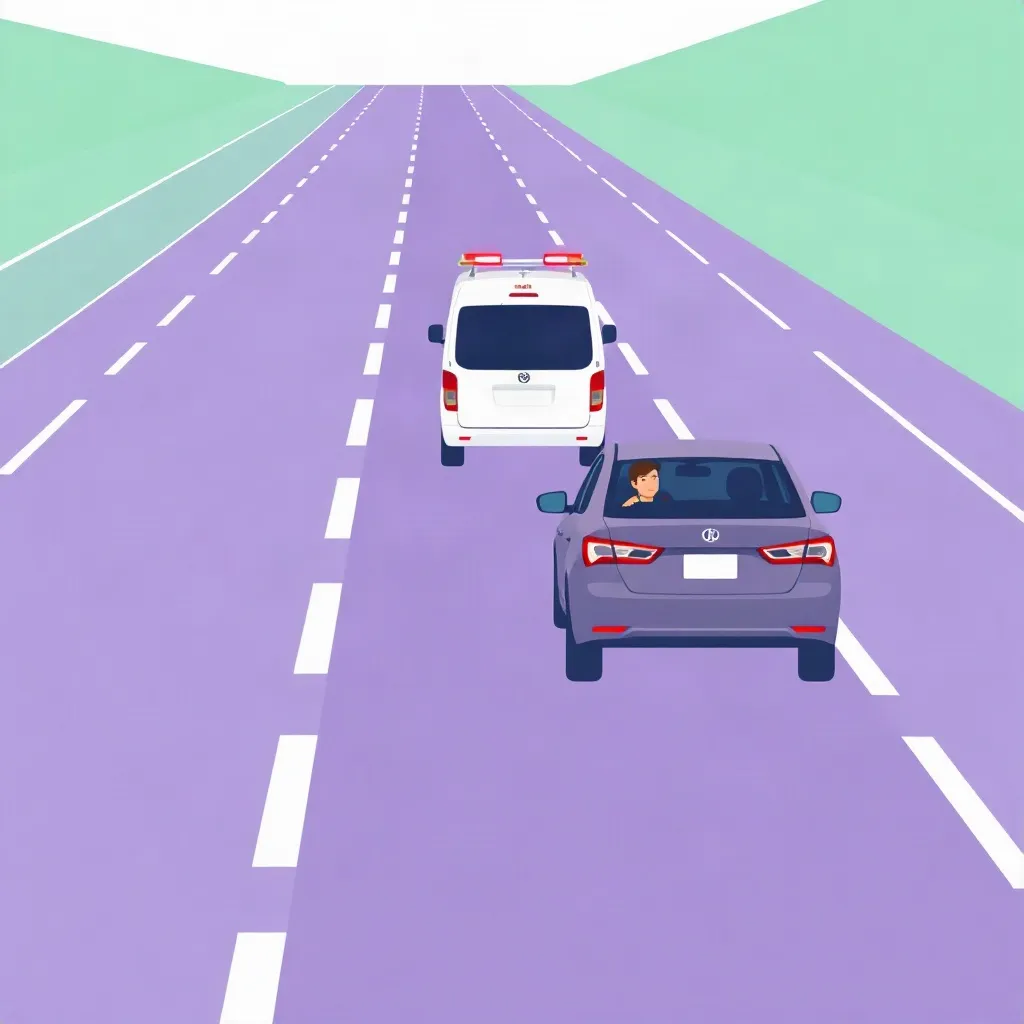
When you detect an emergency vehicle approaching, your reaction must be calm, predictable, and decisive. Panic often leads to sudden braking or erratic lane changes, which can increase the risk of an accident. Follow these steps to ensure you are acting in accordance with Swedish safety conventions:
Interacting with emergency vehicles becomes significantly more difficult in challenging conditions, such as during heavy snowfall or in dense traffic queues. In winter, you must ensure that you do not block the path of snowplows or emergency units by staying as far to the right as possible. In slow-moving traffic, you should always attempt to create a "rescue lane" by pulling toward the edges of the road, even if it means mounting a curb slightly if it is safe to do so.
Never attempt to overtake an emergency vehicle that is actively responding to an incident. Furthermore, avoid following an emergency vehicle closely to navigate through traffic, as this is illegal and highly dangerous.
In the Swedish theory exam, questions often focus on the nuance of "particular caution." You may be asked about the correct behavior when approaching a road work zone where emergency vehicles are active, or how to handle a situation where a police vehicle is using visual signals but no siren. Remember that the absence of a siren does not mean the vehicle is not on an urgent mission. Always respect the space of those working on or near the road, as they are often exposed to high levels of danger.
This article covers the essential legal and practical aspects of interacting with emergency vehicles on Swedish roads. Drivers must understand that emergency vehicles (utryckningsfordon) have special exemptions and that all road users have a legal duty to facilitate their safe passage by exercising 'particular caution.' The practical steps include checking mirrors, signaling early, and creating rescue lanes in traffic. Key exam-relevant points include the fact that absence of a siren does not mean a vehicle is not on an urgent mission, and that following or overtaking active emergency vehicles are serious violations that learners must avoid.
A short set of high-value points that capture the most important ideas from this article.
Emergency vehicles in Sweden (utryckningsfordon) have legal exemptions from standard traffic rules when responding to emergencies with blue lights and/or sirens
Drivers have a legal duty to exercise 'particular caution' (särskild försiktighet) when emergency services are nearby - this is a requirement, not merely a suggestion
When an emergency vehicle approaches, you must check mirrors, signal early, pull over safely, and wait until it has completely passed before rejoining traffic
Creating a 'rescue lane' by pulling to the edges of the road is essential in slow-moving or queued traffic to allow emergency vehicles through
Multiple emergency vehicles may follow one another, so remain observant and patient after the first vehicle passes
Utryckningsfordon refers specifically to police, ambulance, and fire service vehicles with blue flashing lights and/or sirens
The absence of a siren does not mean an emergency vehicle is not on an urgent mission - always respect blue lights
Emergency vehicles may legally bypass speed limits and traffic signals when responding to emergencies
In winter conditions, stay as far right as possible to avoid blocking snowplows (tandemplogar) and emergency units
Never attempt to overtake or closely follow an emergency vehicle that is actively responding to an incident
Panicking and making sudden braking or erratic lane changes when hearing a siren, which increases accident risk
Attempting to overtake an emergency vehicle that is actively responding to an incident
Following an emergency vehicle closely to navigate through traffic, which is illegal and dangerous
Blocking intersections, bus lanes, or pedestrian crossings when trying to yield to emergency vehicles
Returning to traffic flow too quickly before the emergency vehicle has completely passed
Article content overview
A short set of high-value points that capture the most important ideas from this article.
Emergency vehicles in Sweden (utryckningsfordon) have legal exemptions from standard traffic rules when responding to emergencies with blue lights and/or sirens
Drivers have a legal duty to exercise 'particular caution' (särskild försiktighet) when emergency services are nearby - this is a requirement, not merely a suggestion
When an emergency vehicle approaches, you must check mirrors, signal early, pull over safely, and wait until it has completely passed before rejoining traffic
Creating a 'rescue lane' by pulling to the edges of the road is essential in slow-moving or queued traffic to allow emergency vehicles through
Multiple emergency vehicles may follow one another, so remain observant and patient after the first vehicle passes
Utryckningsfordon refers specifically to police, ambulance, and fire service vehicles with blue flashing lights and/or sirens
The absence of a siren does not mean an emergency vehicle is not on an urgent mission - always respect blue lights
Emergency vehicles may legally bypass speed limits and traffic signals when responding to emergencies
In winter conditions, stay as far right as possible to avoid blocking snowplows (tandemplogar) and emergency units
Never attempt to overtake or closely follow an emergency vehicle that is actively responding to an incident
Panicking and making sudden braking or erratic lane changes when hearing a siren, which increases accident risk
Attempting to overtake an emergency vehicle that is actively responding to an incident
Following an emergency vehicle closely to navigate through traffic, which is illegal and dangerous
Blocking intersections, bus lanes, or pedestrian crossings when trying to yield to emergency vehicles
Returning to traffic flow too quickly before the emergency vehicle has completely passed
Explore related topics, search based questions, and concepts that learners often look up when studying Interacting with Emergency Vehicles. These themes reflect real search intent and help you understand how this topic connects to wider driving theory knowledge in Sweden.
Find clear and practical answers to common questions learners often have about Interacting with Emergency Vehicles. This section helps explain difficult points, remove confusion, and reinforce the key driving theory concepts that matter for learners in Sweden.
Yes, you must exercise particular caution and create a clear path for the emergency vehicle to pass safely and efficiently, moving toward the road shoulder if necessary.
Stay calm and pull as far to the side as possible, even if it means driving onto the shoulder, provided it is safe to do so. Ensure you do not block the path of the approaching vehicle.
You should generally avoid overtaking emergency vehicles that are on a call. Be aware that emergency vehicles may perform unexpected maneuvers, and overtaking them can create significant safety risks.
Swedish law emphasizes 'particular caution' when near emergency vehicles. Drivers must prioritize the safety of emergency personnel and ensure the vehicle can proceed without any delay or incident.
Continue your learning journey by exploring more detailed articles and guides. Clarify specific traffic rules, understand complex road signs, or review safe driving practices. Our extensive content library supports your Swedish driving license theory preparation.