
As a driver in Sweden, you must be prepared to adjust your behavior for environmental factors that pose unique risks to pedestrians. This article covers the essential defensive driving principles needed to identify and mitigate hazards associated with ice and snow, ensuring you can contribute to the Vision Zero safety goals. You will learn why pedestrians are at higher risk of falling during winter months and how your awareness can prevent serious accidents in public traffic environments.
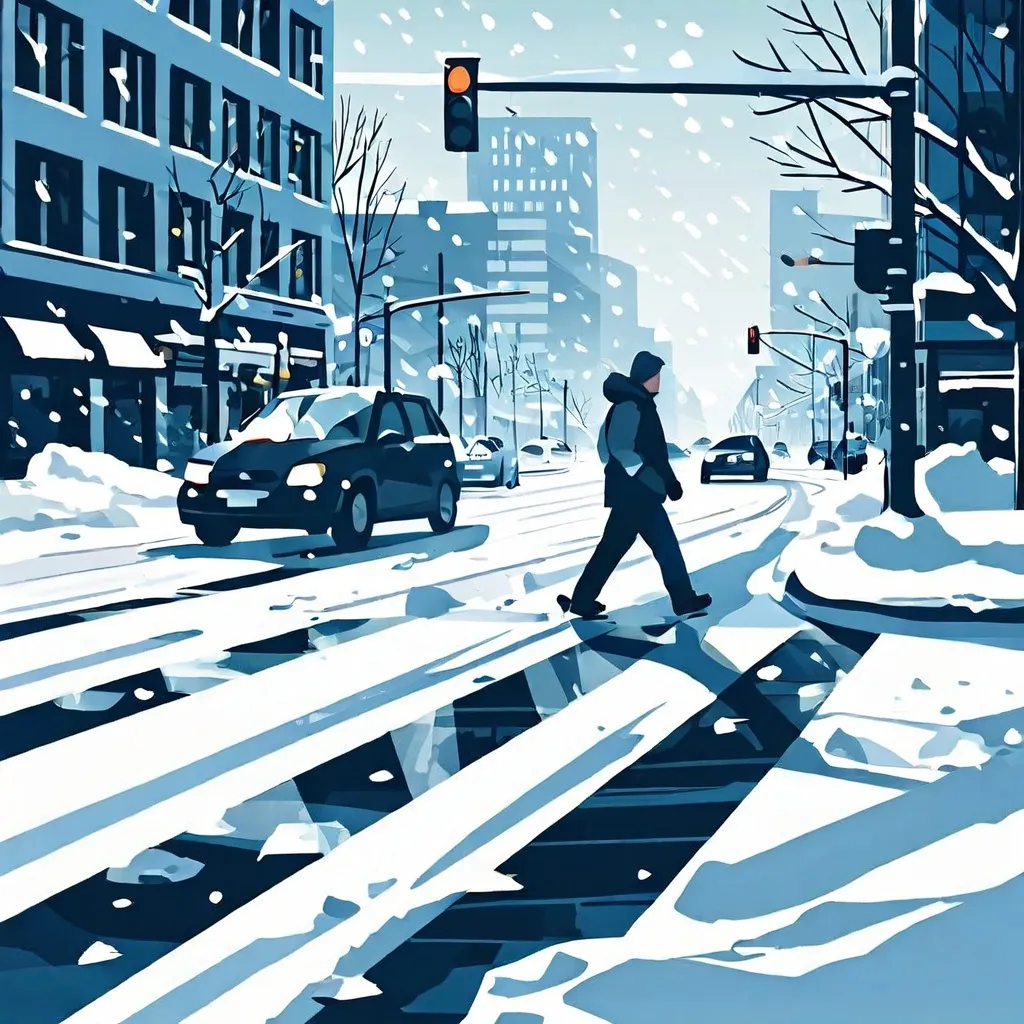
Article content overview
As a learner driver in Sweden, you are entering a driving culture defined by the Vision Zero initiative—the long-term goal that no one should be killed or seriously injured in the Swedish road transport system. During the winter months, when daylight hours are limited and road surfaces are frequently covered in ice or snow, the responsibility to protect vulnerable road users becomes significantly higher. Understanding how environmental factors impact those walking, cycling, or using scooters is not just a safety necessity; it is a core competency required for passing your theory exam.
Official statistics from Transportstyrelsen indicate that fall accidents account for a substantial portion of all injuries within traffic environments. Unlike vehicle-to-vehicle collisions, which are often related to speed and judgment, many pedestrian injuries occur due to slippery surfaces, poor lighting, and reduced friction. As a driver, you must recognize that while you are protected by a steel chassis, a pedestrian’s safety is dependent on their balance and their ability to navigate surfaces that may be treacherous.
A significant number of accidents occur in parking lots and near intersections where drivers expect pedestrians to move with agility. However, when the temperature hovers around the freezing point, even a light dusting of snow or a layer of black ice can turn a simple walk to the store into a high-risk situation. Drivers must anticipate that pedestrians might move slower or more cautiously, and they may be distracted by the need to maintain their own footing, potentially reducing their own awareness of approaching vehicles.
In Sweden, the law places a high burden on the driver to show consideration for vulnerable road users. When you approach a pedestrian crossing—or even a section of road where pedestrians are likely to be present—you must adjust your speed and behavior to account for the road conditions. If the road is slippery, your stopping distance increases exponentially, and your ability to perform an emergency maneuver is severely compromised.
You should never assume that a pedestrian will react or move as quickly as they would on dry summer asphalt. Furthermore, if you are driving in a residential area, near schools, or in city centers, you must be prepared to stop entirely. The theory exam often tests your ability to identify these "hidden" hazards, where the environment itself dictates that you must proceed with extra caution.
Effective hazard perception is about understanding how variables interact. A pedestrian might be walking on the edge of the road because the sidewalk is not cleared of snow. In this scenario, your role as a driver is to provide ample space when passing, as you cannot be certain of the grip level beneath the pedestrian's feet. If you force a pedestrian to move into a snowbank or onto an icy patch to avoid your vehicle, you have failed to exercise the required duty of care.
| Factor | Impact on Pedestrians | Driver's Required Action |
|---|---|---|
| Black Ice | High risk of falling | Reduce speed well in advance |
| Snow banks | Obstructed visibility | Creep forward and signal intent |
| Darkness | Low visibility of walkers | Use lights correctly, scan sides |
| Slush | Unpredictable footing | Increase following distance |
The Swedish approach to road safety emphasizes that infrastructure and environment play a role in accident prevention. However, your individual behavior is the final safeguard. By staying alert to the specific risks associated with winter—such as the increased rate of fall accidents—you contribute to the national effort to reduce serious injuries. Always remember that for a pedestrian, a slip is a personal emergency, but for you as a driver, it is a potential tragedy that must be prevented through proactive observation.
This article explains why winter conditions in Sweden significantly increase risks for pedestrians and the corresponding duties of drivers. Key hazards include black ice, snow banks, reduced visibility, and slush, all of which increase stopping distances and compromise pedestrian stability. Drivers must practice defensive driving by anticipating slower pedestrian movement, providing ample space when passing, and reducing speed well in advance of potential hazards. The content directly supports the hazard perception component of the Swedish theory exam and reinforces the Vision Zero principle that drivers carry primary responsibility for protecting vulnerable road users.
A short set of high-value points that capture the most important ideas from this article.
Vision Zero is Sweden's goal to eliminate traffic fatalities, and drivers bear primary responsibility for protecting vulnerable road users in winter.
Pedestrians face significantly higher fall risks on icy or snow-covered surfaces, which can cause them to move unpredictably or slip into traffic.
Slippery road conditions dramatically increase stopping distances and reduce your ability to perform emergency maneuvers.
Drivers must anticipate that pedestrians may move slower or be distracted by maintaining their footing during winter conditions.
Environmental factors like unplowed sidewalks force pedestrians closer to traffic, requiring drivers to provide extra space and proceed with heightened caution.
Black ice is nearly invisible but creates high fall risk near intersections and bridges—always reduce speed in advance when temperatures hover around freezing.
Your stopping distance increases exponentially on slippery surfaces, so maintain greater following distances and lower speeds.
In residential areas, near schools, and in city centers, be prepared to stop entirely when pedestrians are present.
Even if the road looks clear, patches of ice can cause pedestrians to slip unexpectedly into your path of traffic.
Drivers have a legal duty to show consideration for vulnerable road users and must adjust speed based on road conditions, not just visibility.
Assuming pedestrians will react or move as quickly in winter as they do on dry summer asphalt.
Underestimating the danger of black ice on bridges and at intersections where it forms first.
Failing to account for increased stopping distance when road surfaces are slippery.
Not scanning sides and edges where pedestrians may be walking due to unplowed sidewalks.
Assuming a clear-looking road means safe conditions—patches of ice can be nearly invisible.
Article content overview
A short set of high-value points that capture the most important ideas from this article.
Vision Zero is Sweden's goal to eliminate traffic fatalities, and drivers bear primary responsibility for protecting vulnerable road users in winter.
Pedestrians face significantly higher fall risks on icy or snow-covered surfaces, which can cause them to move unpredictably or slip into traffic.
Slippery road conditions dramatically increase stopping distances and reduce your ability to perform emergency maneuvers.
Drivers must anticipate that pedestrians may move slower or be distracted by maintaining their footing during winter conditions.
Environmental factors like unplowed sidewalks force pedestrians closer to traffic, requiring drivers to provide extra space and proceed with heightened caution.
Black ice is nearly invisible but creates high fall risk near intersections and bridges—always reduce speed in advance when temperatures hover around freezing.
Your stopping distance increases exponentially on slippery surfaces, so maintain greater following distances and lower speeds.
In residential areas, near schools, and in city centers, be prepared to stop entirely when pedestrians are present.
Even if the road looks clear, patches of ice can cause pedestrians to slip unexpectedly into your path of traffic.
Drivers have a legal duty to show consideration for vulnerable road users and must adjust speed based on road conditions, not just visibility.
Assuming pedestrians will react or move as quickly in winter as they do on dry summer asphalt.
Underestimating the danger of black ice on bridges and at intersections where it forms first.
Failing to account for increased stopping distance when road surfaces are slippery.
Not scanning sides and edges where pedestrians may be walking due to unplowed sidewalks.
Assuming a clear-looking road means safe conditions—patches of ice can be nearly invisible.
Explore related topics, search based questions, and concepts that learners often look up when studying Winter Pedestrian Safety Rules. These themes reflect real search intent and help you understand how this topic connects to wider driving theory knowledge in Sweden.
Find clear and practical answers to common questions learners often have about Winter Pedestrian Safety Rules. This section helps explain difficult points, remove confusion, and reinforce the key driving theory concepts that matter for learners in Sweden.
Statistics show that a significant portion of traffic-related injuries in Sweden occur as pedestrian fall accidents, particularly during winter months when ice and snow create hazardous surfaces on paths and in parking lots.
Drivers must practice defensive driving, which includes anticipating that pedestrians may be unstable on slippery surfaces and maintaining extra distance, especially near crossings and parking areas.
Yes, understanding how weather conditions like ice, snow, and darkness affect all road users, including vulnerable ones, is a fundamental competency tested in the Swedish driving licence theory exam.
Continue your learning journey by exploring more detailed articles and guides. Clarify specific traffic rules, understand complex road signs, or review safe driving practices. Our extensive content library supports your Swedish driving license theory preparation.