
This unit focuses on the crucial physics and techniques behind safe speed management, effective braking, and maintaining control of your moped. Understanding these principles is vital for both passing your Swiss Category M theory exam and ensuring your safety on the road, especially when navigating various traffic conditions.
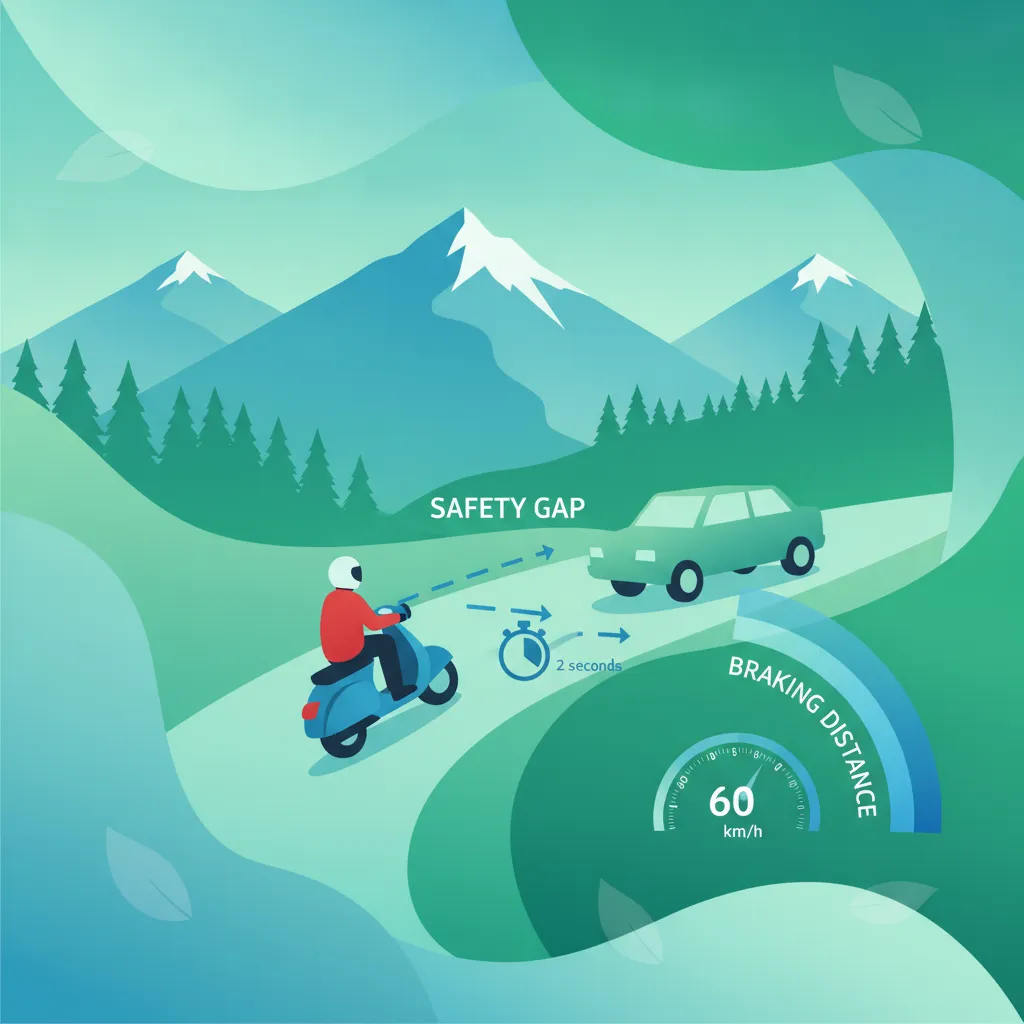
Browse all lessons that make up Speed, Braking, Following Distance, and Vehicle Control. Each lesson focuses on specific topics, learning objectives, and core concepts, helping you build essential knowledge and follow a clear, structured progression toward your study goals in Switzerland.
This lesson details the maximum legal speed limits applicable to Category M vehicles in Switzerland. It explains how to identify speed limits through signage and differentiates between built-up areas, rural roads, and motorways where permitted. The content stresses that the legal limit is a maximum, and riders must always adapt their speed to traffic, weather, and road conditions.
This lesson explains the principles of effective braking for small vehicles. It covers the roles of the front and rear brakes, the importance of tyre pressure and tread for maintaining grip, and how different road surfaces affect traction. Learners will understand how to apply brakes smoothly and progressively to stop safely without skidding.
This lesson teaches riders how to establish and maintain a safe following distance from the vehicle ahead. It introduces the 'two-second rule' as a simple and effective method for gauging a safe gap in ideal conditions. The content also explains why this distance must be increased in wet weather, at night, or when visibility is poor.
This lesson breaks down the technique for safely navigating corners. It explains the importance of adjusting speed before entering a turn, choosing the correct line through the corner, and using body positioning to maintain balance. The principles of leaning the vehicle and looking through the turn are key components for maintaining stability and control.
Explore high-intent keywords and long-tail search topics learners use when researching Speed, Braking, Following Distance, and Vehicle Control. These terms reflect how people search for reliable study materials, structured explanations, and unit-level theory preparation support in Switzerland.
Find clear answers to the most common questions learners ask about Speed, Braking, Following Distance, and Vehicle Control. Understand how the unit is organized, what learning goals it supports, and how it contributes to your study progression with structured explanations and practical guidance tailored for learners in Switzerland.
In Switzerland, mopeds are generally restricted to a maximum speed of 45 km/h. Specific speed limits will vary depending on the zone (e.g., 30 km/h in Tempo-30 zones, built-up areas, and rural roads). Always pay attention to posted signs and road markings. This unit covers these distinctions.
The two-second rule is a simple method to gauge a safe following distance. When the vehicle ahead passes a fixed point (like a signpost), start counting 'one-thousand-one, one-thousand-two'. If you reach the same point before finishing the count, you are too close. This allows adequate time to react and brake safely, especially on a moped which may have different braking characteristics than cars.
Effective braking involves using both the front and rear brakes simultaneously and progressively. Avoid sudden, harsh braking, especially on the front wheel, as this can lead to skidding. If your moped has ABS, it will assist greatly. This unit explains the dynamics of grip and how tyre condition affects braking efficiency.
Proper cornering technique is crucial for maintaining balance and control. It involves looking through the turn, adjusting your speed before entering the corner, and leaning the moped appropriately. Incorrect technique can lead to instability or a loss of traction, increasing the risk of an accident. This unit will guide you on safe turning speeds and balance.
Yes, while the principles of reaction time and braking distance apply to all vehicles, the actual stopping distance can differ significantly. Mopeds typically have lighter weight and smaller braking systems than cars, which can affect their braking performance. Factors like tyre quality, road surface, and rider skill also play a major role. Understanding these nuances is key for the theory exam.
All included lessons
Lessons in Speed, Braking, Following Distance, and Vehicle Control
See who benefits most from studying Speed, Braking, Following Distance, and Vehicle Control. This overview explains how the unit supports different learning needs, what level of knowledge is helpful before starting, and how it fits into the overall study path in Switzerland.
This unit is designed for all learner moped (Category M/AM) riders preparing for their Swiss theory test. It's particularly beneficial for those who need a clear understanding of the physics involved in riding, including how speed, braking, and distance directly impact safety and exam success.

Begin your structured preparation for the official Swiss driving licence theory test today. Browse our comprehensive curriculum, choose your ideal course, and start mastering essential traffic laws, road signs, and practical driving knowledge with confidence.
Browse Swiss Theory CoursesExplore all units and lessons included in this driving theory course.
Begin your structured preparation for the official Swiss driving licence theory test today. Browse our comprehensive curriculum, choose your ideal course, and start mastering essential traffic laws, road signs, and practical driving knowledge with confidence.
Browse Swiss Theory Courses