
This lesson covers the specific maximum legal speed limits for Category M vehicles in Switzerland. By learning these rules, you will gain the knowledge needed to recognize road signs correctly and adapt your driving behavior to ensure safety on all road types.
Lesson content overview
Navigating the roads safely and legally requires a comprehensive understanding of speed limits, especially for riders of Category M vehicles in Switzerland. This lesson provides detailed insights into the maximum legal speeds applicable to mopeds, e-bikes, and other low-powered motorcycles, explaining how these limits are identified and how they vary across different environments. Compliance with these regulations is not only a legal obligation but a cornerstone of road safety for all users.
Speed limits are fundamental to maintaining order and safety on public roads. They are not arbitrary figures but are carefully determined based on road design, traffic density, and the presence of vulnerable road users. For Category M vehicle riders, adhering to these limits is crucial for several reasons: it reduces stopping distances, allows more time for reaction to hazards, lessens the severity of potential accidents, and ensures compliance with Swiss traffic laws. Ignoring speed limits can lead to severe legal consequences, including fines, penalty points, and even license suspension.
In Switzerland, Category M refers to a class of small motorized vehicles, primarily encompassing mopeds (often referred to as Töffli locally), electric bicycles (e-bikes) with motor assistance up to 45 km/h, and light motor vehicles with a maximum engine power of 0.5 kW and a design speed of up to 45 km/h. These vehicles are distinct from larger motorcycles (Category A or A1) and generally have lower maximum speed capabilities and specific regulations tailored to their design and use. Understanding your vehicle's classification is the first step in knowing which speed limits apply to you.
Built-up areas, often called urban zones or localities, are characterized by a denser concentration of buildings, houses, and businesses, accompanied by a higher volume of pedestrian and cyclist traffic. These environments necessitate lower speed limits to enhance safety for all road users.
You enter a built-up area in Switzerland when you pass a rectangular white sign with black text indicating the name of the locality. Similarly, a corresponding sign with a red diagonal stripe indicates exiting a built-up area. Unless otherwise indicated by specific signage, the default maximum speed limit for Category M vehicles within these areas is 50 km/h. However, it is vital to be aware that many parts of built-up areas, especially residential streets and city centers, are designated with even lower limits.
Within built-up areas, you will frequently encounter zones with reduced speed limits, such as 30 km/h zones (often marked as "Zone 30") or even 20 km/h zones (especially near schools or in particularly sensitive residential areas). These signs explicitly override the general 50 km/h limit. Furthermore, in the immediate vicinity of pedestrian zones or shared spaces, Category M vehicles must adapt their speed to a crawl, often implying a maximum of 30 km/h or less, prioritizing the safety of pedestrians. Always look out for specific speed limit signs that apply to your vehicle class.
Lower speeds in built-up areas significantly reduce the risk and severity of accidents involving pedestrians, cyclists, and other vehicles. They provide drivers with more time to react to sudden movements, such as a child running into the street or a car unexpectedly pulling out of a parking space. For Category M vehicles, which are more vulnerable in collisions, maintaining lower speeds in urban environments is a critical self-preservation strategy.
Rural roads connect built-up areas and are generally characterized by lower traffic density and fewer pedestrian crossings compared to urban environments. These roads typically allow for higher speeds, but riders must always remain vigilant for changing conditions.
Outside built-up areas, unless specifically indicated by signage, the default maximum speed limit for Category M vehicles on Swiss rural roads is 80 km/h. This limit applies to main roads, secondary routes, and local rural roads that are not classified as motorways or expressways. It is important to note that this is a maximum limit, and conditions may often warrant traveling at a lower speed.
While 80 km/h is the default, speed limits on rural roads can be lowered due to various factors. You might encounter signs indicating reduced speeds (e.g., 60 km/h or 40 km/h) on:
Always be attentive to road signs, as they take precedence over default speed limits.
Even when no explicit speed reduction signs are present, Category M riders must constantly adapt their speed to the prevailing conditions. Rural roads can present unique challenges, such as unexpected wildlife, agricultural vehicles, or gravel and debris on the road surface. Good judgment and situational awareness are paramount to ensure safety when traveling at higher speeds.
Swiss motorways (Autobahnen) and expressways (Autostrasen) are designed for high-speed, long-distance travel and have specific entry and exit controls. They generally impose strict regulations on vehicle types allowed.
A crucial rule for Category M vehicles in Switzerland is their general prohibition from using motorways and expressways. These roads are typically reserved for vehicles capable of maintaining higher minimum speeds and designed for such conditions. The danger for slower, smaller vehicles on high-speed routes is significant due to the large speed differential with other traffic. Entering a motorway on a moped where it is not permitted is a serious traffic offense.
While generally prohibited, there are very rare and specific instances where short sections of motorways or access roads to motorways might explicitly permit Category M vehicles. In such cases, there will be clear signage indicating this permission, often with a specific speed limit for mopeds (e.g., 80 km/h). These exceptions are rare, so always assume prohibition unless a sign explicitly states otherwise. If you encounter such a sign, you must strictly adhere to the indicated speed limit and ensure your vehicle is capable of safely merging and traveling at that speed.
Never assume you can use a motorway on a Category M vehicle without explicit, dedicated signage allowing it. Always verify local regulations.
The restriction of Category M vehicles from motorways is based on safety. Mopeds and e-bikes, by their design, are generally slower, less visible, and offer less protection in a collision compared to cars or heavy goods vehicles. High-speed differences significantly increase the risk of serious accidents. Maintaining this prohibition protects Category M riders from dangerous situations on high-speed roads.
Understanding and correctly interpreting road signs is paramount for safe and legal riding. Speed limit signs are straightforward, but specific variations apply to Category M vehicles.
The most common speed limit sign is a circular sign with a red border and a black number in the center, indicating the maximum speed in kilometers per hour (km/h). These signs apply to all vehicles unless a sub-panel specifies otherwise. When you see such a sign, you must not exceed the indicated speed.
Occasionally, you might encounter speed limit signs that are accompanied by a sub-panel (an additional rectangular sign below the main sign) featuring a pictogram of a moped or indicating "Category M". This signifies that the displayed speed limit applies specifically to Category M vehicles, and it might be different from the general speed limit for other vehicle classes. Always pay close attention to such specific instructions. If no such sub-panel is present, the standard circular speed limit applies to all vehicles, including Category M.
It is crucial to remember that posted speed limit signs always override the default speed limits. For example, if you are on a rural road where the default limit for Category M is 80 km/h, but you encounter a sign indicating 60 km/h, you must reduce your speed to 60 km/h. Conversely, if you are in a built-up area with a general 50 km/h limit, but a "Zone 30" sign is posted, you must adhere to 30 km/h. These signs are legal instructions that must be followed without exception.
While speed limits provide the maximum permissible speed under optimal conditions, the law mandates that riders must always adapt their speed to the prevailing circumstances. This is known as conditional speed reduction.
The posted speed limit is safe only under ideal conditions. You must reduce your speed significantly when:
Even if you are below the posted limit, driving too fast for the conditions can be considered a violation and can lead to accidents.
A good rule of thumb: If you cannot see clearly, or if the road feels slippery, reduce your speed until you feel completely safe and in control.
Your speed should also be adapted to the amount of traffic and the presence of vulnerable road users:
Adding a passenger or carrying cargo on your Category M vehicle will alter its dynamics. The increased weight affects acceleration, braking performance, and overall stability. When carrying a passenger or heavy luggage:
Always consider your vehicle's capabilities under load and adjust your speed accordingly to maintain control and safety.
Violating speed limits in Switzerland carries serious legal consequences, which escalate with the degree of the offense. Ignorance of the law is not an excuse.
Penalties for speeding generally involve:
Beyond legal penalties, speeding dramatically increases your risk of being involved in an accident. If you are found to be speeding and cause an accident, you will likely be held liable, leading to:
The best way to avoid these severe consequences is consistent compliance with all speed limits and a proactive approach to conditional speed reduction. Always monitor your speed, observe road signs, and adapt to the prevailing conditions to ensure your safety and the safety of others.
Understanding the "why" behind speed limits helps reinforce their importance. The rules are not arbitrary but are based on fundamental principles of physics and human psychology.
The kinetic energy of a moving vehicle increases with the square of its speed (E = ½mv²). This means that doubling your speed quadruples your kinetic energy. Higher kinetic energy requires significantly more force and distance to bring a vehicle to a stop. For example, if you double your speed from 40 km/h to 80 km/h, your stopping distance (including reaction time and actual braking distance) will more than quadruple. This exponential relationship is why even small increases in speed above the limit can have dramatic consequences for stopping distances, especially for Category M vehicles with potentially less powerful braking systems.
At higher speeds, the amount of time you have to perceive a hazard, process the information, and react to it (e.g., apply brakes, swerve) is drastically reduced. Your field of vision narrows, making it harder to spot potential dangers at the periphery. By adhering to speed limits, especially lower ones in complex environments, you grant yourself crucial extra seconds to react safely, which can be the difference between avoiding an accident and being involved in one.
The time it takes for a driver to perceive a hazard, identify it, decide on a course of action, and initiate that action. This time increases significantly at higher speeds.
When accidents do occur, the speed at impact is a critical factor in determining the severity of injuries and damage. As kinetic energy increases with speed, so does the force of impact. Even a relatively minor collision at 50 km/h can result in serious injuries, while the same collision at 30 km/h would likely cause much less severe harm. This principle is particularly relevant for vulnerable Category M riders, who have minimal physical protection in a crash. Lower speeds directly translate to a higher chance of survival and reduced injury severity for everyone involved.
This lesson covers the maximum legal speed limits for Category M mopeds in Switzerland across different environments: 50 km/h is the default in built-up areas (with common 30 km/h zone reductions), while 80 km/h applies on rural roads unless otherwise signed. Motorway access is generally prohibited for mopeds due to dangerous speed differentials. The lesson emphasizes that posted limits are maximums under ideal conditions, and Swiss law requires riders to continuously adapt speed to weather, visibility, traffic density, and road surface conditions. Understanding kinetic energy and stopping distances reinforces why these limits exist and why conditional speed reduction is critical for safety.
A short set of high-value points that capture the most important learning from this lesson.
Category M mopeds are limited to 50 km/h in built-up areas by default, but lower limits like 30 km/h or 20 km/h frequently apply in specific zones
Outside built-up areas, the default maximum speed for Category M vehicles is 80 km/h on rural roads unless otherwise signed
Motorways (Autobahnen) are generally off-limits to Category M vehicles due to dangerous speed differentials with faster traffic
Posted speed limit signs always override default limits, whether raising or lowering the applicable maximum
Legal speed limits represent maximums under ideal conditions; riders must actively reduce speed for weather, visibility, traffic, and road surface conditions
Explore all units and lessons included in this driving theory course.
Built-up areas start at the rectangular white locality sign and default to 50 km/h for Category M vehicles
The 80 km/h rural default applies only on roads that are not motorways or expressways and lack specific speed signage
Unless dedicated sub-panel signage explicitly permits it, never assume motorway access is allowed for a moped
Stopping distance increases with the square of speed, making higher speeds dramatically more dangerous
Even when below the posted limit, driving too fast for current conditions can constitute a traffic violation
Confusing the default speed limit with posted limits—always follow whichever sign is most restrictive
Assuming that all Swiss motorways are accessible to mopeds; they are generally prohibited unless specific signage states otherwise
Failing to reduce speed proactively for weather conditions like rain, ice, or fog when below the posted limit
Not adjusting speed for passengers or cargo, which increases stopping distance and reduces vehicle stability
Treating the posted speed limit as a target rather than a maximum that requires conditional adjustment
Lesson content overview
A short set of high-value points that capture the most important learning from this lesson.
Category M mopeds are limited to 50 km/h in built-up areas by default, but lower limits like 30 km/h or 20 km/h frequently apply in specific zones
Outside built-up areas, the default maximum speed for Category M vehicles is 80 km/h on rural roads unless otherwise signed
Motorways (Autobahnen) are generally off-limits to Category M vehicles due to dangerous speed differentials with faster traffic
Posted speed limit signs always override default limits, whether raising or lowering the applicable maximum
Legal speed limits represent maximums under ideal conditions; riders must actively reduce speed for weather, visibility, traffic, and road surface conditions
Explore all units and lessons included in this driving theory course.
Built-up areas start at the rectangular white locality sign and default to 50 km/h for Category M vehicles
The 80 km/h rural default applies only on roads that are not motorways or expressways and lack specific speed signage
Unless dedicated sub-panel signage explicitly permits it, never assume motorway access is allowed for a moped
Stopping distance increases with the square of speed, making higher speeds dramatically more dangerous
Even when below the posted limit, driving too fast for current conditions can constitute a traffic violation
Confusing the default speed limit with posted limits—always follow whichever sign is most restrictive
Assuming that all Swiss motorways are accessible to mopeds; they are generally prohibited unless specific signage states otherwise
Failing to reduce speed proactively for weather conditions like rain, ice, or fog when below the posted limit
Not adjusting speed for passengers or cargo, which increases stopping distance and reduces vehicle stability
Treating the posted speed limit as a target rather than a maximum that requires conditional adjustment
Explore search topics learners often look for when studying Speed Limits for Small Vehicles in Different Environments. These topics reflect common questions about road rules, driving situations, safety guidance, and lesson level theory preparation for learners in Switzerland.
Browse additional driving theory lessons that cover connected traffic rules, road signs, and common driving situations related to this topic. Improve your understanding of how different rules interact across everyday traffic scenarios.
Understand the fundamental differences in speed limits for mopeds and small vehicles (Category M) between Swiss built-up areas (urban zones) and rural roads. Learn how to identify applicable limits and the reasons behind them for safer driving.
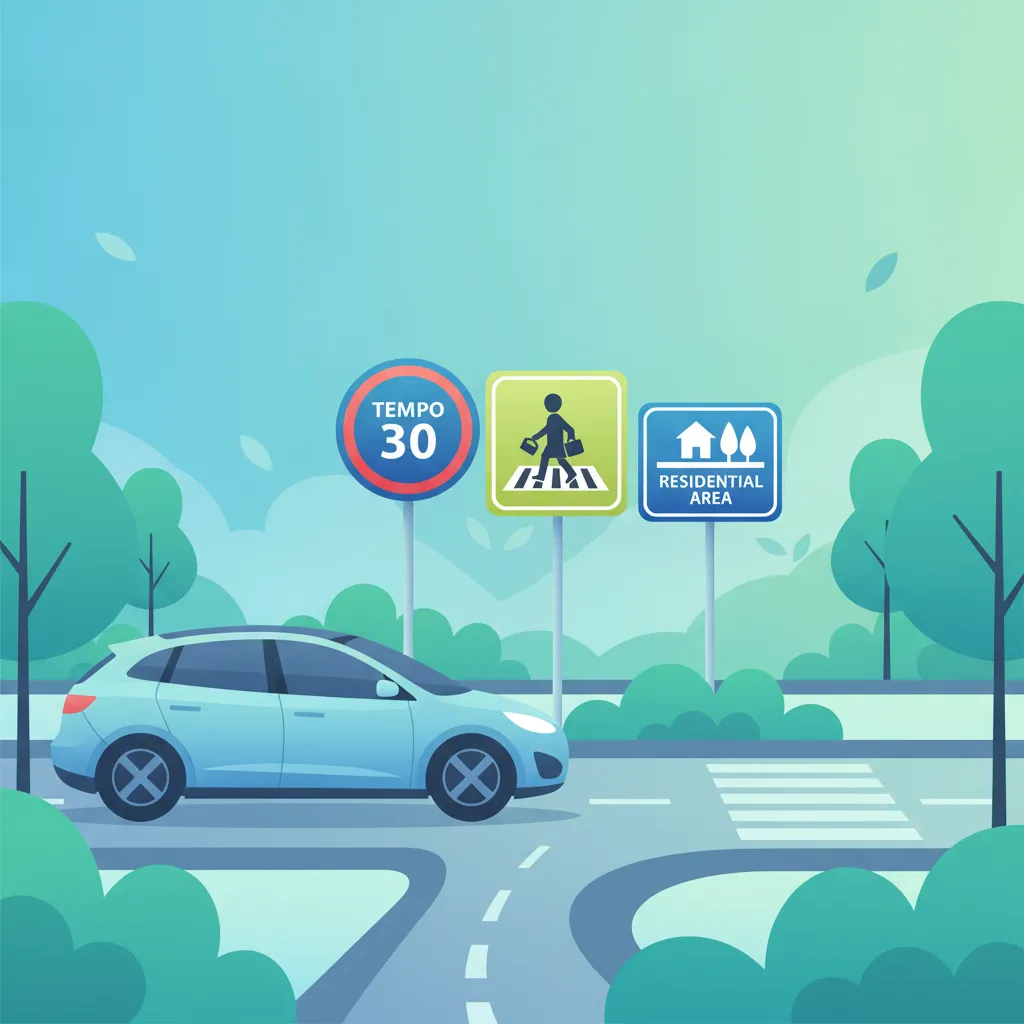
This lesson covers areas with special traffic regulations designed to protect vulnerable road users. Learners will understand the rules and reduced speed limits applicable in Tempo-30 zones, residential areas, and around schools. The content emphasizes the need for heightened awareness and a defensive riding style in these designated zones.
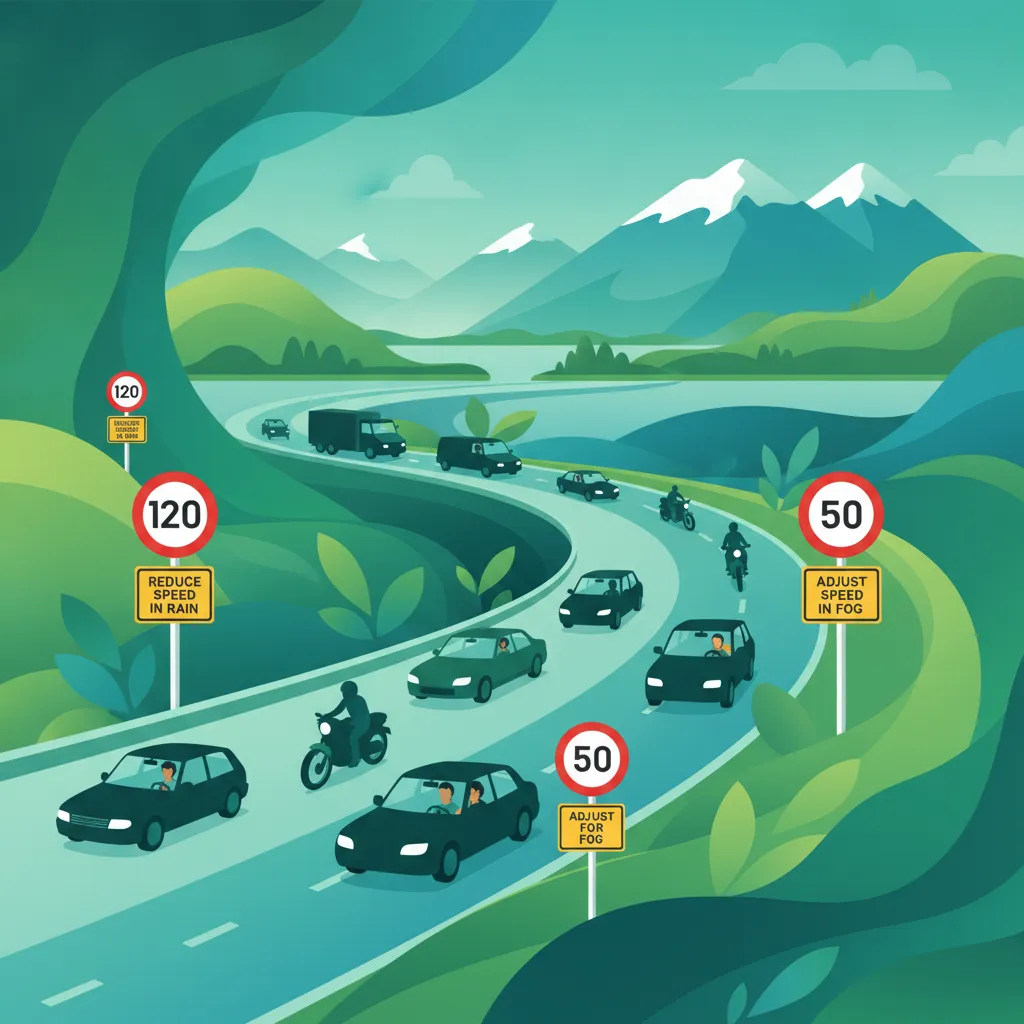
This lesson details the different speed limits applicable in urban, rural, and motorway environments across Switzerland. It explains speed limit signs, temporary restrictions, and how to adapt speed safely based on visibility and road conditions. Understanding these principles helps you comply with legal limits while ensuring an appropriate speed for the circumstances.
Motorway driving requires constant concentration due to high speeds. This lesson emphasizes the importance of staying in the right-hand lane unless overtaking and the specific restrictions on lorry overtaking in Switzerland. It reinforces the need for a following distance of at least four seconds to compensate for the vehicle's long stopping distance and provides guidance on safely merging and exiting.
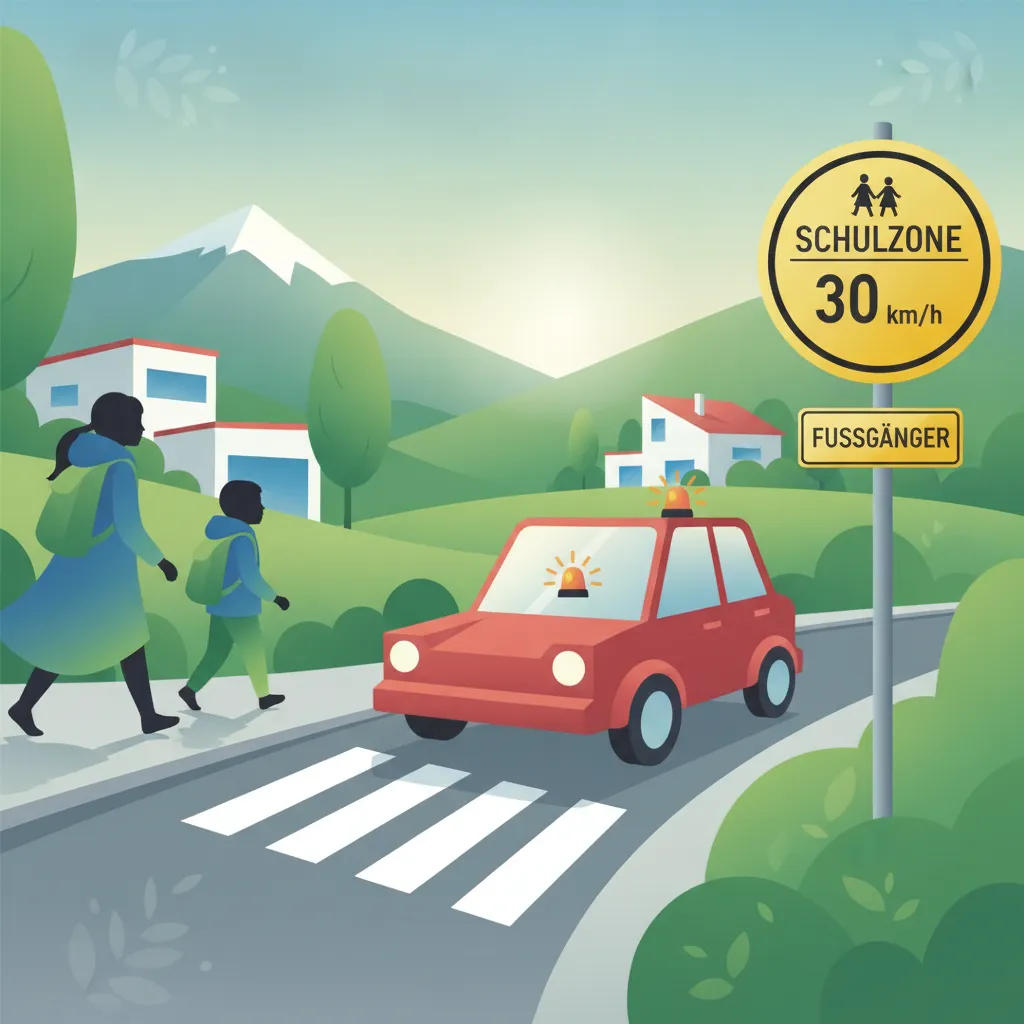
This lesson focuses on school zones, where special speed limits and cautionary measures are required. You will learn to recognize school zone signs, understand reduced speed limits, and be aware of designated child crossing zones. The content also emphasizes the need for heightened vigilance when school buses stop for students to ensure child safety.
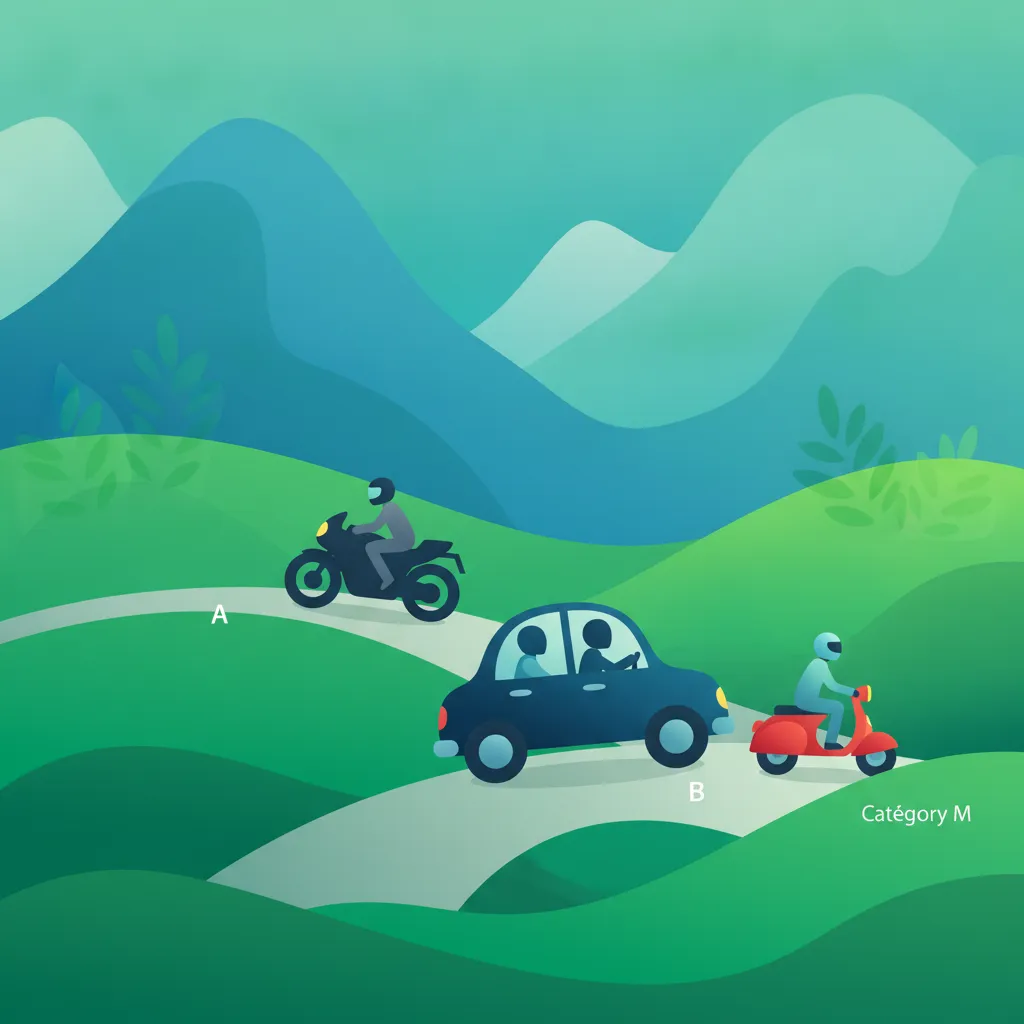
This lesson defines the scope of Switzerland's Category M license by comparing it to other vehicle categories. It details the specific criteria for vehicles, such as maximum speed and engine power, that fall under this classification. Understanding these distinctions is crucial for knowing your legal entitlements and limitations as a Category M license holder.
Motorway driving involves high speeds and requires constant concentration. This lesson covers correct lane discipline, safe procedures for joining and leaving the motorway, and techniques for overtaking other large vehicles. Maintaining appropriate speed and a safe following distance is emphasized throughout.
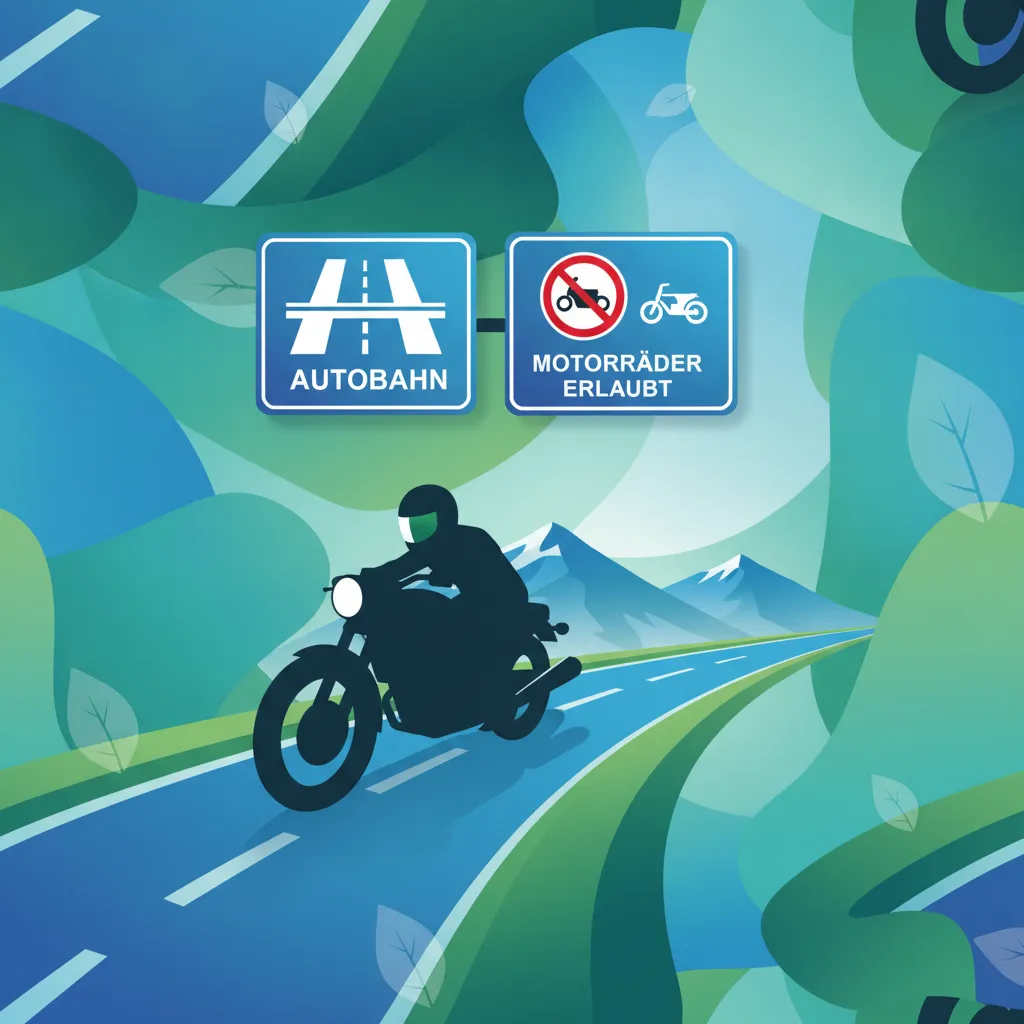
This lesson outlines the specific rules and skills required for riding on high-speed Swiss motorways. It covers the correct procedures for entering and exiting, merging with traffic, maintaining appropriate speed, and conducting safe overtaking maneuvers. Emphasis is placed on using mirrors and signals effectively to integrate safely into the flow of traffic.

This lesson focuses on general driving safety in areas with a high concentration of children. It stresses the importance of significantly reducing speed, being prepared for unexpected events, and scanning for children between parked cars. The driver must exhibit maximum vigilance in these high-risk environments at all times.
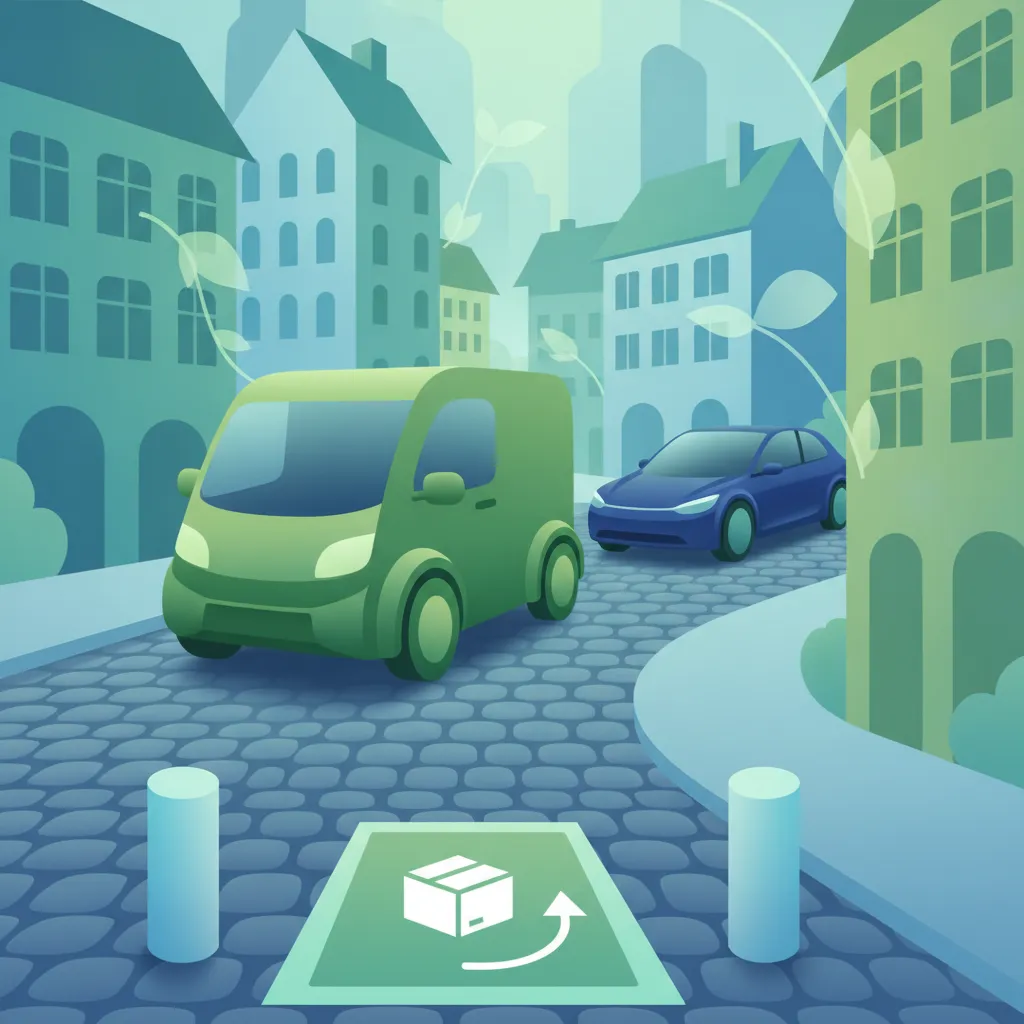
Urban driving requires heightened awareness and careful planning. This lesson covers the challenges of narrow streets, heavy traffic, and the need to identify designated loading and unloading zones. It emphasizes the importance of planning routes in advance to account for time-based access restrictions and to avoid unsuitable roads.
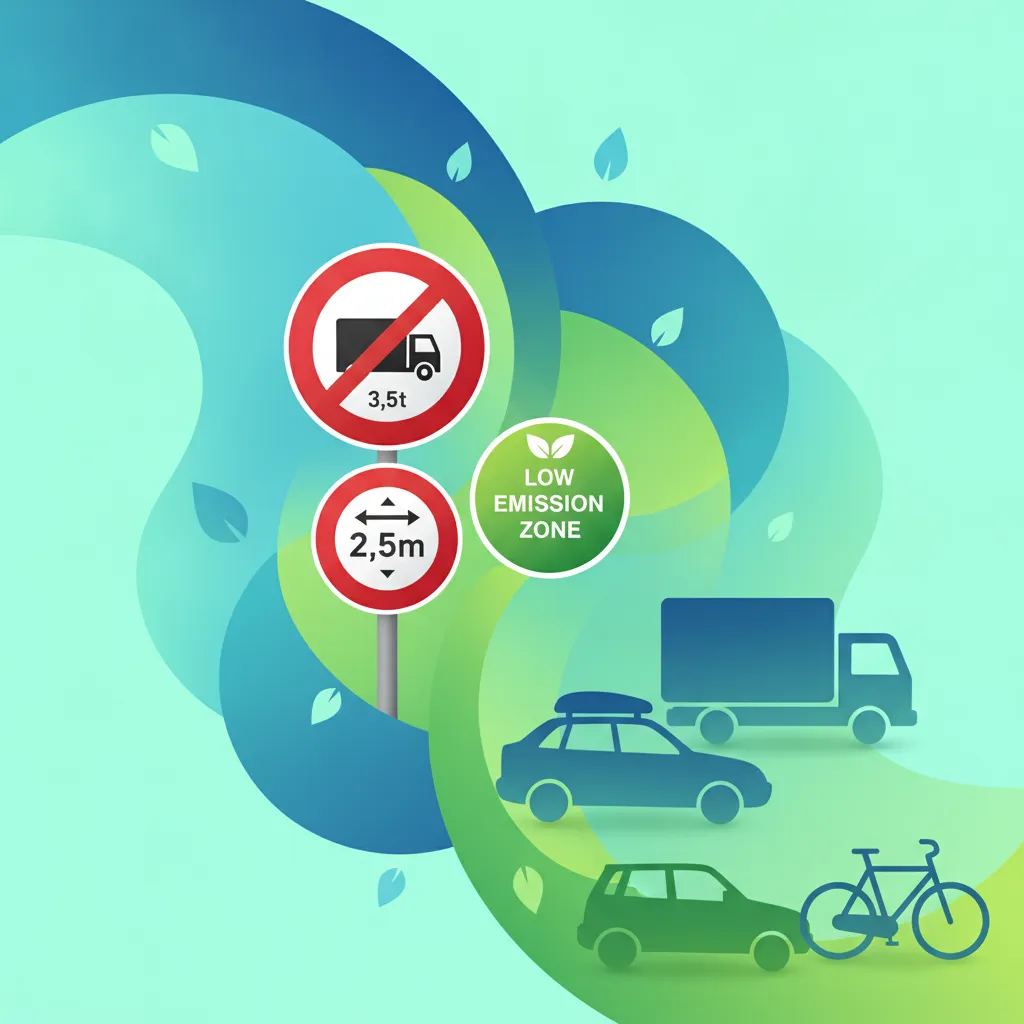
Many urban areas have restrictions to manage traffic and protect infrastructure. This lesson teaches drivers to identify and interpret traffic signs that prohibit access based on gross vehicle weight, axle load, height, or width. It also covers the growing prevalence of environmental or low-emission zones, which may restrict entry for older, more polluting vehicles.
Learn why simply adhering to the maximum speed limit isn't always safe. This lesson covers how to adjust your speed based on weather, visibility, traffic density, and road conditions for Category M vehicles in Switzerland.
This lesson examines the impact of weather and visibility on driving safety and speed selection. It covers how fog, rain, snow, and darkness affect visibility and reaction times, providing guidelines on adjusting speed. It also includes strategies for improving visibility, such as proper headlamp use, to ensure you can adapt to varying weather conditions.
This lesson details the different speed limits applicable in urban, rural, and motorway environments across Switzerland. It explains speed limit signs, temporary restrictions, and how to adapt speed safely based on visibility and road conditions. Understanding these principles helps you comply with legal limits while ensuring an appropriate speed for the circumstances.
This lesson covers areas with special traffic regulations designed to protect vulnerable road users. Learners will understand the rules and reduced speed limits applicable in Tempo-30 zones, residential areas, and around schools. The content emphasizes the need for heightened awareness and a defensive riding style in these designated zones.

This lesson examines the impact of various weather conditions on driving safety. It explains how to adjust speed in low visibility and the risks of aquaplaning in heavy rain. The content also covers using snow chains in snowy conditions, handling icy surfaces, and dealing with strong winds, particularly on bridges and open roads.
The legal speed limit is a maximum, not a target. This lesson teaches the professional driver's approach to speed management, which involves constantly assessing traffic, road, and weather conditions. You will learn to adjust your speed to ensure you can always stop safely within the distance you can see to be clear.

This lesson provides essential strategies for riding in adverse weather like rain and fog. It explains how to increase following distances, reduce speed, and use lights effectively to enhance visibility. The content also addresses the loss of traction on wet roads and the importance of smooth control inputs for braking, accelerating, and steering.
Weather has a profound impact on vehicle handling and visibility. This lesson teaches you how to reduce speed, increase following distances, and use controls smoothly to maintain traction in poor conditions. It also covers the legal requirements and practical application of snow chains in winter.
This lesson focuses on school zones, where special speed limits and cautionary measures are required. You will learn to recognize school zone signs, understand reduced speed limits, and be aware of designated child crossing zones. The content also emphasizes the need for heightened vigilance when school buses stop for students to ensure child safety.
This lesson focuses on general driving safety in areas with a high concentration of children. It stresses the importance of significantly reducing speed, being prepared for unexpected events, and scanning for children between parked cars. The driver must exhibit maximum vigilance in these high-risk environments at all times.

Wet or icy roads drastically reduce tyre grip and can double or triple braking distances. This lesson stresses the importance of significantly reducing overall speed and increasing following distances in such conditions. It advises on using brakes with extreme care to avoid skidding and explains how the vehicle's retarder should be used with caution as it can cause the drive wheels to lock up on slippery surfaces.
Find clear answers to common questions learners have about Speed Limits for Small Vehicles in Different Environments. Learn how the lesson is structured, which driving theory objectives it supports, and how it fits into the overall learning path of units and curriculum progression in Switzerland. These explanations help you understand key concepts, lesson flow, and exam focused study goals.
Category M vehicles have specific speed limitations based on their construction. While they must adhere to general road signs, their maximum speed is often capped by their class. Always check the specific speed limits stated in Swiss traffic law for your vehicle type.
Exceeding speed limits in Switzerland carries strict legal penalties, including fines and potential suspension of your learner's or full license. The theory exam frequently tests your understanding of these consequences and the importance of compliance.
No, the legal limit is a maximum, not a target. In poor weather, heavy traffic, or near schools, you are expected to drive at a lower, safer speed. This is a common topic in the Swiss theory exam to assess your hazard perception skills.
Built-up areas are indicated by specific city-limit signs. Once you pass a sign indicating the end of the locality, higher speed limits usually apply. This lesson helps you recognize these markers quickly to ensure you are always in the correct speed zone.
Pinpoint specific Swiss traffic rules, road signs, or driving situations you need to master. Use the practice search to start a focused revision session now and build confidence for your official driving theory exam.