This lesson explores the essential information signs used on French roads to guide drivers, identify routes, and locate safety services. Building on your knowledge of regulatory and warning signs, this module prepares you for the directional and service-related questions on the Category B theory exam.
Lesson content overview
Navigating the French road network safely and efficiently requires a deep understanding of information signs. Known in the French Code de la route as panneaux d'indication et de services, these signs are typically square or rectangular. Unlike warning signs (which are triangular) or regulatory signs (which are circular), information signs do not usually order or prohibit actions directly. Instead, they provide critical navigational guidance, highlight upcoming services, and indicate specific road rules.
For learners preparing for the French Category B theory exam (Examen de l'Éthique Générale or ETG), mastering these signs is essential. They not only help you plan routes and avoid high-speed navigation errors on the motorway (autoroute) but also ensure you understand the legal obligations associated with emergency zones, toll stations, and designated service lanes.
In France, indication signs serve as a silent co-driver. They communicate through standardized colors, clear pictograms, and structured layouts designed to be understood at a glance, even when driving at the maximum motorway speed limit of 130 km/h.
These signs are categorized into several functional groups:
The Code de la route relies heavily on color coding to convey the classification of a road or destination. Understanding this color hierarchy is one of the most frequently tested concepts on the ETG exam.
The color of a directional sign in France indicates the type of road network you are traveling on or heading toward:
Directional signs in France are positioned strategically to allow drivers to select the correct lane well in advance of an intersection or exit. These signs often feature destination names, distance markers, and lane-allocation arrows.
When approaching complex junctions or highway interchanges, you will encounter large rectangular overhead gantry boards (portiques). These boards display multiple destinations stacked vertically or horizontally.
The Golden Rule of Lane Discipline on Motorways: Never cross a solid line or attempt to cut across multiple lanes to catch an exit. If you miss your exit because you were in the wrong lane, you must continue to the next available exit. Reversing or turning around on a motorway or its slip roads is strictly prohibited and carries severe penalties, including immediate license suspension.
At the top of directional signs, you will find small colored rectangles containing numbers and letters. These are route shields (cartouches), which identify the specific road you are on:
Driving on French motorways requires rapid processing of information. Several key indication signs establish the rules of the road for these high-speed networks.
When you pass the Début d'autoroute sign, the general speed limit changes to 130 km/h in dry conditions (110 km/h in wet weather or for novice drivers holding a permis probatoire).
The vast majority of motorways in France are operated by private concessions and require a fee. The upcoming presence of a toll collection point is signaled well in advance by a distinct sign.
As you approach the toll plaza (gare de péage), you must reduce your speed gradually and select the correct lane based on your payment method. The lanes are marked with illuminated symbols above the toll booths:
Observe early warning signs: Begin monitoring the overhead gantries at least 1,000 metres before the toll plaza to check lane availability.
Select your payment lane early: Avoid shifting lanes abruptly. Look for the illuminated symbols (card, cash, or "t").
Reduce speed progressively: Slow down to the indicated speed limit (which decreases stepwise from 110 km/h to 90 km/h, 70 km/h, and finally 30 km/h or a complete stop).
Keep a safe following distance: Vehicles ahead may stop suddenly if their payment method is rejected.
Driver fatigue is one of the leading causes of fatal accidents on French motorways. The Code de la route emphasizes the rule: "Toutes les deux heures, la pause s'impose" (Every two hours, a break is a must). Service signs help you plan these essential stops.
It is critical to distinguish between a simple rest area and a full-service station:
With the rapid transition to sustainable mobility, dedicated electric vehicle charging indicators have become standard across France.
These signs feature an icon resembling a standard fuel pump, but with a plug or electrical cord symbol running through or beside it. High-power or fast-charging stations on motorways are often designated by the addition of a lightning bolt symbol.
Parking Regulation for EV Spots: The spaces marked with the electric vehicle charging sign are strictly reserved for the duration of active charging. Parking a combustion-engine vehicle (or an electric vehicle that is not actively plugged in and charging) in these bays is a violation of the parking regulations and can result in a hefty fine and immediate towing.
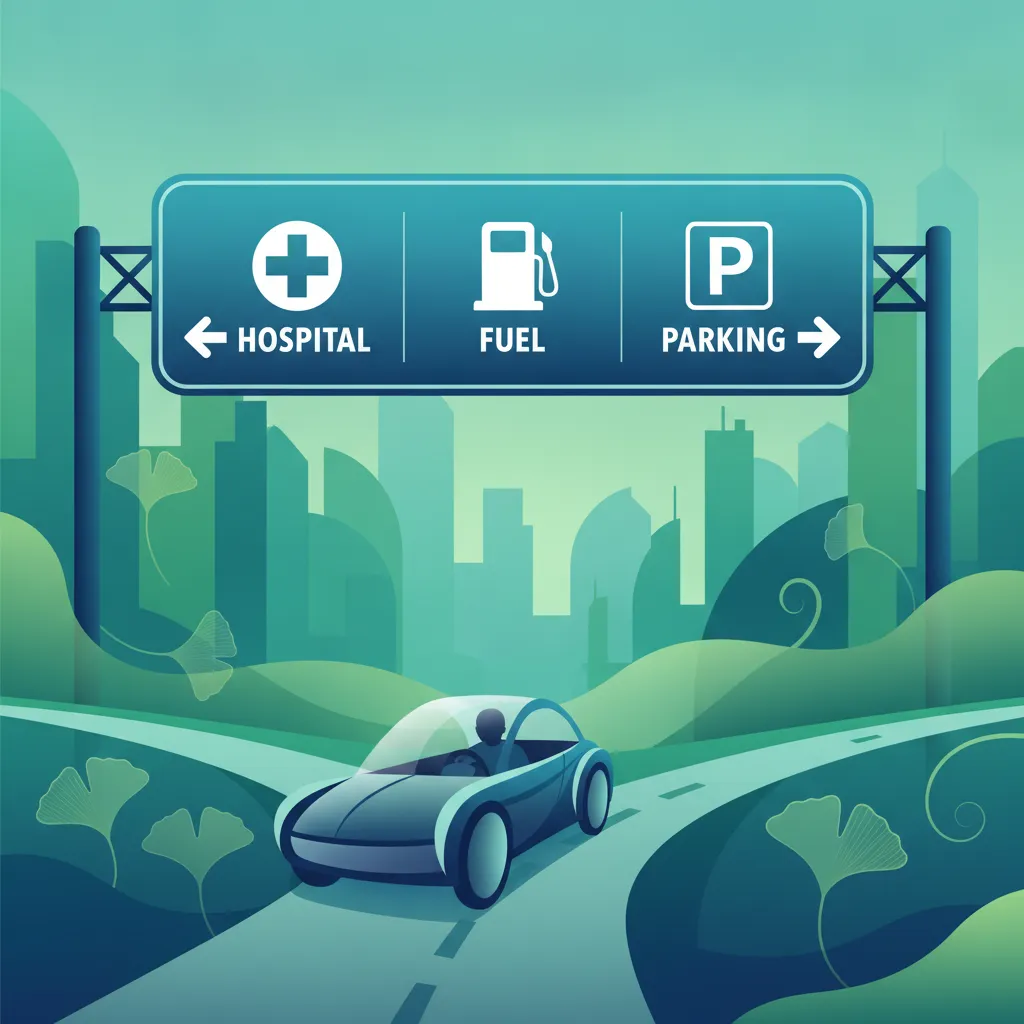
When a medical emergency occurs on the road, knowing how to find immediate professional assistance can save lives. The French road system uses specific signs to guide drivers to emergency services.
The hospital sign features a white letter "H" on a blue square background, often accompanied by a red cross or a directional arrow.
If a passenger experiences a severe medical emergency while you are driving:
Even in the age of GPS navigation, physical distance markers remain a vital tool for orientation, speed management, and emergency reporting.
Along French national and departmental roads, you will spot small red, yellow, or white stone-like markers or flat metal signs at the side of the road. These are known as bornes. On motorways, they are represented by small blue rectangular signs placed at every kilometre along the central barrier or shoulder.
Information signs are designed to enhance safety, but their effectiveness depends entirely on driver compliance and situational awareness.
To keep traffic flowing smoothly and protect vulnerable road users, French traffic law strictly enforces the rules surrounding service and directional infrastructure.
To consolidate your learning for the ETG exam, let's explore how a driver should analyze and react to information signs in common, real-world driving situations.
By fully memorizing these symbols and the laws that govern them, you ensure smooth navigation on French roads and secure vital points on your Category B theory exam.
Explore all units and lessons included in this driving theory course.
Lesson content overview
Explore all units and lessons included in this driving theory course.
Explore search topics learners often look for when studying Information Signs: Direction and Services. These topics reflect common questions about road rules, driving situations, safety guidance, and lesson level theory preparation for learners in France.
Browse additional driving theory lessons that cover connected traffic rules, road signs, and common driving situations related to this topic. Improve your understanding of how different rules interact across everyday traffic scenarios.
Learn the essential regulations for French motorway navigation, including safe lane changes, maintaining following distances, and understanding the legal obligations when entering or exiting high-speed roads. This guide covers motorway signage, hard shoulder safety, and the proper use of merging lanes for category B licence candidates.

French motorways (autoroutes) are fast, controlled-access roads with unique laws regulating lane discipline and emergencies. This lesson teaches standard lane-use: cruising in the right lane and reserving the middle or left lanes exclusively for passing. You will study emergency procedures, the use of orange emergency call boxes, safety barrier rules, and navigating toll booths (peages) safely.
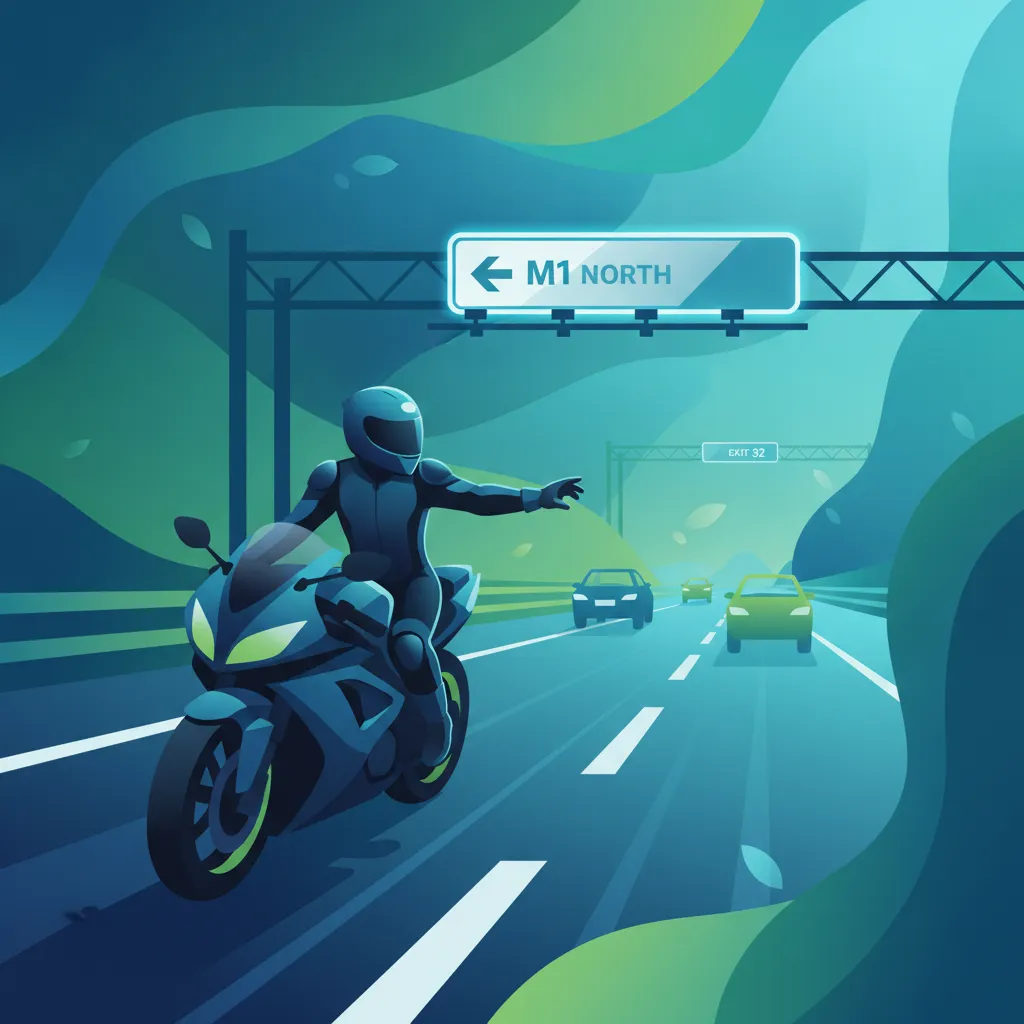
This lesson details how to safely enter, cruise on, and exit French motorways, known as autoroutes, which feature high-speed traffic flows. You will master the process of matching highway speeds in the acceleration lane and performing blind spot checks before merging. The lesson also explains correct lane positioning to avoid aerodynamic turbulences from large semi-trucks, and how to safely prepare for decelerating at exit ramps.
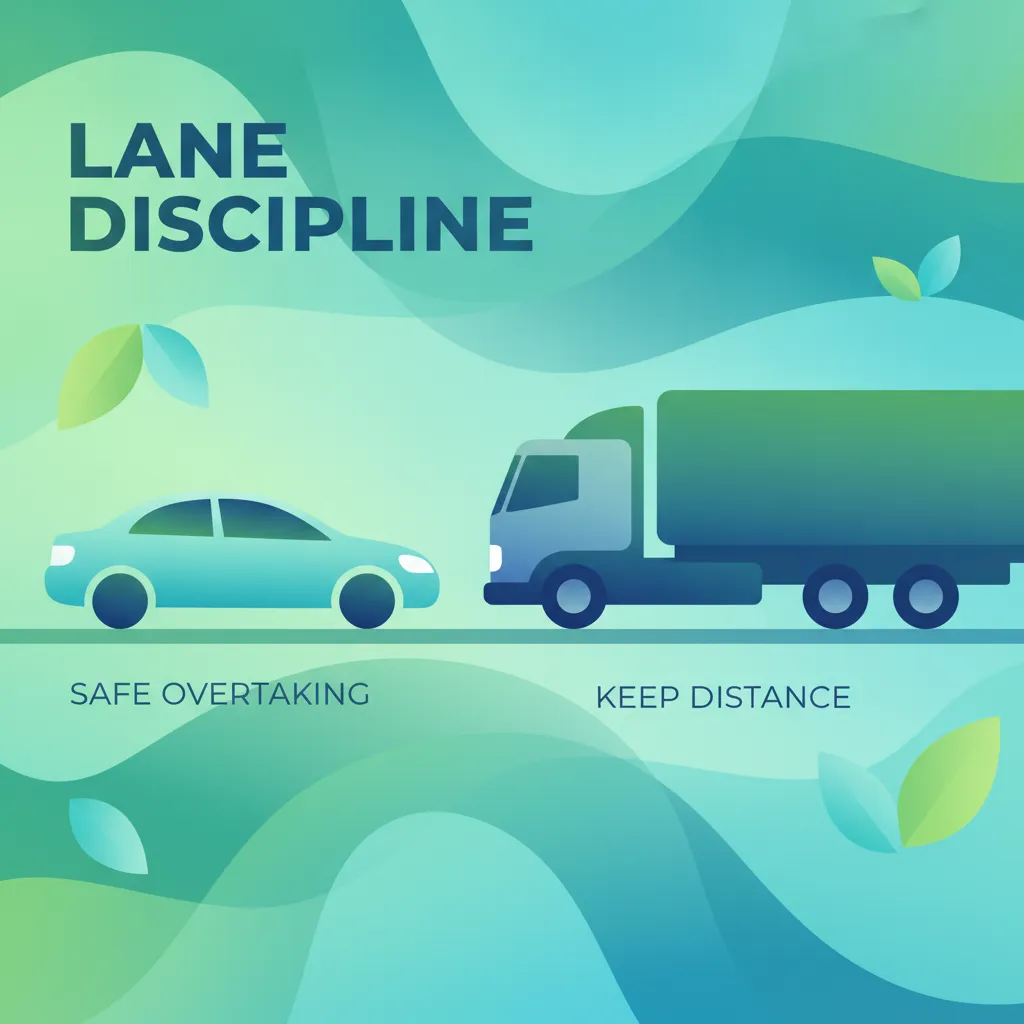
This lesson focuses on the specific considerations for operating goods vehicles on French motorways, including lane selection, speed management, and proper merging techniques. Learners will understand the importance of maintaining lane discipline, using appropriate overtaking practices, and respecting motorway-specific speed limits for heavy vehicles. The content also covers the use of emergency lanes and the handling of traffic flow.
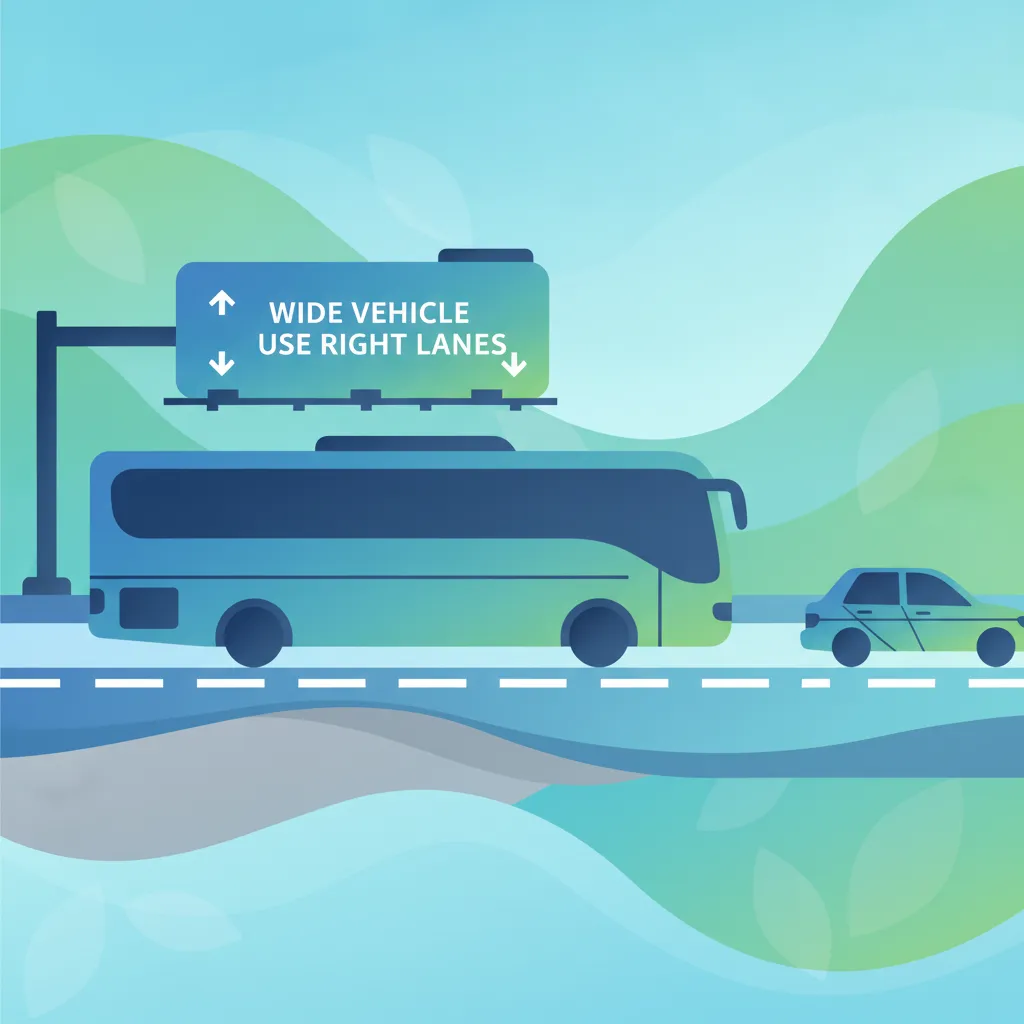
This lesson details the rules of lane discipline for operating wider and longer passenger transport vehicles on highway and city networks. Learners will explore proper lane positioning to prevent encroachment on adjacent lanes or sidewalks. It also covers the step-by-step visual and signaling sequence required to perform safe lane changes, avoiding sudden movements that could startle other drivers.

This lesson covers the rules of driving passenger vehicles on high-speed French motorways (autoroutes). Learners will study entry-ramp merging protocols, lane restrictions for vehicles over 3.5 tonnes, and motorway-specific speed limits. The lesson also highlights the correct use of toll booths (péages), emergency hard-shoulder safety procedures, and accessing dedicated coach rest areas.
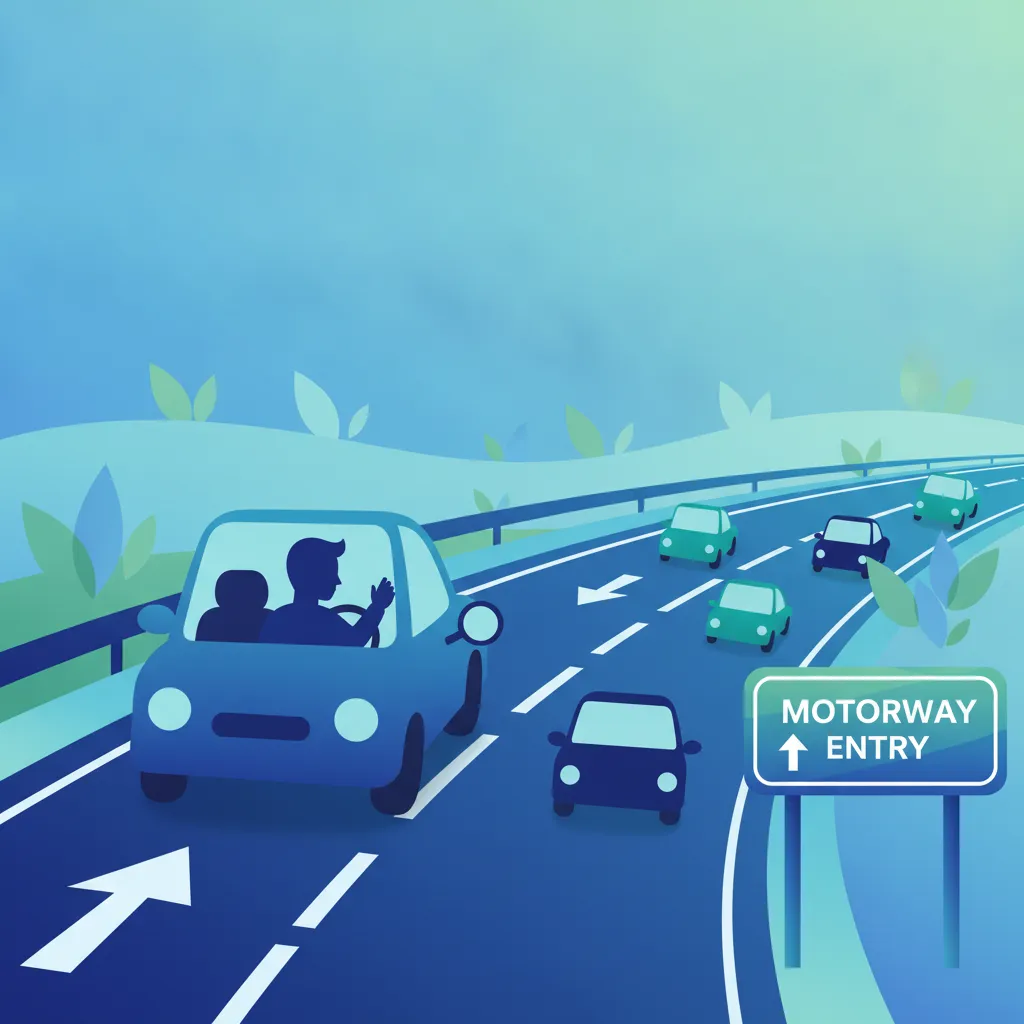
Merging onto a motorway or dual carriageway requires precise coordination of speed, lane observation, and indicator signalling. This lesson explains how to utilize the acceleration lane (voie d'insertion) to match the speed of highway traffic before merging. You will learn how to assess traffic gaps in your side mirrors, signal your intentions, and execute the merge without disrupting the traffic flow.

Longitudinal road markings are painted along the length of the road to divide lanes and regulate overtaking maneuvers. This lesson teaches the strict legal prohibition of crossing solid white lines and the specific spacing of broken lines that permit lane changes. You will also learn how to interpret dual lines, warning arrows, and how to maintain proper lane discipline in heavy traffic.

This lesson details the legal and physical implications of horizontal markings, including solid white lines, broken warning lines, and cycle lane dividers. You will learn about the strict prohibition against crossing solid lines and how directional arrows dictate correct lane choices at complex junctions. Importantly, the lesson teaches you to recognize the physical hazard of wet road paint, which drastically reduces tire grip during braking.
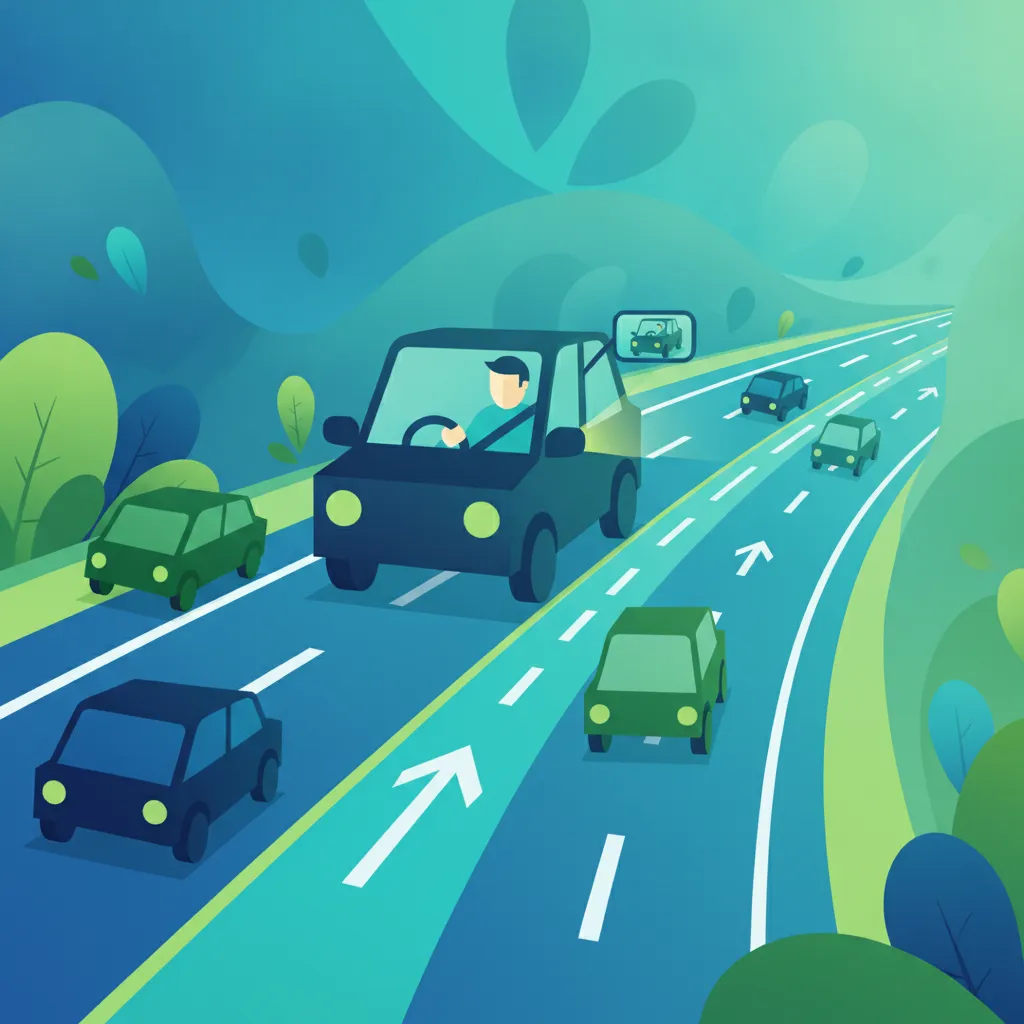
Changing lanes or executing turns requires a structured visual and physical procedure to prevent interrupting surrounding traffic. This lesson explains the key steps: checking the center mirror, exterior mirrors, turning on direction indicators, and performing blind-spot checks. You will learn correct vehicle positioning for both left and right turns, and how to execute safe turning circles without cutting corners.

Rural roads account for a high percentage of severe accidents due to narrow widths, winding geometries, and sudden hazards. This lesson teaches strategies for negotiating sharp bends, handling agricultural machinery, and reacting to wildlife warning signs. You will learn to manage your vehicle's lane placement on roads with soft shoulders and understand speed limits on rural networks.
Explore the meaning of critical safety and medical road signs within the French Code de la route. This lesson explains how to identify emergency call boxes, hospital locations, and evacuation routes, providing the theoretical foundation needed to handle unexpected situations on the road safely and efficiently.
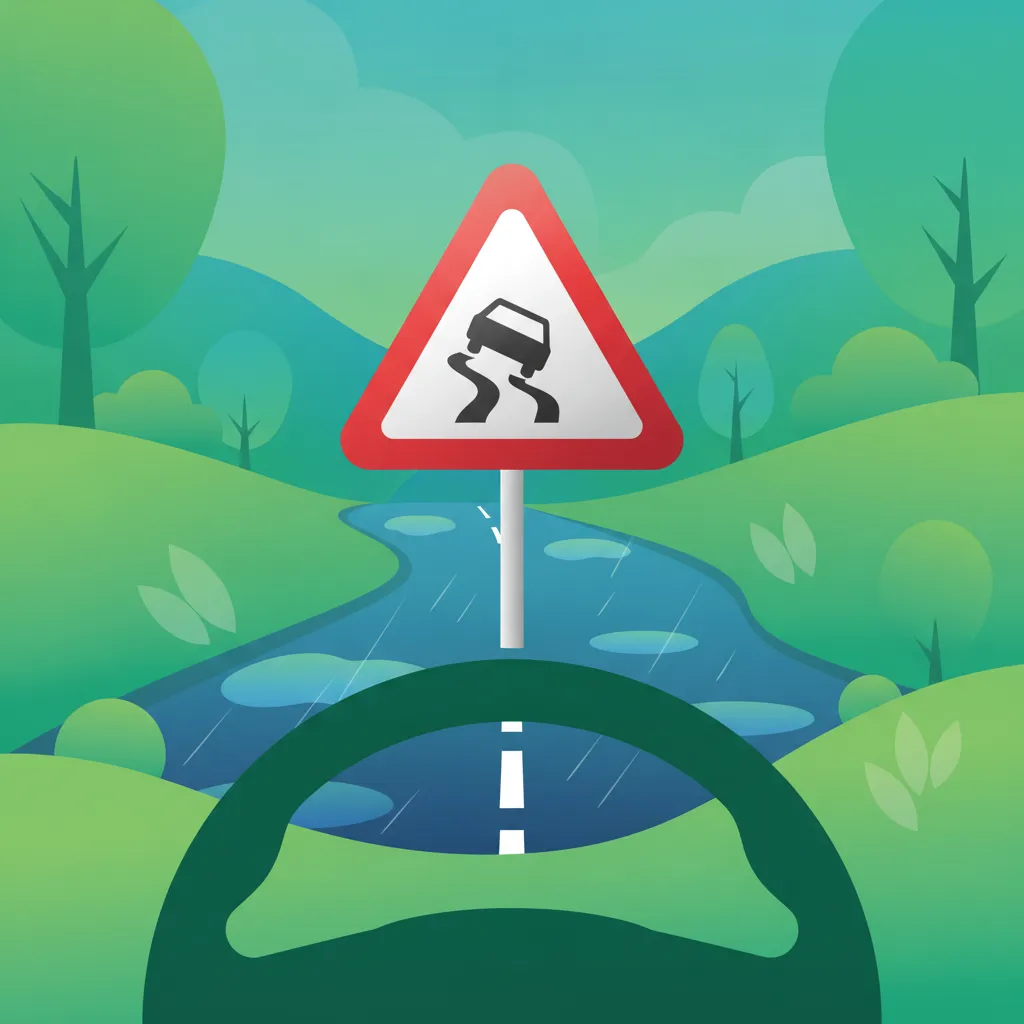
Warning signs on French roads are triangular with a red border, designed to alert drivers to upcoming dangers. This lesson teaches you how to interpret warnings for sharp curves, slippery surfaces, narrowing lanes, and wildlife or animal crossing hazards. You will understand the safety adjustments needed when approaching school zones, active roadworks, or crossings where vulnerable pedestrians are present.
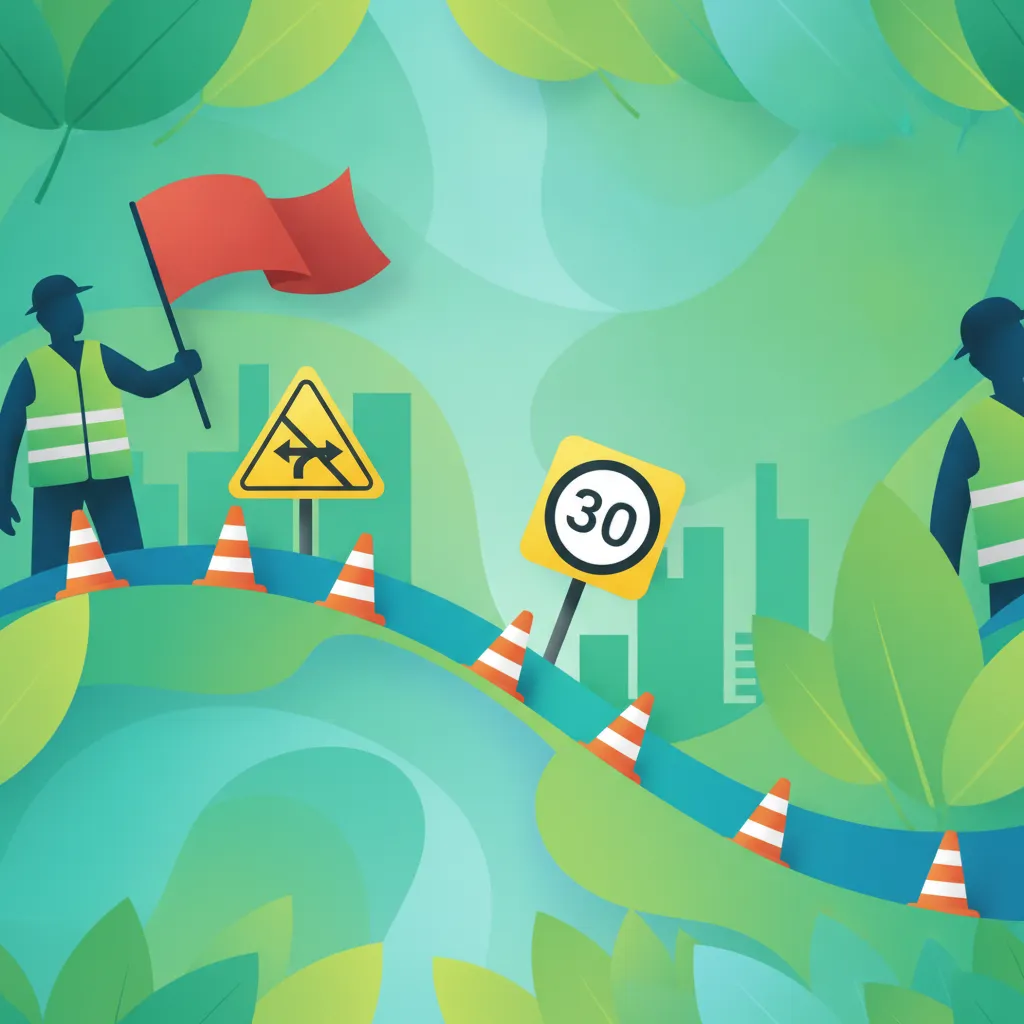
Temporary traffic configurations and construction sites are signaled using yellow-background signs to indicate their short-term nature. This lesson teaches you how to comply with temporary speed reductions, interpret lane shifts, and follow designated detour signs (deviation). Drivers will learn how to maintain high vigilance and safely navigate worksites while protecting road workers and oncoming traffic.

This lesson focuses on French warning signs that alert drivers to potential hazards ahead, such as curves, animal crossings, or slippery surfaces, with particular attention to signs relevant to AM riders. Learners will examine how to interpret these signs, understand the associated risks, and adapt riding behavior accordingly. By mastering warning sign recognition, riders can proactively manage safety risks in diverse road conditions.
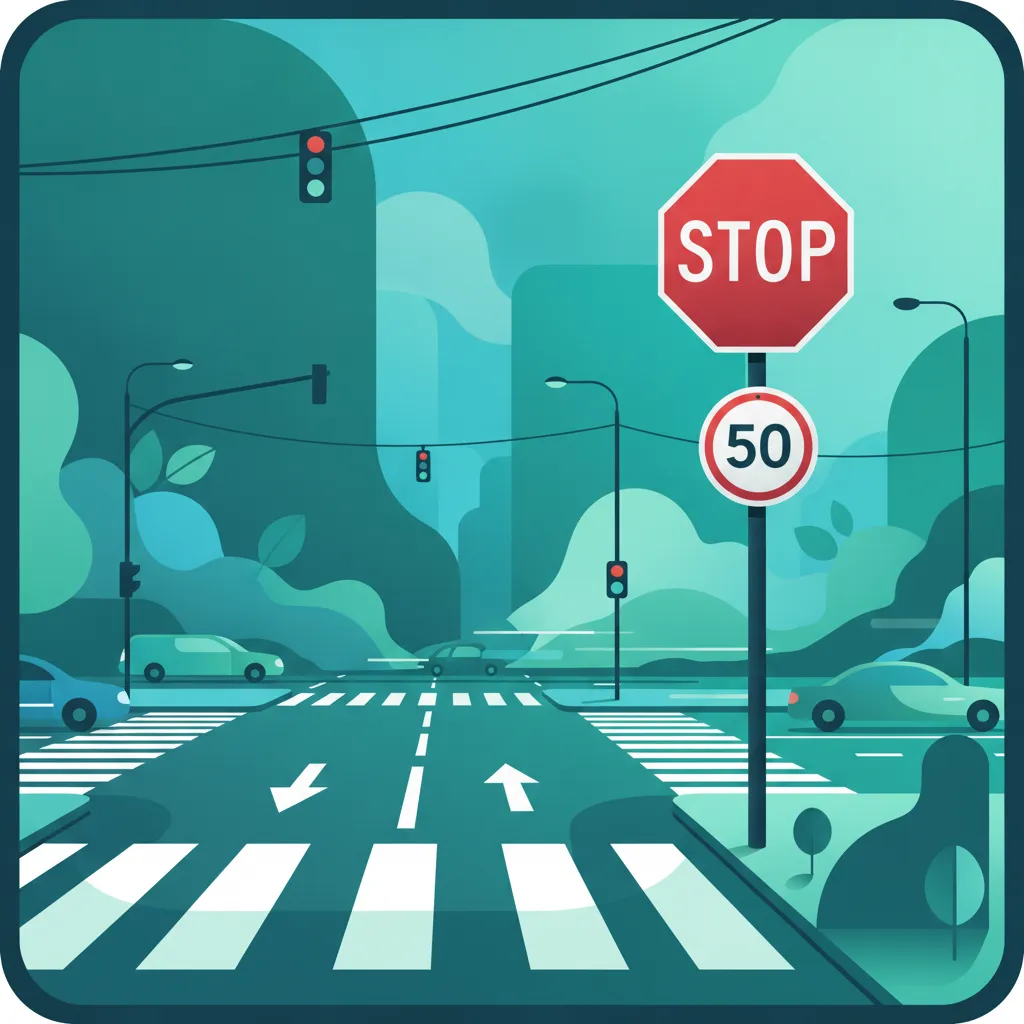
Learners will be introduced to the core set of French regulatory signs that dictate mandatory actions or prohibitions for all road users, including AM riders. The lesson explains the significance of signs such as stop, yield (cédez le passage), speed limit, and no entry, highlighting their specific implications for small vehicles. Understanding these signs is crucial for legal compliance and safe navigation through varied traffic environments.
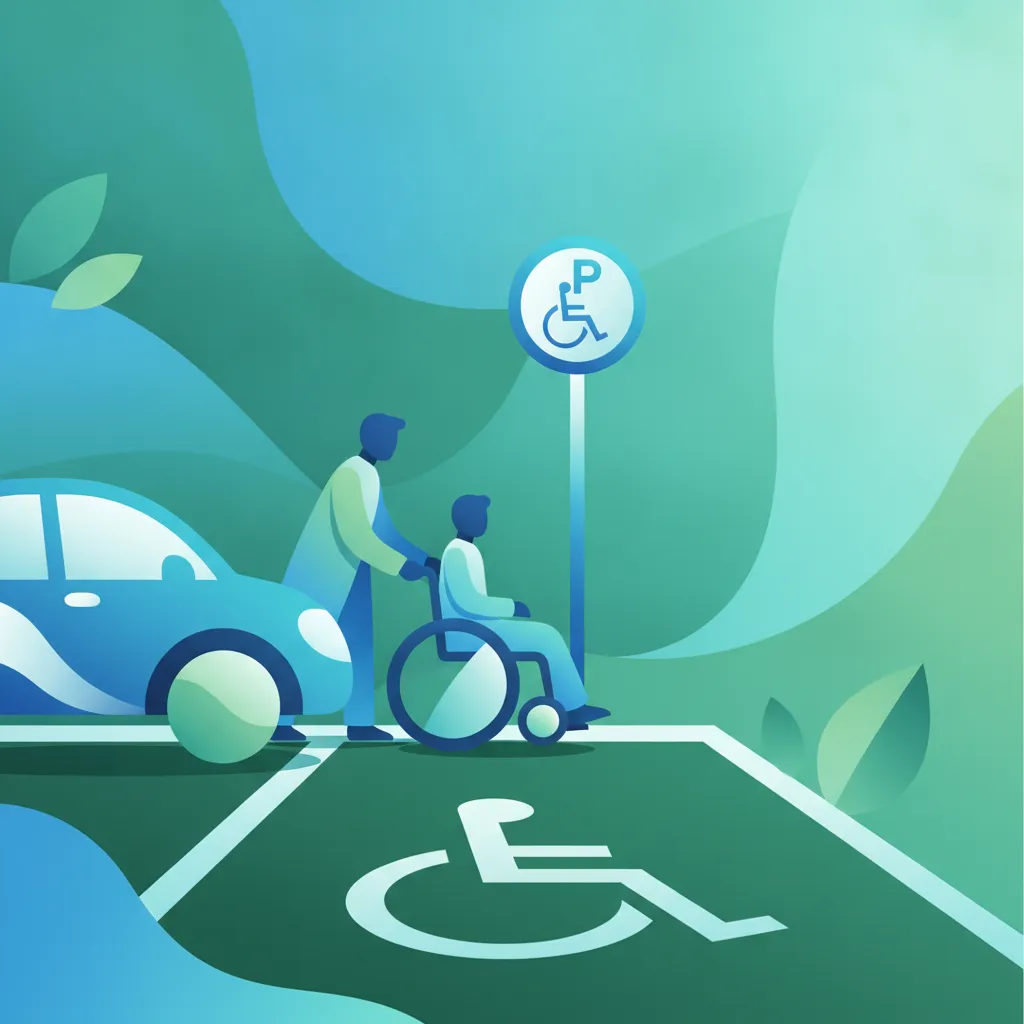
This lesson introduces the standard interior signage required in passenger vehicles to communicate critical safety and accessibility information clearly. Learners will learn to verify the visibility of handicap symbols, emergency exit markers, and priority seating notifications. Proper maintenance of these visual and auditory warning systems ensures that all passenger groups can navigate the vehicle confidently and safely under any conditions.

Some crossroads feature complex layouts or specific signs that modify standard priority rules, such as schematic diagrams (panonceaux schematiques). This lesson teaches you how to read these auxiliary signs, which depict the thick line of the priority road and thin lines of secondary roads. You will learn how to maintain priority when the main road curves and how to navigate non-standard intersection layouts.

Regulatory signs are circular with red borders for prohibitions and blue backgrounds for mandatory instructions. This lesson details critical signs, such as speed limits, no-entry indicators, overtaking bans, and mandatory turning lanes. You will also learn about environmental zones restrictions, height limits for large vehicles, and the legal priority instructions conveyed by stop and yield signs.
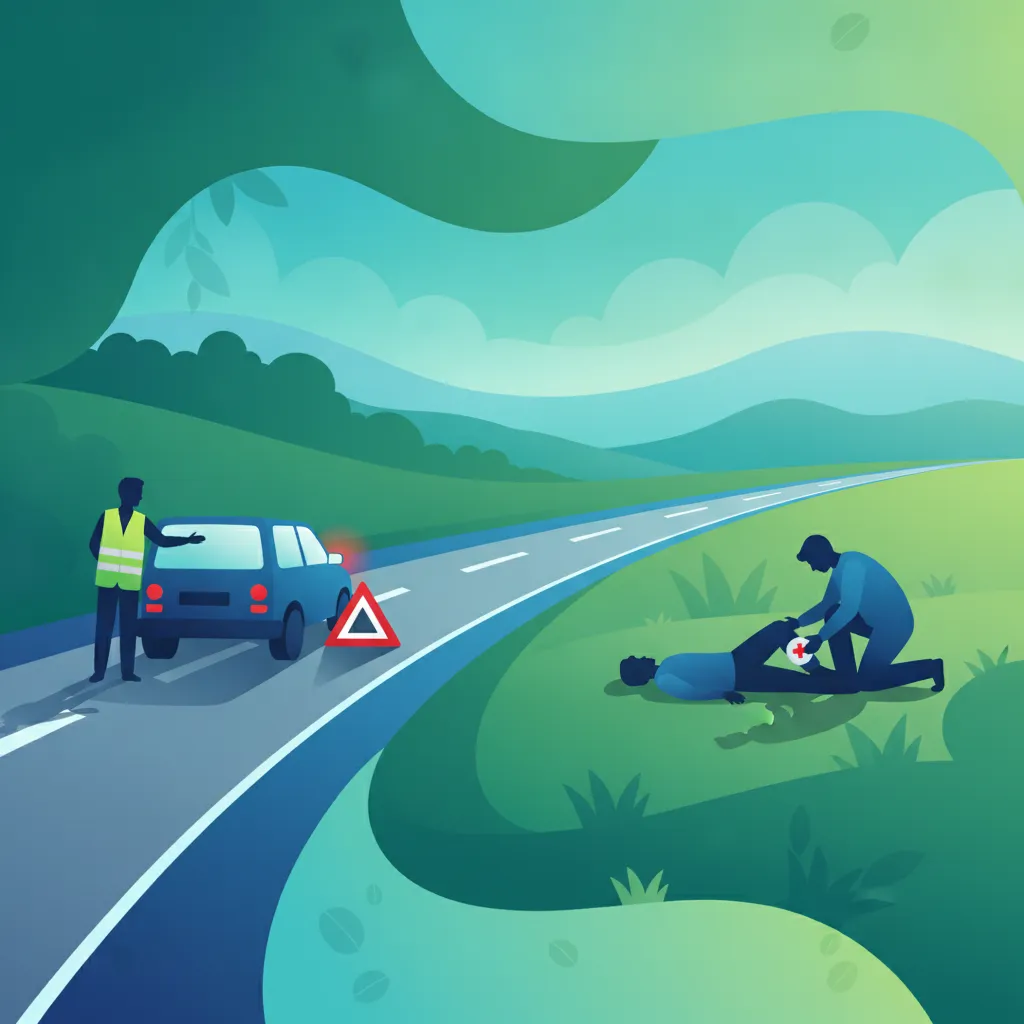
When encountering or participating in a road accident, following a strict safety protocol protects lives and prevents secondary crashes. This lesson covers the essential 'Protect, Alert, Rescue' (PAS) protocol, which involves wearing a yellow high-visibility vest, placing a warning triangle, and calling 112. You will also learn basic first-aid practices, how to secure victims, and the correct way to fill out an accident report.

Learners will focus on the importance of clear and consistent signalling to convey intentions to other road users, thereby enhancing predictability and safety on French streets. The lesson covers both hand signals and vehicle indicators, detailing correct usage, timing, and the legal obligations associated with each. By mastering these communication techniques, AM riders can reduce misunderstandings and potential conflicts, contributing to a smoother traffic flow.
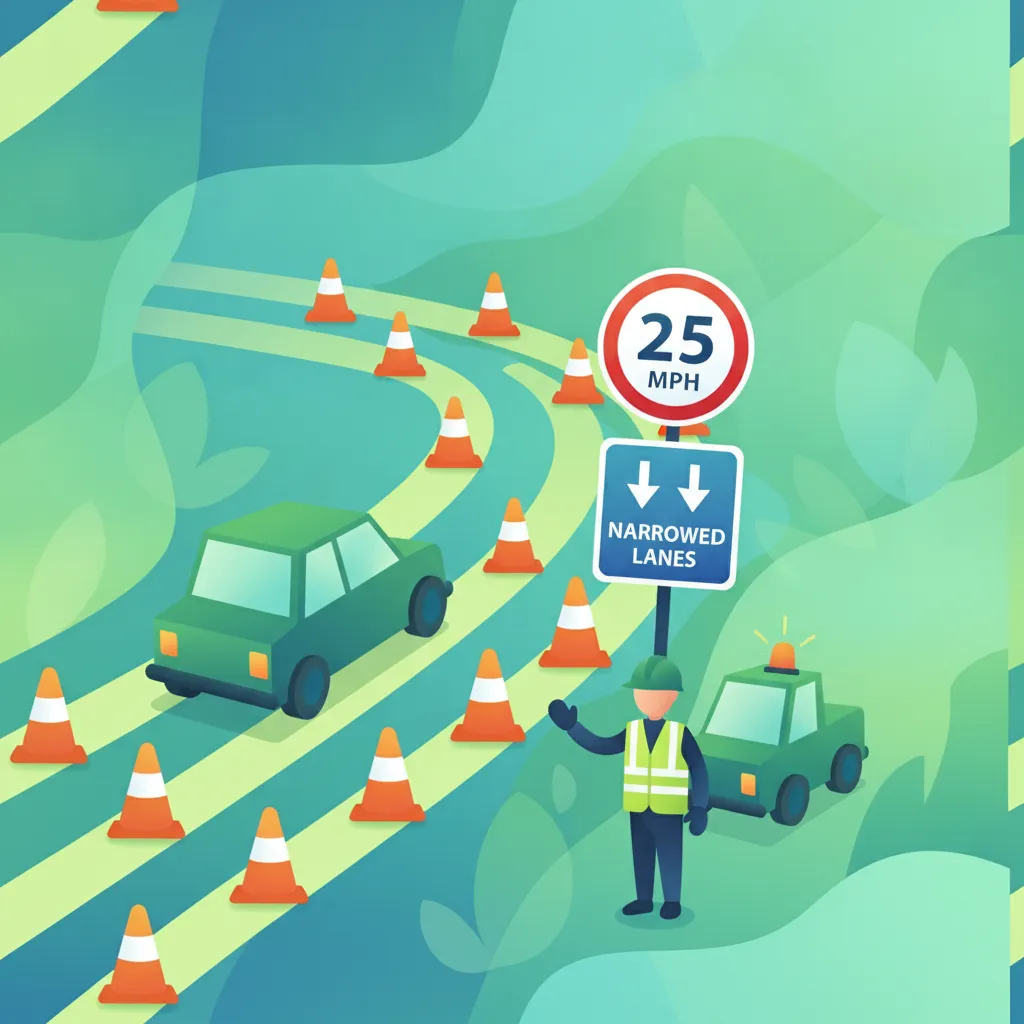
Active roadworks demand heightened vigilance to protect workers and guide vehicles through modified, narrow traffic lanes. This lesson covers how to recognize yellow horizontal road lines, which supersede standard white lines, and temporary traffic signals. You will learn to obey reduced construction-zone speed limits, negotiate lane shifts, and execute detours (deviations) systematically.
Find clear answers to common questions learners have about Information Signs: Direction and Services. Learn how the lesson is structured, which driving theory objectives it supports, and how it fits into the overall learning path of units and curriculum progression in France. These explanations help you understand key concepts, lesson flow, and exam focused study goals.
Regulatory signs command or prohibit specific actions and are often round or inverted triangles. Information signs, usually rectangular or square, provide guidance without imposing strict legal commands, helping you navigate and find services.
Motorway signs in France are primarily blue. They clearly indicate route numbers, upcoming exits, and distance to major cities to help you plan your journey and lane positioning ahead of time.
Hospital signs are classified as information signs. They are designed to guide drivers to emergency care facilities and are typically displayed on white or blue backgrounds depending on their placement.
Yes, the theory exam often includes visual questions asking you to identify specific service icons such as rest stops, fuel stations, or tourist information, as these are vital for planning long-distance travel.
Ready to focus your study? Use the practice search to find exactly the French driving theory questions you need for the Code de la route and permis de conduire ETG. Refine your knowledge on specific topics or challenging rules to boost your confidence and exam readiness.