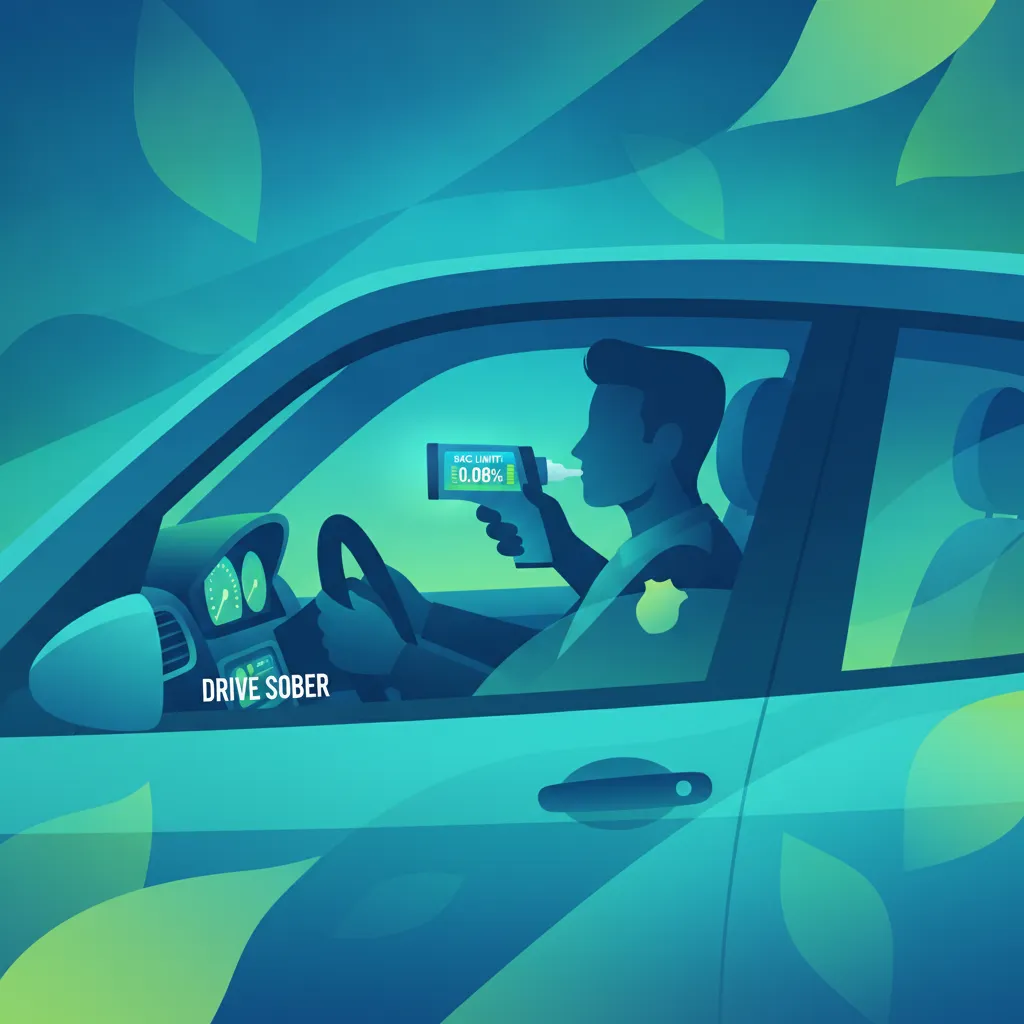
This lesson details the critical relationship between alcohol consumption and road safety, as mandated by the French Code de la route. You will learn the legal Blood Alcohol Concentration (BAC) limits for both standard and probationary drivers, essential for passing the ETG exam. Mastering these regulations ensures you understand your legal responsibilities to avoid severe penalties and maintain road safety.
Lesson content overview
Operating a motor vehicle requires complete cognitive focus, rapid reflexes, precise coordination, and keen situational awareness. Alcohol consumption directly disrupts these essential faculties, making driving under the influence (DUI) one of the leading causes of fatal road accidents in France.
For the French Category B driving theory exam (Examen de l'Éthique Générale or ETG), you must thoroughly understand how alcohol affects the human body, the precise statutory Blood Alcohol Concentration (BAC) limits, how law enforcement measures intoxication, and the severe administrative and criminal penalties associated with violations of the Code de la route.
Alcohol is a central nervous system depressant. Once ingested, ethanol is rapidly absorbed into the bloodstream through the stomach and small intestine, from where it travels directly to the brain. It slows down neural communications, impairing both mental processing and physical capabilities.
A common and dangerous mistake is believing that personal physical tolerance prevents impairment, or that certain tricks can speed up sobriety.
On average, the human body eliminates between 0.10 and 0.15 grams of alcohol per liter of blood (g/L) per hour. This process is handled almost exclusively by the liver and cannot be accelerated.
In France, legal thresholds are defined by the amount of alcohol present in a driver's body. These thresholds are strictly codified under the Code de la route and are measured either in grams per liter of blood (g/L) via a blood test, or in milligrams per liter of exhaled air (mg/L) using a breathalyzer.
The legal system uses a standardized conversion ratio to equate breath measurements to blood concentration:
The French legal system applies two distinct thresholds depending on the driver's experience level.
For experienced drivers who have passed their probationary period, the legal limits are:
New drivers (those in their first three years of licensing, or two years if they completed the supervised driving program Conduite Accompagnée - AAC) are subject to a much stricter limit:
Immediate Invalidation Risk: For a probationary driver in their very first year, the starting license capital is only 6 points. Because any DUI violation triggers an automatic deduction of 6 points, a single offense will immediately reduce their license capital to zero, leading to the automatic invalidation of the license (invalidation du permis pour solde de points nul).
French law enforcement officers (Police Nationale and Gendarmerie) are legally authorized to conduct alcohol screenings under various circumstances, including routine traffic stops, after a traffic violation has occurred, or systematically following any road traffic accident.
Preliminary Roadside Screening (Dépistage): Officers use a preliminary breath screening device (commonly known as an éthylotest). The driver blows into a chemical balloon or an electronic device to determine if alcohol is present in their system.
Evidential Verification (Mesure): If the preliminary screening is positive, or if the driver refuses the roadside test, the police must determine the exact concentration. They will use a certified, calibrated evidential breathalyzer (called an éthylomètre) at the roadside or police station, or transport the driver to a medical facility for a formal blood sample (analyse de sang).
Result Classification: Based on the certified measurement, the offense is classified as either a minor administrative infraction (contravention) or a serious criminal offense (délit).
Penalties for exceeding the legal alcohol limits in France are structured into two main tiers based on the measured BAC level. These penalties combine financial fines, points deductions, license actions, and potential prison sentences.
This category applies when a driver is caught with a BAC that is over the legal limit but below the criminal threshold.
This category applies to severe levels of intoxication, representing a critical danger to public safety.
Some drivers mistakenly believe that refusing to blow into a breathalyzer or refusing a blood test will prevent law enforcement from proving their guilt and thus help them avoid penalties.
Refusal Equals Maximum Penalty: Under the French Code de la route, the refusal to submit to a legally requested alcohol screening or blood test is classified as a criminal offense. It carries the exact same penalties as driving with a BAC above 0.80 g/L.
Drivers who refuse testing face up to 2 years in prison, a fine of €4,500, an automatic deduction of 6 points, a license suspension of up to 3 years, and immediate vehicle immobilization.
The dangers of alcohol are compounded when consumed alongside other substances. Mixing alcohol with illicit drugs or prescription medications creates dangerous synergistic effects that amplify impairment.
Many common prescription and over-the-counter medications carry warning labels regarding driving. In France, these are categorized using a standardized, colored triangular warning system on the packaging:
Combining even a small amount of alcohol with Level 2 or Level 3 medications (such as tranquilizers, sleeping pills, or strong antihistamines) drastically multiplies the depressive effects on the central nervous system. This can lead to sudden sleepiness, profound loss of coordination, and severe cognitive impairment, even if the driver's BAC remains below the legal limit.
Understanding the risks of driving under the influence also requires debunking dangerous habits and misconceptions.
To succeed in your French driving theory exam, memorize these essential parameters and legal thresholds:
| Metric / Scenario | Standard Drivers | Probationary Drivers (Permis Probatoire) |
|---|---|---|
| Legal Blood Alcohol Limit | Less than 0.50 g/L | Less than 0.20 g/L |
| Legal Breath Alcohol Limit | Less than 0.25 mg/L | Less than 0.10 mg/L |
| Points Deducted for Violation | 6 points | 6 points (leads to invalidation in Year 1) |
| BAC ≥ 0.80 g/L (0.40 mg/L air) | Criminal Offense (Délit) | Criminal Offense (Délit) |
| Refusal to undergo testing | Treated as a Criminal Offense | Treated as a Criminal Offense |
| Average elimination rate | 0.10 to 0.15 g/L per hour | 0.10 to 0.15 g/L per hour |
Adhering strictly to these legal limits and recognizing the physiological consequences of alcohol consumption are fundamental to ensuring road safety, protecting vulnerable road users, and preserving your driving privileges under French law.
Explore all units and lessons included in this driving theory course.
Lesson content overview
Explore all units and lessons included in this driving theory course.
Explore search topics learners often look for when studying Effects of Alcohol and Legal Limits. These topics reflect common questions about road rules, driving situations, safety guidance, and lesson level theory preparation for learners in France.
Browse additional driving theory lessons that cover connected traffic rules, road signs, and common driving situations related to this topic. Improve your understanding of how different rules interact across everyday traffic scenarios.
Understand the administrative and criminal framework for enforcing traffic rules in France. This guide provides a detailed overview of the points system, license suspension procedures, financial fines, and judicial measures that apply when a driver fails to adhere to the Code de la route.

This lesson examines the legal consequences, heavy monetary fines, and driver's licence point deductions resulting from traffic and transport safety violations. Learners will study specific infractions such as driving over legal hours, vehicle overloading, and ignoring passenger seatbelt laws. Understanding the strict enforcement systems in France ensures drivers actively avoid risky habits that could end their careers.
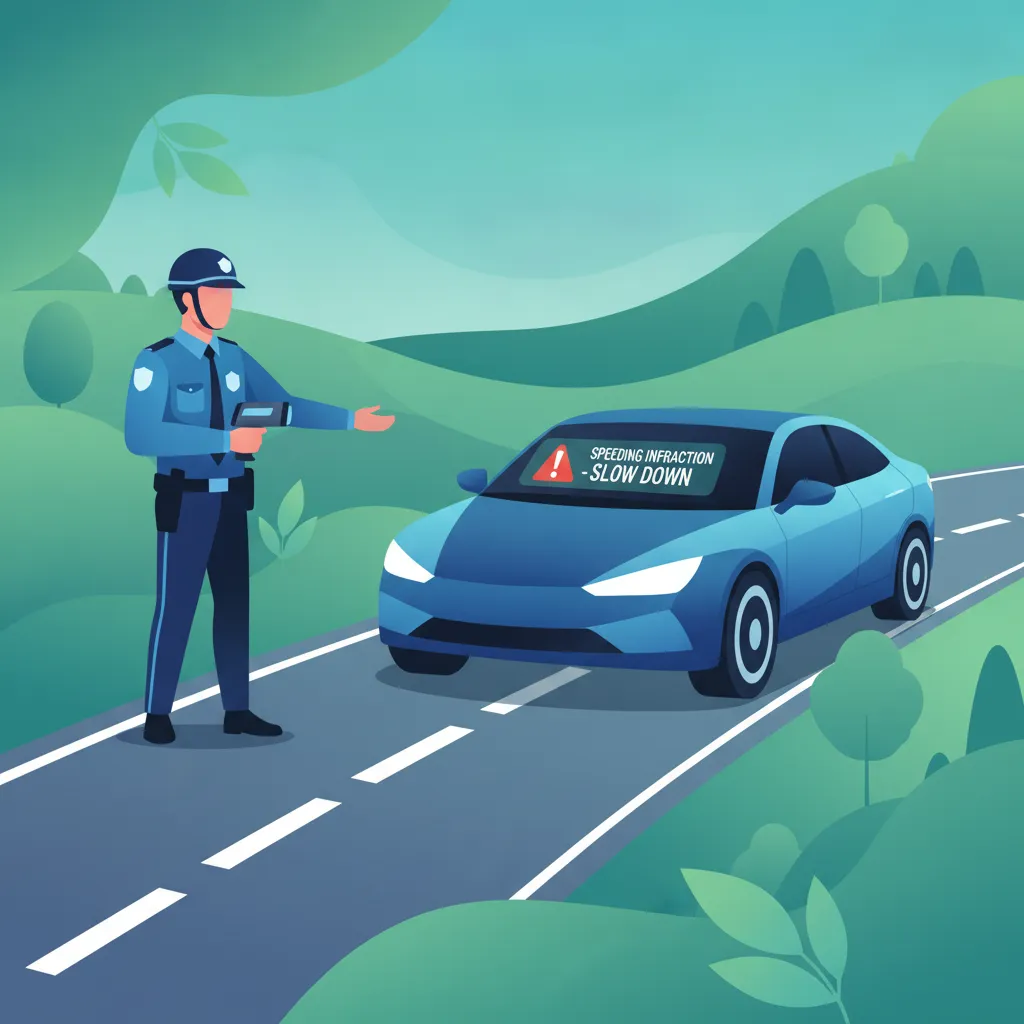
Violating traffic regulations in France triggers strict administrative penalties, including point deductions and financial fines. This lesson examines the structure of the French point-based licence, specifically noting how probationary licences start with fewer points. It outlines the differences between fine categories, vehicle impoundment procedures, and options for recovering points through voluntary safety awareness courses.

Traffic violations in France entail direct points deductions, financial fines, and administrative actions managed online. This lesson explains how traffic offenses are classified and how points are deducted from your total allowance of twelve. You will learn the process for paying fines, how to formally contest a citation via official channels, and the rules for attending points-recovery training.
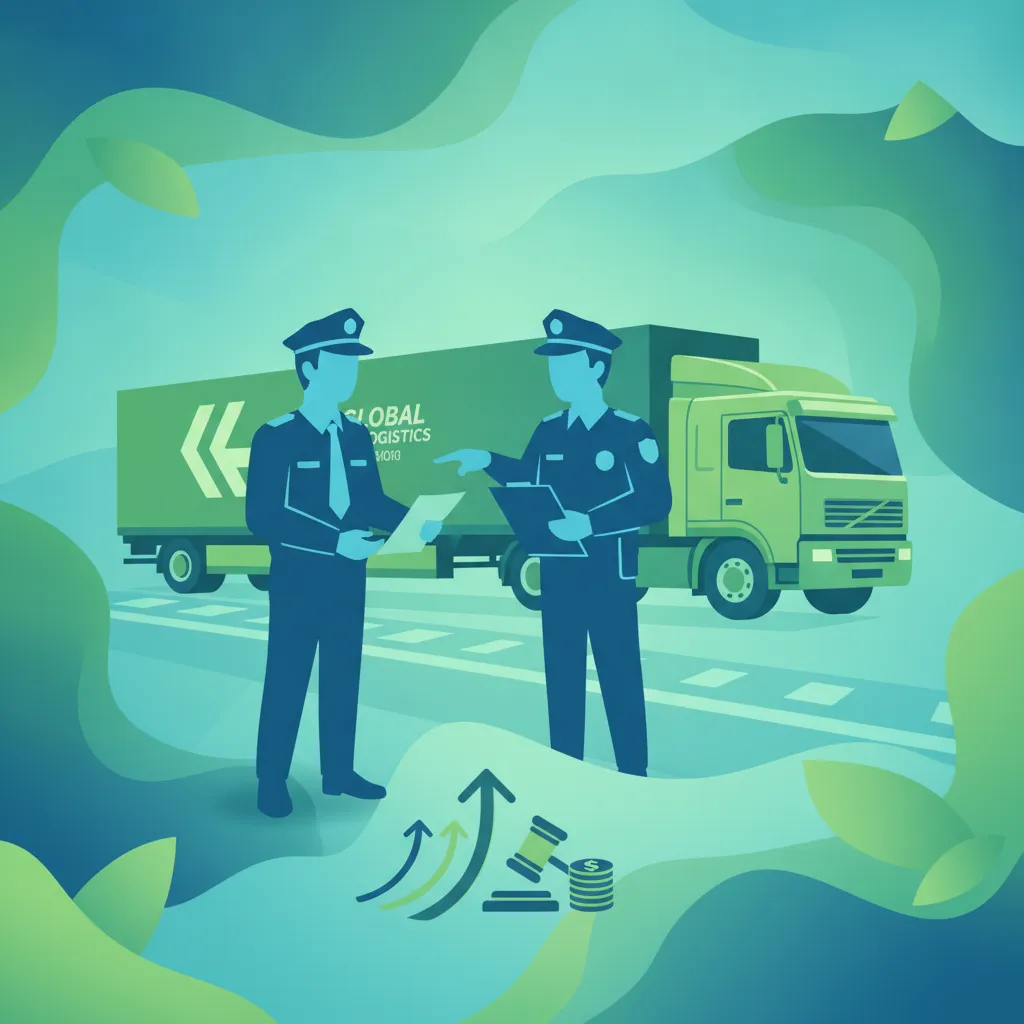
This lesson delves into the dual aspects of civil and criminal liability that professional goods vehicle drivers face in the event of traffic violations or accidents. Learners will explore the range of penalties, including fines, licence suspension, vehicle seizure, and potential imprisonment for severe offenses under French law. The discussion also covers the impact of negligence on insurance coverage, the accrual of penalty points, and the broader consequences for both the driver and their employer.
This lesson outlines the range of penalties that can be imposed for violations of traffic laws and administrative requirements specific to goods vehicles. Learners will understand the financial implications of fines, the potential for licence suspension or revocation, and the circumstances under which a vehicle may be seized. The content also addresses demerit points accumulation, administrative sanctions, and the importance of compliance.
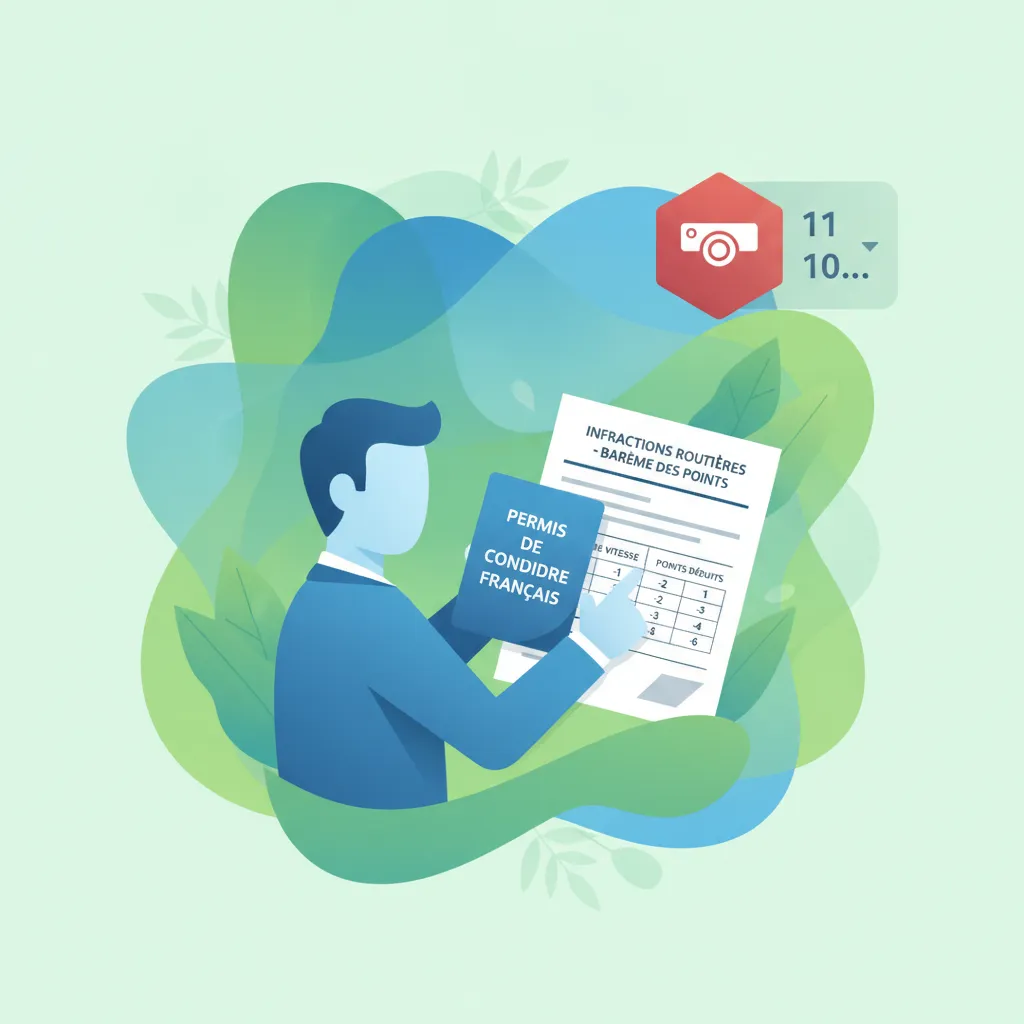
This lesson details the structure of the French points-based licensing system, explaining how points are deducted for specific traffic violations. You will learn about the special probation rules for novice licenses and the process of recovering lost points through safety courses. It also covers the fine structures, warning that ignoring basic safety laws like speed limits can lead to immediate vehicle impoundment and license suspension.

Illegal narcotics and certain over-the-counter or prescription medications severely affect a driver's focus and neurological coordination. This lesson details drug screen procedures (saliva tests) and the zero-tolerance policy for driving under the influence of narcotics. You will also learn to read the standardized warning triangles on French pharmaceutical boxes, which classify medications from level one to three.

Operating a passenger vehicle in France requires strict compliance with dynamic safety laws and maintenance rules. This lesson explains your duty of care toward other road users, mandatory child restraint and seatbelt laws, and strict prohibitions on phone use while driving. You will also learn about the required periodic technical vehicle inspections (controle technique) and third-party insurance mandates.
This lesson addresses the procedures and expectations when professional drivers encounter law enforcement or customs officials in France. Topics include the types of checks that may be performed, required documentation, rights and obligations of drivers, and the consequences of non-compliance. Learners will be guided on best practices for interacting with authorities, emphasizing cooperation, transparency, and the importance of maintaining valid and up-to-date documents for both the vehicle and driver.

Regulatory signs are circular with red borders for prohibitions and blue backgrounds for mandatory instructions. This lesson details critical signs, such as speed limits, no-entry indicators, overtaking bans, and mandatory turning lanes. You will also learn about environmental zones restrictions, height limits for large vehicles, and the legal priority instructions conveyed by stop and yield signs.
Find clear answers to common questions learners have about Effects of Alcohol and Legal Limits. Learn how the lesson is structured, which driving theory objectives it supports, and how it fits into the overall learning path of units and curriculum progression in France. These explanations help you understand key concepts, lesson flow, and exam focused study goals.
The legal blood alcohol concentration limit for a standard driver in France is 0.5 grams per liter of blood.
Yes, for drivers on a probationary license, the legal limit is significantly lower, set at 0.2 grams per liter of blood.
Refusing a breath test in France is considered a serious offence and carries severe legal penalties, often equivalent to or worse than testing over the legal limit.
While the exam covers the legal aspects, understanding that even small amounts of alcohol impair depth perception and reaction time is crucial for answering hazard perception scenarios accurately.
Ready to focus your study? Use the practice search to find exactly the French driving theory questions you need for the Code de la route and permis de conduire ETG. Refine your knowledge on specific topics or challenging rules to boost your confidence and exam readiness.