
This lesson details the rigorous legal and professional standards required of professional drivers operating under passenger vehicle categories D, D1, D1E, and DE in France. By understanding these core responsibilities, you will be prepared to manage the dual demands of strict schedules and the absolute priority of passenger safety during your professional driving career.

Lesson content overview
Operating passenger transport vehicles (categories D1, D, D1E, and DE) under French road safety law is a highly regulated profession. This role carries a profound responsibility: balancing tight schedules with the safety of passengers and the public. Under the French Highway Code (Code de la route), passenger vehicle operators are held to exceptionally high legal and behavioral standards.
This lesson explores your legal duties, professional conduct guidelines, documentation requirements, and incident response frameworks. These standards help you maintain public trust and comply with transport regulations in France.
In France, the "Duty of Care" is a legal obligation, not just a moral code. Under Articles L.312-1 to L.312-24 of the Code de la route, a professional driver must take all reasonable measures to prevent harm to passengers and other road users. This legal duty is divided into two main categories: the Physical Safety Duty and the Medical Duty.
The statutory requirement for passenger vehicle operators to actively protect passengers and third parties from harm by maintaining vehicle control, anticipating hazards, and responding to on-board emergencies.
The physical safety duty dictates that you must not start moving the vehicle until all passengers are safely on board and positioned correctly. For sitting services, passengers must be seated with seatbelts fastened where equipped. For urban transit, standing passengers must have secure access to handrails or hanging straps.
This duty also governs your driving style. Abrupt braking, rapid acceleration, or taking turns at excessive speeds can cause passengers to fall, leading to civil and criminal liability for negligence.
If a passenger falls ill or is injured during transit, your duty of care requires immediate action. You cannot simply ignore the issue to maintain your schedule. You must:
Failing to assist a passenger in danger or ignoring a medical emergency onboard can result in criminal charges under the French Penal Code for "Non-assistance à personne en danger" (failure to assist a person in danger).
To comply with French transport inspections conducted by the police, gendarmerie, or officers from the regional environmental and planning authorities (DREAL), you must carry specific valid documents at all times. Failing to produce these documents during an inspection can lead to heavy fines, vehicle impoundment, or driver disqualification.
As the operator, you must carry proof of your qualifications and physical fitness:
The vehicle must also be fully compliant and documented:
Depending on the service type, you may need:
Professional conduct bridges the gap between mandatory legal requirements and high service quality. As a professional passenger driver, you represent both your employer and the public transport system.
One of the most common challenges you will face is maintaining your timetable (fiche horaire). Delays due to traffic jams, bad weather, or assisting passengers with reduced mobility can cause stress. However, safety always takes precedence over punctuality.
If you are running late, you must never speed, run amber lights, or rush passengers during boarding. Transport companies use digital tracking and dispatch networks to log delays, and you should communicate delays transparently through your dispatch system rather than trying to make up time unsafely.
Under French law, public passenger transport is subject to strict equality guidelines. You must never deny service, display prejudice, or offer subpar assistance based on a passenger's origin, gender, religion, or disability.
Under French anti-discrimination law, refusing service to a qualified passenger with a disability or refusing to deploy boarding ramps is a criminal offense carrying severe financial and administrative penalties.
Securing passengers and ensuring they can safely enter and exit the vehicle is one of your most critical daily tasks.
When stopping to collect or drop off passengers, you must position the vehicle as close to the curb as possible, aligning with designated bus stops (points d'arrêt). This minimizes the gap between the vehicle and the curb, reducing tripping hazards.
Bring the vehicle to a complete stop parallel to the curb, engaging the parking brake.
If the bus is equipped with a kneeling system (système d'agenouillement), activate it to lower the entry step height.
Open the doors and monitor passengers through your wide-angle mirrors.
For passengers with wheelchairs or mobility aids, deploy the access ramp and guide them to the designated restraint area.
Before closing the doors, verify the boarding area is completely clear using both mirrors and direct vision.
Announce the departure or next stop over the Public Address (PA) system, ensure passengers are secure, and merge smoothly into traffic.
Wheelchair spaces onboard must feature functional restraint systems, including floor-anchored straps and a dedicated three-point seatbelt for the occupant. You are legally responsible for ensuring these restraints are properly locked before moving the vehicle.
An overlooked aspect of passenger safety is the interior environment. You must perform visual sweeps of the cabin periodically to check for:
All luggage must be safely stored in overhead racks, under-seat compartments, or the main luggage holds beneath the passenger cabin.
With diverse groups of passengers sharing a confined space, conflicts or disruptive behavior can occur. Your role is to maintain safety and public order without escalating the situation.
If a passenger becomes noisy, aggressive, or refuses to pay their fare, address the situation calmly and politely.
Under French Penal Code Article R.16-3, public transport operators have the authority to request that disruptive passengers leave the vehicle if their behavior compromises safety or order.
If a passenger refuses to comply, becomes threatening, or displays physical aggression, do not put yourself in danger. Stop the vehicle safely, open the doors to allow other passengers to exit if necessary, and contact your company’s safety dispatch or the national police (17) immediately.
Driver fatigue is a major cause of heavy vehicle accidents. To combat this, the European Union enforces strict rules on driving and rest times through Regulation (EC) No 561/2006, which applies directly to passenger transport in France.
You must memorize and strictly apply these driving time limits and mandatory rest structures:
While tachographs enforce legal compliance, they do not measure actual fatigue. You must self-monitor for early warning signs of tiredness:
If you experience these symptoms, pull over at the next safe rest stop. Caffeine or fresh air are temporary fixes and cannot replace natural rest.
When an incident occurs—whether an accident, a passenger injury, or a technical failure—you must complete your reporting obligations accurately and quickly.
If you are involved in a collision or a passenger is injured onboard, follow this sequence:
Secure the Scene: Turn on your hazard warning lights, pull over to a safe area if possible, engage the parking brake, and shut off the engine.
Assess Injuries: Check your passengers and any third parties involved. Call emergency services if needed.
Alert Other Traffic: Deploy safety cones, triangles, or on-board emergency signs as required by the Code de la route.
Document the Accident: For collisions involving other vehicles, complete the Amicable Accident Report (Constat amiable). Record passenger witness statements and take photos of the scene.
File the Internal Incident Report: Submit a detailed report to your company within 24 hours of the event.
The Constat amiable is a standardized European accident form. It must be completed objectively:
Understanding common violations and their legal consequences helps you protect your license, your career, and public safety.
| Violation | Why It Is Wrong | Legal/Safety Consequence | Correct Action |
|---|---|---|---|
| Driving without a valid D/D1 license | Violates licensing laws and invalidates insurance. | Criminal charges, heavy fines, and vehicle impoundment. | Check license validity and medical certificates before driving. |
| Exceeding EU driving limits | Increases fatigue-related accidents. | Heavy fines for the driver and transport company, loss of license points. | Plan routes to include mandatory breaks and rest periods. |
| Failing to secure PRM wheelchair restraints | Puts passengers at risk of severe injury during braking. | Civil and criminal liability for negligence, passenger injury. | Double-check that all wheelchair restraints and seatbelts are locked before starting the engine. |
| Refusing service based on disability | Violates French anti-discrimination and equality laws. | Criminal prosecution, administrative fines, and loss of professional credentials. | Provide equal access, deploy ramps, and assist passengers with reduced mobility. |
| Leaving luggage in vehicle aisles | Blocks emergency evacuation paths and creates tripping hazards. | Fines during checks, injuries during sudden stops. | Require passengers to store bags in designated racks or lower luggage holds. |
To deepen your understanding of professional passenger transport regulations and safety protocols, review these related study resources.
Explore all units and lessons included in this driving theory course.
Lesson content overview
Explore all units and lessons included in this driving theory course.
Explore search topics learners often look for when studying Legal Obligations and Professional Conduct. These topics reflect common questions about road rules, driving situations, safety guidance, and lesson level theory preparation for learners in France.
Browse additional driving theory lessons that cover connected traffic rules, road signs, and common driving situations related to this topic. Improve your understanding of how different rules interact across everyday traffic scenarios.
Understand the strict EU driving and rest time rules governed by Regulation (EC) No 561/2006 for professional drivers in France. This guide details mandatory break intervals, daily driving limits, and scientific methods for monitoring driver fatigue to ensure compliance with transport laws and safety standards.

This lesson focuses on identifying the signs of driver fatigue and understanding its impact on reaction times, decision-making, and overall safety. Learners will be introduced to legal limits on continuous driving and required rest periods as stipulated by French regulations. The content also provides practical strategies for managing fatigue, such as scheduling regular breaks, employing alertness techniques, and recognizing when to cease driving.
Learn the mandatory safety protocols for handling vehicle breakdowns and passenger evacuations in the French public transport sector. This lesson explains how to secure a scene, manage onboard injuries, and comply with the French Penal Code requirements for assisting persons in danger during professional transport operations.

This lesson covers immediate response steps for critical on-board events, including passenger medical emergencies and engine compartment fires. Learners will study the location and proper application of fire extinguishers, safety hammers, and first aid kits. It also explains how to coordinate effectively with French emergency services (SAMU, Fire Brigade) and reassure passengers to maintain calm during an incident.

This lesson details the emergency protocols for handling mechanical breakdowns or tire blowouts on public highways and motorways. Drivers will learn how to park the vehicle in the safest possible location, activate hazard warning lights, and deploy the reflective warning triangle. It teaches precise commands and steps for evacuating passengers quickly through safety exits, positioning them behind protective guardrails.

This lesson examines the flow of passengers entering and exiting the vehicle and how to organize this movement to reduce stop delays safely. Drivers will study the operation of door safety interlocks, sensitive edges, and onboard monitoring cameras to prevent boarding accidents. It also covers coordinating priority boarding for elderly, pregnant, or injured passengers in a polite and structured manner.

This lesson provides step-by-step instructions for utilizing vehicle accessibility systems, including wheelchair ramps, lifts, and specialized tie-down restraints. Drivers will study French regulatory frameworks mandating equal access to public transport services for all individuals. Crucially, the lesson covers respectful, safe, and efficient communication methods for guiding passengers with sensory, physical, or cognitive impairments.

This lesson focuses on techniques for monitoring and managing passenger behavior to maintain a calm and safe environment during transit. Drivers will learn how to enforce seatbelt rules, manage noise levels, and de-escalate verbal conflicts between passengers. Proactive safety announcements and a confident, polite professional demeanor are highlighted as key tools to prevent behavioral issues before they compromise road safety.

Public transit vehicles like city buses and streetcars (trams) have clear legal priorities and dedicated infrastructure in urban areas. This lesson teaches you to recognize reserved transit lanes and your legal obligation to yield to buses exiting their designated stops. You will also learn safe driving strategies near tram tracks, ensuring you never block public transit lines or risk passenger boarding areas.

This lesson details how to manage high-risk interactions with pedestrians who may step off curbs or cross the road near bus stops. Learners will study French Code de la route laws regarding pedestrian priority at crosswalks and near stopping transit vehicles. Developing heightened spatial awareness around blind zones near the front of the bus is emphasized to prevent tragic pedestrian collisions.

This lesson emphasizes the critical importance of maintaining a safe following distance when carrying dozens of passengers. Learners will study how vehicle weight and passenger load dynamically extend braking and total stopping distances compared to standard passenger cars. The lesson provides concrete spacing rules, such as adjusted safety gaps for highway driving and increased distances on slippery roads.
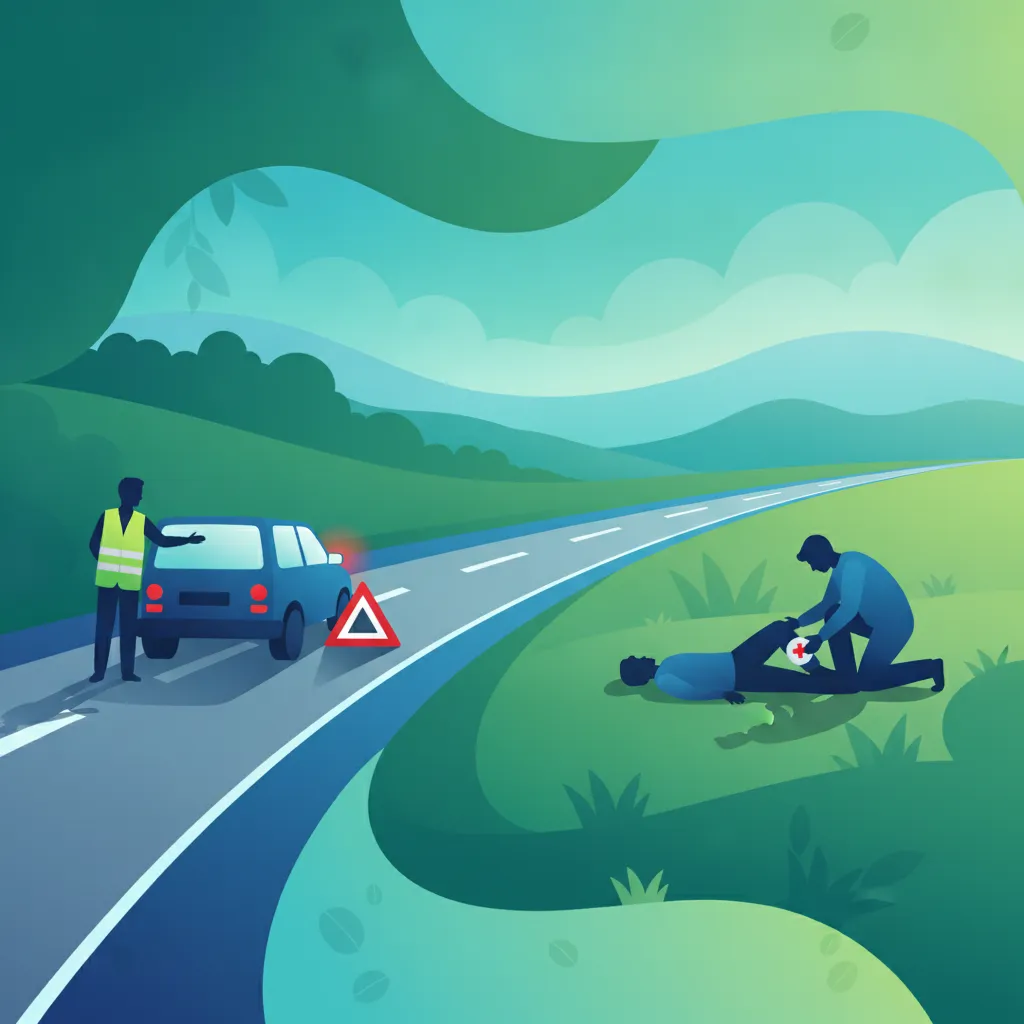
When encountering or participating in a road accident, following a strict safety protocol protects lives and prevents secondary crashes. This lesson covers the essential 'Protect, Alert, Rescue' (PAS) protocol, which involves wearing a yellow high-visibility vest, placing a warning triangle, and calling 112. You will also learn basic first-aid practices, how to secure victims, and the correct way to fill out an accident report.
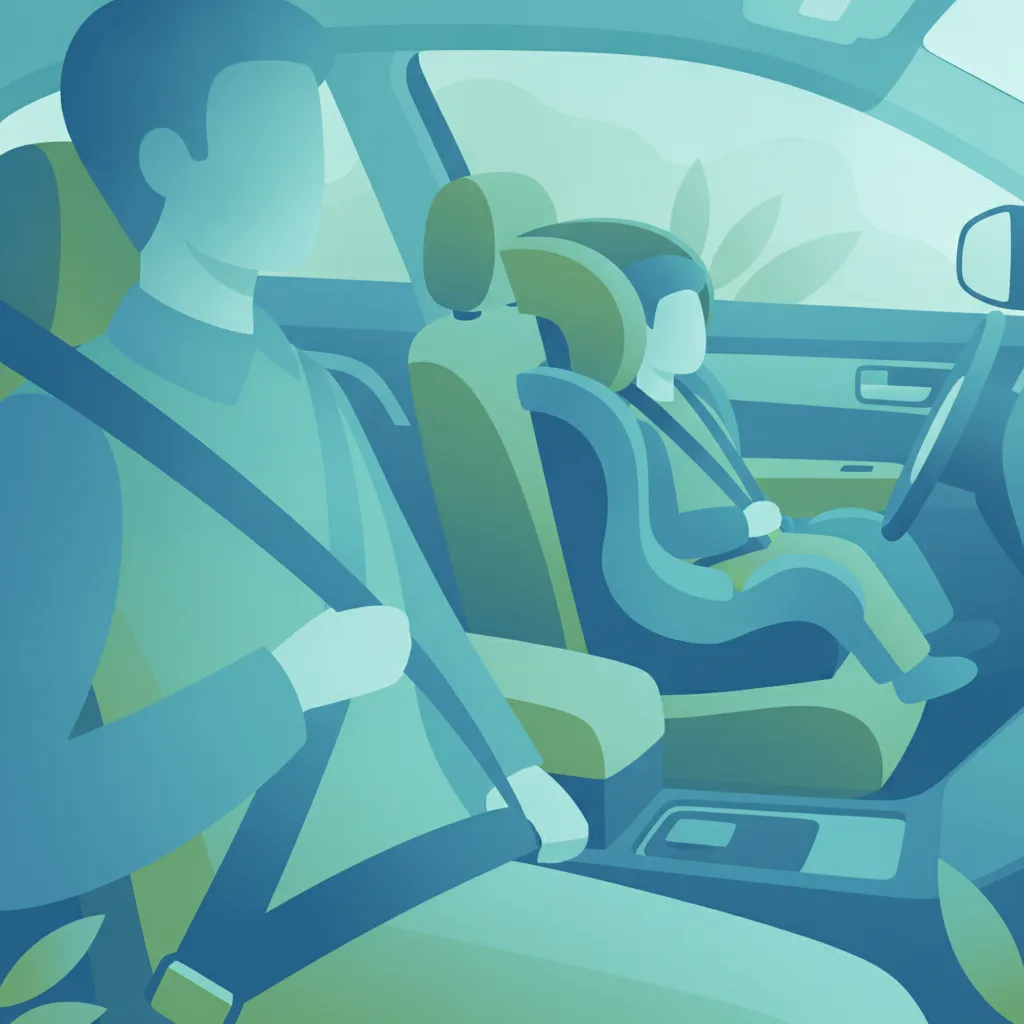
The driver of a vehicle is legally responsible for ensuring that all passengers, particularly minors, are safely restrained. This lesson explains seatbelt enforcement laws and the mandatory child safety seat requirements based on height, weight, and age. You will learn to use the standardized ISOFIX system and understand when and how to safely deactivate passenger airbags for rear-facing infant seats.
Find clear answers to common questions learners have about Legal Obligations and Professional Conduct. Learn how the lesson is structured, which driving theory objectives it supports, and how it fits into the overall learning path of units and curriculum progression in France. These explanations help you understand key concepts, lesson flow, and exam focused study goals.
The primary responsibility is the safety and well-being of all passengers. Legal obligations require you to balance strict scheduling with defensive driving and adherence to all traffic regulations to ensure passenger security.
While the core duty of care remains the same, your legal scope is determined by your licence category. You must strictly operate within the vehicle capacity limits defined by your specific licence (D1, D, D1E, or DE) to remain compliant with the law.
The theory exam often presents situational questions where the 'correct' answer emphasizes safety, compliance, and professional ethics. Prioritizing passenger security over speed or convenience is frequently the key to identifying the correct answer.
Under French law, failures in professional conduct can lead to severe penalties, including fines, points on your licence, or the suspension of your professional driving privileges. Demonstrating an understanding of these consequences is a common theme in the theory exam.
Ready to focus your study? Use the practice search to find exactly the French driving theory questions you need for the Code de la route and permis de conduire ETG. Refine your knowledge on specific topics or challenging rules to boost your confidence and exam readiness.