This lesson provides an essential guide to the specific traffic signs and markings encountered by professional drivers of categories D1, D, D1E, and DE. By mastering these regulatory symbols, you will ensure full compliance with the Code de la route, avoid hazardous physical collisions, and maintain professional safety standards across the French road network.
Lesson content overview
Navigating heavy passenger vehicles, such as buses, coaches, and articulated public transport units, demands a sophisticated understanding of the French Code de la route (highway code). Because of their substantial dimensions, high weight profiles, and the responsibility of carrying dozens of passengers, Category D, D1, D1E, and DE drivers must adhere to regulatory road signs designed specifically for heavy passenger vehicles.
Failing to recognize these indicators can lead to severe structural accidents, such as striking low bridges, compromising the integrity of historical routes, obstructing municipal services, or incurring substantial financial penalties and license points. This lesson details the specific road signs, markings, and priority signals that govern passenger transport operations across France.
Buses and coaches present unique spatial profiles. Double-decker coaches (autocars à deux étages) and modern urban buses equipped with roof-mounted climate control units, auxiliary heaters, or cellular receivers have heights that far exceed standard passenger cars.
                       ___[HVAC Unit]___
                      /                 \
                     |   ================   |  <-- Max Roof Height
                     |                      |
                     |     Double-Decker    |
                     |        Coach         |
                     |                      |
                     ========================  <-- Ground Level
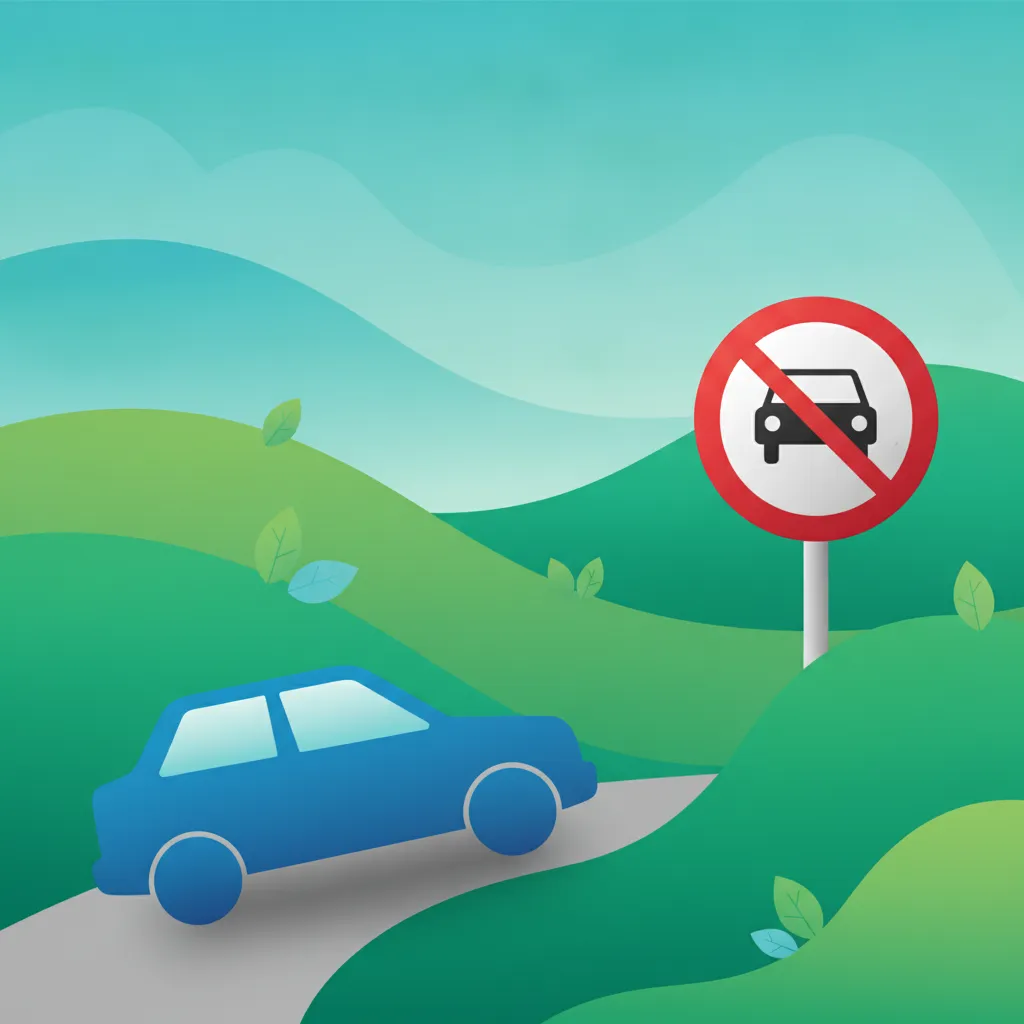
The primary indicator for vertical clearance is the Sign B11, a regulatory prohibition sign consisting of a red circle with black arrows pointing to the top and bottom of a central numerical value (expressed in metres).
Under Article R412-43 of the Code de la route, any driver who attempts to pass a Sign B11 with a vehicle exceeding the designated height is subject to a class 4 fine, potential vehicle impoundment, and civil liability for any structural damage caused.
Know Your Exact Fleet Height: Memorize or display the exact total height of your bus, including all auxiliary roof gear, on a placard in the driver's cockpit.
Scan Advanced Warning Signs: Look for rectangular advisory signs (panneaux de présignalisation) placed several hundred metres before bridges, tunnels, or underpasses, which provide early detour opportunities.
Take the Mandatory Detour: If your vehicle's physical height matches or exceeds the posted limit, execute the signed detour route immediately. Do not enter the restricted approach.
Buses and heavy coaches exert significant stress on road surfaces, historic bridges, and elevated urban causeways. Consequently, the French road network utilizes weight-restriction signs to preserve public infrastructure.
In France, heavy vehicle weight signs typically refer to the PTAC (Poids Total Autorisé en Charge, or Gross Vehicle Weight). The PTAC is a fixed, certified value printed on the vehicle registration document (Carte Grise). Even if a coach is currently empty of passengers, if its registered PTAC exceeds the value displayed on Sign B12, it is legally prohibited from traversing that route.
The maximum legal weight of the individual vehicle when fully loaded with fuel, driver, passengers, and luggage, as certified by the manufacturer and transport authorities.
Some older bridges, rural routes, or historic city centres are limited by axle load rather than total vehicle weight. This is indicated by Sign B13.
                     [Front Axle]           [Rear Tandem Axles]
                     O===========O          O===========O===========O
                       Max: 4.5t               Max: 7.5t per axle
For D-category vehicles, loading must be balanced. An uneven distribution of heavy passenger luggage in under-floor bays, or an overload of standing passengers at the rear of an urban bus, can cause a single axle to exceed legal limits even if the total vehicle weight remains below the maximum PTAC.
To improve the punctuality of public transport and reduce municipal gridlock, French road networks utilize dedicated bus lanes (Voies réservées aux transports en commun).
Reserved lanes are designated using both vertical signs and explicit horizontal road surface markings.
Designated stops are critical for passenger safety, wheelchair ramp deployment, and maintaining predictable traffic patterns.
The physical space of a bus stop is delimited by yellow zig-zag pavement markings (marquage en zig-zag jaune).
                      __________________________________
                     /                                  \
                    |   /\/\/\/\  BUS  /\/\/\/\          | <-- Yellow Zig-Zag
                     \__________________________________/
Stopping outside of designated, regulated bus stops to load or unload passengers is a serious infraction under the Code de la route. Unregulated stops put boarding passengers at risk of being struck by overtaking vehicles or cyclists.
Speed limits for Category D vehicles in France are not always the same as those for light passenger cars. Speed restrictions are based on the vehicle's total weight classification and the type of route.
Under Article R413-8 of the Code de la route, passenger transport vehicles with a GVW (PTAC) exceeding 3.5 tonnes must adhere to the following strict speed limits:
| Road Type | Standard Buses & Coaches (PTAC > 3.5t) | Articulated / Towing Vehicles (PTAC > 12t or with Trailer) |
|---|---|---|
| Motorways (Autoroutes) | 90 km/h (100 km/h if equipped with ABS and specific safety approvals) | 90 km/h |
| Dual Carriageways (Routes à deux chaussées séparées) | 90 km/h | 80 km/h |
| Standard Rural Roads (Routes hors agglomération) | 80 km/h | 80 km/h |
| Urban Built-Up Areas (Agglomérations) | 50 km/h | 50 km/h |
All passenger transport vehicles over 3.5 tonnes must display round speed limit stickers on the rear left of the vehicle body. These discs indicate the maximum speeds the vehicle is legally allowed to travel (e.g., "70", "80", "90", or "100" discs depending on the vehicle classification and whether it is configured for urban or interurban transit).
In many French metropolitan areas, public transport networks use dedicated traffic light signals at intersections to maintain scheduled services.
Where buses run on physically separated lanes (sites propres), standard three-color traffic lights are replaced by white-light geometric indicators on a black background.
       [   |   ]  Vertical Bar   --> Go (Equivalent to Green Light)
       [   o   ]  White Circle   --> Prepare to Stop (Equivalent to Amber Light)
       [   -   ]  Horizontal Bar --> Stop (Equivalent to Red Light)
These signals are highly directional and apply strictly to the vehicle operating within the dedicated transit corridor. General traffic must ignore these white-light signals and follow standard traffic lights.
During heavy rain, snowfall, or dense fog, overhead warning structures and vertical signs can become obscured.
A common mistake for new Category D drivers is assuming that passenger placement does not affect weight limits.
To ensure safe passenger transport and pass the Category D theory exam, you must memorize the direct legal consequences of each specific road sign:
Explore all units and lessons included in this driving theory course.
Lesson content overview
Explore all units and lessons included in this driving theory course.
Explore search topics learners often look for when studying Road Signs Specific to Passenger Vehicles. These topics reflect common questions about road rules, driving situations, safety guidance, and lesson level theory preparation for learners in France.
Browse additional driving theory lessons that cover connected traffic rules, road signs, and common driving situations related to this topic. Improve your understanding of how different rules interact across everyday traffic scenarios.
Learn the specific speed restrictions for buses and coaches on different French road types, including motorway and urban speed limits. This guide explains the geometric signal systems and right-of-way rules for public transport drivers to ensure safe operation at intersections and roundabouts under the Code de la route.
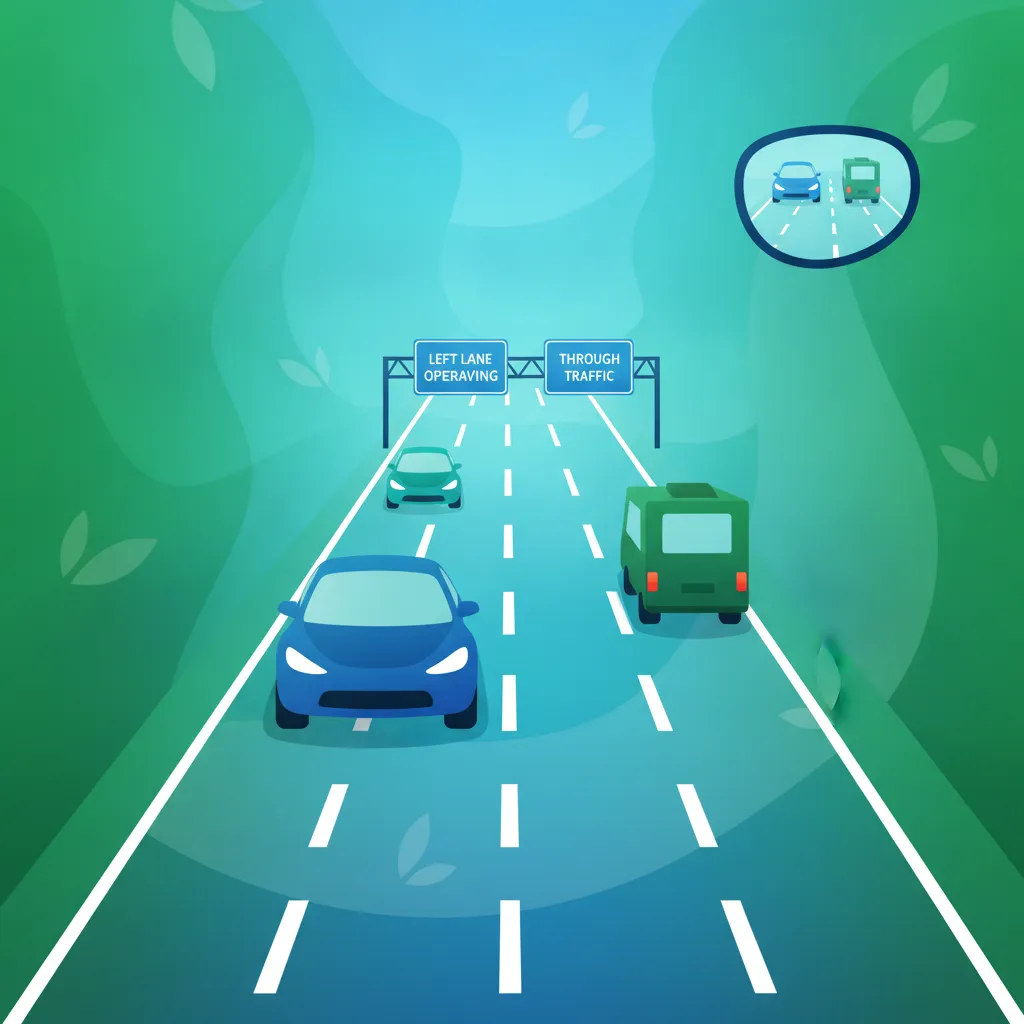
This lesson covers the rules of driving passenger vehicles on high-speed French motorways (autoroutes). Learners will study entry-ramp merging protocols, lane restrictions for vehicles over 3.5 tonnes, and motorway-specific speed limits. The lesson also highlights the correct use of toll booths (péages), emergency hard-shoulder safety procedures, and accessing dedicated coach rest areas.

This lesson details the specific legal speed limits for passenger transport vehicles on motorways, rural trunk roads, and urban streets under French law. Drivers will learn how speed limits shift depending on overall vehicle weight, towing arrangements, and poor weather conditions like heavy rain. Developing a proactive approach to speed management helps maintain stable vehicle control and ensures full regulatory compliance.
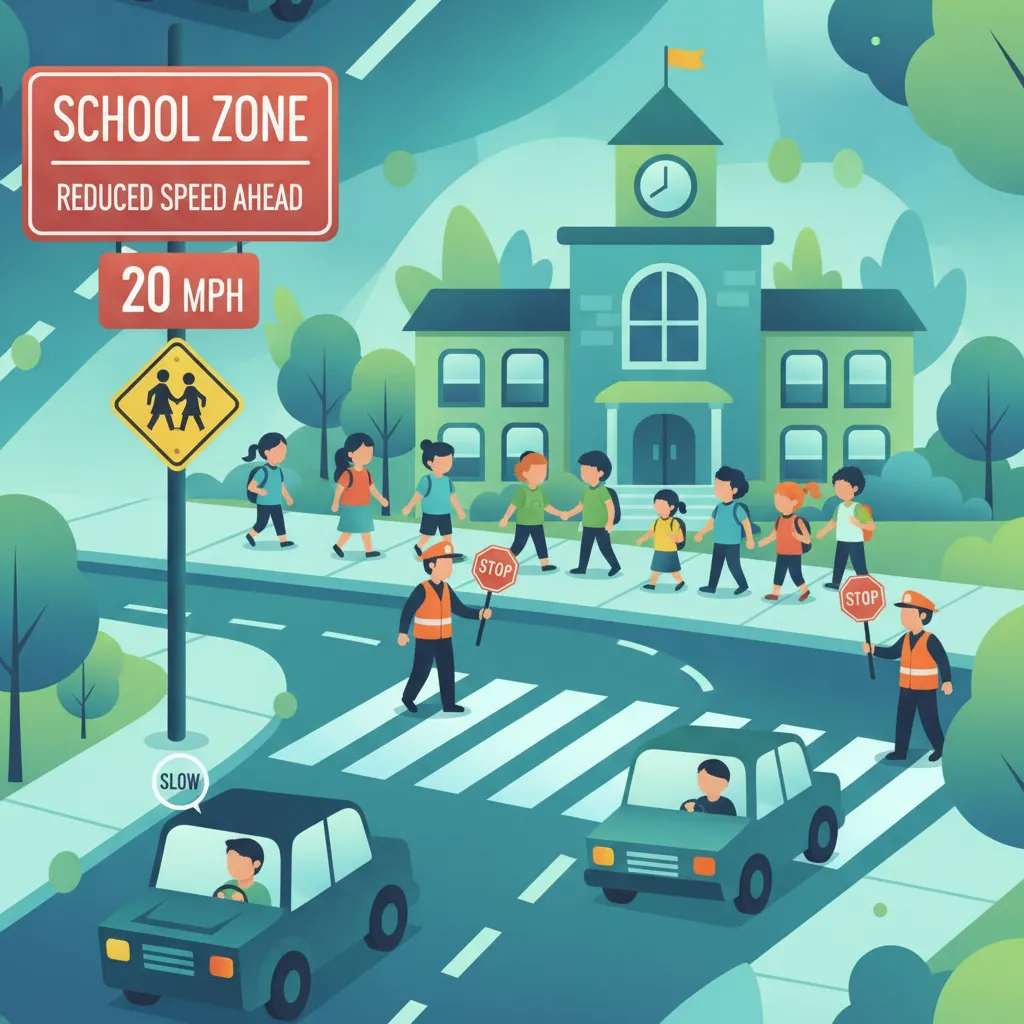
This lesson focuses on the legal rules and safety procedures required within school zones and during school transport (transport scolaire) services in France. Drivers will study strict speed limits, school bus warning sign applications, and mandatory stopping rules when children are boarding. It also details how to respond to official crossing guard signals and ensure students are safely clear before moving.
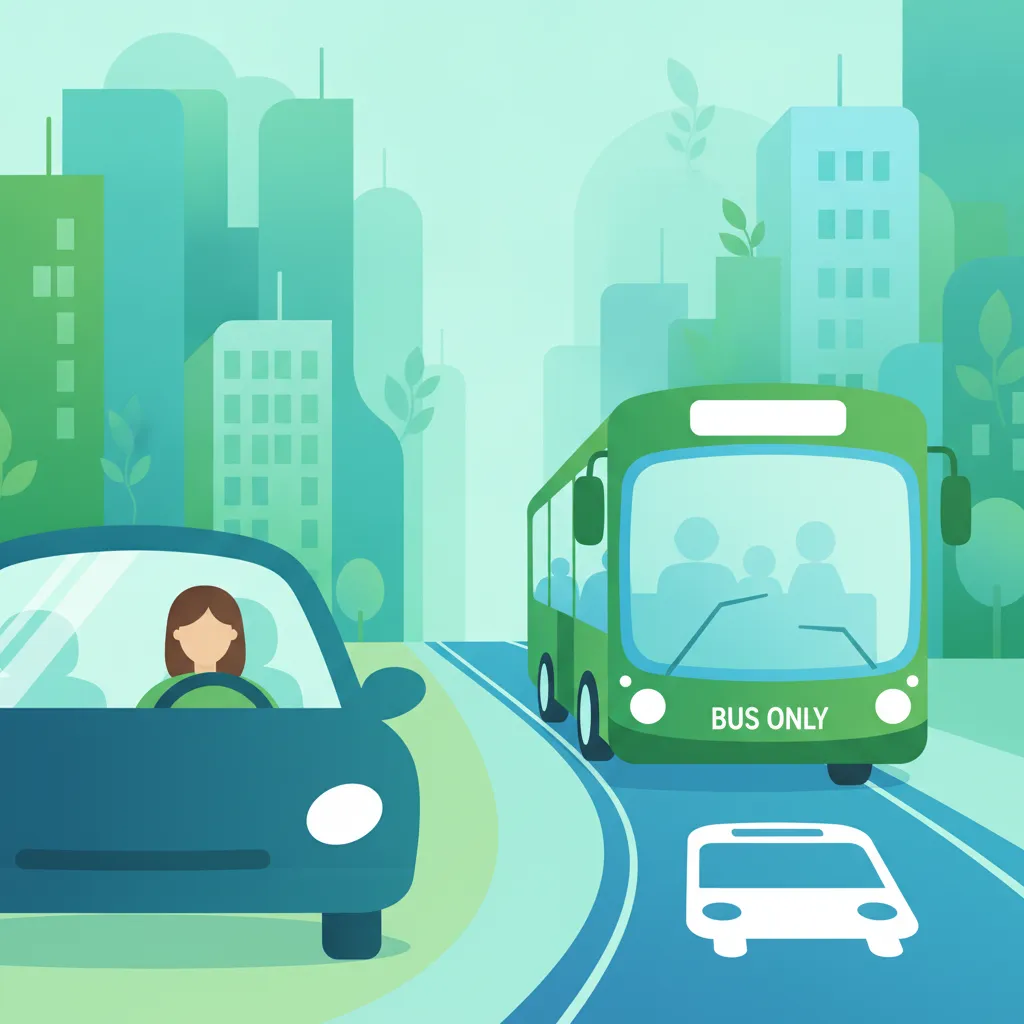
This lesson detail the exact laws governing the use of reserved bus lanes, detailing who may enter them and during what hours of operation. Drivers will study the penalties for unauthorized passenger cars occupying these lanes and the safety protocols for lane sharing with taxi cabs or cyclists. The lesson also highlights safe lane-merging practices when exiting reserved spaces to merge back into general urban traffic.
This lesson examines the regulatory limits and environmental controls applied to large passenger vehicles operating in dense French urban centers. Drivers will study the Crit'Air clean air sticker system and low-emission zones (ZFE) that restrict access for older, high-polluting vehicles. It also addresses navigating physical constraints, such as narrow streets, tight turning radii, and strict municipal weight limits.
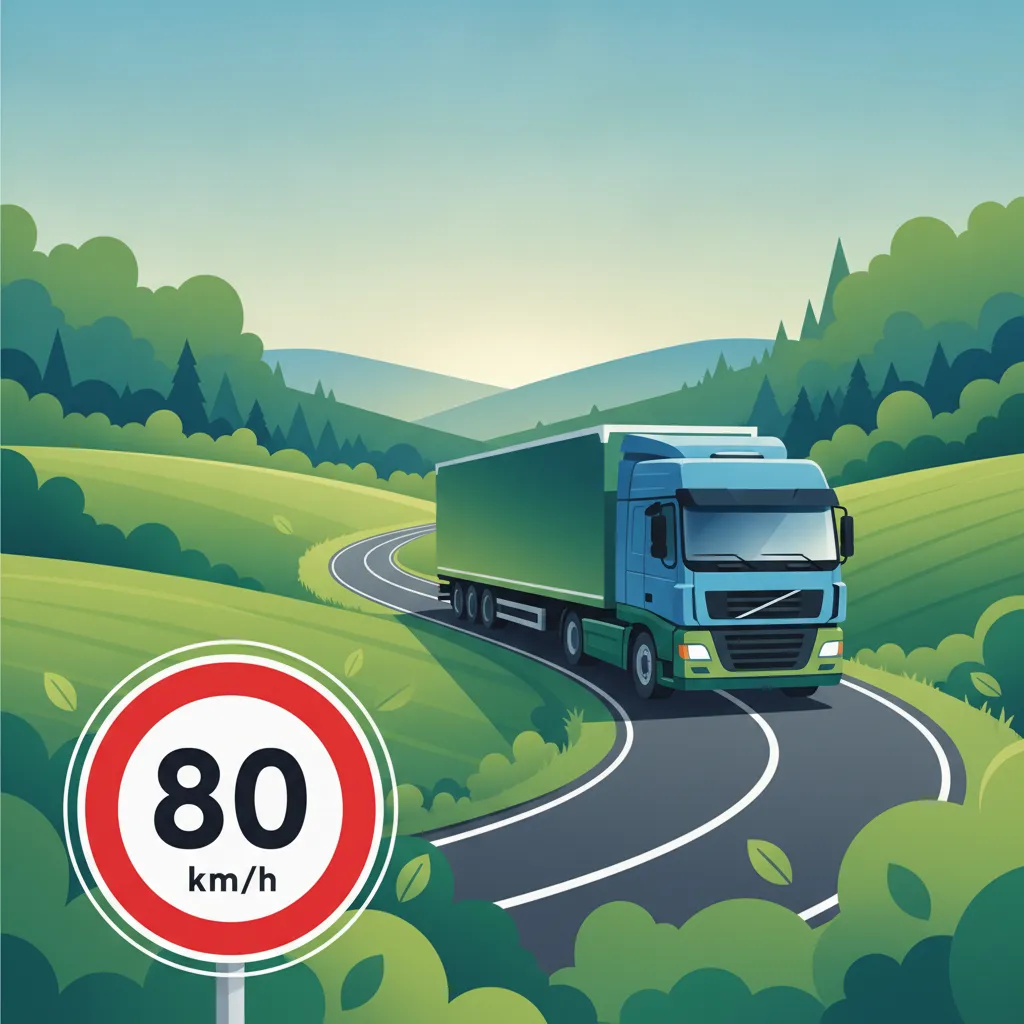
In this lesson, drivers will learn the specific speed limits that apply to goods vehicles across different road types in France, including urban areas, rural roads, and motorways. The content covers the differences between speed limit signs for heavy vehicles and standard passenger cars, the legal basis for these limits, and the importance of speed adaptation based on vehicle category and load. Learners will also be introduced to speed enforcement methods used in France, such as radar and speed cameras.
Public transit vehicles like city buses and streetcars (trams) have clear legal priorities and dedicated infrastructure in urban areas. This lesson teaches you to recognize reserved transit lanes and your legal obligation to yield to buses exiting their designated stops. You will also learn safe driving strategies near tram tracks, ensuring you never block public transit lines or risk passenger boarding areas.

This lesson details the legal restrictions and appropriate use of acoustic horns and visual turn signals under the French Code de la route. Drivers will understand that in urban zones, the horn may only be used to warn of immediate, unavoidable danger to prevent accidents. It covers the correct timing of indicators and hazard lights to communicate intent clearly to surrounding traffic and pedestrians.

This lesson examines French Code de la route laws regarding pedestrian right-of-way, emphasizing the driver's legal duty to yield to any pedestrian engaged in crossing. It outlines proper approach speeds when approaching zebra crossings with obstructed views. Candidates will learn to maintain a safe physical buffer zone and verify that crosswalks are entirely clear of pedestrians before accelerating.

This lesson emphasizes the critical importance of maintaining a safe following distance when carrying dozens of passengers. Learners will study how vehicle weight and passenger load dynamically extend braking and total stopping distances compared to standard passenger cars. The lesson provides concrete spacing rules, such as adjusted safety gaps for highway driving and increased distances on slippery roads.
Understand the regulatory requirements for maneuvering large passenger vehicles in urban environments, including bus lane usage, safe stopping at designated zones, and managing blind spots. This lesson explores the practical challenges of navigating narrow streets and interacting with vulnerable road users within French city centers.

This lesson analyzes the various traffic challenges unique to operating large passenger vehicles in historic and modern French urban areas. Drivers will learn to manage narrow street layouts, double-parked delivery trucks, and high-density multi-lane roundabouts safely. The lesson emphasizes defensive driving strategies, route adjustments, and maintaining mental focus under severe schedule and time pressures.
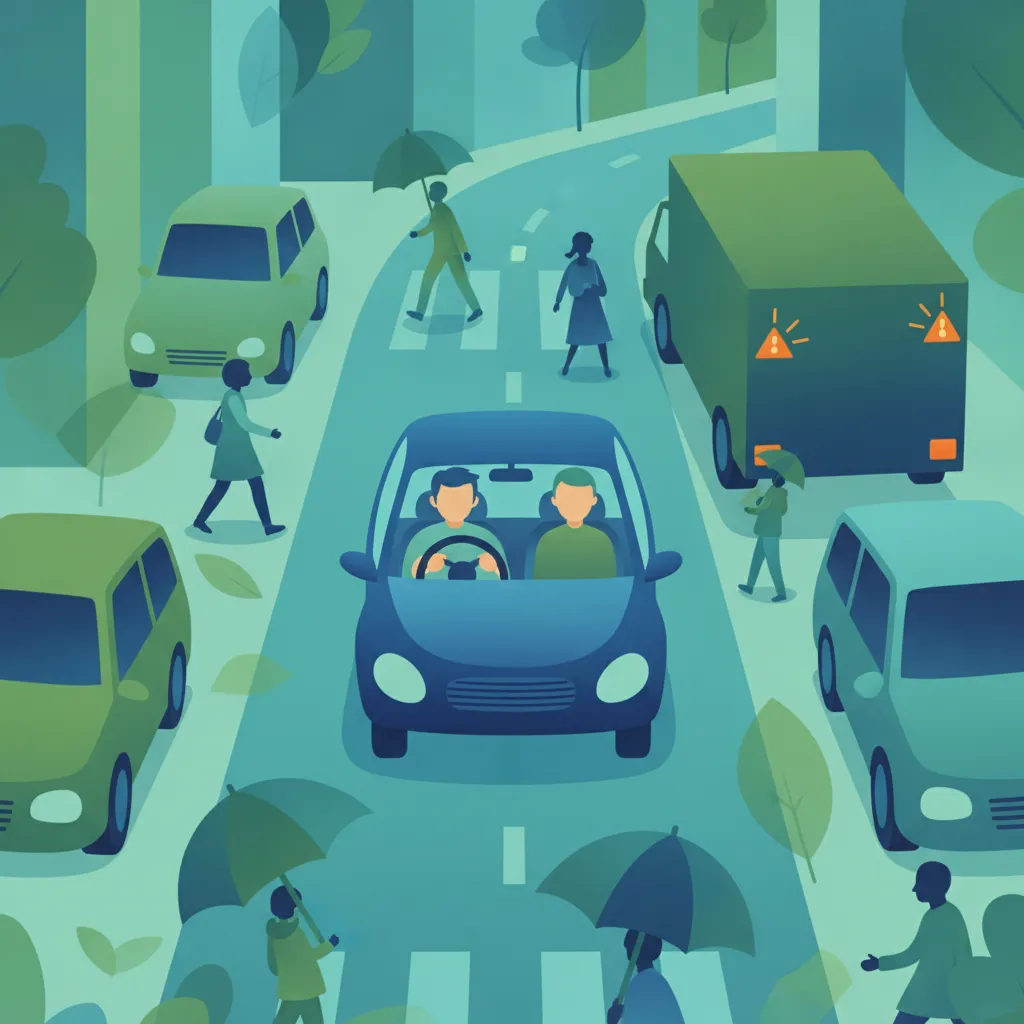
This lesson focuses on maneuvering in extremely crowded areas, passenger terminals, or narrow streets blocked by parked vehicles and obstacles. Drivers will learn to assess clearance distances precisely before committing to narrow pathways. The content teaches steering techniques that maintain stability, optimize space usage, and prioritize public safety during slow-speed, high-difficulty maneuvers.

This lesson analyzes the technical path a long wheelbase vehicle must take when turning at intersections and navigating roundabouts. Drivers will learn to calculate tail swing and rear-wheel tracking, intentionally swinging wide to clear roadside curbs and poles safely. The lesson emphasizes yielding protocols for pedestrians and cyclists who may be crossing the target street during the turn.

This lesson teaches specific visual scanning methods to detect vulnerable road users, such as children, elderly individuals, and cyclists near stops. Drivers will learn to anticipate sudden movements, like a passenger running to catch a bus or stepping off a sidewalk unexpectedly. Managing the massive blind spots around the front and right-hand sides of passenger vehicles is highlighted as a critical safety duty.

This lesson focuses on the technical skills required to position a large bus or coach parallel to the boarding curb. Drivers will learn to minimize the gap between the vehicle steps and the sidewalk, preventing tripping hazards for boarding passengers. The lesson also covers safe approach angles, mirror alignment, and positioning rules that avoid contact with curbside objects or waiting pedestrians.

This lesson details how to manage high-risk interactions with pedestrians who may step off curbs or cross the road near bus stops. Learners will study French Code de la route laws regarding pedestrian priority at crosswalks and near stopping transit vehicles. Developing heightened spatial awareness around blind zones near the front of the bus is emphasized to prevent tragic pedestrian collisions.

This lesson addresses the challenges of positioning near larger vehicles such as cars, vans, buses, and lorries on French roads. Learners will learn to identify blind spots (angles morts), maintain a safe distance, and position themselves to maximize visibility and predictability. Understanding these dynamics is crucial for AM riders to avoid dangerous situations and ensure safe overtaking and lane sharing.

This lesson examines the flow of passengers entering and exiting the vehicle and how to organize this movement to reduce stop delays safely. Drivers will study the operation of door safety interlocks, sensitive edges, and onboard monitoring cameras to prevent boarding accidents. It also covers coordinating priority boarding for elderly, pregnant, or injured passengers in a polite and structured manner.
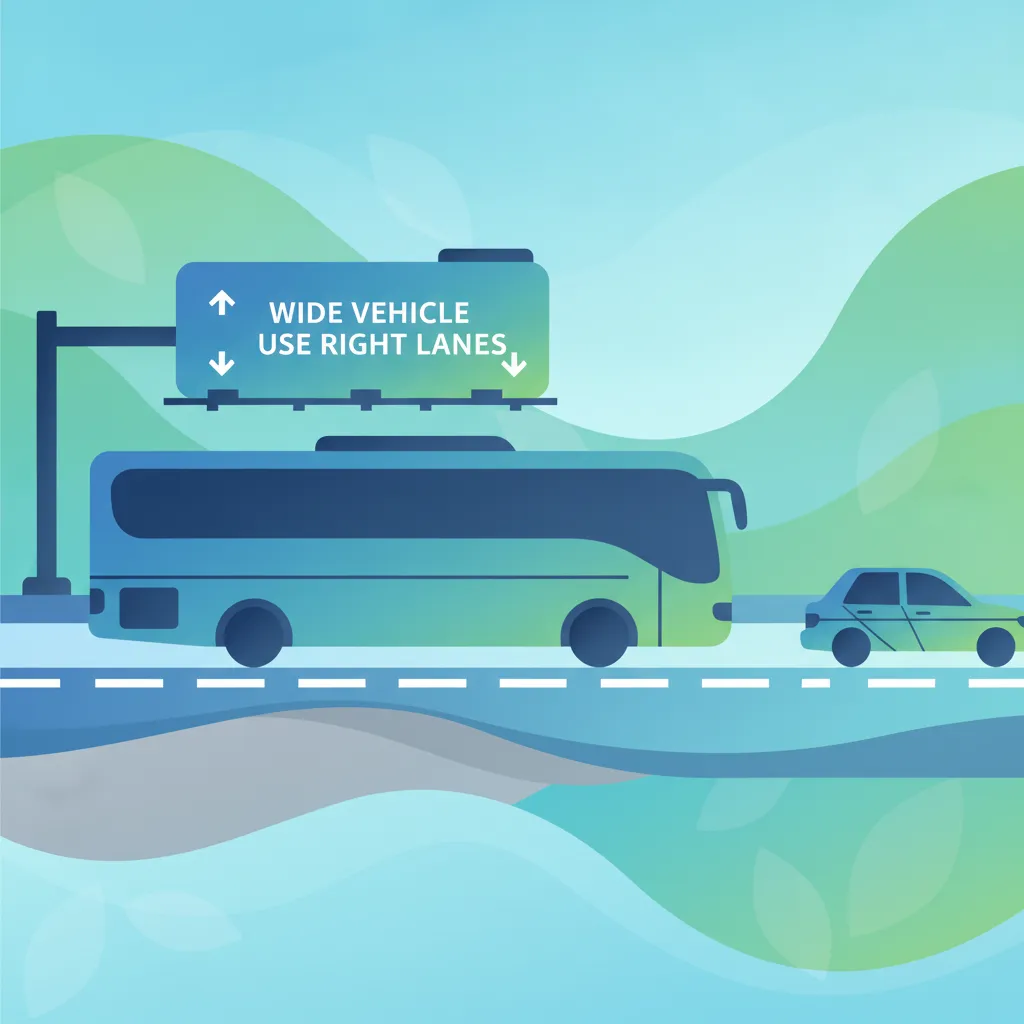
This lesson details the rules of lane discipline for operating wider and longer passenger transport vehicles on highway and city networks. Learners will explore proper lane positioning to prevent encroachment on adjacent lanes or sidewalks. It also covers the step-by-step visual and signaling sequence required to perform safe lane changes, avoiding sudden movements that could startle other drivers.
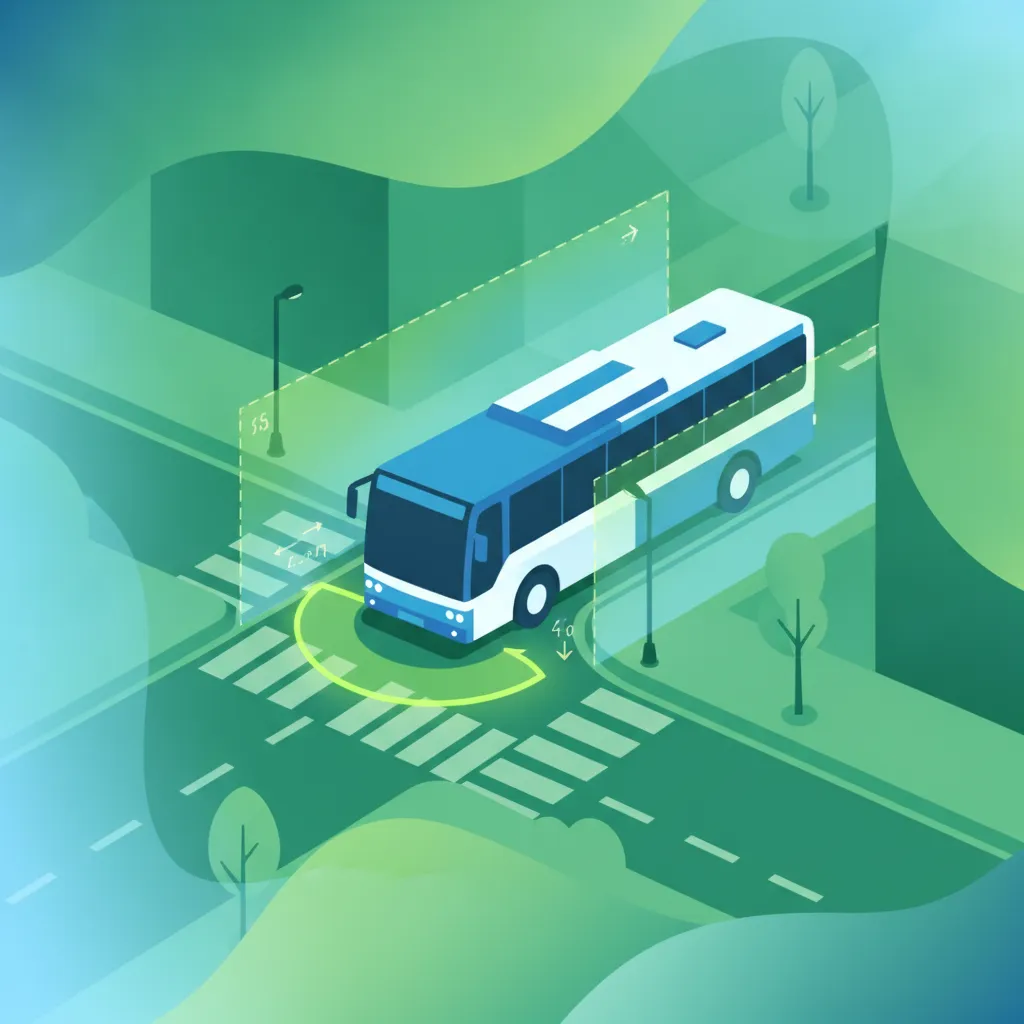
This lesson covers the physical dimensions of passenger vehicles and how their high profile, length, and width alter spatial awareness on the road. Learners will study tail-swing mechanics and track the path of the rear wheels during sharp turns to avoid hitting roadside obstacles. Accurate measurement of overhead structures, bridges, and underpass clearances is taught to prevent catastrophic structural collisions.
Find clear answers to common questions learners have about Road Signs Specific to Passenger Vehicles. Learn how the lesson is structured, which driving theory objectives it supports, and how it fits into the overall learning path of units and curriculum progression in France. These explanations help you understand key concepts, lesson flow, and exam focused study goals.
Yes, while the symbol is the same, the legal implications are more severe. A bus or coach driver must always verify their vehicle's actual height, including roof equipment, against the sign, as failure to do so can lead to catastrophic structural damage and significant liability.
Look for road markings featuring a diamond symbol or the word BUS painted on the tarmac, accompanied by vertical signs indicating access rules. These zones are strictly monitored, and improper use can result in fines that impact your professional record.
No, specific signs or supplementary plates may impose lower speed limits based on vehicle type or size. As a professional driver, you must prioritize these vehicle-specific restrictions over the general speed limits indicated for cars.
If you are driving a fully loaded bus or coach, you must always adhere to the posted weight limit signs. You should have a pre-planned route that avoids these restricted zones, and if you encounter one unexpectedly, you must safely find an alternative route immediately to maintain compliance.
Ready to focus your study? Use the practice search to find exactly the French driving theory questions you need for the Code de la route and permis de conduire ETG. Refine your knowledge on specific topics or challenging rules to boost your confidence and exam readiness.