This lesson covers the specific regulatory constraints and physical challenges of operating heavy passenger vehicles in dense French urban environments. You will learn how to navigate low-emission zones (ZFE) and interpret municipal restrictions to ensure full compliance with the Code de la route. This knowledge is essential for professional safety and passing your D or D1 category theory exam.
Lesson content overview
Operating large passenger vehicles—such as urban buses (autobubs) and intercity coaches (autocars)—within dense French urban centers requires a thorough understanding of specialized regulations. Drivers holding Category D1, D, D1E, or DE licenses must navigate a complex matrix of environmental controls, municipal weight limits, and physical road constraints.
These regulations are designed to safeguard historic urban infrastructure, prioritize public transit flow, protect vulnerable road users, and drastically reduce air pollution in populated metropolitan areas. Failing to respect these boundaries compromises passenger safety, risks severe structural damage, and results in heavy financial and administrative penalties.
The French national clean air initiative relies on the Crit'Air vignette system (officially known as the certificat qualité de l'air). This system classifies all motor vehicles based on their environmental pollutant emissions, focusing primarily on fine particulate matter ( and ) and nitrogen oxides ().
The classification divides vehicles into six distinct, color-coded categories:
For heavy passenger vehicles (M2 and M3 vehicle classes, which correspond to Category D1 and D licenses), these classifications are strictly mapped to the vehicle's European Emission Standard (norme Euro).
Commercial Diesel Classification: A common misconception among commercial drivers is that all diesel buses are automatically assigned to Crit'Air 4 or 5. In reality, a modern Category D bus equipped with a Euro VI-compliant engine is classified under Crit'Air 2. Drivers must verify the vehicle's registration certificate (carte grise), specifically section V.9, to determine the exact Euro standard before applying the physical sticker.
The physical vignette must be ordered through the official French governmental portal and permanently adhered to the lower-right corner of the vehicle's windshield, facing outward. The sticker must remain fully visible and unobstructed by wipers, sun-strips, or passenger-information displays.
Operating a passenger vehicle in a restricted zone without a properly displayed vignette, or with an obscured sticker, constitutes a traffic violation.
A Low Emission Zone—officially termed Zone à Faibles Émissions mobilité (ZFE-m)—is a geographically defined urban area where local authorities restrict access to vehicles based on their Crit'Air classification. Under French environmental law (Loi d'orientation des mobilités or LOM), all major French agglomerations with more than 150,000 inhabitants are progressively establishing permanent ZFEs.
A legally designated urban perimeter where access, driving, and parking are restricted for high-emission vehicles. Restrictions are enforced based on the vehicle's Crit'Air vignette class and can vary depending on the vehicle's weight category (e.g., differentiating light vehicles from heavy passenger vehicles).
ZFE-m schemes operate under two distinct regulatory frameworks:
Heavy goods vehicles and heavy passenger vehicles over 3.5 tonnes (classified as ZFE-GV or ZFE Grands Véhicules) are often subject to stricter timetables and faster phase-out schedules than light passenger cars.
Enforcement is conducted via both stationary roadside checks by law enforcement and automated license plate recognition (ALPR) camera networks located at the boundary entry points of the zones.
French urban areas, particularly the historic centers of ancient towns, are protected by strict structural and dimensional regulations. These municipal restrictions (arrêtés municipaux) prevent large vehicles from damaging historic architecture, underground vaults, and aging bridge spans.
Heavy passenger vehicles introduce massive dynamic loads onto urban roadways. Municipalities utilize specific traffic signs to restrict vehicle weights:
This restriction is vital when navigating near historic structures or older bridges where the structural integrity of the masonry cannot support heavy axle loads. In addition to total gross weight, drivers must watch for axle-load limits, usually signaled by sign B13, which restricts weight per axle (typically 13 tonnes for main driving axles or 10 tonnes for secondary axles).
Due to protruding historic balconies, narrow street layouts, and low-clearance tunnels, vertical and lateral dimensions are tightly monitored:
When operating double-decker coaches (autocars à étage), which often measure up to 4.0 meters in height, hitting a low bridge or underpass is a catastrophic safety risk. Drivers must actively calculate their exact vehicle height, including roof-mounted auxiliary equipment such as AC units or Wi-Fi domes, and match this against posted limits.
To promote public transit and keep cities moving, French traffic law (Code de la route) grants special privileges to scheduled transport. However, these privileges do not automatically extend to all categories of passenger vehicles.
Bus lanes are marked with a thick, white dashed line on the asphalt and the word "BUS" painted repeatedly on the lane surface. They are regulated by sign M9g (which details who is permitted to use the lane).
The Code de la route prohibits standard vehicles from stopping or parking in designated public transit stops. This protection applies to both passenger vehicle drivers and other road users:
Successfully maneuvering a vehicle that can exceed 12 meters in length (or up to 18.75 meters for articulated buses) through narrow urban layouts requires highly developed spatial awareness and an understanding of vehicle geometry.
The outswing—or porte-à-faux—is the portion of the vehicle's body that extends beyond the front and rear axles. It creates significant lateral sweep during tight turns:
Scan the Target Area: Before initiating a turn, check your mirrors for pedestrians standing close to the curb edge, as well as street furniture, traffic lights, or parked cars.
Reduce Speed: Approach the turn at walking speed to maintain absolute control over the vehicle's trajectory and reactions.
Position the Vehicle: Move slightly wider into the lane before turning (without encroaching dangerously into oncoming traffic) to optimize your entry angle.
Monitor the Mirror: As you turn the steering wheel, look into the mirror opposite the direction of the turn to observe the rear body sweeping outward.
Adjust and Clear: Delay full steering lock until the front axle has cleared the curb corner, ensuring the rear tires do not climb the sidewalk and the rear swing does not hit obstacles on the outer side.
Large passenger vehicles require a vast turning circle (rayon de braquage).
Before entering a narrow residential street, a driver must scan for warning signs indicating dead ends (impasse), especially those warning that there is no turn-around area suitable for heavy vehicles (Sign C13b with a heavy vehicle symbol). Getting stuck in a narrow urban street with a 15-meter coach can block traffic for hours and require a highly dangerous, escorted reverse maneuver.
Violations of urban restrictions in France carry severe financial and administrative consequences, which scale significantly for heavy commercial vehicles.
Entering a low-emission zone without the required Crit'Air vignette, or driving a vehicle that is banned due to its emission class, is a Class 3 violation for light vehicles but is upgraded to a Class 4 violation for heavy goods vehicles and buses (vehicles over 3.5 tonnes).
Ignoring height (B10a) or weight (B12) limit signs is a serious offense:
Urban driving conditions change rapidly, requiring drivers to constantly adapt to ensure compliance and safety.
In heavy rain, thick fog, or snow, street signs indicating low emission boundaries, height limits, or weight restrictions can become difficult to spot.
Nighttime driving further complicates this, as non-reflective municipal signs may not be easily visible. In these conditions, drivers must rely on defensive route planning and reduce their speed to ensure they have enough time to read and react to roadside signage.
When navigating narrow historic lanes, the proximity to pedestrians, cyclists, and scooter riders is extremely close. Because a large bus has significant blind spots (angles morts), particularly on the lower sides and directly behind, drivers must maintain high vigilance.
In France, heavy vehicles over 3.5 tonnes must display official "Angles Morts" warning stickers on both sides and the rear of the vehicle to alert cyclists and pedestrians of these hazard zones.
A driver is chartering a Euro V diesel coach (Crit'Air 3) to pick up a group near Lyon's central district. Before departure, the driver must verify the Lyon ZFE guidelines. If the Lyon ZFE currently bans Crit'Air 3 heavy vehicles during weekday business hours, the driver must coordinate a meeting point outside the ZFE boundary or secure a special municipal exemption permit (dérogation) beforehand.
While driving an double-decker coach measuring 3.95 meters high, the driver approaches an underpass marked with a B10a sign indicating a "3.8m" height limit. The driver must never attempt to pass, even if they believe the clearance margins might allow it. They must safely halt the vehicle, hazard lights on, and carefully coordinate with local police or execute a safe, assisted reverse maneuver to reroute.
The driver of an 18-meter articulated bus must turn right into a narrow two-lane street. Because of the extreme rear outswing (porte-à-faux arrière), the driver slows to a crawl, checks the left mirror to ensure no cyclists are passing on the left, moves wide to clear the curb with the middle wheels, and continually checks the right mirror to ensure the rear portion of the bus does not swing over the sidewalk where pedestrians are waiting.
Explore all units and lessons included in this driving theory course.
Lesson content overview
Explore all units and lessons included in this driving theory course.
Explore search topics learners often look for when studying Restrictions for Passenger Vehicles in Urban Areas. These topics reflect common questions about road rules, driving situations, safety guidance, and lesson level theory preparation for learners in France.
Browse additional driving theory lessons that cover connected traffic rules, road signs, and common driving situations related to this topic. Improve your understanding of how different rules interact across everyday traffic scenarios.
Learn the theory behind managing vehicle geometry, rear overhang, and turning radii when operating coaches and buses in dense urban environments. This lesson covers spatial awareness techniques and essential safety protocols for navigating historic city centers without structural contact or causing traffic disruptions.

This lesson analyzes the various traffic challenges unique to operating large passenger vehicles in historic and modern French urban areas. Drivers will learn to manage narrow street layouts, double-parked delivery trucks, and high-density multi-lane roundabouts safely. The lesson emphasizes defensive driving strategies, route adjustments, and maintaining mental focus under severe schedule and time pressures.
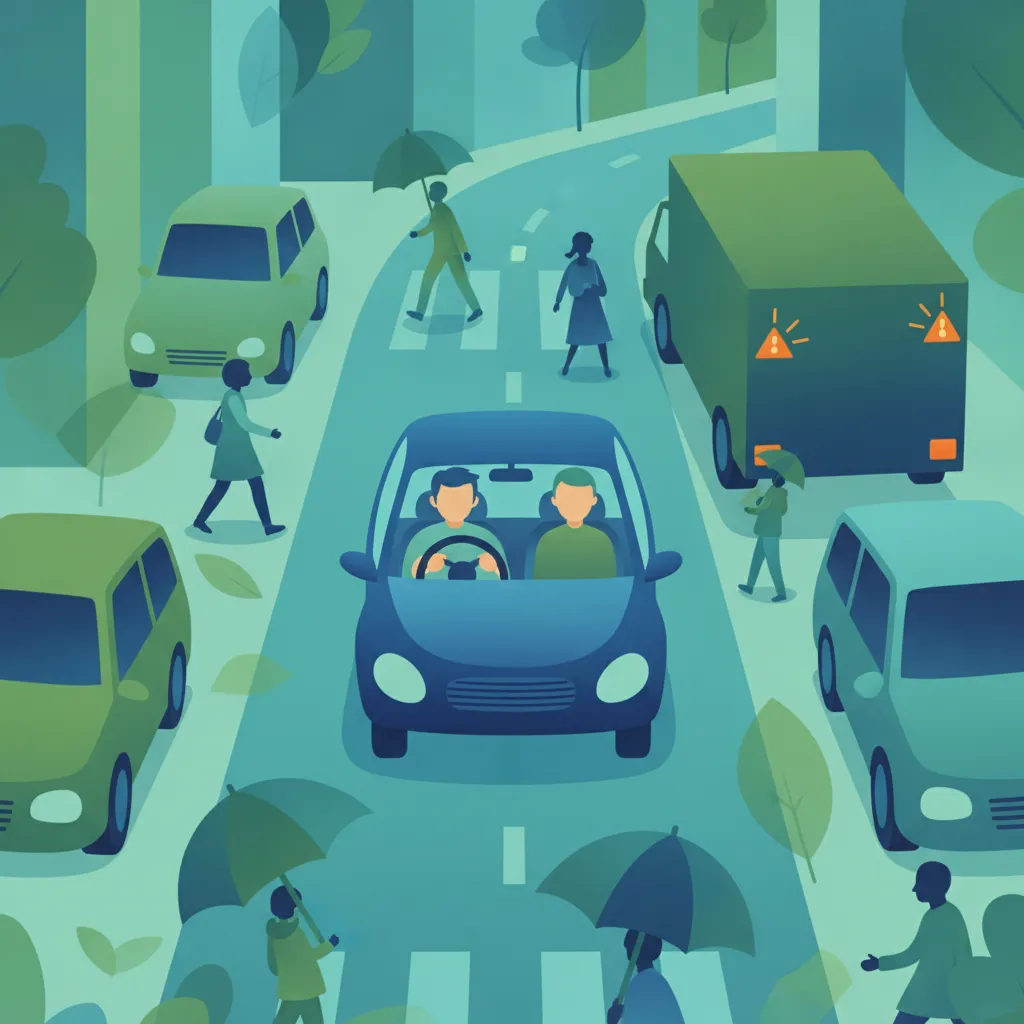
This lesson focuses on maneuvering in extremely crowded areas, passenger terminals, or narrow streets blocked by parked vehicles and obstacles. Drivers will learn to assess clearance distances precisely before committing to narrow pathways. The content teaches steering techniques that maintain stability, optimize space usage, and prioritize public safety during slow-speed, high-difficulty maneuvers.
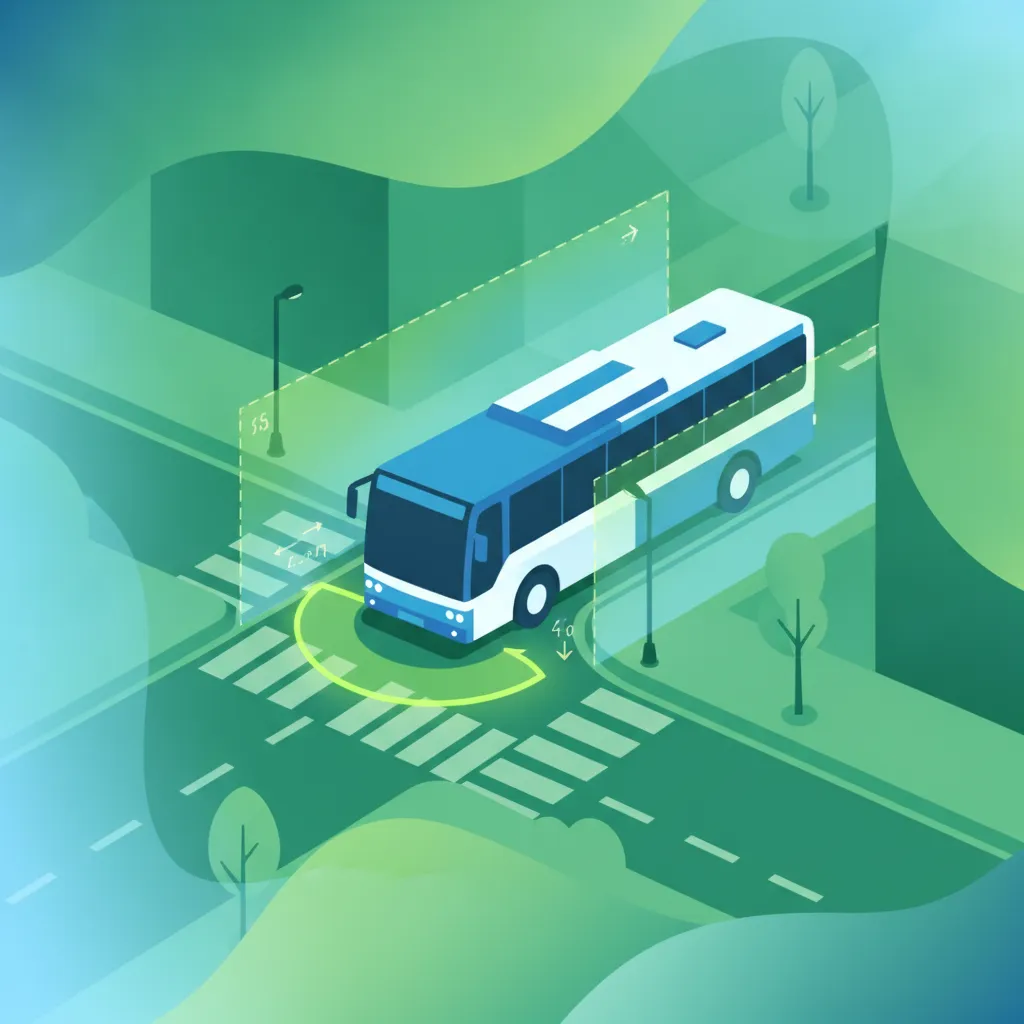
This lesson covers the physical dimensions of passenger vehicles and how their high profile, length, and width alter spatial awareness on the road. Learners will study tail-swing mechanics and track the path of the rear wheels during sharp turns to avoid hitting roadside obstacles. Accurate measurement of overhead structures, bridges, and underpass clearances is taught to prevent catastrophic structural collisions.

This lesson analyzes the technical path a long wheelbase vehicle must take when turning at intersections and navigating roundabouts. Drivers will learn to calculate tail swing and rear-wheel tracking, intentionally swinging wide to clear roadside curbs and poles safely. The lesson emphasizes yielding protocols for pedestrians and cyclists who may be crossing the target street during the turn.
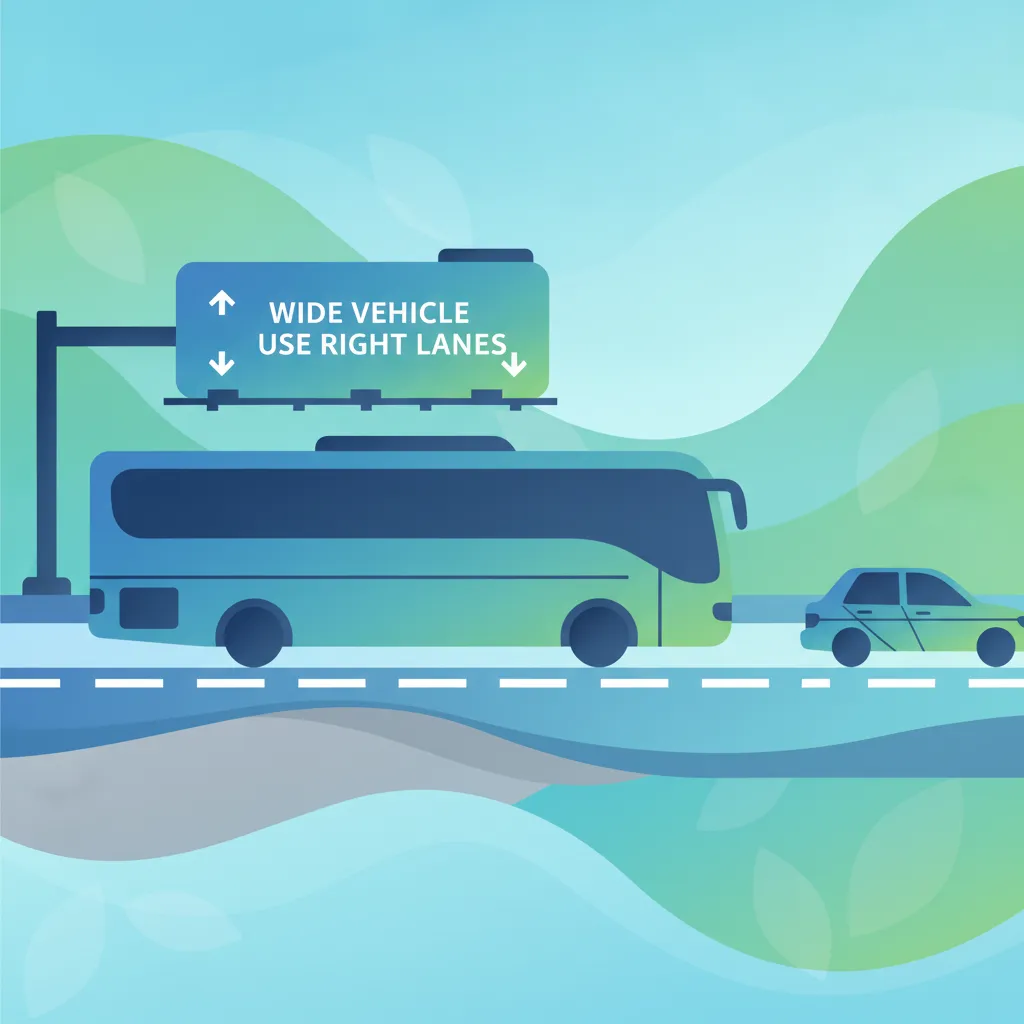
This lesson details the rules of lane discipline for operating wider and longer passenger transport vehicles on highway and city networks. Learners will explore proper lane positioning to prevent encroachment on adjacent lanes or sidewalks. It also covers the step-by-step visual and signaling sequence required to perform safe lane changes, avoiding sudden movements that could startle other drivers.
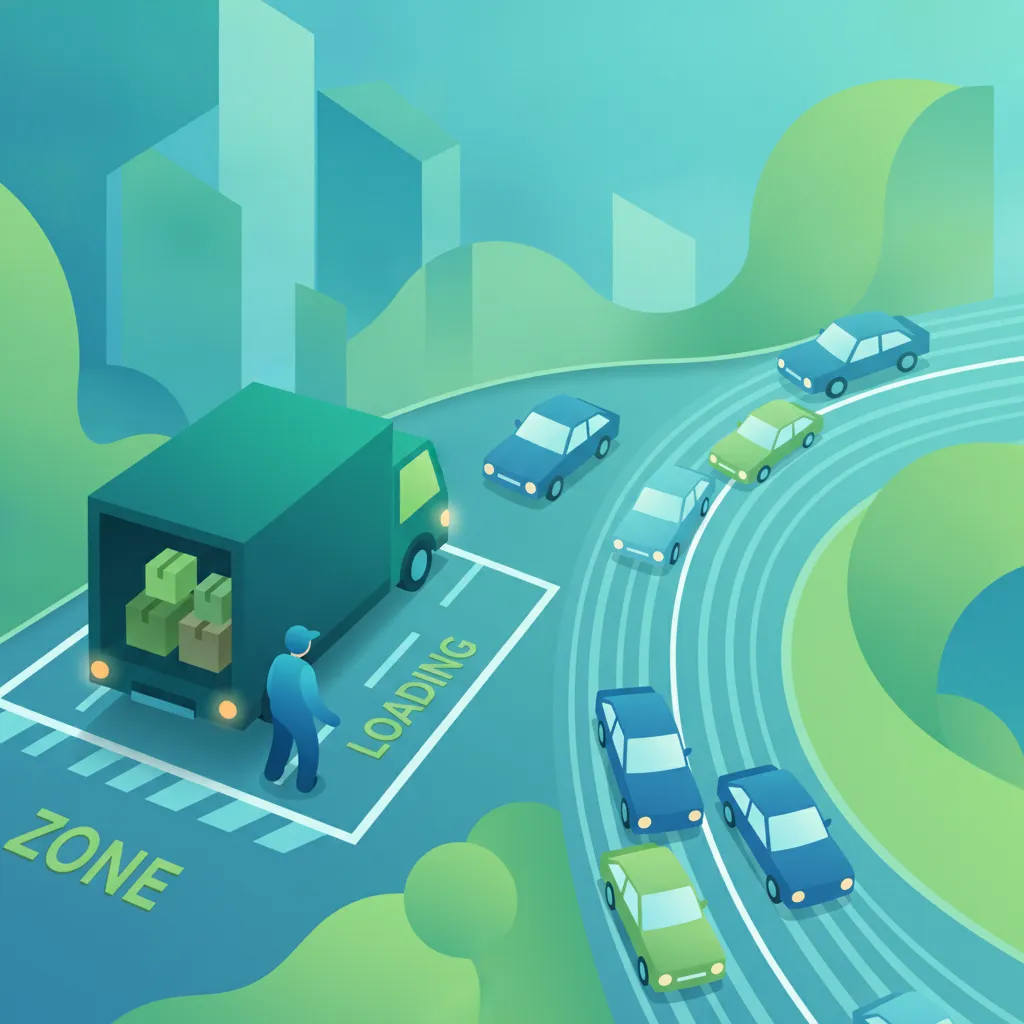
In this lesson, drivers will learn how to navigate urban delivery zones, understanding the rules surrounding loading bays, time windows, and restricted access areas. The content includes the process for obtaining delivery permits, strategies for safe maneuvering in congested city streets, and best practices for minimizing impact on pedestrian traffic. Learners will also be introduced to French city-specific regulations that govern goods vehicle deliveries.

This lesson provides practical strategies for managing the physical demands of slow, heavily congested city traffic. You will learn how to maintain excellent low-speed balance through correct body posture, rear brake modulation, and smooth clutch control. It also emphasizes the importance of preserving an adequate safety buffer when stopping behind other vehicles, allowing an immediate escape route if you face a rear-end threat.

In this lesson, drivers will learn strategies to avoid conflicts with smaller vehicles, such as cars and vans, which may not be as visible in large vehicle blind spots. The content emphasizes maintaining adequate spacing, using proper lane discipline, and being aware of small vehicles' behavior during lane changes and turns. Learners will also be introduced to communication techniques, such as signalling and eye contact.
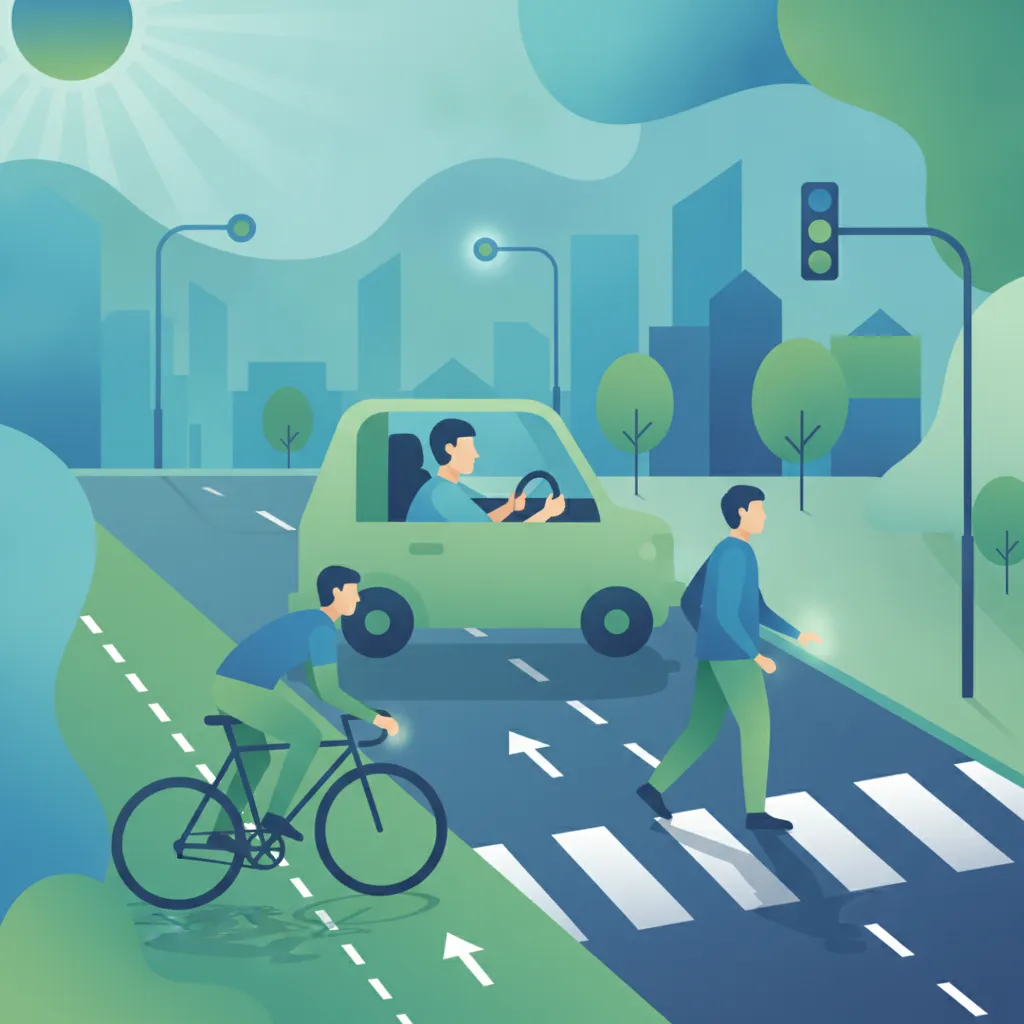
This lesson examines the specific challenges and responsibilities goods vehicle drivers face when interacting with pedestrians and cyclists in urban environments. Learners will understand right-of-way rules, the importance of yielding at pedestrian crossings, and safe turning practices that protect cyclists. The content emphasizes heightened driver vigilance, especially when navigating bike lanes and crowded sidewalks.

In this lesson, drivers will learn how to plan and execute wide turns with goods vehicles, taking into account turning radius, pivot points, and articulation angles. The content emphasizes the necessity of using the full width of the lane, correctly aligning the vehicle through the turn, and anticipating the movement of the trailer. Learners will also explore road marking guidelines for turning and the importance of giving clear signals to surrounding traffic.
Understand the specific traffic laws governing access to dedicated bus lanes, transit priority signs, and reserved municipal parking zones for professional passenger vehicles. This guide clarifies when scheduled transit rules apply to private coaches and how to identify authorised urban transit corridors within French traffic regulations.
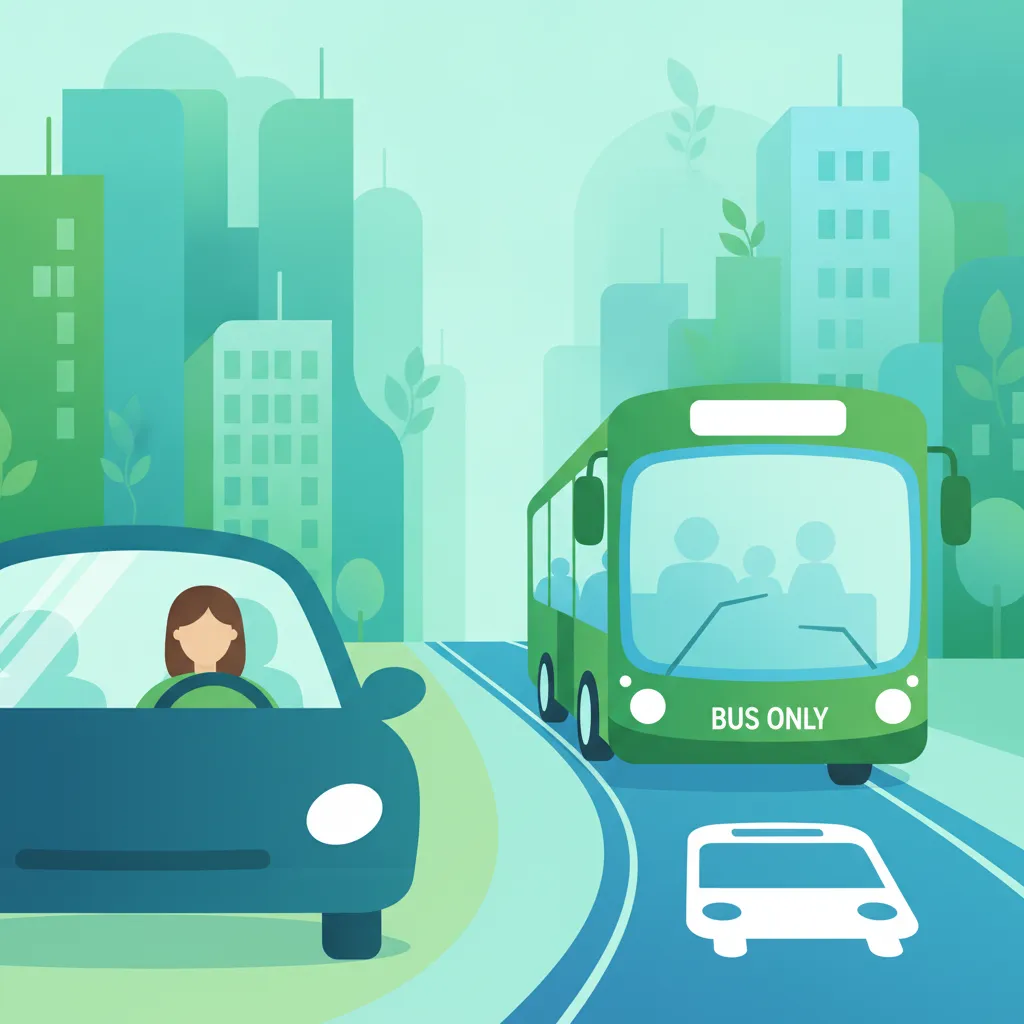
This lesson detail the exact laws governing the use of reserved bus lanes, detailing who may enter them and during what hours of operation. Drivers will study the penalties for unauthorized passenger cars occupying these lanes and the safety protocols for lane sharing with taxi cabs or cyclists. The lesson also highlights safe lane-merging practices when exiting reserved spaces to merge back into general urban traffic.
Public transit vehicles like city buses and streetcars (trams) have clear legal priorities and dedicated infrastructure in urban areas. This lesson teaches you to recognize reserved transit lanes and your legal obligation to yield to buses exiting their designated stops. You will also learn safe driving strategies near tram tracks, ensuring you never block public transit lines or risk passenger boarding areas.
This lesson details the rules of lane discipline for operating wider and longer passenger transport vehicles on highway and city networks. Learners will explore proper lane positioning to prevent encroachment on adjacent lanes or sidewalks. It also covers the step-by-step visual and signaling sequence required to perform safe lane changes, avoiding sudden movements that could startle other drivers.
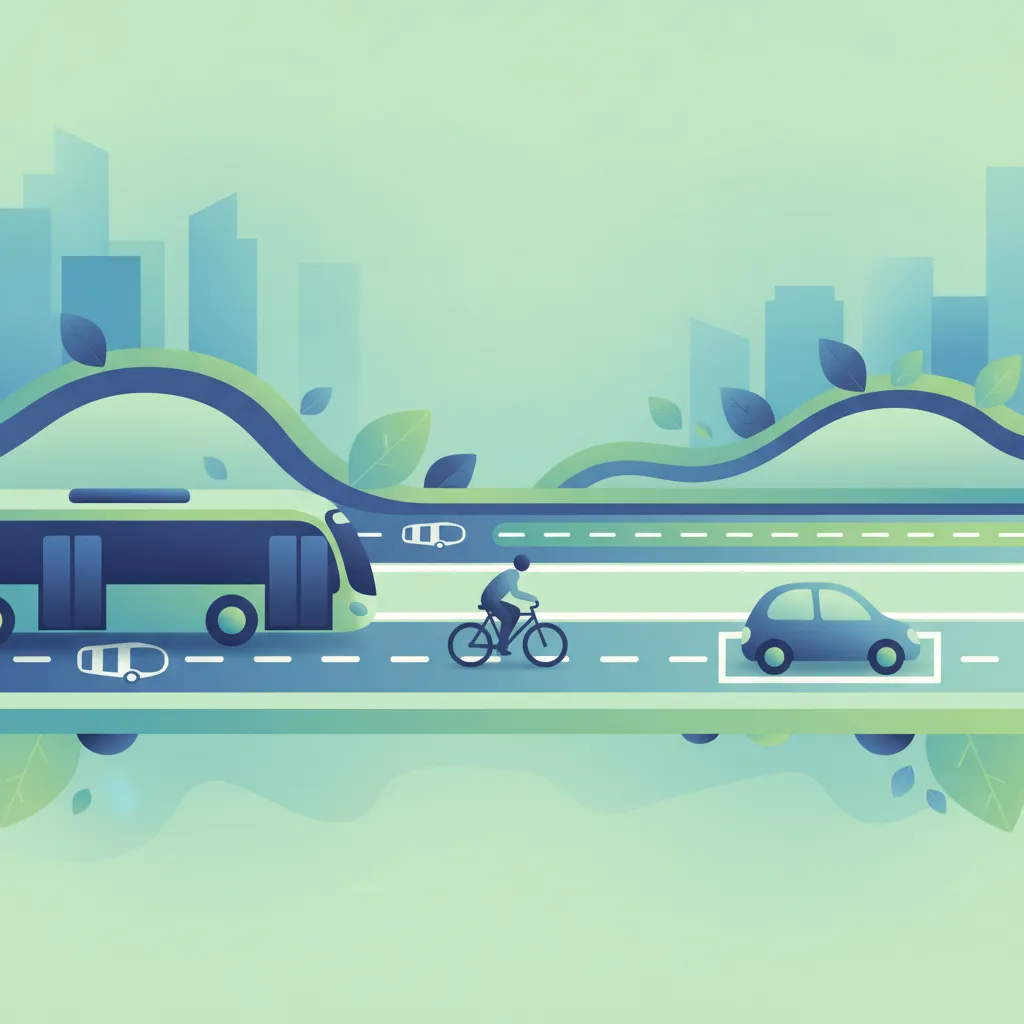
Urban roads in France feature specialized lanes reserved for public transit, micro-mobility, and distinct parking options. This lesson covers how to recognize bus lanes, cycling lanes, and the specific rules that prohibit general traffic from blocking them. You will also learn to interpret parking bay outlines, loading zones, and spots reserved for electric charging or drivers with disabilities.

This lesson details the specific legal speed limits for passenger transport vehicles on motorways, rural trunk roads, and urban streets under French law. Drivers will learn how speed limits shift depending on overall vehicle weight, towing arrangements, and poor weather conditions like heavy rain. Developing a proactive approach to speed management helps maintain stable vehicle control and ensures full regulatory compliance.
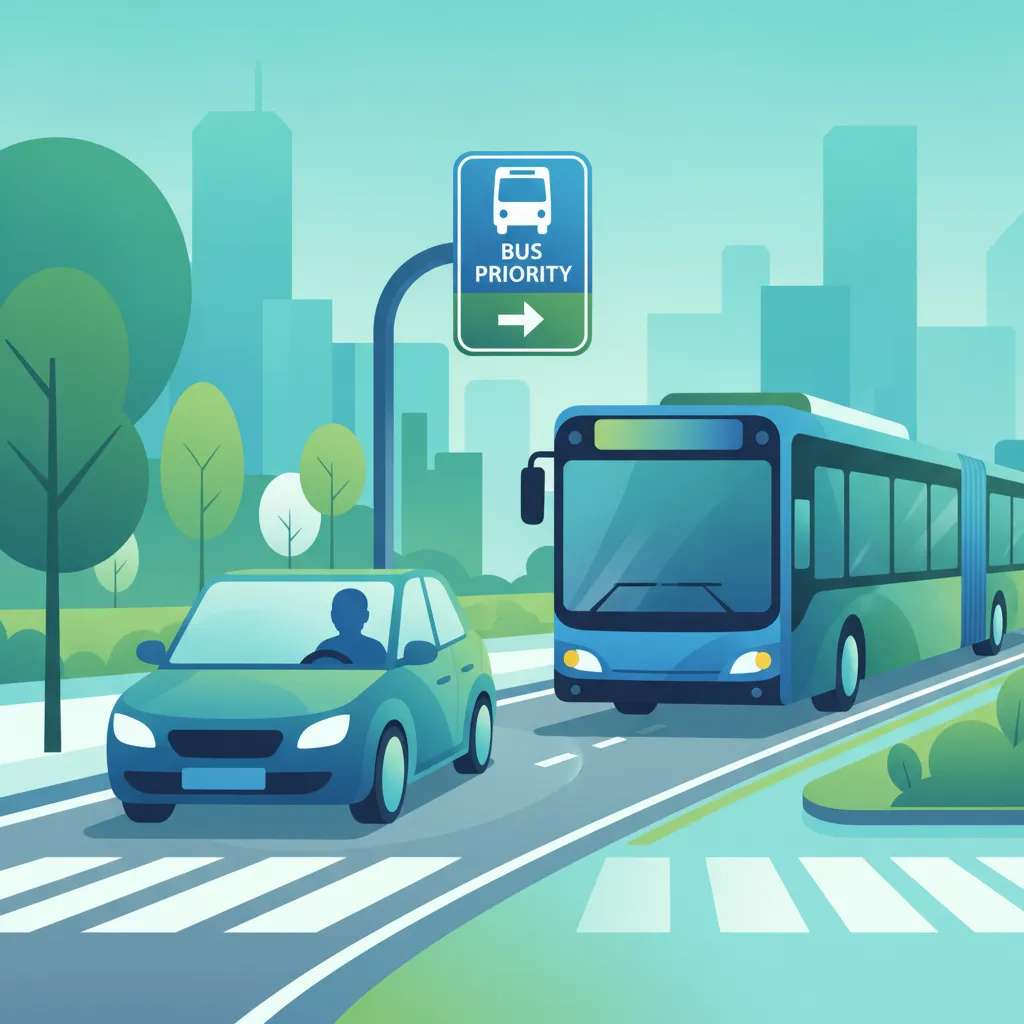
This lesson teaches the fundamentals of professional route planning, focusing on scheduled service timetables and public transport pre-emption signals. Drivers will learn how transit priority systems interact with urban traffic signals to give buses the right-of-way at critical intersections. Strategies for managing sudden detours, coordinating with dispatch, and maintaining service reliability are also discussed in detail.
This lesson covers the rules of driving passenger vehicles on high-speed French motorways (autoroutes). Learners will study entry-ramp merging protocols, lane restrictions for vehicles over 3.5 tonnes, and motorway-specific speed limits. The lesson also highlights the correct use of toll booths (péages), emergency hard-shoulder safety procedures, and accessing dedicated coach rest areas.

This lesson examines French Code de la route laws regarding pedestrian right-of-way, emphasizing the driver's legal duty to yield to any pedestrian engaged in crossing. It outlines proper approach speeds when approaching zebra crossings with obstructed views. Candidates will learn to maintain a safe physical buffer zone and verify that crosswalks are entirely clear of pedestrians before accelerating.

This lesson details the legal restrictions and appropriate use of acoustic horns and visual turn signals under the French Code de la route. Drivers will understand that in urban zones, the horn may only be used to warn of immediate, unavoidable danger to prevent accidents. It covers the correct timing of indicators and hazard lights to communicate intent clearly to surrounding traffic and pedestrians.
This lesson clarifies the legal boundaries of urban infrastructure, highlighting the strict ban on riding motorcycles within bus lanes or cycle paths. You will study French regulations concerning traffic flow, including where and when experimental lane filtering is permitted between lines of stationary cars. Understanding these boundaries ensures you can keep moving through congested areas without risking heavy fines or dangerous collisions.
Find clear answers to common questions learners have about Restrictions for Passenger Vehicles in Urban Areas. Learn how the lesson is structured, which driving theory objectives it supports, and how it fits into the overall learning path of units and curriculum progression in France. These explanations help you understand key concepts, lesson flow, and exam focused study goals.
Yes, most cities implementing ZFE (Low-Emission Zones) require passenger vehicles to display a valid Crit'Air sticker. Failure to display one or having a non-compliant vehicle for the zone's rating can lead to significant fines.
Look for regulatory signs indicating weight, height, or width restrictions. As a professional driver, you must constantly monitor these, as urban layouts can change and navigation systems may not always account for heavy vehicle dimensions.
Entering a restricted zone usually results in a fine. For professional drivers, multiple infractions can impact your licence and professional standing. Always prioritize pre-trip route planning to identify restricted areas before starting your shift.
Yes, many French cities have designated coach drop-off points and specific access routes. You must follow these instead of standard car routes to avoid narrow streets and to stay compliant with municipal transport policies.
Ready to focus your study? Use the practice search to find exactly the French driving theory questions you need for the Code de la route and permis de conduire ETG. Refine your knowledge on specific topics or challenging rules to boost your confidence and exam readiness.