This lesson focuses on the critical task of navigating around pedestrians when operating buses and coaches in France. You will learn how to identify high-risk zones, apply legal priority rules, and manage the unique dangers associated with boarding and alighting points.

Lesson content overview
Navigating the high-risk environments surrounding public transport stops is one of the most critical responsibilities of a professional bus or coach driver. In urban and suburban areas, bus stops serve as highly active hubs where heavy passenger vehicles directly interface with pedestrians.
As a professional driver preparing for the Category D, D1, D1E, or DE French passenger vehicle license, you must master the rules of the Code de la route regarding pedestrian priority, spatial awareness, and blind zone management. This lesson provides an exhaustive breakdown of how to interact safely with pedestrians at bus stops, prevent catastrophic frontal collisions, and maintain full legal compliance.
In French traffic law, pedestrians are classified as vulnerable road users (usagers vulnérables). Because of their physical vulnerability, the Code de la route places a strict duty of care on the drivers of heavy passenger vehicles.
Under Article R412-9 of the Code de la route, drivers must yield to any pedestrian who has regularly entered, or clearly shown the intention to enter, a designated crossing (passage piéton), or who is walking in a pedestrian zone or shared space. At a bus stop, this priority is reinforced. If a pedestrian steps off the curb or signals an intent to cross the street near a stationary or departing transit vehicle, the driver is legally obligated to remain stationary or bring the vehicle to a safe stop.
Article R414-4 mandates that drivers must exercise extreme caution when passing or pulling away from vehicles stopped for public transport. Because passengers exiting a bus may immediately attempt to cross the road—often stepping out directly in front of or behind the vehicle—drivers must moderate their speed and yield priority.
For the bus driver, this means you cannot force your way into traffic or begin moving if a pedestrian is attempting to use the roadway nearby.
To manage transit stops safely, you must understand the distinction between static and dynamic priority:
Legal Penalties: Failing to yield to a pedestrian who has priority under French law is a serious traffic violation. It can result in a heavy class 4 fine, a loss of up to 6 points on your driving license, and a potential temporary suspension of your professional driving permit.
Due to the elevated driving position and structural design of modern buses and coaches, a significant blind zone (angle mort) exists directly in front of the vehicle. This frontal blind zone is one of the most common zones for severe pedestrian accidents.
The frontal blind zone is divided into two main subcategories:
To prevent collisions caused by frontal blind zones, you must establish a strict, habitual scanning routine before releasing the parking brake or moving the vehicle:
Perform a Direct Frontal Scan: Look through the windshield to check the clear path ahead, ensuring no tall objects or pedestrians are visible in the distance.
Check the Front-View Mirror (Antéviseur): If your vehicle is equipped with a front-view or crossview mirror, look directly into it to inspect the bumper area (0–3 metres) for children or low-profile pedestrians.
Scan Wide-Angle Side Mirrors (Rétroviseurs Grand Angle): Check both the left and right side mirrors to detect pedestrians standing close to the front corners or walking along the sides of the bus.
Conduct a Direct Shoulder Check: Quickly glance through the driver's side window and the passenger entry door glass to verify that no one is standing in the immediate lateral blind zones.
Communication around bus stops requires a balanced approach. Misusing visual or auditory signals can confuse or panic pedestrians, leading to erratic movements.
The simultaneous flashing of all direction indicator lights, used to warn other road users of a temporary hazard, a stationary vehicle in a dangerous location, or active boarding/alighting operations.
Under French law, you must activate your hazard lights (feux de détresse) when stopping on the roadway or in a designated bay to pick up or discharge passengers, especially in school transport contexts or high-speed rural routes.
The horn (avertisseur sonore) must be used with extreme discretion. Article R416-9 states that the horn should only be used to prevent an imminent accident.
Properly positioning your vehicle at a designated bus stop is a fundamental safety measure. Incorrect positioning directly compromises passenger and pedestrian safety.
When a bus stops at an angle or fails to pull fully into the designated bay, several safety hazards arise:
Always aim to align the bus parallel to the curb, keeping the tires within 10 to 15 centimetres of the sidewalk edge, ensuring the passenger doors align perfectly with the designated waiting area.
A professional driver must anticipate the unpredictable behaviors of different pedestrian profiles. Never assume that a pedestrian sees your vehicle or understands its stopping limitations.
Children are highly unpredictable. They have limited spatial awareness and struggle to estimate the speed of heavy vehicles.
Your safety margins must adapt dynamically to changes in weather, lighting, and road conditions.
| Environmental Factor | Impact on Pedestrian Interaction | Required Driver Action |
|---|---|---|
| Rain & Wet Roads | Increased braking distance; reduced mirror visibility due to water droplets; pedestrians rushing with umbrellas obscuring their vision. | Reduce approach speed; activate mirror heaters; double your scanning time before departing. |
| Night & Low Light | Low visibility of dark-clothed pedestrians; glare from oncoming headlights. | Ensure all internal and external bus lights are clean and functional; use low-beam headlights; rely heavily on pedestrian crossing signs. |
| Heavy Snow / Ice | Extreme reduction in traction; pedestrians prone to slipping near the curb. | Keep a safe distance from the curb during approach to avoid sliding into waiting passengers; wait until pedestrians are fully clear of the roadway before moving. |
| Dense Urban Traffic | High ambient noise; complex visual environments with cyclists and scooters. | Rely strictly on systematic mirror checks; keep windows slightly cracked to hear external auditory warnings; proceed at walking pace near crowded stops. |
To ensure absolute safety when departing from a bus stop, always follow this standardized operational sequence:
graph TD
    A[Passenger boarding/alighting complete] --> B[Close all doors and verify door lock indicator]
    B --> C[Deactivate hazard warning lights]
    C --> D[Activate left-hand turn signal clignotant gauche]
    D --> E[Perform systematic mirror & blind zone scan]
    E --> F[Check frontal blind zone via front mirror/direct eye contact]
    F --> G[Release parking/halt brake and pull away slowly]
By strictly adhering to these regulatory requirements, physical checks, and defensive driving techniques, you can successfully prevent pedestrian accidents and ensure a safe, professional transit environment.
Explore all units and lessons included in this driving theory course.
Lesson content overview
Explore all units and lessons included in this driving theory course.
Explore search topics learners often look for when studying Interaction with Pedestrians at Bus Stops. These topics reflect common questions about road rules, driving situations, safety guidance, and lesson level theory preparation for learners in France.
Browse additional driving theory lessons that cover connected traffic rules, road signs, and common driving situations related to this topic. Improve your understanding of how different rules interact across everyday traffic scenarios.
Learn how to effectively share the road with cyclists, pedestrians, and individuals on personal mobility devices in busy city environments. This guide explains the specific legal obligations and situational awareness techniques required to navigate safely through congested urban areas while operating large passenger vehicles.
Certain groups of road users require heightened defensive attention from drivers due to physical limitations or unpredictable behaviors. This lesson covers how to recognize signs of visual impairment (white canes), mobility challenges, and the unpredictability of young children. You will learn to reduce your speed, extend yielding patience, and proactively secure extra space to protect these vulnerable users.

This lesson provides global defensive driving strategies to minimize collision risks for all non-motorized and vulnerable road users. Drivers will learn to systematically lower vehicle speed in dense pedestrian zones, even when no active hazards are visible. By cultivating an anticipatory mindset and maintaining generous safety margins, professional drivers establish a protective safety envelope around their vehicle.
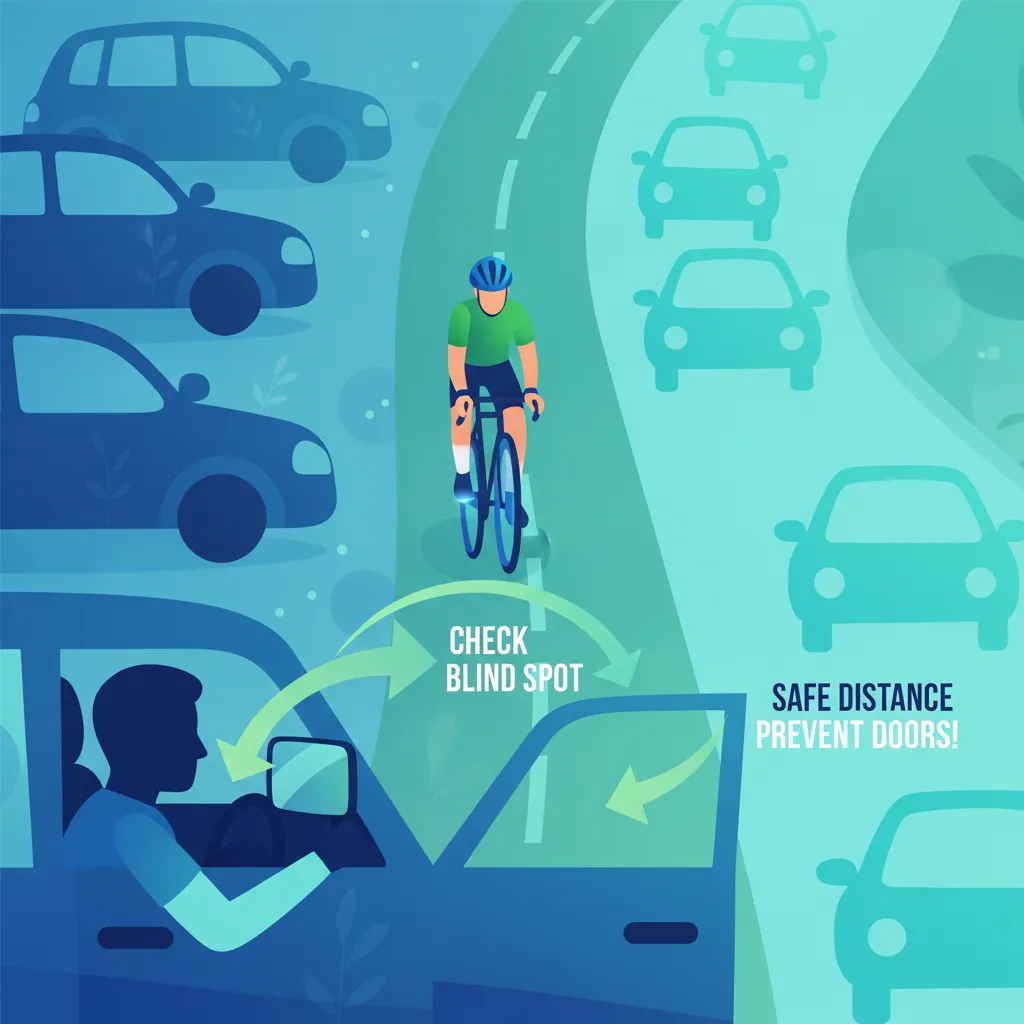
This lesson explains how to share the road safely with cyclists in both urban and rural environments. Drivers will study the legal minimum passing distances when overtaking cyclists, which is one meter in cities and one and a half meters outside urban areas. It also covers recognizing specialized cycling infrastructure, bike boxes at intersections, and preventing blind-spot collisions during right turns.
This lesson analyzes the various traffic challenges unique to operating large passenger vehicles in historic and modern French urban areas. Drivers will learn to manage narrow street layouts, double-parked delivery trucks, and high-density multi-lane roundabouts safely. The lesson emphasizes defensive driving strategies, route adjustments, and maintaining mental focus under severe schedule and time pressures.
This lesson focuses on the legal requirement to yield to pedestrians on or about to step onto zebra crossings, a major focus of French road safety. You will learn how to approach school zones and pedestrian islands with heightened vigilance and reduced speed. Additionally, the lesson explores shared urban spaces, explaining how to maintain safe lateral distances when overtaking cyclists or personal electric scooters.
This lesson teaches specific visual scanning methods to detect vulnerable road users, such as children, elderly individuals, and cyclists near stops. Drivers will learn to anticipate sudden movements, like a passenger running to catch a bus or stepping off a sidewalk unexpectedly. Managing the massive blind spots around the front and right-hand sides of passenger vehicles is highlighted as a critical safety duty.
This lesson examines the specific challenges and responsibilities goods vehicle drivers face when interacting with pedestrians and cyclists in urban environments. Learners will understand right-of-way rules, the importance of yielding at pedestrian crossings, and safe turning practices that protect cyclists. The content emphasizes heightened driver vigilance, especially when navigating bike lanes and crowded sidewalks.

This lesson provides practical strategies for managing the physical demands of slow, heavily congested city traffic. You will learn how to maintain excellent low-speed balance through correct body posture, rear brake modulation, and smooth clutch control. It also emphasizes the importance of preserving an adequate safety buffer when stopping behind other vehicles, allowing an immediate escape route if you face a rear-end threat.

This lesson teaches you how to establish and preserve a dynamic cushion of safety on all sides of your motorcycle. You will study how to apply the 'two-second rule' to keep a safe following distance, extending it to three or more seconds in adverse weather. Additionally, you will discover how to manage tailgating motorists safely without resorting to dangerous speed increases, ensuring you always maintain a clear escape route.
This lesson focuses on maneuvering in extremely crowded areas, passenger terminals, or narrow streets blocked by parked vehicles and obstacles. Drivers will learn to assess clearance distances precisely before committing to narrow pathways. The content teaches steering techniques that maintain stability, optimize space usage, and prioritize public safety during slow-speed, high-difficulty maneuvers.
Understand the systematic approach to identifying and managing high-risk scenarios near transit stops and terminals. This lesson covers defensive driving protocols for handling blind spots, passenger boarding incidents, and emergency response procedures as outlined in French professional driving standards and the Code de la route.
This lesson provides global defensive driving strategies to minimize collision risks for all non-motorized and vulnerable road users. Drivers will learn to systematically lower vehicle speed in dense pedestrian zones, even when no active hazards are visible. By cultivating an anticipatory mindset and maintaining generous safety margins, professional drivers establish a protective safety envelope around their vehicle.
This lesson teaches specific visual scanning methods to detect vulnerable road users, such as children, elderly individuals, and cyclists near stops. Drivers will learn to anticipate sudden movements, like a passenger running to catch a bus or stepping off a sidewalk unexpectedly. Managing the massive blind spots around the front and right-hand sides of passenger vehicles is highlighted as a critical safety duty.

This lesson details the dangerous blind spots (angles morts) that surround heavy passenger vehicles and explains how to mitigate them. Drivers will master the systematic mirror check sequence (retro-information) before executing any turns or lane changes. It also covers the mandatory French "Angles Morts" warning stickers displayed on the vehicle exterior to alert vulnerable road users of danger zones.

This lesson outlines the core operational roles that drivers must perform, from ensuring safe passenger boarding to maintaining precise vehicle control throughout the journey. It details the active risk assessments required to identify hazards on the road and handle unexpected delays safely. Additionally, candidates will understand the specific procedures for reporting accidents and communicating effectively with both passengers and operations hubs.
This lesson addresses the physiological dangers of driver fatigue, a leading cause of severe commercial vehicle crashes. Drivers will learn to spot early physical warning signs of drowsiness, such as micro-sleeps, heavy eyelids, and slow reaction times. The lesson provides practical wellness tips, sleep hygiene guidelines, and structured rest-break strategies to maintain peak alertness throughout a shift.

This lesson focuses on the technical skills required to position a large bus or coach parallel to the boarding curb. Drivers will learn to minimize the gap between the vehicle steps and the sidewalk, preventing tripping hazards for boarding passengers. The lesson also covers safe approach angles, mirror alignment, and positioning rules that avoid contact with curbside objects or waiting pedestrians.
This lesson focuses on techniques for monitoring and managing passenger behavior to maintain a calm and safe environment during transit. Drivers will learn how to enforce seatbelt rules, manage noise levels, and de-escalate verbal conflicts between passengers. Proactive safety announcements and a confident, polite professional demeanor are highlighted as key tools to prevent behavioral issues before they compromise road safety.
This lesson addresses the challenges of positioning near larger vehicles such as cars, vans, buses, and lorries on French roads. Learners will learn to identify blind spots (angles morts), maintain a safe distance, and position themselves to maximize visibility and predictability. Understanding these dynamics is crucial for AM riders to avoid dangerous situations and ensure safe overtaking and lane sharing.
This lesson outlines the step-by-step safety checks and physical controls required to reverse a bus or coach in confined areas. Learners will study the use of rear-view cameras, mirror angles, and acoustic backing alarms to detect obstacles. It highlights the mandatory use of a trained ground guide (guide de manoeuvre) to assist in blind zones, ensuring zero contact with structures or people.
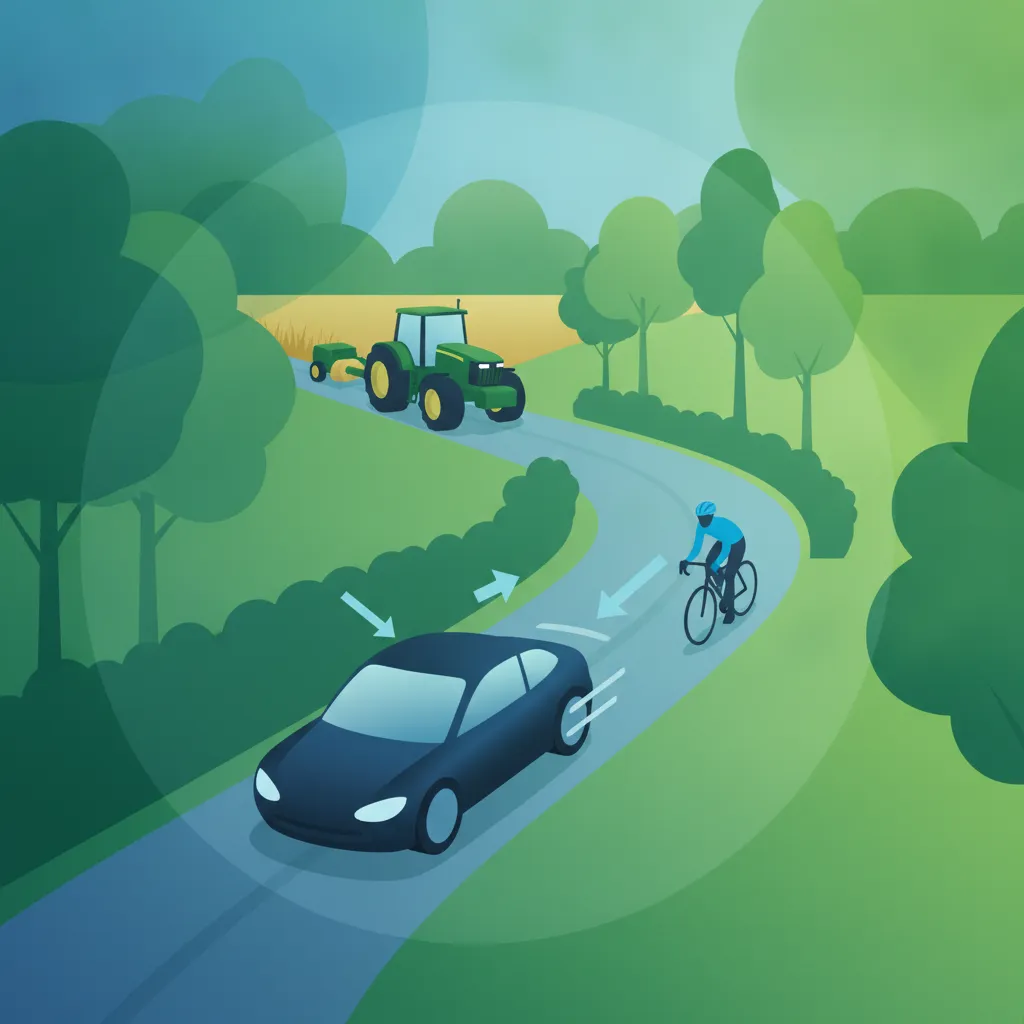
This lesson analyzes the complex driving conditions found on French secondary and rural road networks (routes départementales). Drivers will learn steering and braking techniques to descend steep gradients safely using engine retarding systems without overheating the service brakes. Anticipating agricultural machinery, domestic livestock, unlit intersections, and narrow bridges is also taught in depth.
Find clear answers to common questions learners have about Interaction with Pedestrians at Bus Stops. Learn how the lesson is structured, which driving theory objectives it supports, and how it fits into the overall learning path of units and curriculum progression in France. These explanations help you understand key concepts, lesson flow, and exam focused study goals.
While pedestrians have significant protections, they must use designated crosswalks where available. However, in the context of a public transport vehicle, the Code de la route dictates that the driver must remain hyper-vigilant and stop if a pedestrian is in danger of being hit, regardless of whether the pedestrian is following all rules.
The immediate front and the sides near the doors are the primary blind zones. A pedestrian stepping directly in front of the coach may be completely invisible from the driver's seat; always use your mirrors and front-view cameras if equipped.
You must ensure all pedestrians are clear of your vehicle's path before moving. If a pedestrian is in your blind zone or moving towards the bus, wait until they are clearly visible and a safe distance away.
In school zones, the level of caution must be heightened significantly. You should anticipate unpredictable child behavior, maintain a lower speed, and be ready to stop instantly if you see movement near the sidewalk or bus stop area.
Ready to focus your study? Use the practice search to find exactly the French driving theory questions you need for the Code de la route and permis de conduire ETG. Refine your knowledge on specific topics or challenging rules to boost your confidence and exam readiness.