
This lesson explores the vital role of ethical behavior and environmental stewardship for professional drivers in Germany. As part of your C1, C1E, C, and CE training, you will learn how your driving style impacts public health, fuel consumption, and sustainable logistics operations.

Lesson content overview
Operating heavy vehicles, particularly in the categories C1, C1E, C, and CE, involves significant professional responsibilities that extend beyond mere legal compliance. This lesson for the German Heavy Vehicle Driving License Theory course delves into the crucial ethical and environmental considerations that shape a professional driver's role. Understanding these aspects is vital not only for adhering to regulations but also for contributing to public health, environmental protection, and the broader goals of sustainable logistics.
Heavy vehicles, by their nature, have a considerable impact on air quality, noise levels, and resource consumption. Professional drivers are at the forefront of mitigating these impacts through informed decision-making and responsible driving practices. This chapter will explore how individual actions contribute to collective environmental stewardship and ethical conduct within the transportation industry.
The operation of heavy vehicles inherently carries environmental and public health implications. Recognizing these impacts is the first step toward responsible professional driving. Professional drivers play a pivotal role in ensuring that transportation needs are met without compromising the well-being of communities or the long-term health of our planet.
Sustainable heavy vehicle operation is built upon several foundational principles that guide decision-making and daily practices. These principles serve as the ethical and environmental compass for professional drivers.
Sustainability in the context of transport refers to the practice of operating vehicles in a way that fulfills current transportation demands without jeopardizing future environmental quality or resource availability. This involves a commitment to using resources efficiently, minimizing waste, and significantly reducing emissions throughout a vehicle's operational lifespan. The overarching goal is to ensure the long-term viability of transport systems while safeguarding ecological balance. For drivers, this implies adopting fuel-efficient driving techniques, maintaining vehicles meticulously, and considering route alternatives that lessen environmental impact.
A key ethical responsibility is the protection of public health, which is directly affected by vehicle emissions and noise. Professional drivers have a duty to minimize the exposure of the public to harmful pollutants and excessive noise generated by their operations. This requires a keen awareness of the potential health effects associated with heavy vehicle activities and a proactive approach to mitigating these risks. Actions like avoiding prolonged idling in residential areas or adhering to noise restrictions are critical in this regard.
Corporate Social Responsibility (CSR) represents the broader ethical obligation of transport companies to operate responsibly, taking into account their social, environmental, and economic impacts. While primarily a corporate concept, its principles cascade down to the individual driver. Companies that embrace CSR implement policies promoting eco-friendly practices, such as investing in cleaner fleets or optimizing logistics. Professional drivers contribute to their company's CSR by adhering to these policies and embodying environmentally conscious behaviors on the road.
Resource efficiency in heavy vehicle operations involves the optimal utilization of fuel, time, and vehicle capacity to achieve logistical objectives while minimizing waste. This principle directly reduces operational costs and shrinks the environmental footprint of transportation activities. Drivers contribute to resource efficiency by planning routes meticulously, actively avoiding unnecessary idling, and ensuring that loads are distributed correctly and legally to maximize vehicle capacity and stability.
Heavy vehicle emissions are a primary environmental concern due to their direct impact on air quality and public health. Understanding these emissions is fundamental for any professional driver.
Heavy vehicles release various gaseous and particulate substances from their exhaust systems that significantly degrade air quality. The most common types include:
Heavy vehicles are disproportionately responsible for these emissions, especially in urban environments, due to their fuel consumption and engine characteristics.
To combat these emissions, stringent regulations have been implemented across the European Union. The Euro 6 emission standards (or Euro VI for heavy-duty vehicles) are mandatory for all new heavy vehicles registered after 2014. These standards significantly reduce permissible levels of NOₓ and PM compared to previous Euro categories. Compliance with Euro 6 standards necessitates advanced exhaust gas after-treatment systems, such as Selective Catalytic Reduction (SCR) with AdBlue, or Diesel Particulate Filters (DPF). Drivers must ensure their vehicles are compliant and that any emission control systems are properly maintained.
For professional drivers, the practical significance of emission standards lies in their direct contribution to air pollution. Even seemingly minor actions, such as occasional idling, can accumulate to have a notable impact. For instance, idling a heavy truck for just 20 minutes in a residential area can lead to a significant build-up of harmful NOₓ, affecting local air quality and public health. Drivers must therefore prioritize fuel-efficient driving, proper vehicle maintenance, and awareness of regulations like those for low-emission zones (LEZs).
Fuel consumption is a critical factor for both operational costs and environmental impact. Efficient driving significantly reduces fuel usage, leading to economic savings and lower emissions.
Several factors directly influence the rate at which a heavy vehicle consumes fuel, typically expressed in liters per 100 kilometers (L/100 km):
A driving strategy aimed at minimizing fuel consumption, vehicle wear, and emissions through smooth, anticipatory, and efficient driving techniques.
Adopting eco-driving practices is one of the most effective ways for drivers to reduce fuel consumption and emissions. Key techniques include:
Efficient driving practices yield significant benefits. Economically, reduced fuel usage translates directly into lower operational costs for transport companies and, by extension, improved profitability. Environmentally, every liter of fuel saved means fewer CO₂ and other harmful emissions released into the atmosphere, contributing to cleaner air and combating climate change. For example, maintaining a steady speed on a highway can reduce fuel consumption by 15-20% compared to aggressive driving.
Noise pollution from heavy vehicles is another significant environmental and public health concern, particularly in urban and residential areas.
Unwanted or excessive sound generated by heavy vehicle operation stems from multiple sources:
Prolonged exposure to excessive noise can have serious health consequences for both drivers and the communities they pass through. These include:
Regulations set strict noise level limits for heavy vehicles, measured in decibels (dB), particularly enforced in residential areas and during nighttime hours. Drivers must be aware of these limits and adopt practices to mitigate noise pollution:
When operating a heavy vehicle at night or in designated quiet zones, pay extra attention to smooth gear changes and lower engine revs to minimize noise impact on residents.
Beyond individual driving techniques, a broader approach to sustainable logistics is essential for minimizing the environmental footprint of heavy vehicle transport.
Sustainable logistics involves the strategic planning and execution of transport tasks with minimal environmental impact and maximal efficiency. This systemic approach aims to reduce waste, conserve natural resources, and limit emissions across the entire supply chain.
The planning, implementation, and control of the efficient, effective forward and reverse flow and storage of goods, services, and related information from the point of origin to the point of consumption in an environmentally responsible and resource-efficient manner.
The effects of heavy vehicle operations extend beyond immediate air quality and noise, influencing broader public health and the global environment.
The cumulative impact of vehicle emissions contributes significantly to respiratory diseases, such as asthma and bronchitis, particularly in urban populations. Particulate matter and nitrogen oxides are major culprits. Furthermore, carbon dioxide emissions from fuel combustion are a primary driver of climate change, leading to long-term environmental shifts. Understanding these broader implications underscores the ethical responsibility of every driver.
While the scale of these problems is vast, individual driver actions collectively contribute to mitigation. Adopting driving practices that minimize emissions, adhering strictly to speed limits, and avoiding unnecessary idling, especially in populated areas, are crucial responsibilities. For example, an urban delivery driver who consistently reduces idling time at each stop plays a direct role in lowering overall city emissions and improving local air quality.
Professional heavy vehicle drivers in Germany must operate within a comprehensive legal and policy framework designed to minimize environmental harm. This framework includes regulations from the European Union, national German laws, and local municipal bylaws.
The European Union sets stringent emission standards that all new heavy vehicles must meet. Currently, heavy vehicles must comply with at least Euro 6 emission standards (or Euro VI equivalent for new registrations). This regulation, applicable to all new heavy vehicles registered post-2014, is mandatory and aims to drastically reduce NOₓ and PM emissions, thereby improving overall air quality across member states. Drivers must be aware of their vehicle's Euro class and ensure it meets the requirements for routes they undertake.
Germany has numerous Low-Emission Zones (Umweltzonen) in urban areas where access is restricted to vehicles that meet specific emission criteria. These zones are typically identified by specific road signs and require vehicles to display an environmental badge (Feinstaubplakette) indicating their emission class.
The applicability and specific emission standards for entry vary by city and are often updated. Non-compliant vehicles entering these zones risk penalties or higher fees. It is the driver's obligation to verify the specific municipal policies for low-emission zones (e.g., Berlin LEZ, Munich LEZ) on their route to avoid penalties and contribute to local air quality improvement.
Heavy vehicles are also subject to specific noise emission limits, measured in decibels (dB). These regulations are crucial, especially during nighttime hours or in designated quiet zones, to protect public health from noise pollution. Drivers are legally obligated to ensure their vehicle's noise output does not exceed these limits, which also implies proper vehicle maintenance (e.g., ensuring a sound exhaust system) and driving practices (e.g., smooth acceleration).
Despite clear regulations and ethical guidelines, certain actions frequently lead to violations or have negative environmental consequences. Awareness of these common pitfalls helps professional drivers maintain compliance and promote sustainability.
Environmental performance is not static; it depends heavily on the driving context. Professional drivers must adapt their techniques based on various factors.
Driving at different times of day can also have implications. Nighttime driving may have stricter noise restrictions, particularly in residential zones. Drivers should adjust their practices, using quieter gear changes and lower engine revs, to minimize disturbance.
Understanding the theory is crucial, but applying these principles in real-world driving situations is where they truly become effective. Here are some scenarios illustrating correct and incorrect behaviors for heavy vehicle drivers.
Scenario: A heavy vehicle driver needs to deliver goods to a client located within a newly established Low-Emission Zone (LEZ) in a German city. The driver's vehicle is Euro 5 compliant, which does not meet the new LEZ entry requirements for the city.
Scenario: A truck driver arrives at a busy loading dock for a delivery and is informed there will be a 20-minute wait before they can unload.
Scenario: A driver is operating a fully loaded heavy truck and must descend a long, steep hill on a rural German road.
This lesson covers the ethical and environmental responsibilities of professional heavy vehicle drivers in Germany, focusing on how emissions (CO₂, NOₓ, PM, hydrocarbons) affect public health and air quality, and the mandatory Euro 6 standards designed to reduce them. Drivers learn eco-driving techniques such as smooth acceleration, steady speed maintenance, and minimizing unnecessary idling to reduce fuel consumption by up to 20%. The lesson also addresses noise pollution sources and legal limits, emphasizing contextual adjustments for urban versus rural driving and the importance of Low-Emission Zone compliance using the Feinstaubplakette. Beyond individual driving practices, sustainable logistics principles including load optimization, efficient route planning, and avoiding empty runs contribute to broader environmental goals while supporting Corporate Social Responsibility.
A short set of high-value points that capture the most important learning from this lesson.
Heavy vehicle drivers must understand that CO₂, NOₓ, and particulate matter emissions directly impact air quality, public health, and climate change
Euro 6 emission standards are mandatory for all new heavy vehicles registered after 2014, requiring advanced exhaust treatment systems like SCR with AdBlue and diesel particulate filters
Eco-driving techniques including smooth acceleration, steady speed maintenance, optimal gear selection, and minimizing idling can reduce fuel consumption by 15-20%
Low-Emission Zones in German cities require the Feinstaubplakette environmental badge, with entry restrictions varying by municipality and vehicle emission class
Professional drivers have an ethical duty to protect public health by minimizing emissions and noise, especially in residential areas and near vulnerable road users
Explore all units and lessons included in this driving theory course.
The four main emission types from heavy vehicles are carbon dioxide (CO₂), nitrogen oxides (NOₓ), particulate matter (PM), and hydrocarbons (HC)
Idling restrictions in Germany typically limit stationary engine running to around 3 minutes in residential areas, with penalties for non-compliance
Low-Emission Zone entry requirements must be verified locally as they vary between German cities (e.g., Berlin, Munich, Stuttgart)
Engine braking on descents saves fuel and reduces brake wear compared to continuous service brake application
Fully loaded vehicles consume significantly more fuel than empty ones, making load optimization and proper distribution essential for efficiency
Assuming general speed limits apply inside Low-Emission Zones without checking for lower emission-specific limits
Leaving the engine running during extended stops at loading docks or rest breaks when no equipment requires it
Choosing non-optimized routes with steep gradients instead of flatter, shorter alternatives that reduce fuel consumption
Loading vehicles beyond legal Gross Vehicle Weight or axle limits to avoid additional trips, which increases emissions and carries penalties
Neglecting to verify vehicle Euro class compliance before entering different Low-Emission Zones across Germany
Lesson content overview
A short set of high-value points that capture the most important learning from this lesson.
Heavy vehicle drivers must understand that CO₂, NOₓ, and particulate matter emissions directly impact air quality, public health, and climate change
Euro 6 emission standards are mandatory for all new heavy vehicles registered after 2014, requiring advanced exhaust treatment systems like SCR with AdBlue and diesel particulate filters
Eco-driving techniques including smooth acceleration, steady speed maintenance, optimal gear selection, and minimizing idling can reduce fuel consumption by 15-20%
Low-Emission Zones in German cities require the Feinstaubplakette environmental badge, with entry restrictions varying by municipality and vehicle emission class
Professional drivers have an ethical duty to protect public health by minimizing emissions and noise, especially in residential areas and near vulnerable road users
Explore all units and lessons included in this driving theory course.
The four main emission types from heavy vehicles are carbon dioxide (CO₂), nitrogen oxides (NOₓ), particulate matter (PM), and hydrocarbons (HC)
Idling restrictions in Germany typically limit stationary engine running to around 3 minutes in residential areas, with penalties for non-compliance
Low-Emission Zone entry requirements must be verified locally as they vary between German cities (e.g., Berlin, Munich, Stuttgart)
Engine braking on descents saves fuel and reduces brake wear compared to continuous service brake application
Fully loaded vehicles consume significantly more fuel than empty ones, making load optimization and proper distribution essential for efficiency
Assuming general speed limits apply inside Low-Emission Zones without checking for lower emission-specific limits
Leaving the engine running during extended stops at loading docks or rest breaks when no equipment requires it
Choosing non-optimized routes with steep gradients instead of flatter, shorter alternatives that reduce fuel consumption
Loading vehicles beyond legal Gross Vehicle Weight or axle limits to avoid additional trips, which increases emissions and carries penalties
Neglecting to verify vehicle Euro class compliance before entering different Low-Emission Zones across Germany
Explore search topics learners often look for when studying Ethical and Environmental Considerations. These topics reflect common questions about road rules, driving situations, safety guidance, and lesson level theory preparation for learners in Germany.
Browse additional driving theory lessons that cover connected traffic rules, road signs, and common driving situations related to this topic. Improve your understanding of how different rules interact across everyday traffic scenarios.
Understand the core ethical and environmental duties for heavy vehicle drivers in Germany. This lesson covers minimizing emissions, noise reduction, and sustainable logistics practices to comply with road traffic regulations and promote public health.

This lesson explores the legal framework governing heavy vehicle operation in Germany, focusing on the Straßenverkehrs-Ordnung (StVO) and specific commercial transport regulations. It details the professional duty of care required from drivers, including responsibilities for vehicle inspection and documentation. You will understand the enforcement mechanisms and potential penalties for non-compliance.

This lesson focuses on the principles of 'eco-driving,' a driving style that minimizes fuel consumption and environmental impact. It teaches techniques such as gentle acceleration, anticipating traffic flow to avoid unnecessary braking, using higher gears at lower speeds, and utilizing engine braking. These methods not only save fuel and reduce emissions but also lead to a smoother and safer driving experience.
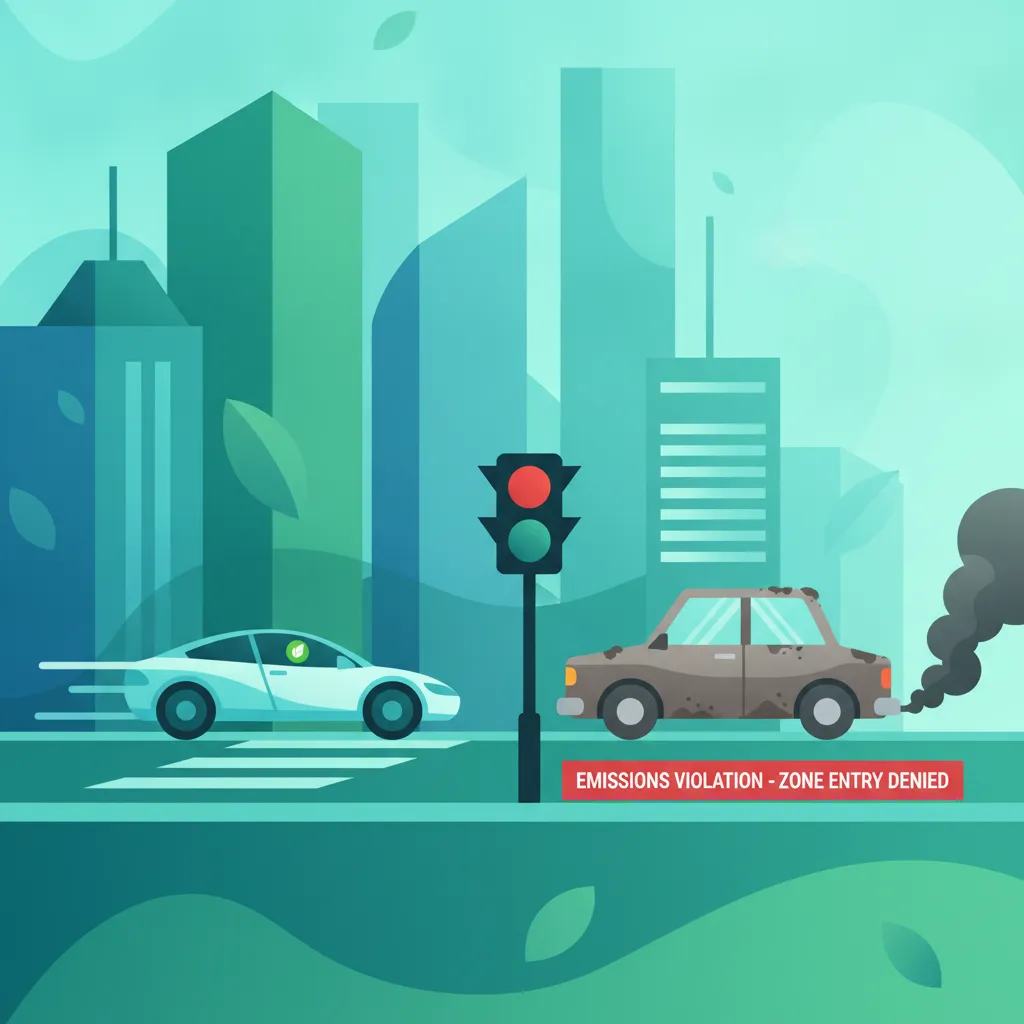
This lesson addresses the concept of environmental zones in German cities, explaining the requirements for emission stickers and the impact on heavy vehicles. It discusses the legal consequences of non-compliance, such as fines, and the importance of ensuring the vehicle meets emission standards. The content covers planning routes to avoid restricted zones if necessary.

This lesson examines the professional standards expected of passenger-vehicle drivers. It covers the importance of maintaining public trust through reliability, punctuality, and a professional demeanor. Key skills such as effective passenger communication, conflict resolution, and stress management are discussed as vital components of a driver's accountability and adherence to regulations.
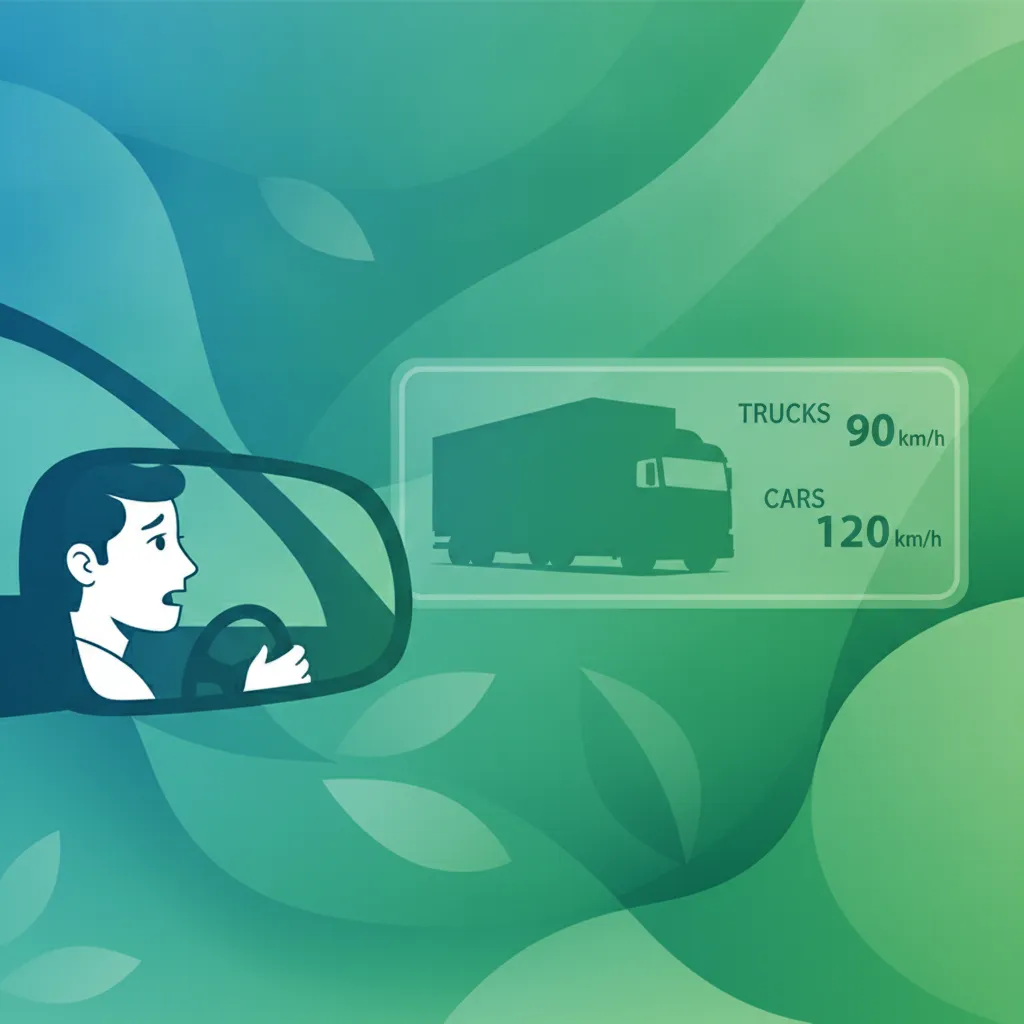
This lesson introduces the interplay between driving licence theory and broader commercial transport regulations. It outlines the essentials of tachograph use, including rules on driver work hours and mandatory rest periods to ensure compliance with European Union regulations. It also covers regulations specific to freight transport, providing context for professional driving responsibilities.

This lesson outlines the legal requirements for vehicle roadworthiness, including mandatory periodic inspections (TÜV) and the issuance of safety certificates. It explains the standards for emissions, safety devices, and the proper documentation of defects. The content underscores the importance of complying with inspection intervals and addressing repair obligations promptly.
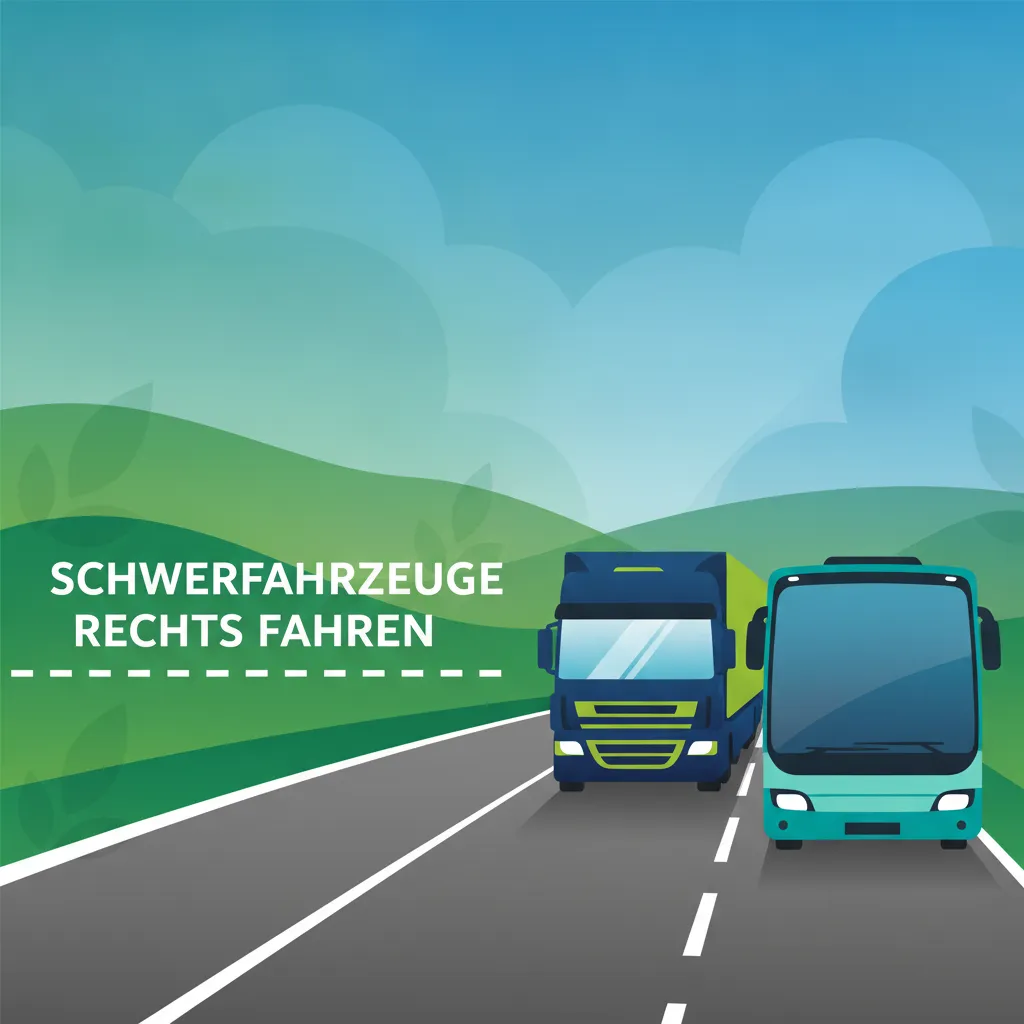
This lesson explains the specific regulations for operating heavy vehicles on Autobahnen, including speed limits, lane discipline, and overtaking rules. It discusses the use of dedicated truck lanes and the importance of maintaining appropriate following distances. The content also covers procedures for merging and exiting high-speed roads safely.

This lesson focuses on the essential legal principle of a heightened duty of care when carrying passengers. It details the driver's responsibility to ensure the safety, comfort, and accessibility of everyone on board, from boarding to alighting. Learners will understand how to conduct risk assessments, manage passenger behavior, and prepare for potential emergencies to fulfill this crucial obligation.

This lesson covers the dimensional limits for heavy vehicles, focusing on height, width, and length restrictions. It explains how to interpret clearance signage for bridges, tunnels, and overhead obstacles, and discusses the implications for route planning. The content also addresses the importance of understanding turning radii and swept paths to avoid collisions.

This lesson focuses on the importance of thorough route planning for heavy vehicles, taking into account dimensional and weight limits. It discusses how to use mapping tools and road signage to identify bridges, tunnels, and roads with restrictions. The content also covers how to plan alternative routes to avoid impassable areas.
Explore how professional drivers impact the environment through emissions, fuel consumption, and noise pollution. This lesson details sustainable logistics principles and environmentally conscious driving for German heavy vehicle operators.
This lesson addresses the concept of environmental zones in German cities, explaining the requirements for emission stickers and the impact on heavy vehicles. It discusses the legal consequences of non-compliance, such as fines, and the importance of ensuring the vehicle meets emission standards. The content covers planning routes to avoid restricted zones if necessary.
This lesson explores the legal framework governing heavy vehicle operation in Germany, focusing on the Straßenverkehrs-Ordnung (StVO) and specific commercial transport regulations. It details the professional duty of care required from drivers, including responsibilities for vehicle inspection and documentation. You will understand the enforcement mechanisms and potential penalties for non-compliance.
This lesson outlines the legal requirements for vehicle roadworthiness, including mandatory periodic inspections (TÜV) and the issuance of safety certificates. It explains the standards for emissions, safety devices, and the proper documentation of defects. The content underscores the importance of complying with inspection intervals and addressing repair obligations promptly.
This lesson explains the specific regulations for operating heavy vehicles on Autobahnen, including speed limits, lane discipline, and overtaking rules. It discusses the use of dedicated truck lanes and the importance of maintaining appropriate following distances. The content also covers procedures for merging and exiting high-speed roads safely.
This lesson covers the dimensional limits for heavy vehicles, focusing on height, width, and length restrictions. It explains how to interpret clearance signage for bridges, tunnels, and overhead obstacles, and discusses the implications for route planning. The content also addresses the importance of understanding turning radii and swept paths to avoid collisions.

This lesson examines the dynamics of delivery traffic within urban areas and industrial estates, focusing on right-of-way rules and loading zone usage. It discusses the importance of adhering to delivery windows and managing traffic flow to minimize congestion. The content also highlights the challenges of navigating narrow aisles and loading docks.
This lesson focuses on the importance of thorough route planning for heavy vehicles, taking into account dimensional and weight limits. It discusses how to use mapping tools and road signage to identify bridges, tunnels, and roads with restrictions. The content also covers how to plan alternative routes to avoid impassable areas.
This lesson introduces the interplay between driving licence theory and broader commercial transport regulations. It outlines the essentials of tachograph use, including rules on driver work hours and mandatory rest periods to ensure compliance with European Union regulations. It also covers regulations specific to freight transport, providing context for professional driving responsibilities.

This lesson examines best practices for loading and unloading heavy vehicles at delivery points, including proper vehicle positioning and coordination with ground personnel. It emphasizes the importance of verifying load stability during unloading to prevent accidents. The content also discusses time-window management and safety protocols for loading docks.

This lesson outlines the legal ramifications of operating a heavy vehicle while fatigued or overloaded. It covers potential fines, license suspension, and the negative impact on insurance coverage. The content also discusses the increased liability in the event of an accident caused by these violations.
Find clear answers to common questions learners have about Ethical and Environmental Considerations. Learn how the lesson is structured, which driving theory objectives it supports, and how it fits into the overall learning path of units and curriculum progression in Germany. These explanations help you understand key concepts, lesson flow, and exam focused study goals.
Professional drivers operate heavy machinery with significant impacts on the environment. The exam tests your knowledge of how to minimize emissions, noise, and fuel waste to ensure compliance with German environmental regulations.
For heavy vehicles, eco-driving focuses on optimizing engine torque, utilizing retarders, and maintaining steady momentum to reduce fuel consumption and brake wear, which is much more critical due to the vehicle's mass.
As a professional, you are responsible for the safety of vulnerable road users and the well-being of the public. This includes strictly observing environmental zones and managing noise levels in residential areas.
Yes, you may encounter questions regarding low-emission zones and the legal necessity of adhering to environmental restrictions when planning your routes with heavy vehicles.
Begin your targeted revision now. Use our practice search to quickly find specific German driving theory questions. Filter by StVO rules, road signs, or hazard perception to create your focused study plan. Master challenging areas and prepare confidently for your theoretical driving test.