
This lesson focuses on the specific challenges of navigating heavy vehicles through urban environments and industrial estates. You will learn the correct protocols for parking in loading zones, managing right-of-way in tight spaces, and adhering to urban traffic regulations essential for your professional driving career.

Lesson content overview
Operating heavy vehicles in urban environments and industrial estates presents a distinct set of challenges for professional drivers. This lesson, part of your German Heavy Vehicle Driving License Theory course for categories C1, C1E, C, and CE, delves into the specific dynamics of delivery traffic, focusing on critical right-of-way regulations, the proper utilization of loading zones, and efficient maneuvering techniques. Mastering these aspects is paramount for maintaining traffic flow, minimizing congestion, ensuring safety for all road users, and complying with German traffic law (Straßenverkehrs-Ordnung, StVO).
Urban areas and industrial estates are characterized by dense traffic, limited space, and a mix of road users, including a high proportion of vulnerable individuals such as pedestrians and cyclists. For heavy vehicle drivers, navigating these environments requires heightened awareness, precise control, and strict adherence to specialized rules designed to manage the unique operational demands of deliveries. These demands include navigating narrow streets and access routes, finding suitable stopping points, and executing complex maneuvers such as reversing into loading docks, often under time pressure.
The core challenge lies in balancing the necessity of delivering goods efficiently with the paramount need for safety and minimal disruption to other traffic. This involves not only understanding static rules but also developing dynamic spatial awareness and predictive judgment. This lesson builds upon foundational knowledge of vehicle dimensions, braking behavior, and general road safety principles, applying them to the specific context of urban and industrial deliveries.
Right-of-way (Vorfahrt) is a fundamental principle in German traffic law, establishing a clear hierarchy for road users to prevent collisions. In urban and industrial settings, heavy vehicle drivers must be acutely aware of who has priority, particularly concerning vulnerable road users. Misjudging or ignoring right-of-way rules can lead to severe accidents and legal consequences.
Pedestrians are consistently among the most vulnerable road users, and their protection is a high priority in German traffic law. Drivers of heavy vehicles must always exercise extreme caution and be prepared to yield to pedestrians, especially at designated crossing points.
At marked crosswalks (Zeichen 293), often indicated by thick white stripes on the road, pedestrians always have priority. This means you must stop your vehicle if a pedestrian is on the crosswalk or clearly intends to cross. Even in the absence of a marked crosswalk, such as when turning into a street where pedestrians are crossing, or in shared public spaces, drivers are generally expected to yield. The large size and limited maneuverability of heavy vehicles mean that drivers bear a greater responsibility to ensure pedestrian safety. Always assume pedestrians may not see your large vehicle or may misjudge its speed.
Cyclists, like pedestrians, are vulnerable road users who require special consideration. They are often faster and less predictable than pedestrians and can be easily overlooked, particularly when a heavy vehicle is turning.
When turning right, a common scenario in urban delivery traffic, you must always pay close attention to cyclists who may be continuing straight alongside your vehicle, often in a designated bike lane. Cyclists in bike lanes or cycle paths that run parallel to the roadway generally have priority. When making a right turn, you must yield to any cyclists traveling straight. Failure to do so is a frequent cause of severe accidents involving heavy goods vehicles. Before turning, use your mirrors effectively, check your blind spots, and signal your intentions early. Similarly, when exiting a property or industrial access road onto a public road, you must yield to both cyclists and pedestrians on the main thoroughfare.
While heavy vehicle drivers generally carry a higher responsibility to yield to more vulnerable road users, there are specific, limited circumstances where delivery vehicles may have a form of priority. This usually applies within explicitly designated loading zones or private industrial areas where specific local rules are in effect, often indicated by additional signage.
For instance, if a loading zone is marked as exclusively for delivery vehicles during certain hours, other vehicles are prohibited from occupying it. However, even in such zones, the general principles of right-of-way concerning pedestrians and cyclists usually remain. The operational purpose of a delivery vehicle does not inherently grant it an override to fundamental traffic safety rules. Any priority granted is typically over other motorized traffic attempting to park or stop in a designated delivery space, not over the safety of vulnerable individuals.
Loading zones are crucial for efficient urban and industrial deliveries, providing designated spaces where goods can be transferred without unduly obstructing traffic. However, their use is governed by strict rules, and misapplication can lead to fines, congestion, and safety hazards.
In Germany, parking and stopping regulations are indicated by specific traffic signs, which are essential for heavy vehicle drivers to recognize and understand.
While "Restricted No Parking" (Zeichen 286) allows for brief stops of up to three minutes for loading or unloading, dedicated loading zones (Ladezonen) are often created using either Zeichen 283 or 286 in conjunction with additional signs (Zusatzzeichen). These additional signs specify details such as:
It is critical to observe these signs meticulously. A loading zone might permit stopping for 15 minutes, but only during specific hours. Outside those hours, the default rule (e.g., "no parking" or "no stopping") applies, or it might revert to general parking rules. Always check all signs.
When using a designated loading bay, the primary goal is to complete the loading or unloading operation as quickly and safely as possible.
Identify Legally: Confirm the area is indeed a loading zone and understand any time limits or restrictions displayed on supplementary signs.
Position Safely: Approach the bay carefully, ensuring sufficient space for maneuvering. Position your vehicle to allow for efficient loading/unloading while minimizing obstruction to other traffic lanes or pedestrian walkways.
Engage Hazard Lights: Once stationary, activate your hazard warning lights (Warnblinkanlage) to alert other drivers to your temporary stop, especially if you are partially obstructing a lane.
Monitor Time: If a time limit is specified (e.g., 15 minutes), actively monitor your duration. Set an alarm if necessary.
Secure Vehicle: Always engage the parking brake and, if appropriate, use wheel chocks to prevent accidental movement, particularly on inclines or if the vehicle will be unattended.
Minimize Obstruction: While loading, ensure goods do not spill into pedestrian areas or block access points unnecessarily. Keep pathways clear.
Depart Promptly: Once loading/unloading is complete, clear the loading zone without delay, making way for the next vehicle.
Common violations associated with loading zones include:
Delivery windows and strict scheduling are increasingly common, particularly in urban areas and for large retail or industrial sites. These pre-defined time intervals during which deliveries are permitted are not merely suggestions; they are often mandatory requirements designed to manage traffic flow, reduce congestion during peak hours, and ensure operational efficiency for receiving businesses.
Adherence to delivery windows is crucial for several reasons:
Professional drivers must integrate delivery window compliance into their route planning and time management. This means accounting for potential traffic delays, road closures, and unforeseen circumstances that could impact arrival times. Effective planning can prevent stress, fines, and operational inefficiencies.
Exceeding scheduled times or arriving outside the allotted delivery window can have various negative consequences:
Operating large vehicles in confined spaces like narrow industrial aisles, crowded service roads, or tight loading docks demands exceptional spatial awareness and precise vehicle control. Heavy goods vehicles (HGVs) have different turning characteristics and blind spots compared to smaller vehicles, making these maneuvers particularly challenging.
A thorough understanding of your vehicle's exact dimensions – length, width, height, and especially its turning radius (Wendekreis) – is fundamental. Before attempting a maneuver in a tight space, assess whether your vehicle, possibly with a trailer, can physically make the turn or fit into the designated area without striking obstacles.
Reversing a heavy vehicle, especially with a trailer, into a loading dock or tight bay is one of the most challenging maneuvers. It requires slow speed, constant observation, and often external guidance.
Pre-Assessment: Before starting, get out of your vehicle (if safe) and walk around the area to identify potential hazards, obstacles, and the precise boundaries of the loading bay. Note any slopes or uneven surfaces.
Plan Your Path: Visualize the entire maneuver. Determine your initial angle and the necessary adjustments. Aim to complete the maneuver with as few corrections as possible.
Use All Mirrors: Constantly check all available mirrors, including convex and wide-angle mirrors, to monitor your vehicle's position relative to the dock and surrounding objects.
Utilize Spotters: Whenever possible, use a trained spotter who can guide you with clear, unambiguous hand signals. Maintain eye contact with them. If no spotter is available, be prepared to stop and get out to reassess your position frequently.
Slow and Steady: Perform the maneuver at walking pace or slower. Small steering inputs at low speed have a greater effect on the trailer's direction.
Correct Early: If you notice the trailer starting to go off course, make small corrections immediately. Over-correction at speed can quickly lead to jackknifing.
Secure the Vehicle: Once correctly positioned at the dock, engage the parking brake, switch off the engine (if appropriate), and consider using wheel chocks before unloading.
Heavy vehicles have significant blind spots (tote Winkel) that are amplified in confined maneuvering situations. These areas, not visible through mirrors or direct vision, pose a major risk to pedestrians, cyclists, other vehicles, and infrastructure.
The safe operation of delivery vehicles in urban and industrial settings is profoundly influenced by external conditions and the state of your vehicle. Professional drivers must adapt their driving style and procedures to account for these variables.
Adverse weather conditions significantly increase the risk associated with urban deliveries:
The nature of the road and the surrounding traffic also dictate appropriate driving behavior:
The load carried by your heavy vehicle directly impacts its handling characteristics:
Ignoring the specific rules and safety considerations for delivery traffic in urban and industrial areas can lead to a range of serious consequences, impacting safety, finances, and legal standing.
Adhering to these principles is not just about avoiding penalties; it is about ensuring the safety of yourself and others, maintaining efficient operations, and upholding the professional standards expected of a heavy vehicle driver in Germany.
Navigating delivery traffic in Germany's urban areas and industrial estates requires a sophisticated blend of legal knowledge, operational skill, and heightened safety awareness.
This lesson reinforces the interconnectedness of various driving theory aspects. Understanding vehicle dimensions is crucial for maneuvering, and knowing braking capabilities is vital for safely approaching loading zones. By diligently applying these principles, heavy vehicle drivers contribute significantly to road safety, traffic efficiency, and professional delivery standards across Germany.
This lesson covers the essential rules and skills for navigating delivery traffic in German urban areas and industrial estates with heavy vehicles. You will learn how to correctly interpret loading zone signs (including Zeichen 283 and 286 with their supplementary restrictions), apply right-of-way rules prioritizing pedestrians and cyclists, and execute safe maneuvers in confined spaces such as reversing into loading docks while accounting for blind spots and trailer tracking. The lesson also emphasizes the importance of delivery windows for traffic management and provides guidance on adapting driving behavior to weather, road conditions, and vehicle load. Mastery of these topics is essential for both the German theory exam and safe professional driving practice.
A short set of high-value points that capture the most important learning from this lesson.
Heavy vehicle drivers must always yield to pedestrians at crosswalks (Zeichen 293) and cyclists in bike lanes, even when making turns in delivery scenarios.
Loading zones (Ladezonen) are governed by specific signs combining Zeichen 283 or 286 with supplementary signs (Zusatzzeichen) specifying time limits and vehicle types.
Trailers do not follow the exact path of the tractor unit—they cut in on turns, requiring wider turns than initially anticipated.
Adverse weather significantly impacts heavy vehicle handling, increasing stopping distances and reducing stability during maneuvers.
Delivery windows (Anlieferungsfenster) are often mandatory requirements, not suggestions, and non-compliance can result in fines and operational disruptions.
Explore all units and lessons included in this driving theory course.
Zeichen 283 (Absolutes Haltverbot) prohibits any stopping; Zeichen 286 (Eingeschränktes Haltverbot) allows stops up to 3 minutes for loading/unloading.
When reversing with a trailer, use the G.O.A.L. method—get out and look—if you are unsure about blind spots or clearance.
The size and weight of your vehicle mean collisions with pedestrians or cyclists can have catastrophic consequences; prioritize their safety above delivery speed.
Know your vehicle's turning radius (Wendekreis) and overhang dimensions before attempting any tight maneuver in industrial areas.
Restricted no parking (Zeichen 286) permits brief stops, but only if traffic is not obstructed and time limits shown on additional signs are observed.
Assuming delivery vehicle priority in loading zones overrides the safety of pedestrians and cyclists—it does not.
Overstaying time limits in loading zones, assuming a few extra minutes are harmless, leading to fines and congestion.
Failing to check supplementary signs on loading zones, missing time restrictions that apply only during certain hours.
Turning too sharply in confined spaces without accounting for trailer tracking, causing the trailer to swing into adjacent areas or hit obstacles.
Relying solely on mirrors for blind spot checks without physically turning to look or using a spotter in tight maneuvers.
Lesson content overview
A short set of high-value points that capture the most important learning from this lesson.
Heavy vehicle drivers must always yield to pedestrians at crosswalks (Zeichen 293) and cyclists in bike lanes, even when making turns in delivery scenarios.
Loading zones (Ladezonen) are governed by specific signs combining Zeichen 283 or 286 with supplementary signs (Zusatzzeichen) specifying time limits and vehicle types.
Trailers do not follow the exact path of the tractor unit—they cut in on turns, requiring wider turns than initially anticipated.
Adverse weather significantly impacts heavy vehicle handling, increasing stopping distances and reducing stability during maneuvers.
Delivery windows (Anlieferungsfenster) are often mandatory requirements, not suggestions, and non-compliance can result in fines and operational disruptions.
Explore all units and lessons included in this driving theory course.
Zeichen 283 (Absolutes Haltverbot) prohibits any stopping; Zeichen 286 (Eingeschränktes Haltverbot) allows stops up to 3 minutes for loading/unloading.
When reversing with a trailer, use the G.O.A.L. method—get out and look—if you are unsure about blind spots or clearance.
The size and weight of your vehicle mean collisions with pedestrians or cyclists can have catastrophic consequences; prioritize their safety above delivery speed.
Know your vehicle's turning radius (Wendekreis) and overhang dimensions before attempting any tight maneuver in industrial areas.
Restricted no parking (Zeichen 286) permits brief stops, but only if traffic is not obstructed and time limits shown on additional signs are observed.
Assuming delivery vehicle priority in loading zones overrides the safety of pedestrians and cyclists—it does not.
Overstaying time limits in loading zones, assuming a few extra minutes are harmless, leading to fines and congestion.
Failing to check supplementary signs on loading zones, missing time restrictions that apply only during certain hours.
Turning too sharply in confined spaces without accounting for trailer tracking, causing the trailer to swing into adjacent areas or hit obstacles.
Relying solely on mirrors for blind spot checks without physically turning to look or using a spotter in tight maneuvers.
Explore search topics learners often look for when studying Delivery Traffic in Urban Areas and Industrial Estates. These topics reflect common questions about road rules, driving situations, safety guidance, and lesson level theory preparation for learners in Germany.
Browse additional driving theory lessons that cover connected traffic rules, road signs, and common driving situations related to this topic. Improve your understanding of how different rules interact across everyday traffic scenarios.
Understand the specific regulations for loading zones and delivery traffic in German urban areas. This lesson covers StVO rules for heavy vehicles, delivery windows, and managing traffic flow in cities and industrial estates, aligning with C1, C, and CE license theory.
This lesson explains the specific regulations for operating heavy vehicles on Autobahnen, including speed limits, lane discipline, and overtaking rules. It discusses the use of dedicated truck lanes and the importance of maintaining appropriate following distances. The content also covers procedures for merging and exiting high-speed roads safely.
This lesson addresses the concept of environmental zones in German cities, explaining the requirements for emission stickers and the impact on heavy vehicles. It discusses the legal consequences of non-compliance, such as fines, and the importance of ensuring the vehicle meets emission standards. The content covers planning routes to avoid restricted zones if necessary.

This lesson examines best practices for loading and unloading heavy vehicles at delivery points, including proper vehicle positioning and coordination with ground personnel. It emphasizes the importance of verifying load stability during unloading to prevent accidents. The content also discusses time-window management and safety protocols for loading docks.

This lesson covers the dimensional limits for heavy vehicles, focusing on height, width, and length restrictions. It explains how to interpret clearance signage for bridges, tunnels, and overhead obstacles, and discusses the implications for route planning. The content also addresses the importance of understanding turning radii and swept paths to avoid collisions.
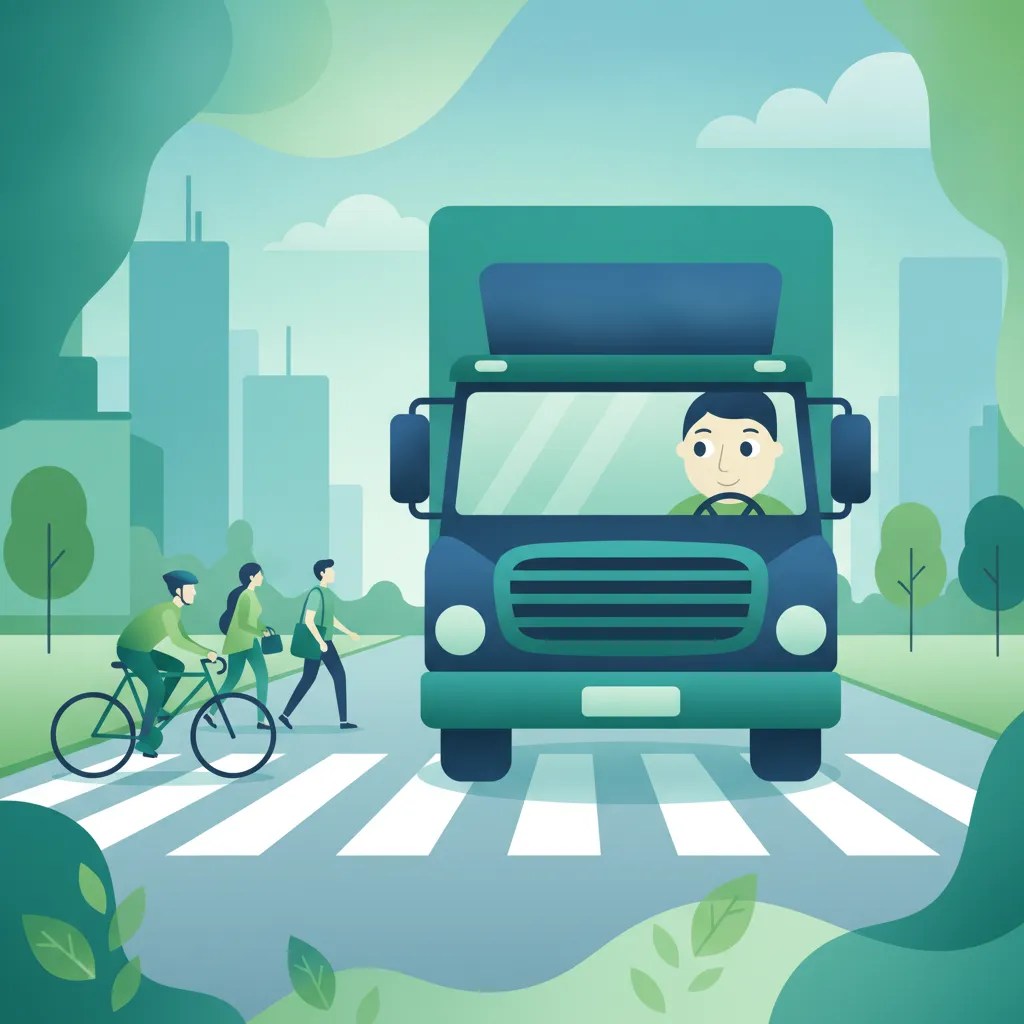
This lesson focuses on the right-of-way rules that heavy vehicles must follow when interacting with cyclists and pedestrians, particularly at intersections and crossings. It emphasizes the need for trucks to yield appropriately and maintain safe distances. The content also covers the interpretation of traffic signs governing priority in urban areas.

This lesson explains the legal and safety requirements for transporting goods and cargo. It covers the importance of proper load distribution to maintain vehicle stability and the methods for securely fastening items to prevent them from shifting or falling. The regulations concerning maximum vehicle weight, roof loads, and the correct marking of loads that overhang the vehicle are also detailed.

This lesson explores the legal framework governing heavy vehicle operation in Germany, focusing on the Straßenverkehrs-Ordnung (StVO) and specific commercial transport regulations. It details the professional duty of care required from drivers, including responsibilities for vehicle inspection and documentation. You will understand the enforcement mechanisms and potential penalties for non-compliance.
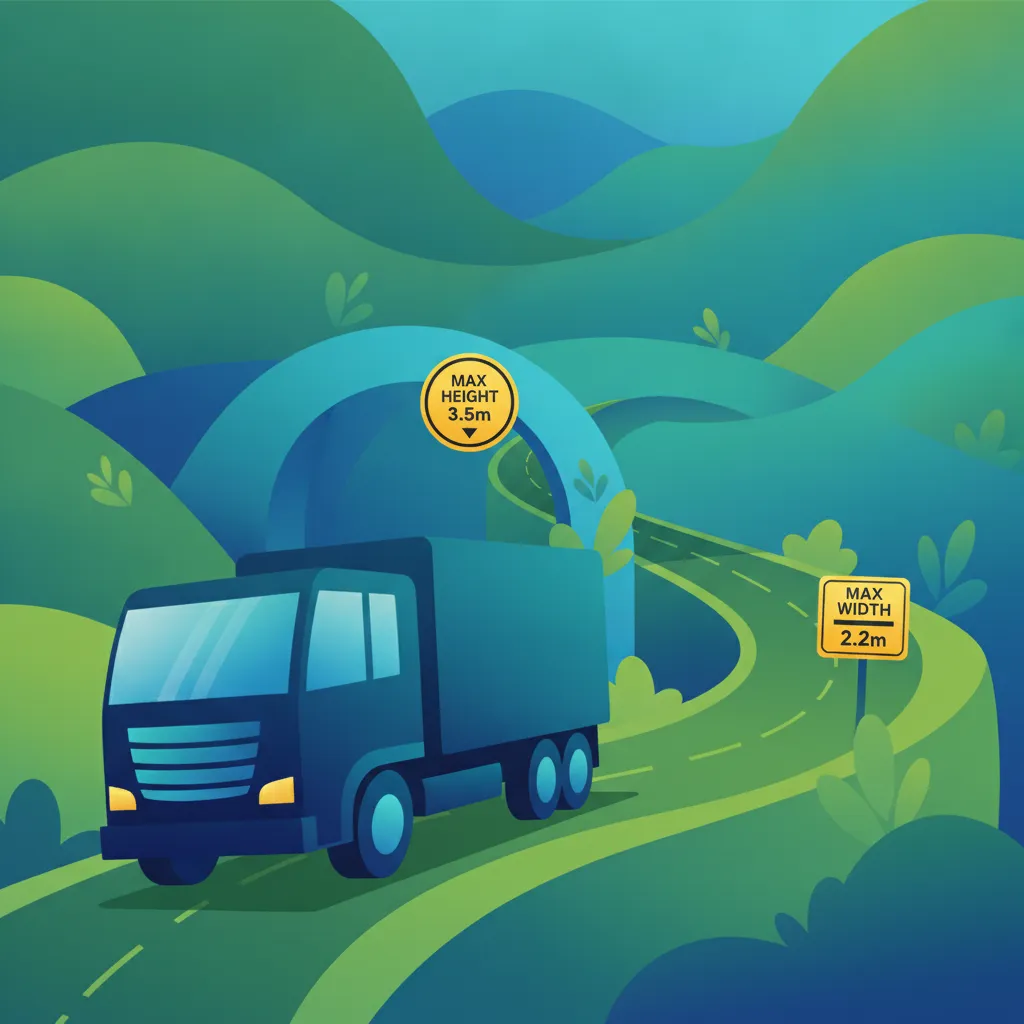
This lesson focuses on the importance of thorough route planning for heavy vehicles, taking into account dimensional and weight limits. It discusses how to use mapping tools and road signage to identify bridges, tunnels, and roads with restrictions. The content also covers how to plan alternative routes to avoid impassable areas.
This lesson focuses on the distribution of loads across axle groups and the legal limits for axle loads. It explains the importance of correct weight distribution to avoid axle overloading, which can lead to road damage and safety hazards. The content also covers methods for measuring axle loads and the legal requirements for maintaining proper axle load limits.

This lesson addresses the challenges of maneuvering heavy vehicles in confined spaces such as loading bays and narrow streets. It provides strategies for planning the maneuver, accounting for vehicle dimensions, turning radius, and blind spots. The content emphasizes slow, controlled movements and the need for high situational awareness.
Learn how heavy vehicles must interact safely with pedestrians and cyclists in busy urban areas and industrial estates. This lesson focuses on right-of-way rules, visibility challenges, and safe maneuvering in mixed traffic environments according to German theory.

This lesson teaches riders how to interact safely and predictably with pedestrians, cyclists, and public transport vehicles. It highlights the importance of yielding at designated crossings, maintaining a safe passing distance, and anticipating the movements of buses and trams. The content emphasizes using eye contact and clear signaling to foster safe and respectful interactions with all road users.
This lesson focuses on the right-of-way rules that heavy vehicles must follow when interacting with cyclists and pedestrians, particularly at intersections and crossings. It emphasizes the need for trucks to yield appropriately and maintain safe distances. The content also covers the interpretation of traffic signs governing priority in urban areas.
This lesson focuses on complex traffic environments where different types of road users share the same space. It provides guidance on situations like driving on streets with integrated tram tracks or where bus and bicycle lanes are part of the roadway. The content emphasizes understanding the specific priority rules and being extra vigilant to anticipate potential conflicts in these busy, shared zones.
This lesson focuses on the interaction between heavy vehicles and vulnerable road users at crossings, particularly when turning right. It covers the need for heightened vigilance, the importance of properly using mirrors, and correct signaling to alert others. The content highlights legal responsibilities and safe distance requirements to prevent accidents.

This lesson focuses on identifying road users who require special attention and caution, such as children, the elderly, and individuals with disabilities. It details the appropriate behavior when encountering school buses and public transport, which often involve unpredictable pedestrian movement. A critical topic covered is the legal requirement to form an emergency corridor ('Rettungsgasse') for responding emergency vehicles.

This lesson focuses on the critical moments of interaction with pedestrians and cyclists near bus stops, a common location for accidents. It reinforces the importance of reducing speed, yielding right-of-way, and constantly monitoring blind spots during the stopping process. Learners will practice techniques like making eye contact and using signals to communicate intentions, creating a safer environment for everyone around the vehicle.

This lesson focuses on the unique challenges and safety protocols required when operating alongside trams and light rail systems. It clarifies the strict right-of-way rules that typically favor trams and explains how to safely navigate shared roadways and cross tracks. Learners will be taught to recognize specific signals and markings related to tramways to prevent conflicts and ensure the safety of all road users.
This lesson provides specific guidance on how to safely share the road with pedestrians and cyclists, who are among the most vulnerable road users. It covers the rules of conduct at zebra crossings, traffic lights for pedestrians, and designated cycle lanes. The content emphasizes the importance of vigilance, yielding right-of-way, and maintaining a safe distance to prevent accidents in urban and rural environments.

This lesson trains drivers to proactively identify vulnerable road users and anticipate their often unpredictable behavior. It highlights the specific risks posed by children, elderly pedestrians, cyclists, and e-scooter users, particularly near bus stops and crossings. The goal is to develop a heightened sense of risk perception and apply defensive driving techniques to protect those who are most at risk on the road.

This lesson provides a detailed breakdown of the various categories of participants in road traffic, from pedestrians and cyclists to cars, trucks, and public transport. It explains the concept of vulnerable road users and outlines the specific rules and expectations for interacting with each group. The objective is to foster mutual respect and understanding to ensure safe coexistence on the road for everyone.
Find clear answers to common questions learners have about Delivery Traffic in Urban Areas and Industrial Estates. Learn how the lesson is structured, which driving theory objectives it supports, and how it fits into the overall learning path of units and curriculum progression in Germany. These explanations help you understand key concepts, lesson flow, and exam focused study goals.
You may only stop in a designated loading zone if the sign specifically permits it for your vehicle type and you are actively loading or unloading goods. Always check for additional time restrictions or weight limits that may apply to heavy vehicles.
Prioritize checking your vehicle's dimensions—specifically height and width—against any clearance signs or overhead obstructions. Always use a spotter if available and maximize your field of vision using all mirrors.
The StVO does not grant special priority status to heavy delivery vehicles. You must strictly follow existing signs and the right-hand-before-left rule unless specific signals indicate otherwise, regardless of your delivery schedule.
Yes, many German cities utilize Environmental Zones (Umweltzonen). You must ensure your vehicle meets the required emission standards and displays the correct badge before entering restricted urban areas for deliveries.
Begin your targeted revision now. Use our practice search to quickly find specific German driving theory questions. Filter by StVO rules, road signs, or hazard perception to create your focused study plan. Master challenging areas and prepare confidently for your theoretical driving test.