
This lesson explores the essential safety protocols for loading and unloading heavy vehicles in various environments. Building on your knowledge of weight distribution and vehicle stability, you will learn how to coordinate with site personnel and manage time windows effectively to ensure operational safety.

Lesson content overview
Operating heavy vehicles in Germany, particularly those requiring C1, C1E, C, and CE driving licenses, involves more than just driving on the road. A crucial aspect of professional heavy vehicle operation is the safe and efficient management of loading and unloading at various delivery points. This lesson delves into best practices, essential safety protocols, and regulatory considerations to ensure that cargo transfer operations are conducted without incident, protecting personnel, equipment, and the valuable goods being transported.
Mastery of these practices is not merely about compliance; it is fundamental to preventing accidents, minimizing operational delays, and maintaining the professional standards expected of drivers holding a German heavy vehicle driving license. It builds upon foundational knowledge of vehicle dimensions, mass distribution, and load securing principles, as discussed in Lesson 5: Loads, Weight Distribution, Load Securing and Vehicle Stability.
Effective loading and unloading procedures are paramount for heavy vehicle drivers. They directly impact safety, operational efficiency, and legal compliance. Improper practices can lead to severe consequences, including injuries to personnel, damage to vehicles and cargo, and significant delays, all of which can result in legal penalties and financial losses.
This topic intersects with several critical areas of heavy vehicle operation, including precise maneuvering in confined spaces (Lesson 7: Mirrors, Blind Spots, Turning, Reversing and Maneuvering) and cautious interaction with vulnerable road users, especially in urban delivery environments (Lesson 8.2: Right-of-Way Rules for Trucks and Cyclists/Pedestrians). By understanding and applying these principles, professional drivers can navigate the complexities of delivery points safely and competently.
Safety is the overriding concern during all loading and unloading operations. Adhering to a set of core principles ensures that potential hazards are identified and mitigated effectively. These principles form the backbone of responsible heavy vehicle operation at delivery points.
Accurate vehicle positioning is the first critical step for safe and efficient cargo transfer. It involves aligning the heavy vehicle, whether a rigid truck or a truck-trailer combination, precisely with the loading dock or designated unloading area. This ensures that the load transfer equipment, such as tail lifts, forklifts, or dock levelers, can operate safely and without excessive strain on the vehicle or manual operators.
Proper alignment prevents the need for repeated adjustments, which consume valuable time and increase the risk of errors or collisions. Misalignment can lead to precarious load angles, uneven weight distribution during transfer, and potential damage to the vehicle, dock, or cargo. Drivers must consider the available space, the type of loading equipment, and the nature of the cargo.
Establishing clear communication channels and signaling methods between the heavy vehicle driver and ground personnel (dock workers, warehouse staff) is essential. This reduces the risk of accidents caused by misunderstandings regarding vehicle movements, equipment operation, or the status of the load.
Effective coordination requires explicit signals and confirmation before any significant action is taken. This proactive approach ensures that everyone involved is aware of planned movements and can react appropriately. Reliance on assumptions rather than explicit communication is a common cause of incidents at loading docks.
Even if a load was perfectly secured before transit, its stability must be continuously verified during the unloading process. Changes in weight distribution as items are removed can affect the overall stability of the remaining cargo, potentially leading to shifts, collapses, or spills.
Regular checks, which can include visual inspections and tactile assessments, are crucial. If any instability is detected, such as leaning pallets or shifting crates, the unloading process must be immediately halted. Addressing instability promptly prevents accidents, protects personnel, and avoids damage to the remaining cargo or the vehicle itself. This is directly linked to the principles of load securing and vehicle stability covered in Lesson 5.
Many delivery points, especially in urban or industrial areas, operate on strict time windows. Adhering to these scheduled arrival and departure times is vital for efficient logistics, preventing congestion at the dock, and avoiding penalties.
Effective time-window management requires careful planning of the route, anticipating potential delays, and accurately estimating the time required for both positioning and the actual loading or unloading process. Rushing to meet a deadline can compromise safety procedures and lead to errors.
Loading docks are often busy environments with specific safety regulations designed to protect workers and equipment. These protocols can include site-specific rules, such as lockout/tagout procedures for equipment, designated safe zones, and the mandatory use of personal protective equipment (PPE).
Professional heavy vehicle drivers must be aware of and strictly follow all posted safety instructions and site-specific procedures. This proactive compliance helps to minimize the risk of accidents from moving equipment, vehicle operations, or falls.
Translating the core principles into practical actions is vital for professional heavy vehicle drivers. These detailed practices ensure that every step of the loading and unloading process is executed with maximum safety and efficiency.
Achieving the correct alignment for loading or unloading requires skill and careful judgment. Different dock configurations and vehicle types necessitate various positioning strategies.
Practical Steps for Perpendicular Alignment:
When reversing to a loading dock, always be aware of your blind spots. Even with advanced mirror systems and cameras, human guidance is invaluable. Do not rush the maneuver.
Effective communication prevents accidents by ensuring everyone knows what to expect. Drivers must initiate and respond to clear signals.
Load stability checks are an ongoing process during unloading, not just a one-time event before departure.
The condition where the cargo remains immobile and does not shift or fall during handling, transit, or unloading.
Time management is a critical operational skill for heavy vehicle drivers, impacting not only personal schedules but also the entire logistics chain.
Specific safety protocols are in place at most loading docks to protect everyone on site. Drivers must be familiar with and adhere to these.
Upon final positioning, engage the parking brake fully.
Place wheel chocks firmly against the wheels, typically both front and back of at least one axle, as per site regulations. This prevents any accidental movement of the vehicle.
Turn off the engine (if required by site rules) and remove the keys from the ignition to prevent unauthorized or accidental starting.
If deploying a tail lift (a mechanical platform at the rear of the vehicle that lowers cargo to ground level), ensure the area is clear of personnel and obstacles before activation.
Compliance with legal regulations is non-negotiable for professional heavy vehicle drivers in Germany. The following rules are critical for safe loading and unloading.
Regulation: The heavy vehicle must be fully stopped and secured using its parking brake and, if required, wheel chocks, before any loading or unloading equipment (such as a tail lift, forklift, or dock leveler) is operated.
Regulation: Drivers must obtain explicit clearance or a definitive signal from ground personnel before moving the heavy vehicle during any phase of loading or unloading when workers are present in the vicinity.
Regulation: The stability of the load must be verified throughout the entire unloading process. Any detected instability must be addressed and corrected immediately before continuing with the unloading.
Even experienced drivers can sometimes make mistakes during loading and unloading. Awareness of common violations and their consequences is key to maintaining a high standard of safety.
Violation: Operating the Tail Lift Without Securing the Vehicle.
Violation: Moving the Heavy Vehicle Without Explicit Clearance.
Violation: Ignoring Visible Load Instability During Unloading.
Violation: Exceeding the Allocated Time Window for Loading/Unloading.
Violation: Failing to Follow Site-Specific Safety Protocols.
Loading and unloading practices must be adaptable to various environmental and operational conditions. A professional heavy vehicle driver assesses the situation and adjusts their approach accordingly.
Understanding the direct links between actions and outcomes reinforces the importance of correct procedures.
Safe and efficient loading and unloading are indispensable skills for drivers holding a German heavy vehicle driving license. By integrating knowledge from various aspects of heavy vehicle operation, you can ensure safe and smooth deliveries.
By consistently applying these principles, you contribute significantly to the safety of all personnel, the integrity of the cargo, and the overall professionalism of heavy vehicle operations in Germany.
This lesson covers the essential safety protocols for loading and unloading heavy vehicles at German delivery points, directly relevant for C1, C, C1E, and CE license theory. It emphasizes that proper vehicle positioning at loading docks (Laderampe) must be achieved before any cargo transfer, with the vehicle secured using parking brake and wheel chocks (Unterlegkeile). Clear communication through standardized hand signals (Handzeichen) and explicit clearance from ground personnel (Bodenpersonal) are mandatory before vehicle movement. Continuous load stability verification throughout unloading is required because weight distribution changes as items are removed. Professional drivers must also manage time windows (Zeitfenster) efficiently while adhering to all site-specific safety protocols and adapting procedures to environmental conditions like weather and lighting.
A short set of high-value points that capture the most important learning from this lesson.
Precise vehicle positioning at loading docks is the foundation of safe cargo transfer and must be completed before any loading or unloading begins.
Heavy vehicles must be fully immobilized with parking brake and wheel chocks before operating any equipment like tail lifts or dock levelers.
Load stability must be continuously verified throughout the entire unloading process as weight distribution changes with each item removed.
Explicit clearance from ground personnel is mandatory before any vehicle movement when workers are present near the vehicle.
Professional drivers must adapt procedures to environmental conditions including wet surfaces, low visibility, and confined urban spaces.
Explore all units and lessons included in this driving theory course.
Always engage the parking brake and place wheel chocks before extending or operating a tail lift (Ladebordwand).
Never move the vehicle without explicit clearance—assumptions about the area being clear are a common cause of serious accidents.
If load instability is detected during unloading, stop immediately, re-secure the load, and only resume when safe.
Wheel chocks (Unterlegkeile) should be placed both in front of and behind at least one axle as per site regulations.
Time windows (Zeitfenster) require planning but safety must never be sacrificed to meet deadlines.
Operating the tail lift without first securing the vehicle with parking brake and wheel chocks, risking platform shift and personnel injury.
Moving the heavy vehicle without waiting for explicit clearance from ground personnel, leading to potential collisions with workers.
Continuing unloading after noticing load instability, hoping the problem will resolve itself, which often causes cargo collapse.
Rushing to meet delivery time windows by skipping safety steps like proper vehicle positioning or stability checks.
Ignoring site-specific safety protocols such as lockout/tagout procedures, PPE requirements, or posted safety signage.
Lesson content overview
A short set of high-value points that capture the most important learning from this lesson.
Precise vehicle positioning at loading docks is the foundation of safe cargo transfer and must be completed before any loading or unloading begins.
Heavy vehicles must be fully immobilized with parking brake and wheel chocks before operating any equipment like tail lifts or dock levelers.
Load stability must be continuously verified throughout the entire unloading process as weight distribution changes with each item removed.
Explicit clearance from ground personnel is mandatory before any vehicle movement when workers are present near the vehicle.
Professional drivers must adapt procedures to environmental conditions including wet surfaces, low visibility, and confined urban spaces.
Explore all units and lessons included in this driving theory course.
Always engage the parking brake and place wheel chocks before extending or operating a tail lift (Ladebordwand).
Never move the vehicle without explicit clearance—assumptions about the area being clear are a common cause of serious accidents.
If load instability is detected during unloading, stop immediately, re-secure the load, and only resume when safe.
Wheel chocks (Unterlegkeile) should be placed both in front of and behind at least one axle as per site regulations.
Time windows (Zeitfenster) require planning but safety must never be sacrificed to meet deadlines.
Operating the tail lift without first securing the vehicle with parking brake and wheel chocks, risking platform shift and personnel injury.
Moving the heavy vehicle without waiting for explicit clearance from ground personnel, leading to potential collisions with workers.
Continuing unloading after noticing load instability, hoping the problem will resolve itself, which often causes cargo collapse.
Rushing to meet delivery time windows by skipping safety steps like proper vehicle positioning or stability checks.
Ignoring site-specific safety protocols such as lockout/tagout procedures, PPE requirements, or posted safety signage.
Explore search topics learners often look for when studying Loading and Unloading Practices at Delivery Points. These topics reflect common questions about road rules, driving situations, safety guidance, and lesson level theory preparation for learners in Germany.
Browse additional driving theory lessons that cover connected traffic rules, road signs, and common driving situations related to this topic. Improve your understanding of how different rules interact across everyday traffic scenarios.
Understand the critical safety protocols for loading and unloading heavy vehicles at delivery points. This lesson covers vehicle positioning, coordination with personnel, and safe equipment use, essential for German C and CE license theory.

This lesson examines the dynamics of delivery traffic within urban areas and industrial estates, focusing on right-of-way rules and loading zone usage. It discusses the importance of adhering to delivery windows and managing traffic flow to minimize congestion. The content also highlights the challenges of navigating narrow aisles and loading docks.

This lesson explains the legal and safety requirements for transporting goods and cargo. It covers the importance of proper load distribution to maintain vehicle stability and the methods for securely fastening items to prevent them from shifting or falling. The regulations concerning maximum vehicle weight, roof loads, and the correct marking of loads that overhang the vehicle are also detailed.

This lesson outlines the legal requirements for load securing according to German traffic law (StVO) and other relevant regulations. It details the obligations for cargo safety, inspection, and documentation. The content also explains the penalties for non-compliance, emphasizing adherence to legal standards to ensure safety.

This lesson addresses the challenges of maneuvering heavy vehicles in confined spaces such as loading bays and narrow streets. It provides strategies for planning the maneuver, accounting for vehicle dimensions, turning radius, and blind spots. The content emphasizes slow, controlled movements and the need for high situational awareness.
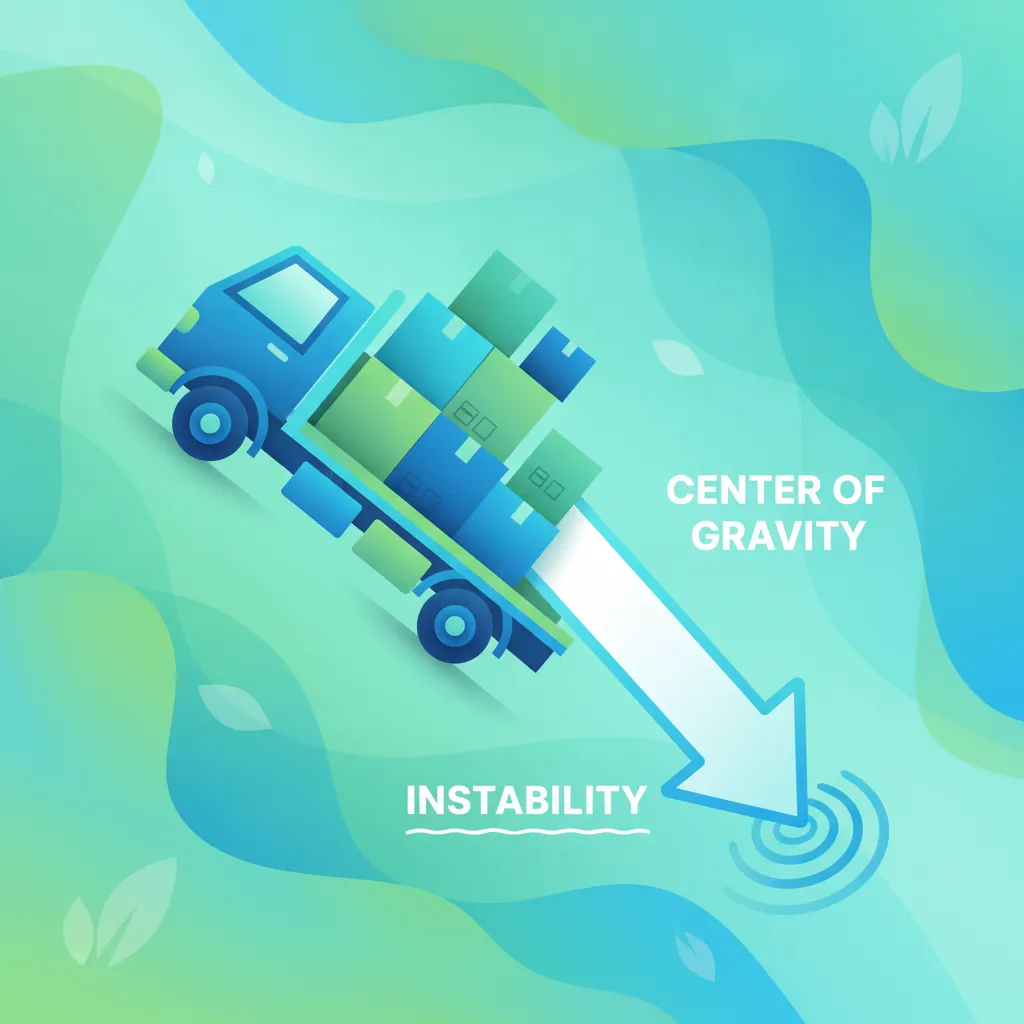
This lesson introduces the principles of load distribution and the impact of the centre of gravity on vehicle stability. It explains how cargo placement influences axle loads and the overall balance of the vehicle. The content emphasizes the importance of maintaining a low centre of gravity to reduce rollover risk.

This lesson examines the risks associated with load shifting during braking and cornering maneuvers. It explains how inertia and weight transfer can cause cargo to move, potentially leading to instability or loss of control. The content emphasizes the importance of proper load securing to mitigate these risks and maintain vehicle stability.

This lesson covers the various methods and equipment used to secure loads, including friction, blocking, and lashing techniques. It describes the proper use of tie-down straps, cargo nets, load bars, and other securing devices. The content also explains how to achieve sufficient tension and use secure fastening points.

This lesson provides a step-by-step guide for safely managing a vehicle breakdown on the road. It includes instructions on performing an emergency stop, deploying hazard lights and warning triangles, and contacting assistance. The content emphasizes maintaining safety for both the driver and other road users during the breakdown.

This lesson covers the proper management of items brought on board by passengers, including luggage, prams, and mobility aids. It teaches how to use designated storage areas and racks correctly to prevent items from becoming hazards. The procedures for securing wheelchairs and other mobility devices are detailed to ensure they are stable and do not move during transit, complying with safety and accessibility standards.
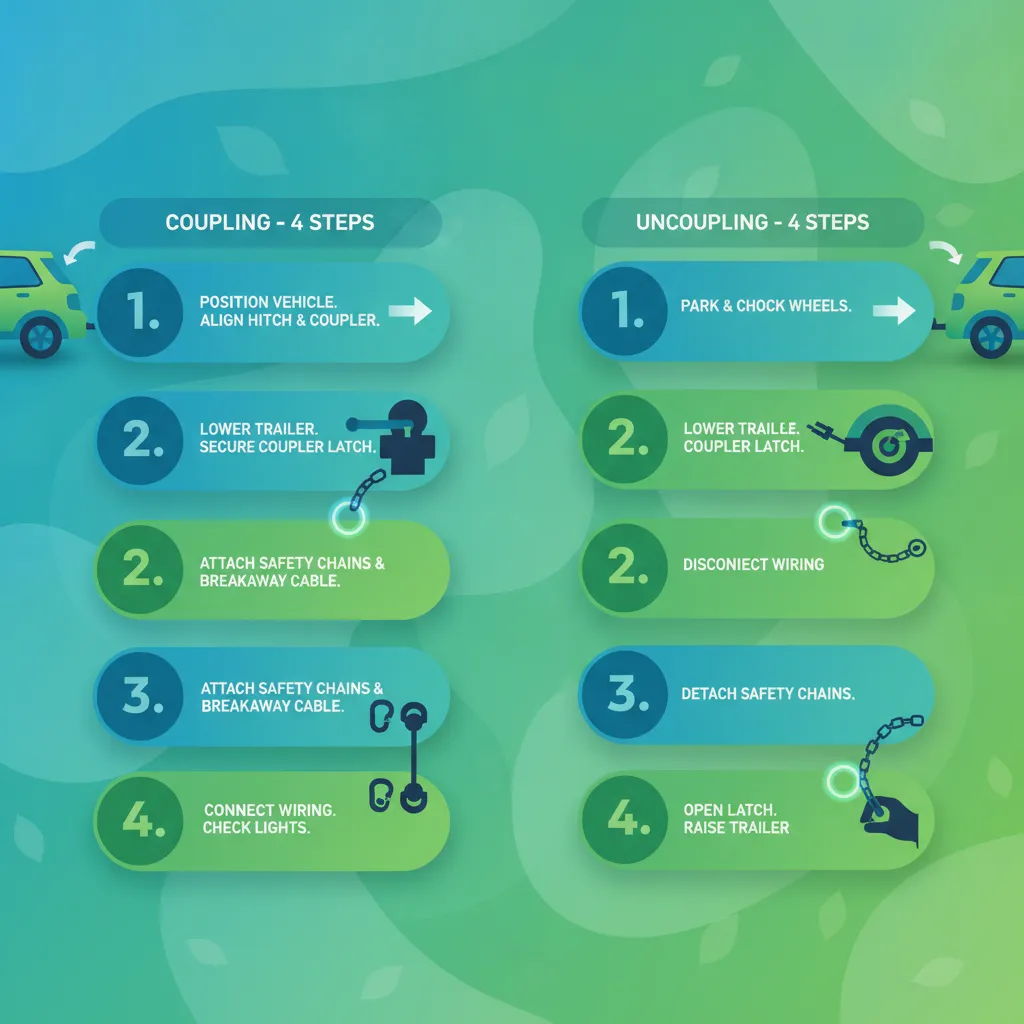
This lesson outlines the standard procedure for coupling and uncoupling trailers, emphasizing safety checks such as verifying the lock, hand brake, and brake connections. It discusses the importance of wheel chocks and correct alignment of the tow vehicle. The content includes a visual inspection checklist to ensure a secure connection.
Focus on verifying load stability when unloading heavy goods vehicles. This lesson details the risks of load shifting and how to prevent accidents during unloading at delivery points, crucial for your German driving theory preparation.
This lesson examines the risks associated with load shifting during braking and cornering maneuvers. It explains how inertia and weight transfer can cause cargo to move, potentially leading to instability or loss of control. The content emphasizes the importance of proper load securing to mitigate these risks and maintain vehicle stability.
This lesson introduces the principles of load distribution and the impact of the centre of gravity on vehicle stability. It explains how cargo placement influences axle loads and the overall balance of the vehicle. The content emphasizes the importance of maintaining a low centre of gravity to reduce rollover risk.

This lesson focuses on the critical relationship between load distribution, the center of gravity, and vehicle stability. It explains how the placement of passengers and luggage can raise the center of gravity, increasing the risk of rollover during turns or sudden maneuvers. Learners will understand how to manage loading within legal weight limits to maintain optimal handling, braking performance, and overall safety.
This lesson explains the legal and safety requirements for transporting goods and cargo. It covers the importance of proper load distribution to maintain vehicle stability and the methods for securely fastening items to prevent them from shifting or falling. The regulations concerning maximum vehicle weight, roof loads, and the correct marking of loads that overhang the vehicle are also detailed.

This lesson focuses on vehicle stability and the risks of rollover, particularly for vehicles with a high centre of gravity. It discusses how load placement, speed, and cornering affect rollover risk. The content outlines countermeasures such as speed reduction, load lowering, and the use of anti-roll devices.

This lesson focuses on the distribution of loads across axle groups and the legal limits for axle loads. It explains the importance of correct weight distribution to avoid axle overloading, which can lead to road damage and safety hazards. The content also covers methods for measuring axle loads and the legal requirements for maintaining proper axle load limits.
This lesson covers the various methods and equipment used to secure loads, including friction, blocking, and lashing techniques. It describes the proper use of tie-down straps, cargo nets, load bars, and other securing devices. The content also explains how to achieve sufficient tension and use secure fastening points.
Find clear answers to common questions learners have about Loading and Unloading Practices at Delivery Points. Learn how the lesson is structured, which driving theory objectives it supports, and how it fits into the overall learning path of units and curriculum progression in Germany. These explanations help you understand key concepts, lesson flow, and exam focused study goals.
Even if third-party personnel perform the physical labor, the driver remains responsible for ensuring the vehicle is properly positioned and that the remaining load does not become unstable or shift dangerously during the process.
The main risk is that the load may have shifted during transport and could fall out immediately upon opening. Always stand to the side of the vehicle and inspect the load's integrity before fully clearing the area.
Correct positioning ensures that the vehicle is perfectly aligned with the dock, minimizing gaps where personnel could fall or equipment could fail. It also prevents mechanical strain on loading ramps and ensures the truck remains stable.
Rushing to meet a delivery deadline often leads to shortcuts in load securing and safety checks. Professional drivers must manage time effectively to avoid the pressure that causes fatigue and reckless behavior.
Begin your targeted revision now. Use our practice search to quickly find specific German driving theory questions. Filter by StVO rules, road signs, or hazard perception to create your focused study plan. Master challenging areas and prepare confidently for your theoretical driving test.