
This lesson details your legal and moral duty to provide assistance at an accident scene, a critical component of the German driving theory exam. You will learn to secure the site with a warning triangle and perform fundamental life-saving measures to ensure safety for all road users.
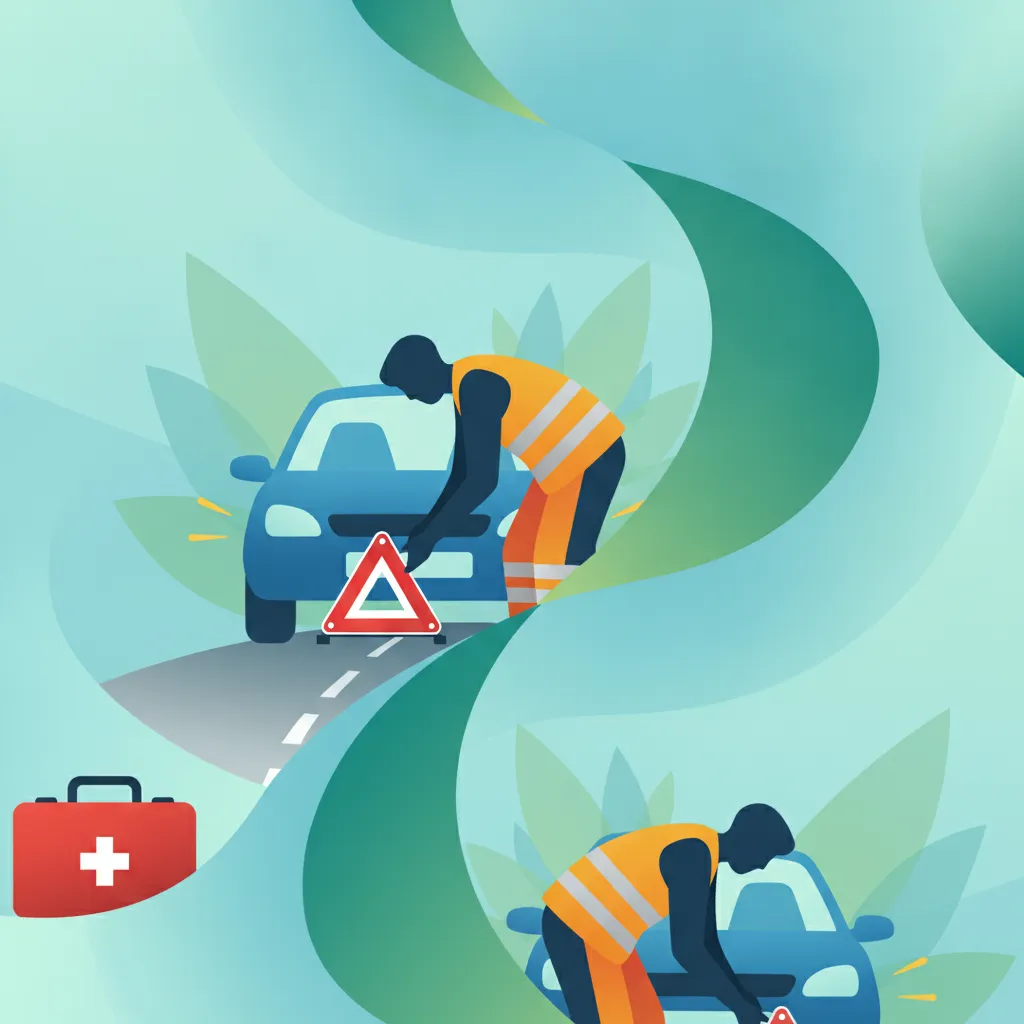
Lesson content overview
Navigating Germany's roads safely extends beyond obeying traffic rules; it encompasses being prepared for unforeseen emergencies. As a responsible driver, understanding basic first aid and the correct use of warning devices like the safety triangle (Warndreieck) is not merely a recommendation, but a legal and moral obligation. This lesson for your German Category B driving license comprehensive course will equip you with the essential knowledge to react effectively and appropriately at an accident scene, potentially saving lives and preventing further incidents.
In Germany, the legal framework governing road traffic places a significant responsibility on every road user, especially drivers, to assist in the event of an accident. This obligation is rooted in both legal statutes and a fundamental moral duty to help those in distress.
The Straßenverkehrs-Ordnung (StVO), Germany's Road Traffic Regulations, and the Straßenverkehrsgesetz (StVG), the Road Traffic Act, outline specific requirements for drivers involved in or witnessing an accident. These laws emphasize that rendering aid is paramount, prioritizing human life and safety above all else.
According to § 34 of the StVO, any person involved in an accident or witnessing one is legally obliged to stop immediately and render assistance to injured persons. This duty includes safeguarding the accident scene and remaining present until professional help arrives or their presence is no longer required.
The StVG, particularly § 1, establishes a general duty of care for all road users, requiring them to act responsibly and avoid endangering others. This broader principle reinforces the necessity of assisting those in danger, even if not directly involved in the incident.
The implication of these regulations is clear: driving away from an accident without offering assistance can lead to severe legal consequences, including fines or imprisonment. Even if you were not involved in the collision, if you witnessed it and can safely provide help, you are expected to do so. Your assistance should always be within the scope of your capabilities and without endangering yourself further.
The "duty to assist" (Pflichterfüllung zur Hilfeleistung) means more than just calling emergency services. While contacting rescue services is crucial, you must also actively assess the situation and provide immediate, life-saving measures if safe to do so. This includes ensuring your own safety before approaching the scene, as well as the safety of other road users. Only after ensuring personal safety should you proceed to aid the injured.
Always prioritize your own safety and the safety of the accident scene before approaching an injured person. Entering a dangerous situation without proper caution can result in further injuries or even fatalities.
This responsibility applies even if the accident appears minor or if others are already present. Your presence and willingness to help can make a critical difference. Common misunderstandings include the belief that simply calling for help fulfills the duty; however, the law requires active assistance until professionals take over.
When confronted with an accident, a structured approach to first aid is crucial. The "First Aid Hierarchy" provides a systematic framework, prioritizing actions to save lives and prevent further harm. This hierarchy helps even untrained individuals respond effectively in high-stress situations.
A structured order of emergency response focusing on life-critical functions: Danger Avoidance → Airway (A) → Breathing (B) → Circulation (C) → Shock Prevention.
The very first step in any emergency situation is danger avoidance. Before you can help anyone, you must ensure that the accident scene is safe for yourself, the injured, and other road users. This includes:
Only once the immediate dangers are mitigated should you approach the injured person. This foundational step is critical to prevent the situation from worsening and endangering more lives.
After securing the scene, focus on the injured person's vital functions using the ABC principle:
Airway (A): Check if the person's airway is open and clear. If they are unconscious, their tongue might block their airway. Gently tilt their head back and lift their chin to open the airway. Remove any visible obstructions from their mouth (e.g., debris, vomit), being careful not to push anything further down.
Breathing (B): After ensuring a clear airway, check for breathing. Look, listen, and feel for breath. Place your ear close to their mouth and nose, looking for chest movement, and feeling for breath on your cheek. If they are breathing, proceed to place them in the recovery position. If they are not breathing, and you are trained and able, begin CPR.
Circulation (C): Assess for signs of severe bleeding. If present, immediately address it as described in the next section. Also, check for pulse if you are trained to do so.
It's a common misunderstanding to jump straight to visible injuries like bleeding without first ensuring the person can breathe. A blocked airway or lack of breathing can be immediately life-threatening and must be addressed with utmost urgency.
Once airway and breathing are stable, or if they are conscious, focus on managing bleeding and preventing shock.
A life-threatening condition caused by insufficient blood flow throughout the body, often resulting from severe blood loss or trauma. Symptoms include rapid pulse, pale skin, cold sweat, and confusion.
Preventing shock is as crucial as stopping bleeding, as it can be fatal even after direct injuries are managed.
Every driver should know how to perform two fundamental first aid techniques: placing an unconscious person in the recovery position and controlling severe bleeding. These skills can significantly improve an injured person's chances of survival.
The recovery position is a crucial technique for unconscious individuals who are still breathing normally. Its primary purpose is to maintain an open airway and prevent aspiration (inhaling vomit or fluids into the lungs).
Assess Breathing: First, ensure the person is genuinely unconscious but breathing. Do not use the recovery position if the person is conscious, alert, or not breathing (in which case CPR might be necessary).
Clear Area: Remove any large, bulky items from their pockets that might cause discomfort or injury when rolled.
Position Arms: Kneel beside the person. Straighten both their legs. Place the arm nearest to you at a right angle to their body, with the hand pointing upwards (like a "stop" signal). Bring the arm furthest from you across their chest and hold the back of their hand against their cheek nearest to you.
Position Leg: Grasp the leg furthest from you just above the knee and pull it up so the foot is flat on the ground.
Roll the Person: Keep their hand pressed against their cheek, and with your other hand on their raised knee, gently but firmly roll the person towards you onto their side.
Adjust Position: Once they are on their side, adjust the upper leg so that both the hip and knee are bent at right angles to stabilize the position. Tilt their head back to ensure the airway remains open, and adjust the hand under their cheek to support the head.
Monitor: Continuously monitor their breathing until medical help arrives.
While placing an injured person, always consider potential spinal injuries. Minimize movement of the head and neck if you suspect such an injury. If multiple rescuers are present, they can help stabilize the head and neck during positioning.
Controlling bleeding is a critical component of first aid, as severe blood loss can quickly lead to shock and be fatal. The goal is to minimize blood loss until professional medical help arrives.
Direct Pressure: Apply firm, direct pressure to the wound using a clean cloth, sterile dressing, or even your bare hand if nothing else is available. This is the most effective initial step. Maintain continuous pressure.
Elevation: If possible and if no fracture is suspected, elevate the injured limb (arm or leg) above the level of the heart. This helps reduce blood flow to the wound.
Dressing and Bandaging: Once the bleeding slows or stops, secure the dressing with a bandage. Do not remove the initial dressing; if blood soaks through, add more layers on top and continue applying pressure. The aim is to create a pressure bandage.
Monitor: Keep the injured person calm and warm to help prevent shock. Continuously monitor the wound for renewed bleeding.
For very severe, life-threatening bleeding that cannot be controlled by direct pressure, a tourniquet may be considered as a last resort by those properly trained. However, improper use can cause significant tissue damage, so it is generally not recommended for untrained individuals unless specifically instructed by emergency services over the phone.
Beyond providing first aid, a driver's duty includes effectively securing the accident scene to prevent further collisions. The warning triangle (Warndreieck) is an indispensable tool for this purpose in Germany.
A reflective, triangular safety device that must be carried in every vehicle in Germany. It is used to warn other road users of a stationary vehicle or hazard ahead.
German law, specifically § 24b and § 39 of the StVO, mandates the use and correct placement of the warning triangle. Failure to properly deploy this device can lead to fines and, more critically, secondary accidents.
Requires drivers to carry specified warning devices, including a warning triangle, and to use them to mark a stationary vehicle that poses a hazard to traffic.
Details the distances at which the warning triangle must be placed, varying according to the type of road and prevailing speed limits.
The primary goal of the warning triangle is to give approaching drivers sufficient time to recognize the hazard and react safely. It should be placed in a way that it is clearly visible to oncoming traffic before they reach the accident site.
The placement distance for the warning triangle is not arbitrary; it depends on the typical speed of traffic on the road where the accident occurred. Longer distances are required on faster roads to provide adequate reaction time.
When placing the triangle, walk towards oncoming traffic, facing the vehicles, to ensure your safety. Do not attempt to retrieve the triangle until the danger has passed or the vehicle has been removed.
While the warning triangle is essential, other measures should also be used to enhance scene safety:
Always ensure that you retrieve your warning triangle safely after the incident is resolved or when a tow truck arrives to move your vehicle.
Mistakes made at an accident scene, whether in first aid or scene security, can have serious consequences. Awareness of these common errors can help you respond more effectively.
Common Mistakes:
Best Practices:
Understanding the specific legal paragraphs can reinforce the importance of these actions.
These regulations are not just theoretical concepts; they form the legal backbone of responsible conduct on German roads.
As a driver in Germany, your responsibility extends far beyond simply operating a vehicle. Being prepared to provide first aid and secure an accident scene is a critical skill that can dramatically influence the outcome of an emergency. By understanding your legal obligations, adhering to the first aid hierarchy, knowing how to apply basic life-saving measures like the recovery position and bleeding control, and correctly deploying your warning triangle, you embody the principles of a safe and responsible road user. These actions not only fulfill your legal duty but also contribute significantly to the safety and well-being of all individuals on the road.
This lesson covers the legal and practical obligations for drivers in Germany when encountering an accident, including the duty to assist under § 34 StVO and the requirement to carry and properly deploy a warning triangle. Learners must memorize the specific triangle placement distances by road speed and understand the First Aid Hierarchy: securing the scene, checking airway and breathing, controlling bleeding, and preventing shock. The recovery position and direct pressure techniques are essential practical skills, while common mistakes include insufficient triangle distance, skipping vital function checks, and neglecting personal safety. These topics are directly tested in the German Category B theory exam and are critical for real-world emergency response.
A short set of high-value points that capture the most important learning from this lesson.
Under German law (§ 34 StVO), drivers must stop, render assistance, and remain at an accident scene until help arrives or their presence is no longer required
The First Aid Hierarchy prioritizes: Danger Avoidance → Airway (A) → Breathing (B) → Circulation (C) → Shock Prevention
Warning triangle placement distances vary by road speed: 15m (up to 30 km/h), 30m (30-50 km/h), 45m (over 50 km/h), and 70m on motorways
The recovery position keeps an unconscious but breathing person's airway open and prevents aspiration of fluids
Always secure your own safety first before approaching an accident scene to avoid becoming a secondary victim
Explore all units and lessons included in this driving theory course.
§ 34 StVO creates a legal duty to assist; leaving without helping can result in fines or imprisonment
Triangle distance increases with road speed – on motorways place it at least 70 metres behind the vehicle
Never move a person to the recovery position if they are not breathing (CPR required instead)
Direct pressure is the primary method for controlling bleeding; elevate the limb only if no fracture is suspected
Always wear a safety vest (Warnweste) and activate hazard lights before placing the warning triangle
Believing that simply calling emergency services (112) fulfills the legal duty to assist – active on-site help is required
Placing the warning triangle too close to the vehicle, reducing reaction time for approaching drivers
Skipping the ABC assessment and jumping directly to visible wounds, missing immediately life-threatening airway blockages
Attempting complex medical procedures beyond basic first aid training, which can worsen injuries
Failing to activate hazard lights or wear a safety vest when exiting the vehicle at an accident scene
Lesson content overview
A short set of high-value points that capture the most important learning from this lesson.
Under German law (§ 34 StVO), drivers must stop, render assistance, and remain at an accident scene until help arrives or their presence is no longer required
The First Aid Hierarchy prioritizes: Danger Avoidance → Airway (A) → Breathing (B) → Circulation (C) → Shock Prevention
Warning triangle placement distances vary by road speed: 15m (up to 30 km/h), 30m (30-50 km/h), 45m (over 50 km/h), and 70m on motorways
The recovery position keeps an unconscious but breathing person's airway open and prevents aspiration of fluids
Always secure your own safety first before approaching an accident scene to avoid becoming a secondary victim
Explore all units and lessons included in this driving theory course.
§ 34 StVO creates a legal duty to assist; leaving without helping can result in fines or imprisonment
Triangle distance increases with road speed – on motorways place it at least 70 metres behind the vehicle
Never move a person to the recovery position if they are not breathing (CPR required instead)
Direct pressure is the primary method for controlling bleeding; elevate the limb only if no fracture is suspected
Always wear a safety vest (Warnweste) and activate hazard lights before placing the warning triangle
Believing that simply calling emergency services (112) fulfills the legal duty to assist – active on-site help is required
Placing the warning triangle too close to the vehicle, reducing reaction time for approaching drivers
Skipping the ABC assessment and jumping directly to visible wounds, missing immediately life-threatening airway blockages
Attempting complex medical procedures beyond basic first aid training, which can worsen injuries
Failing to activate hazard lights or wear a safety vest when exiting the vehicle at an accident scene
Explore search topics learners often look for when studying First Aid Basics and Safety Triangle Use. These topics reflect common questions about road rules, driving situations, safety guidance, and lesson level theory preparation for learners in Germany.
Browse additional driving theory lessons that cover connected traffic rules, road signs, and common driving situations related to this topic. Improve your understanding of how different rules interact across everyday traffic scenarios.
Understand your legal obligation to provide first aid in Germany. Learn essential life-saving steps and the correct placement of the warning triangle to ensure safety at accident scenes, as required by driving theory.

This lesson provides clear, step-by-step instructions on what to do at the scene of a traffic accident. It covers the immediate priorities: stopping, securing the area with a warning triangle, and putting on a high-visibility vest. The lesson details how to make an effective emergency call to '112' and what information to provide, as well as the procedure for exchanging insurance details with other parties involved.
This lesson covers the essential actions to take at an accident scene, focusing on personal safety and providing basic first aid. It explains how to make an effective emergency call to 112 and what information to provide. The lesson also details the legal requirements for documenting and reporting an accident for police and insurance purposes.

This lesson introduces riders to fundamental first aid principles and the proper management of an accident scene to prevent further harm. It covers basic life-saving actions, such as checking for consciousness, controlling severe bleeding, and positioning a casualty safely. The lesson also addresses the critical decision of when and how to remove a helmet and how to effectively communicate with emergency services.
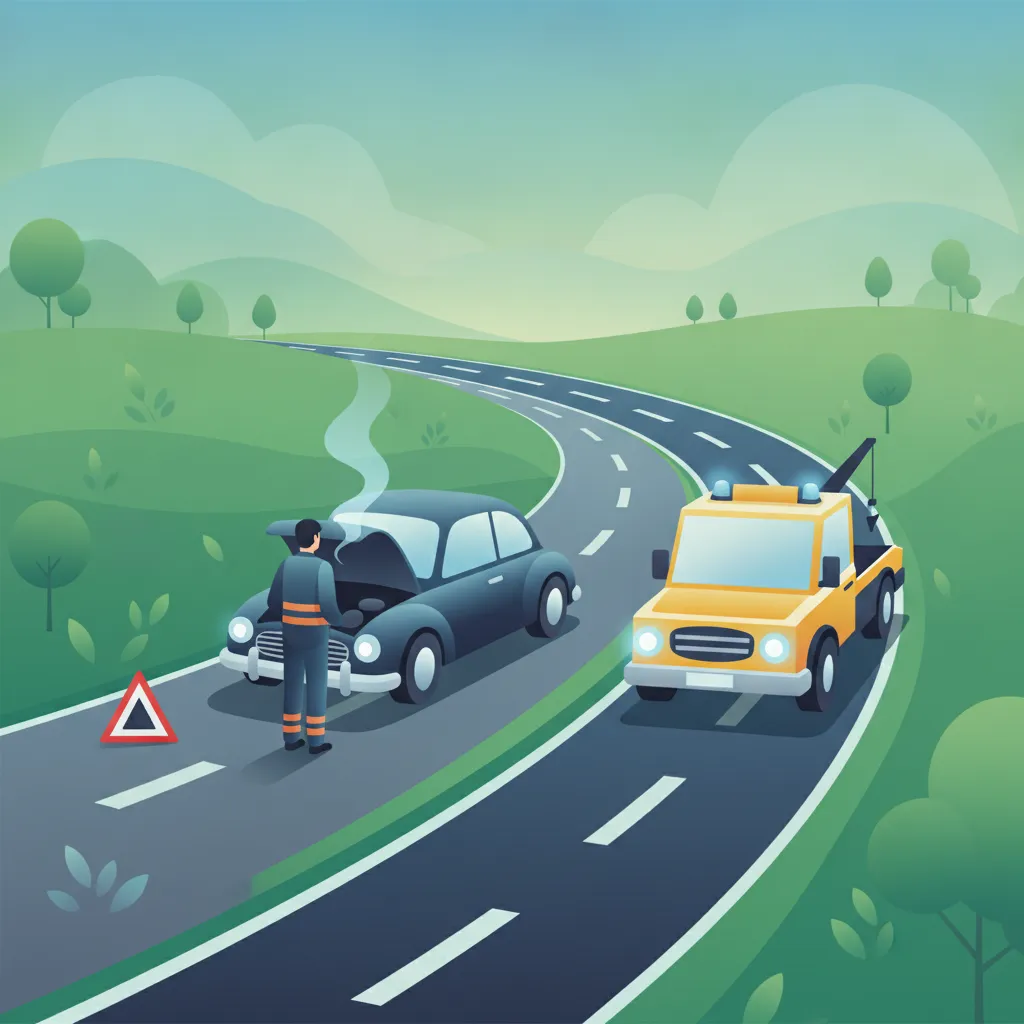
This lesson provides clear, actionable steps for managing a breakdown or being involved in an accident. It covers how to safely move the vehicle off the road, use warning signals, and secure the area. The procedure for contacting roadside assistance and the authorities is also explained in detail.
This lesson outlines the proper response to an accident involving a heavy vehicle, including immediate actions and contacting emergency services. It details the legal obligations for reporting accidents and cooperating with police investigations. The content also covers documentation requirements for insurance claims and the importance of preserving the accident scene.

This lesson covers the appropriate steps to take in the event of a vehicle breakdown or an accident. It details procedures for safely moving the motorcycle out of traffic, making the area visible with hazard warnings, and contacting emergency services. The content emphasizes personal safety and the correct protocol for managing the scene until professional help arrives.
Learn fundamental first aid principles for accident scenarios, including patient assessment and the recovery position. Discover how to effectively secure the accident scene with the warning triangle to prevent further incidents.
This lesson provides clear, step-by-step instructions on what to do at the scene of a traffic accident. It covers the immediate priorities: stopping, securing the area with a warning triangle, and putting on a high-visibility vest. The lesson details how to make an effective emergency call to '112' and what information to provide, as well as the procedure for exchanging insurance details with other parties involved.
This lesson introduces riders to fundamental first aid principles and the proper management of an accident scene to prevent further harm. It covers basic life-saving actions, such as checking for consciousness, controlling severe bleeding, and positioning a casualty safely. The lesson also addresses the critical decision of when and how to remove a helmet and how to effectively communicate with emergency services.
This lesson covers the essential actions to take at an accident scene, focusing on personal safety and providing basic first aid. It explains how to make an effective emergency call to 112 and what information to provide. The lesson also details the legal requirements for documenting and reporting an accident for police and insurance purposes.
This lesson provides clear, actionable steps for managing a breakdown or being involved in an accident. It covers how to safely move the vehicle off the road, use warning signals, and secure the area. The procedure for contacting roadside assistance and the authorities is also explained in detail.
This lesson covers the appropriate steps to take in the event of a vehicle breakdown or an accident. It details procedures for safely moving the motorcycle out of traffic, making the area visible with hazard warnings, and contacting emergency services. The content emphasizes personal safety and the correct protocol for managing the scene until professional help arrives.

This lesson outlines a clear, systematic procedure for managing a vehicle breakdown safely and efficiently. It covers immediate actions such as activating hazard lights, placing a warning triangle, and moving the vehicle to a safe location if possible. Learners will understand how to communicate the situation to passengers, decide if an evacuation is necessary, and contact the appropriate breakdown services for assistance.
Find clear answers to common questions learners have about First Aid Basics and Safety Triangle Use. Learn how the lesson is structured, which driving theory objectives it supports, and how it fits into the overall learning path of units and curriculum progression in Germany. These explanations help you understand key concepts, lesson flow, and exam focused study goals.
Yes. Every driver is legally obligated to provide reasonable first aid if it does not put their own safety at significant risk. Failure to assist can lead to serious legal consequences.
On an Autobahn, the warning triangle should be placed approximately 150 to 400 meters before the hazard to ensure oncoming traffic at high speeds has sufficient time to react.
The recovery position keeps the airway open and prevents an unconscious person from choking on their own vomit or blood, ensuring they can breathe until professional medical help arrives.
Yes, German traffic law (StVZO) requires every vehicle to be equipped with a standard-compliant first aid kit and a warning triangle as part of basic roadworthiness.
Begin your targeted revision now. Use our practice search to quickly find specific German driving theory questions. Filter by StVO rules, road signs, or hazard perception to create your focused study plan. Master challenging areas and prepare confidently for your theoretical driving test.