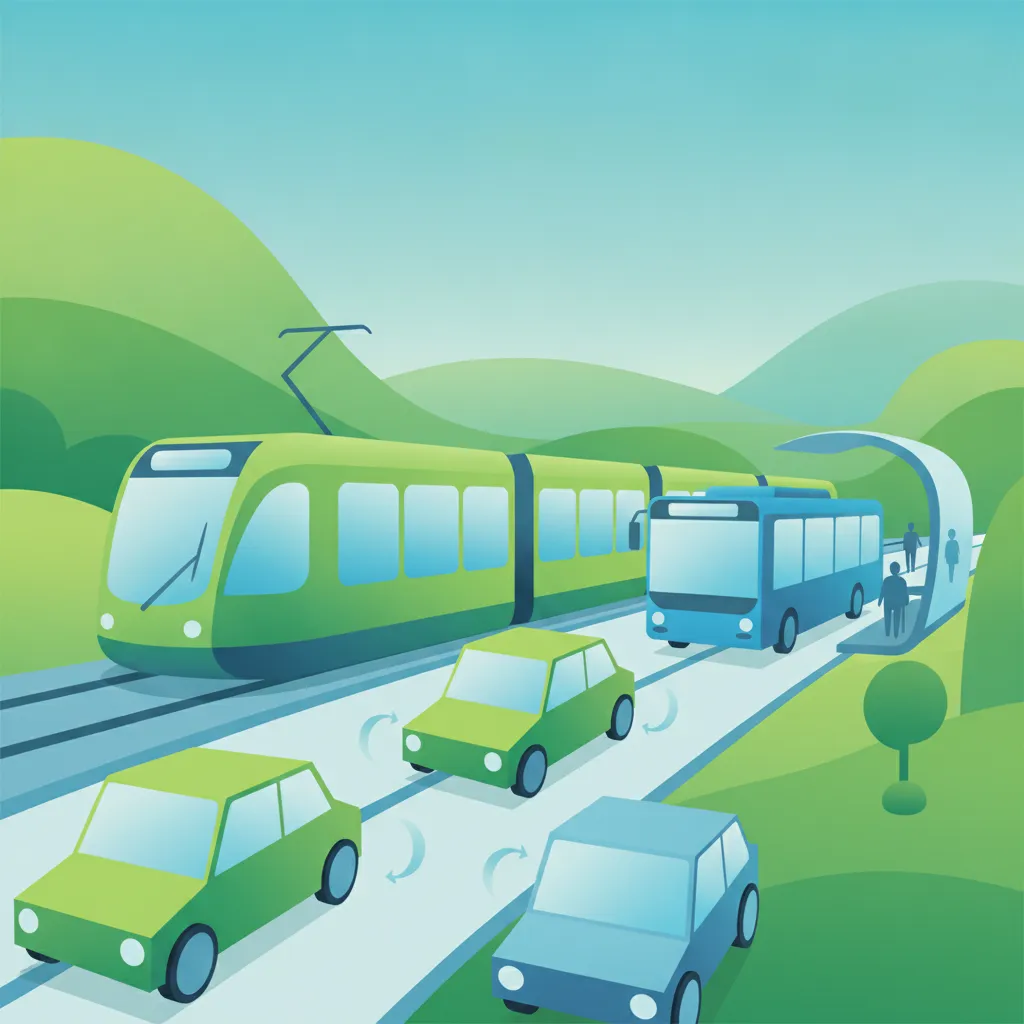
In Germany's urban landscapes, trams (Straßenbahnen) and certain public transport buses often operate under special priority rules. Due to their fixed tracks, significant size, and limited maneuverability, drivers must understand when and how to yield. This page clarifies these specific situations, helping you navigate German roads safely and confidently.
Theory topic content overview
Read the full theory topic guide for Tram & Bus Priority with structured, easy-to-scan content built for learners in Germany. This detailed section explains the exact rule, meaning, traffic context, comparison points, and exam logic behind this German driving theory topic so you can study faster, understand the concept more clearly, and avoid common interpretation mistakes on the theory test.
In Germany's bustling urban centres, trams (officially Straßenbahnen) and certain public transport buses operate under specific priority rules designed to ensure safety, maintain schedules, and facilitate efficient urban flow. These rules, enshrined in the Straßenverkehrs-Ordnung (StVO), are critical for every driver to understand, not only for navigating German roads safely but also for successfully passing the German driving theory exam.
This topic clarifies when and why you must yield to these vehicles, focusing on their unique characteristics and the legal framework in Germany.
Tram and public transport priority refers to the specific situations where trams and public buses are granted Vorfahrt (right of way) over other road users. This special status is not arbitrary; it stems from their operational characteristics:
Straßenbahnen): As Schienenfahrzeuge (rail vehicles), trams are confined to fixed tracks and cannot swerve to avoid obstacles. They are large, heavy, and require significant distances to stop. Their movement is predictable along their route but inflexible.Understanding this core concept – that these vehicles have inherent limitations – is key to internalizing why German traffic law mandates special consideration for them.
The special priority rules for trams and public transport buses in Germany are not just theoretical; they are fundamental for:
StVO explicitly outlines these rules. Failure to comply can lead to fines, penalty points (Punkte in Flensburg), and potentially license revocation.In Germany, the specific rules for Straßenbahnen are crucial and often override general priority principles:
Schienenfahrzeuge. You should always expect to yield to a tram unless a traffic light or explicit signage dictates otherwise.rechts vor links (right before left) rule, which applies at unmarked intersections, does NOT apply to trams. A tram coming from the right at an unmarked intersection does not automatically have priority because it's on the right; it typically has priority because it's a Schienenfahrzeug. Conversely, if you are approaching from the right, you do not have priority over a tram.
Vorfahrt durch Verkehrszeichen), traffic lights (Lichtzeichen) are required. On such an intersection, the "rechts vor links" rule is never to be applied.Abbiegende Straßenbahnen): When a tram turns, it often crosses the path of other traffic that might normally have priority. In Germany, a turning tram typically retains its priority. This means if you are driving straight and a tram ahead of you indicates a turn that crosses your path, you must yield to the tram. Always anticipate their turns and be prepared to stop.While not Schienenfahrzeuge, certain public buses also enjoy specific priority under German law:
Bushaltestelle) and indicates its intention to pull away (with its left turn signal) must be given priority by other road users. You must slow down and, if necessary, stop to allow the bus to enter traffic safely. This rule is especially critical in built-up areas (im geschlossenen Ort or innerorts).Schulbusse): Special rules also apply to school buses. If a school bus has its hazard warning lights flashing because children are getting on or off, you must only pass at walking pace (Schrittgeschwindigkeit) and maintain a sufficient distance. This ensures the safety of vulnerable children.To avoid mistakes, it's vital to distinguish between similar scenarios and common misunderstandings:
rechts vor links to trams. Remember: Trams are Schienenfahrzeuge and are exempt from this rule; they usually have priority unless specifically controlled by lights or signs.Lichtzeichenanlagen) always take precedence over general priority rules and even most priority signs. If a traffic light is red for the tram, it must stop, regardless of its general priority status.Let's look at how these rules play out:
Schienenfahrzeug and therefore has priority. You must slow down and yield.Theory test questions frequently target these specific priority rules. Learners often make mistakes by:
Rechts vor Links: Assuming a tram coming from the left must yield, or that they have priority over a tram from the right.Mastering Tram and Public Transport Priority in Germany boils down to constant vigilance and understanding the unique operational constraints of these vehicles. Remember:
Straßenbahnen.Rechts vor Links: For trams, discard the rechts vor links rule. Think "fixed path, heavy vehicle, usually priority."By internalizing these principles, you contribute to safer German roads, help maintain efficient public transport, and ensure you're well-prepared for your driving theory test.
Start with a short, direct summary of Tram & Bus Priority before reading the full explanation below.
Trams in Germany generally have priority due to their fixed tracks and inability to swerve, making their movement predictable but inflexible. Public transport buses also gain priority when pulling away from marked bus stops, especially in urban areas. Drivers must be prepared to yield to these vehicles to ensure traffic flow and safety, as outlined in the German Straßenverkehrs-Ordnung (StVO).
Review the most important terms, rule signals, and traffic concepts linked to Tram & Bus Priority.
Explore related theory topic pages connected to Tram & Bus Priority and continue with the next useful rule explanation.
See the common search queries learners use when trying to understand Tram & Bus Priority in Germany.

Solidify your understanding of German road rules. Explore specific theory topics in detail, from priority rules to complex Autobahn situations. Review key concepts and prepare thoroughly for every aspect of your official driving license theory examination.
German Driving Theory TopicsTheory topic content overview
Start with a short, direct summary of Tram & Bus Priority before reading the full explanation below.
Trams in Germany generally have priority due to their fixed tracks and inability to swerve, making their movement predictable but inflexible. Public transport buses also gain priority when pulling away from marked bus stops, especially in urban areas. Drivers must be prepared to yield to these vehicles to ensure traffic flow and safety, as outlined in the German Straßenverkehrs-Ordnung (StVO).
Review the most important terms, rule signals, and traffic concepts linked to Tram & Bus Priority.
Explore related theory topic pages connected to Tram & Bus Priority and continue with the next useful rule explanation.
See the common search queries learners use when trying to understand Tram & Bus Priority in Germany.
Solidify your understanding of German road rules. Explore specific theory topics in detail, from priority rules to complex Autobahn situations. Review key concepts and prepare thoroughly for every aspect of your official driving license theory examination.
German Driving Theory TopicsUse this exam-focused revision tip to understand how Tram & Bus Priority is likely to appear in theory questions for learners in Germany. This section helps you identify the most testable part of the rule, avoid common traps, and remember the concept more effectively during German driving theory exam preparation.
In the German theory exam, remember that trams (Straßenbahnen) are considered "Schienenfahrzeuge" and are not subject to the "rechts vor links" rule; they generally have priority. Also, be mindful of public transport buses indicating their departure from a stop; you must yield to them. Watch out for questions involving turning trams crossing your path – they usually have the right of way.
Read direct answers to the most common learner questions about Tram & Bus Priority in Germany. This FAQ focuses on rule confusion, practical meaning, comparison with similar concepts, and the exact uncertainties that appear most often in German driving theory revision and exam preparation.
Trams (Straßenbahnen) in Germany generally have priority due to their fixed tracks, meaning you must yield to them unless traffic signs (e.g., 'Give Way' sign) or traffic lights explicitly regulate otherwise. The "rechts vor links" rule does not apply to trams.
A public transport bus has priority when it indicates its intention to pull away from a marked bus stop (Haltestelle), especially within urban areas. Drivers behind or alongside the bus must allow it to re-enter traffic.
Trams have special priority because they run on fixed tracks, cannot swerve to avoid obstacles, and have long braking distances due to their weight. Giving them priority ensures safety and consistent public transport schedules.
Be extra cautious, especially at intersections or when turning across tracks. Always check for approaching trams and be prepared to stop. Never obstruct the tracks.
No, the "rechts vor links" (right before left) rule, which typically applies at uncontrolled intersections, does not apply to trams (Schienenfahrzeuge). Trams generally maintain their priority.
If a tram is turning, it typically has priority over other vehicles that would cross its path, even if those vehicles are coming from the right. Always yield to a turning tram.
While there isn't a dedicated "tram priority" sign, you will find general priority signs (e.g., 'Give Way' - Zeichen 205, or 'Stop' - Zeichen 206) at intersections that may or may not include tram lines. However, the general rule is to yield to the tram.
Begin your targeted revision now. Use our practice search to quickly find specific German driving theory questions. Filter by StVO rules, road signs, or hazard perception to create your focused study plan. Master challenging areas and prepare confidently for your theoretical driving test.