Even with careful driving, unexpected situations like breakdowns or accidents can occur. This lesson covers the essential emergency procedures for agricultural vehicles, ensuring you know exactly how to react safely and responsibly. Understanding these protocols is crucial for your safety and for complying with Polish traffic law.

Lesson content overview
Operating agricultural vehicles, such as tractors with or without trailers, on public roads in Poland demands not only mastery of driving skills but also a thorough understanding of emergency procedures and accident response. This lesson outlines the crucial actions a Category T driver must take in situations like mechanical breakdowns, trailer detachment, or a road traffic accident. Adhering to these guidelines is vital for protecting yourself, other road users, and fulfilling your legal obligations under the Polish Road Traffic Act (Prawo o ruchu drogowym).
Proper emergency handling is paramount for several reasons: it drastically reduces the risk of secondary collisions, safeguards vulnerable road users, and ensures compliance with Polish law, helping to avoid penalties and legal liabilities. This knowledge builds upon your understanding of basic traffic rules, vehicle controls specific to Category T tractors, and the broader legal framework governing road user duties.
Emergency situations on the road can arise unexpectedly, from a sudden mechanical failure in your tractor to an unforeseen accident involving other vehicles or pedestrians. For Category T drivers, these incidents carry unique challenges due to the size, weight, and slower speed of agricultural machinery. The primary goal in any emergency is to prevent the initial incident from escalating into further hazards, such as additional crashes, injuries, or prolonged road blockages.
Polish law mandates specific actions in emergency situations, with clear penalties for non-compliance. These regulations are designed to ensure road safety and establish clear responsibilities for all drivers. Key among these is the "safety-first logic," which prioritizes the immediate mitigation of hazards. This means that your first actions should always focus on making the scene safe for yourself, any passengers, and other road users. Understanding your legal obligations is not merely about avoiding fines; it is about protecting lives and property. This lesson integrates knowledge from the "Legal Foundations and Licence Requirements" and "Vehicle Construction and Control Systems" units, reinforcing how to apply legal duties and vehicle knowledge in critical moments.
When an emergency occurs, swift and correct actions can make a significant difference. Your immediate response should focus on stopping your vehicle safely and clearly signaling the hazard to others.
The process of bringing your Category T vehicle to a halt must maximize safety for everyone involved. If you experience a breakdown or an incident, your first priority is to move the vehicle to the safest possible location.
Once stopped, engage the handbrake and select a neutral gear or park, if your tractor is equipped with one, to prevent any unintended movement. This immediate action enables other drivers to perceive that the road ahead is obstructed or that a vehicle is stationary, giving them crucial time to react and adjust their driving.
Hazard warning lights, also known as emergency flashers, are flashing front and rear lights designed to indicate that a vehicle is stationary or moving at a very low speed due to an emergency. These lights provide an immediate and unmistakable visual cue to other traffic that your vehicle is not operating under normal conditions.
Most modern tractors are equipped with a dashboard control for manual activation of hazard lights. Some may even have automatic activation in the event of a sudden stop or collision. It is crucial to activate these lights as soon as you realize your vehicle poses a hazard on a public road, especially when it is stopped outside of a traffic jam.
It is important to remember that hazard lights should generally not be used while continuing to drive slowly in normal traffic, as this can confuse other drivers. Their primary purpose is to signal a stationary hazard or an emergency situation.
A warning triangle is a reflective, triangular safety device that must be placed on the roadway to warn approaching traffic of a stopped vehicle or obstruction. This significantly increases your vehicle's visibility, particularly in low-light conditions or adverse weather.
The Polish Road Traffic Act specifies precise rules for its deployment:
Correct placement is vital. Placing the triangle too close to the vehicle or on the shoulder significantly reduces its effectiveness, as it may not give approaching drivers sufficient time to react. The triangle must be clearly visible and positioned to alert drivers before they reach the hazard.
Beyond immediate signaling, taking steps to secure the incident area is critical to prevent further accidents and to facilitate the safe arrival and work of emergency services.
Securing the incident site involves actions taken to protect the area around your vehicle from further traffic intrusion. This is especially important on busy or high-speed roads.
kamizelka odblaskowa in Polish) when exiting your vehicle on a public road, particularly during an emergency. This significantly increases your personal visibility to passing vehicles, reducing the risk of being struck.pachołki drogowe) or portable barriers around the incident area further marks the hazard zone and helps guide traffic safely around it. These are particularly recommended on roads with speed limits above 30 km/h.These measures contribute significantly to reducing the risk of secondary collisions and create a safer environment for emergency responders.
One of the most critical legal and ethical duties following an accident is the obligation to render immediate assistance to injured persons. Article 15 of the Polish Road Traffic Act explicitly imposes this duty on all drivers involved in or witnessing an accident. Failure to provide assistance can result in severe criminal liability.
Your first aid obligations include:
Never move an injured person unless their life is in immediate danger (e.g., from fire or further traffic). Unnecessary movement can worsen spinal injuries.
This immediate assistance can significantly increase survival chances and minimize the severity of injuries before professional medical help arrives.
Proper reporting of an incident is essential for legal documentation, liability determination, and insurance claims. Neglecting these steps can lead to fines, legal complications, and difficulties with your insurance provider.
According to Article 88 of the Polish Road Traffic Act, police notification is mandatory in specific circumstances:
Even for seemingly minor incidents without injuries, if the damage exceeds the legal threshold, contacting the police is a legal requirement. In cases where police intervention is not mandatory (e.g., minor damage below the threshold with no injuries and no traffic obstruction), drivers may instead exchange details and fill out a joint Urzędowy Miejsce Zdarzenia (Official Incident Report Form) for insurance purposes.
Regardless of police involvement, it is generally mandatory to notify your vehicle insurer within 24 hours of any incident that may lead to a claim. This timeframe is crucial for facilitating claim processing and ensuring legal compliance with your insurance policy. Delaying notification can complicate your claim and potentially affect your coverage.
Thorough documentation of the incident provides crucial evidence for police reports and insurance claims.
Record Time and Location: Note the precise time and location of the incident, including specific road names, kilometer markers, or nearby landmarks.
Note Weather and Road Conditions: Document the prevailing weather (e.g., clear, rainy, foggy) and road conditions (e.g., dry, wet, icy).
Identify Parties Involved: Collect names, contact information, vehicle registration numbers, and insurance details of all other parties and witnesses.
Photograph Damages: Take clear photographs of all vehicle damage, the position of vehicles, road markings, and any other relevant scene details.
Make Notes of Actions Taken: Keep a record of the steps you took (e.g., activating hazard lights, placing warning triangle, calling 112).
This detailed information will be invaluable during any subsequent investigation or claim process.
Emergency procedures are not one-size-fits-all. They must be adapted to the specific conditions of the incident, including weather, road type, and the nature of the vehicle or load.
Visibility is a critical factor in any emergency.
The speed and volume of traffic vary significantly by road type, requiring different levels of precaution.
pas awaryjny) as possible. Activate hazard lights, deploy your warning triangle 50 meters ahead, and, if feasible, request roadside assistance immediately via 112. Due to the high speeds, any obstruction is extremely dangerous. Consider using safety cones if available and if it is safe to deploy them.Agricultural vehicles often operate with heavy trailers and loads, which present unique challenges in emergencies.
Understanding common violations and their implications is crucial for Category T drivers in Poland. Failure to follow proper emergency procedures can lead to serious consequences, both legally and in terms of road safety.
Here are some common mistakes and the correct behaviors to adopt:
Violations of emergency procedures can result in various penalties:
Adhering to these procedures is not just good practice; it is a legal imperative with significant consequences for non-compliance.
This lesson covers essential emergency procedures for Polish Category T drivers, emphasizing safe stopping protocols, correct use of hazard lights and warning triangles (50m on roads over 20 km/h, 30m on slower roads), and legal obligations under the Polish Road Traffic Act. Key requirements include wearing high-visibility vests, calling emergency services (112) for any injuries, mandatory police reporting for accidents involving injuries or significant damage, and notifying insurers within 24 hours. Special attention is given to trailer detachment emergencies and adapting procedures to adverse weather, nighttime, and different road types like motorways and rural roads.
A short set of high-value points that capture the most important learning from this lesson.
Your first priority after any breakdown or accident is to move to the safest location, activate hazard lights, and alert oncoming traffic.
Warning triangles must always be placed on the carriageway (not the shoulder) at exactly 50 meters ahead on roads with speed limits above 20 km/h.
Under Article 15 of the Polish Road Traffic Act, you are legally obligated to provide immediate assistance to injured persons and call emergency services (112).
Police reporting is mandatory when there are injuries, fatalities, property damage exceeding the legal threshold, or significant traffic obstruction.
When a trailer detaches on a public road, never attempt to re-attach it yourself; secure the area with warning signals and call for professional assistance.
Explore all units and lessons included in this driving theory course.
Hazard lights are for stationary emergencies only; do not use them while slowly moving through normal traffic.
The 50-meter/30-meter triangle distance applies to the carriageway ahead of your vehicle, in the direction of oncoming traffic.
You must notify your insurer within 24 hours of any incident that may lead to a claim.
Always wear a high-visibility vest (kamizelka odblaskowa) before exiting your vehicle on any public road.
Never move an injured person unless they face immediate danger from fire or further traffic; unnecessary movement can worsen spinal injuries.
Placing the warning triangle on the shoulder or behind the vehicle instead of on the carriageway ahead, which significantly reduces its warning effectiveness.
Using hazard lights while driving slowly in normal traffic, which confuses other drivers about your intentions.
Leaving the scene without checking for injuries or calling 112, which violates Article 15 and can result in criminal liability.
Failing to notify insurance within 24 hours, which can complicate claim processing and affect coverage eligibility.
Attempting to re-attach a detached trailer on a live road without professional assistance, creating extreme danger for yourself and other traffic.
Lesson content overview
A short set of high-value points that capture the most important learning from this lesson.
Your first priority after any breakdown or accident is to move to the safest location, activate hazard lights, and alert oncoming traffic.
Warning triangles must always be placed on the carriageway (not the shoulder) at exactly 50 meters ahead on roads with speed limits above 20 km/h.
Under Article 15 of the Polish Road Traffic Act, you are legally obligated to provide immediate assistance to injured persons and call emergency services (112).
Police reporting is mandatory when there are injuries, fatalities, property damage exceeding the legal threshold, or significant traffic obstruction.
When a trailer detaches on a public road, never attempt to re-attach it yourself; secure the area with warning signals and call for professional assistance.
Explore all units and lessons included in this driving theory course.
Hazard lights are for stationary emergencies only; do not use them while slowly moving through normal traffic.
The 50-meter/30-meter triangle distance applies to the carriageway ahead of your vehicle, in the direction of oncoming traffic.
You must notify your insurer within 24 hours of any incident that may lead to a claim.
Always wear a high-visibility vest (kamizelka odblaskowa) before exiting your vehicle on any public road.
Never move an injured person unless they face immediate danger from fire or further traffic; unnecessary movement can worsen spinal injuries.
Placing the warning triangle on the shoulder or behind the vehicle instead of on the carriageway ahead, which significantly reduces its warning effectiveness.
Using hazard lights while driving slowly in normal traffic, which confuses other drivers about your intentions.
Leaving the scene without checking for injuries or calling 112, which violates Article 15 and can result in criminal liability.
Failing to notify insurance within 24 hours, which can complicate claim processing and affect coverage eligibility.
Attempting to re-attach a detached trailer on a live road without professional assistance, creating extreme danger for yourself and other traffic.
Explore search topics learners often look for when studying Emergency Procedures and Accident Response. These topics reflect common questions about road rules, driving situations, safety guidance, and lesson level theory preparation for learners in Poland.
Browse additional driving theory lessons that cover connected traffic rules, road signs, and common driving situations related to this topic. Improve your understanding of how different rules interact across everyday traffic scenarios.
Learn essential steps for tractor breakdowns and accidents under Polish law. Covers scene safety, hazard lights, warning triangles, and mandatory reporting requirements for Category T drivers.

This lesson prepares drivers for the event of a vehicle breakdown on a motorway or expressway. It details the correct procedure: pulling over to the emergency lane, activating hazard lights, and placing the warning triangle at the legally required distance. The importance of wearing a reflective vest when outside the vehicle is also a key safety point.
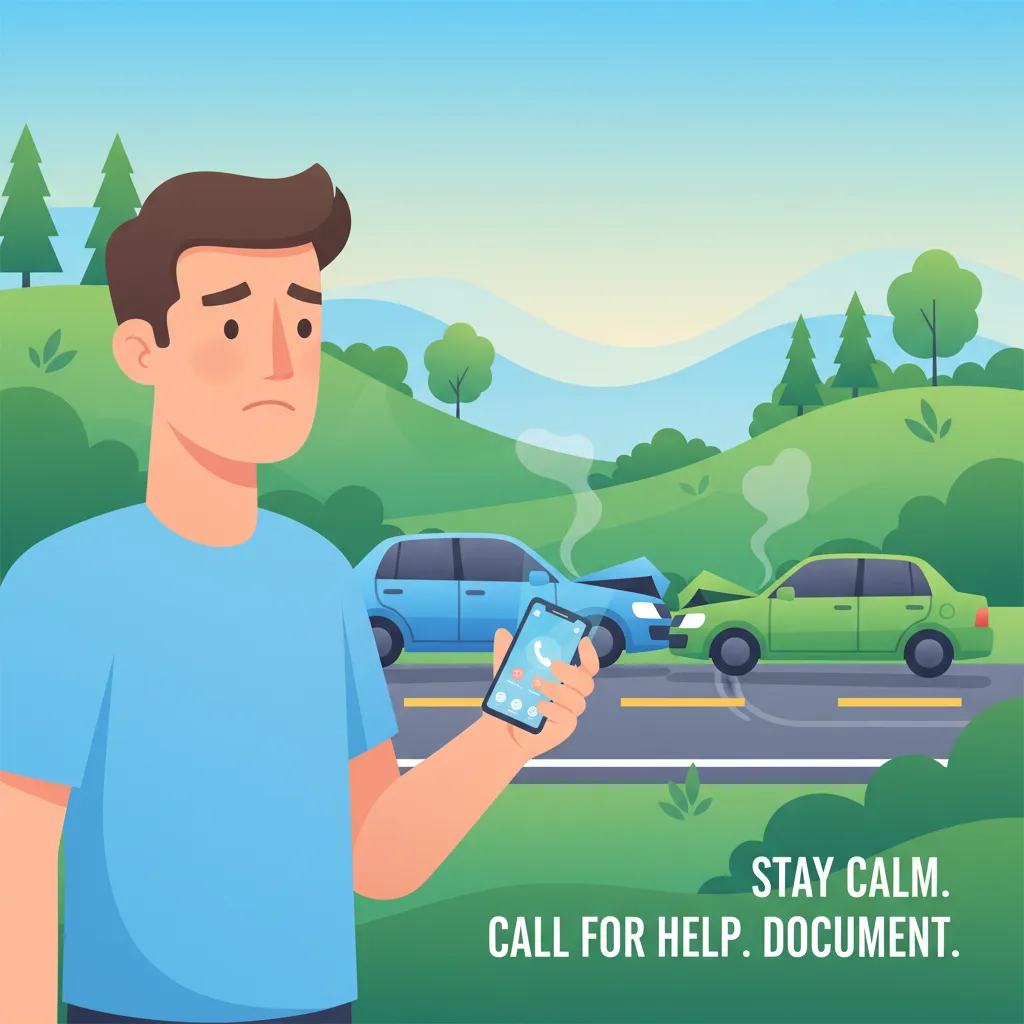
This lesson provides a clear, procedural guide for the moments following a road accident. It prioritizes safety, instructing on how to secure the scene with a warning triangle and hazard lights to prevent further incidents. The lesson also covers assessing for injuries and when it is necessary to call emergency services.
This lesson outlines the legal responsibilities of tractor drivers as stipulated by Polish traffic law, emphasizing the duty to comply with all rules of the road. It discusses the liability framework for accidents involving agricultural vehicles, including the need for appropriate insurance and potential penalties. The lesson also explains the importance of maintaining accurate documentation, such as registration papers and a driver’s licence.
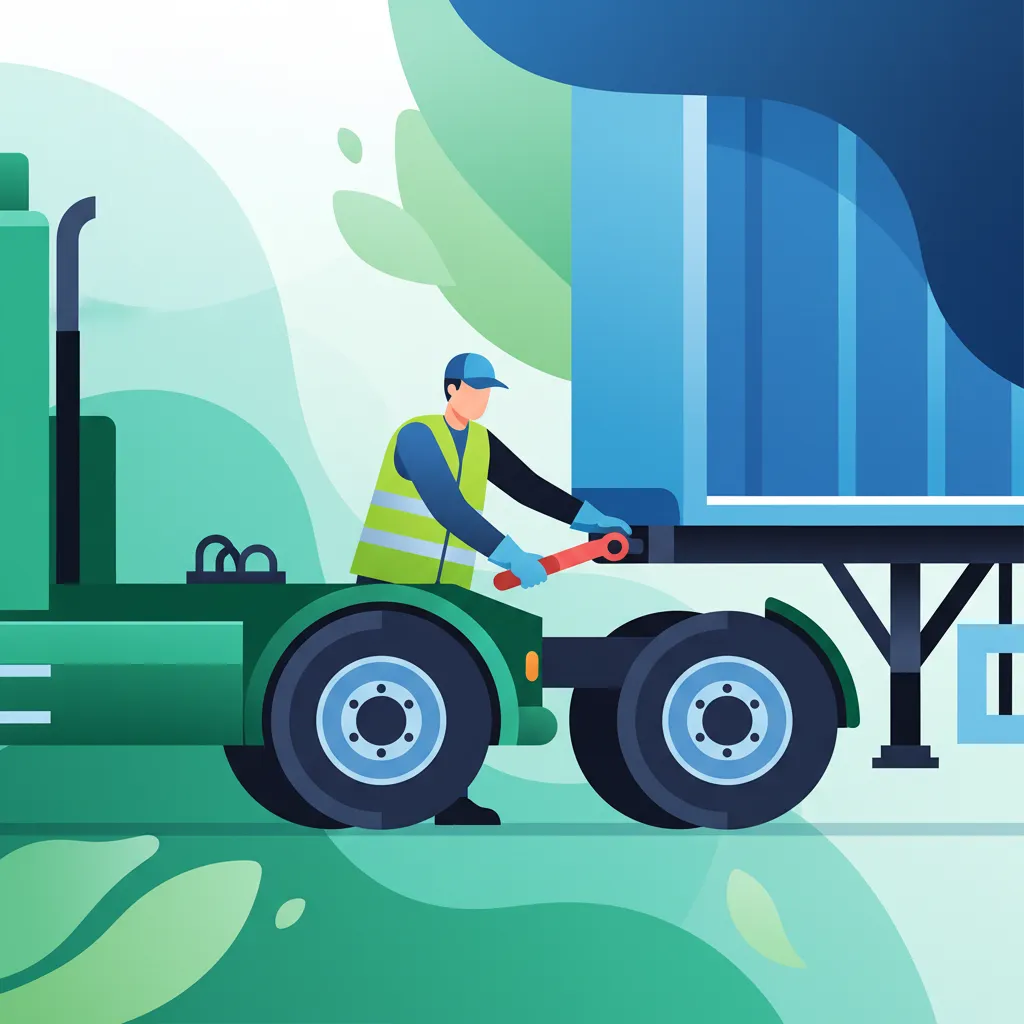
This lesson provides a step-by-step guide to safely coupling and uncoupling trailers, highlighting the correct use of hitches, drawbars, and safety chains. It emphasizes pre-couple inspections, alignment checks, and the necessity of confirming secure connections before movement. Learners will also study procedures for safely uncoupling, including establishing a safe zone and verifying trailer stability.

This lesson focuses on the maintenance of agricultural implements and attachments powered via the tractor’s PTO and hydraulic systems. It covers routine inspection of hydraulic lines, lubrication of moving parts, and verification of safety features before each use. Additionally, the lesson stresses the importance of keeping detailed maintenance logs and certification documents to satisfy legal standards.

This lesson details the professional driver's responsibilities in the event of a collision. It covers the immediate actions required to secure the scene, such as activating hazard lights and placing warning triangles, to prevent further incidents. Learners will understand the correct procedure for contacting emergency services, providing assistance to injured parties if trained, and the legal requirements for documenting and reporting the accident to the authorities and their employer.

This lesson equips drivers with essential first-aid knowledge applicable to a road accident scenario. It covers how to assess a casualty, control severe bleeding, and place an unconscious person in the recovery position. The lesson also emphasizes Poland's legal requirement for individuals to provide assistance to the injured within their capabilities.

This lesson provides essential knowledge for responding to sudden and dangerous vehicle malfunctions. It outlines step-by-step procedures for handling a catastrophic tire blowout, managing a loss of braking power, and reacting to a shift in cargo that destabilizes the vehicle. The focus is on maintaining as much control as possible, bringing the vehicle to a safe stop away from traffic, and activating hazard warnings to protect the scene and other road users.
Understand your legal duties in Poland when facing tractor breakdowns or accidents. This lesson details first aid obligations, mandatory reporting to police and insurance, and proper incident documentation.
This lesson outlines the legal responsibilities of tractor drivers as stipulated by Polish traffic law, emphasizing the duty to comply with all rules of the road. It discusses the liability framework for accidents involving agricultural vehicles, including the need for appropriate insurance and potential penalties. The lesson also explains the importance of maintaining accurate documentation, such as registration papers and a driver’s licence.
This lesson equips drivers with essential first-aid knowledge applicable to a road accident scenario. It covers how to assess a casualty, control severe bleeding, and place an unconscious person in the recovery position. The lesson also emphasizes Poland's legal requirement for individuals to provide assistance to the injured within their capabilities.
This lesson details the professional driver's responsibilities in the event of a collision. It covers the immediate actions required to secure the scene, such as activating hazard lights and placing warning triangles, to prevent further incidents. Learners will understand the correct procedure for contacting emergency services, providing assistance to injured parties if trained, and the legal requirements for documenting and reporting the accident to the authorities and their employer.
This lesson focuses on the maintenance of agricultural implements and attachments powered via the tractor’s PTO and hydraulic systems. It covers routine inspection of hydraulic lines, lubrication of moving parts, and verification of safety features before each use. Additionally, the lesson stresses the importance of keeping detailed maintenance logs and certification documents to satisfy legal standards.

This lesson deals with the administrative aftermath of an accident. It explains the legal requirements for reporting a collision to the police and the process for notifying insurance companies. The content details what information must be exchanged between involved parties, including insurance details and contact information, to facilitate a smooth claims process.
This lesson reviews the core set of regulatory and warning signs that all road users must obey, emphasizing those that affect agricultural tractors such as speed limits, stop, and give-way signs. It clarifies the colour and shape conventions used in Polish signage, enabling drivers to quickly recognize and react to sign information. The lesson also addresses the placement of signs in rural environments where visibility may be compromised.

This lesson provides comprehensive guidelines for safely transporting agricultural equipment, focusing on proper load securing techniques and weight distribution calculations. It discusses route planning that accounts for road conditions, bridge weight capacities, and seasonal obstacles like mud or snow. The lesson also emphasizes the use of protective equipment and regular compliance verification for safe operations.
This lesson provides a clear, procedural guide for the moments following a road accident. It prioritizes safety, instructing on how to secure the scene with a warning triangle and hazard lights to prevent further incidents. The lesson also covers assessing for injuries and when it is necessary to call emergency services.
Find clear answers to common questions learners have about Emergency Procedures and Accident Response. Learn how the lesson is structured, which driving theory objectives it supports, and how it fits into the overall learning path of units and curriculum progression in Poland. These explanations help you understand key concepts, lesson flow, and exam focused study goals.
Your immediate priority is safety. If possible, steer the tractor and any attached trailer to the safest location at the side of the road, away from moving traffic. Once stationary, activate your hazard warning lights immediately to alert other drivers to your situation. Then, ensure the vehicle is secured by applying the parking brake.
For a tractor, the warning triangle should be placed at a sufficient distance behind your vehicle to warn approaching traffic. The exact distance can vary, but it should be far enough to give drivers ample time to react. In Poland, generally, it's recommended to place it about 50-100 meters behind the vehicle on a normal road, and further on faster roads or bends. Ensure it is clearly visible and stable.
You are required to report an accident that causes injury or significant damage. For a simple breakdown without immediate danger, you may not need to call the police unless directed to by emergency services or if your vehicle is obstructing traffic significantly. However, always assess the situation: if there's any risk to others, report it. You may need to contact breakdown services or a mechanic.
If a trailer detaches, the immediate action is to stop safely as soon as possible, ideally without swerving or braking sharply. Once stopped, secure both the tractor and the trailer. Assess the situation to determine if it is safe to reattach the trailer yourself or if professional assistance is required. Activate hazard lights and place warning triangles if necessary.
While you are not expected to be a medical professional, knowing basic first aid is vital. This includes how to check for danger before approaching, assess the casualty's consciousness and breathing, and provide basic support like stopping bleeding or keeping them warm and comfortable until emergency services arrive. If possible, take a dedicated first aid course.
Build custom practice sessions tailored precisely to your needs. Focus on areas requiring improvement, review specific Polish road signs, or master complex traffic rules to ensure full preparation for your official driving license exam.