
Welcome to the lesson on the Best Practices for Safe Transport of Equipment, part of the 'Safety, Hazard Perception, and Environmental Conditions' unit for your Polish Category T driving license. This lesson is crucial for understanding how to safely transport agricultural machinery and loads on public roads, ensuring both your safety and compliance with Polish regulations.

Lesson content overview
Safely transporting agricultural equipment is a critical skill for every Category T license holder in Poland. This lesson provides comprehensive guidelines and legal requirements for moving tractors, trailers, and self-propelled implements, ensuring both operational efficiency and the safety of all road users. Proper load management directly impacts vehicle handling, braking performance, stability, and adherence to Polish law. Neglecting these principles can lead to severe accidents, significant vehicle damage, road hazards, and substantial legal penalties.
This training builds upon your foundational knowledge of Category T vehicle controls, Polish traffic law, and the interpretation of road signs. It is essential for understanding advanced hazard perception scenarios and case studies involving agricultural transport.
Safe transport of agricultural equipment is governed by a combination of physics, engineering limits, and legal mandates, primarily the Polish Road Traffic Act (Prawo o ruchu drogowym) and associated regulations. The underlying logic prioritizes safety by minimizing the risk of load shift, rollovers, or loss of control, while also ensuring legal compliance with weight limits and securing methods.
Here are the fundamental principles guiding safe agricultural transport:
Load securing is the comprehensive process of firmly attaching equipment to a vehicle, ensuring it cannot shift, fall, or detach during transit. This principle is paramount for preventing unstable vehicle behavior and eliminating potential road hazards for other drivers. It necessitates the correct use of tie-down points, chains, straps, and appropriate tension to withstand dynamic forces encountered during driving, braking, and turning.
Weight distribution involves strategically allocating the total load among the vehicle's axles and across its wheelbase. This practice is crucial for maintaining vehicle stability, ensuring proper tire wear, and complying with strict legal limits for individual axle loads. Correct distribution significantly influences braking distances, steering responsiveness, and adherence to bridge weight capacities.
The Center of Gravity (CoG) is the point where the total weight of the vehicle and its load effectively acts downwards. Careful management of the CoG is vital for reducing the risk of rollovers and maintaining predictable vehicle handling. This involves careful calculation and adjustment of both the vertical and longitudinal CoG through precise load placement, ensuring it remains within the safe operational envelope of the vehicle's wheelbase and track width.
Effective route planning entails selecting a travel path that meticulously respects legal, physical, and environmental constraints. This includes verifying bridge load capacities, understanding road classifications, and anticipating seasonal conditions that could affect traction or stability. Proper planning prevents overloading infrastructure, avoiding potential road closures, and navigating obstacles like mud or snow.
The use of appropriate protective equipment is a mandatory safety measure for anyone involved in loading, unloading, or operating agricultural vehicles. Wearing gear such as helmets, high-visibility clothing, and protective gloves significantly reduces the risk of injury from moving machinery and during emergency situations. Such equipment must always be part of the pre-trip safety checklist.
Compliance verification involves conducting regular, systematic checks to confirm that the vehicle, its load, and all securing equipment meet legal standards before commencing any journey. This practice guarantees adherence to traffic law and ensures safe operational conditions, encompassing thorough documentation, visual inspections, and precise load weight verification.
Load securing involves a range of techniques and specialized tools designed to immobilize cargo on a tractor or trailer, preventing any movement in horizontal or vertical directions. These methods are critical for safety, as a shifting load can drastically alter a vehicle's handling characteristics, potentially leading to loss of control or an accident.
Polish regulations, particularly Rozporządzenie Ministra Infrastruktury, stipulate strict requirements for load securing. For example, any load exceeding 100 kg must be secured with at least two independent securing devices to prevent movement. This redundancy is vital, as the failure of one device will not immediately compromise the entire load.
Correct Example: A farmer transports a large cultivator on a low-bed trailer. Four heavy-duty chains, each attached to a certified tie-down point on the trailer and the cultivator, are used. Each chain is tensioned to its minimum rated force, and rubber mats are placed under the cultivator's wheels to increase friction.
Incorrect Example: A driver attempts to secure a large sprayer with a single, old rope tied loosely around the sprayer and attached only to the trailer's rear hitch. This is insufficient, illegal, and extremely dangerous.
Weight distribution is the strategic placement of a load to ensure that the total weight is appropriately shared among the vehicle's axles. Axle load refers to the specific weight borne by each individual axle, and legal limits are imposed to protect road infrastructure and ensure vehicle stability.
Category T vehicles, including tractors and their trailers, have specific maximum permissible axle loads set by law. For instance, the Ustawa o Ruchu Drogowym (§ 84-1) outlines these limits, which can vary based on the vehicle's Gross Vehicle Weight (GVW). A common limit for tractors might be 5 tonnes per axle for vehicles up to 4 tonnes GVW, with higher limits for heavier tractors or specific axle configurations.
Correct Example: A three-axle trailer is loaded with 6 tonnes of grain. The driver ensures the load is evenly distributed, resulting in approximately 2 tonnes on each axle, well within legal limits.
Incorrect Example: All 6 tonnes of grain are loaded onto the very rear of a two-axle trailer. This places an excessive load (e.g., 10 tonnes) on the rear axle, significantly exceeding its legal and engineering limits.
The Gross Vehicle Weight (GVW) is the combined total weight of the vehicle itself, its cargo, the driver, and all fluids. For Category T vehicles on public roads, strict GVW limits apply. Exceeding the GVW puts undue stress on vehicle components, negatively impacts braking performance, and can lead to severe penalties.
The Center of Gravity (CoG) is a hypothetical point representing the average position of the entire mass of an object (or system). For a vehicle and its load, understanding and managing the CoG is crucial for preventing instability, especially during maneuvers or on uneven terrain.
Placing heavy equipment too high or too far back on a trailer can dramatically raise the vertical CoG and shift the longitudinal CoG rearwards. This increases the likelihood of a rollover on bends or slopes, and can cause the trailer to "jack-knife" or push the tractor when braking. Polish Technical Regulations (e.g., Rozporządzenie Ministra Infrastruktury) implicitly require that the combined CoG remain within the vehicle's "safe zone" defined by its wheelbase and track width.
Correct Example: When loading a tall fertilizer spreader, it is positioned as low as possible on the trailer bed and centered. Its weight is distributed evenly front-to-rear, ensuring the CoG remains within 55% of the wheelbase from the front axle.
Incorrect Example: A heavy combine harvester is loaded too far back on a trailer, causing the front of the trailer to lift and the rear CoG to be excessively high. This makes the entire unit unstable and prone to jack-knifing or rollover.
Effective route planning is not just about finding the shortest path; it's about selecting a safe and legally compliant route that accounts for the specific characteristics of agricultural transport and the infrastructure limitations in Poland.
Before embarking on a journey with a heavy load, it is imperative to verify that all bridges along the planned route can safely support the combined weight of your vehicle and its cargo. Bridges, especially older ones on local roads (drogi lokalne), often have posted load limits. Ignorance of these limits is not an excuse for violations.
This sign indicates the maximum permissible weight for vehicles crossing the bridge or entering the road segment. You must respect this limit.
Poland's road network is categorized, and certain categories restrict or prohibit heavy agricultural traffic.
Correct Example: A driver transporting a large sugar beet harvester checks their route and identifies a low-capacity bridge on the direct path. They plan an alternative route using a national road that has been certified for heavier loads, even though it adds a few extra kilometers.
Incorrect Example: A driver takes a shortcut across a narrow, unpaved road during spring, failing to anticipate the mud. The heavy tractor gets stuck, blocking the road and requiring costly recovery.
Route planning must also account for seasonal and weather-related challenges:
Safety extends beyond the vehicle itself to the individuals involved in loading, unloading, and inspecting agricultural equipment. The use of appropriate protective equipment (PPE) is mandatory under occupational safety regulations in Poland, such as Rozporządzenie Ministra Pracy.
Correct Example: A driver, wearing a high-visibility vest and steel-toe boots, directs a trailer into a loading bay near a rural road, clearly visible to passing traffic.
Incorrect Example: An operator, wearing only regular clothes and sneakers, attempts to secure a heavy load, putting their feet and body at risk from shifting equipment or passing vehicles.
Beyond personal attire, ensure the vehicle and its load are adequately lit and marked. This includes functioning headlights, tail lights, indicators, and hazard warning lights. For oversized loads, special markings, flags, and potentially escort vehicles may be required to alert other road users.
A systematic pre-trip review is not merely good practice; it's a legal obligation and a fundamental safety measure. A thorough compliance checklist ensures that all legal and safety requirements are met before the vehicle departs.
Before every journey, especially when transporting equipment, perform a detailed inspection:
Drivers must carry specific documents, as authorities can request proof of compliance at any control point:
Correct Example: Before departing, a driver fills out a checklist, confirms the trailer's rear axle load is within its 8-tonne limit using an onboard scale, and checks that all chains are visually sound. They also ensure all relevant permits are in the cab.
Incorrect Example: A driver skips the pre-trip inspection, relying on a quick glance. They depart with an improperly secured load and a malfunctioning brake light, unaware of potential hazards or legal repercussions.
Compliance with specific Polish laws is non-negotiable for safe and legal agricultural transport. The primary legal framework is the Ustawa o Ruchu Drogowym (Road Traffic Act), supplemented by various implementing regulations, particularly from the Ministry of Infrastructure (Rozporządzenie Ministra Infrastruktury).
These acts define maximum permissible weights, dimensions, and operational rules for vehicles, including agricultural machinery. Key areas covered include:
| Rule | Applicability | Legal Status | Rationale |
|---|---|---|---|
| Maximum GVW for Category T | Any Category T vehicle on public road | Mandatory | Prevents infrastructure damage, ensures stability |
| Axle Load Limits | Each axle of the vehicle | Mandatory | Balances road wear, prevents axle/tire failure |
| Load Securing Requirements (≥ 100 kg) | All loads over 100 kg | Mandatory | Prevents cargo shift, loss of control, road hazards |
| Bridge Weight Rating Compliance | When crossing any bridge | Mandatory | Ensures structural safety of bridges |
| Use of Protective Equipment | Loading/unloading on public roads/farms | Mandatory | Reduces injuries to operators and bystanders |
| Route Restrictions (e.g., Expressways) | Certain road categories | Prohibited | Prevents disruption of high-speed traffic |
| Documentation of Load and Vehicle | All traffic stops and inspections | Mandatory | Enables authorities to verify compliance |
| Seasonal/Weather Adjustments | When conditions impair traction or visibility | Recommended | Maintains safety under reduced friction/visibility |
Understanding common mistakes and edge cases is vital for proactive prevention. These scenarios highlight potential hazards and legal pitfalls that Category T drivers frequently encounter.
Safe transport practices are not static; they must adapt to various environmental and operational conditions.
Agricultural vehicles, especially when loaded, can be slow, wide, and have significant blind spots.
Understanding the underlying physics and rationale for safety regulations reinforces their importance.
This lesson covers the essential principles and legal requirements for safely transporting agricultural equipment in Poland under Category T regulations. Key topics include proper load securing techniques using chains, straps, and certified tie-down points; strategic weight distribution across axles within legal limits; and managing the vehicle's Center of Gravity to prevent rollovers and jack-knifing. Route planning must respect bridge weight capacities and road classifications, with expressways generally prohibited for agricultural traffic. Critical pre-trip compliance checks verify vehicle condition, load security, and documentation, while proper PPE use protects operators during loading and unloading operations. Understanding the physics behind load shifts and braking distances reinforces why these safety practices are legally mandated under Polish traffic law.
A short set of high-value points that capture the most important learning from this lesson.
Loads exceeding 100 kg must be secured with at least two independent securing devices attached to certified tie-down points to prevent catastrophic failure if one device fails.
Weight distribution across axles must respect individual limits even when total GVW is within legal range—axle overload is a common violation with serious consequences.
The Center of Gravity (CoG) management is critical: placing heavy loads too high or too far back dramatically increases rollover and jack-knifing risk during turns or braking.
Route planning must account for bridge weight limits (sign B-18), road classifications, and seasonal conditions—ignoring posted restrictions can cause structural damage or collapse.
Agricultural vehicles are generally prohibited from expressways and motorways unless a special permit has been explicitly granted.
Explore all units and lessons included in this driving theory course.
Maximum GVW for Category T vehicles, specific axle load limits per vehicle configuration, and securing requirements are set by Ustawa o Ruchu Drogowym and Rozporządzenie Ministra Infrastruktury.
Every sudden load shift instantly moves the vehicle's CoG, creating unexpected torque that can cause rollover, skidding, or loss of steering control.
Tie-down points must be certified anchor points engineered for securing forces—improvised anchors (mudguards, hitches) can fail catastrophically.
Braking distance increases approximately 30% per additional tonne of load, requiring significantly longer following distances and advance planning.
Agricultural vehicles with loaded tractors or exceeding certain dimensions require special permits for motorway use.
Concentrating too much weight on a single axle while keeping total GVW within limits, leading to axle failure, tire blowouts, or bridge damage.
Using non-certified attachment points for securing devices because they are convenient or nearby, rather than engineered tie-down points.
Failing to adjust securing and driving practices for adverse weather, particularly underestimating ice, mud, or snow reduction in traction and friction.
Skipping pre-trip inspections for tire pressure, brake function, or lighting, which is especially dangerous with heavy loads that increase stopping distances.
Driving on prohibited road types (expressways, motorways) without realizing agricultural vehicles generally cannot use them without special permits.
Lesson content overview
A short set of high-value points that capture the most important learning from this lesson.
Loads exceeding 100 kg must be secured with at least two independent securing devices attached to certified tie-down points to prevent catastrophic failure if one device fails.
Weight distribution across axles must respect individual limits even when total GVW is within legal range—axle overload is a common violation with serious consequences.
The Center of Gravity (CoG) management is critical: placing heavy loads too high or too far back dramatically increases rollover and jack-knifing risk during turns or braking.
Route planning must account for bridge weight limits (sign B-18), road classifications, and seasonal conditions—ignoring posted restrictions can cause structural damage or collapse.
Agricultural vehicles are generally prohibited from expressways and motorways unless a special permit has been explicitly granted.
Explore all units and lessons included in this driving theory course.
Maximum GVW for Category T vehicles, specific axle load limits per vehicle configuration, and securing requirements are set by Ustawa o Ruchu Drogowym and Rozporządzenie Ministra Infrastruktury.
Every sudden load shift instantly moves the vehicle's CoG, creating unexpected torque that can cause rollover, skidding, or loss of steering control.
Tie-down points must be certified anchor points engineered for securing forces—improvised anchors (mudguards, hitches) can fail catastrophically.
Braking distance increases approximately 30% per additional tonne of load, requiring significantly longer following distances and advance planning.
Agricultural vehicles with loaded tractors or exceeding certain dimensions require special permits for motorway use.
Concentrating too much weight on a single axle while keeping total GVW within limits, leading to axle failure, tire blowouts, or bridge damage.
Using non-certified attachment points for securing devices because they are convenient or nearby, rather than engineered tie-down points.
Failing to adjust securing and driving practices for adverse weather, particularly underestimating ice, mud, or snow reduction in traction and friction.
Skipping pre-trip inspections for tire pressure, brake function, or lighting, which is especially dangerous with heavy loads that increase stopping distances.
Driving on prohibited road types (expressways, motorways) without realizing agricultural vehicles generally cannot use them without special permits.
Explore search topics learners often look for when studying Best Practices for Safe Transport of Equipment. These topics reflect common questions about road rules, driving situations, safety guidance, and lesson level theory preparation for learners in Poland.
Browse additional driving theory lessons that cover connected traffic rules, road signs, and common driving situations related to this topic. Improve your understanding of how different rules interact across everyday traffic scenarios.
Understand the essential rules and best practices for safely transporting agricultural equipment in Poland. This lesson covers load securing, weight distribution, and route planning considerations crucial for Category T license holders.
This lesson provides a step-by-step guide to safely coupling and uncoupling trailers, highlighting the correct use of hitches, drawbars, and safety chains. It emphasizes pre-couple inspections, alignment checks, and the necessity of confirming secure connections before movement. Learners will also study procedures for safely uncoupling, including establishing a safe zone and verifying trailer stability.

This lesson examines the signs that convey dimensional and weight restrictions, which are vital for safe tractor and trailer operation. It outlines how to read width, height, and weight limit signs and the legal implications of exceeding these limits. The lesson provides guidance on planning loads to comply with bridge and road classification restrictions found across Polish rural networks.
This lesson outlines the legal responsibilities of tractor drivers as stipulated by Polish traffic law, emphasizing the duty to comply with all rules of the road. It discusses the liability framework for accidents involving agricultural vehicles, including the need for appropriate insurance and potential penalties. The lesson also explains the importance of maintaining accurate documentation, such as registration papers and a driver’s licence.

This lesson explores the correct lane and road positioning for tractors, emphasizing the use of the right-hand lane or shoulder where appropriate. It clarifies how speed limits differ between road types and provides guidelines for adjusting speed based on vehicle load, road condition, and traffic density. Proper positioning improves safety for both the tractor driver and other road users sharing the same space.
This lesson examines real-world case studies of harvest traffic, where multiple tractors and trailers share limited road space during peak agricultural periods. Learners explore strategies for coordinating speed, maintaining safe distances, and using signaling to communicate intentions. The content also addresses the challenges of field access points and the need for cooperation with other drivers.
This lesson addresses encounters with slow-moving vehicles, such as tractors, which are common on rural roads. It teaches drivers to be patient, maintain a safe following distance, and only overtake when it is absolutely safe and legal to do so. Recognizing the large size and limited maneuverability of such vehicles is crucial for avoiding accidents.
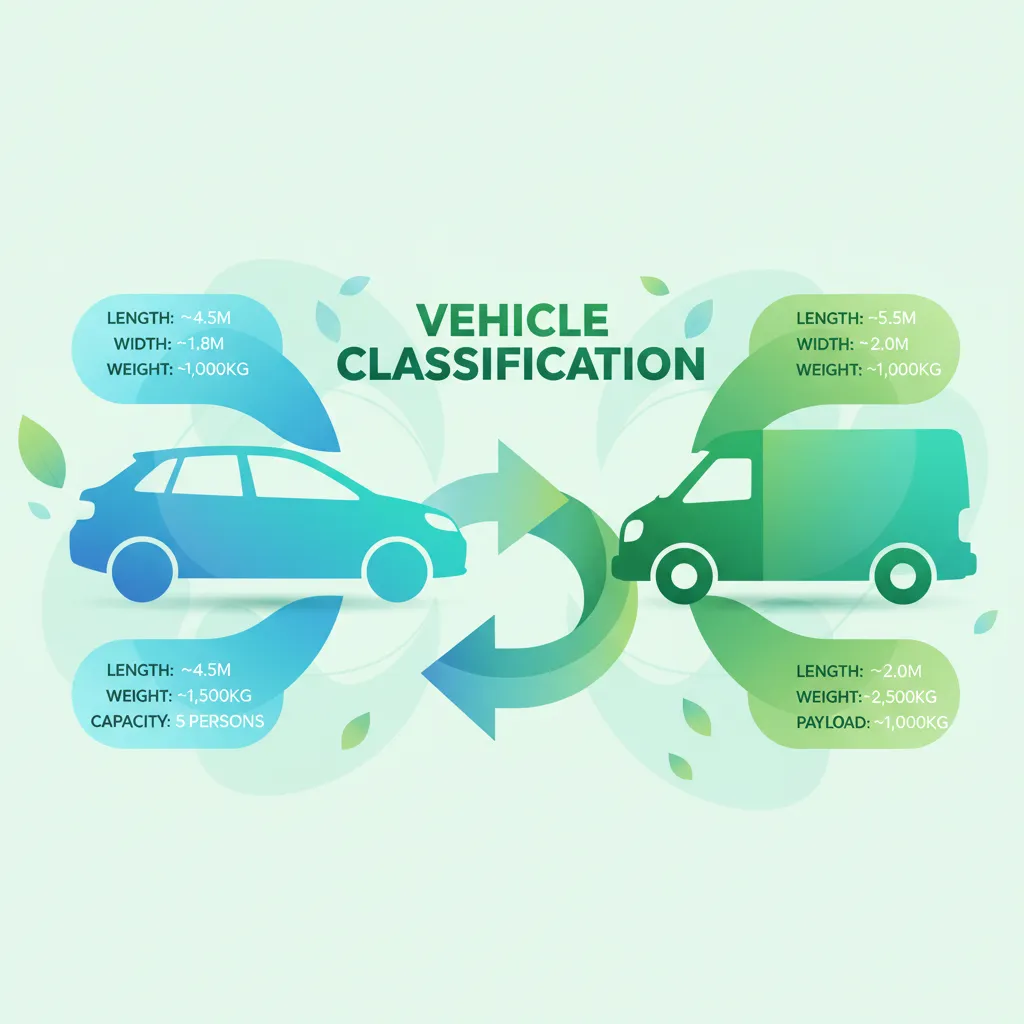
This lesson focuses on the precise classification of agricultural vehicles as defined by Polish law, differentiating between tractors, forestry machines, and trailers. It examines the legal parameters such as maximum permissible weight, width, height, and length that affect roadworthiness certifications. The lesson clarifies terminology used in official documents, ensuring learners can correctly identify the vehicles they are permitted to operate.
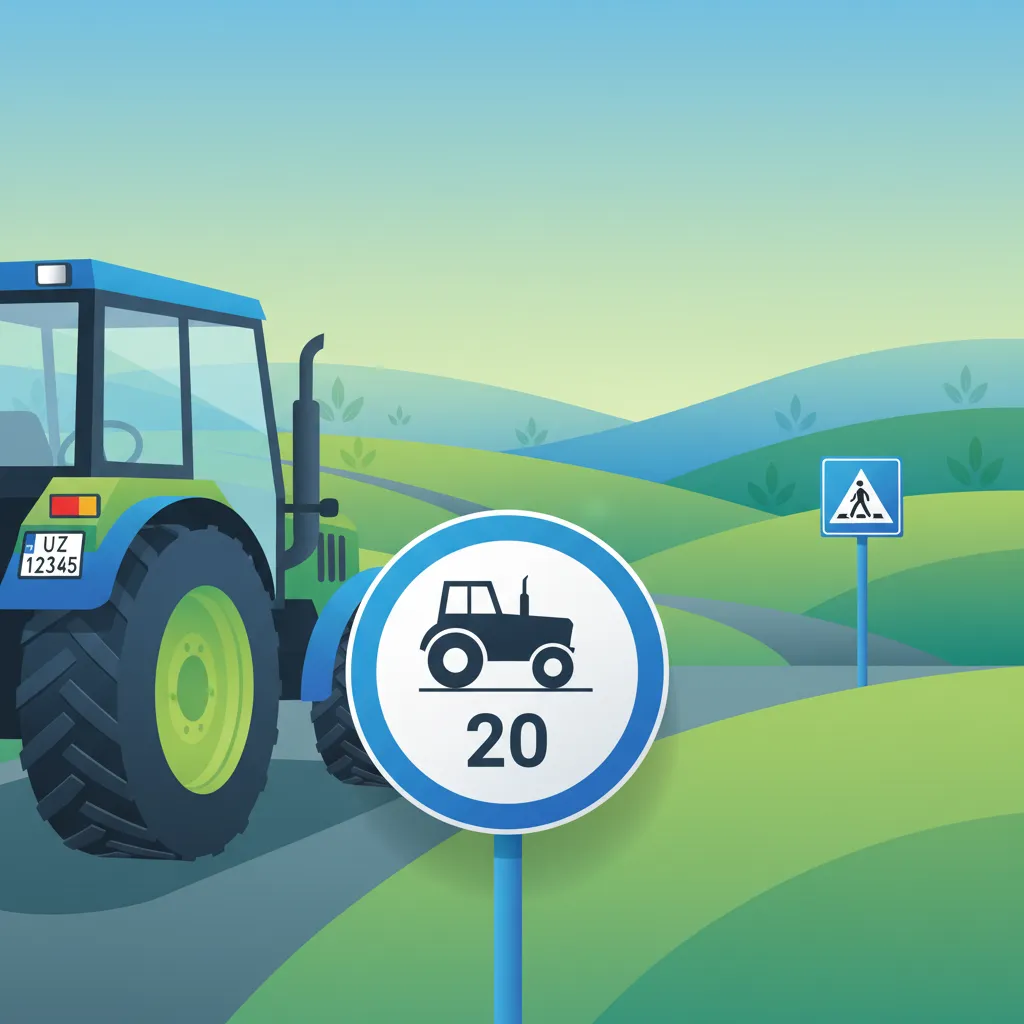
This lesson reviews the core set of regulatory and warning signs that all road users must obey, emphasizing those that affect agricultural tractors such as speed limits, stop, and give-way signs. It clarifies the colour and shape conventions used in Polish signage, enabling drivers to quickly recognize and react to sign information. The lesson also addresses the placement of signs in rural environments where visibility may be compromised.

This lesson focuses on the maintenance of agricultural implements and attachments powered via the tractor’s PTO and hydraulic systems. It covers routine inspection of hydraulic lines, lubrication of moving parts, and verification of safety features before each use. Additionally, the lesson stresses the importance of keeping detailed maintenance logs and certification documents to satisfy legal standards.
Explore the physics behind proper weight distribution and axle load management for agricultural vehicles in Poland. Learn how to ensure stability, prevent rollovers, and comply with legal weight restrictions for Category T transport.
This lesson examines the signs that convey dimensional and weight restrictions, which are vital for safe tractor and trailer operation. It outlines how to read width, height, and weight limit signs and the legal implications of exceeding these limits. The lesson provides guidance on planning loads to comply with bridge and road classification restrictions found across Polish rural networks.

This lesson delves into the physics of load management, teaching learners how to calculate payloads, locate the center of gravity, and distribute weight to preserve stability. The lesson addresses methods for securing cargo using straps and tie-downs, while also covering the effect of load shift on braking. Proper load planning ensures compliance with legal regulations and mitigates risks associated with trailer sway.
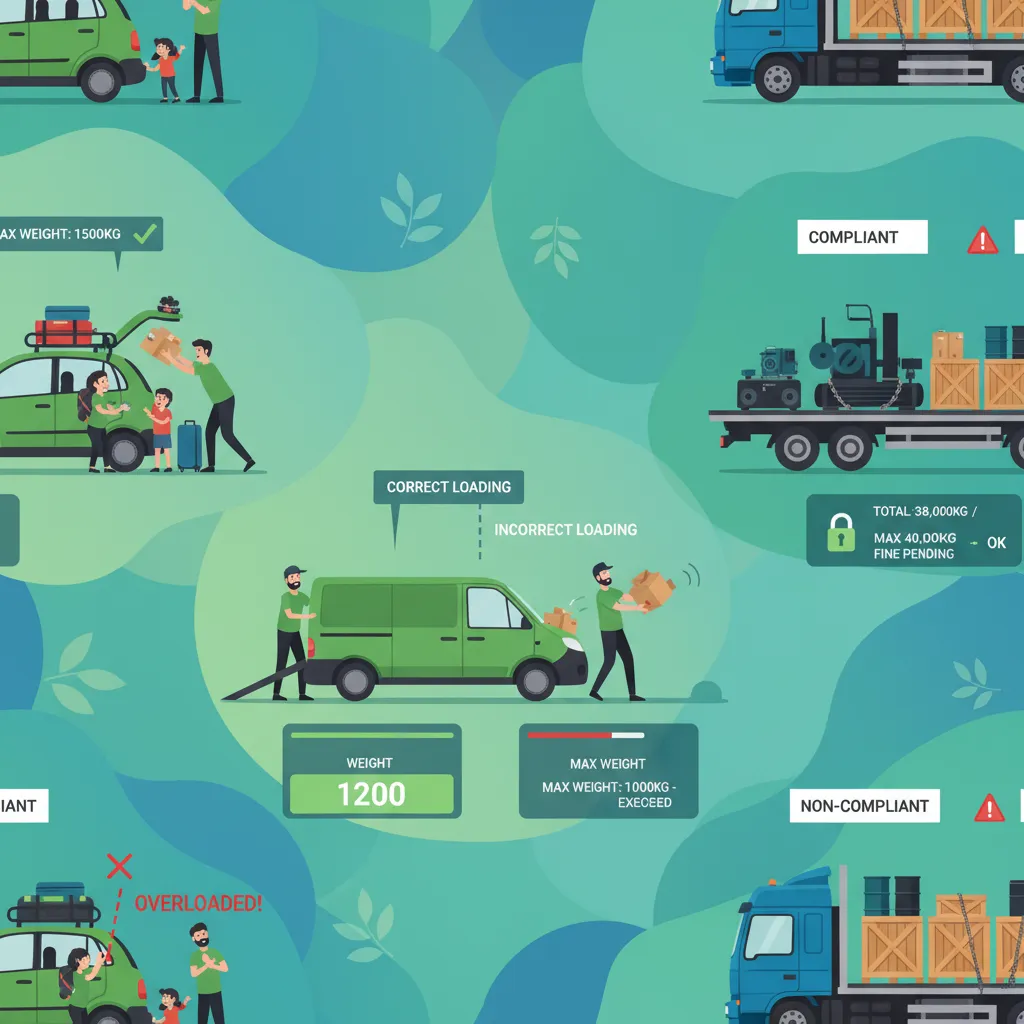
This lesson introduces the legal framework governing vehicle and axle weight limits in Poland and the EU. Learners will understand how to determine a vehicle's maximum permissible payload and interpret official load charts and documentation. The content covers the importance of correct weight distribution to avoid exceeding individual axle limits and explains the serious legal and safety consequences of operating an overloaded vehicle.
This lesson focuses on the precise classification of agricultural vehicles as defined by Polish law, differentiating between tractors, forestry machines, and trailers. It examines the legal parameters such as maximum permissible weight, width, height, and length that affect roadworthiness certifications. The lesson clarifies terminology used in official documents, ensuring learners can correctly identify the vehicles they are permitted to operate.
This lesson examines real-world case studies of harvest traffic, where multiple tractors and trailers share limited road space during peak agricultural periods. Learners explore strategies for coordinating speed, maintaining safe distances, and using signaling to communicate intentions. The content also addresses the challenges of field access points and the need for cooperation with other drivers.

This lesson explores the key components responsible for vehicle stability and control. It compares different suspension technologies, like traditional leaf springs and modern air suspension, and explains their impact on ride quality and load handling. Learners will also study the principles of hydraulic power steering and the importance of correct wheel alignment, as well as understand how different axle configurations affect load distribution and maneuverability.
This lesson outlines the legal responsibilities of tractor drivers as stipulated by Polish traffic law, emphasizing the duty to comply with all rules of the road. It discusses the liability framework for accidents involving agricultural vehicles, including the need for appropriate insurance and potential penalties. The lesson also explains the importance of maintaining accurate documentation, such as registration papers and a driver’s licence.

This lesson explores the dynamic relationship between cargo weight and a vehicle's performance. It explains how increased mass raises kinetic energy, significantly lengthening braking distances and requiring earlier, more gradual brake application. Learners will also analyze how a heavy or poorly distributed load alters the vehicle's handling characteristics, particularly during cornering, and understand the necessity of adjusting speed and driving style to compensate for these effects.
Find clear answers to common questions learners have about Best Practices for Safe Transport of Equipment. Learn how the lesson is structured, which driving theory objectives it supports, and how it fits into the overall learning path of units and curriculum progression in Poland. These explanations help you understand key concepts, lesson flow, and exam focused study goals.
In Poland, transporting agricultural equipment requires adherence to specific rules under the 'Prawo o ruchu drogowym'. This includes ensuring loads are securely fastened, properly distributed for stability, and that the overall dimensions and weight comply with legal limits for tractors and trailers. You must also plan your route carefully, considering any restrictions on roads or bridges, and be aware of seasonal conditions that might affect safety. Our lesson covers these critical aspects in detail for your Category T exam preparation.
Load stability is paramount. You must ensure the weight is evenly distributed, preferably with a slight downward pressure on the hitch. Use appropriate securing devices like straps, chains, or nets that are in good condition and rated for the load's weight. The equipment itself should be centred and as low as possible to minimise the risk of tipping, especially during turns or on uneven terrain. This lesson provides practical guidance on these techniques.
When planning your route, always consider the specific limitations of your tractor and trailer, including width, height, and weight. Check for any bridge weight restrictions or low-clearance underpasses on your intended path. Also, factor in road surface conditions, especially during wet or winter months when mud or snow can create hazards, and aim for routes that minimise travel on busy, high-speed roads where possible. This is a key area tested in the Category T theory exam.
Route planning is vital for safety and efficiency. It helps you avoid unexpected obstacles like narrow roads, weight-restricted bridges, or areas prone to difficult conditions such as mud or ice. Proper planning minimises the risk of accidents, delays, and potential damage to your equipment or the road infrastructure. It also ensures compliance with traffic laws and regulations specific to agricultural vehicles in Poland.
When handling and securing agricultural equipment, it's important to wear appropriate PPE. This typically includes sturdy work gloves to protect your hands from rough surfaces and potential pinch points, safety footwear with steel toes to prevent foot injuries, and possibly high-visibility clothing to ensure you are seen, especially in low-light conditions or near active traffic. Always assess the risks involved in your specific task to determine the necessary PPE.
Build custom practice sessions tailored precisely to your needs. Focus on areas requiring improvement, review specific Polish road signs, or master complex traffic rules to ensure full preparation for your official driving license exam.