
Trams and certain public transport vehicles operate under special priority rules in Poland due to their limited maneuverability and fixed routes. This page outlines when drivers must yield to these vehicles, especially at intersections and near stops, to ensure smooth traffic flow and prevent collisions. Pay close attention to situations where a tram's right of way overrides standard priority rules.
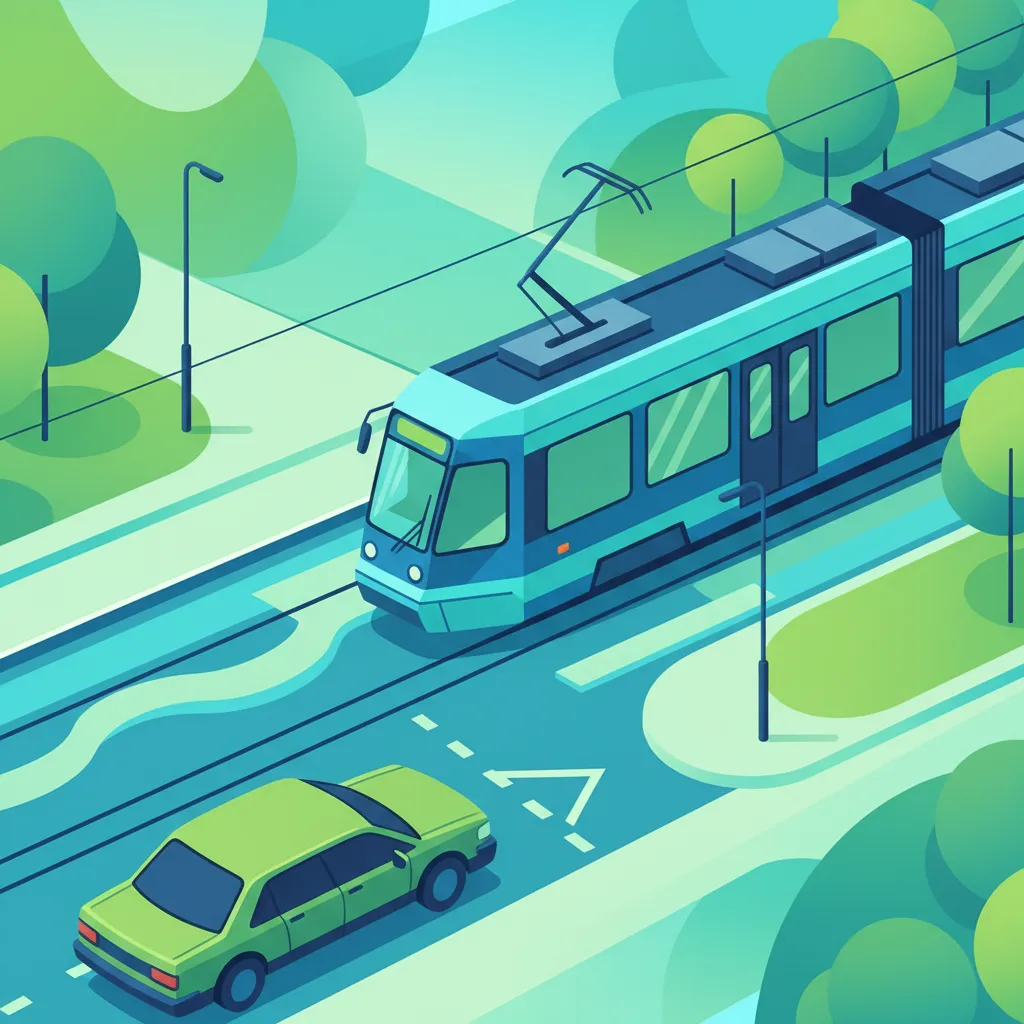
Theory topic content overview
Read the full theory topic guide for Tram and Public Transport Priority with structured, easy-to-scan content built for learners in Poland. This detailed section explains the exact rule, meaning, traffic context, comparison points, and exam logic behind this Polish driving theory topic so you can study faster, understand the concept more clearly, and avoid common interpretation mistakes on the theory test.
In Polish road traffic, tram and public transport priority refers to specific rules that grant certain public service vehicles, primarily trams, the right of way in situations where other road users might normally expect to have it. This principle is fundamental to road safety in urban areas across Poland, where trams operate on fixed routes and have limited maneuverability. Understanding these rules is crucial for all drivers, especially for passing the Polish driving theory exam and navigating cities safely.
The core idea is to facilitate the uninterrupted flow of public transport, which serves many passengers, and to acknowledge the physical limitations of these vehicles. Trams, running on fixed rails, cannot swerve to avoid obstacles or react quickly to unexpected situations like other road vehicles.
Prioritising trams and other public transport vehicles like buses is vital for several reasons unique to the Polish context:
pierwszeństwo tramwaju (tram priority) and pierwszeństwo pojazdów komunikacji miejskiej (public transport priority) are very common in the Polish driving theory exam. Learners frequently make mistakes regarding specific scenarios, such as unmarked intersections or tram stops, making it a high-stakes topic for aspiring drivers.Prawo o Ruchu Drogowym) explicitly defines these priority rules, which drivers must understand to interact safely and legally with the extensive tram and bus networks.The rules for tram priority in Poland depend heavily on the specific situation and the presence of traffic signals or signs.
Skrzyżowania)Skrzyżowania Równorzędne): This is one of the most critical rules to remember in Poland. At an unmarked intersection where no traffic lights or signs regulate priority, a tram always has priority, regardless of whether it approaches from the right or left. This crucial rule overrides the general "right before left" (zasada prawej ręki) rule that applies to other vehicles.
sygnalizacja świetlna) or specific road signs like "Yield" (A-7) or "Stop" (B-20), the tram must obey these just like any other vehicle. In these cases, the signs or signals dictate priority, not the vehicle type.Przystanki Tramwajowe/Autobusowe)wyspa dla pasażerów). If passengers are stepping directly onto or from the roadway, you must stop your vehicle to allow them safe passage to the pavement or tram. Resume driving only when all passengers have safely cleared the road.Zatoki Autobusowe w Obszarze Zabudowanym): In built-up areas (obszar zabudowany), a bus or trolleybus pulling out from a designated stop must be given priority by other vehicles, provided it indicates its intention to move off with a turn signal. Drivers must slow down and allow the bus to merge into traffic.Several factors can influence or override the general rules of tram and public transport priority in Poland:
karetka, policja, straż pożarna) using blue flashing lights and a siren always have absolute priority over all other road users, including trams and buses.Polish learners often struggle with specific nuances of tram and public transport priority, leading to common mistakes in the theory exam and on the road:
Zasada Prawej Ręki): The biggest confusion point is at unmarked intersections. Remember: a tram at an unmarked intersection in Poland ALWAYS has priority, even if coming from the left. This decisively overrides the standard "right before left" rule for other vehicles.przejazdy tramwajowe) or intersections where traffic is directed (i.e., by traffic lights or a traffic officer). This is a crucial distinction from railway crossings and a common exam trap.obszar zabudowany). Outside these areas, the bus must yield to other traffic.Consider these typical situations you might encounter while driving in Poland:
obszar zabudowany) in Wrocław. Ahead, a public bus has stopped at a designated bus stop and signals left to pull back into traffic. You must slow down and allow the bus to enter the lane, giving it priority.The most important takeaway for tram and public transport priority in Poland is to always anticipate the movements of these large, fixed-route vehicles. When in doubt, especially at unmarked intersections or when a tram is turning, assume the tram has priority. Always verify traffic signs and signals first, but be prepared for the exceptions where standard rules are overridden. For buses, remember the special rule for pulling out from stops in built-up areas. Prioritising these vehicles ensures both your safety and the smooth operation of Poland's vital public transport systems.
Tram and public transport priority in Poland is governed by specific rules that override standard priority principles at unmarked intersections, where trams always have right of way regardless of approach direction. These rules exist because trams run on fixed rails and cannot deviate, making them high-risk in collisions, and because Poland's major cities depend heavily on tram networks for urban mobility. Traffic signals and road signs always take precedence over vehicle-type priority, and special rules apply near stops and for buses pulling out in built-up areas. This topic is frequently tested in the Polish driving theory exam, and a common trap is forgetting that reversing trams or those leaving a depot do not have priority.
A short set of high-value points that capture the most important ideas from this theory explanation.
At unmarked intersections with no signals or signs, a tram always has priority regardless of approach direction, overriding the standard 'right before left' rule
Functional traffic signals and road signs always take precedence over general tram priority rules
A tram reversing or leaving a depot does NOT have priority over other road users
Buses pulling out from designated stops have priority only within built-up areas (obszar zabudowany), not outside them
Drivers must stop when passengers are boarding or alighting from a tram directly onto the roadway and only proceed once the path is clear
Trams override 'right before left' at unmarked intersections; signals always take priority over vehicle-type priority rules
The bus-stop priority rule applies ONLY inside built-up areas; outside them the bus must yield
A reversing tram or one leaving a tram depot has NO priority and must yield to other traffic
Overtaking IS permitted at tram crossings or intersections where traffic is directed by signals or a traffic officer, unlike at railway crossings
Trams on fixed rails cannot swerve; their mass means significant braking distance, so always maintain safe following distance
Assuming trams ALWAYS have priority in every situation, including when reversing or departing from a depot
Confusing bus priority rules and applying them outside built-up areas where they do not apply
Forgetting that traffic signals override tram priority at signalised intersections
Believing overtaking rules at tram crossings are the same as at railway crossings (overtaking is permitted at directed tram intersections)
Underestimating a tram's braking ability or failing to maintain adequate following distance behind a tram
Start with a short, direct summary of Tram and Public Transport Priority before reading the full explanation below.
In Poland, trams generally have priority at intersections where traffic lights or signs do not explicitly regulate priority, or where they are turning. This is primarily because trams run on fixed tracks and cannot easily deviate. Drivers must also be cautious around public transport stops, especially when passengers are boarding or alighting directly onto the roadway, and yield to buses pulling out from a designated stop in built-up areas. Always anticipate a tram's movement and be prepared to yield.
Review the most important terms, rule signals, and traffic concepts linked to Tram and Public Transport Priority.
Explore related theory topic pages connected to Tram and Public Transport Priority and continue with the next useful rule explanation.
See the common search queries learners use when trying to understand Tram and Public Transport Priority in Poland.

Continue your preparation by exploring specific Polish driving theory topics in detail. Review each section to reinforce your understanding of traffic rules, road signs, and safe driving practices. Our comprehensive explanations are structured to support your learning journey and help you confidently approach the official driving licence theory exam.
Polish Driving Theory TopicsTheory topic content overview
A short set of high-value points that capture the most important ideas from this theory explanation.
At unmarked intersections with no signals or signs, a tram always has priority regardless of approach direction, overriding the standard 'right before left' rule
Functional traffic signals and road signs always take precedence over general tram priority rules
A tram reversing or leaving a depot does NOT have priority over other road users
Buses pulling out from designated stops have priority only within built-up areas (obszar zabudowany), not outside them
Drivers must stop when passengers are boarding or alighting from a tram directly onto the roadway and only proceed once the path is clear
Trams override 'right before left' at unmarked intersections; signals always take priority over vehicle-type priority rules
The bus-stop priority rule applies ONLY inside built-up areas; outside them the bus must yield
A reversing tram or one leaving a tram depot has NO priority and must yield to other traffic
Overtaking IS permitted at tram crossings or intersections where traffic is directed by signals or a traffic officer, unlike at railway crossings
Trams on fixed rails cannot swerve; their mass means significant braking distance, so always maintain safe following distance
Assuming trams ALWAYS have priority in every situation, including when reversing or departing from a depot
Confusing bus priority rules and applying them outside built-up areas where they do not apply
Forgetting that traffic signals override tram priority at signalised intersections
Believing overtaking rules at tram crossings are the same as at railway crossings (overtaking is permitted at directed tram intersections)
Underestimating a tram's braking ability or failing to maintain adequate following distance behind a tram
Start with a short, direct summary of Tram and Public Transport Priority before reading the full explanation below.
In Poland, trams generally have priority at intersections where traffic lights or signs do not explicitly regulate priority, or where they are turning. This is primarily because trams run on fixed tracks and cannot easily deviate. Drivers must also be cautious around public transport stops, especially when passengers are boarding or alighting directly onto the roadway, and yield to buses pulling out from a designated stop in built-up areas. Always anticipate a tram's movement and be prepared to yield.
Review the most important terms, rule signals, and traffic concepts linked to Tram and Public Transport Priority.
Explore related theory topic pages connected to Tram and Public Transport Priority and continue with the next useful rule explanation.
See the common search queries learners use when trying to understand Tram and Public Transport Priority in Poland.
Continue your preparation by exploring specific Polish driving theory topics in detail. Review each section to reinforce your understanding of traffic rules, road signs, and safe driving practices. Our comprehensive explanations are structured to support your learning journey and help you confidently approach the official driving licence theory exam.
Polish Driving Theory TopicsUse this exam-focused revision tip to understand how Tram and Public Transport Priority is likely to appear in theory questions for learners in Poland. This section helps you identify the most testable part of the rule, avoid common traps, and remember the concept more effectively during Polish driving theory exam preparation.
Remember that a tram's right of way often overrides the 'right before left' rule at unmarked intersections. Many learners forget that a tram reversing or leaving a depot *does not* have priority. Always check traffic signs and signals first, but if absent, assume the tram has priority, especially when turning, unless it's explicitly yielding.
Read direct answers to the most common learner questions about Tram and Public Transport Priority in Poland. This FAQ focuses on rule confusion, practical meaning, comparison with similar concepts, and the exact uncertainties that appear most often in Polish driving theory revision and exam preparation.
In Poland, a tram typically has priority at intersections where there are no traffic lights or road signs dictating the right of way, or when the tram is turning. This applies even if other vehicles would normally have priority under the 'right before left' rule.
No, a tram does not always have priority. For example, a tram reversing or exiting a depot does not have priority. Also, if traffic is regulated by signals or signs, the tram must obey those just like other vehicles.
In built-up areas in Poland, drivers must allow a bus or trolleybus to pull out from a designated stop onto the roadway if it indicates its intention to do so. Drivers must reduce speed and, if necessary, stop to yield priority.
Drivers must be very cautious near tram stops. If a tram stop is not on an island and passengers are boarding or alighting directly onto the road, drivers must stop their vehicle to allow pedestrians safe passage to and from the tram, resuming only when it is safe to do so.
Overtaking a tram is generally permissible in Poland, but it requires extreme caution, especially when tram tracks are on the road. It is prohibited to overtake a tram on a pedestrian crossing or immediately before it. Always ensure sufficient space and watch for pedestrians and other road users.
"Tramwaj" is the Polish word for a tram. It refers to a public transport vehicle that runs on fixed railway tracks, typically within urban areas.
Build custom practice sessions tailored precisely to your needs. Focus on areas requiring improvement, review specific Polish road signs, or master complex traffic rules to ensure full preparation for your official driving license exam.