
This lesson explores the essential techniques for using mirrors, rearview cameras, and sensor systems to maximize situational awareness in heavy goods vehicles. Building on your knowledge of vehicle dimensions, you will learn how to integrate these safety technologies into your daily driving routine for the Turkish C license theory exam.

Lesson content overview
Operating a heavy goods vehicle (HGV) such as a rigid truck, semi-trailer, or drawbar combination (Turkish license categories C1, C, C1E, or CE) requires exceptional situational awareness. Due to their immense size, length, and height, these vehicles feature vast blind spots (kör noktalar) that can easily swallow entire passenger cars, motorcycles, or pedestrians.
To prevent collisions, professional drivers must master the Principle of Comprehensive Visibility. This requires a coordinated, continuous, and systematic integration of traditional mirrors, advanced camera feeds, and modern electronic sensor networks. This lesson covers how to optimize, maintain, and legally utilize these visibility systems under the Turkish Highway Traffic Regulation (Karayolları Trafik Yönetmeliği) to ensure maximum safety in both bustling urban deliveries and highway operations.
The Principle of Comprehensive Visibility dictates that a driver must maintain an uninterrupted, 360-degree understanding of the vehicle’s surrounding space. Because human anatomy limits our direct field of view to roughly 180 degrees forward, we must rely on technological aids to cover the remaining space.
In professional transport, safety is built on three layers of visibility:
No single system is completely foolproof. Mirrors can be misadjusted, cameras can become dirty, and sensors can suffer from environmental interference. Safety is achieved through complementary use—using each tool to verify and reinforce the others.
Under European type-approval standards, which Turkey strictly enforces through alignment with UNECE regulations (specifically UNECE R46), commercial goods vehicles must be equipped with a specific array of mirrors. These are divided into distinct classes, each targeting a specific zone around the vehicle.
The Passenger-Side Trap: The passenger side (right-hand side in Turkey) represents the largest and most dangerous blind spot for a left-hand drive HGV. Always check your Class IV (wide-angle) and Class V (kerb) mirrors before executing any right-hand turn to protect vulnerable road users.
An improperly adjusted mirror does not just limit your view; it creates false confidence by hiding entire vehicles. You must adjust your mirrors before starting your engine and whenever your vehicle's load distribution changes significantly.
Establish a Neutral Seating Position: Sit in your normal driving posture with your seat height, steering wheel, and suspension dampening fully adjusted. Your feet should comfortably rest on the pedals.
Adjust the Main Side Mirrors (Class II / III): Align them so that only a tiny sliver of your vehicle's side (about 10% of the inner edge of the mirror) is visible. This small sliver acts as a spatial reference point. The horizon line should be positioned horizontally in the middle of the glass.
Set the Wide-Angle Mirrors (Class IV): Adjust these outwards so that their field of view begins where the main side mirror's coverage ends. This creates a seamless transition as an overtaking vehicle moves from your rear view to your side view.
Configure the Kerb Mirror (Class V): Angle the mirror downward until you can clearly see the passenger-side front wheel, the lower door frame, and the ground extending roughly 2 metres outward from the side of the vehicle.
Position the Front Mirror (Class VI): Adjust this mirror so you can see the entire width of the front bumper and the ground extending at least 2 metres forward from the bumper.
Modern heavy goods vehicles increasingly utilize camera-monitor systems (CMS) to either supplement or entirely replace traditional glass mirrors.
These cameras are typically mounted high on the rear of the vehicle body or trailer. They project a real-time video feed onto a dedicated dashboard or pillar-mounted screen inside the cab. They are invaluable when reversing into tight loading docks, navigating narrow alleys, or verifying that the immediate path behind the vehicle is clear of low-lying obstacles.
These systems use four or more wide-angle cameras mounted around the vehicle's exterior perimeter. Sophisticated onboard software stitches these separate feeds together to generate a virtual bird's-eye view of the vehicle. This is highly effective during low-speed maneuvers in congested urban construction sites or distribution centres.
Electronic sensor networks act as your vehicle's "early warning system." They detect objects that escape both direct and indirect vision.
Usually utilizing ultrasonic or short-range radar technology, proximity sensors are mounted on the rear and front bumpers. They emit high-frequency sound waves or radar signals that bounce off obstacles, calculating distance based on the return time.
Aimed specifically at reducing side-swipe collisions, these advanced radar and camera-based systems monitor the lateral zones of the vehicle. Under the European General Safety Regulation (GSR), which Turkey mirrors, new HGVs must feature side-mounted sensors to detect vulnerable road users.
Sensor Complacency: Over-reliance on electronic alerts can lead to driver complacency. If a sensor fails due to dirt, electrical faults, or extreme temperatures, a driver who has stopped checking their physical mirrors is highly likely to cause an accident. Treat sensors as an extra safety net, not a replacement for active scanning.
Under the Turkish Highway Traffic Law No. 2918 (2918 Sayılı Karayolları Trafik Kanunu) and its accompanying regulations, professional drivers carry strict, non-delegable legal responsibilities regarding vehicle visibility.
Understanding where other drivers fail can help you avoid making the same high-risk mistakes on Turkish roads.
Driving conditions in Turkey vary dramatically from the snowy winter mountain passes of Erzurum to the blistering summer heat of Antalya. Environmental changes directly affect how your safety systems perform.
| Environmental Challenge | Operational Impact | Safe Driver Countermeasures |
|---|---|---|
| Heavy Rain, Snow, or Road Spray | Mirrors quickly become fogged, water-streaked, or coated in dirt. Sensors can be blocked by thick layers of wet snow or ice. | Pull over safely to clean mirrors and wipe down sensors manually. Use heated mirror functions (ayna ısıtıcıları) to evaporate condensation. |
| Nighttime & Low Light | Standard glass mirrors suffer from headlight glare, causing temporary driver blindness. Standard cameras without infrared capabilities produce dark, grainy feeds. | Adjust mirrors to anti-glare angles if equipped. Utilize infrared or night-vision rearview camera feeds. Rely heavily on proximity sensors to detect low-visibility obstacles. |
| Extreme Summer Heat | Prolonged sun exposure can cause electronic sensors to overheat, resulting in false alerts or temporary system shutdown. | Monitor the dashboard for sensor warning lights. Do not assume your blind-spot monitoring is active if the system indicates an over-temperature fault. |
| Changes in Load Weight | Heavy loads lower the rear suspension, altering the pitch of the cab and shifting mirror angles upward. | Readjust all mirrors (Class II, IV, V, and VI) after every loading and unloading cycle to restore correct sightlines. |
| Dense Urban Traffic | Constant proximity to pedestrians, electric scooters, and motorcyclists creates high-frequency sensor alerts, which can lead to driver alarm fatigue. | Maintain a slow, deliberate speed. Systematically verify alerts with physical mirror checks and direct window scans. |
To maximize your safety, you must practice system redundancy. This means you never make a maneuvering decision based on a single source of information.
By layering these checks, you confirm the exact nature of the hazard and can navigate safely around it. This integrated approach dramatically lowers accident rates, protects vulnerable road users, and ensures you operate your vehicle as a highly skilled, responsible professional.
Explore all units and lessons included in this driving theory course.
Lesson content overview
Explore all units and lessons included in this driving theory course.
Explore search topics learners often look for when studying Use of Mirrors, Cameras, and Additional Sensors. These topics reflect common questions about road rules, driving situations, safety guidance, and lesson level theory preparation for learners in Turkey.
Browse additional driving theory lessons that cover connected traffic rules, road signs, and common driving situations related to this topic. Improve your understanding of how different rules interact across everyday traffic scenarios.
Understand the unique challenges of maneuvering large commercial vehicles in congested Turkish urban environments. This lesson focuses on predicting the behavior of pedestrians, cyclists, and motorcyclists near loading zones and managing visibility in tight city traffic, ensuring compliance with professional driver safety standards and traffic regulations.

This lesson examines the critical interactions between goods vehicles and vulnerable road users such as pedestrians, cyclists, and motorcyclists, particularly in urban environments. Learners will explore right-of-way rules, maintaining safe distances, and strategies for anticipating the actions of these road users. The lesson emphasizes the importance of clear communication and protective driving.

This lesson explores the unique challenges faced during urban deliveries, such as navigating restricted loading zones, traffic congestion, and narrow streets. Learners will learn strategies for safe maneuvering, efficient loading and unloading, and maintaining situational awareness in high-pedestrian traffic areas. Emphasis is placed on complying with local regulations and optimizing time management.

Learners will examine the complexities of operating in environments where various road users, including pedestrians, cyclists, and motorcyclists, coexist. The lesson emphasizes the need for heightened situational awareness, defensive driving techniques, and proactive hazard anticipation. Strategies for navigating mixed traffic safely, especially in congested urban areas, are highlighted.

Learners will identify the different categories of vulnerable road users and understand the heightened risks they face. The lesson emphasizes the importance of recognizing these users, anticipating their actions, and taking proactive measures to ensure their safety while operating passenger vehicles. Strategies for mitigating danger and fostering a protective driving environment are explored.

This lesson focuses on protecting vulnerable road users, such as pedestrians, cyclists, and motorcyclists, in mixed traffic environments. Learners will examine specific strategies for increased vigilance, anticipatory driving, and properly yielding to these users. The lesson also covers high-risk zones, such as school areas and public transport stops, emphasizing the need for heightened safety.

This lesson explores the unique challenges encountered when driving goods vehicles on rural roads, including narrow widths, sharp curves, animal crossings, and varying road surface conditions. Learners will understand the importance of adjusting speed, maintaining vigilance, and respecting road markings. Emphasis is placed on safe navigation practices to mitigate risks associated with rural areas.

This lesson delves into specific manoeuvring strategies required when navigating both tight urban environments and open rural roads with large passenger vehicles. Learners will explore techniques for handling narrow streets, tight turns, and intersections, while maintaining safety and efficiency. The content emphasizes planning and execution of manoeuvres based on road conditions and vehicle dimensions.
This lesson examines the integral role of the goods vehicle driver in contributing to overall traffic safety and a positive safety culture. It focuses on proactive driving behaviors, hazard identification, and effective risk management strategies. Communication techniques with other road users, compliance with traffic flow regulations, and competent emergency responses are highlighted as essential skills.

This lesson explores the hazards characteristic of rural roads, including narrow paths, lack of lighting, slow agricultural vehicles, and sharp curves. It teaches drivers how to anticipate blind corners, adjust speed, and pass slow-moving tractors safely. Motorists will learn to remain highly alert for unexpected roadway obstructions.
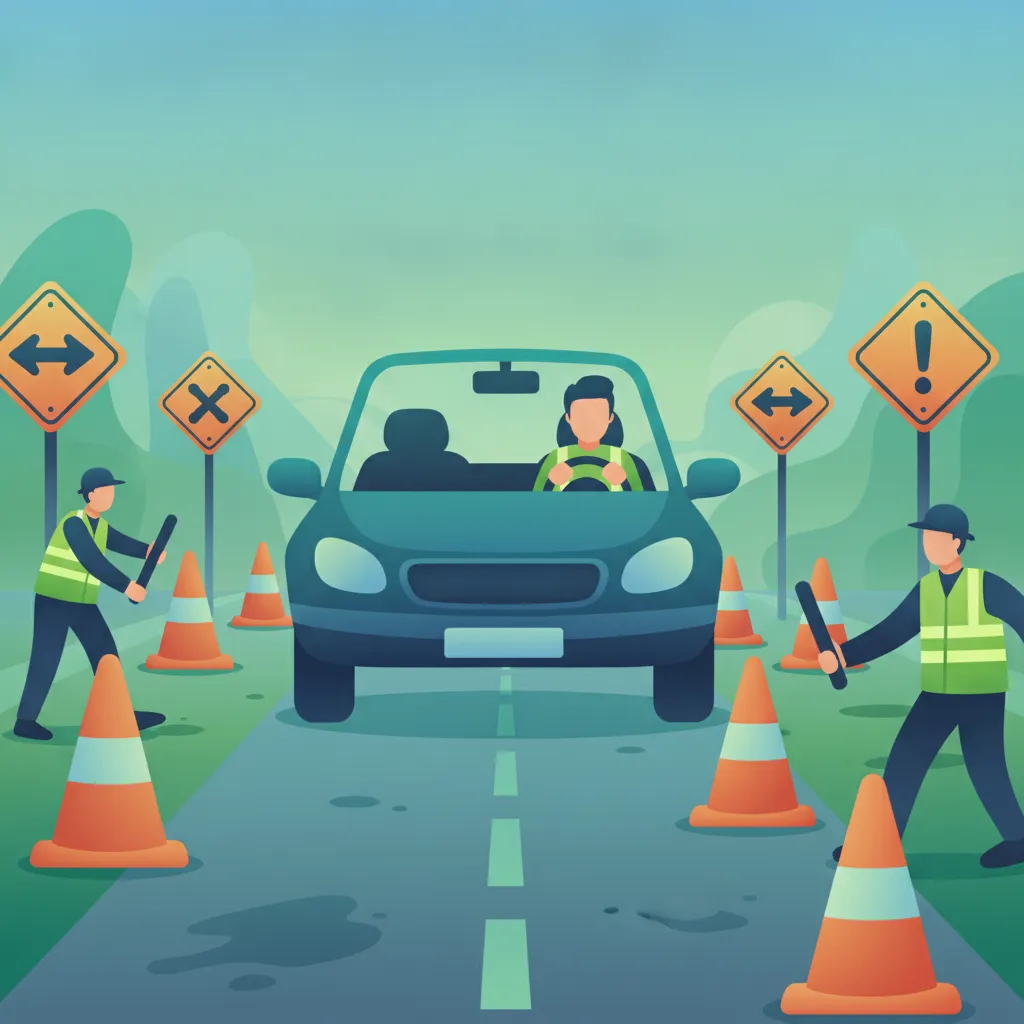
This lesson focuses on the safe navigation of goods vehicles through roadworks and construction zones. Learners will examine the importance of recognizing temporary signs, adhering to reduced speed limits, and maintaining heightened caution around workers and equipment. The lesson emphasizes the need for special attention due to the altered road environment and hazards specific to heavy vehicles.
Learn the theory behind managing wide turn radii and maintaining proper lane occupancy for heavy goods vehicles. This guide covers strategic positioning at intersections, trailer swing awareness, and defensive maneuvering techniques required to navigate complex junctions and highways safely while complying with professional Turkish driving regulations.

This lesson focuses on the critical importance of lane discipline and proper lane usage for large goods vehicles. Learners will understand the challenges posed by wider vehicle dimensions, the necessity of maintaining adequate lane occupancy, and the need for precise lane keeping. Emphasis is placed on selecting appropriate lanes, adhering to traffic flow, and ensuring general highway safety.

This lesson focuses on the specific manoeuvring techniques required when operating articulated vehicles or those towing trailers. Learners will understand the dynamics of pivot points, the causes and mitigation of trailer sway, and how to execute turns safely with a trailer attached. Proper coupling checks and trailer length considerations are emphasized for safe operations on public roads.

This lesson explores effective turning strategies for goods vehicles, focusing on managing the larger turn radius required due to vehicle size and load. Learners will understand how to approach corners safely, adjust speed, use signals appropriately, and compensate for off-tracking. The lesson also highlights how load distribution impacts turning dynamics and the importance of vehicle control.

Learners will explore the fundamentals of maintaining correct lane discipline, focusing on appropriate lane positioning, understanding lane markings, and executing lane changes safely. Emphasis is placed on the unique considerations for large passenger vehicles within the lane, such as width and maneuverability. The lesson also addresses the impact of proper lane discipline on overall traffic flow and safety.
This lesson examines the specific road space requirements necessary for large goods vehicles to operate safely and efficiently. Topics include the need for adequate lane width, lateral clearance, and turning lanes to accommodate wider and longer vehicles. Learners will explore the proper use of shoulders, overtaking procedures, and the impact of large vehicles on overall road capacity in traffic.

This lesson examines lane division and proper lane usage on multi-lane roads and highways. Learners will understand the purpose of lane markings in guiding drivers to maintain appropriate lane discipline. Topics include correct lane selection for different vehicle types, overtaking procedures, and lane-changing techniques. Real-world examples illustrate the importance of respecting lane usage rules.

This lesson focuses on the challenges and techniques required when maneuvering goods vehicles in confined spaces such as loading docks, narrow streets, and urban environments. It addresses the importance of spatial awareness, precision driving, and understanding vehicle dimensions to avoid collisions. Learners will explore strategies for effective parking, reversing, and handling blind spots safely.
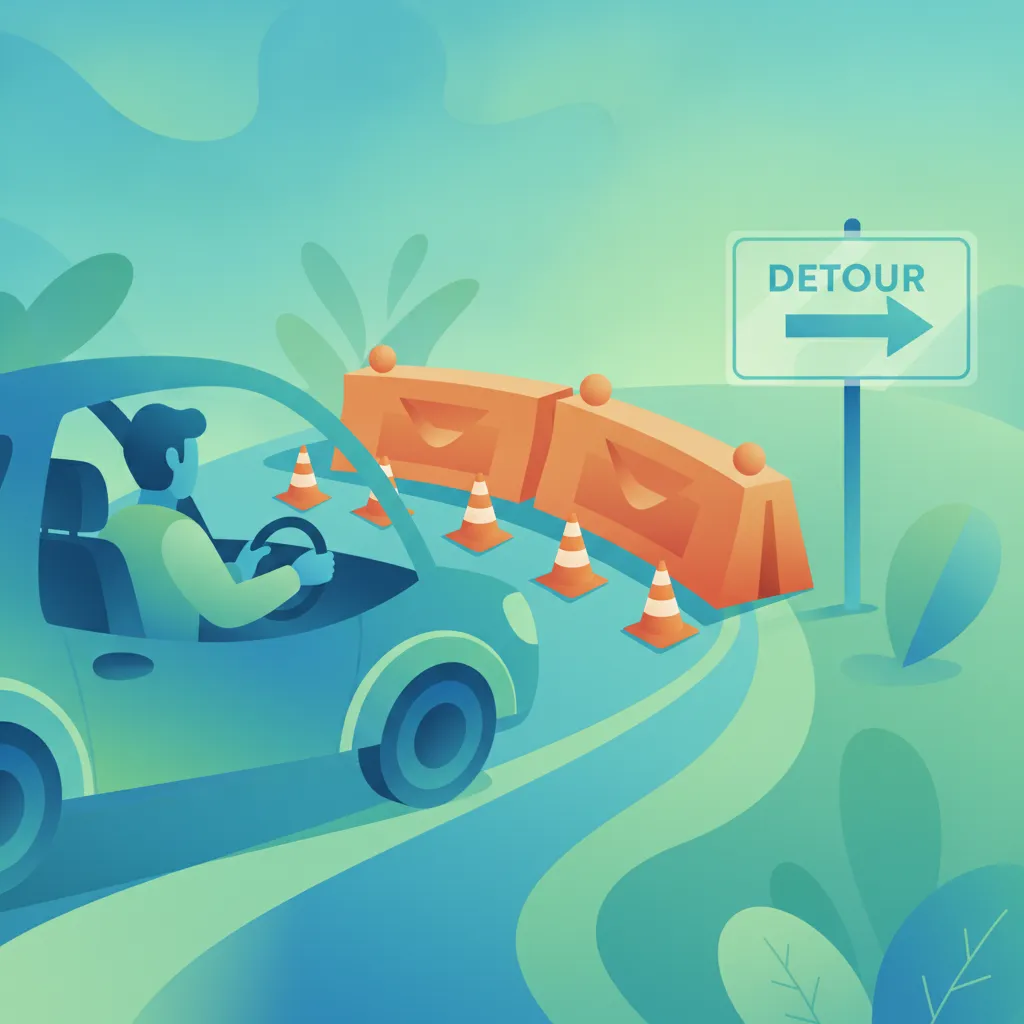
This lesson focuses on effectively managing road closures and detours that affect goods vehicle routes. Learners will explore strategies for obtaining real-time information, updating navigation systems, and planning alternate routes to maintain efficiency and compliance. Emphasis is placed on safety considerations, communication with dispatch centers, and adhering to traffic management.
This lesson focuses on traffic signs and road markings that are specifically relevant to goods vehicles in Turkey. Learners will become familiar with signs indicating prohibited routes, weight limits, height restrictions, hazardous material transport, and lane usage regulations. The lesson emphasizes the importance of accurately interpreting these signs to ensure compliance with traffic laws.
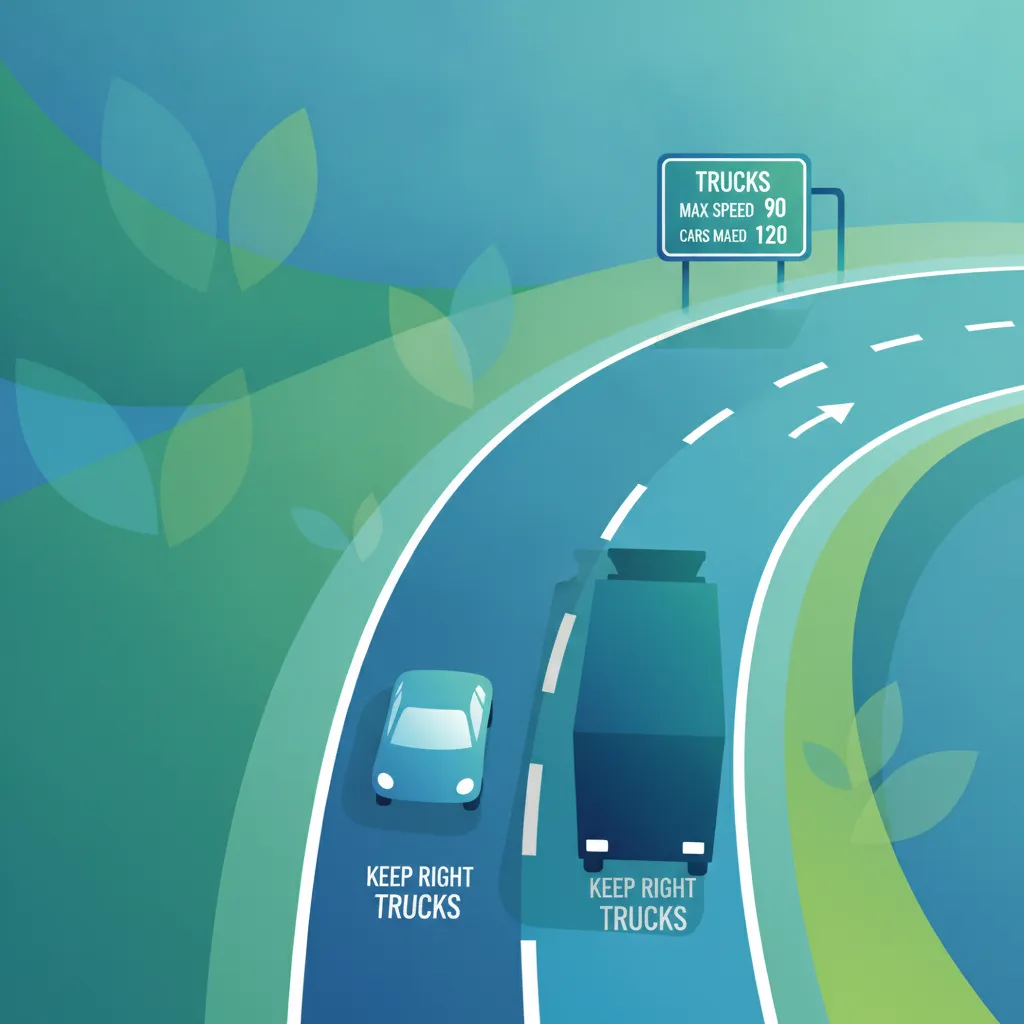
This lesson addresses the specific considerations for goods vehicle operation on highways and expressways, covering speed limits, lane discipline, safe merging, and overtaking. Learners will learn how to adapt to traffic flow, manage heavy vehicle dynamics at higher speeds, and ensure safe operation. The lesson emphasizes the importance of vigilance and proper lane usage to prevent accidents.
Find clear answers to common questions learners have about Use of Mirrors, Cameras, and Additional Sensors. Learn how the lesson is structured, which driving theory objectives it supports, and how it fits into the overall learning path of units and curriculum progression in Turkey. These explanations help you understand key concepts, lesson flow, and exam focused study goals.
Goods vehicles have larger dimensions and longer wheelbases, creating significant blind spots. Proper adjustment is the only way to minimize these danger zones, ensuring you can see cyclists, motorcyclists, and pedestrians who may be positioned near your vehicle.
No, you must use a combination of all available tools. Cameras have limitations such as glare, potential for mechanical failure, or mud accumulation; mirrors provide a wider, non-digital perspective that is essential for a thorough scan before moving.
Sensors provide audible or visual warnings when an obstacle is detected in areas you cannot see directly, such as immediately behind or beside the vehicle. They act as an additional layer of protection, particularly in tight loading bays or areas with many vulnerable road users.
Yes, the Turkish theory exam tests your knowledge of modern vehicle safety systems. You may be asked about the limitations of sensors, the correct procedure for mirror checks, and how technology interacts with your legal responsibility as a professional driver.
Use our comprehensive practice search to find exactly the Turkish driving theory questions you need to master. Whether reviewing specific road signs, traffic rules, or first aid scenarios, select your perfect practice set and boost your confidence for the official ehliyet sınavı.