
Logo
Danish Driving Theory Courses

Lesson 4 of the Risk Behaviour, Legal Consequences, Breakdowns and Emergencies unit

Danish Driving Theory AM: Emergency Procedures and Contacting Authorities

This lesson provides critical training on how to handle emergency situations and accidents while operating a stor knallert. You will learn the correct legal steps to secure an incident scene and how to communicate effectively with the 112 emergency services in Denmark. Mastering these procedures is essential for both your theory exam and your safety as a rider on public roads.
emergency procedures112accident responsetheory test preplegal obligations
Danish Driving Theory AM: Emergency Procedures and Contacting Authorities

Lesson content overview

Danish Driving Theory AM

Emergency Procedures and Contacting Authorities for Stor Knallert Riders in Denmark

Navigating the roads safely is the primary goal for every stor knallert rider in Denmark. However, even with the utmost care, accidents can happen. Knowing how to react calmly and effectively in an emergency, especially after an accident, is crucial not only for your own safety but also for the well-being of others and compliance with Danish law. This lesson provides essential guidance on immediate actions at the scene of an incident, how to contact emergency services, secure the area, and understand your legal responsibilities.

Understanding these procedures ensures that you can respond appropriately during critical moments, minimizing harm and facilitating timely professional assistance. This knowledge is an integral part of responsible motorcycling and forms a vital component of your official Danish Driving Theory Course for Category AM.

Understanding Immediate Actions at an Accident Scene

The moments immediately following an accident are often chaotic and stressful. Your ability to think clearly and take swift, correct actions can significantly impact the outcome, potentially saving lives and preventing further incidents. The primary goals are always to ensure safety, provide aid, and contact the appropriate authorities.

This section will guide you through the initial steps you must take to manage an emergency situation effectively and responsibly. It covers everything from assessing the situation to your legal obligations as a road user involved in or witnessing an accident.

When and How to Call the Danish Emergency Number 112

The 112 emergency number is Denmark's universal contact point for all critical situations requiring immediate assistance from the police, ambulance services, or the fire department. It is vital to understand precisely when this number should be used to ensure rapid response for genuine emergencies. Calling 112 should be reserved for life-threatening situations, serious injuries, immediate danger, or significant damage to property.

The Role of 112 in Danish Emergencies

The 112 service acts as a centralized dispatch system, connecting you directly to the relevant emergency service based on the nature of your call. Unlike non-emergency police numbers, 112 is specifically for urgent interventions where every second counts. Misusing 112 for non-emergency situations can delay assistance to those in genuine peril, so it is important to exercise judgment.

Tip

Always call 112 if there is any doubt about the severity of an incident involving potential injury, immediate danger, or significant property damage. It is better to err on the side of caution.

In Denmark, there is a legal duty to report certain incidents to the authorities promptly. As a stor knallert rider, you are legally obligated to call 112 after an accident if any of the following conditions are met:

  • Injuries: Any person involved has sustained injuries, regardless of how minor they might seem.
  • Death: If the accident has resulted in a fatality.
  • Significant Property Damage: If the damage to property (vehicles, infrastructure, etc.) is substantial. While "significant" can be subjective, if damage appears extensive or renders a vehicle inoperable, a report is generally required.

Failing to report an accident that meets these criteria can lead to severe legal penalties, including charges of hit-and-run, especially if injuries are involved. Your swift action ensures that medical professionals and law enforcement can respond quickly.

How to Call 112: A Step-by-Step Guide

  1. Stay Calm: Take a deep breath to compose yourself. A calm voice helps the operator understand the situation clearly.

  2. Dial 112: Use any mobile or landline phone. The call is free.

  3. State the Emergency Type: Clearly say whether you need an ambulance, police, or fire brigade, or a combination.

  4. Provide Your Location: This is the most critical piece of information. Be as precise as possible (street name, house number, nearest intersection, kilometer marker on highways, landmarks). Your mobile phone might provide coordinates automatically.

  5. Describe the Incident: Briefly explain what happened (e.g., "motorcycle accident," "car overturned," "person unconscious").

  6. Number of Victims & Injuries: State how many people are involved and, if known, the nature and severity of their injuries.

  7. Immediate Dangers: Inform the operator of any immediate hazards, such as fuel leaks, smoke, traffic obstructions, or electrical wires.

  8. Follow Instructions: Listen carefully to the operator's questions and instructions. They are trained to guide you.

  9. Do Not Hang Up First: Only end the call when the operator explicitly tells you to, as they may need to ask further questions or provide critical advice.

Providing Accurate Information to Emergency Services

When you call 112, the information you provide is critical for enabling an efficient and effective emergency response. Supplying detailed and precise facts allows dispatchers to send the right resources to the correct location without delay. Vague or inaccurate information can waste precious time, potentially worsening the outcome of an emergency.

Key Details to Convey

After an accident, emergency operators will typically ask for specific types of information. Be prepared to provide the following:

  • Precise Location: As discussed, this is paramount. Use street names, nearest cross streets, house numbers, or prominent landmarks. If you are on a highway, look for kilometer markers or bridge names.
  • Nature of the Incident: Is it a collision between vehicles? Has someone fallen from their stor knallert? Is there a fire?
  • Number of People Involved and Their Condition: How many individuals are affected? Are they conscious, breathing, bleeding, or trapped? Are children involved?
  • Presence of Immediate Hazards: Are there traffic obstructions, spilled fuel, broken glass, smoke, or other dangers that could affect responders or bystanders?

Warning

Avoid speculation or guessing. If you don't know an answer, it's better to say so than to provide incorrect information. Stick to observable facts.

Your ability to remain calm and communicate clearly during this critical conversation will directly impact the speed and appropriateness of the emergency services' arrival. They rely on your observations to understand the scope of the situation before they even arrive at the scene.

Securing the Accident Scene: Preventing Further Incidents

Once you have assessed the situation and contacted 112, your next crucial step is securing the accident scene. This involves taking immediate actions to prevent secondary accidents and protect everyone involved, including yourself, other road users, and the emergency responders who will soon arrive. A poorly secured scene can lead to further collisions, injuries, or even fatalities.

Essential Scene Safety Measures

The principles of scene securing are designed to make the accident visible to approaching traffic and to safeguard anyone within the immediate vicinity.

  1. Prioritize Personal Safety: Before attempting any other actions, ensure your own safety. Do not rush into dangerous situations, such as active traffic lanes, if it puts you at undue risk.
  2. Activate Hazard Lights (Havarikryds): If your stor knallert or any other vehicle involved is still operational, immediately switch on its hazard lights (havarikryds). These flashing amber lights make your vehicle more visible to other road users, indicating a stationary hazard.
  3. Wear a Reflective Vest: If you have a reflective safety vest (sikkerhedsvest) with you, put it on before exiting your vehicle or moving around the accident scene. This significantly increases your visibility, especially in low light or poor weather conditions.
  4. Place a Warning Triangle (Advarselstrekant): This is a mandatory safety device in Denmark. The warning triangle must be placed at a specific distance behind the accident scene to alert approaching drivers in advance. The placement distance varies depending on the road type and speed limit:
    • Urban Areas/Low-Speed Roads: Generally, the triangle should be placed at least 30 meters behind the vehicle.
    • Rural Roads/Higher Speed Roads: The distance typically increases to 50 meters.
    • Motorways (Motorvej): On motorways, where speeds are much higher, the warning triangle must be placed approximately 100 meters behind the vehicle to give drivers ample time to react. Place the triangle facing oncoming traffic, ensuring it is stable and clearly visible.
  1. Move to a Safe Location (If Possible): If your vehicle is only slightly damaged and can be safely moved, consider moving it to the side of the road or an emergency lane to clear the traffic flow. However, if there are serious injuries or significant damage, it's often best to leave vehicles in place for the police investigation, unless they pose an immediate and severe danger.
  2. Direct Traffic (If Safe and Trained): Only if you are trained and it is absolutely safe to do so, you may attempt to direct traffic around the scene. Otherwise, wait for the police or emergency services to manage traffic flow.

By meticulously following these steps, you actively contribute to the safety of everyone at and around the accident site. This responsibility extends beyond the initial call and continues until emergency services have taken full control.

Basic First Aid: Providing Immediate Care Until Help Arrives

After an accident, especially one involving injuries, your immediate actions can be critical in sustaining life until professional medical assistance arrives. While you are not expected to perform advanced medical procedures without training, knowing some first aid basics can make a significant difference. The goal is to keep an injured person stable and safe.

Principles of Basic First Aid at the Scene

  1. Assess Responsiveness: Gently try to wake the person. Ask loudly, "Are you okay?" If they don't respond, they are unconscious.
  2. Check for Breathing (ABC - Airway, Breathing, Circulation):
    • Airway: Ensure the person's airway is open. If they are unconscious, carefully tilt their head back and lift their chin to open the airway.
    • Breathing: Look, listen, and feel for breathing for up to 10 seconds. Look for chest movement, listen for breath sounds, and feel for breath on your cheek.
    • Circulation (Pulse): If trained, check for a pulse. However, focusing on breathing is often more critical for untrained individuals.
  3. Control Severe Bleeding: If a person is bleeding heavily, apply direct pressure to the wound with a clean cloth, bandage, or even your hand. Maintain continuous pressure until emergency services arrive. Raising the injured limb (if possible and not causing more pain) can also help.
  4. Protect from Cold/Heat: Cover an injured person with a blanket or jacket to prevent hypothermia, even in mild weather, as shock can cause body temperature to drop. In hot weather, try to provide shade.
  5. Do Not Move an Injured Person Unnecessarily: Unless the person is in immediate danger (e.g., from fire, unstable structure, or oncoming traffic), do not move them. Moving someone with potential spinal injuries can cause further, irreversible damage.
  6. Stay with the Injured Person: Provide reassurance and continue to monitor their condition until professional help arrives.
  7. Inform Emergency Services: When 112 arrives, clearly communicate what you have observed and any first aid you have administered.

Warning

You are not legally obligated to perform advanced first aid if you are not trained. However, there is a moral expectation to assist to the best of your ability without putting yourself or others in further danger. The most important actions are calling 112 and securing the scene.

Provisions for Immediate Care

Keeping a small first-aid kit on your stor knallert or with your gear is a sensible precaution. Such a kit typically contains bandages, antiseptic wipes, sterile dressings, and sometimes gloves, which can be invaluable in an emergency. Remember, your primary role is to provide basic, immediate care and support until trained paramedics can take over.

In the aftermath of an accident, your responsibilities extend beyond scene safety and initial aid. You have a legal obligation to cooperate fully with all emergency services and authorities present at the scene. This cooperation is essential for ensuring a thorough investigation, proper management of the incident, and compliance with Danish traffic laws.

Complying with Instructions

Once the police, ambulance, or fire department personnel arrive, they take command of the scene. You must follow all instructions given by emergency operators and responding authorities without question. This includes:

  • Providing Statements: You will likely be asked to provide a statement about what you witnessed or how the accident occurred. Be honest, factual, and do not speculate.
  • Remaining at the Scene: Unless instructed otherwise by the police, you must stay at the accident scene until you are officially cleared to leave. Leaving the scene prematurely, especially if injuries or significant damage are involved, can result in serious charges, including hit-and-run offenses.
  • Assisting Responders: Be prepared to assist responders if they ask for help (e.g., by indicating where an injured person is, or pointing out hazards), as long as it does not put you in danger.
  • Exchanging Information: If other parties are involved, you are typically required to exchange contact information, insurance details, and vehicle registration numbers. The police will usually facilitate this.

Consequences of Non-Cooperation

Failure to cooperate with authorities can lead to legal penalties. This can range from fines to more severe consequences, depending on the nature of your non-compliance and the severity of the incident. It is a fundamental part of your legal responsibilities as a road user in Denmark.

Your cooperation is vital for the investigation process, which aims to determine the cause of the accident, assign responsibility, and prevent similar incidents in the future. By adhering to these obligations, you not only avoid legal repercussions but also contribute to a safer road environment for everyone.

Summary of Emergency Response for Stor Knallert Riders

Understanding and practicing emergency procedures is a critical aspect of responsible motorcycling. As a stor knallert rider in Denmark, you have a clear set of duties during an accident or emergency. These responsibilities are designed to protect human life, prevent further harm, and ensure that justice can be served according to Danish traffic laws.

Remember these key takeaways:

  • Call 112 immediately for injuries, fatalities, or significant property damage, providing precise location and incident details.
  • Secure the accident scene using hazard lights, wearing a reflective vest, and placing a warning triangle at the correct distance.
  • Administer basic first aid if safe and capable, focusing on life-sustaining actions like checking breathing and controlling severe bleeding.
  • Cooperate fully with all emergency services and authorities, staying at the scene until officially released.

Your preparedness in these situations can make a life-saving difference and demonstrates your commitment to road safety and your legal obligations.

Learn more with these articles

Check out these practice sets

Lesson recap

Quick summary before you move on

Fast revision

This lesson covers essential emergency procedures for stor knallert riders in Denmark, focusing on when and how to call 112, what information to provide, and how to secure an accident scene to prevent secondary collisions. It specifies warning triangle placement distances for different road types and outlines basic first aid principles using the ABC method. The lesson also explains your legal obligations to report accidents involving injuries or significant damage and to cooperate fully with emergency services and authorities until officially cleared to leave.


Core takeaways

Main ideas from this lesson

A short set of high-value points that capture the most important learning from this lesson.

Call 112 immediately when accidents involve injuries, fatalities, or significant property damage.

Secure the scene using hazard lights, a reflective vest, and a warning triangle placed at road-specific distances.

When calling 112, provide precise location, incident type, number of victims, injuries, and any immediate hazards.

Apply basic first aid using the ABC method (Airway, Breathing, Circulation) and do not move injured persons unless they are in immediate danger.

You have a legal obligation to remain at the scene, cooperate with authorities, and exchange information with other parties involved.

Remember this

Details worth keeping in mind

Point 1

Denmark's emergency number 112 connects you to police, ambulance, and fire services for urgent situations.

Point 2

Warning triangle placement distances: 30 meters in urban areas, 50 meters on rural roads, and approximately 100 meters on motorways.

Point 3

Do not hang up the phone until the 112 operator explicitly instructs you to do so.

Point 4

Do not move an injured person unless they face immediate danger from fire, traffic, or collapse.

Point 5

The legal duty to report applies when there are injuries, deaths, or substantial property damage—failing to report can result in hit-and-run charges.

Watch for this

Frequent learner mistakes

Providing vague location information (e.g., 'somewhere on the road') instead of specific street names, landmarks, or kilometer markers.

Hanging up on the 112 operator before being told to do so, potentially missing critical instructions.

Placing the warning triangle at an incorrect distance, reducing the time approaching drivers have to react.

Attempting to move an injured person to 'help' them, which can worsen spinal or internal injuries.

Moving vehicles from the scene before police arrive when injuries are involved, potentially obstructing the investigation.

Search topics related to Emergency Procedures and Contacting Authorities

Explore search topics learners often look for when studying Emergency Procedures and Contacting Authorities. These topics reflect common questions about road rules, driving situations, safety guidance, and lesson level theory preparation for learners in Denmark.

what to do at an accident scene Denmark theory testcalling 112 in Denmark emergency procedureCategory AM theory test emergency questionshow to secure an accident scene Danish traffic lawfirst aid requirements for Danish driving licencestor knallert emergency procedures guide

Related driving theory lessons for Emergency Procedures and Contacting Authorities

Browse additional driving theory lessons that cover connected traffic rules, road signs, and common driving situations related to this topic. Improve your understanding of how different rules interact across everyday traffic scenarios.

Accident Scene Management and Legal Obligations in Denmark

Understand your legal duty to report accidents in Denmark. This lesson details how to manage an accident scene, including securing the area and cooperating with authorities, crucial for Category AM riders.
accident responselegal obligationsscene securitytraffic lawemergency procedures
Legal Implications of Accidents and Injuries lesson image

Legal Implications of Accidents and Injuries

This lesson outlines the legal responsibilities of a rider involved in a traffic accident. It explains the legal duty to stop, render aid, and report the incident to the police and insurance providers. The content covers the concepts of liability and the potential legal consequences following an accident.

Danish Driving Theory AMRisk Behaviour, Legal Consequences, Breakdowns and Emergencies
View lesson
Emergency Procedures: Accidents, Breakdowns, and First Aid lesson image

Emergency Procedures: Accidents, Breakdowns, and First Aid

This lesson provides a clear action plan for handling emergencies on the road. It explains how to secure an accident scene using a warning triangle, when and how to call the emergency number 112, and the fundamentals of providing basic first aid. You will also learn the safe procedure for dealing with a vehicle breakdown to protect yourself and other road users.

Danish Driving Theory BBeginner Risks, Legal Consequences, and Emergencies
View lesson
First Aid and Emergency Reporting lesson image

First Aid and Emergency Reporting

This lesson provides an overview of essential first aid principles relevant to a transport environment. It covers how to assess a casualty, perform basic life support, and manage common injuries until professional help arrives. The content also details the correct procedure for contacting emergency services, providing clear and accurate information, and completing required incident reports.
Danish Passenger Transport Theory DBreakdowns, Fire, Passenger Incidents, Evacuation, First Aid and Emergencies
View lesson
Crash Scenarios, Prevention, and Immediate Response lesson image

Crash Scenarios, Prevention, and Immediate Response

This lesson prepares riders for the unfortunate event of a crash. It covers the crucial first steps to take, including ensuring personal safety, making the accident scene visible to prevent further collisions, and assessing for injuries. Understanding these immediate priorities can significantly impact the outcome of an emergency situation.

Danish Motorcycle Theory AHuman Factors, Legal Consequences, Breakdowns, Crashes and First Response
View lesson
First Aid Basics and Emergency Calls (112) lesson image

First Aid Basics and Emergency Calls (112)

This final lesson provides essential, life-saving information for accident response. It covers the basics of first aid, such as managing bleeding and checking for consciousness, which can be critical until professional help arrives. It also details how to provide clear, concise information to the emergency operator when calling 112.
Danish Motorcycle Theory AHuman Factors, Legal Consequences, Breakdowns, Crashes and First Response
View lesson
Procedures for Load Loss, Fire, and Emergencies lesson image

Procedures for Load Loss, Fire, and Emergencies

This lesson prepares drivers for critical incidents, including vehicle fires, significant load loss, and traffic collisions. It explains fire prevention measures and the proper use of an on-board fire extinguisher. The content also outlines the legal and safety procedures for responding to an accident scene, including securing the area, reporting the incident to emergency services, and providing basic first aid if necessary.
Danish Heavy Vehicle Theory CFatigue, Legal Consequences, Breakdowns, Fire, Load Loss and Emergencies
View lesson
Responding to Breakdowns and Tyre Failures lesson image

Responding to Breakdowns and Tyre Failures

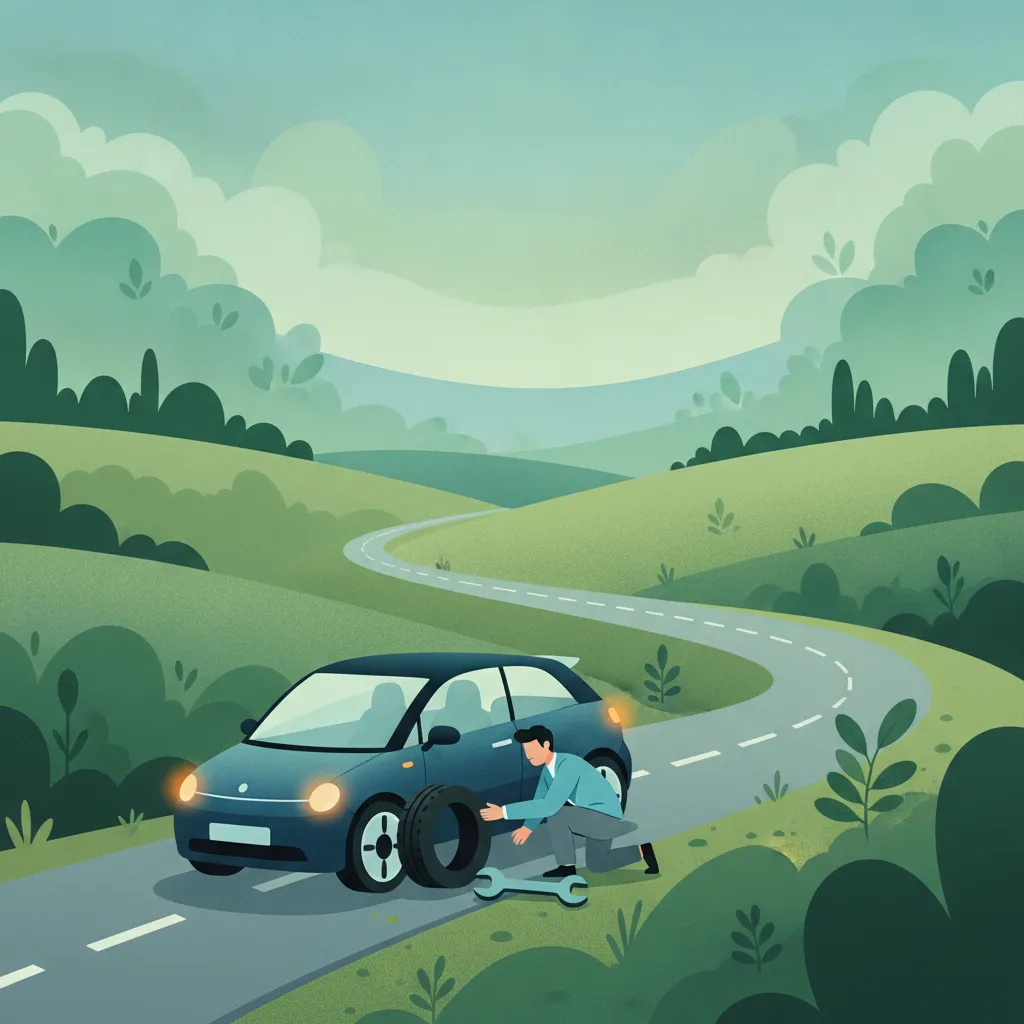
This lesson provides a clear, safety-oriented protocol for handling a vehicle breakdown or tyre failure. It covers how to safely maneuver the vehicle to the roadside, the correct use of hazard lights and warning triangles to alert other traffic, and procedures for contacting assistance. Adhering to these steps, as required by Danish law, is critical for protecting yourself and other road users from further incident.

Danish Heavy Vehicle Theory CFatigue, Legal Consequences, Breakdowns, Fire, Load Loss and Emergencies
View lesson

Calling 112 and Basic First Aid Theory

Learn the essential steps for calling Denmark's emergency number 112 and fundamental first aid techniques to use until professional help arrives. This knowledge is vital for stor knallert riders in critical situations.

112first aidemergency servicesroad safetyaccident procedures
First Aid Basics and Emergency Calls (112) lesson image

First Aid Basics and Emergency Calls (112)

This final lesson provides essential, life-saving information for accident response. It covers the basics of first aid, such as managing bleeding and checking for consciousness, which can be critical until professional help arrives. It also details how to provide clear, concise information to the emergency operator when calling 112.

Danish Motorcycle Theory AHuman Factors, Legal Consequences, Breakdowns, Crashes and First Response
View lesson
Emergency Procedures: Accidents, Breakdowns, and First Aid lesson image

Emergency Procedures: Accidents, Breakdowns, and First Aid

This lesson provides a clear action plan for handling emergencies on the road. It explains how to secure an accident scene using a warning triangle, when and how to call the emergency number 112, and the fundamentals of providing basic first aid. You will also learn the safe procedure for dealing with a vehicle breakdown to protect yourself and other road users.

Danish Driving Theory BBeginner Risks, Legal Consequences, and Emergencies
View lesson
First Aid and Emergency Reporting lesson image

First Aid and Emergency Reporting

This lesson provides an overview of essential first aid principles relevant to a transport environment. It covers how to assess a casualty, perform basic life support, and manage common injuries until professional help arrives. The content also details the correct procedure for contacting emergency services, providing clear and accurate information, and completing required incident reports.

Danish Passenger Transport Theory DBreakdowns, Fire, Passenger Incidents, Evacuation, First Aid and Emergencies
View lesson
Crash Scenarios, Prevention, and Immediate Response lesson image

Crash Scenarios, Prevention, and Immediate Response

This lesson prepares riders for the unfortunate event of a crash. It covers the crucial first steps to take, including ensuring personal safety, making the accident scene visible to prevent further collisions, and assessing for injuries. Understanding these immediate priorities can significantly impact the outcome of an emergency situation.

Danish Motorcycle Theory AHuman Factors, Legal Consequences, Breakdowns, Crashes and First Response
View lesson
Legal Implications of Accidents and Injuries lesson image

Legal Implications of Accidents and Injuries

This lesson outlines the legal responsibilities of a rider involved in a traffic accident. It explains the legal duty to stop, render aid, and report the incident to the police and insurance providers. The content covers the concepts of liability and the potential legal consequences following an accident.

Danish Driving Theory AMRisk Behaviour, Legal Consequences, Breakdowns and Emergencies
View lesson
Procedures for Load Loss, Fire, and Emergencies lesson image

Procedures for Load Loss, Fire, and Emergencies

This lesson prepares drivers for critical incidents, including vehicle fires, significant load loss, and traffic collisions. It explains fire prevention measures and the proper use of an on-board fire extinguisher. The content also outlines the legal and safety procedures for responding to an accident scene, including securing the area, reporting the incident to emergency services, and providing basic first aid if necessary.

Danish Heavy Vehicle Theory CFatigue, Legal Consequences, Breakdowns, Fire, Load Loss and Emergencies
View lesson

Frequently asked questions about Emergency Procedures and Contacting Authorities

Find clear answers to common questions learners have about Emergency Procedures and Contacting Authorities. Learn how the lesson is structured, which driving theory objectives it supports, and how it fits into the overall learning path of units and curriculum progression in Denmark. These explanations help you understand key concepts, lesson flow, and exam focused study goals.

When should I call 112 in the event of an accident?

You must call 112 if there are injuries, if the road is blocked, or if there is an immediate danger to other traffic. In the theory exam, always prioritize calling emergency services immediately if a person is hurt.

What information does the 112 operator need?

The operator needs to know exactly where you are, what has happened, if anyone is injured, and if there are immediate hazards like fire or fuel leaks. Provide clear, concise answers to help them dispatch the correct resources.

Do I have a legal obligation to stop at an accident scene?

Yes, in Denmark, you are legally required to stop and assist if you are involved in or witness an accident. Failing to render necessary help is a serious legal offense that could impact your licence status.

How do I secure an accident scene as a stor knallert rider?

Prioritize your own safety first by parking your vehicle off the road if possible. Use hazard lights if your vehicle has them, move to a safe location, and warn oncoming traffic by using hand signals or warning signs if safe to do so.

Ready to Find Your Next Targeted Danish Driving Theory Practice Set?

Use our powerful search tool to pinpoint specific Danish driving theory topics, road signs, or traffic situations you need to review. Start exploring relevant practice sets now to reinforce your knowledge and build confidence for your upcoming driving licence exam.

Search Practice Questions

Continue your Danish driving theory learning journey

Danish road signsDanish article topicsSearch Danish road signsDanish driving theory homeDanish road sign categoriesDanish driving theory topicsSearch Danish theory articlesDanish driving theory coursesDanish Driving Theory B courseDanish driving theory articlesDanish driving theory practiceDanish practice set categoriesDanish Driving Theory AM courseDanish Motorcycle Theory A courseDanish driving licence proceduresDanish Heavy Vehicle Theory C courseSearch Danish driving theory practiceDanish driving theory terminology A–ZDanish driving theory terms and glossaryDanish Passenger Transport Theory D courseCategory B Overview and Learner Responsibilities unit in Danish Driving Theory BDanish Traffic Culture and Road Sharing Principles unit in Danish Driving Theory BDanish Signs, Markings, Signals and Priority Rules unit in Danish Driving Theory AMAM in Denmark, Stor Knallert and First-Rider Responsibility unit in Danish Driving Theory AMMotorcycle Controls, Safety Checks and Protective Equipment unit in Danish Motorcycle Theory ADanish A1, A2 and A, Rider Responsibility and Motorcycle Risk unit in Danish Motorcycle Theory AMass, Dimensions, Axle Loads, Payload and Operating Limits unit in Danish Heavy Vehicle Theory CDanish C Categories, Heavy-Vehicle Responsibility and Professional Mindset unit in Danish Heavy Vehicle Theory CRisky Behaviours and Their Consequences lesson in Risk Behaviour, Legal Consequences, Breakdowns and EmergenciesDanish D Categories, Passenger Duty of Care and Professional Identity unit in Danish Passenger Transport Theory DPassenger Vehicle Checks, Dimensions, Doors, Mirrors and Safety Systems unit in Danish Passenger Transport Theory DLegal Implications of Accidents and Injuries lesson in Risk Behaviour, Legal Consequences, Breakdowns and EmergenciesManaging Breakdowns and Roadside Emergencies lesson in Risk Behaviour, Legal Consequences, Breakdowns and EmergenciesEmergency Procedures and Contacting Authorities lesson in Risk Behaviour, Legal Consequences, Breakdowns and Emergencies