
This lesson provides a critical action plan for managing road emergencies, including breakdowns and accident scenarios in Denmark. You will learn the correct legal procedures for securing a scene and when to contact 112, ensuring you are prepared for both the theory exam and real-world safety challenges. This concludes our preparation, equipping you with the final essential skills for responsible Category B driving.
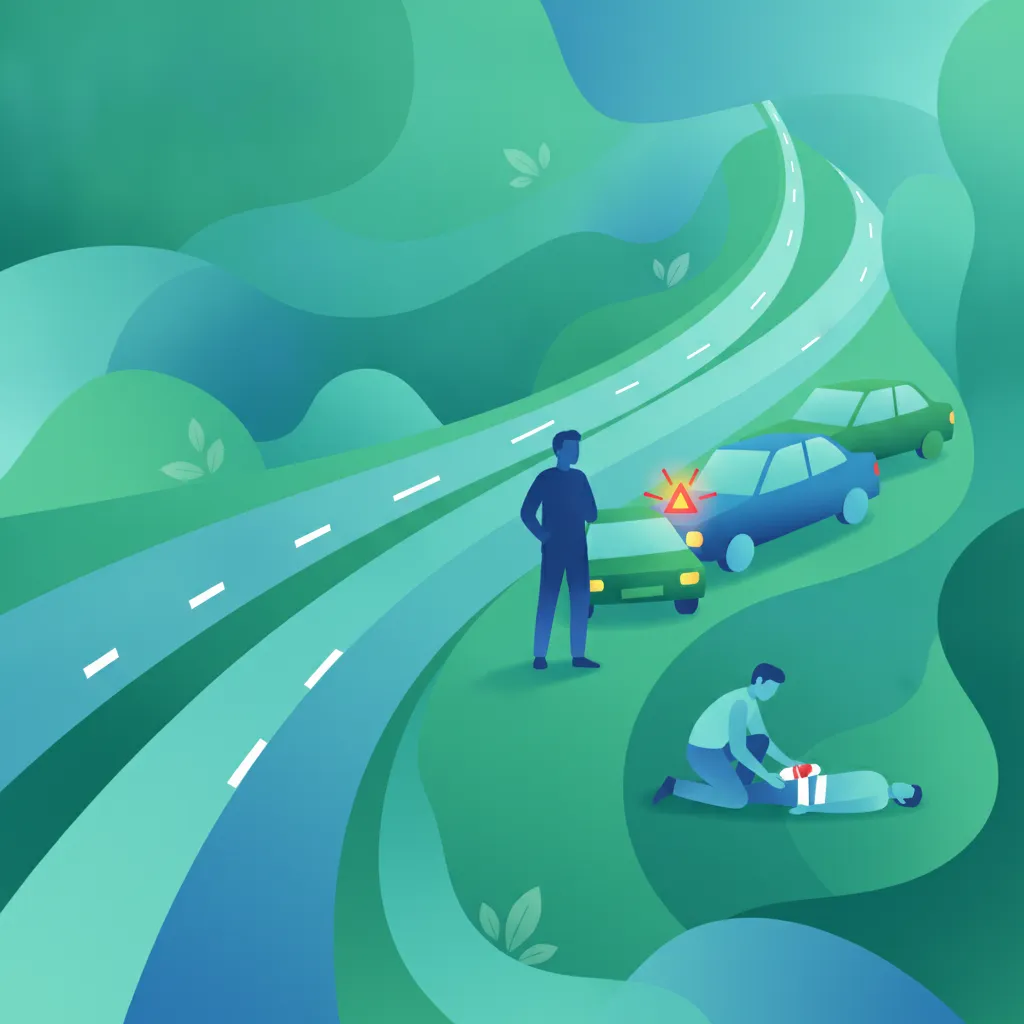
Lesson content overview
Navigating the roads as a Category B driver in Denmark requires not only an understanding of traffic rules but also the preparedness to handle unforeseen emergencies. This lesson in your Danish Driving License Theory Course is crucial for equipping you with the knowledge and practical steps needed to respond safely and effectively to accidents, vehicle breakdowns, and situations requiring immediate first aid. Your ability to react calmly and correctly in these high-stress scenarios can prevent further harm, save lives, and fulfill your legal obligations as a road user.
Understanding emergency procedures is paramount for ensuring the safety of yourself, your passengers, other road users, and any victims involved. Prompt and accurate actions can significantly reduce the risk of secondary incidents, mitigate injuries, and facilitate efficient rescue operations. This comprehensive guide will walk you through the essential protocols for handling various roadside emergencies, from securing an accident scene to providing basic first aid and managing a vehicle breakdown safely.
In Denmark, all drivers have clear legal and moral duties when encountering or being involved in a road incident. The primary obligation is to render assistance and ensure the safety of others. Failing to stop and assist after an accident, commonly known as a hit-and-run, carries severe penalties under Danish traffic law.
If you are involved in an accident, or are one of the first to arrive at the scene of an accident where people are injured or there is significant damage, you are legally required to stop. Your duty extends to assessing the situation, offering help to the injured, and contacting emergency services if necessary. This responsibility is fundamental to maintaining road safety and reflects a core societal value of mutual aid.
Failing to stop, render assistance, and report an accident causing injury or significant damage is a serious criminal offense in Denmark, leading to severe penalties including fines, license points, or even imprisonment.
After an accident or breakdown, the immediate priority is to secure the scene to prevent further collisions and protect those involved. This involves making your stationary vehicle as visible as possible and warning approaching traffic.
Also known as emergency lights, these are the vehicle's turn indicators that flash simultaneously, signaling to other road users that your vehicle is stopped and may pose a hazard.
Upon stopping due to an emergency or breakdown, the first action you should take is to activate your vehicle's hazard warning lights (havarianlæg). These lights significantly increase the visibility of your stationary vehicle, especially in low light conditions, poor weather, or on high-speed roads. They alert other drivers to a potential danger ahead, giving them more time to react and adjust their speed or lane position. Remember that hazard lights should only be used when your vehicle is stationary and presenting a hazard, not while driving.
A reflective, orange triangular sign that drivers must carry in their vehicle and place on the road behind a stationary vehicle to warn approaching traffic of a hazard.
The warning triangle (advarselstrekant) is a critical safety device that must be carried in all vehicles in Denmark. Its correct placement is vital for preventing secondary accidents. The distance at which you place the warning triangle behind your vehicle depends on the prevailing speed limit of the road. The purpose is to give approaching drivers sufficient time to see the warning and react safely.
Roads with a speed limit below 50 km/h: Place the warning triangle approximately 30 meters behind your vehicle.
Roads with a speed limit between 50 km/h and 80 km/h: Place the warning triangle approximately 100 meters behind your vehicle.
Roads with a speed limit of 80 km/h or more (e.g., motorways, rural main roads): Place the warning triangle approximately 150 meters behind your vehicle.
When placing the warning triangle, ensure your own safety. Hold the triangle facing oncoming traffic as you walk back to the correct distance. Place it firmly on the road so it is clearly visible and stable. In poor visibility conditions (fog, heavy rain, snow, or darkness), the warning triangle becomes even more crucial, and you should consider placing it at the maximum legal distance if possible, to provide the longest possible warning.
In any serious emergency involving injuries, a dangerous situation (e.g., fire, spilled hazardous materials), or when police involvement is required, your next critical step after securing the scene is to contact the emergency services.
In Denmark, as across the European Union, the emergency telephone number is 112. This single number connects you to the police, fire department, and ambulance services. It is crucial to call 112 immediately if there are injuries, if the situation poses a significant danger, or if the accident causes substantial damage requiring official reporting.
When you call 112, remain calm and speak clearly. The emergency operator will need precise information to dispatch the appropriate services quickly.
Your Exact Location: Provide as precise a location as possible. This could be a street name and number, motorway number and direction, kilometer marker, or distinctive landmarks. Modern phones often provide GPS coordinates which you can relay if unsure.
Nature of the Incident: Clearly describe what has happened (e.g., "car accident," "vehicle breakdown with injuries," "car on fire").
Number of Vehicles Involved: State how many vehicles are part of the incident.
Number of Injured Persons: Report how many people appear to be injured and, if possible, the apparent severity of their injuries (e.g., "one person unconscious," "two people with minor cuts").
Any Immediate Dangers: Mention any additional hazards, such as fire, smoke, spilled fuel, or the presence of vulnerable road users.
Stay on the line until the operator tells you to hang up, as they may need more information or to provide instructions for immediate actions.
As a driver, you have a legal and moral obligation to provide basic first aid to the best of your ability at an accident scene if safe to do so. Even simple measures can significantly improve an injured person's chances of survival and recovery before professional medical help arrives.
Before approaching any injured person, always ensure your own safety and the safety of other potential rescuers. Do not put yourself in danger.
Severe bleeding is a life-threatening condition that you can often manage effectively with basic first aid.
A safe side-lying position designed to keep an unconscious person's airway open and prevent them from choking on their tongue or vomit.
If a victim is unconscious but breathing, and there is no suspicion of spinal injury, placing them in the recovery position is crucial. This position helps to keep their airway clear.
Kneel beside the person.
Straighten their legs.
Place the arm nearest to you at a right angle to their body, palm facing upwards.
Bring the arm farthest from you across their chest and hold the back of their hand against their cheek nearest to you.
With your other hand, grasp the leg farthest from you just above the knee.
Pull the leg up, keeping their foot on the ground.
Carefully roll the person towards you onto their side.
Adjust the upper leg so that both hip and knee are bent at right angles.
Tilt their head back to ensure the airway remains open.
Check their breathing regularly.
Even without an accident, a vehicle breakdown can create a dangerous situation on the road. Knowing the correct procedure can protect you, your passengers, and other road users.
If your vehicle breaks down and cannot continue moving, your first priority is to move it to the safest possible location.
Once safely stopped, make your vehicle visible to prevent collisions.
After securing the scene, you can address the breakdown itself.
Emergency procedures must be adapted to the prevailing conditions. Road type, weather, and visibility significantly impact the risk level and the effectiveness of your safety measures.
Every action taken in an emergency — from activating hazard lights to correctly placing a warning triangle and providing clear information to 112 — is aimed at preventing secondary accidents. These subsequent collisions often occur because approaching drivers are unaware of the initial hazard.
By making your presence known, giving other drivers ample warning, and ensuring the safety of those involved, you significantly reduce the likelihood of a chain reaction crash. This proactive approach not only complies with Danish law but also embodies responsible and defensive driving principles, protecting everyone on the road.
Being prepared for emergencies is an indispensable part of being a responsible driver in Denmark. The knowledge gained from this Category B preparation lesson will equip you to handle challenging situations with confidence and competence.
These procedures are not merely rules; they are life-saving protocols designed to protect you and your fellow road users. Mastering them is a fundamental step in becoming a safe and responsible driver.
This lesson covers the critical emergency procedures required for Danish Category B drivers, including securing accident scenes with hazard lights and warning triangles placed at legally specified distances, calling emergency services (112) with precise location and incident details, and providing basic first aid including the recovery position for unconscious breathing victims. Breakdown procedures emphasize safely pulling over, proper signaling, and seeking assistance without risking personal safety. The lesson stresses that proper scene securing prevents secondary accidents and that legal duties to stop and assist apply whenever injury or significant damage occurs.
A short set of high-value points that capture the most important learning from this lesson.
Danish drivers have a legal obligation to stop, render assistance, and report accidents involving injury or significant damage under threat of criminal penalties.
Warning triangle placement distance depends on road speed limit: 30m below 50 km/h, 100m between 50-80 km/h, and 150m on roads 80 km/h or more.
When calling 112, provide exact location, incident type, number of vehicles and injured persons, and any immediate dangers like fire or fuel spills.
The recovery position keeps an unconscious but breathing person's airway open and prevents choking when spinal injury is not suspected.
On motorways, exit the vehicle and wait behind safety barriers if possible, never standing directly in front of or behind the vehicle.
Explore all units and lessons included in this driving theory course.
Hazard warning lights (havarianlæg) must be activated immediately upon stopping due to emergency or breakdown.
Hold the warning triangle facing oncoming traffic when walking back to place it, and ensure it is stable on the road surface.
Never give food or drink to an injured person, especially if unconscious or in shock.
On motorways (motorvej), always place the warning triangle 150 meters behind the vehicle.
Only move a victim with suspected spinal injury if they are in immediate danger such as fire.
Placing the warning triangle at incorrect distances, such as using 30 meters on a motorway where 150 meters is required.
Failing to provide specific location information when calling 112, such as motorway number, direction, or kilometer marker.
Attempting to move an unconscious victim without checking for spinal injury first, potentially causing further harm.
Using hazard warning lights while driving instead of only when stationary, which is illegal and misleading to other road users.
Not activating hazard lights before exiting the vehicle to set up the warning triangle, leaving the scene unsecured momentarily.
Lesson content overview
A short set of high-value points that capture the most important learning from this lesson.
Danish drivers have a legal obligation to stop, render assistance, and report accidents involving injury or significant damage under threat of criminal penalties.
Warning triangle placement distance depends on road speed limit: 30m below 50 km/h, 100m between 50-80 km/h, and 150m on roads 80 km/h or more.
When calling 112, provide exact location, incident type, number of vehicles and injured persons, and any immediate dangers like fire or fuel spills.
The recovery position keeps an unconscious but breathing person's airway open and prevents choking when spinal injury is not suspected.
On motorways, exit the vehicle and wait behind safety barriers if possible, never standing directly in front of or behind the vehicle.
Explore all units and lessons included in this driving theory course.
Hazard warning lights (havarianlæg) must be activated immediately upon stopping due to emergency or breakdown.
Hold the warning triangle facing oncoming traffic when walking back to place it, and ensure it is stable on the road surface.
Never give food or drink to an injured person, especially if unconscious or in shock.
On motorways (motorvej), always place the warning triangle 150 meters behind the vehicle.
Only move a victim with suspected spinal injury if they are in immediate danger such as fire.
Placing the warning triangle at incorrect distances, such as using 30 meters on a motorway where 150 meters is required.
Failing to provide specific location information when calling 112, such as motorway number, direction, or kilometer marker.
Attempting to move an unconscious victim without checking for spinal injury first, potentially causing further harm.
Using hazard warning lights while driving instead of only when stationary, which is illegal and misleading to other road users.
Not activating hazard lights before exiting the vehicle to set up the warning triangle, leaving the scene unsecured momentarily.
Explore search topics learners often look for when studying Emergency Procedures: Accidents, Breakdowns, and First Aid. These topics reflect common questions about road rules, driving situations, safety guidance, and lesson level theory preparation for learners in Denmark.
Browse additional driving theory lessons that cover connected traffic rules, road signs, and common driving situations related to this topic. Improve your understanding of how different rules interact across everyday traffic scenarios.
Understand how weather, road type, and visibility affect emergency procedures for accidents and breakdowns. Learn to adapt your response for safety in diverse Danish driving environments.
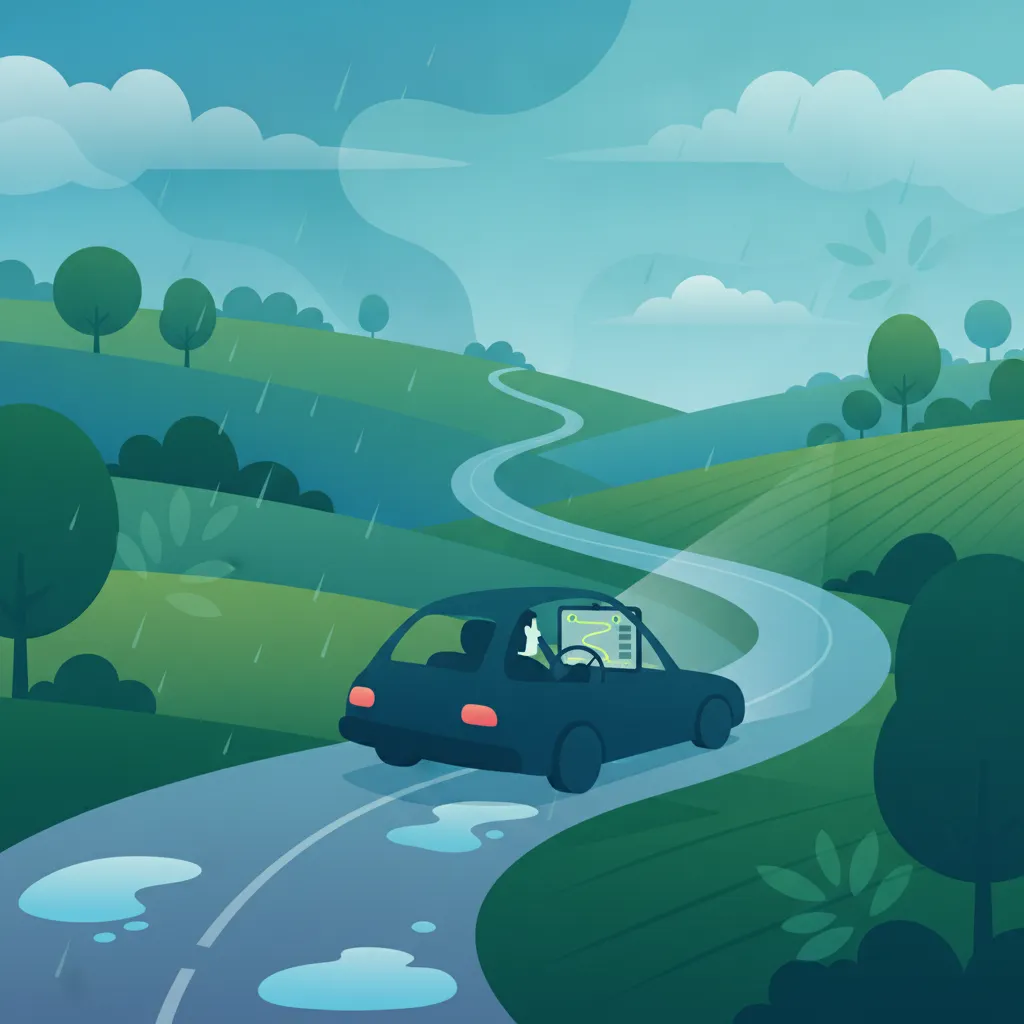
This lesson addresses the combined challenges of navigating narrow rural roads and driving in adverse weather. It explains how to adapt speed and braking techniques for conditions like heavy rain, fog, or ice, which are common on rural routes. The content also integrates these factors into route planning, teaching drivers how to select the safest and most appropriate path while avoiding local weight or height restrictions.

This lesson equips you with the knowledge to drive safely in challenging weather conditions. It explains the risk of aquaplaning in heavy rain, how to counteract strong crosswinds, and the correct use of lights in darkness and fog. The core principle is adapting your speed and increasing your following distance to compensate for reduced visibility and traction.

This lesson prepares riders for the specific hazards of rural roads, which often have less visibility and more unpredictable surfaces. It covers strategies for approaching blind curves, safely passing agricultural machinery, and being vigilant for animals on the road. Adjusting speed to match visibility is a core principle.
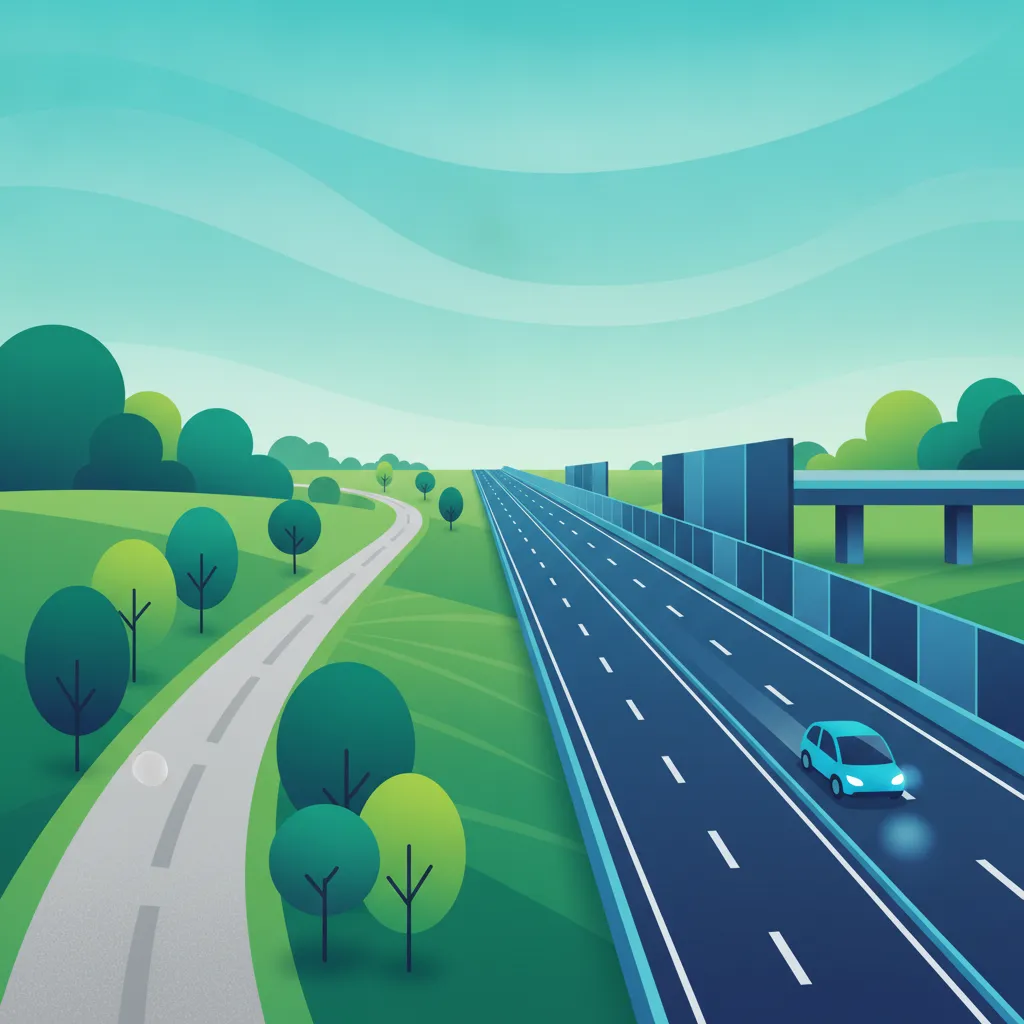
This lesson contrasts the driving techniques required for rural roads and motorways. It covers managing speed on narrow, winding lanes with potential hazards like farm machinery or animals. The content also explains the principles of safe motorway driving, including maintaining lane discipline, managing high-speed stability, and executing safe overtaking maneuvers.
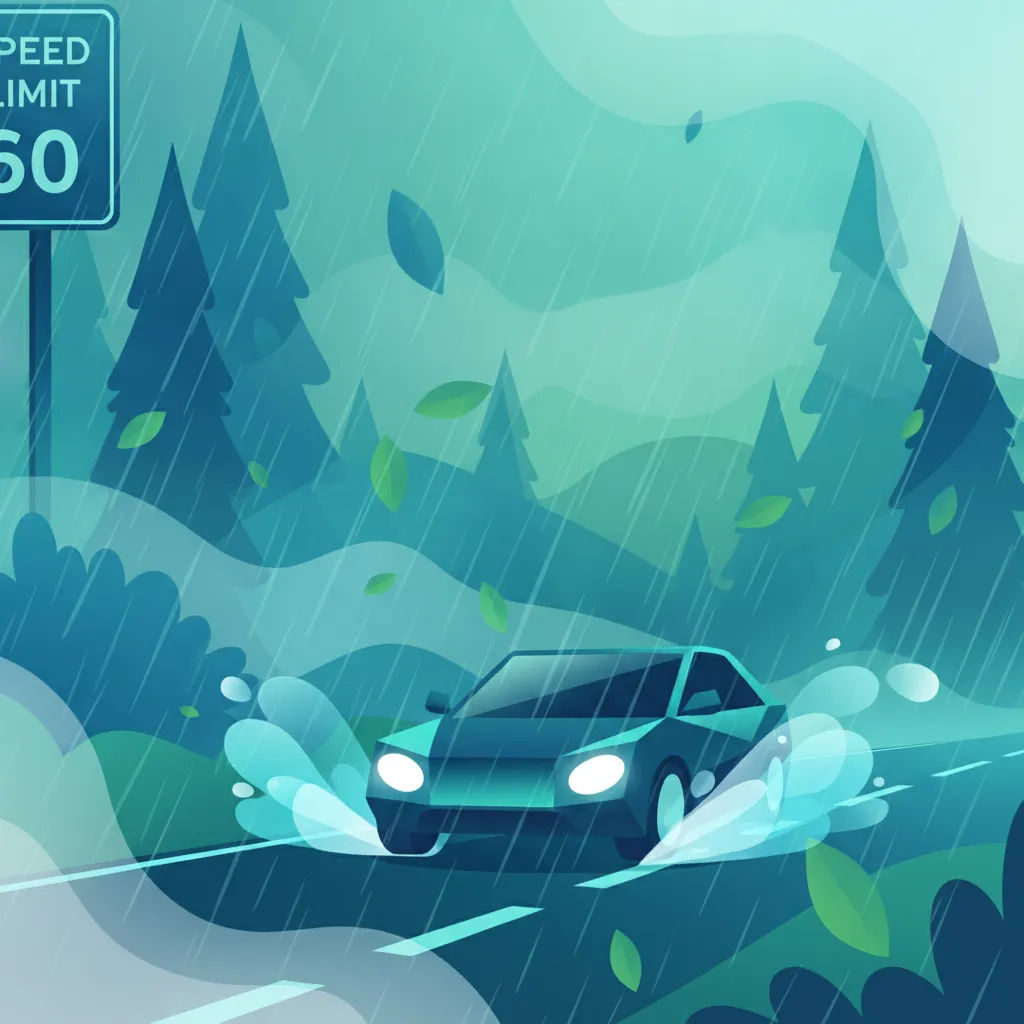
This lesson explains how to adjust driving techniques for adverse conditions. It covers the effects of rain, snow, ice, and fog on tire grip and visibility, emphasizing the need to increase following distances and reduce speed. The content also details the correct use of lights for night driving and in poor weather to ensure the bus is visible to others.

This lesson covers the core principles of defensive driving in an urban context. It teaches drivers how to anticipate the actions of other road users, maintain safe following distances in dense traffic, and navigate complex intersections with multiple signals. The content emphasizes heightened awareness of pedestrians, cyclists, and unexpected events common in Danish city environments.

This lesson teaches the importance of adapting your speed to prevailing conditions, rather than simply adhering to the posted limit. It explains how factors like traffic density, road surface quality, visibility, and adverse weather should influence your speed choice. Developing this risk-aware approach is crucial for maintaining vehicle control and ensuring safety in all driving environments.
This lesson introduces cooperative driving as a fundamental element of road safety in Denmark. It highlights the social responsibility of drivers to act predictably, anticipate the actions of others, and maintain courteous interactions with all road users. By fostering mutual respect and cooperation, you will learn how to reduce the potential for conflict and enhance overall traffic safety.
This lesson covers the correct techniques for various turning manoeuvres, including how to signal, position your vehicle, and judge gaps in traffic. It also details the legal and safety protocols for overtaking, emphasizing the importance of assessing speed, distance, and oncoming traffic. A thorough understanding of these procedures is crucial for navigating intersections and two-lane roads safely.
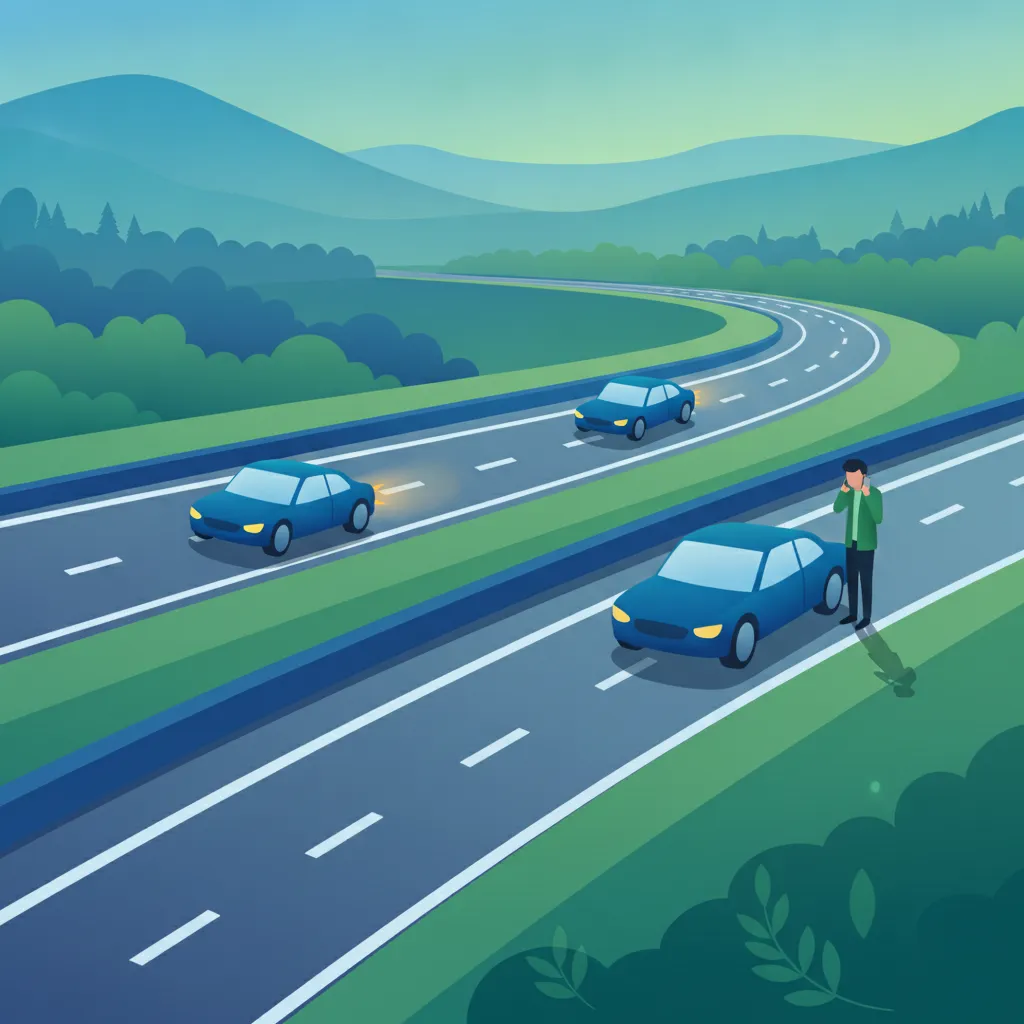
This lesson covers the immediate actions to take at the scene of an accident. It explains how and when to call the Danish emergency number 112, and what information to provide to the operator. The content also includes the principles of securing an accident scene to prevent further incidents and basic first aid concepts.
Learn essential procedures for road accidents, vehicle breakdowns, and basic first aid. Understand your legal obligations and how to secure a scene, call 112, and assist the injured in Denmark.
This lesson covers the immediate actions to take at the scene of an accident. It explains how and when to call the Danish emergency number 112, and what information to provide to the operator. The content also includes the principles of securing an accident scene to prevent further incidents and basic first aid concepts.
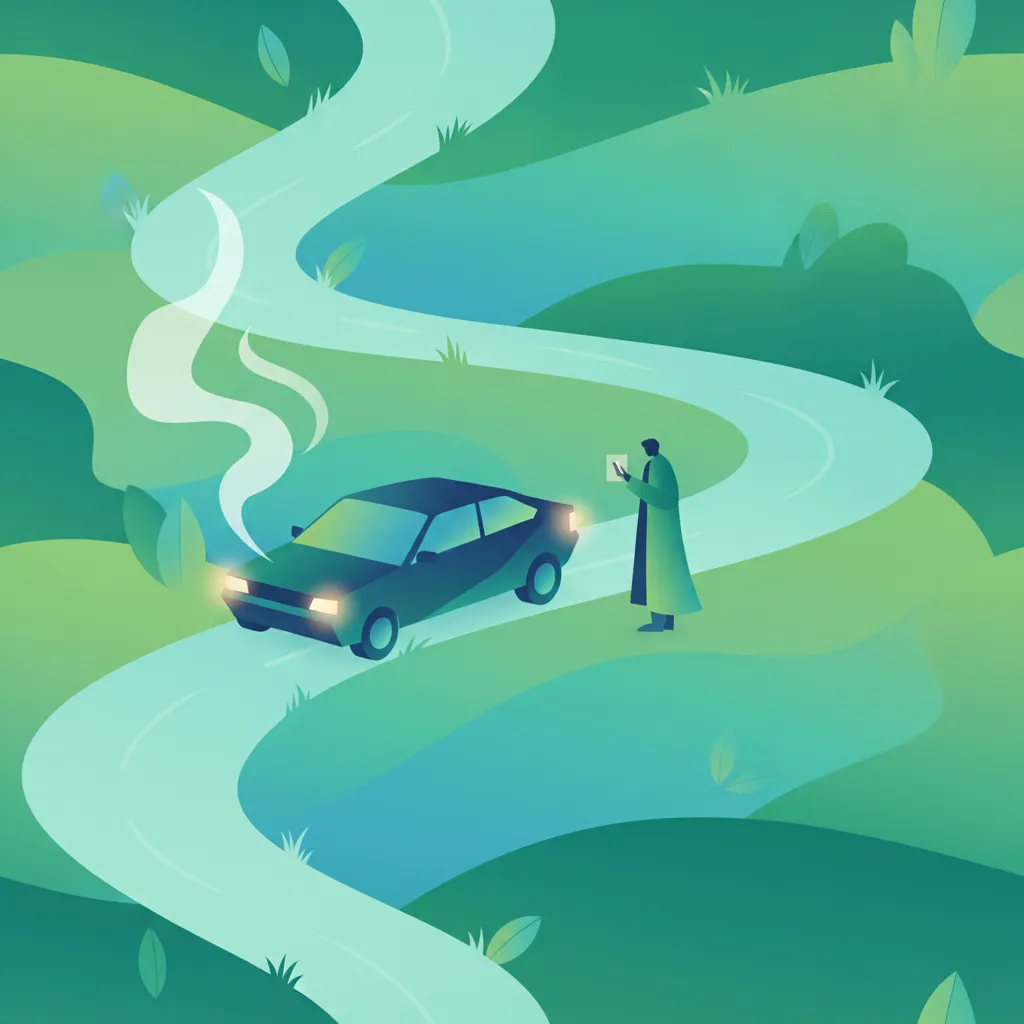
This lesson provides a step-by-step guide for handling a vehicle breakdown on the road. It covers how to safely move the vehicle, secure the scene with warning devices, and notify the company and authorities. The content also details fire prevention measures and the correct procedure for using an on-board fire extinguisher for different types of fires.
This lesson provides an overview of essential first aid principles relevant to a transport environment. It covers how to assess a casualty, perform basic life support, and manage common injuries until professional help arrives. The content also details the correct procedure for contacting emergency services, providing clear and accurate information, and completing required incident reports.

This final lesson provides essential, life-saving information for accident response. It covers the basics of first aid, such as managing bleeding and checking for consciousness, which can be critical until professional help arrives. It also details how to provide clear, concise information to the emergency operator when calling 112.
This lesson provides a clear, safety-oriented protocol for handling a vehicle breakdown or tyre failure. It covers how to safely maneuver the vehicle to the roadside, the correct use of hazard lights and warning triangles to alert other traffic, and procedures for contacting assistance. Adhering to these steps, as required by Danish law, is critical for protecting yourself and other road users from further incident.
This lesson prepares drivers for critical incidents, including vehicle fires, significant load loss, and traffic collisions. It explains fire prevention measures and the proper use of an on-board fire extinguisher. The content also outlines the legal and safety procedures for responding to an accident scene, including securing the area, reporting the incident to emergency services, and providing basic first aid if necessary.
This lesson provides a step-by-step guide for managing a vehicle breakdown safely. It instructs the rider on moving the vehicle to a safe location, making it visible to other traffic using hazard lights, and personal safety while waiting for assistance. The importance of staying away from active traffic lanes is a key point.

This lesson outlines a step-by-step procedure for managing a mechanical breakdown on the road. It covers moving the motorcycle to a safe location, using hazard lights, and wearing high-visibility clothing. The goal is to ensure personal safety while minimizing disruption and danger to other traffic.
This lesson prepares riders for the unfortunate event of a crash. It covers the crucial first steps to take, including ensuring personal safety, making the accident scene visible to prevent further collisions, and assessing for injuries. Understanding these immediate priorities can significantly impact the outcome of an emergency situation.
This lesson introduces the essential principles of defensive driving, shifting the focus from reacting to hazards to proactively anticipating them. You will learn techniques for systematic scanning of the driving environment, maintaining a safety cushion around your vehicle, and identifying potential risks before they develop. These proactive strategies are fundamental to becoming a safer, more confident driver.
Find clear answers to common questions learners have about Emergency Procedures: Accidents, Breakdowns, and First Aid. Learn how the lesson is structured, which driving theory objectives it supports, and how it fits into the overall learning path of units and curriculum progression in Denmark. These explanations help you understand key concepts, lesson flow, and exam focused study goals.
In Denmark, the warning triangle must be placed far enough away to give other drivers adequate time to react. On motorways, it is typically placed at least 100 meters behind the vehicle; on other roads, a distance of 50 meters is usually expected.
Yes, if you are involved in or encounter an accident, you have a legal obligation to stop, assist those in need, and provide your details. Failure to do so can result in serious legal consequences.
State clearly where the accident is located, what happened, and if there are any injuries. Stay calm, speak clearly, and do not hang up until the operator tells you to do so.
If your vehicle is broken down and poses a hazard, you must switch on your hazard lights immediately to warn other drivers, especially in poor visibility or at night.
Use our powerful search tool to pinpoint specific Danish driving theory topics, road signs, or traffic situations you need to review. Start exploring relevant practice sets now to reinforce your knowledge and build confidence for your upcoming driving licence exam.