
This lesson details the critical safety procedures required when facing a vehicle breakdown or tyre failure while operating a heavy vehicle. Mastering these protocols is essential for your Category C theory exam and ensures you can protect yourself, your load, and other road users in emergency situations.
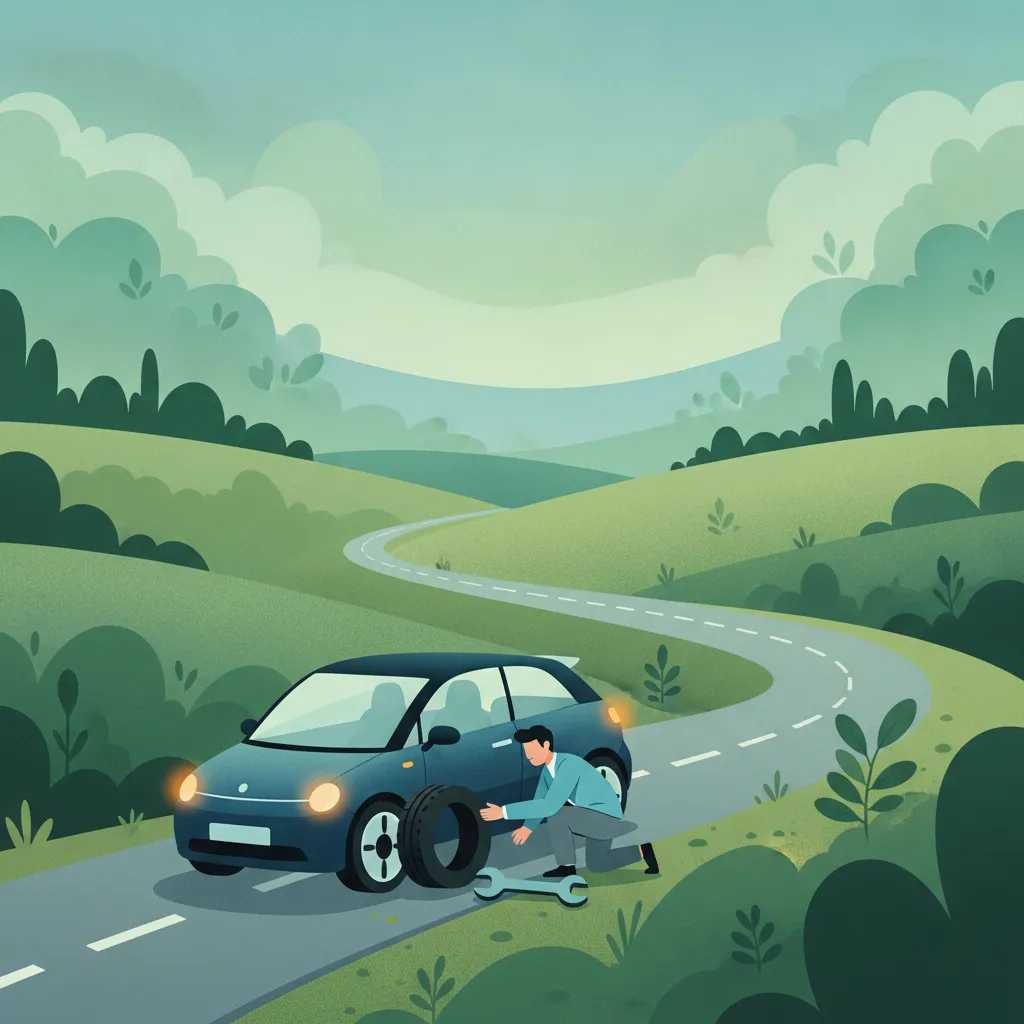
Lesson content overview
Encountering a vehicle breakdown or a sudden tyre failure can be a stressful and hazardous situation for any driver, but especially for operators of heavy goods vehicles (HGVs). Given their size, weight, and the nature of the cargo they transport, breakdowns involving Category C vehicles pose a significantly greater risk to the driver, other road users, and the environment. This lesson, part of your Complete Danish Heavy Vehicle Theory Course for Category C License, provides a detailed, safety-oriented protocol for managing such incidents, ensuring compliance with Danish law and prioritising road safety.
A breakdown refers to any situation where your vehicle becomes inoperable due to a mechanical fault or a tyre failure, preventing it from continuing normal operation. These events can occur unexpectedly and demand immediate, decisive action to mitigate hazards. The principles outlined here are crucial for preventing secondary accidents, maintaining traffic flow, and fulfilling your legal obligations as a professional driver in Denmark.
Vehicle breakdowns and tyre failures present significant dangers. A heavy goods vehicle stopped unexpectedly on the carriageway or shoulder can become a major obstruction, reducing visibility for other drivers and increasing the risk of rear-end collisions, especially given the longer stopping distances required by other large vehicles.
As a Category C licence holder, you bear the primary responsibility for assessing the situation rapidly and taking immediate action to minimise risk. This includes ensuring your own safety, the safety of any passengers, and the safety of other road users. Correctly utilising hazard warning signals and knowing how to communicate with assistance services are fundamental aspects of this responsibility.
The core principles for managing a breakdown include:
When a breakdown or tyre failure occurs, your immediate actions are critical in preventing a minor incident from escalating into a serious accident. The sequence of actions should be swift, deliberate, and focused on safety.
The moment you become aware of a breakdown or tyre failure, your first priority is to bring your heavy goods vehicle to a safe halt. This process, known as immediate safe stopping, involves assessing road conditions, traffic density, and visibility to choose the most secure stopping point without causing further danger.
Signal Your Intentions: Use your indicators to signal your intention to move to the side of the road, giving ample warning to other drivers, especially important given the length and weight of a Category C vehicle.
Gradually Reduce Speed: Avoid sudden braking if possible. Decelerate smoothly while steering towards the safest available stopping location.
Identify the Safest Stopping Point:
On Motorways: Always aim for the hard shoulder (nødspor). This dedicated lane provides a buffer between your vehicle and fast-moving traffic. Do not stop in a live lane of traffic unless absolutely unavoidable due to an immediate danger.
On Rural Roads: Look for wide road shoulders, lay-bys (rastepladser), or minor side roads where your vehicle can be parked completely off the main carriageway.
In Urban Areas: Seek out legal parking spaces, quieter side streets, or areas where your vehicle will not obstruct traffic or pedestrian flow. Avoid stopping on blind corners, crests of hills, or narrow stretches where your large vehicle could create a severe obstruction.
Stop Completely Off the Carriageway: Ensure that your heavy vehicle, including any trailer, is fully clear of the traffic lane. Even a slight protrusion can be highly dangerous.
A common mistake is continuing to drive with a faulty tyre, which can lead to complete loss of control, further vehicle damage, or even a fire. Another error is stopping too abruptly or remaining partially in a travel lane, which directly exposes your vehicle to collision risks.
Immediately after bringing your vehicle to a safe stop, the next critical step is to activate your hazard warning lights (also known as warning flashers or katastrofeblink in Danish). These are the vehicle's built-in signalling system that activate all turn indicators simultaneously, flashing front and rear, to warn other road users of your vehicle's impaired or stationary status.
The use of hazard warning lights is mandatory when your vehicle is stopped on the carriageway or shoulder due due to a breakdown or tyre failure. This immediate visual warning is vital, especially for heavy goods vehicles, which can be less agile to react to and pose a greater impact risk. They alert approaching traffic to exercise caution and adjust their speed or lane position well in advance. While some modern vehicles may activate hazard lights automatically during emergency braking, you must manually ensure they are on after stopping.
Forgetting to activate hazard lights or using them only after a significant delay is a serious oversight that dramatically increases the risk of a rear-end collision, especially on fast-moving roads like motorways.
Beyond hazard warning lights, you must deploy a warning triangle (advarselstrekant) to provide advanced warning to oncoming traffic. This reflective device is a legally required piece of safety equipment in all vehicles in Denmark, including heavy goods vehicles. Its correct placement is crucial for ensuring other drivers have sufficient time to react to your stationary vehicle.
Locate Your Warning Triangle: Ensure your warning triangle is easily accessible within the cab.
Prioritise Personal Safety: Before exiting your vehicle, put on a high-visibility vest if you have one. Assess the traffic situation and only exit when it is safe to do so. Walk to the rear of your vehicle, facing oncoming traffic.
Maintain Safe Distance: Place the warning triangle on the road surface, ensuring it is visible to approaching traffic. The legally mandated distances in Denmark are:
On motorways (motorveje): The warning triangle must be placed at least 30 meters behind your heavy vehicle.
On other roads (andre veje): The warning triangle must be placed at least 20 meters behind your heavy vehicle.
In situations of poor visibility (e.g., fog, heavy rain, snow, or at night), it is advisable to place the warning triangle at an even greater distance than the minimum requirement to compensate for reduced sight lines.
Correct Orientation: The triangle must be placed directly on the carriageway, not on the pavement or verge, and oriented so that its reflective surface directly faces oncoming traffic.
Common errors include placing the triangle too close to the vehicle, rendering it ineffective, or forgetting to deploy it entirely. Placing it on the pavement also reduces its visibility and may not fulfil the legal requirement.
Once your heavy vehicle is safely stopped and marked, your next step is to contact assistance. This involves clearly communicating your situation and location to the appropriate service.
Assess the Severity: Determine if the situation poses an immediate and severe danger (e.g., vehicle completely blocking a lane on a motorway, risk of explosion or fire).
Contact Police (112) for Immediate Danger: If your vehicle presents an immediate and significant hazard to other road users, or if there is an accident, injury, or fire, immediately call the police (national emergency number 112 in Denmark). They can secure the scene, divert traffic, and coordinate further emergency response.
Contact Roadside Assistance: For standard breakdowns or tyre failures that do not pose an immediate extreme danger, contact your roadside assistance provider. This could be your insurance company, a vehicle manufacturer's service, or a dedicated roadside assistance organisation.
Provide Precise Location Details: When contacting assistance, be prepared to provide:
Your exact location (e.g., nearest motorway exit number, road name, kilometre marker, street address, or GPS coordinates).
The direction of travel (e.g., "northbound E45").
A clear description of the vehicle (e.g., "blue Category C lorry with a trailer") and the nature of the problem (e.g., "rear-left tyre blowout," "engine completely stopped").
Details of any cargo, especially if it is hazardous.
Remain in a Safe Location: After contacting assistance, stay with your vehicle, but position yourself in the safest possible spot. On motorways, this means behind a barrier if available, and away from the flow of traffic. Do not attempt to walk along the carriageway or abandon your vehicle unless explicitly instructed to do so by emergency personnel or if staying with it becomes unsafe.
Failing to provide exact location details can cause significant delays in assistance reaching you, prolonging the hazardous situation.
Compliance with Danish road traffic regulations (Færdselsloven) during a breakdown is not only crucial for safety but also a legal requirement for all drivers, particularly Category C licence holders. Failure to adhere to these rules can result in significant legal penalties.
The Danish Road Traffic Act mandates specific actions from drivers in the event of a breakdown or tyre failure:
Failure to comply with these regulations can lead to fines and potential liability in the event of a secondary accident. Penalties are typically imposed for:
Understanding these legal obligations and their consequences underscores the importance of a professional and responsible approach to breakdown management.
While the core principles of breakdown management remain consistent, the specific actions you take must be adapted to the prevailing conditions. Heavy vehicle drivers, due to the nature of their vehicles, must be particularly diligent in these situations.
The procedures and regulations for managing breakdowns and tyre failures are founded on fundamental safety principles:
In summary, responding to a breakdown or tyre failure in a heavy goods vehicle demands a structured and disciplined approach. Upon experiencing such an event, you must first bring your vehicle to a halt in the safest possible location, signalling your intentions clearly. Immediately activate your hazard warning lights to alert surrounding traffic. Subsequently, deploy your warning triangle at the legally stipulated distance – at least 30 meters behind your vehicle on motorways and 20 meters on other roads – ensuring it is correctly positioned on the carriageway, facing oncoming traffic. After securing the scene, contact the appropriate assistance service, whether it be roadside assistance or the police for more severe hazards, providing precise location details. Throughout the incident, you must remain with your vehicle in a safe location until help arrives, always adhering to the specific requirements of the Danish Road Traffic Act. Adapting these steps to specific road types, weather conditions, and the unique characteristics of your heavy vehicle is paramount for protecting yourself and other road users from further incident.
This lesson teaches Category C drivers the critical safety procedures for managing breakdowns and tyre failures on Danish roads, covering safe maneuvering to the roadside, immediate activation of hazard lights, and correct warning triangle deployment at legally mandated distances of 30 meters on motorways and 20 meters on other roads. Drivers must contact appropriate assistance services—112 for immediate danger or police-required situations, roadside assistance for standard breakdowns—providing exact location, direction of travel, vehicle description, and cargo details. Legal obligations under Danish road traffic law require proper signalling, signage, and remaining with the vehicle until assistance arrives, with specific penalties for non-compliance including fines and liability for secondary accidents. The procedures must be adapted based on road type, weather conditions, and the unique handling characteristics of heavy goods vehicles, always prioritising visibility and providing following traffic with sufficient reaction time.
A short set of high-value points that capture the most important learning from this lesson.
When a breakdown occurs, immediately signal your intention to move off the road and decelerate smoothly before stopping in the safest available location.
Hazard warning lights must be activated immediately upon stopping to warn other road users of your stationary vehicle.
Deploy the warning triangle at least 30 meters behind your vehicle on motorways and 20 meters on other roads, placed directly on the carriageway facing oncoming traffic.
Contact police (112) for immediate danger or obstruction; contact roadside assistance for standard breakdowns while providing precise location and vehicle details.
Always remain with your vehicle in a safe location until help arrives, positioning yourself behind barriers away from traffic flow.
Explore all units and lessons included in this driving theory course.
The legally mandated warning triangle distances are 30m on motorways and 20m on other roads, with greater distances advisable in poor visibility.
The hard shoulder on Danish motorways is called nødspor and is always the primary stopping location for breakdowns.
Personal safety comes first—put on a high-visibility vest and assess traffic before exiting the vehicle to deploy the warning triangle.
Load loss from unsecured cargo creates additional hazards requiring immediate police contact (112).
Under Færdselsloven, failing to use hazard lights or deploy the warning triangle correctly can result in fines and legal liability.
Forgetting to activate hazard warning lights or activating them only after a significant delay, dramatically increasing rear-end collision risk.
Placing the warning triangle too close to the vehicle (under the legal minimum distances), making it ineffective for giving approaching traffic adequate reaction time.
Stopping in unsafe locations such as live lanes, blind corners, or narrow stretches instead of seeking the hard shoulder, lay-by, or wider shoulder.
Not providing precise location details when contacting assistance, causing delays in help reaching you and prolonging the hazardous situation.
Continuing to drive with a faulty tyre rather than executing safe immediate stopping, which can lead to complete loss of control or fire.
Lesson content overview
A short set of high-value points that capture the most important learning from this lesson.
When a breakdown occurs, immediately signal your intention to move off the road and decelerate smoothly before stopping in the safest available location.
Hazard warning lights must be activated immediately upon stopping to warn other road users of your stationary vehicle.
Deploy the warning triangle at least 30 meters behind your vehicle on motorways and 20 meters on other roads, placed directly on the carriageway facing oncoming traffic.
Contact police (112) for immediate danger or obstruction; contact roadside assistance for standard breakdowns while providing precise location and vehicle details.
Always remain with your vehicle in a safe location until help arrives, positioning yourself behind barriers away from traffic flow.
Explore all units and lessons included in this driving theory course.
The legally mandated warning triangle distances are 30m on motorways and 20m on other roads, with greater distances advisable in poor visibility.
The hard shoulder on Danish motorways is called nødspor and is always the primary stopping location for breakdowns.
Personal safety comes first—put on a high-visibility vest and assess traffic before exiting the vehicle to deploy the warning triangle.
Load loss from unsecured cargo creates additional hazards requiring immediate police contact (112).
Under Færdselsloven, failing to use hazard lights or deploy the warning triangle correctly can result in fines and legal liability.
Forgetting to activate hazard warning lights or activating them only after a significant delay, dramatically increasing rear-end collision risk.
Placing the warning triangle too close to the vehicle (under the legal minimum distances), making it ineffective for giving approaching traffic adequate reaction time.
Stopping in unsafe locations such as live lanes, blind corners, or narrow stretches instead of seeking the hard shoulder, lay-by, or wider shoulder.
Not providing precise location details when contacting assistance, causing delays in help reaching you and prolonging the hazardous situation.
Continuing to drive with a faulty tyre rather than executing safe immediate stopping, which can lead to complete loss of control or fire.
Explore search topics learners often look for when studying Responding to Breakdowns and Tyre Failures. These topics reflect common questions about road rules, driving situations, safety guidance, and lesson level theory preparation for learners in Denmark.
Browse additional driving theory lessons that cover connected traffic rules, road signs, and common driving situations related to this topic. Improve your understanding of how different rules interact across everyday traffic scenarios.
Learn the critical step-by-step procedures for safely stopping a heavy vehicle during a breakdown or tyre failure. Covers hazard lights, warning triangle placement, and contacting assistance as per Danish road law.

Properly functioning lighting and signaling systems are fundamental for safe communication on the road. This lesson details the purpose and correct use of all exterior lights, including headlights, brake lights, turn signals, and hazard lights, according to Danish law. It emphasizes the driver's responsibility to ensure these systems are clean and operational to maintain visibility and clearly signal maneuvers to other road users.

This lesson outlines a step-by-step procedure for managing a mechanical breakdown on the road. It covers moving the motorcycle to a safe location, using hazard lights, and wearing high-visibility clothing. The goal is to ensure personal safety while minimizing disruption and danger to other traffic.

This lesson provides a step-by-step guide for managing a vehicle breakdown safely. It instructs the rider on moving the vehicle to a safe location, making it visible to other traffic using hazard lights, and personal safety while waiting for assistance. The importance of staying away from active traffic lanes is a key point.
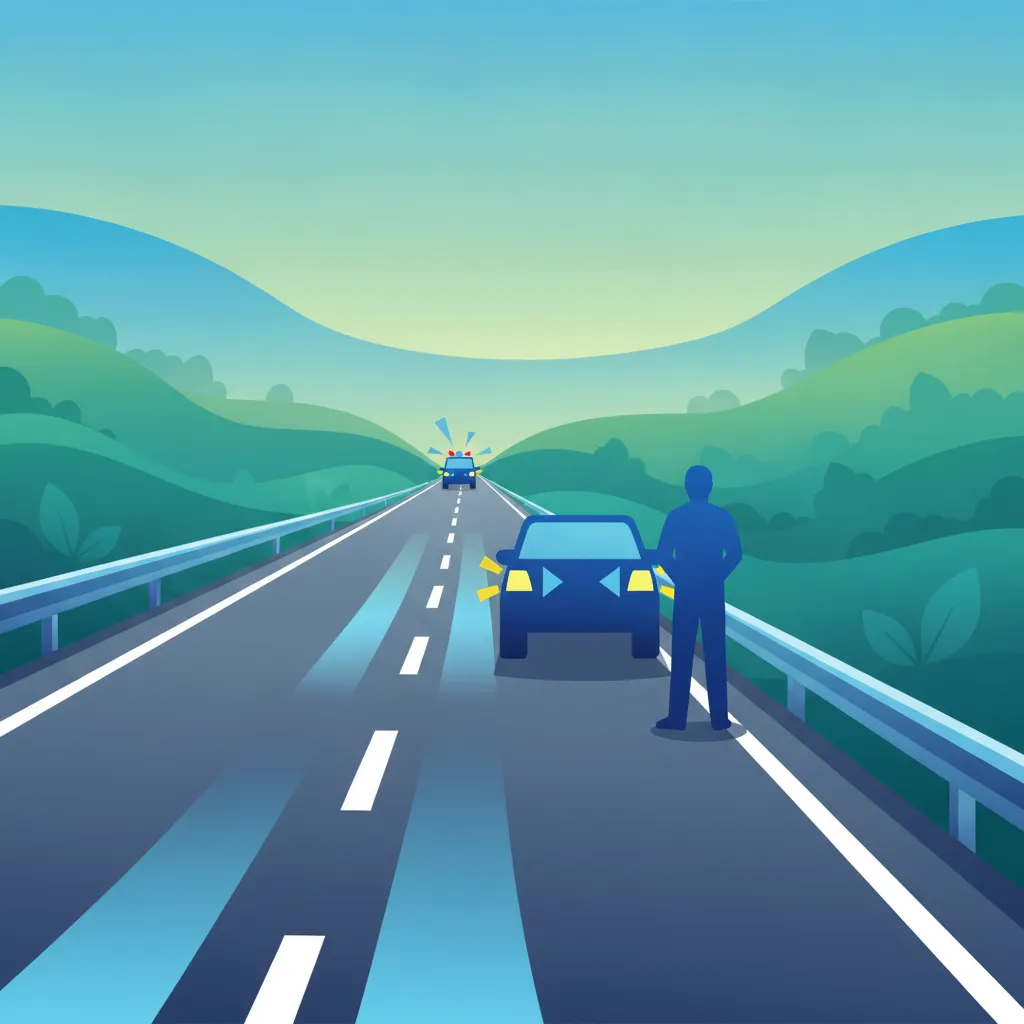
This lesson prepares drivers for critical incidents, including vehicle fires, significant load loss, and traffic collisions. It explains fire prevention measures and the proper use of an on-board fire extinguisher. The content also outlines the legal and safety procedures for responding to an accident scene, including securing the area, reporting the incident to emergency services, and providing basic first aid if necessary.

This lesson provides a step-by-step guide for handling a vehicle breakdown on the road. It covers how to safely move the vehicle, secure the scene with warning devices, and notify the company and authorities. The content also details fire prevention measures and the correct procedure for using an on-board fire extinguisher for different types of fires.
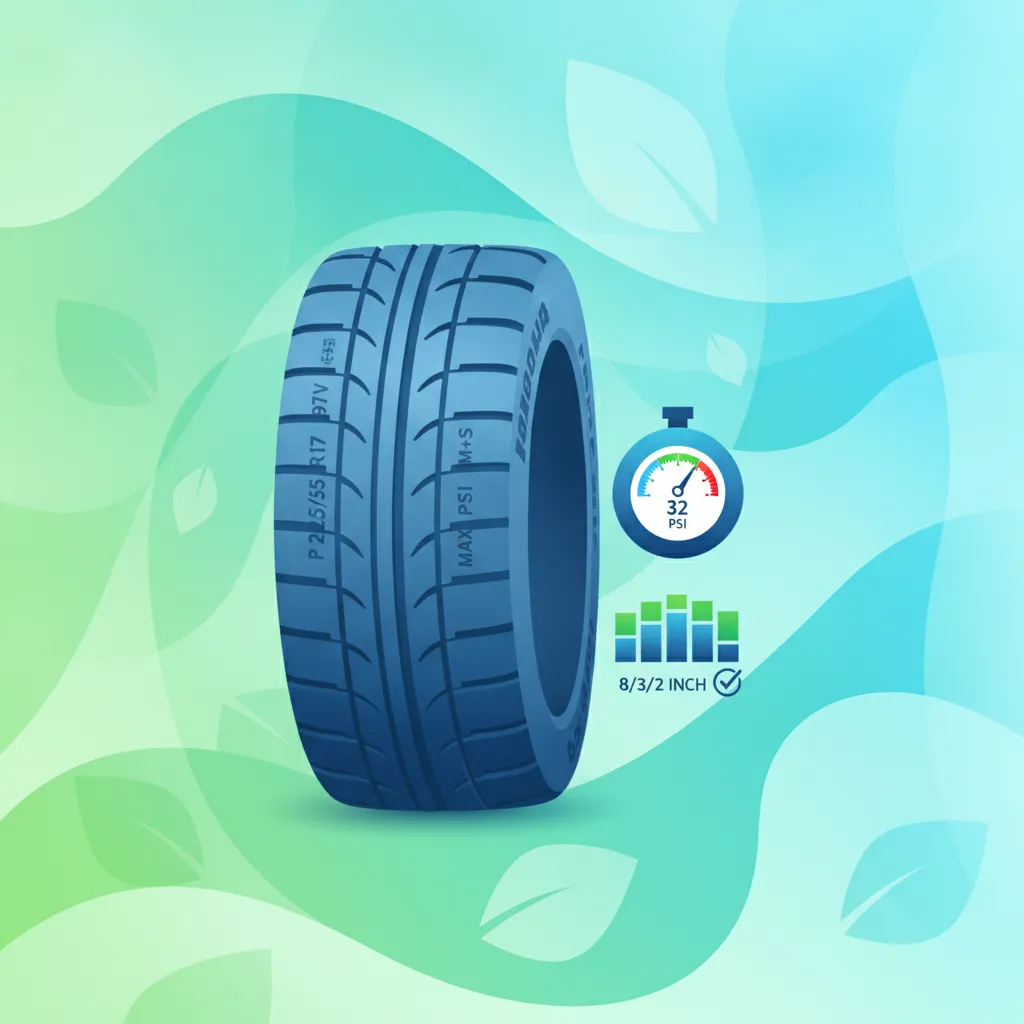
This lesson provides essential knowledge on tyre maintenance, a critical aspect of heavy vehicle safety and efficiency. It covers how to check for correct tyre pressure, assess wear patterns, and understand technical specifications like load and speed ratings. Learners will become familiar with the legal requirements for tread depth in Denmark and recognize how heavy loads impact tyre condition and overall vehicle performance.
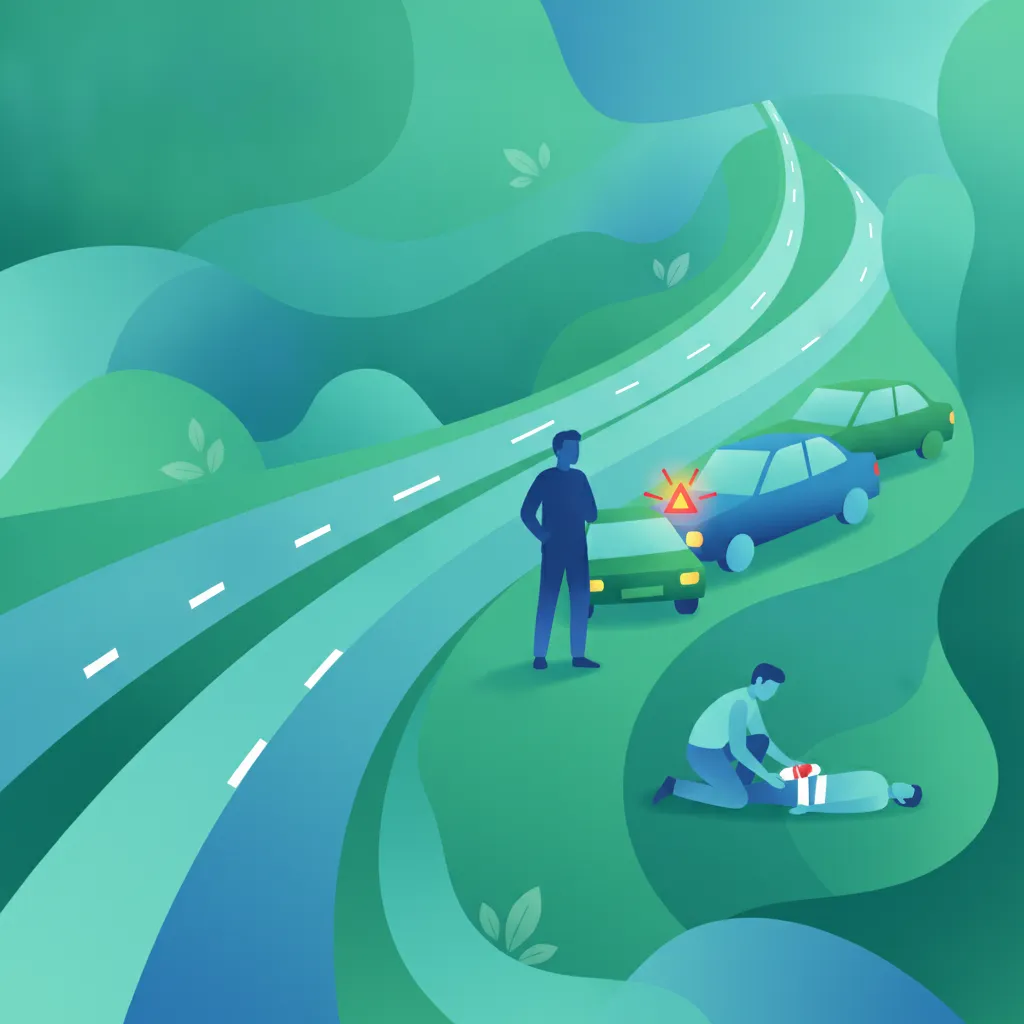
This lesson provides a clear action plan for handling emergencies on the road. It explains how to secure an accident scene using a warning triangle, when and how to call the emergency number 112, and the fundamentals of providing basic first aid. You will also learn the safe procedure for dealing with a vehicle breakdown to protect yourself and other road users.

Operating a heavy goods vehicle comes with heightened professional and legal responsibilities. This lesson examines the driver's duties regarding pre-trip inspections, load security, and continuous vehicle maintenance. It emphasizes the ethical obligation to protect vulnerable road users like cyclists and pedestrians, and stresses the importance of maintaining professional conduct and adhering to all traffic regulations to ensure road safety.
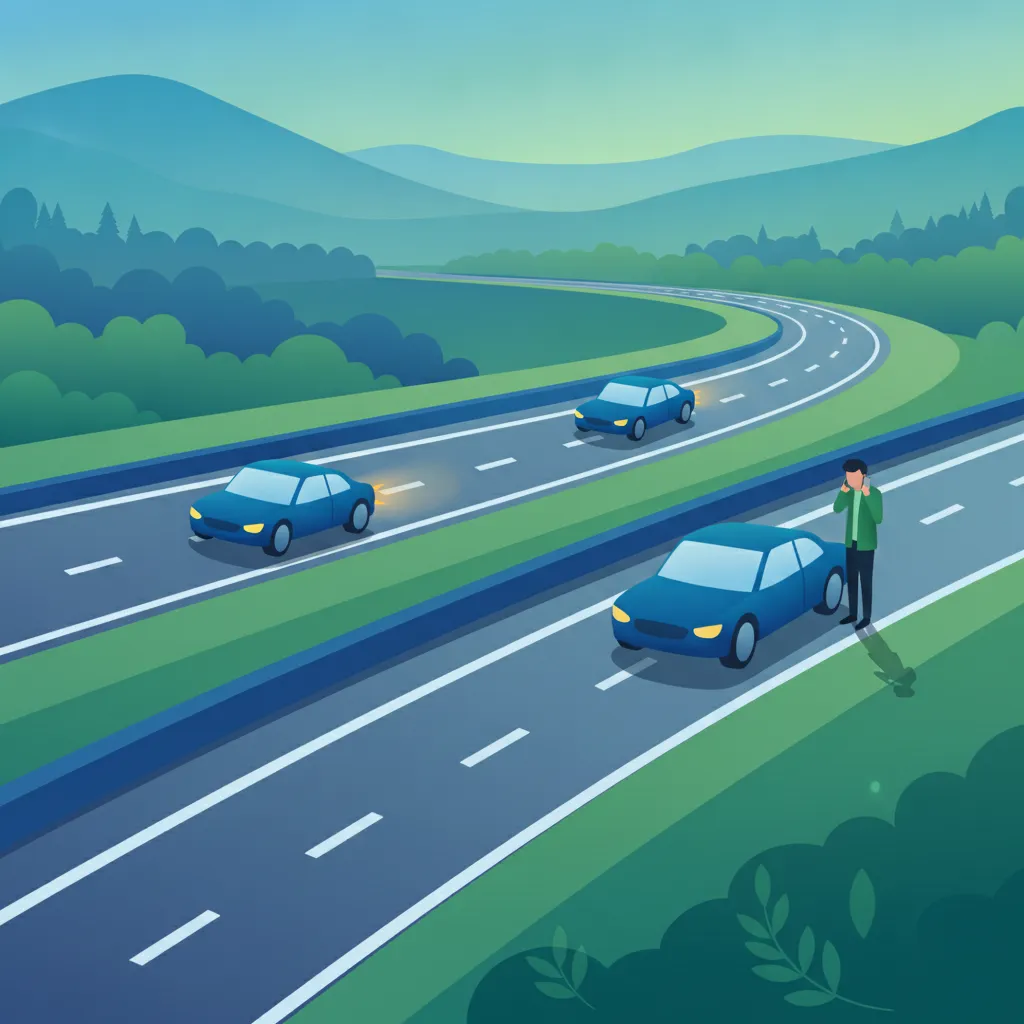
This lesson covers the immediate actions to take at the scene of an accident. It explains how and when to call the Danish emergency number 112, and what information to provide to the operator. The content also includes the principles of securing an accident scene to prevent further incidents and basic first aid concepts.
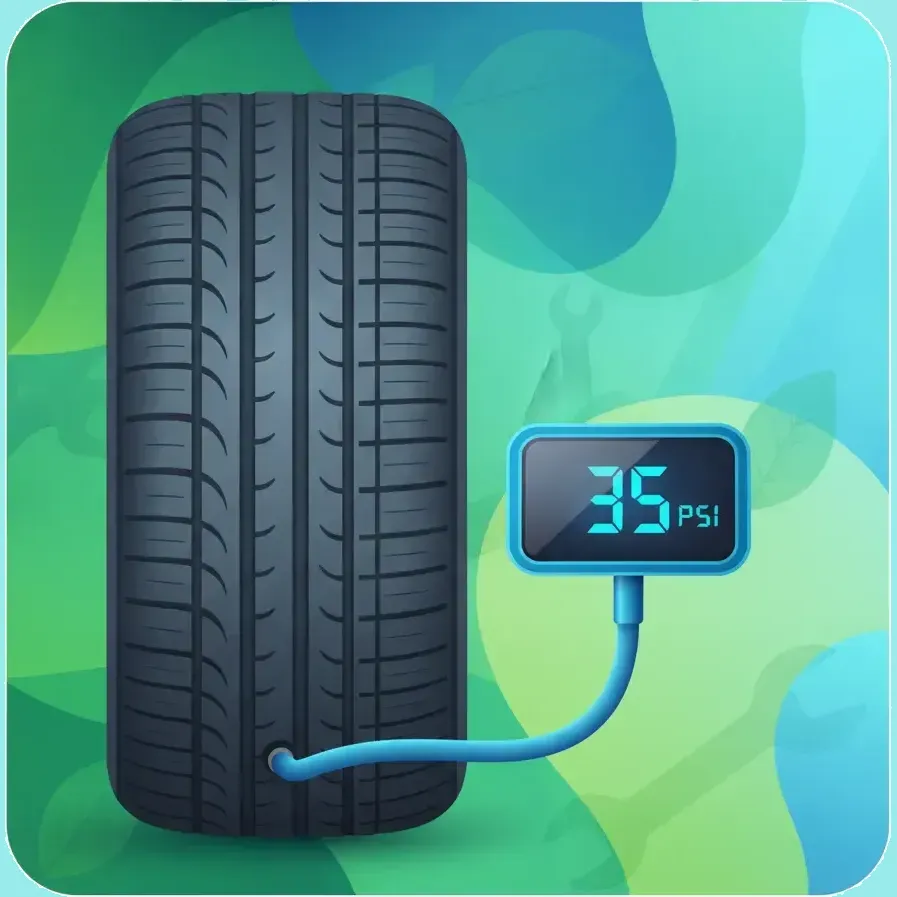
This lesson highlights the vital role tyres play in vehicle safety. It explains how to conduct regular checks on tyre pressure and tread depth, and how incorrect values can compromise grip, braking efficiency, and overall handling. You will also learn the legal minimum requirements for tyres in Denmark to ensure your vehicle is always compliant and safe.
Understand the legal obligations for Category C drivers when facing a breakdown or tyre failure in Denmark. This lesson details required actions, distances for warning signs, and potential legal consequences for non-compliance.
This lesson provides a step-by-step guide for managing a vehicle breakdown safely. It instructs the rider on moving the vehicle to a safe location, making it visible to other traffic using hazard lights, and personal safety while waiting for assistance. The importance of staying away from active traffic lanes is a key point.
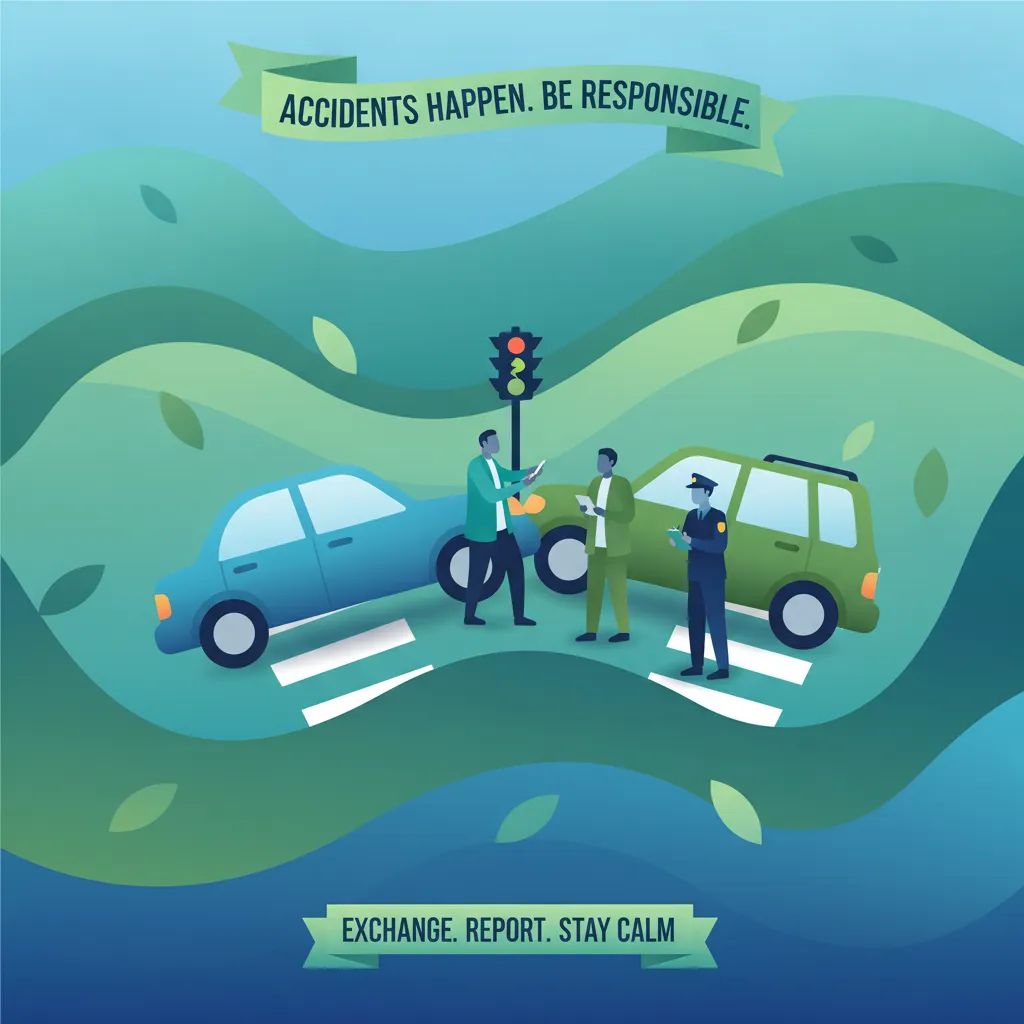
This lesson outlines the legal responsibilities of a rider involved in a traffic accident. It explains the legal duty to stop, render aid, and report the incident to the police and insurance providers. The content covers the concepts of liability and the potential legal consequences following an accident.
This lesson provides a step-by-step guide for handling a vehicle breakdown on the road. It covers how to safely move the vehicle, secure the scene with warning devices, and notify the company and authorities. The content also details fire prevention measures and the correct procedure for using an on-board fire extinguisher for different types of fires.
This lesson provides a clear action plan for handling emergencies on the road. It explains how to secure an accident scene using a warning triangle, when and how to call the emergency number 112, and the fundamentals of providing basic first aid. You will also learn the safe procedure for dealing with a vehicle breakdown to protect yourself and other road users.
Operating a heavy goods vehicle comes with heightened professional and legal responsibilities. This lesson examines the driver's duties regarding pre-trip inspections, load security, and continuous vehicle maintenance. It emphasizes the ethical obligation to protect vulnerable road users like cyclists and pedestrians, and stresses the importance of maintaining professional conduct and adhering to all traffic regulations to ensure road safety.
This lesson covers the immediate actions to take at the scene of an accident. It explains how and when to call the Danish emergency number 112, and what information to provide to the operator. The content also includes the principles of securing an accident scene to prevent further incidents and basic first aid concepts.

This lesson provides an overview of essential first aid principles relevant to a transport environment. It covers how to assess a casualty, perform basic life support, and manage common injuries until professional help arrives. The content also details the correct procedure for contacting emergency services, providing clear and accurate information, and completing required incident reports.
Properly functioning lighting and signaling systems are fundamental for safe communication on the road. This lesson details the purpose and correct use of all exterior lights, including headlights, brake lights, turn signals, and hazard lights, according to Danish law. It emphasizes the driver's responsibility to ensure these systems are clean and operational to maintain visibility and clearly signal maneuvers to other road users.
This lesson details the legal consequences for professional drivers who commit traffic infractions. It explains the Danish system of fines and penalty points for various offenses, from speeding to load security violations, and outlines the conditions that can lead to license suspension. The content underscores the professional and legal obligation to uphold traffic law at all times to maintain a clean driving record.
This lesson outlines a step-by-step procedure for managing a mechanical breakdown on the road. It covers moving the motorcycle to a safe location, using hazard lights, and wearing high-visibility clothing. The goal is to ensure personal safety while minimizing disruption and danger to other traffic.
Find clear answers to common questions learners have about Responding to Breakdowns and Tyre Failures. Learn how the lesson is structured, which driving theory objectives it supports, and how it fits into the overall learning path of units and curriculum progression in Denmark. These explanations help you understand key concepts, lesson flow, and exam focused study goals.
You must place the warning triangle at a sufficient distance behind your vehicle—typically 100 meters on motorways—to give other drivers enough time to react. Always ensure your hazard lights are on before leaving the cab to place the triangle.
While not strictly stated as a legal requirement for every scenario, it is highly recommended and considered part of professional best practice for Category C drivers to wear high-visibility gear when stepping out of the vehicle in traffic.
Stay calm, keep a firm grip on the steering wheel, avoid sudden braking, and allow the vehicle to slow down gradually while steering toward the shoulder. Once the vehicle is under control and off the main flow of traffic, turn on hazard lights immediately.
You should only leave your vehicle unattended if it is necessary to call for help or if you are in immediate danger. You are legally responsible for the vehicle and its load, so you should prioritize securing the vehicle and notifying the relevant authorities as quickly as possible.
Use our powerful search tool to pinpoint specific Danish driving theory topics, road signs, or traffic situations you need to review. Start exploring relevant practice sets now to reinforce your knowledge and build confidence for your upcoming driving licence exam.