
This lesson prepares you for the critical actions required at the scene of a motorcycle crash. Understanding your responsibilities as a rider, from securing the scene to providing information to emergency services, is essential for both the Danish theory exam and your real-world safety.
Lesson content overview
Motorcycling, while exhilarating, carries inherent risks. Preparing for the unfortunate event of a crash is a crucial aspect of responsible riding. This lesson provides essential knowledge and a structured approach to immediate actions following a motorcycle accident on Danish roads. Understanding these procedures is not only vital for personal safety and the well-being of others but also a legal requirement for all riders.
The focus here is on the critical first steps: ensuring personal safety, making the accident scene highly visible to prevent secondary collisions, and systematically assessing for injuries. Mastering these immediate priorities can profoundly impact the outcome of an emergency situation, minimizing harm and facilitating a smooth interaction with emergency services and authorities.
While no rider ever intends to be involved in a crash, understanding common accident scenarios and implementing preventative strategies significantly reduces the likelihood. Most motorcycle accidents are preventable through heightened awareness, defensive riding techniques, and adherence to traffic laws.
Motorcycle accidents often stem from a combination of factors. A frequent cause is other road users failing to see the motorcyclist, often termed "looked but failed to see." This can occur at intersections, during lane changes, or when vehicles pull out into traffic. Other common causes include:
Prevention is always the best strategy. Riders can significantly reduce their risk by adopting proactive and defensive riding habits. This includes maintaining a safe following distance, constantly scanning the road for hazards, anticipating the actions of other drivers, and positioning oneself to be seen. Wearing appropriate protective gear, including a helmet, reflective clothing, and sturdy boots, also mitigates injury severity if an accident does occur.
When a crash occurs, the immediate aftermath can be disorienting and stressful. However, having a clear sequence of actions in mind can help you respond effectively and minimize further risks. The first priorities are always personal safety, securing the scene, and assessing injuries.
Your own safety is paramount. After a crash, your instinct might be to immediately move or assess the damage to your motorcycle. However, it is crucial to first evaluate your immediate surroundings and your physical condition.
Never attempt to remove your helmet or the helmet of an injured person unless it is absolutely necessary for basic life support (e.g., to clear an airway) and you are trained to do so. Removing a helmet incorrectly can worsen spinal injuries.
Once your immediate personal safety is addressed, the next critical step is to make the accident scene visible to other road users. This prevents secondary collisions, which can often be more severe than the initial incident.
If your motorcycle is stationary on the roadway after a crash, activating your hazard warning lights (often simply called hazard lights) is mandatory. These high-intensity flashing lights alert other drivers to a potential danger ahead. Ensure they are switched on as soon as it is safe to do so, even if you are moving your motorcycle to the side of the road.
In Denmark, if your motorcycle is stationary in or near a traffic lane after a crash, you must place a warning triangle to alert oncoming traffic. The placement distance is crucial and depends on the speed limit of the road. On high-speed roads, the triangle needs to be placed further back to give drivers sufficient reaction time. This increases the safety margin for everyone approaching the scene.
When you exit your motorcycle on a public road, especially after a crash, it is a legal requirement in Denmark to wear a reflective vest (or other high-visibility clothing). This makes you significantly more visible to other drivers, particularly in low light conditions, adverse weather, or on busy roads, further reducing the risk of being struck. Always keep a reflective vest accessible on your motorcycle.
After securing the scene, the next priority is to assess for injuries, both your own and those of anyone else involved. This assessment should be quick and methodical, allowing you to prioritize who needs immediate attention and what information to relay to emergency services.
Before attempting to move or help others, perform a quick self-check. Systematically check for pain, bleeding, or inability to move limbs. Do not rush to stand up if you feel any significant pain or dizziness. If you suspect a serious injury, remain still and call for help.
If others are involved in the crash (e.g., other riders, drivers, pedestrians, cyclists), quickly assess their condition from a safe distance if possible. Look for obvious signs of injury, unresponsiveness, or distress.
Remember the ABCs of first aid: Airway, Breathing, Circulation. These are the most immediate life-threatening concerns. Address severe bleeding by applying direct pressure if safe to do so. Keep injured persons warm to prevent shock.
Effective communication with emergency services and understanding your legal duties are critical steps after a crash. Knowing exactly what to say and what actions are required by law will ensure timely assistance and proper documentation.
In Denmark, the single emergency number for police, fire brigade, and ambulance is 112. Dial this number immediately if there are any injuries, significant damage, or if the accident poses a hazard to other road users.
Dial 112: Connects you to the emergency dispatch center.
State Your Location Clearly: Provide the exact address, road name, nearest intersection, or distinguishing landmarks. If on a motorway, use the nearest kilometer marker.
Describe the Situation: Briefly explain that there has been a motorcycle crash, the number and type of vehicles involved, and if there are any injuries (how many people, their apparent condition).
Identify Hazards: Inform the operator of any additional dangers, such as spilled fuel, debris on the road, or a vehicle blocking traffic.
Follow Instructions: Stay on the line and follow any instructions given by the operator until help arrives. Do not hang up until instructed to do so.
When communicating with emergency services or police, be clear, concise, and factual. Avoid speculation or assigning blame. Focus on providing objective information about the crash:
Under Danish traffic law, if you are involved in an accident, you have several mandatory obligations. One of the most critical is to remain at the crash site until emergency services arrive, or until a police officer directs otherwise. Leaving the scene of an accident without proper authorization can lead to severe legal penalties.
You are also legally obliged to provide accurate information to emergency services and law enforcement, cooperating fully with their investigations. This includes providing your identification, vehicle registration details, and a factual account of the incident.
Beyond immediate safety and emergency response, gathering information at the scene is crucial for any subsequent insurance claims or legal proceedings. Comprehensive documentation can protect your interests and help establish the facts.
While waiting for authorities, if it is safe to do so and does not interfere with emergency operations, start noting down key details about the crash.
Independent witnesses can provide invaluable objective accounts of the crash. If possible, politely ask for their contact details (name, phone number, email address). Do not pressure them, but explain that their statement could be helpful for factual clarity.
Modern smartphones make it easy to document the scene. Take photographs from various angles, capturing:
Always ensure your own safety and do not obstruct emergency services or traffic flow while taking photos.
The initial response to a crash may need to be adapted based on the specific environmental and road conditions at the time of the incident. What is safe and effective on a sunny day in an urban area may not be appropriate on a dark, foggy rural road.
If the crash involves pedestrians, cyclists, or other motorcyclists, extra caution and immediate injury assessment are critical. These users often lack the protective shell of a car, making them highly vulnerable to serious injury. Ensure they receive prompt medical attention and provide comprehensive information to emergency services about their condition.
Danish traffic laws (Færdselsloven) outline specific responsibilities for individuals involved in a road traffic accident. Adherence to these regulations is not only about safety but also legal compliance.
Failure to comply with these rules can result in fines, license points, or even more severe legal consequences depending on the severity of the violation and the accident.
In the stressful aftermath of an accident, it is easy to make mistakes that can worsen the situation or create legal complications. Being aware of these common pitfalls can help you avoid them.
By being mindful of these common errors, you can navigate the post-crash scenario more effectively and safely.
This lesson teaches Danish motorcyclists the critical priority sequence after a crash: securing personal safety first, then making the scene visible with hazard lights and warning triangles, assessing injuries using basic first aid principles (ABCs), and contacting emergency services via 112. Danish traffic law mandates specific post-collision obligations including remaining at the scene, providing information, and wearing reflective gear. Understanding these procedures is essential for both passing the Danish theory exam and responding effectively in real-world emergency situations where every second counts.
A short set of high-value points that capture the most important learning from this lesson.
Personal safety is always your first priority after a crash - assess immediate danger, stay calm, and keep your helmet on until medical help arrives.
Activate hazard warning lights immediately and place a warning triangle at the correct distance to prevent secondary collisions.
Call emergency services (112) in Denmark if there are any injuries, significant damage, or hazards to other road users.
You are legally required to remain at the crash scene until authorities arrive or direct otherwise - leaving is a serious offense under Danish law.
Gather documentation (photos, witness details, vehicle information) while waiting for emergency services, but never compromise your safety to do so.
Explore all units and lessons included in this driving theory course.
On high-speed roads, place the warning triangle further back to give drivers sufficient reaction time.
Always wear a reflective vest when exiting your motorcycle on a public road after a crash.
Remember the ABCs of first aid: Airway, Breathing, Circulation - the most immediate life-threatening concerns.
When calling 112, provide your exact location, describe the situation and number of people involved, identify hazards, and follow the operator's instructions.
You must provide your identity, vehicle details, and insurance information to other parties and cooperate fully with emergency services and police.
Leaving the crash scene before authorities arrive, which is a serious legal offense in Denmark with severe penalties.
Failing to activate hazard lights immediately, drastically reducing visibility and increasing the risk of secondary collisions.
Placing the warning triangle too close to the motorcycle or not placing it at all, rendering it ineffective.
Moving your motorcycle or injured persons unnecessarily unless there is immediate danger like fire, as this can worsen injuries or disturb evidence.
Underestimating injury severity or delaying the call to 112 when injuries are suspected, which can critically delay medical assistance.
Lesson content overview
A short set of high-value points that capture the most important learning from this lesson.
Personal safety is always your first priority after a crash - assess immediate danger, stay calm, and keep your helmet on until medical help arrives.
Activate hazard warning lights immediately and place a warning triangle at the correct distance to prevent secondary collisions.
Call emergency services (112) in Denmark if there are any injuries, significant damage, or hazards to other road users.
You are legally required to remain at the crash scene until authorities arrive or direct otherwise - leaving is a serious offense under Danish law.
Gather documentation (photos, witness details, vehicle information) while waiting for emergency services, but never compromise your safety to do so.
Explore all units and lessons included in this driving theory course.
On high-speed roads, place the warning triangle further back to give drivers sufficient reaction time.
Always wear a reflective vest when exiting your motorcycle on a public road after a crash.
Remember the ABCs of first aid: Airway, Breathing, Circulation - the most immediate life-threatening concerns.
When calling 112, provide your exact location, describe the situation and number of people involved, identify hazards, and follow the operator's instructions.
You must provide your identity, vehicle details, and insurance information to other parties and cooperate fully with emergency services and police.
Leaving the crash scene before authorities arrive, which is a serious legal offense in Denmark with severe penalties.
Failing to activate hazard lights immediately, drastically reducing visibility and increasing the risk of secondary collisions.
Placing the warning triangle too close to the motorcycle or not placing it at all, rendering it ineffective.
Moving your motorcycle or injured persons unnecessarily unless there is immediate danger like fire, as this can worsen injuries or disturb evidence.
Underestimating injury severity or delaying the call to 112 when injuries are suspected, which can critically delay medical assistance.
Explore search topics learners often look for when studying Crash Scenarios, Prevention, and Immediate Response. These topics reflect common questions about road rules, driving situations, safety guidance, and lesson level theory preparation for learners in Denmark.
Browse additional driving theory lessons that cover connected traffic rules, road signs, and common driving situations related to this topic. Improve your understanding of how different rules interact across everyday traffic scenarios.
Learn crucial steps after a motorcycle accident: securing the scene to prevent further collisions, assessing injuries, and contacting emergency services. This covers essential safety procedures and legal duties for Danish riders.
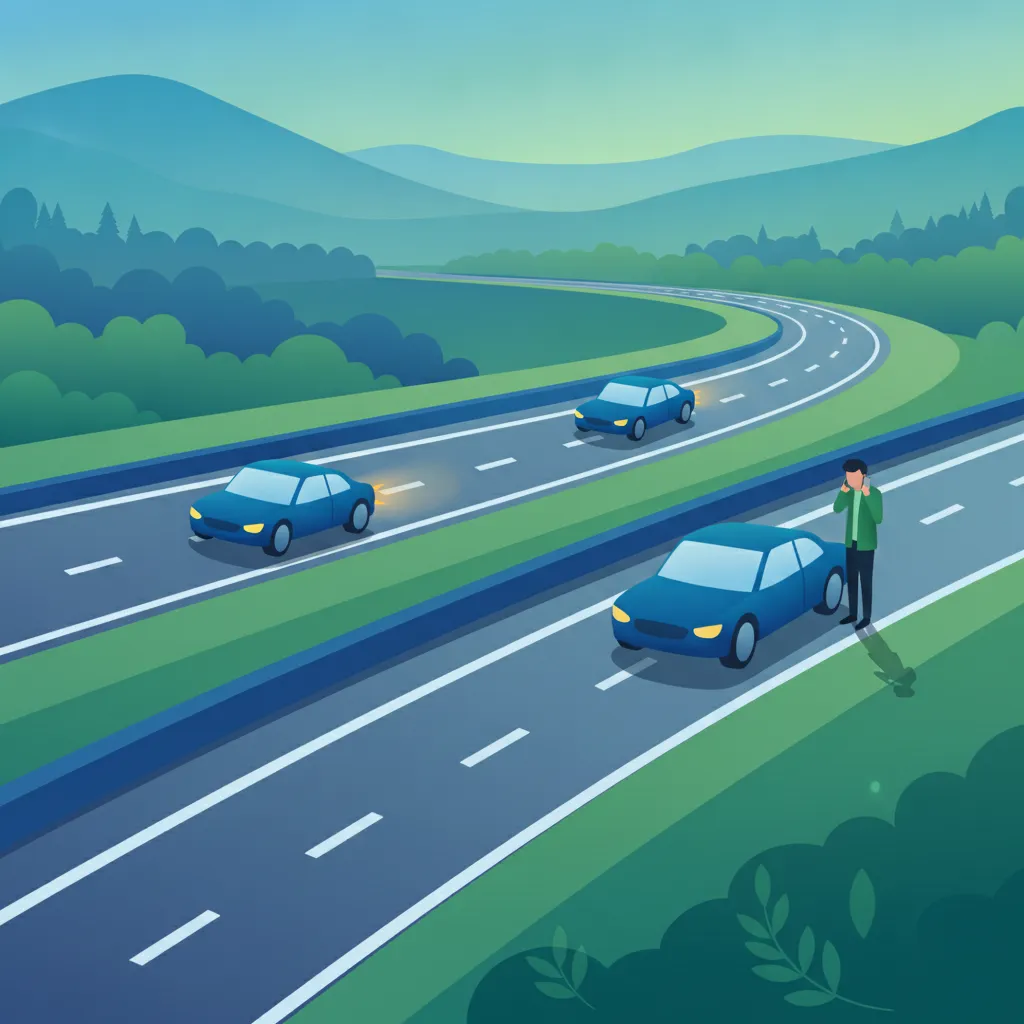
This lesson covers the immediate actions to take at the scene of an accident. It explains how and when to call the Danish emergency number 112, and what information to provide to the operator. The content also includes the principles of securing an accident scene to prevent further incidents and basic first aid concepts.
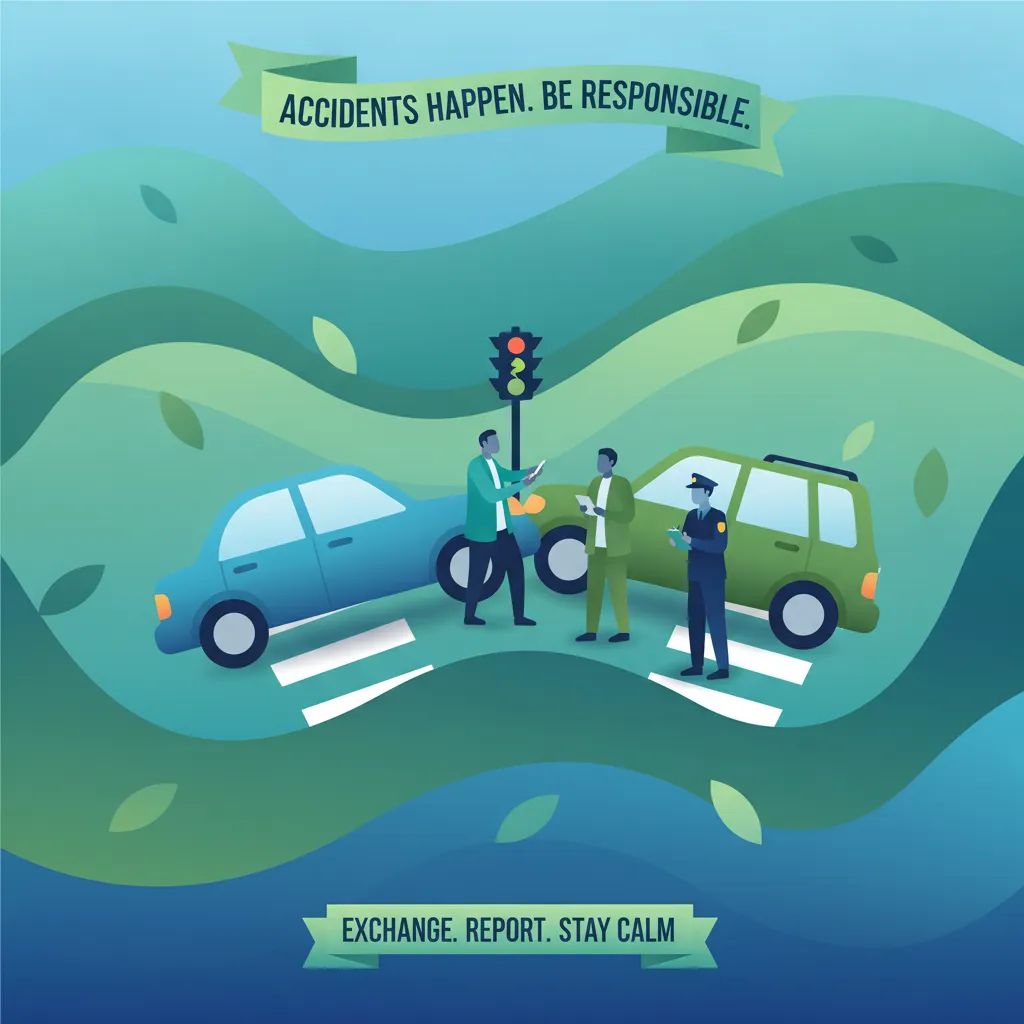
This lesson outlines the legal responsibilities of a rider involved in a traffic accident. It explains the legal duty to stop, render aid, and report the incident to the police and insurance providers. The content covers the concepts of liability and the potential legal consequences following an accident.

This final lesson provides essential, life-saving information for accident response. It covers the basics of first aid, such as managing bleeding and checking for consciousness, which can be critical until professional help arrives. It also details how to provide clear, concise information to the emergency operator when calling 112.
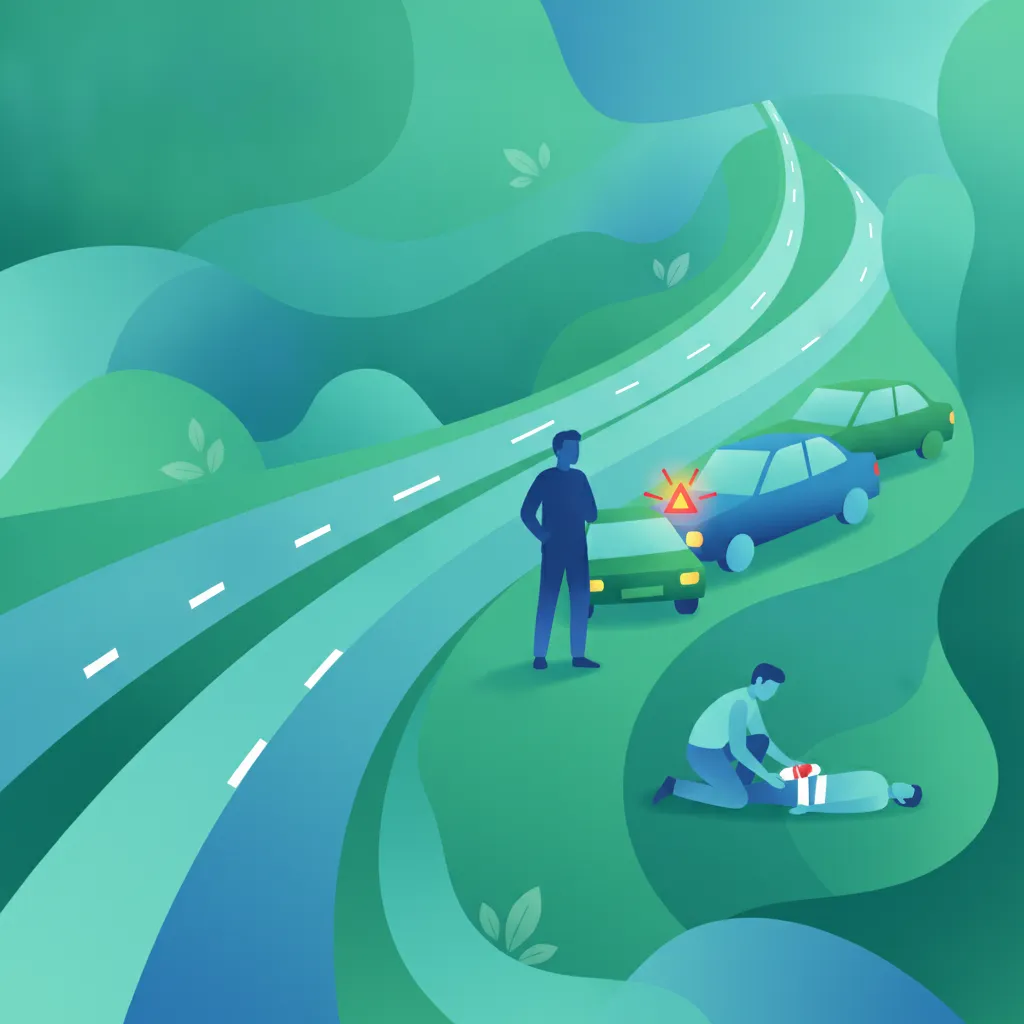
This lesson provides a clear action plan for handling emergencies on the road. It explains how to secure an accident scene using a warning triangle, when and how to call the emergency number 112, and the fundamentals of providing basic first aid. You will also learn the safe procedure for dealing with a vehicle breakdown to protect yourself and other road users.

This lesson provides an overview of essential first aid principles relevant to a transport environment. It covers how to assess a casualty, perform basic life support, and manage common injuries until professional help arrives. The content also details the correct procedure for contacting emergency services, providing clear and accurate information, and completing required incident reports.

This lesson outlines a step-by-step procedure for managing a mechanical breakdown on the road. It covers moving the motorcycle to a safe location, using hazard lights, and wearing high-visibility clothing. The goal is to ensure personal safety while minimizing disruption and danger to other traffic.

This lesson provides a step-by-step guide for managing a vehicle breakdown safely. It instructs the rider on moving the vehicle to a safe location, making it visible to other traffic using hazard lights, and personal safety while waiting for assistance. The importance of staying away from active traffic lanes is a key point.
Explore common causes of motorcycle accidents and learn proactive prevention strategies. This lesson also highlights typical mistakes made after a crash and how to avoid them to ensure safety and legal compliance in Denmark.

This lesson examines the specific risks inherent to motorcycling, emphasizing a rider's vulnerability due to reduced physical protection compared to other vehicles. It covers the heightened severity of injuries in accidents and the critical role of protective gear in mitigating harm. Learners will understand how to adopt defensive strategies, such as proper road positioning, to counteract these risks.
This lesson outlines the legal responsibilities of a rider involved in a traffic accident. It explains the legal duty to stop, render aid, and report the incident to the police and insurance providers. The content covers the concepts of liability and the potential legal consequences following an accident.

This lesson prepares riders for the specific hazards of rural roads, which often have less visibility and more unpredictable surfaces. It covers strategies for approaching blind curves, safely passing agricultural machinery, and being vigilant for animals on the road. Adjusting speed to match visibility is a core principle.
This lesson outlines a step-by-step procedure for managing a mechanical breakdown on the road. It covers moving the motorcycle to a safe location, using hazard lights, and wearing high-visibility clothing. The goal is to ensure personal safety while minimizing disruption and danger to other traffic.
This lesson provides a clear overview of the penalties associated with breaking traffic laws as a motorcyclist. It details the Danish penalty point system ('klip i kørekortet') and the conditions that can lead to fines or licence revocation. Understanding these consequences reinforces the importance of lawful riding.

This lesson provides a systematic approach to safely navigating intersections. It covers how to interpret priority signs and traffic signals, establish right-of-way, and scan for potential conflicts from all directions. The importance of clear sightlines and anticipating the movements of other vehicles is a key focus.
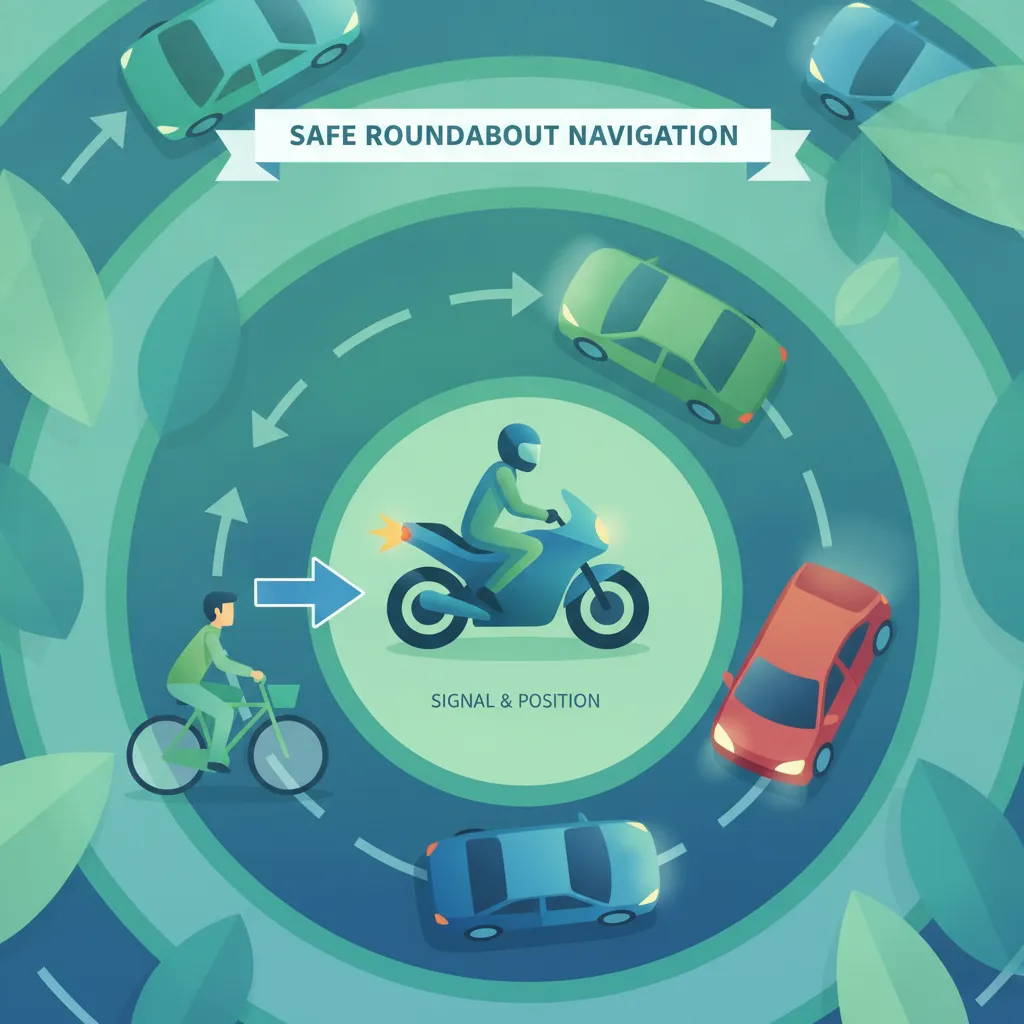
This lesson details the specific skills needed to navigate roundabouts on a motorcycle. It explains how to approach at a safe speed, select the correct lane based on your intended exit, and yield to circulating traffic. Proper use of signals to indicate intentions when entering and exiting is also covered.
This lesson covers the immediate actions to take at the scene of an accident. It explains how and when to call the Danish emergency number 112, and what information to provide to the operator. The content also includes the principles of securing an accident scene to prevent further incidents and basic first aid concepts.
This final lesson provides essential, life-saving information for accident response. It covers the basics of first aid, such as managing bleeding and checking for consciousness, which can be critical until professional help arrives. It also details how to provide clear, concise information to the emergency operator when calling 112.
This lesson provides an overview of the Danish legal system as it applies to motorcyclists. It details the consequences of traffic violations, including fines, penalty points, and potential licence suspension. Learners will also understand their legal responsibilities concerning insurance coverage and procedures to follow in the event of a collision.
Find clear answers to common questions learners have about Crash Scenarios, Prevention, and Immediate Response. Learn how the lesson is structured, which driving theory objectives it supports, and how it fits into the overall learning path of units and curriculum progression in Denmark. These explanations help you understand key concepts, lesson flow, and exam focused study goals.
Your first priority is always safety. Stop your motorcycle in a secure position, switch on your hazard lights, and ensure you do not become a victim yourself before attempting to help others.
Under Danish law, if you are involved in or encounter an accident, you are generally required to provide assistance if it is safe to do so. This is both a moral and legal expectation for all road users.
Only move an injured person if there is an immediate threat to their life, such as a fire or the risk of another vehicle collision. Moving a rider incorrectly can worsen spinal or neck injuries.
Use your hazard lights and consider placing a warning triangle if it is safe to do so. Position your motorcycle in a way that blocks or alerts approaching traffic, but never put yourself at risk of being struck.
Use our powerful search tool to pinpoint specific Danish driving theory topics, road signs, or traffic situations you need to review. Start exploring relevant practice sets now to reinforce your knowledge and build confidence for your upcoming driving licence exam.