
This lesson covers the critical safety protocols required for professional heavy vehicle operators in Denmark when facing emergencies. You will learn how to handle vehicle fires, manage load loss situations, and follow the correct legal procedures after a collision. Mastering these skills is essential for your Category C theory exam and ensures you are prepared to act safely in high-stakes, real-world traffic incidents.
Lesson content overview
Operating a heavy goods vehicle, such as a lorry or truck under a Category C license, comes with significant responsibilities, particularly when faced with emergencies. This comprehensive lesson is designed to equip you with the essential knowledge and procedures for managing critical incidents, including vehicle fires, substantial load loss, and traffic collisions. Understanding and correctly applying these emergency protocols is not just a matter of safety; it is a legal obligation that protects lives, property, and the environment.
The ability to respond swiftly and appropriately to an emergency can mitigate potential harm to yourself, your cargo, and other road users. It helps prevent secondary incidents, minimizes damage, and ensures compliance with Danish traffic laws. This lesson builds upon foundational knowledge from other parts of your Danish Heavy Vehicle Theory Course for Category C License, particularly concepts related to vehicle systems, load securing, and legal consequences.
Emergency situations for heavy vehicles can range from minor breakdowns to severe fires or multi-vehicle collisions. Each scenario demands a specific, coordinated response to ensure safety and legal compliance. The core principles of emergency management revolve around rapid assessment, protecting the scene, communicating with emergency services, and providing initial aid.
The underlying logic for all emergency responses is primarily focused on safety and legal responsibility. By minimizing risk to yourself and others through immediate and correct actions, you contribute significantly to road safety. This lesson will detail the specific steps and legal requirements relevant to Category C license holders in Denmark, ensuring you are prepared for real-world challenges.
Fire prevention is the first line of defense against one of the most destructive vehicle emergencies. Many fires are preventable with diligent checks and proper maintenance. For heavy goods vehicles, which operate with complex mechanical and electrical systems, and often transport substantial or sometimes flammable loads, vigilance is paramount.
Regular inspections and maintenance are crucial. This includes routine checks of the electrical system for worn wires, loose connections, or signs of overheating. The fuel system must also be inspected for leaks, damaged lines, or faulty caps that could allow fuel to escape and ignite. Mechanical components such as brakes can generate extreme heat, so ensuring they are properly adjusted and not binding is vital. Overloading a vehicle also increases strain on all systems, raising temperatures and the risk of component failure leading to fire.
Beyond mechanical aspects, proper load securing is also a key fire prevention measure. Cargo that shifts can generate friction, damage electrical components, or rupture fuel lines. Ensuring that your load is stable and properly secured prevents these potential fire hazards. Ignoring warning lights on the dashboard or neglecting scheduled checks on critical components are common mistakes that can lead to system failures and, ultimately, fires.
Despite all prevention efforts, fires can still occur. When they do, a properly maintained and correctly used on-board fire extinguisher can make a significant difference in containing a small blaze before it escalates.
Heavy goods vehicles in Denmark are often required to carry fire extinguishers. These must be readily accessible, regularly inspected to ensure they are full and pressurized, and drivers must know how to operate them. For vehicle fires, a powder (ABC) extinguisher is generally suitable as it can tackle fires involving solids (A), liquids (B), and electrical equipment (C).
Pull the pin: This unlocks the operating lever.
Aim low: Direct the nozzle or hose at the base of the fire, not the flames.
Squeeze the lever: This releases the extinguishing agent.
Sweep from side to side: Cover the entire area of the fire, moving the nozzle back and forth.
It is crucial to understand the limitations of an on-board extinguisher. They are designed for small, incipient fires. Attempting to extinguish a large or rapidly spreading fire can put you at severe risk. In such cases, your priority must be to evacuate to a safe distance and immediately call emergency services (112). Never turn your back on a fire after extinguishing it; watch for reignition.
Load loss, which includes cargo shifting or falling from the vehicle, poses a serious hazard to other road users and can lead to secondary accidents. Proper load securing is a continuous responsibility throughout your journey, not just during loading.
Cargo can shift or detach due to improper securing, sudden braking, sharp turns, or uneven road surfaces. Signs of load shifting might include unusual vehicle handling, noise from the cargo area, or visible movement in your mirrors. If you suspect or observe load loss, your immediate priority is to react safely and prevent further danger.
Safely stop the vehicle: Activate your hazard warning lights immediately and pull over to the safest possible location, ideally off the main carriageway.
Assess the situation: Determine the extent of the load loss and whether it poses an immediate danger to traffic. If the cargo is spilled on the road, it creates a hazard for others.
Secure the scene: If safe to do so, place an emergency warning triangle (mentioned further below) to alert approaching traffic.
Contact emergency services (112) if necessary: If the load loss creates a significant hazard (e.g., large debris on a motorway, hazardous materials spill) or causes an accident, call 112 immediately.
Re-secure or clear the load: If it is safe and possible, attempt to re-secure the load. If not, and the items are small enough to be removed safely without endangering yourself, clear them from the roadway. For large items or hazardous materials, await professional assistance.
Continuing to drive with an unsecured or partially lost load is a serious violation and extremely dangerous. Always address load issues promptly. This directly links to the principles of load securing covered in Lesson 5 of your Danish Heavy Vehicle Theory Course.
In the unfortunate event of a traffic collision, your actions in the immediate aftermath are critical for minimizing harm and complying with legal requirements. Heavy vehicle accidents often involve significant forces and potential for severe damage or injury.
Stop Safely: If involved, stop your vehicle immediately at or near the scene, but in a safe location that does not obstruct traffic or endanger others further.
Activate Hazard Lights: Turn on your hazard warning lights to alert other drivers of the danger.
Protect the Scene: If safe to do so, place an emergency warning triangle. On motorways, this should be placed approximately 100 meters behind your vehicle. On other roads, at least 50 meters, or more if visibility is poor. Ensure you are visible and safe while placing it.
Assess Injuries and Dangers: Quickly evaluate the situation for injured persons and immediate hazards (e.g., leaking fuel, smoke, unstable vehicles). Do not put yourself in danger.
Call Emergency Services (112): Immediately contact 112 (more details below) to report the accident.
Provide Basic First Aid: If you are trained and it is safe to do so, provide basic first aid to injured individuals while awaiting professional help.
Exchange Information (if applicable): Once immediate safety and emergency service notification are handled, exchange details with other involved parties if no injuries or serious damage, and it's a minor incident.
Failing to stop at the scene or leaving without providing assistance are serious legal offenses in Denmark. Your prompt and correct actions can prevent secondary collisions and ensure timely aid for those affected.
Timely and accurate reporting to emergency services is paramount in any critical incident involving heavy vehicles. In Denmark, the emergency number is 112.
You must call 112 immediately in cases of:
When you call 112, remain calm and provide clear, concise information:
Delaying the call or providing incomplete information can hinder the emergency response, potentially leading to more severe outcomes. Always follow the instructions of the emergency operator.
As a professional driver, you have a moral and legal duty to assist injured persons if it is safe for you to do so. While you are not expected to be a medical professional, basic first aid knowledge can be life-saving.
Your primary concern is always your own safety. Do not attempt to provide first aid if it puts you in danger (e.g., on a busy road without scene protection, near a burning vehicle).
Many Category C drivers undergo first aid training as part of their professional development, which is highly recommended. Even without formal training, understanding these basic principles can make a crucial difference in the critical minutes before paramedics arrive.
Danish traffic laws impose specific obligations on heavy vehicle drivers regarding emergency situations. Adherence to these regulations is mandatory and designed to ensure safety on the roads.
Drivers involved in a traffic accident, or those required by law to stop due to fire or significant load loss, must stop their vehicle at or near the scene. This applies universally when an incident involves injury or damage. The rationale is to provide assistance, prevent further danger, and facilitate investigations.
Certain heavy vehicles in Denmark are legally required to carry a fire extinguisher. This typically applies to vehicles above a specific weight threshold or those transporting certain types of cargo. The purpose is to enable an immediate response to vehicle fires, especially given the potential for rapid escalation in larger vehicles.
Drivers must call 112 immediately in cases of accidents with injuries, substantial property damage, or fire. This legal obligation ensures prompt medical, fire, and rescue responses.
When stopped on the roadway after an incident, drivers are legally required to use hazard lights and warning triangles to protect the site. This mandatory measure prevents further accidents by alerting approaching traffic to the hazard. The distance for placing the emergency triangle varies by road type, generally 50 meters on conventional roads and 100 meters on motorways, but this can be adjusted for poor visibility.
All vehicles carrying cargo are legally required to have their loads properly secured to prevent shifting or loss during transport. This is a fundamental safety regulation designed to prevent accidents caused by cargo movement.
Drivers have a legal duty to offer assistance to injured persons if it is safe to do so at the scene of a traffic collision where injury is suspected. This obligation is rooted in the principle of minimizing harm and saving lives.
Failing to follow proper emergency procedures or neglecting legal obligations can lead to severe consequences, ranging from significant fines to imprisonment, loss of license, and severe personal liability.
Emergency situations are rarely textbook. The environment in which an incident occurs significantly influences the best course of action. Heavy vehicle drivers must be adept at adapting their response based on prevailing conditions.
Understanding these conditional variations and integrating them into your emergency response strategy demonstrates a high level of professionalism and significantly enhances safety for everyone involved.
Mastering emergency procedures for heavy goods vehicles is a cornerstone of professional driving under a Category C license. Your ability to prevent, assess, and respond effectively to incidents like vehicle fires, load loss, and traffic accidents is crucial for your safety, the safety of others, and compliance with Danish law.
Always prioritize fire prevention through diligent vehicle inspections and proper load securing. Know the location and operation of your onboard fire extinguisher, but recognize its limitations for small fires only. In the event of a fire, load loss, or accident, your immediate actions are: stop safely, activate hazard lights, set up an emergency triangle, call 112 with precise information, and provide basic first aid if safe and trained. Adhere strictly to legal obligations for stopping, reporting, scene securing, and assisting injured persons. By integrating knowledge from vehicle maintenance, load securing, and legal responsibilities, you develop a comprehensive and proactive approach to heavy vehicle safety.
This lesson covers critical emergency procedures for Category C drivers in Denmark, focusing on fire prevention through vehicle inspections and proper load securing, proper use of on-board fire extinguishers using the PASS method for small fires only, and immediate response protocols for load loss, accidents, and vehicle fires. Danish law mandates specific actions including stopping at scenes, activating hazard lights, placing warning triangles at defined distances, calling 112 with precise information, and providing basic first aid when safe. Key legal consequences exist for failing to stop, leaving the scene, or improperly maintaining safety equipment, making thorough knowledge of these procedures essential for both exam success and real-world professional driving.
A short set of high-value points that capture the most important learning from this lesson.
Your personal safety is always the first priority in any emergency; never put yourself at risk to help others or property.
Fire prevention through diligent pre-trip inspections and proper load securing is the most effective way to avoid vehicle fires.
The PASS method (Pull, Aim, Squeeze, Sweep) guides proper fire extinguisher operation, but only for small, contained fires.
Load loss requires immediate safe stopping, hazard assessment, and either re-securing or clearing the cargo before continuing.
Calling 112 requires calm, precise information: exact location, nature of emergency, number of injured persons, vehicle details, and any additional hazards.
Explore all units and lessons included in this driving theory course.
PASS: Pull the pin, Aim at the base of the fire, Squeeze the lever, Sweep side to side.
Warning triangle placement: approximately 100 meters on motorways, at least 50 meters on other roads (adjust for poor visibility).
Fire extinguishers on heavy goods vehicles are typically ABC powder type, suitable for solids, liquids, and electrical fires.
Always call 112 immediately for accidents with injuries, vehicle fires, or major load loss creating road hazards.
Unless there is immediate danger, never move injured persons, especially if spinal injury is suspected.
Attempting to extinguish a large or rapidly spreading fire instead of evacuating and calling 112.
Providing first aid without proper training or assessment, which can worsen injuries.
Failing to stop at an accident scene or leaving before emergency services arrive (a serious offense in Denmark).
Driving on with an unsecured or partially lost load, creating severe road hazards for other users.
Delaying the emergency call to 112, which can reduce the chance of timely medical intervention or fire control.
Lesson content overview
A short set of high-value points that capture the most important learning from this lesson.
Your personal safety is always the first priority in any emergency; never put yourself at risk to help others or property.
Fire prevention through diligent pre-trip inspections and proper load securing is the most effective way to avoid vehicle fires.
The PASS method (Pull, Aim, Squeeze, Sweep) guides proper fire extinguisher operation, but only for small, contained fires.
Load loss requires immediate safe stopping, hazard assessment, and either re-securing or clearing the cargo before continuing.
Calling 112 requires calm, precise information: exact location, nature of emergency, number of injured persons, vehicle details, and any additional hazards.
Explore all units and lessons included in this driving theory course.
PASS: Pull the pin, Aim at the base of the fire, Squeeze the lever, Sweep side to side.
Warning triangle placement: approximately 100 meters on motorways, at least 50 meters on other roads (adjust for poor visibility).
Fire extinguishers on heavy goods vehicles are typically ABC powder type, suitable for solids, liquids, and electrical fires.
Always call 112 immediately for accidents with injuries, vehicle fires, or major load loss creating road hazards.
Unless there is immediate danger, never move injured persons, especially if spinal injury is suspected.
Attempting to extinguish a large or rapidly spreading fire instead of evacuating and calling 112.
Providing first aid without proper training or assessment, which can worsen injuries.
Failing to stop at an accident scene or leaving before emergency services arrive (a serious offense in Denmark).
Driving on with an unsecured or partially lost load, creating severe road hazards for other users.
Delaying the emergency call to 112, which can reduce the chance of timely medical intervention or fire control.
Explore search topics learners often look for when studying Procedures for Load Loss, Fire, and Emergencies. These topics reflect common questions about road rules, driving situations, safety guidance, and lesson level theory preparation for learners in Denmark.
Browse additional driving theory lessons that cover connected traffic rules, road signs, and common driving situations related to this topic. Improve your understanding of how different rules interact across everyday traffic scenarios.
Understand critical emergency protocols for Category C drivers in Denmark. This lesson covers essential steps for vehicle fires, load loss incidents, and accident scene management, including legal requirements and reporting to 112.
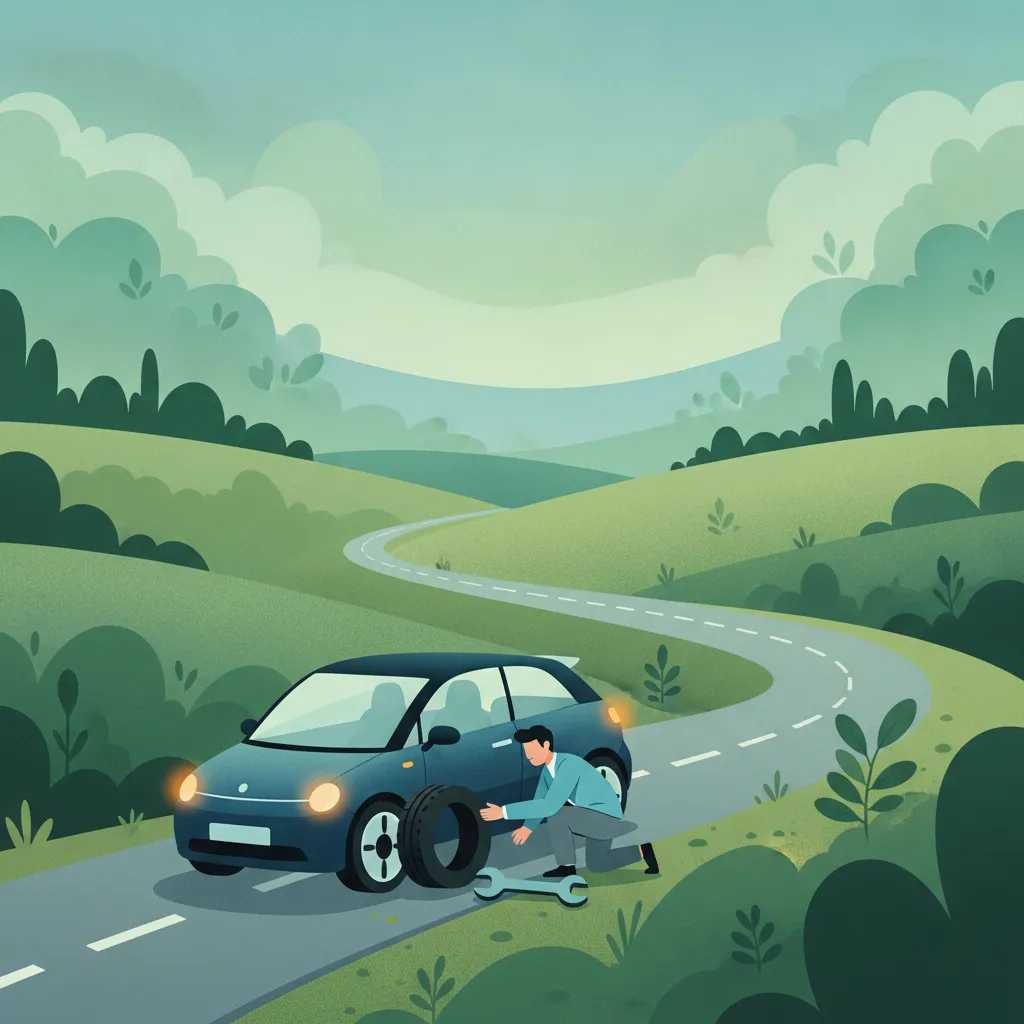
This lesson provides a clear, safety-oriented protocol for handling a vehicle breakdown or tyre failure. It covers how to safely maneuver the vehicle to the roadside, the correct use of hazard lights and warning triangles to alert other traffic, and procedures for contacting assistance. Adhering to these steps, as required by Danish law, is critical for protecting yourself and other road users from further incident.

This lesson provides a step-by-step guide to safe loading and unloading practices. It covers the importance of ensuring proper weight distribution during the process, re-checking cargo securement, and adhering to safety protocols at loading docks. The content also includes ergonomic best practices to prevent driver injury and guidelines for the safe operation of equipment like tail lifts and pallet jacks.

Properly functioning lighting and signaling systems are fundamental for safe communication on the road. This lesson details the purpose and correct use of all exterior lights, including headlights, brake lights, turn signals, and hazard lights, according to Danish law. It emphasizes the driver's responsibility to ensure these systems are clean and operational to maintain visibility and clearly signal maneuvers to other road users.

This lesson provides a step-by-step guide for handling a vehicle breakdown on the road. It covers how to safely move the vehicle, secure the scene with warning devices, and notify the company and authorities. The content also details fire prevention measures and the correct procedure for using an on-board fire extinguisher for different types of fires.
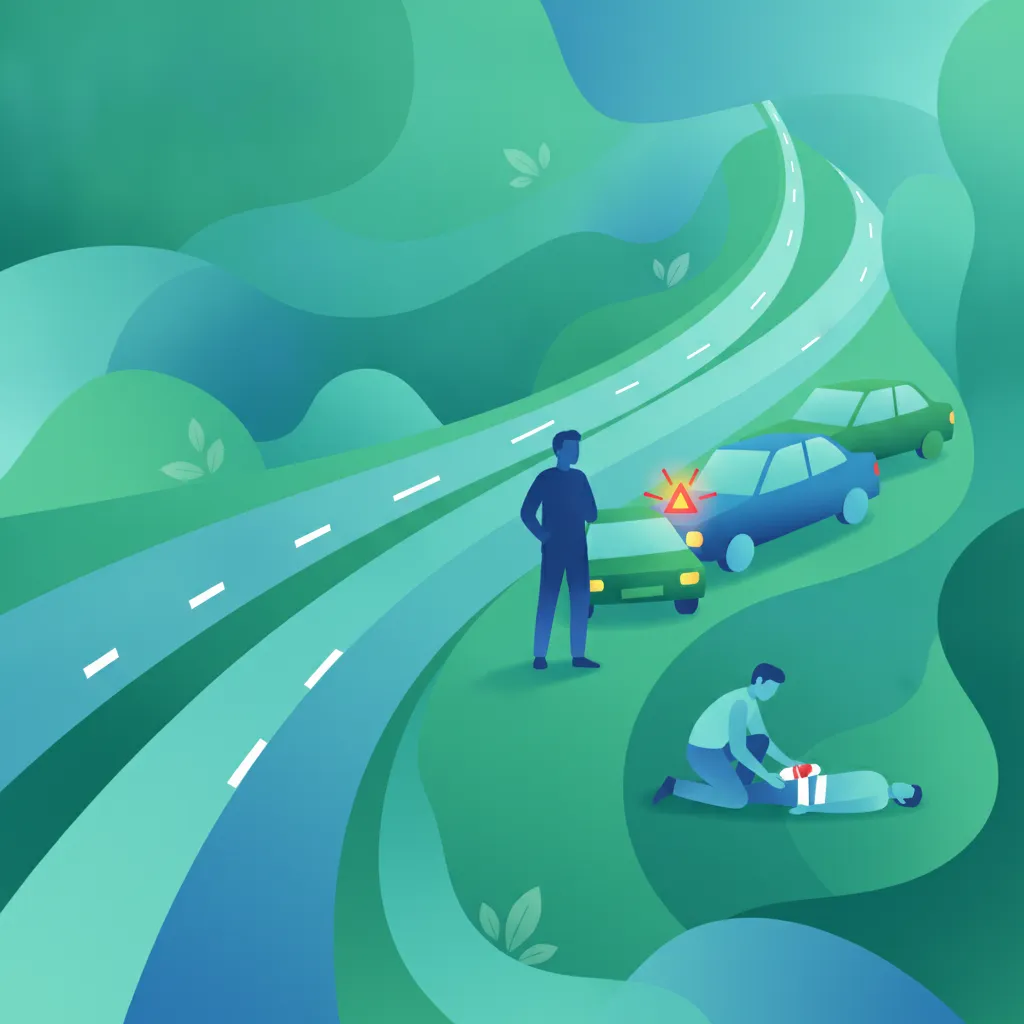
This lesson provides a clear action plan for handling emergencies on the road. It explains how to secure an accident scene using a warning triangle, when and how to call the emergency number 112, and the fundamentals of providing basic first aid. You will also learn the safe procedure for dealing with a vehicle breakdown to protect yourself and other road users.
Operating a heavy goods vehicle comes with heightened professional and legal responsibilities. This lesson examines the driver's duties regarding pre-trip inspections, load security, and continuous vehicle maintenance. It emphasizes the ethical obligation to protect vulnerable road users like cyclists and pedestrians, and stresses the importance of maintaining professional conduct and adhering to all traffic regulations to ensure road safety.
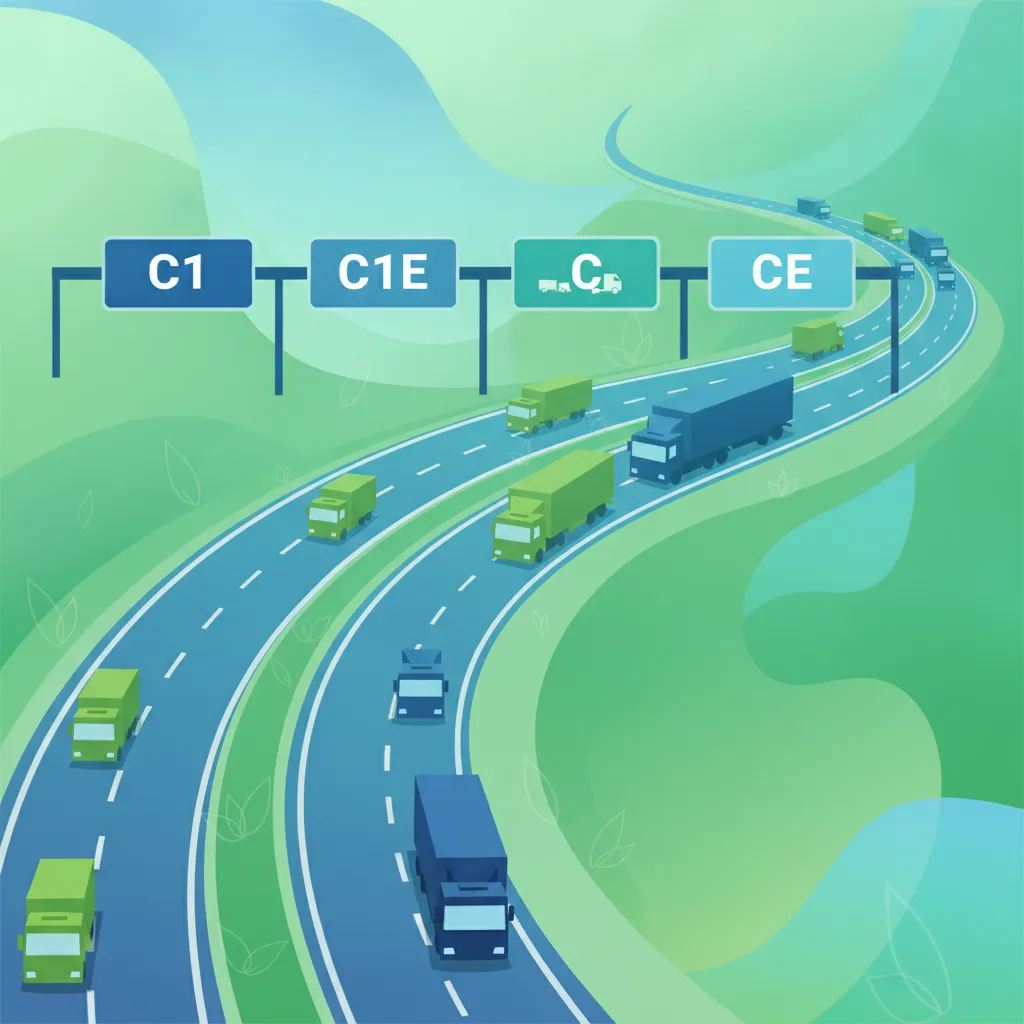
This lesson provides a detailed breakdown of the Danish C-category licenses, explaining the specific vehicle types and combinations allowed under each classification. It clarifies the legal definitions of mass limits for C1 and C vehicles, and how the addition of trailers creates the C1E and CE categories. The content focuses on the operational implications of these distinctions, helping you identify the correct license for different professional driving roles.

This lesson details the legal framework governing the acquisition of a C-category driving license in Denmark. It covers the essential requirements, including medical fitness standards, the structure of the theoretical examination, and the scope of mandatory practical training. Furthermore, it explains the ongoing legal obligations of a license holder, such as renewal procedures and continuous compliance with evolving traffic laws and regulations.

This lesson details the specific procedures for safely transporting a heavy vehicle via ferry. It covers the process of boarding and maneuvering on the ferry deck, the correct methods for securing the vehicle and trailer for sea transit, and the relevant Danish regulations. The content also explains the safety protocols to follow during the crossing and the correct procedure for disembarking upon arrival.
This lesson prepares drivers for the unique operational environment of ports and large industrial sites. It explains the specific traffic rules, signage, and safety protocols that govern these areas, which often differ from public roads. Learners will understand how to safely navigate around loading docks, container yards, and other industrial traffic to ensure efficient and incident-free operations.
Learn crucial fire prevention measures and effective load securing techniques for heavy goods vehicles in Denmark. This covers maintaining vehicle systems to avoid fires and ensuring cargo stability to prevent dangerous load loss incidents.

This lesson provides practical instruction on various methods for securing cargo effectively. It covers the correct application of equipment such as straps, chains, and nets, as well as techniques like blocking and bracing to prevent load movement. The content is aligned with Danish and European standards for load securing, ensuring learners understand how to inspect and verify that their cargo is safe for transport.
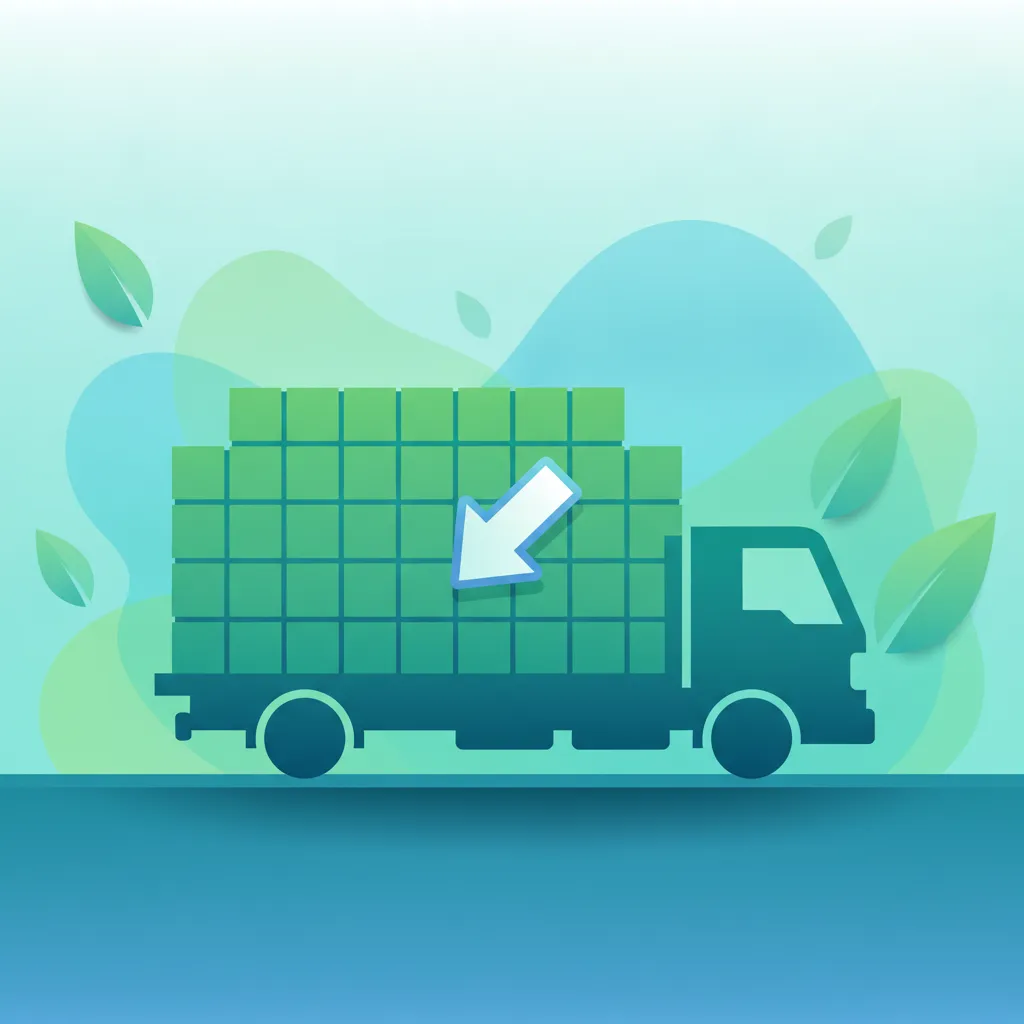
This lesson explains the fundamental physics of load distribution and its direct impact on a heavy vehicle's centre of gravity. It details how the positioning of cargo—whether high, low, forward, or back—alters handling characteristics and overall stability. The content emphasizes the importance of achieving a balanced load to minimize rollover risk and comply with Danish regulations for safe weight distribution.
This lesson provides a step-by-step guide to safe loading and unloading practices. It covers the importance of ensuring proper weight distribution during the process, re-checking cargo securement, and adhering to safety protocols at loading docks. The content also includes ergonomic best practices to prevent driver injury and guidelines for the safe operation of equipment like tail lifts and pallet jacks.

This lesson focuses on the safe transportation of both passengers and cargo. It details the legal requirements for using seat belts and the mandatory use of appropriate child restraints for younger passengers. Additionally, it explains the principles of proper load distribution and securing methods to prevent cargo from shifting, which could dangerously affect the vehicle's stability and handling.

This lesson examines the primary factors that contribute to heavy vehicle instability and the risk of rollover. It explains how high-speed cornering, sudden maneuvers, and improperly secured loads can create dangerous lateral forces that compromise vehicle stability. Learners will understand how to identify high-risk situations and apply preventive driving techniques to maintain control and adhere to Danish safety guidelines.

Proper axle load distribution is crucial for the safety and legality of heavy vehicle operations. This lesson explains how axle pressure is defined and regulated, highlighting the importance of distributing weight correctly across all axles. It covers how imbalanced loads can negatively affect braking performance, steering control, and overall vehicle stability, while also explaining the Danish regulations for maximum axle loads.
This lesson details the specific procedures for safely transporting a heavy vehicle via ferry. It covers the process of boarding and maneuvering on the ferry deck, the correct methods for securing the vehicle and trailer for sea transit, and the relevant Danish regulations. The content also explains the safety protocols to follow during the crossing and the correct procedure for disembarking upon arrival.
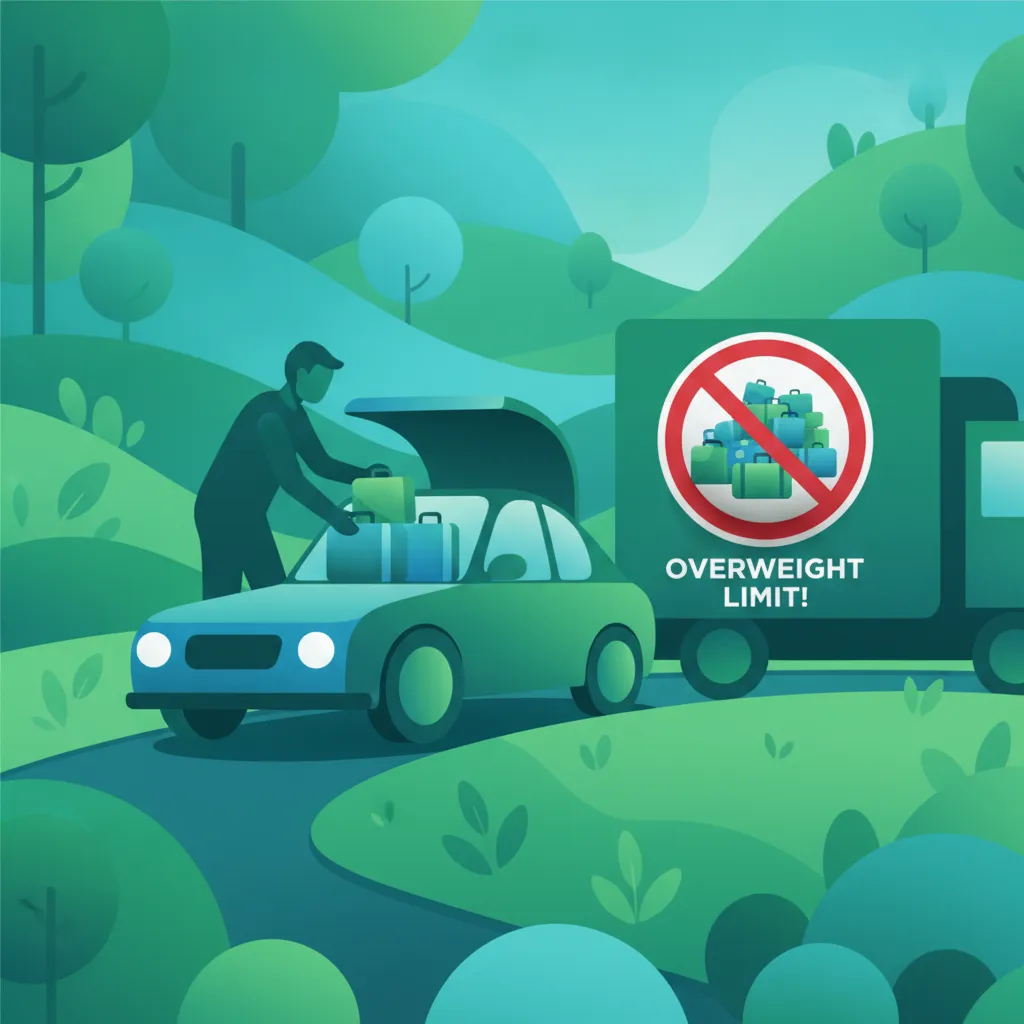
This lesson introduces the fundamental concepts of vehicle mass, clarifying the legal distinctions between total weight, actual weight, and loaded weight under Danish law. It emphasizes the importance of strictly adhering to these limits to ensure safe vehicle operation and handling characteristics. The content also details the significant safety risks and legal penalties associated with exceeding weight limits, such as fines and vehicle impoundment.

This lesson addresses the causes and prevention of trailer sway and jack-knifing, two critical loss-of-control events. It explains how factors like improper braking, high speeds, crosswinds, and poor load distribution can trigger these dangerous situations. Learners will study avoidance strategies, including proper speed management and smooth steering inputs, as well as corrective actions to regain control if sway begins.
This lesson teaches the essential skill of calculating a heavy vehicle's payload capacity, taking into account both its design specifications and legal restrictions. It explains the relationship between unladen weight, gross vehicle mass, and the resulting legal payload. The content emphasizes the critical role of accurate load planning to prevent overloading, which poses significant safety risks and leads to legal penalties.
Find clear answers to common questions learners have about Procedures for Load Loss, Fire, and Emergencies. Learn how the lesson is structured, which driving theory objectives it supports, and how it fits into the overall learning path of units and curriculum progression in Denmark. These explanations help you understand key concepts, lesson flow, and exam focused study goals.
You must immediately pull over to a safe area, activate hazard lights, and secure the area with warning triangles. If the load poses a danger to others, notify the police immediately and inform road authorities so the hazard can be cleared.
Yes, your fire extinguisher must be accessible, fully charged, and inspected regularly. You must know how to operate it safely by aiming at the base of the flames, keeping in mind that your primary priority is always your own safety.
If personal injury has occurred or if there is significant damage to public property, you must report the incident to the police. Even in minor collisions, it is standard practice to exchange insurance information and document the scene thoroughly.
As a professional Category C driver, you are legally responsible for ensuring your load is properly secured. Any load loss due to negligence can result in fines, potential suspension of your license, and liability for any damages caused to others.
Use our powerful search tool to pinpoint specific Danish driving theory topics, road signs, or traffic situations you need to review. Start exploring relevant practice sets now to reinforce your knowledge and build confidence for your upcoming driving licence exam.