
This lesson details the specific regulations for interacting with trams (Straßenbahn) in Austrian urban environments. You will learn the priority rules that govern these interactions, how to safely share road space, and your legal obligations when approaching tram stops.

Lesson content overview
Driving in Austrian cities often means sharing the road with trams (Straßenbahn), an integral part of public transport. Understanding how to interact safely and legally with these rail-bound vehicles is crucial for every driver, especially for those preparing for the Austrian Category B driving license. This lesson clarifies the specific regulations, priority rules, and safety protocols required to navigate urban environments where trams operate, ensuring the safety of all road users and preventing traffic violations.
In Austria, the principle of tram priority (Straßenbahnvorrang) is a cornerstone of traffic law regarding interaction with trams. This overarching rule dictates that trams generally have the right-of-way over other road users. This priority is not arbitrary; it stems from the tram's unique operational characteristics: its fixed path on rails and its limited ability to maneuver or stop quickly compared to other vehicles.
The purpose of tram priority is to prevent accidents by compensating for the tram's physical constraints. Drivers must yield to a tram when it signals its intent to turn, stop, or proceed through an intersection. This rule is enshrined in the Austrian Road Traffic Act (Straßenverkehrsordnung – StVO), particularly in regulations concerning priority (§36 StVO). While trams typically have priority at unsignalized intersections, traffic signs or signals (such as traffic lights) can explicitly override this general rule. Therefore, always observe the prevailing signage and signals.
Always be aware of tram signals and movements. Due to their fixed path, trams cannot swerve to avoid obstacles. It is the responsibility of other road users to adapt and yield.
Trams operate on fixed tracks, meaning they cannot steer around unexpected obstacles or react swiftly to changing road conditions by changing lanes. Their acceleration and braking capabilities are also different from those of cars. Granting them priority ensures a smoother flow of public transport and, more importantly, enhances safety by reducing the likelihood of sudden stops or collisions that could endanger both tram passengers and other road users. This system also helps maintain tram schedules, which are vital for urban public transport networks.
In many Austrian cities, motor vehicles and trams often share the same road space. This concept is known as lane superposition. However, there are also areas with dedicated tram lanes that are reserved exclusively for tram traffic. Understanding the rules for both scenarios is essential for safe and legal driving.
When a tram shares a lane with motor vehicles, motorists must exercise particular caution and adhere to specific rules. The primary implication is that you must not impede the tram's movement, especially when it signals its intent to turn or stop.
Overtaking a tram is strictly prohibited if the tram signals a turn (e.g., with flashing white lights) or is stopping or has stopped for passengers. This rule is critical for preventing accidents.
If a tram is moving straight in a shared lane and not signaling a turn or stopping for passengers, overtaking may be permissible, provided it can be done safely and without obstructing the tram. However, vigilance is key, as conditions can change rapidly. Always maintain a safe following distance, similar to what you would keep behind any other vehicle. This distance should be sufficient to allow you to stop safely if the tram brakes suddenly or if passengers unexpectedly move near the tram.
Dedicated tram lanes are sections of the road reserved solely for trams. These lanes are typically marked with distinct road markings (e.g., yellow lines, tram symbols) and specific traffic signs. The purpose of these lanes is to ensure uninterrupted tram movement and enhance the safety of tram operations.
Motor vehicles are generally prohibited from entering or driving in a dedicated tram lane. The only exception to this rule is when a motorist needs to cross the tram lane to turn into a side street or access a property immediately adjacent to the tram lane. Even in such cases, the maneuver must be performed with utmost care, ensuring that no approaching tram is obstructed or endangered. Using a dedicated tram lane as a shortcut or to bypass traffic is illegal and carries penalties.
Always check road markings and signs carefully. They will indicate whether a lane is exclusively for trams or if shared use is permitted under certain conditions.
Tram stops, known as Haltestellen in Austria, are designated points where trams halt to allow passengers to board and alight. These are critical areas requiring heightened driver awareness and strict adherence to safety rules to protect vulnerable passengers.
When a tram stops at a Haltestelle to pick up or drop off passengers, all other vehicles must give way. This means you must:
This rule is designed to prevent tragic accidents involving passengers. Even if you perceive no immediate danger, the potential for a passenger stepping out unexpectedly is high. Attempting to pass a tram during boarding or alighting is a serious traffic violation and carries severe penalties.
Intersections where trams operate require special attention, particularly when a tram intends to turn across a lane used by motor vehicles. Due to their fixed path and inability to quickly change speed or direction, trams are granted priority in such situations.
When a tram signals its intention to turn, for example, a right turn that crosses an adjacent vehicular lane, or a left turn across oncoming traffic, vehicles in the lane that the tram will cross must stop and give way.
Trams often use specific signal lights, such as flashing white lights, to indicate their turning intentions. It is paramount for drivers to observe these signals carefully and yield accordingly. Ignoring these signals can lead to direct collisions, as the tram cannot simply adjust its path.
A signal used by trams to indicate their intention to turn, often seen as a flashing white arrow or bar on the tram's front. Drivers must be vigilant for these signals and yield to the tram's intended path.
The principle here is that the tram's inability to swerve necessitates priority. Drivers must anticipate these movements and react promptly to ensure safety and maintain smooth traffic flow.
Ignoring or misunderstanding tram priority rules can lead to dangerous situations, fines, and points on your license. Here are some of the most common violations and how to avoid them:
Violations of tram priority rules in Austria can result in substantial fines and may include point penalties, in addition to the inherent danger of collisions. Always prioritize safety.
Driving safely near trams requires not only knowledge of the rules but also the ability to adapt to varying conditions. External factors can significantly impact visibility, reaction times, and the behavior of both trams and pedestrians.
Understanding these contextual variations helps in developing a comprehensive defensive driving strategy around trams, minimizing risks for everyone.
Let's apply these rules to common driving situations you might encounter in Austria.
Setting: You are approaching a cross-intersection in an urban area with no traffic lights. A tram is approaching the intersection from your right. Rule Applied: Tram Priority (Straßenbahnvorrang). Correct Behavior: You must slow down, observe the tram's movement, and yield to allow the tram to pass through the intersection first. The tram, due to its fixed path, has priority even if you would normally have right-of-way over a vehicle approaching from the right. Reasoning: Trams cannot stop as quickly as cars and cannot swerve. Your yielding prevents a collision and ensures smooth public transport flow.
Setting: You are driving in a shared lane behind a tram. The tram activates its hazard lights and stops at a designated tram stop (Haltestelle) to allow passengers to board and alight. Rule Applied: Tram Stops and Boarding/Alighting Priority. Correct Behavior: You must stop behind the tram, maintaining a safe distance. You wait until all passengers have safely boarded or alighted, and the tram has started to move again before you proceed. Reasoning: Overtaking a tram at a stop endangers passengers, especially those stepping onto or off the tram who may not see your vehicle.
Setting: You are driving straight through an intersection with a green traffic light. Ahead of you, a tram in an adjacent lane activates its flashing white turn signal, indicating a right turn that will cross your lane of travel. Rule Applied: Tram Turning Priority. Correct Behavior: Despite your green light, you must stop and yield to the turning tram. Allow the tram to complete its turn across your lane safely. Reasoning: A tram cannot quickly accelerate or stop if it is obstructed mid-turn. Its fixed path necessitates that other vehicles yield to its turning maneuver.
Setting: You are driving on a multi-lane street in the city. To your left, there's a lane clearly marked with tram symbols and yellow lines. You want to make a right turn into a side street. Rule Applied: Dedicated Tram Lanes. Correct Behavior: You stay in the motor vehicle lane. If you need to cross the dedicated tram lane to make your turn, you must ensure it is clear of trams and perform the maneuver safely and efficiently, without impeding any tram. You must not drive straight in this lane. Reasoning: Dedicated tram lanes are for the exclusive use of trams to maintain their schedule and safety. Unauthorized use by motor vehicles causes obstruction and is illegal.
Successfully navigating urban traffic in Austria, especially around trams, requires a deep understanding of specific rules and a commitment to safe driving practices. The core principles to remember are:
By internalizing these guidelines, you will contribute to safer roads for everyone in Austrian cities and be well-prepared for your Austrian Category B driving license theory course.
This lesson covers Austria's tram priority rules, which give Straßenbahn right-of-way in most situations due to their fixed track constraints. Key rules include never overtaking trams at stops, yielding to turning trams at intersections, and respecting dedicated tram lanes. The content explains lane superposition versus dedicated lanes, safety procedures at Haltestellen, and contextual factors like weather and visibility affecting tram interactions. Practical scenarios demonstrate correct behavior at unsignalized intersections, tram stops, and turning situations. Understanding these rules is essential for passing the Category B theory test and driving safely in Austrian cities like Vienna, Graz, and Linz.
A short set of high-value points that capture the most important learning from this lesson.
Tram priority (Straßenbahnvorrang) is a fundamental rule in Austria; trams generally have right-of-way due to their fixed tracks and limited maneuverability.
Never overtake a tram that is stopped or stopping at a Haltestelle for passengers to board or alight.
Dedicated tram lanes are reserved exclusively for trams; motor vehicles may only cross them to turn into adjacent side streets or properties.
Observe tram signal lights (especially flashing white lights) and yield when a tram intends to turn across your lane.
Always stop behind a tram at a Haltestelle and wait until passengers have safely cleared before proceeding.
Explore all units and lessons included in this driving theory course.
Trams have priority at unsignalized intersections unless traffic signs explicitly override this rule.
Overtaking a tram is only permissible when the tram moves straight without signaling a turn or stopping for passengers.
Lane superposition means trams and vehicles share the same lane; you must not impede tram movement.
In adverse weather conditions, increase following distance from trams as their braking distance is affected.
Driving with a trailer near trams requires extra space and time due to larger turning radius and increased braking distance.
Attempting to overtake a tram that is stopping for passengers, endangering those boarding or alighting.
Entering a dedicated tram lane illegally, including using it as a shortcut during low traffic.
Proceeding straight through an intersection when a tram is signaling to turn across your lane.
Following too closely behind a tram at a stop, risking a collision if the tram departs abruptly.
Ignoring tram signal lights, particularly flashing white lights indicating turning intentions.
Lesson content overview
A short set of high-value points that capture the most important learning from this lesson.
Tram priority (Straßenbahnvorrang) is a fundamental rule in Austria; trams generally have right-of-way due to their fixed tracks and limited maneuverability.
Never overtake a tram that is stopped or stopping at a Haltestelle for passengers to board or alight.
Dedicated tram lanes are reserved exclusively for trams; motor vehicles may only cross them to turn into adjacent side streets or properties.
Observe tram signal lights (especially flashing white lights) and yield when a tram intends to turn across your lane.
Always stop behind a tram at a Haltestelle and wait until passengers have safely cleared before proceeding.
Explore all units and lessons included in this driving theory course.
Trams have priority at unsignalized intersections unless traffic signs explicitly override this rule.
Overtaking a tram is only permissible when the tram moves straight without signaling a turn or stopping for passengers.
Lane superposition means trams and vehicles share the same lane; you must not impede tram movement.
In adverse weather conditions, increase following distance from trams as their braking distance is affected.
Driving with a trailer near trams requires extra space and time due to larger turning radius and increased braking distance.
Attempting to overtake a tram that is stopping for passengers, endangering those boarding or alighting.
Entering a dedicated tram lane illegally, including using it as a shortcut during low traffic.
Proceeding straight through an intersection when a tram is signaling to turn across your lane.
Following too closely behind a tram at a stop, risking a collision if the tram departs abruptly.
Ignoring tram signal lights, particularly flashing white lights indicating turning intentions.
Explore search topics learners often look for when studying Tram Traffic Interaction and Priority Rules. These topics reflect common questions about road rules, driving situations, safety guidance, and lesson level theory preparation for learners in Austria.
Browse additional driving theory lessons that cover connected traffic rules, road signs, and common driving situations related to this topic. Improve your understanding of how different rules interact across everyday traffic scenarios.
Explore complex scenarios and advanced rules for interacting with trams in Austrian cities. Understand challenging situations involving trams, priority, and lane sharing beyond the basics, essential for Category B theory.
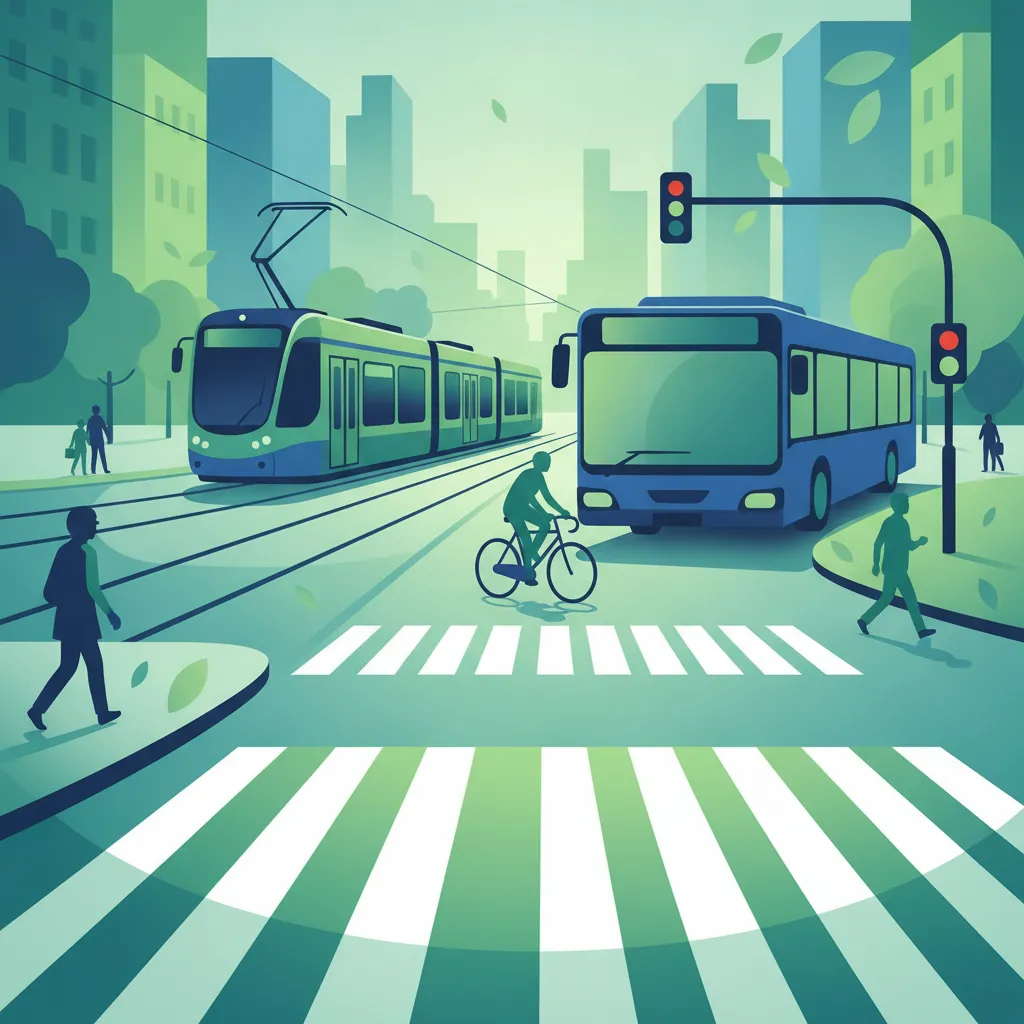
This lesson addresses the unique challenges and priority rules that apply when interacting with public transport and cyclists at intersections. It clarifies the specific right-of-way regulations for trams, which often have priority over other traffic, and the procedures for navigating around bus stops. The content also covers how to safely manage crossings with dedicated bicycle lanes, ensuring the protection of all road users.

Cities like Vienna and Graz have extensive tram networks that require special attention from bus drivers. This lesson covers the rules of priority concerning trams, the dangers of crossing tracks, and the specific hazards at shared stops where passengers cross traffic lanes. It emphasizes the need for extreme caution and clear communication with other road users in these complex environments.

This lesson focuses on the unique challenges presented by tram systems in Austrian cities. It teaches riders how to cross tracks at a safe angle to avoid tyres getting caught, especially in wet conditions, and explains the absolute priority trams have in most situations. Awareness around tram stops and bus lanes is also covered to ensure safe coexistence with public transport.
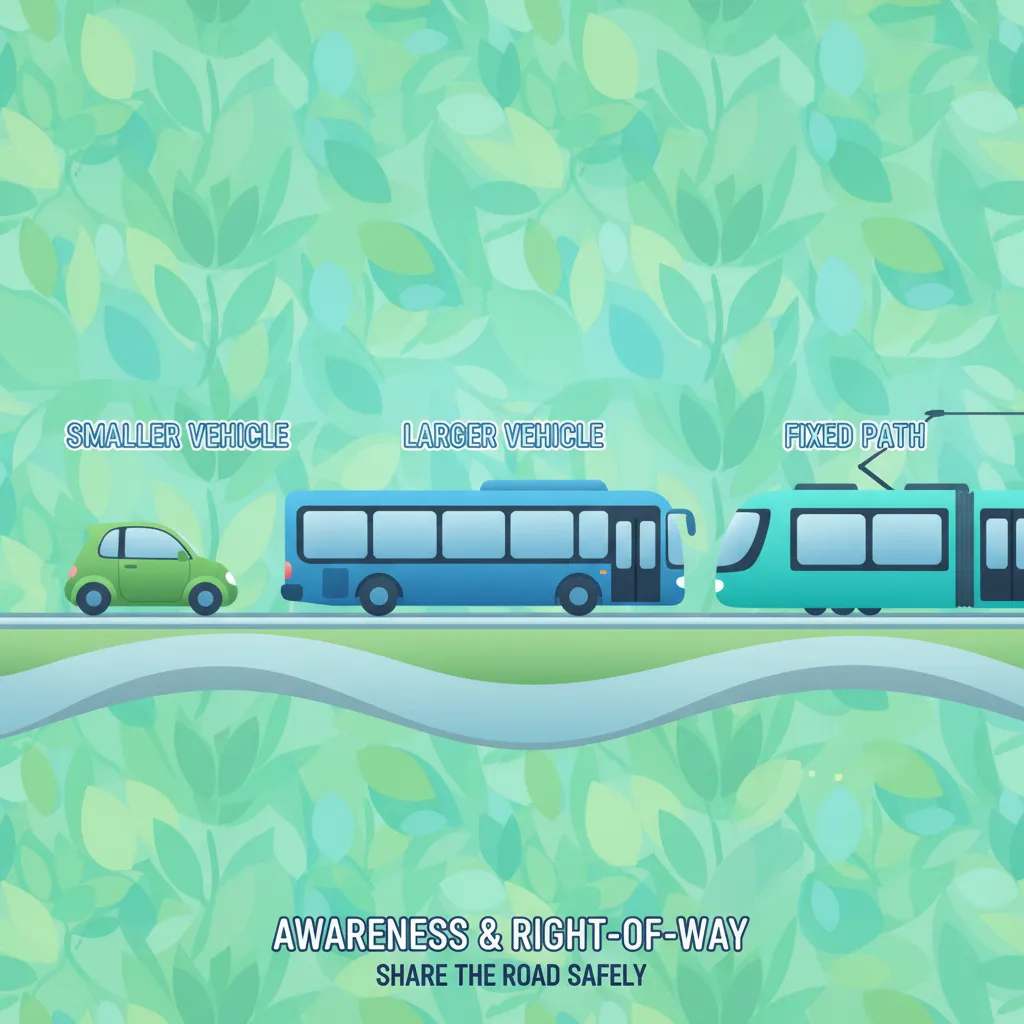
This lesson provides specific guidance for sharing the road with different types of vehicles in Austria. It covers the dangers of large vehicle blind spots, the rules for navigating near buses and dedicated tram tracks, and common conflict points at intersections. Understanding the behavior and limitations of other vehicles is key to safely navigating complex urban environments.
This lesson addresses the specific challenges of interacting with larger vehicles like buses and trams in an urban environment. It explains how to signal intentions clearly and predictably to avoid conflicts in shared spaces. Key topics include safely crossing tram tracks and maintaining awareness around public transport stops.
This lesson addresses the specific hazard of tram tracks in urban areas, which can be slippery and cause a loss of balance. It teaches the correct angle at which to cross tracks and the importance of being aware of tram signals and movements. The content also provides guidance for safely sharing road space near tram and bus stops.

Many Austrian cities use special signalling to give buses and trams priority at intersections. This lesson explains how to identify and understand these signals, which often use white bars or letters instead of standard colours. Learning to anticipate these signals allows for a smoother, more efficient driving style that takes full advantage of the public transport infrastructure.
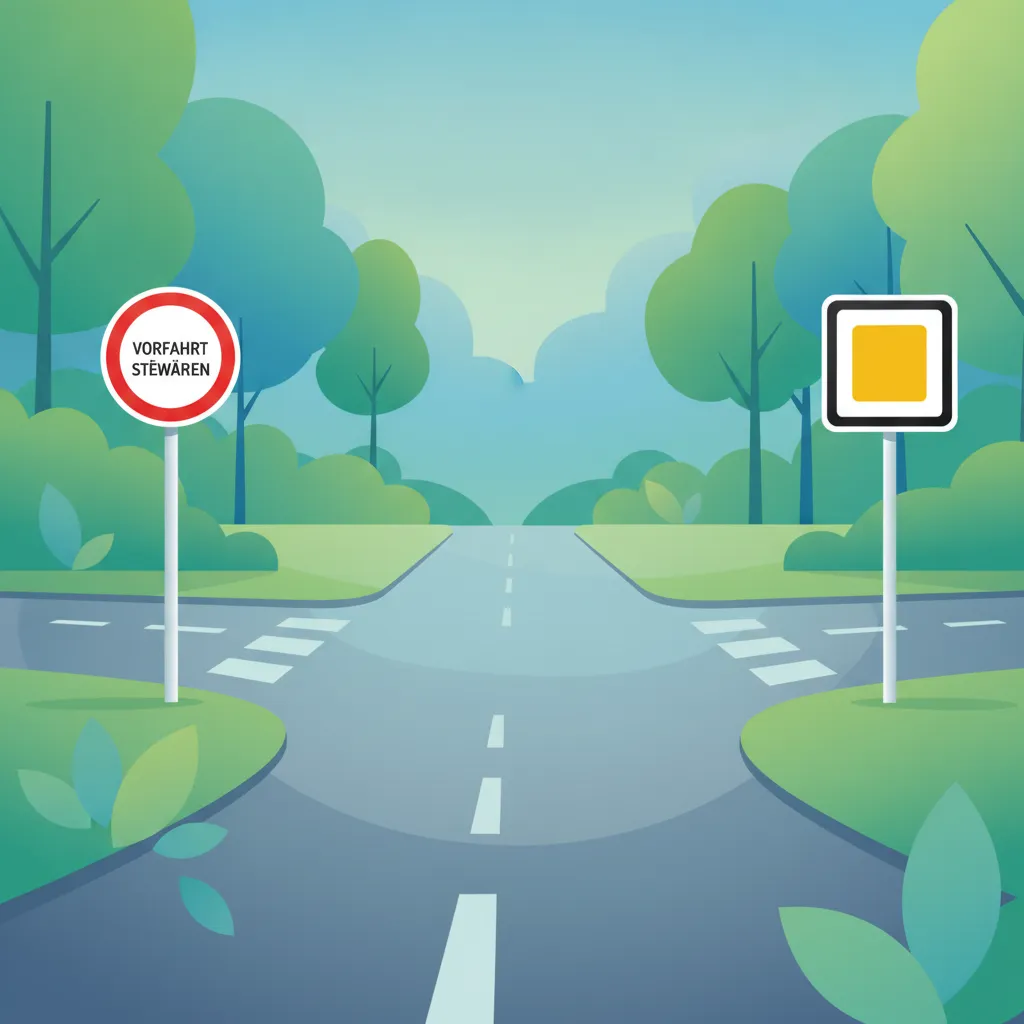
This lesson explains the fundamental concepts of priority that govern traffic at Austrian junctions. It differentiates between having priority ('Vorfahrt') and the duty to yield ('Nachrang'), detailing the signs that establish these rules. Correct application of these principles is critical for preventing collisions at intersections and roundabouts.
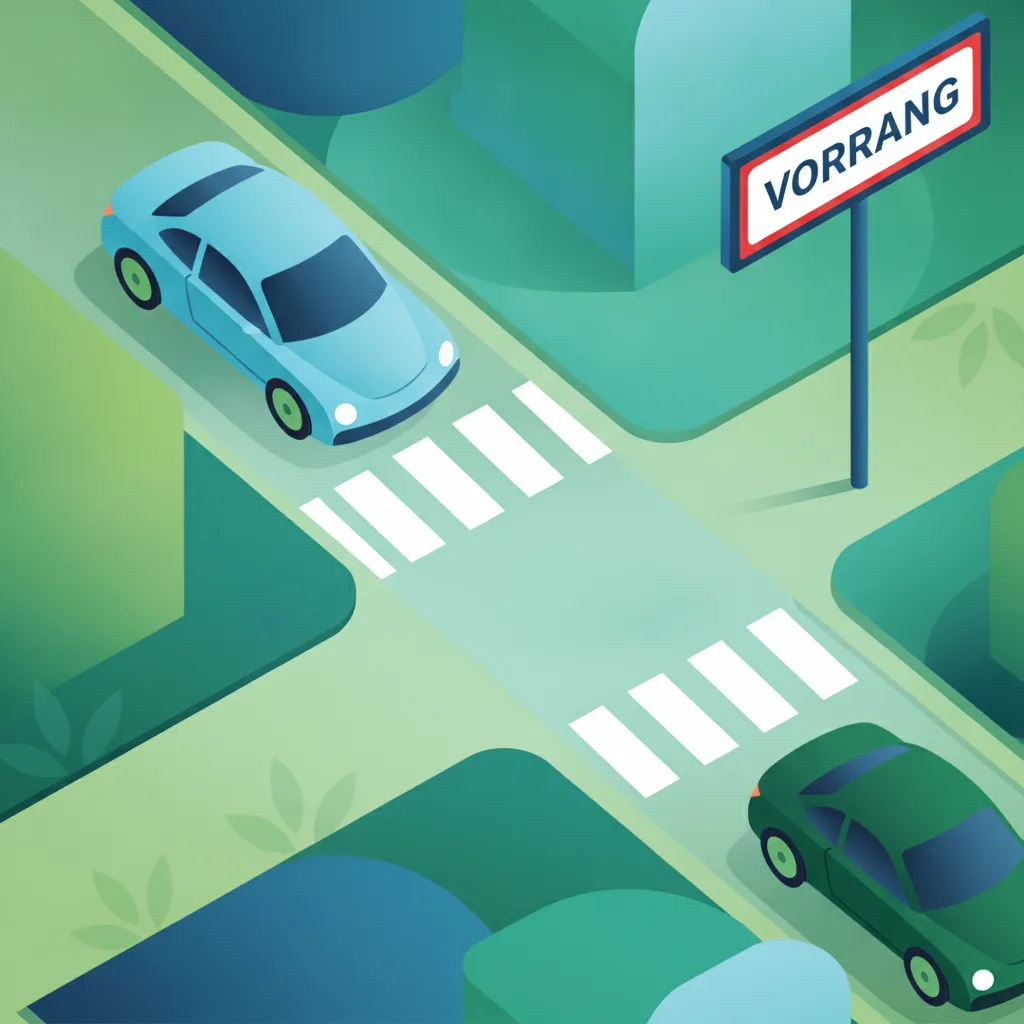
This lesson provides a detailed analysis of the core Austrian traffic rules that govern priority at junctions and in traffic. It focuses on the principles of Vorrang (having priority), Nachrang (yielding), and the Rechtsregel (default right-of-way from the right). Learners will understand the hierarchy of these rules and their application at various types of intersections, from unmarked junctions to those controlled by priority road signs, ensuring correct and safe decision-making.
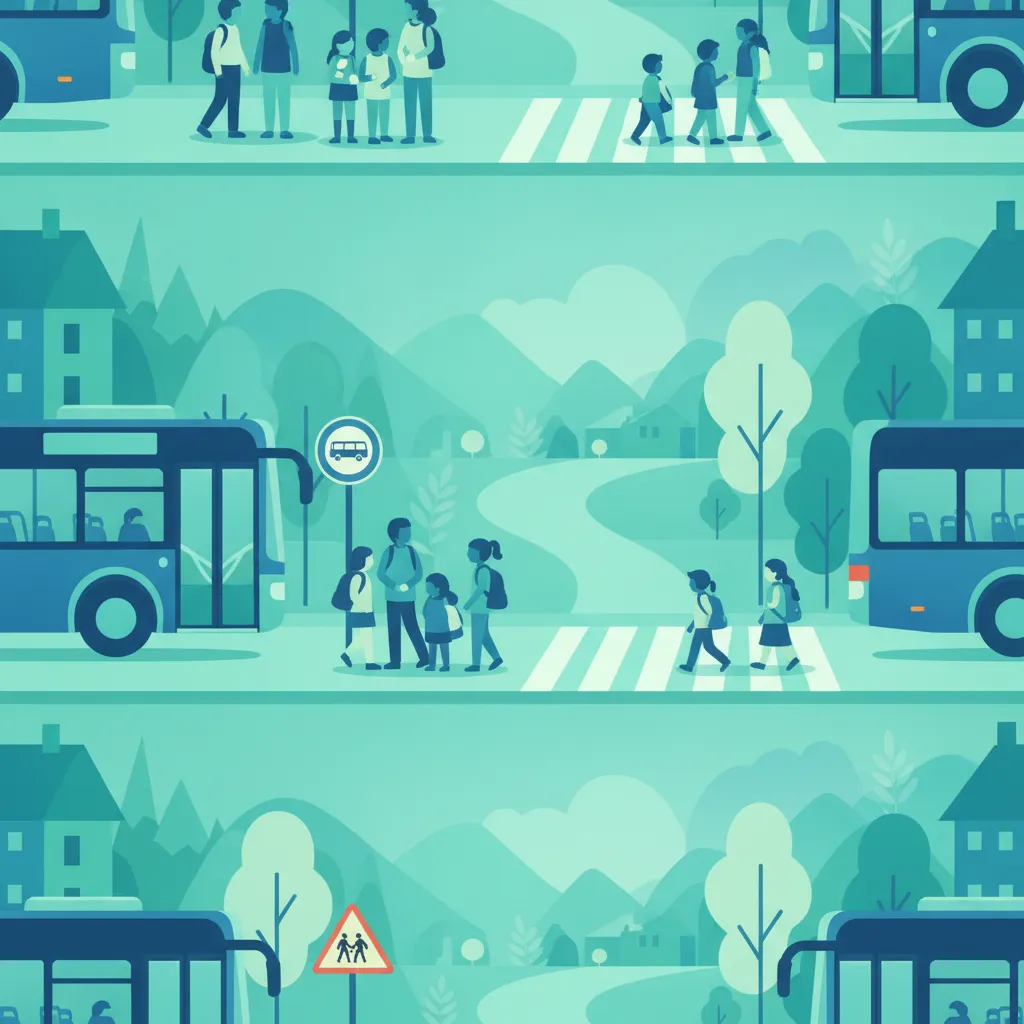
This lesson details the specific regulations and best practices for driving in areas with high pedestrian activity, such as bus stops and school zones. It explains the driver's obligation to stop for school buses with flashing lights and to yield to public buses pulling out from a stop. The content emphasizes the requirement to significantly reduce speed in marked school zones to ensure the safety of children.
Learn about frequent errors and violations drivers make when encountering trams in Austria. Understand how to avoid critical mistakes at tram stops, intersections, and in shared lanes for safer urban driving.
Cities like Vienna and Graz have extensive tram networks that require special attention from bus drivers. This lesson covers the rules of priority concerning trams, the dangers of crossing tracks, and the specific hazards at shared stops where passengers cross traffic lanes. It emphasizes the need for extreme caution and clear communication with other road users in these complex environments.
This lesson focuses on the unique challenges presented by tram systems in Austrian cities. It teaches riders how to cross tracks at a safe angle to avoid tyres getting caught, especially in wet conditions, and explains the absolute priority trams have in most situations. Awareness around tram stops and bus lanes is also covered to ensure safe coexistence with public transport.
This lesson provides specific guidance for sharing the road with different types of vehicles in Austria. It covers the dangers of large vehicle blind spots, the rules for navigating near buses and dedicated tram tracks, and common conflict points at intersections. Understanding the behavior and limitations of other vehicles is key to safely navigating complex urban environments.
This lesson addresses the unique challenges and priority rules that apply when interacting with public transport and cyclists at intersections. It clarifies the specific right-of-way regulations for trams, which often have priority over other traffic, and the procedures for navigating around bus stops. The content also covers how to safely manage crossings with dedicated bicycle lanes, ensuring the protection of all road users.
This lesson addresses the specific hazard of tram tracks in urban areas, which can be slippery and cause a loss of balance. It teaches the correct angle at which to cross tracks and the importance of being aware of tram signals and movements. The content also provides guidance for safely sharing road space near tram and bus stops.
This lesson addresses the specific challenges of interacting with larger vehicles like buses and trams in an urban environment. It explains how to signal intentions clearly and predictably to avoid conflicts in shared spaces. Key topics include safely crossing tram tracks and maintaining awareness around public transport stops.
Many Austrian cities use special signalling to give buses and trams priority at intersections. This lesson explains how to identify and understand these signals, which often use white bars or letters instead of standard colours. Learning to anticipate these signals allows for a smoother, more efficient driving style that takes full advantage of the public transport infrastructure.
This lesson explains the fundamental concepts of priority that govern traffic at Austrian junctions. It differentiates between having priority ('Vorfahrt') and the duty to yield ('Nachrang'), detailing the signs that establish these rules. Correct application of these principles is critical for preventing collisions at intersections and roundabouts.
This lesson details the specific regulations and best practices for driving in areas with high pedestrian activity, such as bus stops and school zones. It explains the driver's obligation to stop for school buses with flashing lights and to yield to public buses pulling out from a stop. The content emphasizes the requirement to significantly reduce speed in marked school zones to ensure the safety of children.

This lesson provides a comprehensive explanation of Austria's right-of-way laws, which are fundamental to intersection safety. It covers the meaning of different priority signs and clarifies the 'Rechts vor Links' (priority to the right) rule that applies at unmarked junctions. A clear understanding of these rules is essential to prevent conflicts and collisions in urban and rural settings.
Find clear answers to common questions learners have about Tram Traffic Interaction and Priority Rules. Learn how the lesson is structured, which driving theory objectives it supports, and how it fits into the overall learning path of units and curriculum progression in Austria. These explanations help you understand key concepts, lesson flow, and exam focused study goals.
Yes, as a general rule in the Austrian StVO, a tram has priority over other vehicles at intersections unless specific signs or traffic lights dictate otherwise. Always exercise extra caution when crossing tracks.
You may overtake a moving tram, but only if there is sufficient space and it can be done safely. However, you must never overtake a tram on the side where passengers board or alight unless there is a designated safety island.
If there is no safety island, you must stop behind the tram and allow passengers to board and alight safely. You must only proceed once it is safe to do so and the doors have closed.
Yes, trams often have their own specific traffic light signals (often featuring white horizontal or vertical bars). It is important to distinguish these from the standard circular traffic lights used for cars.
Refine your study plan by searching for specific Austrian driving theory practice sets. Pinpoint questions related to particular road rules, signs, or challenge levels, and begin practicing immediately to reinforce your knowledge and excel in your official exam with confidence. Get started with focused revision today.