
This lesson provides essential training on navigating roundabouts in Austria, focusing on the core priority rules that keep traffic moving safely. You will learn how to correctly manage entry, circulation, and exit procedures while understanding the specific traffic signs and markings you will encounter in the theory exam.
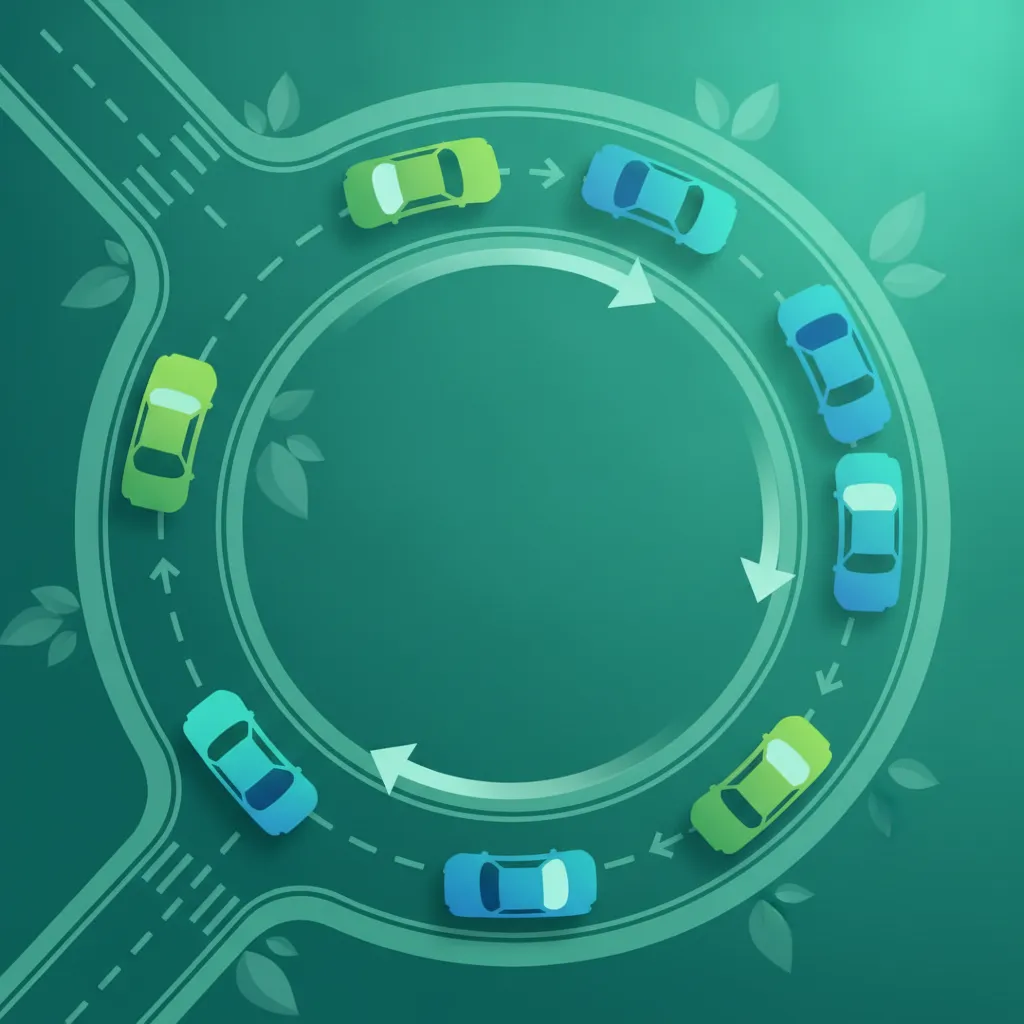
Lesson content overview
Roundabouts, known as Kreisverkehr in Austria, are common traffic solutions designed to improve safety and traffic flow at intersections. Mastering the rules for navigating these circular intersections is crucial for safe and efficient driving. This lesson provides a comprehensive guide to right-of-way, lane selection, signaling, and other essential practices when encountering roundabouts in Austria, adhering to the Straßenverkehrsordnung (StVO).
A roundabout is a type of circular intersection or junction in which road traffic flows in one direction around a central island. Instead of traffic signals, roundabouts use a give-way (yield) rule at entry points to ensure a continuous flow of traffic. This design reduces common points of conflict found in traditional intersections, leading to fewer severe accidents.
A circular intersection where traffic flows continuously in one direction around a central island, utilizing a give-way rule at entry points.
The primary purpose of a roundabout is to manage traffic merging and diverging. By converting intersection conflict points into yield points, roundabouts prevent head-on and right-angle collisions, which are typically the most severe types of accidents. They promote lower speeds, enhance safety for all road users, and often reduce delays compared to traffic light intersections.
In Austria, you will encounter various types of roundabouts, each with slight differences in navigation:
Roundabouts are engineered to enhance both safety and efficiency. They replace left turns across oncoming traffic with a series of right turns around a central island, significantly reducing severe collision types. The constant flow of traffic, without the need for full stops at traffic lights, minimizes delays, fuel consumption, and emissions, especially during off-peak hours. Studies consistently show that roundabouts can dramatically reduce the number of severe accidents compared to traditional intersections.
The most critical rule for navigating roundabouts in Austria is the give-way principle. This rule dictates that any vehicle approaching and intending to enter a roundabout must yield to traffic already circulating within it. This principle is enshrined in Austrian traffic law, specifically StVO § 145.
Vehicles approaching a roundabout must yield to traffic already circulating within it, allowing them to pass before entering.
When you approach a roundabout, your primary responsibility is to observe the traffic already inside the circle. You must slow down and be prepared to stop if necessary to allow any vehicle currently in the roundabout to proceed. This applies even if there are no specific give-way signs immediately at the entry point, as the presence of the roundabout sign (Sign 260) inherently implies this rule in Austria.
Never assume you have the right-of-way when entering a roundabout. Always be prepared to yield to circulating traffic, regardless of whether a specific give-way sign is present at the entry. The roundabout sign itself indicates the give-way obligation.
To ensure drivers are aware of an upcoming roundabout and its associated rules, specific road signs are used:
This sign informs you that you are approaching a roundabout. Upon seeing this sign, you should adjust your speed and prepare to yield. In some cases, a standard triangular give-way sign (Sign 115) may also precede the roundabout, reinforcing the yielding requirement.
Always look for these signs, as they provide critical information for safe and compliant entry into the roundabout.
Correct lane selection and vehicle positioning are essential for smooth and safe navigation, especially in multi-lane roundabouts. Choosing the right lane early prevents abrupt maneuvers and potential conflicts with other drivers.
Your intended exit dictates your lane choice when approaching and entering a roundabout:
Always check for overhead signs or road markings before entering a multi-lane roundabout. These provide crucial information about which lanes lead to which exits.
Multi-lane roundabouts demand careful attention to lane discipline. The general rule is:
Changing lanes within a multi-lane roundabout should be avoided unless absolutely necessary and only when specific lane markings allow it, and it is safe to do so. If you find yourself in the wrong lane, it is safer to go around the roundabout again (if possible and safe) or take an unintended exit and reroute, rather than making a dangerous lane change.
Before entering any roundabout, position your vehicle correctly within your chosen lane. Leave sufficient space to the vehicle in front of you, especially when waiting to yield. This allows you to react to sudden stops and gives you a better view of circulating traffic. Be prepared to slow down or stop completely to yield.
Clear communication with other road users is paramount for safety, and this is especially true when exiting a roundabout. Using your turn indicators correctly prevents confusion and reduces the risk of collisions.
According to StVO § 129, drivers must signal their intention to exit a roundabout using the right-turn indicator.
Drivers must use the vehicle’s right-turn indicator to communicate their intention to leave the roundabout.
The correct timing for signaling is crucial:
Do not signal left when circulating within the roundabout unless specific road markings or signage indicate it for specific lane usage in very complex multi-lane systems. Your primary signal within a roundabout is always the right-turn indicator to show your intention to exit.
Failure to signal your exit clearly and on time can lead to several dangerous situations:
A timely and clear right-turn signal allows others to anticipate your actions, facilitating smoother traffic flow and significantly reducing collision risk.
Appropriate speed management is key to navigating roundabouts safely. The circular geometry and the need to yield require drivers to reduce their speed significantly before entry and maintain a controlled speed while circulating.
StVO § 128 dictates that speed must be adapted to road conditions and circumstances. For roundabouts, this means:
Always maintain an adequate following distance from the vehicle in front of you, both when approaching the roundabout and while circulating. This distance increases your reaction time and helps prevent rear-end collisions, especially if the vehicle ahead needs to stop suddenly to yield or for a pedestrian.
Understanding the specific signs associated with roundabouts in Austria is vital. Beyond the primary Roundabout (Sign 260), you may encounter an Optional Roundabout sign, which changes your approach.
As discussed, Sign 260 indicates an obligatory roundabout with the inherent give-way rule. Always be vigilant for this sign to anticipate the need to yield.
A unique sign you might encounter is for an optional roundabout:
This sign indicates that while there is a roundabout, there is also a designated bypass route that allows you to continue straight without entering the circular flow.
If your destination is straight ahead, and an Optional Roundabout sign is present, using the bypass is often more efficient. It reduces the traffic load within the roundabout and can save you time. Drivers using the bypass must still be aware of any priority rules or pedestrian crossings along their route.
Roundabouts are shared spaces, and drivers must always be particularly attentive to vulnerable road users, including pedestrians and cyclists, especially at exit points.
Pedestrian crosswalks (Zebrastreifen) are commonly located just beyond the exit points of roundabouts.
Schutzweg). This is a fundamental principle of Austrian traffic law (StVO § 41).The interaction with cyclists in roundabouts can be complex:
StVO § 102, they must generally follow the same give-way rules as motor vehicles when entering and circulating.Always double-check your blind spots for cyclists before entering or exiting a roundabout, as they can be easily obscured by your vehicle's pillars.
Understanding common errors at roundabouts can help you avoid them and prevent accidents or legal penalties.
The most frequent and dangerous violation is entering a roundabout without yielding to circulating traffic. This directly contravenes StVO § 145.
StVO § 129) creates uncertainty for other drivers and pedestrians, increasing collision risk.StVO § 128) can lead to loss of control, overshooting exits, or an inability to yield safely.Optional Roundabout (Sign 252) is present can contribute to unnecessary congestion.StVO § 41).Driving safely through roundabouts also means adapting your behavior to various conditions, including weather, lighting, and your vehicle type.
Large vehicles like trucks, buses, and cars towing trailers require extra space and different maneuvering techniques:
When driving near heavy vehicles in a roundabout, never attempt to pass them on the side they are turning towards, as they may need to swing wide.
Austrian roundabouts (Kreisverkehr) operate under the give-way rule where circulating traffic always has priority (StVO § 145), requiring you to slow down and yield before entering. Lane discipline is essential: choose your lane based on your intended exit—right lane for first/second exits, left lane for third or later exits. Always signal your intention to exit using the right-turn indicator as you pass the exit before yours (StVO § 129), and maintain a speed of 20-30 km/h while circulating. Be especially vigilant for pedestrians at crosswalks and cyclists in the roadway or adjacent paths, yielding to them as required by Austrian traffic law.
A short set of high-value points that capture the most important learning from this lesson.
Vehicles already circulating in a roundabout always have priority; you must yield before entering regardless of whether a give-way sign is present
Your lane choice depends on your intended exit: right lane for first/second exits, left lane for third or later exits in multi-lane roundabouts
Always signal your exit with the right-turn indicator as you pass the exit immediately before your intended one
Reduce speed to 20-30 km/h when entering and circulating, adjusting further for weather conditions
Pedestrians on marked crosswalks (Zebrastreifen) at roundabout exits have absolute priority and must be yielded to
Explore all units and lessons included in this driving theory course.
StVO § 145 mandates yielding to circulating traffic at all Austrian roundabouts; Sign 260 alone implies this obligation
For first exits (right turns), enter in the rightmost lane and stay there; for third exits (left turns), enter left and transition outward before exiting
Right-turn signal must be activated before exiting—never use left signal within a standard roundabout unless specifically indicated
Cyclists using the roadway follow the same give-way rules as motor vehicles; always check blind spots for them
In multi-lane roundabouts, avoid changing lanes inside; if in the wrong lane, go around again or take an unintended exit rather than making dangerous maneuvers
Entering a roundabout without yielding to vehicles already circulating, the most frequent and dangerous violation
Using the wrong lane for your intended exit, forcing late and dangerous maneuvers across traffic
Failing to signal or signaling too early/late, causing confusion for entering traffic and those behind you
Speeding through the roundabout entry or circulating at excessive speed, reducing reaction time and increasing collision severity
Neglecting to check for pedestrians at crosswalks immediately after exiting, violating StVO § 41
Lesson content overview
A short set of high-value points that capture the most important learning from this lesson.
Vehicles already circulating in a roundabout always have priority; you must yield before entering regardless of whether a give-way sign is present
Your lane choice depends on your intended exit: right lane for first/second exits, left lane for third or later exits in multi-lane roundabouts
Always signal your exit with the right-turn indicator as you pass the exit immediately before your intended one
Reduce speed to 20-30 km/h when entering and circulating, adjusting further for weather conditions
Pedestrians on marked crosswalks (Zebrastreifen) at roundabout exits have absolute priority and must be yielded to
Explore all units and lessons included in this driving theory course.
StVO § 145 mandates yielding to circulating traffic at all Austrian roundabouts; Sign 260 alone implies this obligation
For first exits (right turns), enter in the rightmost lane and stay there; for third exits (left turns), enter left and transition outward before exiting
Right-turn signal must be activated before exiting—never use left signal within a standard roundabout unless specifically indicated
Cyclists using the roadway follow the same give-way rules as motor vehicles; always check blind spots for them
In multi-lane roundabouts, avoid changing lanes inside; if in the wrong lane, go around again or take an unintended exit rather than making dangerous maneuvers
Entering a roundabout without yielding to vehicles already circulating, the most frequent and dangerous violation
Using the wrong lane for your intended exit, forcing late and dangerous maneuvers across traffic
Failing to signal or signaling too early/late, causing confusion for entering traffic and those behind you
Speeding through the roundabout entry or circulating at excessive speed, reducing reaction time and increasing collision severity
Neglecting to check for pedestrians at crosswalks immediately after exiting, violating StVO § 41
Explore search topics learners often look for when studying Roundabouts: Right-of-Way and Flow Management. These topics reflect common questions about road rules, driving situations, safety guidance, and lesson level theory preparation for learners in Austria.
Browse additional driving theory lessons that cover connected traffic rules, road signs, and common driving situations related to this topic. Improve your understanding of how different rules interact across everyday traffic scenarios.
Explore detailed explanations of navigating complex multi-lane roundabouts in Austria. Learn advanced strategies for lane selection, yielding, and signaling in challenging circular intersections to enhance your understanding of traffic flow and safety.
This lesson provides clear instructions for maneuvering through single and multi-lane roundabouts. It covers the critical rule of giving way to traffic already in the circle, proper lane selection based on the intended exit, and the correct use of indicators when entering and exiting. Mastering roundabouts is key to efficient and safe travel in modern Austrian traffic systems.
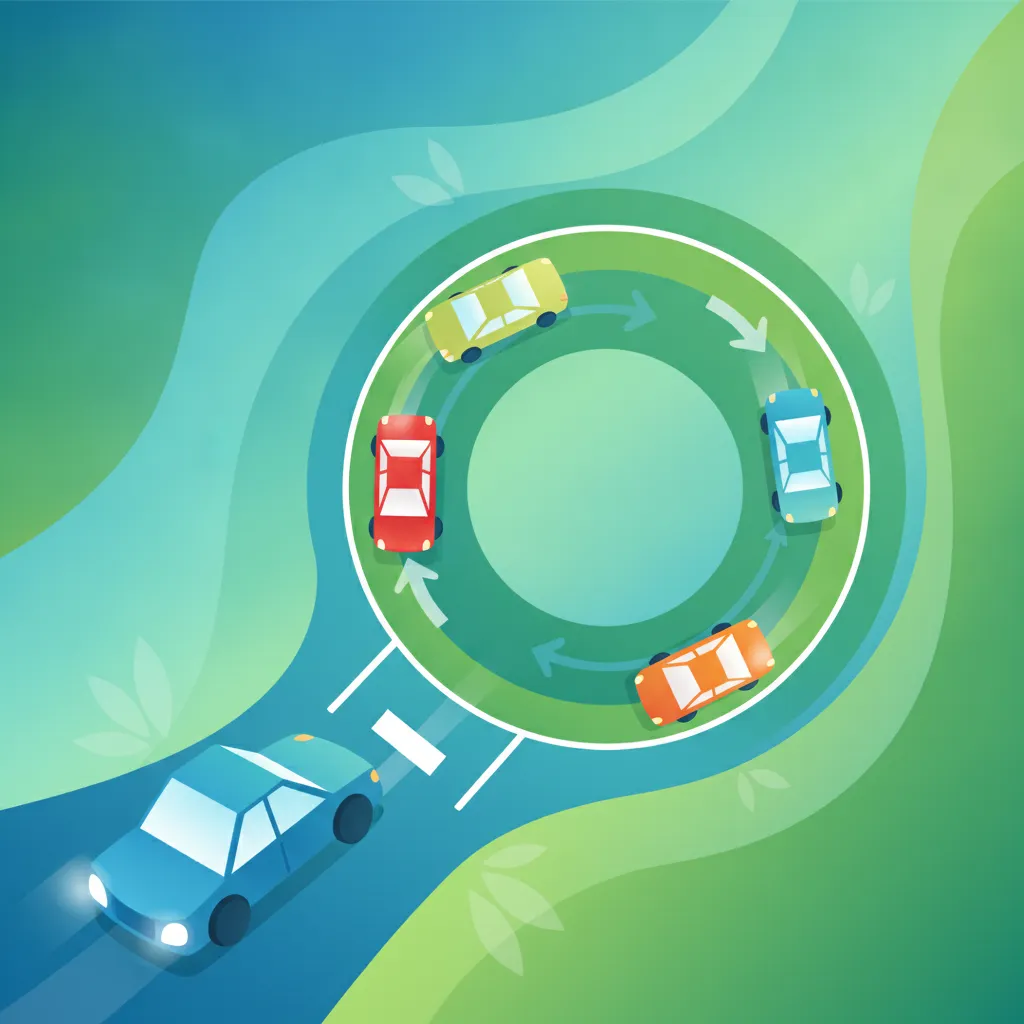
This lesson provides clear instructions on how to safely navigate roundabouts. It explains the critical rule of yielding to traffic already circulating and how to choose the correct lane based on the intended exit. The content also covers proper signaling procedures for entering and exiting the roundabout to communicate intentions clearly.

This lesson provides a detailed guide to executing turning manoeuvres safely and correctly at both intersections and roundabouts. It explains the importance of proper lane positioning well in advance of the turn, the correct timing for signaling, and the necessity of checking for pedestrians and cyclists. The content also reinforces priority rules that apply when turning, particularly when crossing the path of oncoming traffic during a left turn.

This lesson addresses advanced manoeuvres that require precise timing and judgment, such as merging onto a motorway from an acceleration lane. It explains the importance of matching the speed of the traffic flow and finding a safe gap before moving over. The content also covers procedures for navigating lane drops and the 'zipper merge' (Reißverschlusssystem) principle in congested situations, promoting efficient and cooperative driving.

This lesson teaches a safe, methodical process for navigating intersections. It stresses the importance of proper lane positioning on approach, comprehensive visual scans for cross-traffic, pedestrians, and cyclists, and clear communication of intent. Special attention is given to the increased risks associated with left turns across oncoming traffic.
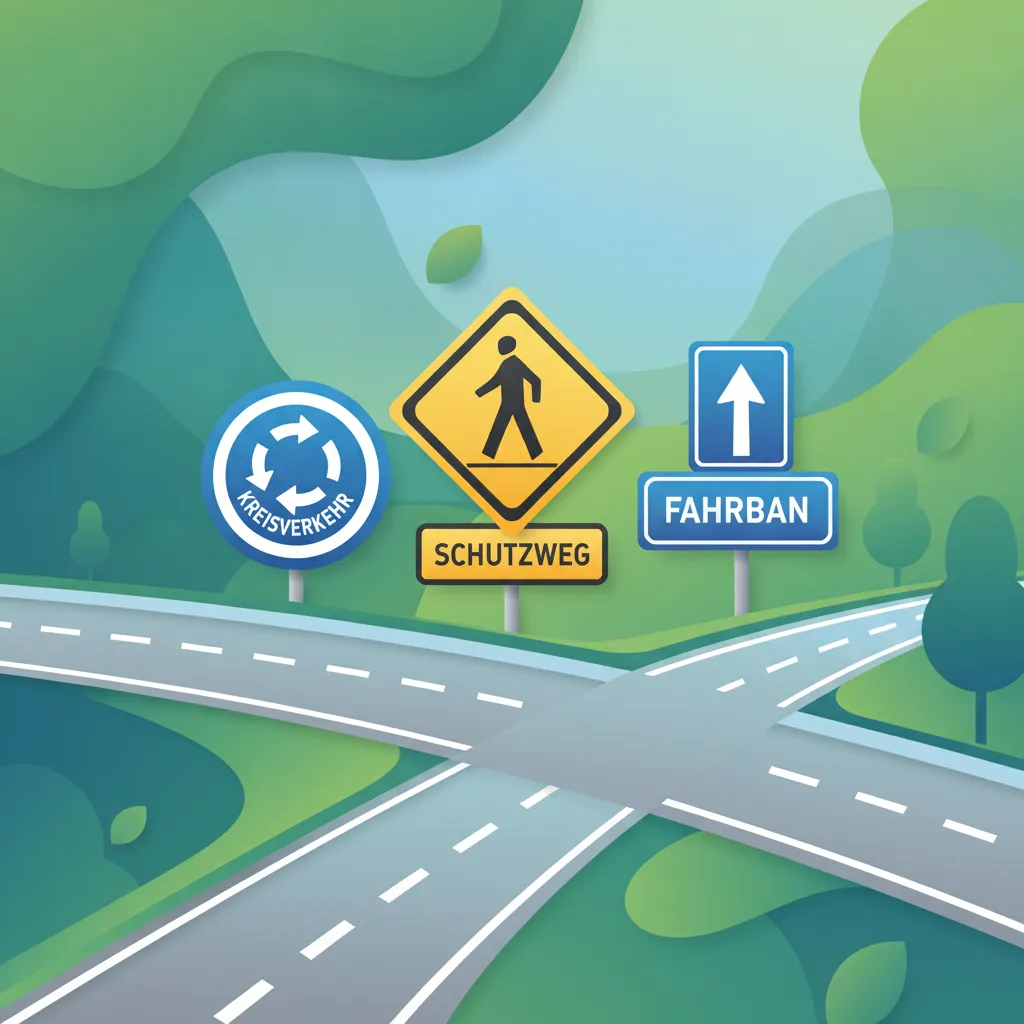
This lesson covers the specific regulations associated with special Austrian road signs and areas. It details the rules for 'Schutzweg' (protected pedestrian crossings), 'Kreisverkehr' (roundabouts), and the distinction between 'Fahrbahn' (road) and 'Fahrstreifen' (lane). Understanding these specific contexts is essential for safe navigation in urban and suburban environments.

Many Austrian towns and city centres feature narrow roads not designed for large vehicles. This lesson provides strategies for assessing tight spaces, positioning the vehicle to maximize clearance, and navigating complex, non-standard junctions. It emphasizes the importance of slow speeds, constant observation, and understanding the vehicle's swept path to avoid contact with buildings, street furniture, and other vehicles.
This lesson examines various common intersection layouts, including T-intersections, four-way junctions, and complex multi-lane crossings. It explains how right-of-way is determined in each scenario, whether through traffic signals, stop or yield signs, or the default right-hand rule. Understanding how to identify conflict points and apply the correct priority rule is essential for preventing collisions and ensuring smooth traffic movement.

This lesson explores the distinct challenges of urban driving, focusing on managing the vehicle in dense, slow-moving, or stop-and-go traffic. It covers strategies for effective lane management, anticipating traffic signal changes, and navigating common city road features like one-way streets and traffic calming measures. Understanding these dynamics helps reduce stress and improve safety in congested environments.

This lesson introduces the proactive mindset of defensive driving, which focuses on anticipating potential hazards rather than just reacting to them. It teaches techniques for systematic risk assessment, including scanning the road ahead, checking mirrors frequently, and being aware of the potential actions of other road users. By adopting these safe habits, drivers can create a buffer of safety around their vehicle and significantly reduce the likelihood of being involved in an accident.
Understand the typical errors drivers make in Austrian roundabouts, including priority violations and signaling confusion. Learn essential safety practices for interacting with cyclists and pedestrians to navigate these intersections confidently and avoid hazards.
This lesson provides clear instructions on how to safely navigate roundabouts. It explains the critical rule of yielding to traffic already circulating and how to choose the correct lane based on the intended exit. The content also covers proper signaling procedures for entering and exiting the roundabout to communicate intentions clearly.
This lesson provides clear instructions for maneuvering through single and multi-lane roundabouts. It covers the critical rule of giving way to traffic already in the circle, proper lane selection based on the intended exit, and the correct use of indicators when entering and exiting. Mastering roundabouts is key to efficient and safe travel in modern Austrian traffic systems.

This lesson provides a comprehensive explanation of Austria's right-of-way laws, which are fundamental to intersection safety. It covers the meaning of different priority signs and clarifies the 'Rechts vor Links' (priority to the right) rule that applies at unmarked junctions. A clear understanding of these rules is essential to prevent conflicts and collisions in urban and rural settings.
This lesson provides a detailed guide to executing turning manoeuvres safely and correctly at both intersections and roundabouts. It explains the importance of proper lane positioning well in advance of the turn, the correct timing for signaling, and the necessity of checking for pedestrians and cyclists. The content also reinforces priority rules that apply when turning, particularly when crossing the path of oncoming traffic during a left turn.

This lesson teaches drivers how to safely coexist with cyclists and pedestrians, who are prevalent in urban areas. It covers the rules for dedicated bike lanes (Radweg), the importance of yielding to pedestrians in designated zones, and the need for extra caution when turning or opening car doors. Maintaining safe overtaking distances and anticipating the movements of these vulnerable road users are key themes for preventing accidents.

This lesson addresses the specific danger of right-hand turns, where cyclists and pedestrians in the vehicle's right-side blind spot are at high risk. It covers the defensive driving techniques required, including careful observation, slow speed, and yielding the right-of-way. These procedures are critical for preventing serious accidents in urban areas.
This lesson covers the specific regulations associated with special Austrian road signs and areas. It details the rules for 'Schutzweg' (protected pedestrian crossings), 'Kreisverkehr' (roundabouts), and the distinction between 'Fahrbahn' (road) and 'Fahrstreifen' (lane). Understanding these specific contexts is essential for safe navigation in urban and suburban environments.
This lesson prepares riders for safely transiting through construction zones ('Baustellen'). It covers the interpretation of temporary signage, adherence to reduced speed limits, and awareness of hazards suchas altered lane markings, abrupt surface changes, and loose gravel. Respecting the safety of road workers and anticipating unpredictable traffic patterns are key themes.
This lesson teaches a safe, methodical process for navigating intersections. It stresses the importance of proper lane positioning on approach, comprehensive visual scans for cross-traffic, pedestrians, and cyclists, and clear communication of intent. Special attention is given to the increased risks associated with left turns across oncoming traffic.
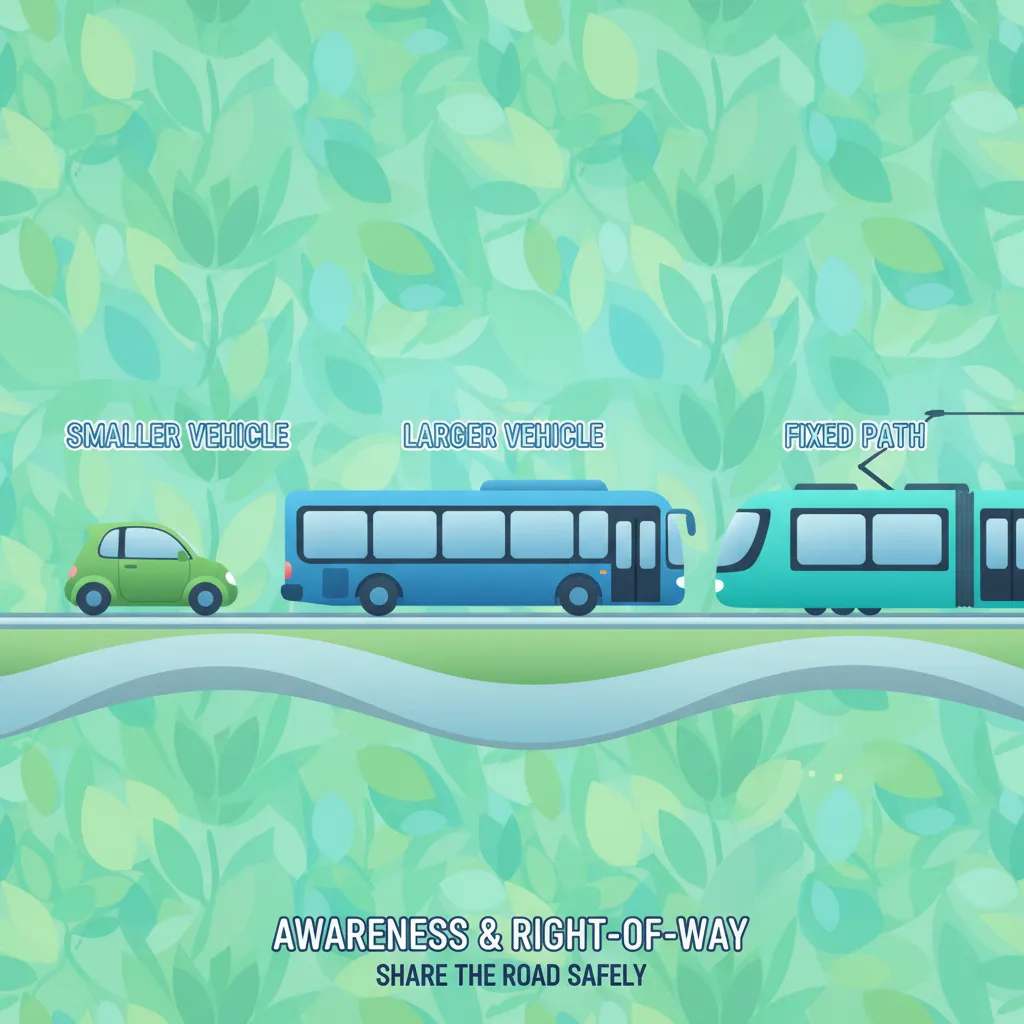
This lesson provides specific guidance for sharing the road with different types of vehicles in Austria. It covers the dangers of large vehicle blind spots, the rules for navigating near buses and dedicated tram tracks, and common conflict points at intersections. Understanding the behavior and limitations of other vehicles is key to safely navigating complex urban environments.
Find clear answers to common questions learners have about Roundabouts: Right-of-Way and Flow Management. Learn how the lesson is structured, which driving theory objectives it supports, and how it fits into the overall learning path of units and curriculum progression in Austria. These explanations help you understand key concepts, lesson flow, and exam focused study goals.
Yes, in Austria, traffic already circulating in the roundabout generally has priority over those entering. You must wait for a safe gap before merging into the flow.
No, you do not use your turn signal when entering a roundabout. You must, however, signal when you intend to exit to inform other drivers of your path.
Cyclists are vulnerable road users who often ride along the edge of the roundabout. Always perform a thorough shoulder check before changing lanes or exiting to ensure no cyclists are in your blind spot.
Yes. If traffic lights are installed at a roundabout, you must follow the light signals regardless of the standard roundabout priority rules.
Refine your study plan by searching for specific Austrian driving theory practice sets. Pinpoint questions related to particular road rules, signs, or challenge levels, and begin practicing immediately to reinforce your knowledge and excel in your official exam with confidence. Get started with focused revision today.