
This lesson guides you through the complexities of interacting with trams and public transport on your motorcycle. You will learn to navigate tracks, recognize tram priority, and manage your positioning safely to avoid common urban traffic risks.
Lesson content overview
Navigating urban environments on a motorcycle presents a unique set of challenges, especially in Austrian cities where tram networks are an integral part of public transport. These rail-bound vehicles share road space with other traffic, creating specific hazards for motorcyclists. This lesson, part of the Austrian Motorcycle Theory: Comprehensive Guide for A, A1, & A2 Licences, will equip you with the essential knowledge and techniques to safely interact with trams and buses, understanding their priority and the particular risks associated with tram tracks.
Tram tracks, while crucial for public transport, introduce distinct dangers for motorcyclists. Unlike other vehicles, trams cannot deviate from their fixed path, making them inflexible in responding to unexpected movements from other road users. The steel rails themselves pose a physical hazard to motorcycle tyres, particularly when encountered at an unsafe angle or in adverse weather conditions.
The primary concerns for riders include the risk of a tyre getting caught in the rail groove, reduced traction on the smooth metal surface, and the absolute priority trams typically hold in traffic. Recognising and mitigating these risks is fundamental to safe urban riding in Austria.
When a motorcycle tyre crosses a tram track, its contact patch momentarily transitions from asphalt to a narrow, hard steel rail. This transition is critical. If the tyre's angle relative to the rail is too shallow, the tyre can become wedged in the groove or slide along the rail, leading to a loss of grip and control.
Furthermore, the coefficient of friction between rubber and steel is significantly lower than between rubber and asphalt, especially when the rails are wet, icy, or contaminated with oil. In such conditions, even a slight change in angle or an abrupt maneuver can lead to immediate traction loss, potentially causing a skid or fall. Riders must adjust their approach, speed, and braking technique when encountering tracks to prevent such incidents.
Wet tram tracks are extremely slippery. The combination of water and metal drastically reduces tyre grip, making sudden braking, acceleration, or steering over tracks highly dangerous.
One of the most critical rules to understand when riding near tram tracks in Austria is the principle of absolute priority granted to trams. This means that, in most situations, trams have the unequivocal right of way over all other road users, regardless of standard right-of-way rules or even some traffic signals.
The legal requirement that trams have the right to proceed uninterrupted at any point where they intersect or cross other traffic, unless explicitly overridden by specific signage or a traffic controller.
This priority reflects the tram's inability to swerve, its long braking distances, and its role in maintaining public transport schedules. As a motorcyclist, you must always anticipate tram movements and be prepared to yield.
At intersections where tram tracks cross your path, you must yield to an approaching tram, even if you normally have right-of-way or if the traffic light is green for your direction. Trams often have their own specific light signals (flashing yellow or white lights) that indicate their priority. Always be vigilant for these signals and the presence of trams.
When approaching any intersection with tram tracks, look both ways several times for trams, especially before committing to the intersection. Do not assume a green light for your direction automatically means a tram will stop.
In situations without traffic lights (uncontrolled intersections), if a tram is approaching, it always has priority. Your understanding of general right-of-way rules must be adapted to account for tram priority.
Failing to respect tram priority can lead to severe consequences, including collisions, significant injuries, and legal penalties. Trams have limited visibility to their sides, and due to their mass, cannot stop quickly or swerve to avoid obstacles. It is entirely the responsibility of other road users to ensure they do not impede a tram's path.
Crossing tram tracks requires a specific technique to minimize the risk of losing traction or having a tyre snag. The goal is to traverse the rails as quickly and as perpendicularly as possible.
The most critical rule for crossing tram tracks is to do so at an angle as close to 90 degrees (perpendicular) as possible. This minimizes the length of time your tyre is in contact with the rail and reduces the chance of it slipping or getting caught in the groove.
Scan Ahead: Identify tram tracks well in advance. Plan your approach and exit path.
Adjust Lane Position: Maneuver your motorcycle to create a trajectory that allows for a near-perpendicular crossing. This may mean moving slightly left or right within your lane.
Maintain Steady Speed: Do not accelerate or brake sharply while on the tracks. Maintain a steady, controlled speed that allows you to easily cross without sudden inputs.
Keep the Motorcycle Upright: Avoid leaning significantly when crossing. Keep the motorcycle as upright as possible to maximize the tyre's contact patch across the rail.
Look Where You Want to Go: Focus your vision beyond the tracks, towards your intended path, to help guide your motorcycle smoothly.
Crossing at a shallow angle, for instance, 30 or 45 degrees, increases the risk significantly. The tyre has more time to slide along the rail, and the risk of the tyre edge catching the groove is much higher.
While a steady speed is advised during the crossing, you should reduce your overall speed when approaching tram tracks, especially in adverse conditions. This gives you more time to assess the situation, adjust your line, and react if necessary.
Avoid braking directly over tram tracks. If you need to brake, do so before reaching the tracks or after you have completely cleared them. Braking on the smooth, hard rail surfaces can easily cause a wheel to lock, leading to a loss of control.
When riding in wet conditions, treat tram tracks with extreme caution. Reduce speed significantly and ensure your crossing angle is as close to 90 degrees as possible. Smooth, controlled inputs are paramount.
Tram stops are dynamic environments where pedestrians, trams, and other vehicles converge. As a motorcyclist, special awareness is required to ensure the safety of disembarking and embarking passengers, as well as your own.
A crucial rule in Austria is that you must not overtake a tram that is stopped at a designated tram stop to allow passengers to board or alight. This rule is in place to protect passengers who may be crossing the road to or from the tram.
You must wait behind the tram until it has resumed motion and all passengers have safely cleared the roadway. Even if it appears there are no passengers, the rule applies to prevent dangerous assumptions.
Passengers getting on or off a tram may not always be looking out for approaching motorcycles. They might step directly into your path, assuming traffic will yield. Maintain a safe distance and be prepared for unexpected pedestrian movements around tram stops. Slow down and cover your brakes when approaching these areas.
Tram stops can vary in design, from simple road markings to raised platforms. Be aware of painted areas, pedestrian crossings, and specific signs that denote a tram stop. These markings often include yellow lines or specific symbols indicating areas of restricted movement for other vehicles.
Bus lanes are designated sections of the road reserved primarily for public transport buses. Their purpose is to ensure efficient and uninterrupted public transport flow, reducing congestion and travel times for bus passengers.
In Austria, motorcycles are generally not permitted to use bus lanes unless explicitly indicated by specific signage. Signs for bus lanes typically feature a bus symbol, and if other vehicles are allowed, their symbols (e.g., a motorcycle symbol) will also be present on the sign or on supplementary plates.
Always look for the appropriate signage. Do not assume that an empty bus lane means you can use it. Unauthorised use of a bus lane can result in fines and obstruct public transport, potentially creating unsafe situations.
Even if you are not permitted to use a bus lane, you must be aware of its presence and maintain proper lane discipline. Do not straddle the line separating a regular lane from a bus lane. Be prepared for buses to move in and out of their designated lane, especially when approaching bus stops or intersections.
Riding in urban areas with trams and buses requires constant vigilance and a proactive approach to safety.
Always maintain a high level of situational awareness. Trams are large, but their movement can sometimes be obscured by other traffic or buildings. Use your mirrors frequently and perform head checks to ensure you are aware of trams approaching from behind or the side.
Be predictable in your own movements. Use clear signals for turns and lane changes. Avoid sudden maneuvers that could surprise a tram driver or bus driver who might have limited visibility of smaller vehicles.
Weather conditions significantly impact safety. On wet or icy days, not only are tram tracks more hazardous, but overall braking distances for all vehicles, including trams and buses, are increased. Adjust your speed and increase your following distances accordingly.
Time of day also plays a role. At night or in low-light conditions, tram tracks can be harder to spot. Ensure your motorcycle's lights are functioning correctly and reduce speed in areas with poor illumination.
Road type and density of traffic affect how you interact with public transport. In narrow streets, your positioning may be more critical to avoid encroaching on tram or bus space. In wider avenues, dedicated tram lanes might separate you from the tracks, but awareness of cross-traffic remains vital.
Understanding common errors is key to preventing accidents.
Mastering the interaction with trams and buses is a vital skill for any motorcyclist in Austrian urban environments.
By integrating these principles into your riding habits, you will significantly enhance your safety and the safety of others when sharing the road with Austria's public transport systems.
This lesson covers the critical skills for navigating Austrian urban environments with tram tracks and public transport. Trams hold absolute priority over all other road users, requiring riders to always yield regardless of traffic signals or standard right-of-way rules. The most important technique is crossing tracks at a near-90-degree angle while keeping the motorcycle upright and maintaining steady speed, never braking on the rails. Wet conditions dramatically increase danger by reducing tyre grip on steel surfaces. Riders must also respect tram stop rules by never overtaking stopped trams, and only use bus lanes when explicitly permitted by signage. These rules and techniques are essential for both safe urban riding and passing the Austrian motorcycle theory exam.
A short set of high-value points that capture the most important learning from this lesson.
Trams have absolute priority in most traffic situations, overriding standard right-of-way rules and even green traffic signals for your direction.
Always cross tram tracks at an angle as close to 90 degrees as possible to minimize tyre-rail contact time and prevent snagging or slipping.
Wet tram tracks are extremely slippery because water drastically reduces the friction between rubber tyres and steel rails.
You must never overtake a tram that is stopped at a designated tram stop to board or alight passengers; wait until it moves and passengers clear.
Motorcycles are generally prohibited from using bus lanes unless specific signage explicitly permits them.
Explore all units and lessons included in this driving theory course.
The absolute priority rule means you must yield to trams even when you would normally have right-of-way or have a green light.
Brake before reaching tram tracks or after clearing them completely; never brake while directly on the rails.
Use a step-by-step approach: scan ahead, adjust lane position, maintain steady speed, keep the motorcycle upright, and look where you want to go.
Passengers boarding or alighting trams may step into your path without looking; slow down and cover your brakes near tram stops.
When riding in wet or icy conditions, reduce speed significantly and ensure your crossing angle remains near-perpendicular.
Riding parallel along tram tracks instead of crossing them at a right angle, which increases the risk of tyres catching in the groove.
Overtaking a tram that is stopped at a tram stop, which is a serious safety violation that endangers boarding passengers.
Entering bus lanes without checking for explicit permission signage, resulting in fines and obstruction of public transport.
Crossing tram tracks at a shallow angle (30 to 45 degrees) instead of near-perpendicular, dramatically increasing slip risk.
Failing to yield to trams due to assuming a green traffic light overrides tram priority; always verify tram presence before proceeding.
Lesson content overview
A short set of high-value points that capture the most important learning from this lesson.
Trams have absolute priority in most traffic situations, overriding standard right-of-way rules and even green traffic signals for your direction.
Always cross tram tracks at an angle as close to 90 degrees as possible to minimize tyre-rail contact time and prevent snagging or slipping.
Wet tram tracks are extremely slippery because water drastically reduces the friction between rubber tyres and steel rails.
You must never overtake a tram that is stopped at a designated tram stop to board or alight passengers; wait until it moves and passengers clear.
Motorcycles are generally prohibited from using bus lanes unless specific signage explicitly permits them.
Explore all units and lessons included in this driving theory course.
The absolute priority rule means you must yield to trams even when you would normally have right-of-way or have a green light.
Brake before reaching tram tracks or after clearing them completely; never brake while directly on the rails.
Use a step-by-step approach: scan ahead, adjust lane position, maintain steady speed, keep the motorcycle upright, and look where you want to go.
Passengers boarding or alighting trams may step into your path without looking; slow down and cover your brakes near tram stops.
When riding in wet or icy conditions, reduce speed significantly and ensure your crossing angle remains near-perpendicular.
Riding parallel along tram tracks instead of crossing them at a right angle, which increases the risk of tyres catching in the groove.
Overtaking a tram that is stopped at a tram stop, which is a serious safety violation that endangers boarding passengers.
Entering bus lanes without checking for explicit permission signage, resulting in fines and obstruction of public transport.
Crossing tram tracks at a shallow angle (30 to 45 degrees) instead of near-perpendicular, dramatically increasing slip risk.
Failing to yield to trams due to assuming a green traffic light overrides tram priority; always verify tram presence before proceeding.
Explore search topics learners often look for when studying Riding Near Tram Tracks and Public Transport. These topics reflect common questions about road rules, driving situations, safety guidance, and lesson level theory preparation for learners in Austria.
Browse additional driving theory lessons that cover connected traffic rules, road signs, and common driving situations related to this topic. Improve your understanding of how different rules interact across everyday traffic scenarios.
Understand the absolute priority of trams and the rules for bus lanes in Austria. Learn essential theory for safely navigating urban areas with public transport, focusing on priority rules and rider responsibilities.
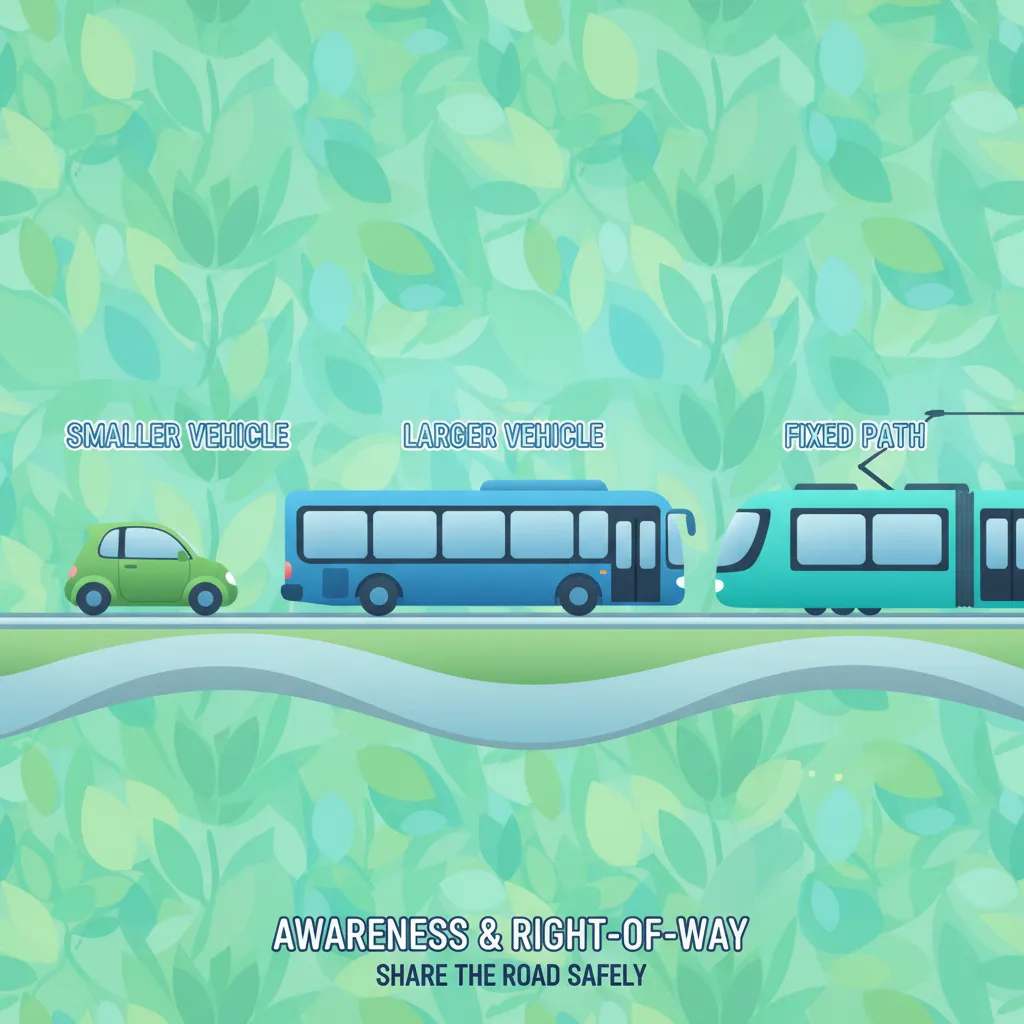
This lesson provides specific guidance for sharing the road with different types of vehicles in Austria. It covers the dangers of large vehicle blind spots, the rules for navigating near buses and dedicated tram tracks, and common conflict points at intersections. Understanding the behavior and limitations of other vehicles is key to safely navigating complex urban environments.
This lesson addresses the unique challenges and priority rules that apply when interacting with public transport and cyclists at intersections. It clarifies the specific right-of-way regulations for trams, which often have priority over other traffic, and the procedures for navigating around bus stops. The content also covers how to safely manage crossings with dedicated bicycle lanes, ensuring the protection of all road users.

Cities like Vienna and Graz have extensive tram networks that require special attention from bus drivers. This lesson covers the rules of priority concerning trams, the dangers of crossing tracks, and the specific hazards at shared stops where passengers cross traffic lanes. It emphasizes the need for extreme caution and clear communication with other road users in these complex environments.

This lesson focuses on the specific regulations and safety protocols for driving near trams (Straßenbahn) in Austrian cities. It clarifies the priority rules, which almost always favor the tram, and explains how to safely share lanes or cross tram tracks. The content provides critical guidance on how to behave at tram stops, ensuring the safety of boarding and alighting passengers is always the primary concern.
This lesson addresses the specific hazard of tram tracks in urban areas, which can be slippery and cause a loss of balance. It teaches the correct angle at which to cross tracks and the importance of being aware of tram signals and movements. The content also provides guidance for safely sharing road space near tram and bus stops.
This lesson addresses the specific challenges of interacting with larger vehicles like buses and trams in an urban environment. It explains how to signal intentions clearly and predictably to avoid conflicts in shared spaces. Key topics include safely crossing tram tracks and maintaining awareness around public transport stops.

Many Austrian cities use special signalling to give buses and trams priority at intersections. This lesson explains how to identify and understand these signals, which often use white bars or letters instead of standard colours. Learning to anticipate these signals allows for a smoother, more efficient driving style that takes full advantage of the public transport infrastructure.
This lesson details the specific regulations and best practices for driving in areas with high pedestrian activity, such as bus stops and school zones. It explains the driver's obligation to stop for school buses with flashing lights and to yield to public buses pulling out from a stop. The content emphasizes the requirement to significantly reduce speed in marked school zones to ensure the safety of children.

This lesson provides a comprehensive explanation of Austria's right-of-way laws, which are fundamental to intersection safety. It covers the meaning of different priority signs and clarifies the 'Rechts vor Links' (priority to the right) rule that applies at unmarked junctions. A clear understanding of these rules is essential to prevent conflicts and collisions in urban and rural settings.
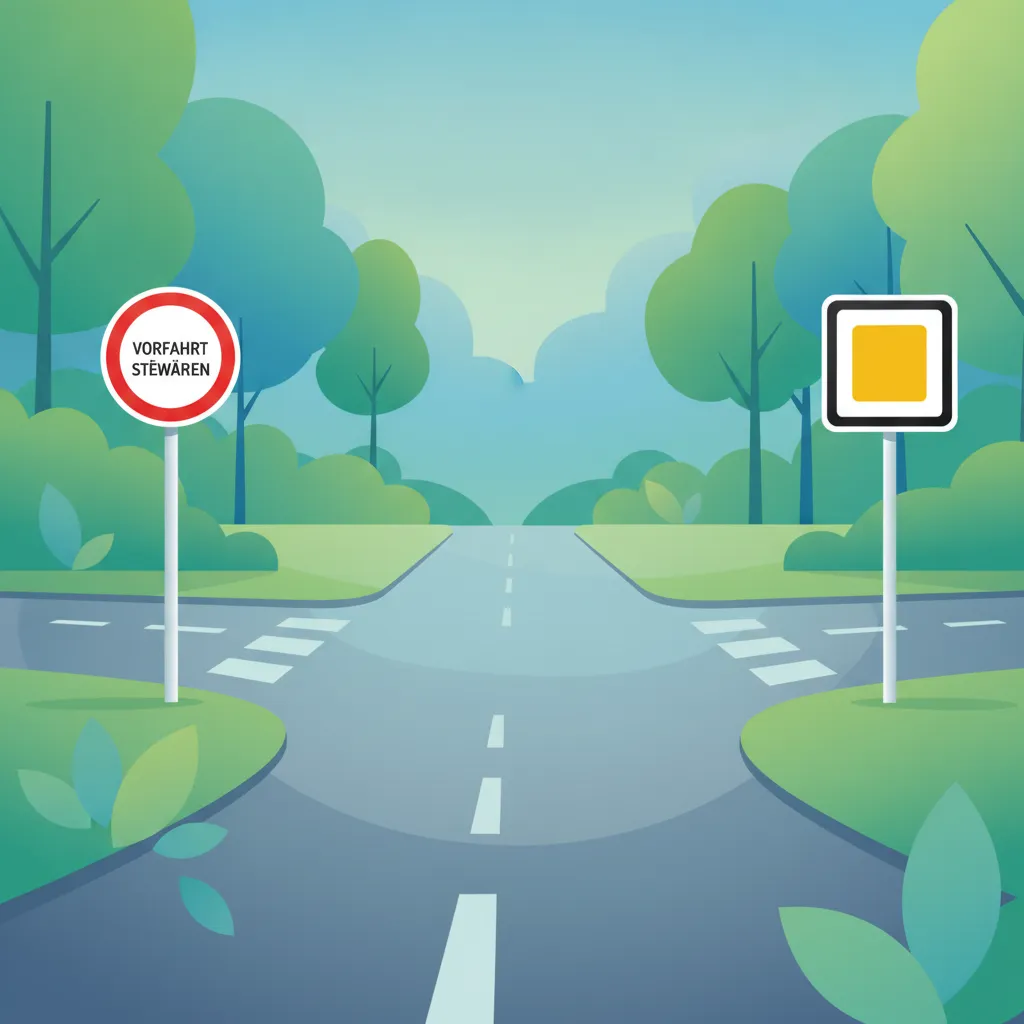
This lesson explains the fundamental concepts of priority that govern traffic at Austrian junctions. It differentiates between having priority ('Vorfahrt') and the duty to yield ('Nachrang'), detailing the signs that establish these rules. Correct application of these principles is critical for preventing collisions at intersections and roundabouts.
Learn critical techniques for safely crossing tram tracks on a motorcycle in Austria. This lesson covers tyre-rail interaction, correct crossing angles, and hazard avoidance in urban traffic, crucial for theory and safe riding.
This lesson addresses the specific hazard of tram tracks in urban areas, which can be slippery and cause a loss of balance. It teaches the correct angle at which to cross tracks and the importance of being aware of tram signals and movements. The content also provides guidance for safely sharing road space near tram and bus stops.
This lesson provides specific guidance for sharing the road with different types of vehicles in Austria. It covers the dangers of large vehicle blind spots, the rules for navigating near buses and dedicated tram tracks, and common conflict points at intersections. Understanding the behavior and limitations of other vehicles is key to safely navigating complex urban environments.
This lesson addresses the specific challenges of interacting with larger vehicles like buses and trams in an urban environment. It explains how to signal intentions clearly and predictably to avoid conflicts in shared spaces. Key topics include safely crossing tram tracks and maintaining awareness around public transport stops.

This lesson highlights the specific hazards of riding on countryside roads in Austria. It teaches riders to be vigilant for wildlife crossing signs, especially at dawn and dusk, and how to safely approach and overtake slow-moving agricultural machinery. Awareness of potential surface hazards like mud, gravel, or manure from farm access points is also crucial for maintaining traction.
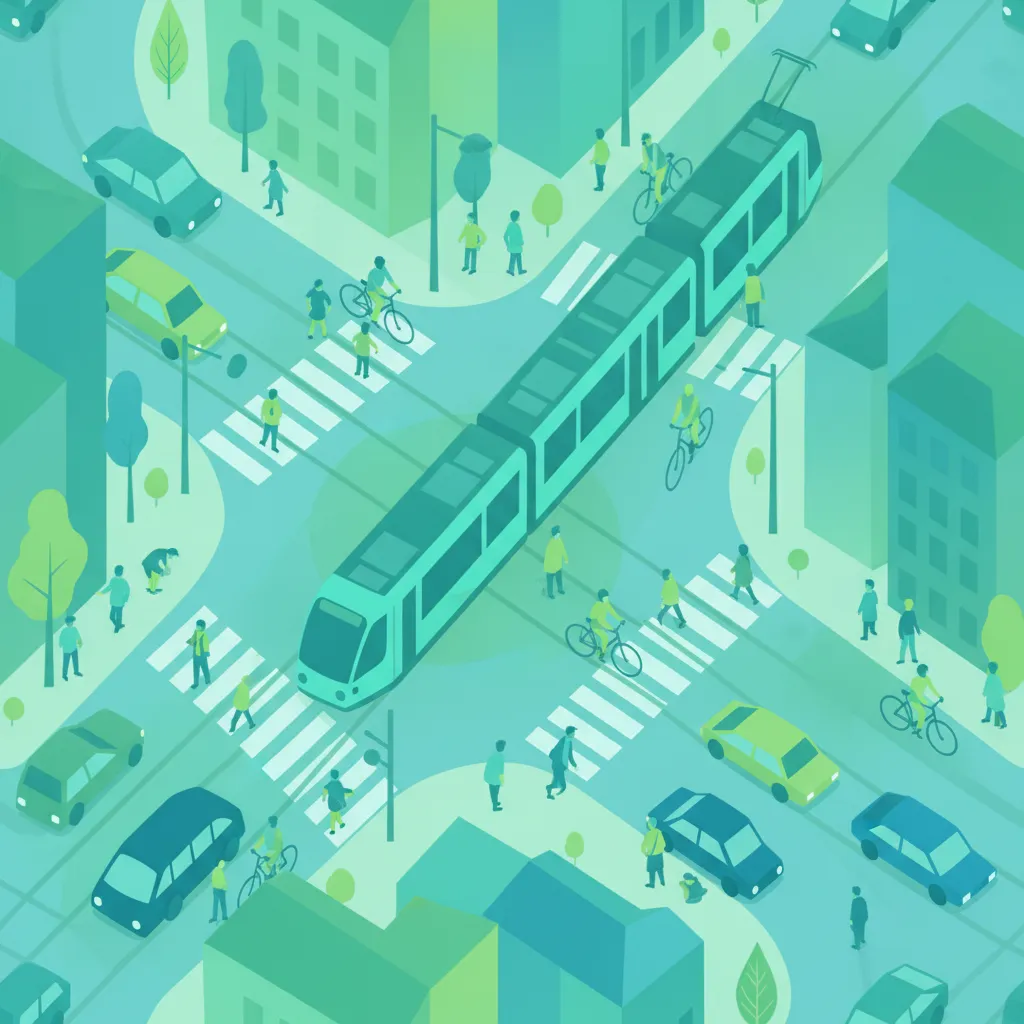
This lesson teaches a safe, methodical process for navigating intersections. It stresses the importance of proper lane positioning on approach, comprehensive visual scans for cross-traffic, pedestrians, and cyclists, and clear communication of intent. Special attention is given to the increased risks associated with left turns across oncoming traffic.
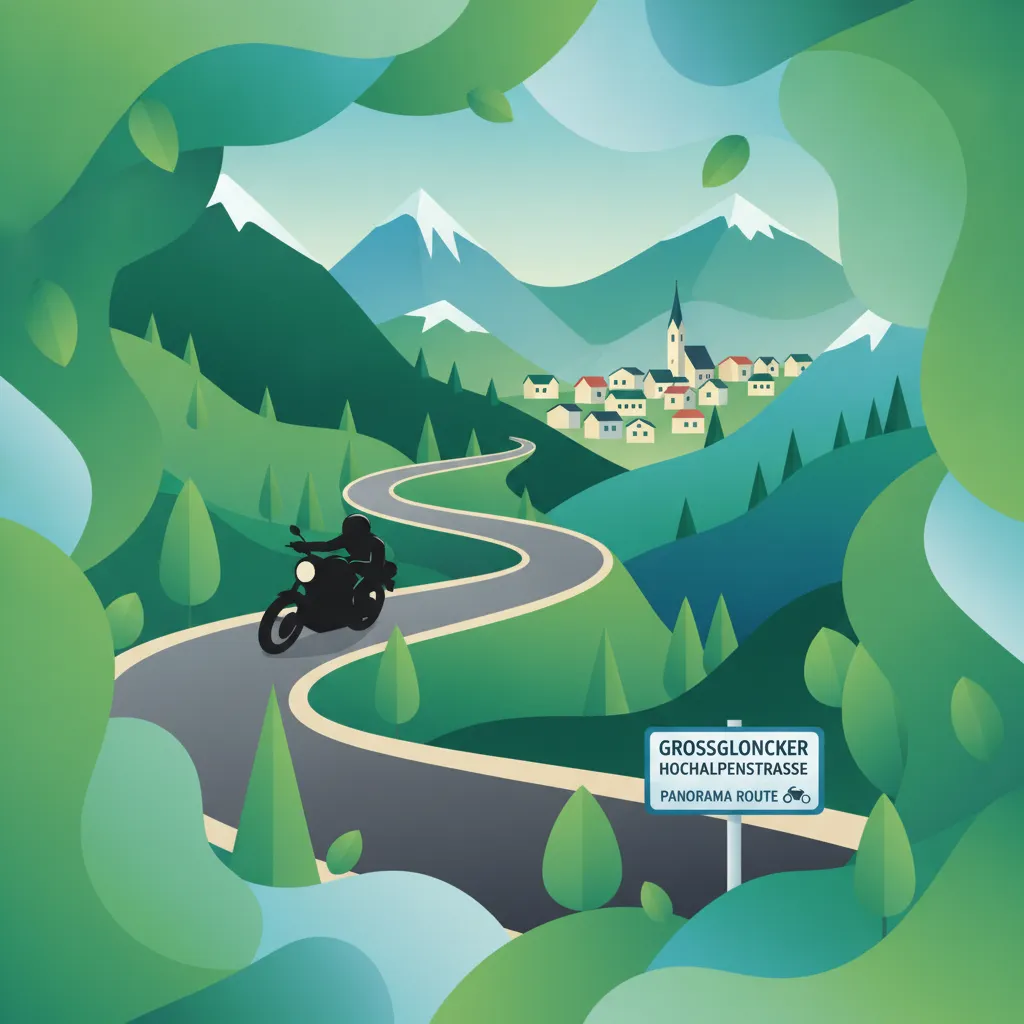
This lesson provides advice for navigating popular scenic routes, which often feature heavy traffic, cyclists, and distracted drivers. It emphasizes maintaining focus on the road despite beautiful scenery and anticipating unpredictable actions from other tourists who may stop suddenly. Adopting a patient and defensive mindset is key to safely enjoying these remarkable roads.

This lesson teaches a safe and systematic process for approaching and crossing intersections. It covers how to correctly assess priority based on signs and general rules, adjust speed appropriately, and perform thorough visual checks. Emphasis is placed on anticipating the actions of other road users to prevent conflicts at junctions.
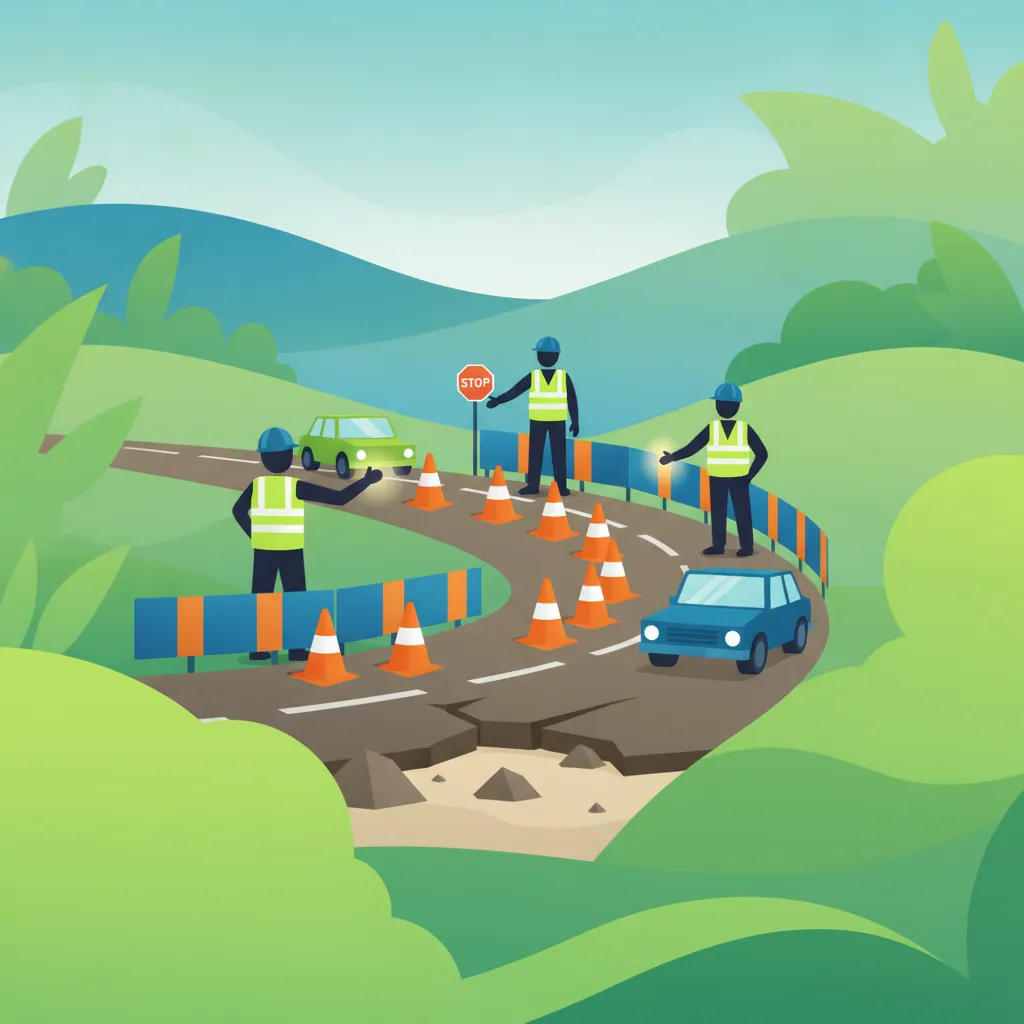
This lesson prepares riders for safely transiting through construction zones ('Baustellen'). It covers the interpretation of temporary signage, adherence to reduced speed limits, and awareness of hazards suchas altered lane markings, abrupt surface changes, and loose gravel. Respecting the safety of road workers and anticipating unpredictable traffic patterns are key themes.

This lesson prepares riders for the specific conditions of Austria's mountain passes. It highlights hazards such as tight hairpin turns, potential for sudden weather changes, rockfall, and variable road surfaces. Awareness of these unique challenges allows riders to anticipate risks and adapt their technique for safe and enjoyable alpine touring.
Cities like Vienna and Graz have extensive tram networks that require special attention from bus drivers. This lesson covers the rules of priority concerning trams, the dangers of crossing tracks, and the specific hazards at shared stops where passengers cross traffic lanes. It emphasizes the need for extreme caution and clear communication with other road users in these complex environments.
Find clear answers to common questions learners have about Riding Near Tram Tracks and Public Transport. Learn how the lesson is structured, which driving theory objectives it supports, and how it fits into the overall learning path of units and curriculum progression in Austria. These explanations help you understand key concepts, lesson flow, and exam focused study goals.
Yes, in most scenarios. Trams are generally considered to have right-of-way, even if they appear to be approaching from a direction that would otherwise yield in standard traffic rules. Always check for signs confirming priority at intersections.
Always cross tram tracks at as close to a 90-degree angle as possible. Crossing at shallow angles causes your tyres to slip along the metal groove, which is extremely dangerous, especially in wet weather.
Generally, no. Dedicated tram tracks are usually off-limits to other vehicles unless indicated by specific road markings or signs that allow for specific manoeuvres like turning.
Watch for passengers crossing the street to board or leave the tram. In many cases, you must stop behind the tram if it is boarding passengers to allow them to cross the road safely.
Refine your study plan by searching for specific Austrian driving theory practice sets. Pinpoint questions related to particular road rules, signs, or challenge levels, and begin practicing immediately to reinforce your knowledge and excel in your official exam with confidence. Get started with focused revision today.