
This lesson provides a comprehensive overview of how to safely and legally navigate bus lanes as a professional Category D driver in Austria. You will learn to recognize specific signage and markings, understand authorized exceptions, and identify when you are permitted to enter or cross these lanes to maintain your route.
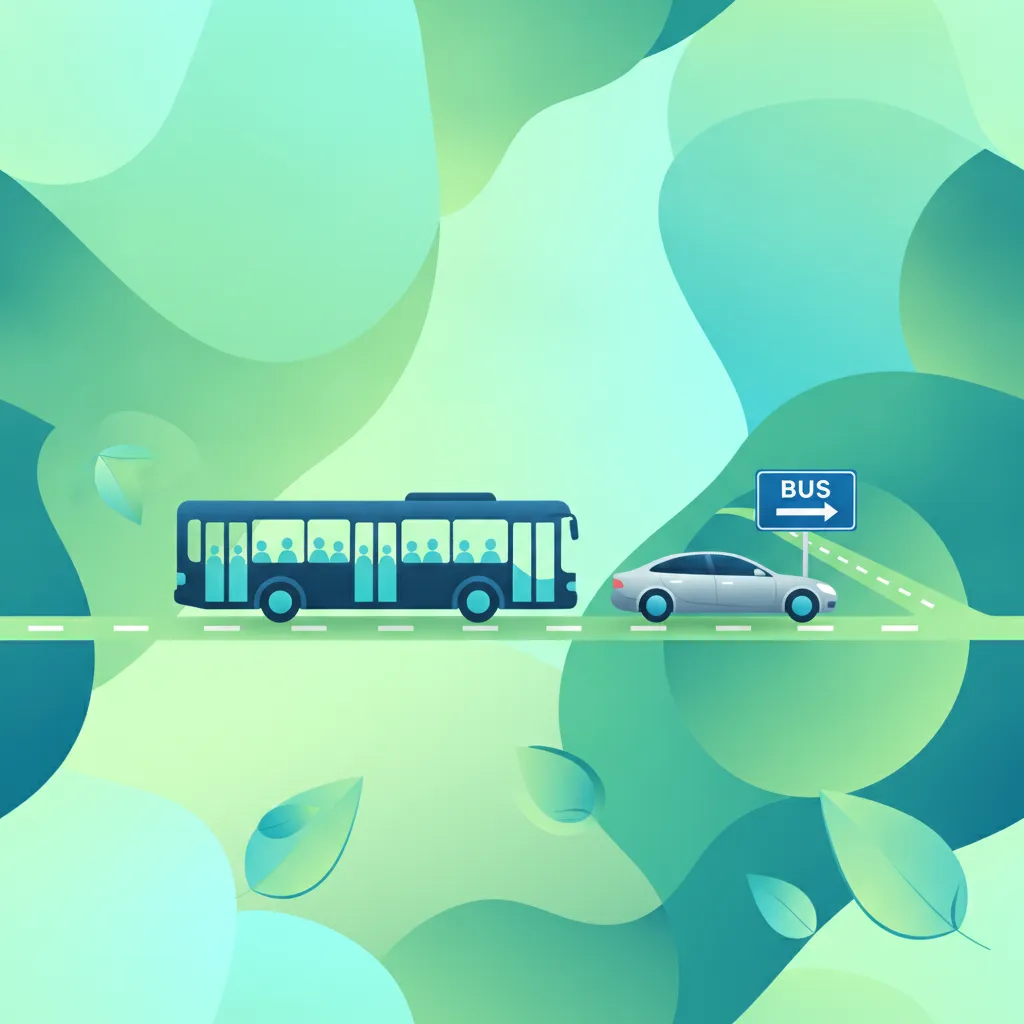
Lesson content overview
Bus lanes are a crucial component of urban traffic management in Austria, designed to prioritize public transport and ensure the efficient movement of buses and coaches. For professional drivers undertaking the Austrian Driving Theory Course for Bus & Coach Licence (Category D), a thorough understanding of these dedicated lanes is not merely a matter of compliance but a fundamental aspect of maintaining punctuality, passenger safety, and overall road network efficiency. Misuse of bus lanes can lead to significant delays for public transport, create dangerous situations, and result in legal penalties.
This lesson delves into the specifics of identifying, using, and navigating bus lanes throughout Austria. We will explore the various road markings and signs, the distinctions between continuous and broken line bus lanes, time-restricted usage, and the specific categories of vehicles authorized to share these lanes. Understanding these rules is essential for reducing congestion, improving service reliability, and contributing to a safer and more orderly traffic environment.
Recognizing bus lanes is the first step toward correct usage. Austrian bus lanes are clearly distinguished from regular traffic lanes through specific road markings and unique traffic signs. Professional drivers must be adept at identifying these visual cues to ensure compliance and avoid unintentional violations.
The physical markings on the road surface provide the primary indication of a bus lane. Typically, these lanes are marked with a continuous or broken white line that separates them from adjacent traffic lanes. Within the bus lane itself, a large, stylized bus symbol (a pictogram of a bus) is usually painted at regular intervals. This symbol serves as an unequivocal visual identifier, reinforcing the lane's designated purpose. In some instances, the words "BUS" or "TAXI" may also be painted on the road surface to further clarify permitted usage.
The type of line — continuous or broken — is critical, as it dictates whether crossing the lane boundary is permissible under certain conditions or strictly prohibited. A continuous white line signifies an exclusive lane that drivers must not cross, while a broken white line allows for crossing in specific, controlled circumstances, such as for turning maneuvers.
In addition to road markings, specific traffic signs are erected to indicate the presence, start, end, and rules governing bus lanes. These signs are indispensable for confirming the status of a lane and understanding any time-based restrictions or additional authorized users.
The most common sign for a bus lane is a blue rectangular sign featuring a white bus symbol. This sign, often designated as a mandatory sign (similar to P11b in other European contexts), indicates that the lane is exclusively or primarily for buses.
Often, this primary sign is accompanied by supplementary signs that provide further details:
It is crucial for drivers to observe these signs carefully, as they provide the definitive rules for bus lane usage at any given location and time. Ignoring these signs can lead to significant penalties.
The distinction between a continuous white line and a broken white line marking a bus lane is fundamental to correct and legal usage. These lines dictate when and how other vehicles may interact with the bus lane.
A bus lane bordered by a continuous white line is strictly exclusive. This marking signifies that the lane must not be entered, driven in, or crossed by any unauthorized vehicle at any time, unless specific supplementary signs explicitly permit it (e.g., during off-peak hours, the continuous line might effectively be suspended for general traffic, but this is always communicated by signage).
The purpose of a continuous line is to ensure the uninterrupted flow of public transport. Drivers must remain in their designated traffic lanes and plan their routes to avoid any need to enter or cross such a bus lane. Any entry into a continuous bus lane by an unauthorized vehicle is a violation and can lead to fines and, in some cases, penalty points.
In contrast, a bus lane marked by a broken white line offers some flexibility. This type of marking allows other vehicles to cross the bus lane under specific conditions, primarily for making turns or exiting a road.
While crossing is permitted, it is not an invitation for general use. The overriding rule is that any maneuver involving crossing a broken line bus lane must not impede or endanger a bus already using the lane. This means drivers must yield to buses, check for oncoming bus traffic, and only proceed when it is safe to do so without causing a bus to slow down, swerve, or stop. Common situations where crossing a broken line bus lane is permitted include:
Drivers must always signal their intentions clearly and ensure the path is clear before crossing. Failure to yield to a bus, even when crossing a broken line, constitutes a serious violation.
Many bus lanes in Austria are not operational 24 hours a day. Instead, they function under time restrictions, which balance the priority of public transport during busy periods with the general traffic flow during quieter hours.
Time-restricted bus lanes are indicated by supplementary signs displaying the specific hours of operation (e.g., "06:00–20:00"). During these specified hours, the lane's restrictions are in full effect, and it is reserved for buses and any other explicitly authorized vehicles. Drivers of unauthorized vehicles must treat the lane as an exclusive bus lane, adhering to the rules for continuous or broken lines as indicated.
Always check the supplementary signs for time restrictions. A bus lane that seems open at one time of day may be strictly reserved during others.
For professional drivers operating coaches, understanding these variable hours is vital for route planning and adhering to schedules without incurring fines. Using a restricted lane during its operational hours is a common violation and can lead to significant delays for public transport and penalties for the driver.
Outside of the specified operating hours, the restrictions on time-restricted bus lanes are lifted. This means that during off-peak times (e.g., late evenings, overnight, or weekends, depending on the signage), the lane may be used by general traffic.
When a bus lane is open to general traffic, the continuous or broken lines that define it during operational hours may no longer prohibit crossing or entry for regular vehicles. However, it is essential to look for any additional signage that might still impose certain restrictions or indicate a different type of usage. Always default to caution and observe all prevailing signs and markings. The absence of an illuminated restriction sign at night, where one typically exists, indicates that the restriction is not currently active.
While bus lanes are primarily for buses, Austrian traffic regulations, often determined at the municipal level, may permit other specific vehicle categories to use them. This is typically done to enhance multimodal transport efficiency or to provide dedicated routes for specific public services.
When a bus lane is designated for shared use, the primary blue rectangular bus lane sign will feature additional symbols indicating the other authorized vehicle types. Common additions include:
It is imperative for drivers of all vehicle types, including buses and coaches, to be aware of these authorized users. When sharing a bus lane, these vehicles must still adhere to all traffic laws and, crucially, yield to buses as the primary users of the lane.
Regardless of whether a vehicle is explicitly authorized to use a bus lane (e.g., a taxi, motorcycle, or bicycle) or is merely crossing a broken line for a turn, the fundamental principle is that buses always have priority. Any vehicle entering or operating within a bus lane must yield to any bus already present or approaching within the lane.
Always assume a bus has the right-of-way in its designated lane. This practice ensures safety and helps maintain public transport schedules.
This rule is critical for several reasons:
Failing to yield to a bus can result in severe legal consequences, including fines and liability in the event of an accident. Professional drivers must consistently demonstrate awareness and respect for bus priority.
Even when driving a coach, there will be instances where you need to make a turn across a bus lane. This must be executed with extreme caution and strict adherence to specific procedures to ensure safety and prevent obstruction.
When preparing to turn right (or left, if applicable, in a specific lane configuration) and your path requires crossing a broken line bus lane, a precise sequence of actions is necessary:
Signal Early: Activate your turn signal well in advance to clearly communicate your intentions to all road users, especially any approaching buses.
Check for Buses: Before entering or crossing the bus lane, thoroughly check your mirrors and blind spots for any approaching buses. Remember that buses can move quickly and may be closer than they appear.
Yield to Buses: If a bus is approaching in the lane, you must yield. Wait until the bus has passed or has come to a complete stop before proceeding. Never force a bus to brake or swerve.
Enter Smoothly and Decisively: Once the lane is clear and it is safe to do so, enter the bus lane smoothly to position your vehicle correctly for the turn. Avoid lingering or making sudden movements.
Complete the Turn: Execute your turn safely, ensuring you do not impede traffic in the new direction or any other lane.
The goal is to integrate your maneuver seamlessly into the traffic flow without disrupting public transport or creating hazardous situations.
The core principle behind all bus lane regulations is to maintain the efficient and unimpeded movement of buses. Therefore, even when legally permitted to cross or briefly enter a bus lane, it is paramount to ensure you do not cause any obstruction. This means:
Adhering to these principles ensures that your actions support, rather than hinder, the effective operation of public transport, which is a key responsibility for professional Category D drivers.
Understanding the specific legal framework governing bus lanes in Austria is critical for professional drivers. These regulations are designed to enforce priority, maintain safety, and ensure efficient urban mobility.
Rule 1: Drivers must not enter or cross a continuously marked bus lane.
Rule 2: Drivers may cross a broken white line bus lane to make a turn or exit, provided they do not impede bus traffic.
Rule 3: Bus lane restrictions apply only during the indicated hours; outside these hours, the lane may be used by all vehicles, unless otherwise marked.
Rule 4: Only vehicles explicitly indicated by sign (e.g., taxis, motorcycles, bicycles) may use bus lanes alongside buses.
Rule 5: All vehicles entering or crossing a bus lane must yield to any bus already in the lane, regardless of lane markings or whether they are authorized users.
Understanding common bus lane violations is just as important as knowing the rules themselves. Many infringements occur due to lack of attention, misunderstanding of signage, or impatience. For a Category D driver, preventing these violations is paramount for safety and maintaining a professional driving record.
One of the most frequent violations is the unauthorized entry into or obstruction of a bus lane. This includes:
Other common errors stem from misinterpreting time restrictions or failing to give buses their rightful priority:
Such violations not only carry financial penalties but also undermine the efficiency and safety of public transport, which is a core concern for Category D drivers.
The application of bus lane rules is not always static; various external factors and driving situations require drivers to adapt their behavior and exercise additional caution.
Adverse weather conditions significantly impact the visibility of road markings and traffic signs, as well as overall driving conditions:
During poor visibility, it is vital to slow down, increase following distance, and activate appropriate lighting. Assume a bus could be present in a bus lane even if markings are temporarily unclear.
Bus lane characteristics and rules can vary slightly depending on the road type and the specific urban environment:
Always remember that local municipalities in Austria can have specific nuances in their bus lane regulations or signage. Stay alert for local variations.
Furthermore, the vehicle load you are carrying as a coach driver can affect your maneuverability and acceleration. A heavily loaded bus or coach requires more time and space to initiate and complete turns or to yield. This must be factored into your decision-making process when interacting with bus lanes, reinforcing the need for early signaling and ample space. Similarly, be extremely cautious of vulnerable road users (cyclists, pedestrians) who might also be authorized in bus lanes or crossing them. Their unpredictability demands heightened awareness from all drivers.
The correct use of bus lanes in Austria is a cornerstone of responsible and professional driving, particularly for those operating Category D vehicles. These dedicated lanes are a vital tool for urban mobility, ensuring that public transport remains an efficient, reliable, and attractive option for countless passengers. As a professional driver, your adherence to bus lane regulations directly contributes to passenger safety, punctuality, and the smooth functioning of Austria's road network.
By consistently identifying bus lanes through their distinctive markings and signs, understanding the critical difference between continuous and broken lines, respecting time-based restrictions, recognizing authorized vehicle types, and always yielding to buses, you uphold the principles of safe and courteous driving. Mastering these rules not only prevents legal penalties but also reinforces your commitment to professional excellence and a duty of care towards all road users and passengers. Integrate this knowledge with your overall understanding of city traffic, public transport priority, and passenger management to become a truly competent and responsible bus and coach driver in Austria.
This lesson teaches Category D drivers how to correctly identify and navigate Austrian bus lanes through road markings and traffic signs. The critical distinction lies between continuous white lines (strictly exclusive) and broken white lines (permitted crossing for turns when safe), with time restriction signs determining when lanes revert to general traffic. Authorized users beyond buses—such as taxis or cyclists—are indicated by supplementary symbols on the primary blue bus lane sign. A universal principle throughout is that all vehicles must yield to buses, who hold absolute priority in their designated lanes. Mastering these rules prevents legal penalties, ensures passenger safety, and maintains the efficiency of Austria's public transport network.
A short set of high-value points that capture the most important learning from this lesson.
Bus lanes in Austria are identified by white line boundaries and a painted bus symbol, often accompanied by a blue rectangular sign with a white bus symbol.
A continuous white line means the bus lane is strictly exclusive and must never be crossed; a broken white line allows crossing only for turning or exiting.
Time-restricted bus lanes are marked with supplementary signs showing operating hours; restrictions are lifted outside those hours unless otherwise indicated.
Only vehicles explicitly shown on the lane sign (buses, taxis, motorcycles, bicycles) may use shared bus lanes, and all must always yield to buses.
Entering or obstructing a bus lane during restricted hours is a serious violation with significant fines and potential penalty points.
Explore all units and lessons included in this driving theory course.
Continuous white line = never cross; broken white line = cross only for turns/exits and never impede a bus.
Always check for time restriction signs before assuming a bus lane is available for general traffic.
Buses always have priority in their designated lane regardless of lane markings or authorized vehicle type.
When turning across a broken line bus lane, signal early, check mirrors for approaching buses, yield completely, then enter smoothly.
During adverse weather, painted markings may be obscured—rely more on visible traffic signs and heightened caution.
Assuming a bus lane is open to general traffic without checking for time restriction signs, leading to entry during restricted hours.
Crossing a continuous white line bus lane to bypass congested traffic, even when no turn is required.
Failing to yield to an approaching bus when making a permitted crossing of a broken line bus lane.
Believing that authorized vehicles (taxis, motorcycles) in a shared bus lane have equal priority to buses.
Stopping or parking momentarily in a bus lane to drop off passengers, causing obstruction to public transport.
Lesson content overview
A short set of high-value points that capture the most important learning from this lesson.
Bus lanes in Austria are identified by white line boundaries and a painted bus symbol, often accompanied by a blue rectangular sign with a white bus symbol.
A continuous white line means the bus lane is strictly exclusive and must never be crossed; a broken white line allows crossing only for turning or exiting.
Time-restricted bus lanes are marked with supplementary signs showing operating hours; restrictions are lifted outside those hours unless otherwise indicated.
Only vehicles explicitly shown on the lane sign (buses, taxis, motorcycles, bicycles) may use shared bus lanes, and all must always yield to buses.
Entering or obstructing a bus lane during restricted hours is a serious violation with significant fines and potential penalty points.
Explore all units and lessons included in this driving theory course.
Continuous white line = never cross; broken white line = cross only for turns/exits and never impede a bus.
Always check for time restriction signs before assuming a bus lane is available for general traffic.
Buses always have priority in their designated lane regardless of lane markings or authorized vehicle type.
When turning across a broken line bus lane, signal early, check mirrors for approaching buses, yield completely, then enter smoothly.
During adverse weather, painted markings may be obscured—rely more on visible traffic signs and heightened caution.
Assuming a bus lane is open to general traffic without checking for time restriction signs, leading to entry during restricted hours.
Crossing a continuous white line bus lane to bypass congested traffic, even when no turn is required.
Failing to yield to an approaching bus when making a permitted crossing of a broken line bus lane.
Believing that authorized vehicles (taxis, motorcycles) in a shared bus lane have equal priority to buses.
Stopping or parking momentarily in a bus lane to drop off passengers, causing obstruction to public transport.
Explore search topics learners often look for when studying Correct Use of Bus Lanes in Austria. These topics reflect common questions about road rules, driving situations, safety guidance, and lesson level theory preparation for learners in Austria.
Browse additional driving theory lessons that cover connected traffic rules, road signs, and common driving situations related to this topic. Improve your understanding of how different rules interact across everyday traffic scenarios.
Explore the specific regulations for vehicles other than buses that are permitted to use bus lanes in Austria, including taxis, motorcycles, and cyclists. Understand the rules for priority and safe interaction within these shared lanes.

Cities like Vienna and Graz have extensive tram networks that require special attention from bus drivers. This lesson covers the rules of priority concerning trams, the dangers of crossing tracks, and the specific hazards at shared stops where passengers cross traffic lanes. It emphasizes the need for extreme caution and clear communication with other road users in these complex environments.
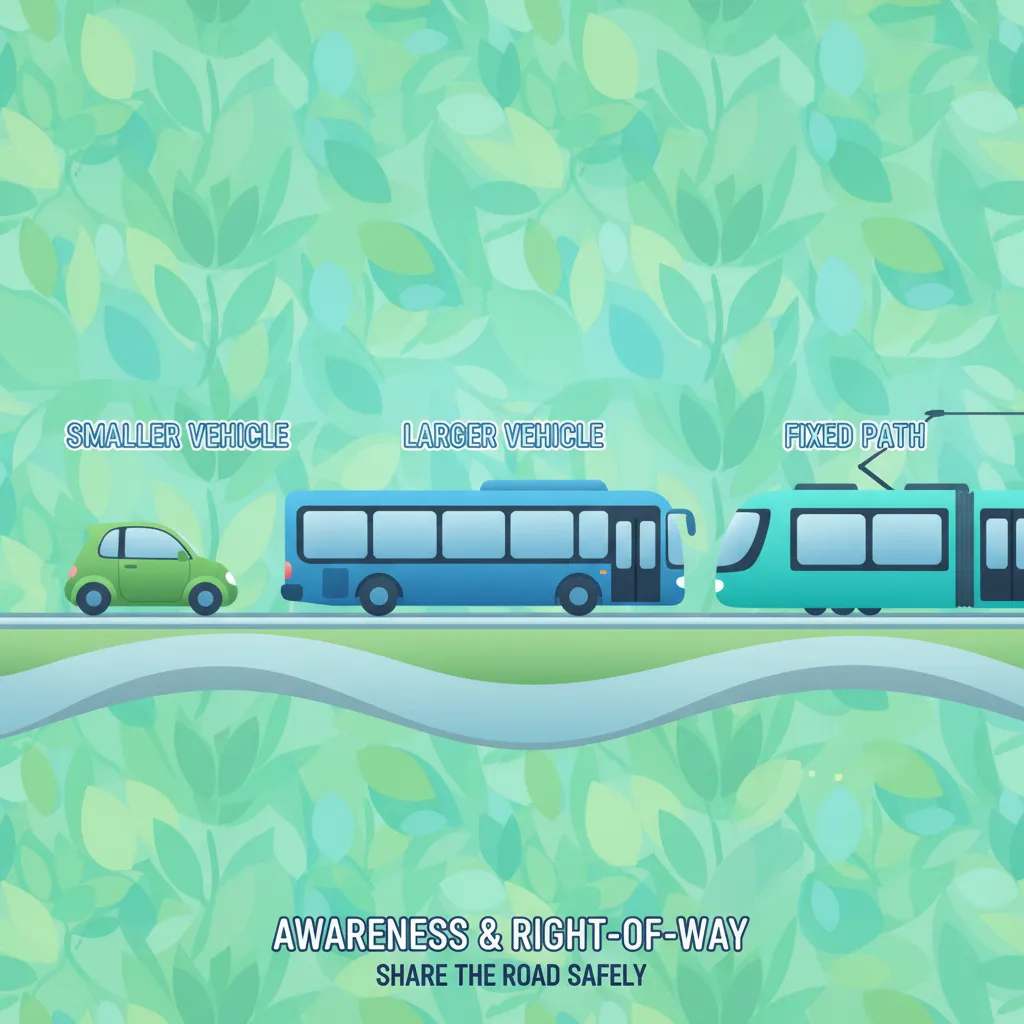
This lesson provides specific guidance for sharing the road with different types of vehicles in Austria. It covers the dangers of large vehicle blind spots, the rules for navigating near buses and dedicated tram tracks, and common conflict points at intersections. Understanding the behavior and limitations of other vehicles is key to safely navigating complex urban environments.
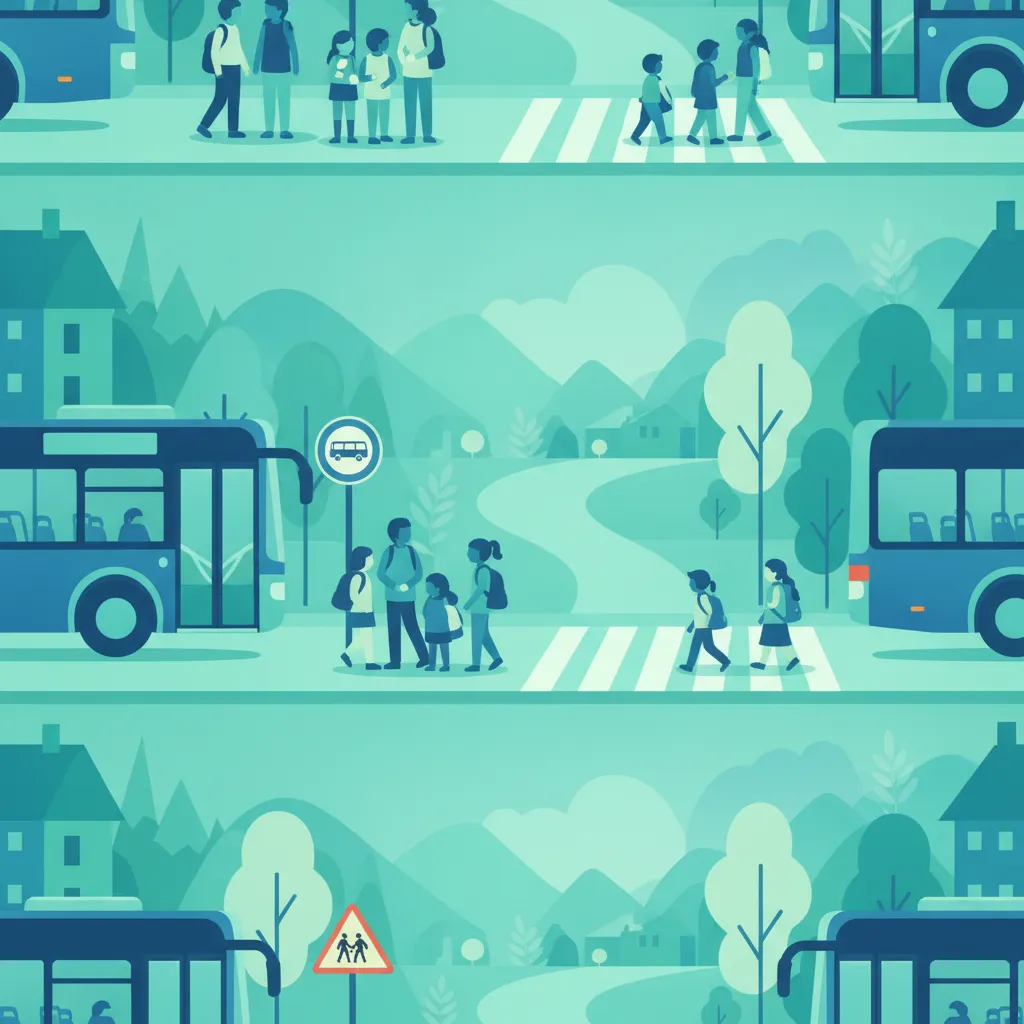
This lesson details the specific regulations and best practices for driving in areas with high pedestrian activity, such as bus stops and school zones. It explains the driver's obligation to stop for school buses with flashing lights and to yield to public buses pulling out from a stop. The content emphasizes the requirement to significantly reduce speed in marked school zones to ensure the safety of children.
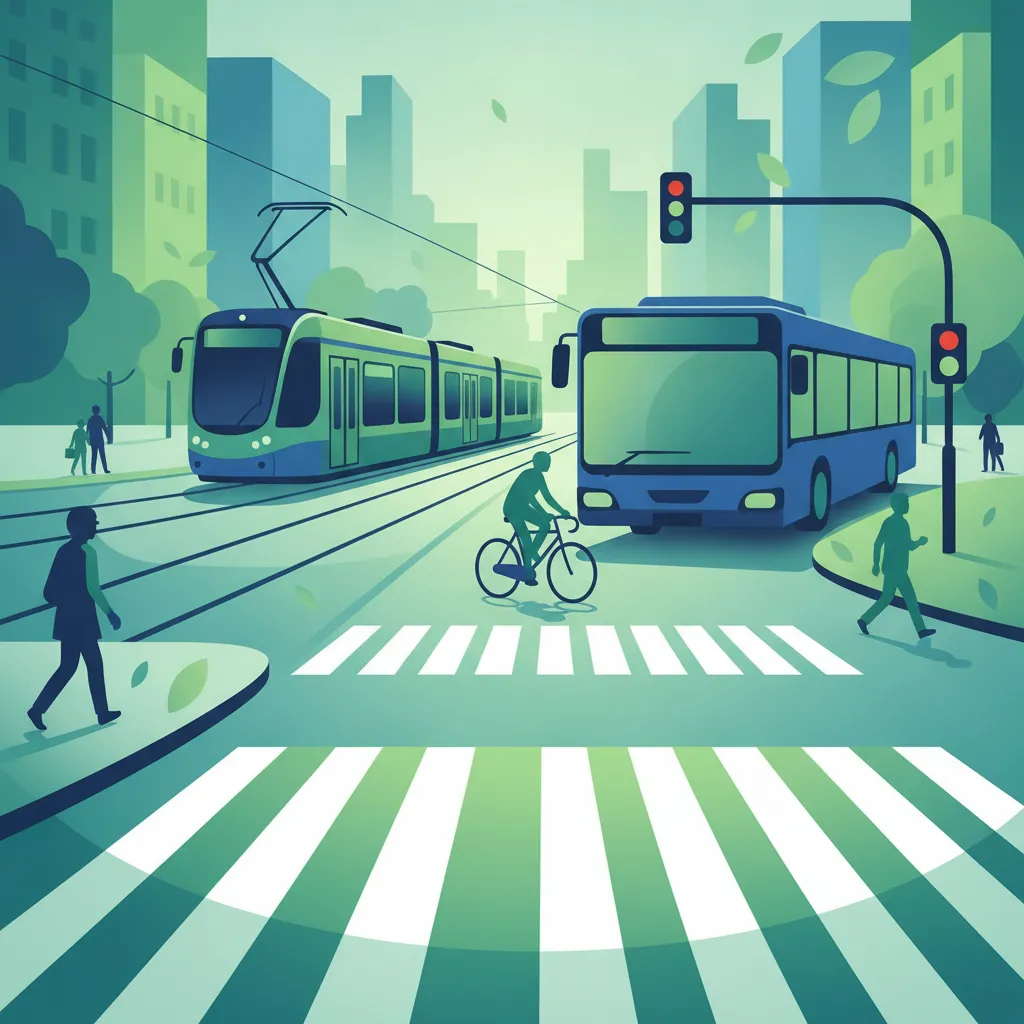
This lesson addresses the unique challenges and priority rules that apply when interacting with public transport and cyclists at intersections. It clarifies the specific right-of-way regulations for trams, which often have priority over other traffic, and the procedures for navigating around bus stops. The content also covers how to safely manage crossings with dedicated bicycle lanes, ensuring the protection of all road users.

This lesson focuses on the specific regulations and safety protocols for driving near trams (Straßenbahn) in Austrian cities. It clarifies the priority rules, which almost always favor the tram, and explains how to safely share lanes or cross tram tracks. The content provides critical guidance on how to behave at tram stops, ensuring the safety of boarding and alighting passengers is always the primary concern.
Driving a bus in a busy city like Vienna or Salzburg requires constant forward planning and anticipation. This lesson teaches techniques for maintaining adequate space around the vehicle, positioning correctly for upcoming junctions, and reading the flow of traffic. Adopting a defensive mindset is key to navigating complex urban environments without incident.

This lesson addresses the specific challenges of interacting with larger vehicles like buses and trams in an urban environment. It explains how to signal intentions clearly and predictably to avoid conflicts in shared spaces. Key topics include safely crossing tram tracks and maintaining awareness around public transport stops.
High-speed driving in a large vehicle requires excellent lane discipline and forward planning. This lesson covers Austrian speed limits for buses, rules for joining and leaving the motorway, safe overtaking procedures, and maintaining appropriate following distances. The critical importance of forming an emergency corridor ('Rettungsgasse') in traffic jams is also a key topic.

Transporting children carries the highest level of responsibility. This lesson covers the specific Austrian rules for school buses, including the use of warning signs and lights. It focuses on developing a mindset of extreme caution, anticipating that children may run into the road unexpectedly, and managing the chaotic traffic environment often found around schools during drop-off and pick-up times.

This lesson teaches drivers how to safely coexist with cyclists and pedestrians, who are prevalent in urban areas. It covers the rules for dedicated bike lanes (Radweg), the importance of yielding to pedestrians in designated zones, and the need for extra caution when turning or opening car doors. Maintaining safe overtaking distances and anticipating the movements of these vulnerable road users are key themes for preventing accidents.
Learn about common mistakes and violations when using Austrian bus lanes, including understanding time restrictions, continuous vs. broken lines, and adapting to different weather and road conditions. Essential for Category D drivers.
This lesson details the specific regulations and best practices for driving in areas with high pedestrian activity, such as bus stops and school zones. It explains the driver's obligation to stop for school buses with flashing lights and to yield to public buses pulling out from a stop. The content emphasizes the requirement to significantly reduce speed in marked school zones to ensure the safety of children.
Driving a bus in a busy city like Vienna or Salzburg requires constant forward planning and anticipation. This lesson teaches techniques for maintaining adequate space around the vehicle, positioning correctly for upcoming junctions, and reading the flow of traffic. Adopting a defensive mindset is key to navigating complex urban environments without incident.
Cities like Vienna and Graz have extensive tram networks that require special attention from bus drivers. This lesson covers the rules of priority concerning trams, the dangers of crossing tracks, and the specific hazards at shared stops where passengers cross traffic lanes. It emphasizes the need for extreme caution and clear communication with other road users in these complex environments.

Many Austrian towns and city centres feature narrow roads not designed for large vehicles. This lesson provides strategies for assessing tight spaces, positioning the vehicle to maximize clearance, and navigating complex, non-standard junctions. It emphasizes the importance of slow speeds, constant observation, and understanding the vehicle's swept path to avoid contact with buildings, street furniture, and other vehicles.
High-speed driving in a large vehicle requires excellent lane discipline and forward planning. This lesson covers Austrian speed limits for buses, rules for joining and leaving the motorway, safe overtaking procedures, and maintaining appropriate following distances. The critical importance of forming an emergency corridor ('Rettungsgasse') in traffic jams is also a key topic.

Rural Austrian roads present unique challenges, including lack of markings, tight spaces, and slow-moving agricultural vehicles. This lesson teaches how to read the road ahead, anticipate hazards around blind bends, and use passing places effectively when meeting other large vehicles. It emphasizes adjusting speed to suit the limited visibility and variable road conditions.
This lesson provides specific guidance for sharing the road with different types of vehicles in Austria. It covers the dangers of large vehicle blind spots, the rules for navigating near buses and dedicated tram tracks, and common conflict points at intersections. Understanding the behavior and limitations of other vehicles is key to safely navigating complex urban environments.
This lesson addresses the unique challenges and priority rules that apply when interacting with public transport and cyclists at intersections. It clarifies the specific right-of-way regulations for trams, which often have priority over other traffic, and the procedures for navigating around bus stops. The content also covers how to safely manage crossings with dedicated bicycle lanes, ensuring the protection of all road users.
Transporting children carries the highest level of responsibility. This lesson covers the specific Austrian rules for school buses, including the use of warning signs and lights. It focuses on developing a mindset of extreme caution, anticipating that children may run into the road unexpectedly, and managing the chaotic traffic environment often found around schools during drop-off and pick-up times.
Find clear answers to common questions learners have about Correct Use of Bus Lanes in Austria. Learn how the lesson is structured, which driving theory objectives it supports, and how it fits into the overall learning path of units and curriculum progression in Austria. These explanations help you understand key concepts, lesson flow, and exam focused study goals.
No, you must always look for specific signs indicating the permitted vehicle types. While most bus lanes are for public transport, local regulations may restrict or allow specific vehicles, and you must follow the posted times of operation.
Yes, you are generally permitted to cross a bus lane to enter or exit a driveway or side street if the layout requires it, provided you do not obstruct public transport and the road markings allow the manoeuvre.
Hours of operation are typically indicated on supplementary signs mounted below the bus lane sign. If no time is specified, the restriction is generally in effect at all times.
In some Austrian cities, taxis are permitted to use bus lanes. Always check local road signs, as these vary by municipality and can affect your lane management when driving a bus.
Refine your study plan by searching for specific Austrian driving theory practice sets. Pinpoint questions related to particular road rules, signs, or challenge levels, and begin practicing immediately to reinforce your knowledge and excel in your official exam with confidence. Get started with focused revision today.