
This lesson explores the specialized safety protocols and traffic rules required when navigating construction sites or interacting with heavy machinery as a professional driver. It builds upon your understanding of vehicle positioning and spatial awareness to ensure you can operate safely in these high-risk environments. Mastering these rules is essential for both your theory exam and daily professional operation on Austrian roads.
Lesson content overview
Operating heavy goods vehicles (HGVs) on construction sites presents unique challenges compared to standard road driving. These dynamic environments combine heavy machinery, ground-level workers, and constantly changing terrain, demanding a heightened level of caution, clear communication, and strict adherence to site-specific rules. This lesson, part of your Austrian Driving License Theory Course for Heavy Goods Vehicles (C, C1, C1E, CE), will equip you with the essential knowledge and protocols to navigate construction sites safely and efficiently, ensuring the well-being of all personnel and compliance with Austrian traffic law.
A successful heavy vehicle operation within a construction zone hinges on understanding that these are controlled environments. Standard traffic rules are often temporarily superseded by site-specific regulations designed to protect workers and facilitate complex operations. Your ability to integrate seamlessly into this altered traffic flow, communicate effectively, and anticipate hazards is paramount to preventing accidents and maintaining an organized workflow.
Construction sites are not simply extensions of public roads; they are meticulously planned operational areas. Every movement of vehicles and personnel is, ideally, governed by a specific framework to ensure safety and efficiency. For HGV drivers, comprehending this framework is the first step towards safe operation.
A Site Traffic Management Plan (TMP) is a comprehensive, documented strategy that defines how vehicles and pedestrians will move safely within and around a construction site. This plan outlines specific vehicle routes, designated entry and exit points, internal speed limits, and various control measures. Its primary purpose is to organize movements, minimize potential conflict points between different types of machinery and personnel, and safeguard everyone on site.
Drivers of heavy vehicles must familiarize themselves with the TMP for any site they enter. This typically means following clearly marked routes, adhering to posted speed limits, and respecting any temporary traffic controls. Ignoring these site-specific directives is a common mistake that can lead to hazardous situations, as they deviate from established safe operating procedures. For instance, a temporary road sign might indicate a "Site Entrance – Stop & Proceed Only When Directed," which overrides any general right-of-way rules.
Within a construction site, there is often an established Construction Vehicle Hierarchy that dictates the priority of movement among different types of machinery. This prioritization is typically based on the vehicle's function, maneuverability constraints, and the criticality of its operation. For example, large lifting equipment like cranes often have the highest priority, followed by earth-moving machinery such as excavators and bulldozers, with transport vehicles like dump trucks and delivery trucks typically having lower priority.
This hierarchy is crucial for preventing deadlocks and ensuring that critical equipment can operate without undue interruption. As an HGV driver, you must be prepared to yield to higher-priority construction vehicles as dictated by the TMP or a flagger. Attempting to overtake a crane while it is performing a lifting operation, for example, is highly dangerous and can lead to severe accidents or site disruption. Austrian road users are generally required to yield to vehicles that are integral to site operations, as outlined in StVO § 3.
One of the most significant deviations from standard driving is the Right-of-Way Adjustments within construction sites. Normal right-of-way rules, as defined in StVO § 4, are often modified or entirely superseded by site-specific directives. These adjustments are typically communicated through flaggers (traffic controllers) or temporary site signage.
Drivers must understand that these temporary site control measures take precedence. You must yield when instructed, even if under normal circumstances, standard road rules would grant you priority. A common mistake is assuming that standard right-of-way rules still apply, which can lead to confusion and collisions, particularly at intersections controlled by flaggers where vehicles might be directed contrary to typical traffic flow.
Clear and unambiguous communication is vital in the chaotic environment of a construction site. Flaggers and temporary signage play a central role in directing traffic safely and efficiently.
Flagger Communication refers to the process by which a site flagger, also known as a traffic controller, uses standardized hand signals, acoustic devices, or electronic signals to direct vehicle movements within a construction site. These signals provide immediate, clear, and unambiguous instructions, especially when permanent traffic signs are absent, insufficient, or obscured by the site environment.
As an HGV driver, you must be proficient in interpreting and obeying these flagger signals without hesitation. Flagger signals have the same legal force as permanent traffic lights or road signs within the construction area, per StVO § 3. Misreading hand signals or assuming that flagger instructions are merely advisory can have severe consequences, including collisions with other vehicles or ground-level personnel. Examples include a flagger holding a red flag to indicate stop, then switching to a green flag to signal that it is safe to proceed.
Beyond flaggers, Use of Site Lighting and Signage is critical for safe navigation. Temporary signs and lighting are strategically placed to delineate site boundaries, indicate hazards, establish traffic flow, and communicate site-specific regulations. These might include signs for "Keep Clear," "Yield to Construction Vehicles," or specific speed limits.
Temporary lighting is also essential for night operations, ensuring that pathways are illuminated and workers are visible. Drivers must always obey these temporary site signs and signals, even if they appear to conflict with permanent road signs or general traffic regulations. Ignoring temporary signage under the assumption that permanent signage is dominant is a dangerous mistake that can lead to entry into prohibited areas or unawareness of critical hazards. For instance, a flashing amber sign might mark an unguarded pitfall, requiring immediate attention.
One of the highest risks on a construction site is the interaction between large heavy vehicles and ground-level workers. Due to their sheer size, HGVs have significant blind spots, making it challenging to see individuals working nearby.
Ground-Level Personnel Awareness means actively recognizing that workers may be present at ground level, often operating outside the driver’s direct line of sight. This is particularly true when operating near large equipment such as excavators, cranes, or even other HGVs. These blind spots – areas around the vehicle that are not visible through mirrors or direct vision – are significant risk zones where struck-by accidents can occur.
To mitigate this risk, drivers must continuously reduce speed, exercise extreme caution, and systematically scan ground-level areas around their vehicle, especially before moving, reversing, or turning. Turning your head and using all available mirrors are essential techniques to inspect these vulnerable zones. Never assume that ground-level workers are not present simply because they are not visible in your mirrors.
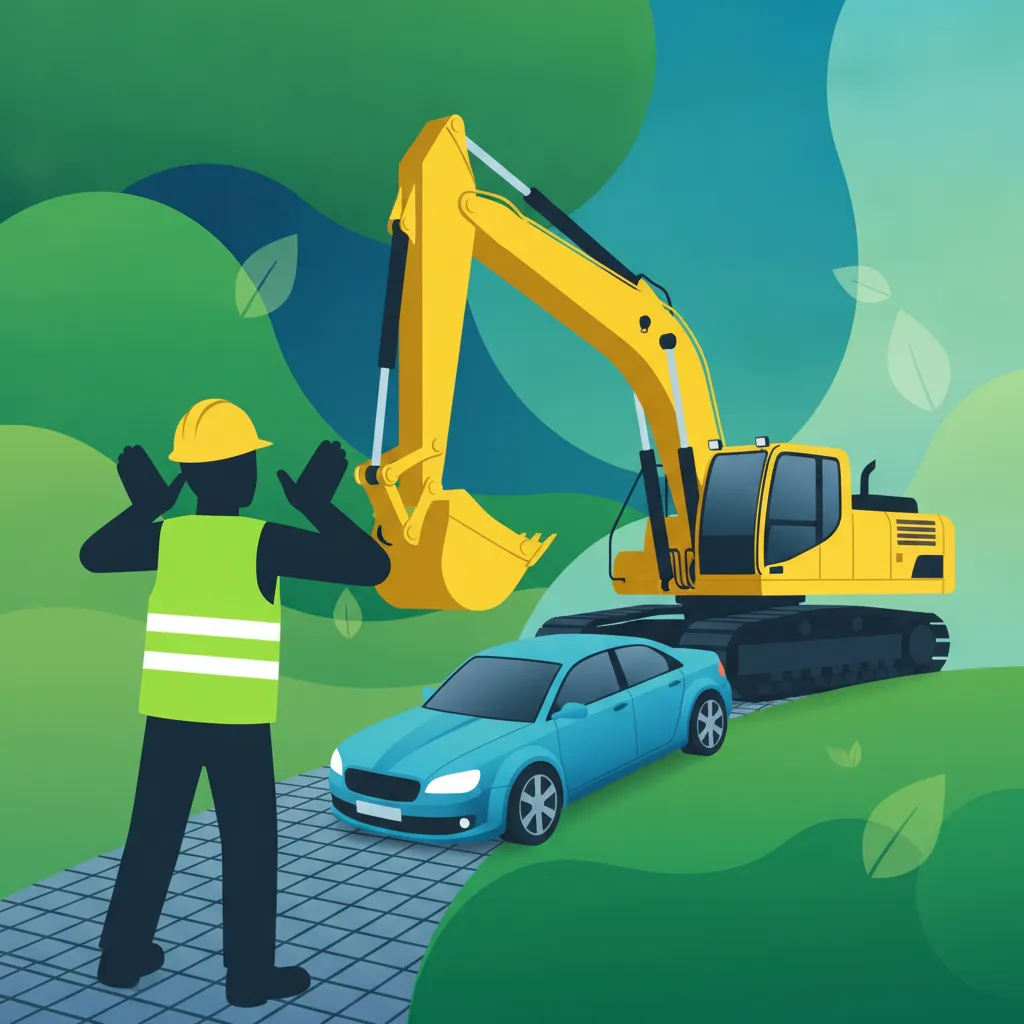
When visibility is limited, or during complex maneuvers such as reversing, Spotters are indispensable. A spotter is a designated worker or flagger positioned to guide the driver, providing clear signals or radio communication to navigate around blind spots, other equipment, or personnel. They act as the driver's "extra pair of eyes," ensuring the safe movement of the vehicle.
Drivers must always heed a spotter's instructions. Ignoring a spotter's signal, particularly when they are signaling to stop or indicating a hazard, can lead to severe accidents and may result in criminal liability for negligence. Stopping your vehicle before an excavator's swinging arm and waiting for a spotter or the operator to confirm it is safe to proceed is a prime example of correct behavior.
To enhance safety on site, drivers of heavy vehicles are often required to wear Personal Protective Equipment (PPE). This typically includes a high-visibility vest, safety boots, and in some areas, a hard hat. The High-Visibility Vest is crucial as it significantly increases the driver's visibility to other site workers and equipment operators, especially in low-light conditions or busy areas. Safety boots protect feet from heavy objects or uneven terrain, while hard hats provide head protection against falling debris.
Drivers must don the appropriate PPE before entering or moving within a construction site. Non-compliance is not only a safety risk but can also lead to site penalties and potential legal liabilities under Austrian construction safety regulations.
The terrain and operational environment of a construction site can be dramatically different from public roads. Consequently, specific driving techniques and vigilance are required to manage these unique hazards.
Site-Specific Speed Limits are temporary speed restrictions imposed within a construction site, which are typically much lower than general urban limits. These limits are set by the Site Traffic Management Plan (TMP) and are often as low as 10 km/h or 20 km/h, depending on the specific activity and conditions.
These reduced speed limits are not arbitrary; they are crucial for allowing increased reaction time and significantly reducing stopping distances in confined spaces with unpredictable movements. Drivers must strictly observe all posted temporary speed limit signs and adjust their speed accordingly. Maintaining normal road speed in a construction zone, where hazards can emerge instantly, is a common and dangerous mistake, leading to insufficient time to react to an unexpected obstacle or worker.
On a construction site, the ground can be uneven, sloped, or full of obstacles. This presents a greater risk of load shift compared to driving on smooth public roads. Therefore, Load-Securing During Site Operations requires additional diligence. Even if a load was adequately secured for highway travel, it might require re-evaluation and potentially additional securing measures before maneuvering within a constrained or uneven construction site.
Always verify that your load is firmly restrained using appropriate securing devices (chains, straps, load bars) and designated tie-down points. A shifting load can drastically alter your vehicle's stability, leading to vehicle rollover or endangering ground-level workers.
Before entering or moving within a site, drivers must verify that their loads are properly secured according to StVO § 65 and construction-site safety guidelines. Assuming existing restraints are sufficient for varied site terrain is a mistake that can lead to severe accidents and damage.
Driving conditions on a construction site can be further complicated by weather and lighting. In conditions such as rain, fog, or snow, Conditional Logic and Contextual Variations apply. Reduced visibility and increased stopping distances necessitate even lower speeds, and the use of low-beam headlights and hazard lights as directed by site personnel or signage.
During night operations, the mandatory use of site lighting, high-visibility gear, and potentially additional spotters is essential to ensure the visibility of workers and equipment. Confined spaces, like alleyways within a site, demand extremely low speeds (e.g., ≤5 km/h) and mandatory use of spotters due to the heightened risk of collision. The state of your vehicle (loaded vs. unloaded) also impacts maneuverability and stopping distances, requiring adjusted entry sequences and overall caution.
Operating a heavy vehicle on a construction site is governed by specific Austrian laws and regulations that drivers must be aware of to ensure compliance and safety.
Several sections of the Austrian Road Traffic Act (StVO) are particularly relevant to driving in construction zones:
Beyond the StVO, the Bauarbeitsverordnung (Construction Work Regulations) specifically addresses safety on construction sites. These regulations include requirements for personal protective equipment (PPE) for all individuals entering a site, including heavy vehicle drivers. Non-compliance with PPE requirements can result in penalties and significantly increases accident risk.
Failure to adhere to construction site regulations can lead to serious consequences. Here are some common violations:
Understanding the rules is one thing; applying them in real-world scenarios is another. Here are examples of correct and incorrect behaviors:
Scenario: A heavy delivery truck approaches a site entrance marked with a temporary "Stop – Proceed Only When Flagger Signals." A flagger holds a red flag, indicating a hold.
Scenario: An excavator is actively swinging its arm within a confined alleyway that your delivery vehicle needs to pass through. There is limited space.
Scenario: It's nighttime, and operations are ongoing on a construction site with limited temporary lighting. Visibility is low.
Scenario: You have just delivered a load of materials. The construction site has a temporary speed limit sign of 10 km/h near an active crane operation zone.
Scenario: Your HGV is loaded with heavy concrete barriers. After driving on uneven terrain within the site, you stop for a brief moment before proceeding to the drop-off point.
Mastering interaction with construction vehicles and site traffic requires a comprehensive understanding of altered rules, proactive communication, and continuous vigilance. These key principles are vital:
These concepts collectively equip heavy-vehicle drivers to operate safely, legally, and efficiently within construction site environments, contributing significantly to overall site safety and operational success.
Operating heavy goods vehicles on Austrian construction sites requires following a Site Traffic Management Plan that defines routes, speed limits, and control measures. Flagger signals override standard road rules and carry full legal authority under StVO § 3, while construction vehicle hierarchy determines movement priority among equipment. Drivers must maintain constant awareness of ground-level personnel in blind spots, use spotters for limited-visibility maneuvers, and wear mandatory PPE including high-visibility vests. Load securing must be rechecked after traversing uneven terrain, and all temporary site signage and lighting must be obeyed regardless of permanent road signs.
A short set of high-value points that capture the most important learning from this lesson.
Site Traffic Management Plans (TMP) govern all vehicle movement within construction zones and must be followed strictly
Flagger signals carry the same legal authority as traffic lights under StVO § 3 and supersede standard road rules
Drivers must yield to higher-priority construction equipment (cranes, excavators) according to the established vehicle hierarchy
Ground-level personnel awareness is critical due to significant blind spots around heavy vehicles
Load securing must be re-checked after driving on uneven terrain as highway securing may be insufficient
Explore all units and lessons included in this driving theory course.
Flagger signals are legally binding per StVO § 3 - never treat them as optional or advisory
PPE (high-visibility vest, safety boots, hard hat where required) is mandatory under Bauarbeitsverordnung
Site speed limits (typically 10–20 km/h) are much lower than normal road limits and legally binding under StVO § 57
Always use spotters for complex maneuvers or when visibility is limited
Right-of-way rules per StVO § 4 can be temporarily modified by site controllers - always defer to on-site directions
Assuming standard right-of-way rules still apply inside construction sites when site-specific controls are in place
Treating flagger signals as optional or proceeding without receiving a clear 'go' signal
Entering or operating without required PPE, reducing visibility to ground-level workers
Driving at normal road speeds within the site, leaving insufficient reaction time for sudden hazards
Assuming load securing done for highway travel is sufficient for uneven construction site terrain
Lesson content overview
A short set of high-value points that capture the most important learning from this lesson.
Site Traffic Management Plans (TMP) govern all vehicle movement within construction zones and must be followed strictly
Flagger signals carry the same legal authority as traffic lights under StVO § 3 and supersede standard road rules
Drivers must yield to higher-priority construction equipment (cranes, excavators) according to the established vehicle hierarchy
Ground-level personnel awareness is critical due to significant blind spots around heavy vehicles
Load securing must be re-checked after driving on uneven terrain as highway securing may be insufficient
Explore all units and lessons included in this driving theory course.
Flagger signals are legally binding per StVO § 3 - never treat them as optional or advisory
PPE (high-visibility vest, safety boots, hard hat where required) is mandatory under Bauarbeitsverordnung
Site speed limits (typically 10–20 km/h) are much lower than normal road limits and legally binding under StVO § 57
Always use spotters for complex maneuvers or when visibility is limited
Right-of-way rules per StVO § 4 can be temporarily modified by site controllers - always defer to on-site directions
Assuming standard right-of-way rules still apply inside construction sites when site-specific controls are in place
Treating flagger signals as optional or proceeding without receiving a clear 'go' signal
Entering or operating without required PPE, reducing visibility to ground-level workers
Driving at normal road speeds within the site, leaving insufficient reaction time for sudden hazards
Assuming load securing done for highway travel is sufficient for uneven construction site terrain
Explore search topics learners often look for when studying Interaction with Construction Vehicles and Site Traffic. These topics reflect common questions about road rules, driving situations, safety guidance, and lesson level theory preparation for learners in Austria.
Browse additional driving theory lessons that cover connected traffic rules, road signs, and common driving situations related to this topic. Improve your understanding of how different rules interact across everyday traffic scenarios.
Understand specific Austrian traffic regulations and safety protocols for heavy vehicles operating on construction sites. Covers flagger communication, site traffic management plans, and hazard awareness in dynamic work zones.
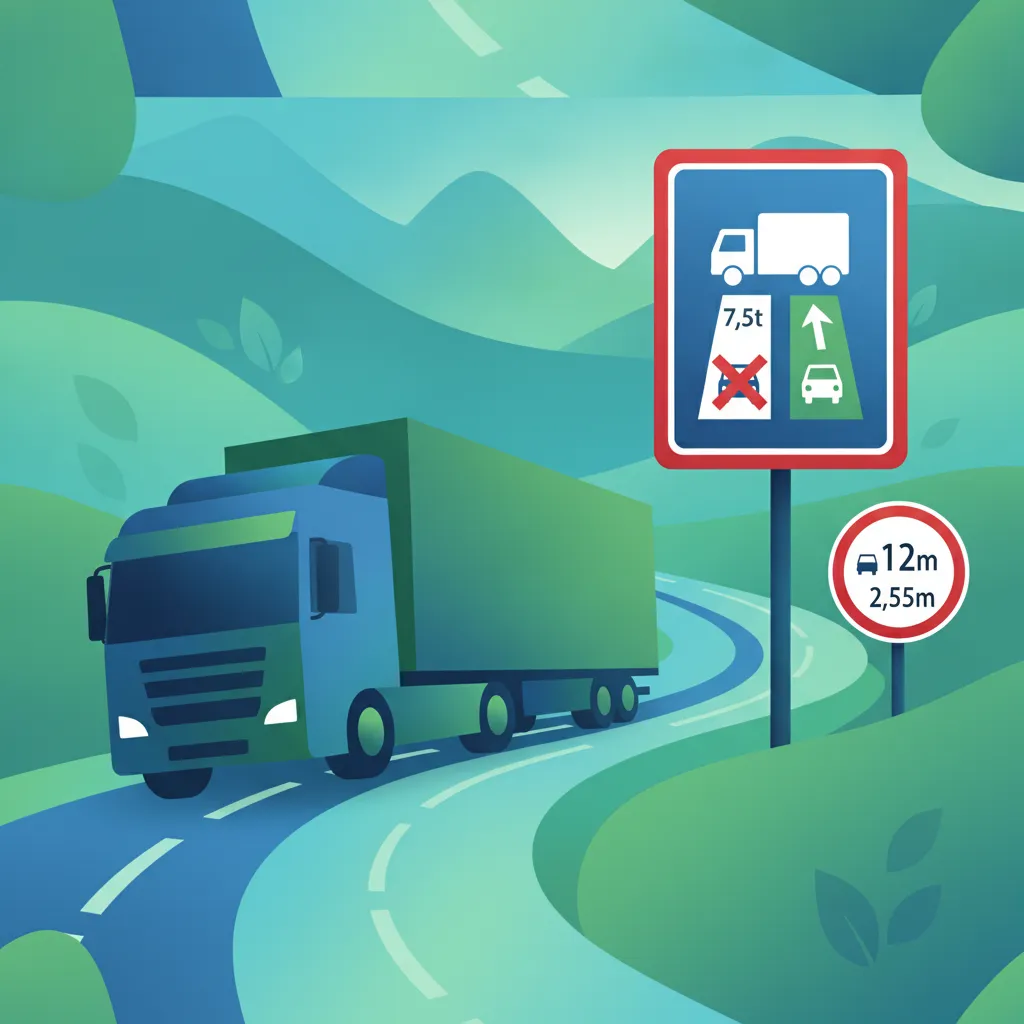
This lesson focuses on the specific Austrian road signs and supplemental plates that apply to heavy goods vehicles. It explains how to interpret signage indicating weight limits, height and width restrictions, lane usage rules, and other critical regulatory information. Correctly understanding these signs is essential for legal compliance and safe navigation on Austria's roads.

This lesson details the general traffic rules applicable to heavy goods vehicles on Austrian roads, highlighting differences from passenger car regulations. It covers key topics such as right-of-way at intersections, specific rules for overtaking, maintaining proper lane discipline, and adhering to designated speed limits. Understanding these rules is critical for safe integration into mixed traffic.

This lesson covers the interaction with various forms of urban traffic control. It includes anticipating traffic light cycles to avoid stopping in an intersection and following the directions given by police or road work personnel. Smooth cooperation with these systems ensures better traffic flow and safety for everyone.

This lesson outlines the standardized procedure for handling a vehicle breakdown safely. It covers pulling over to a safe location, activating hazard lights, deploying the warning triangle, and wearing a high-visibility vest. It also explains when and how to contact roadside assistance or emergency services.

This lesson details the regulations for heavy goods vehicles on Austria's high-speed road network. It covers the specific speed limits, rules on lane usage (e.g., when overtaking is permitted), and procedures for entering and exiting the motorway. Adherence to these rules is crucial for safety in a fast-paced environment.
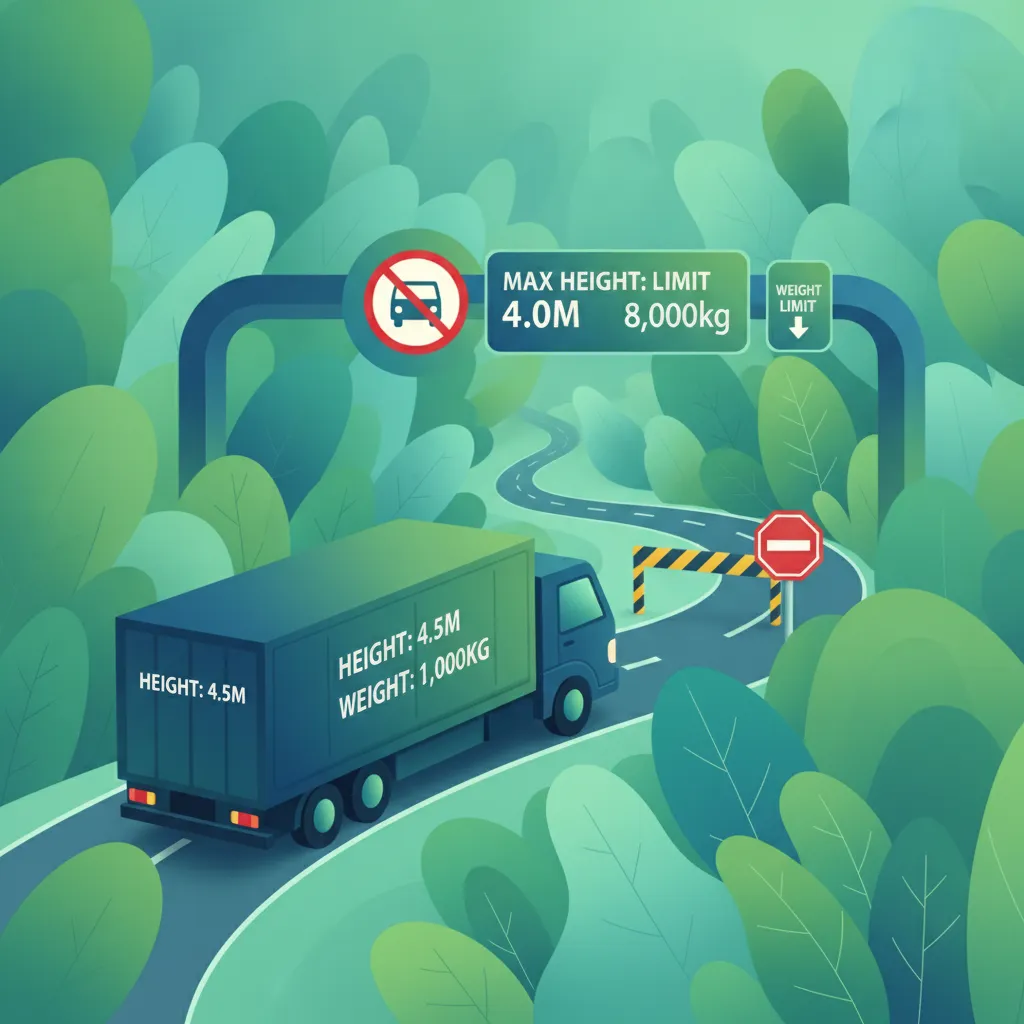
This lesson covers the practical aspects of planning a route for a heavy goods vehicle. It explains how to use maps and specialized GPS systems to identify and avoid roads with height, weight, or other restrictions. Proactive route planning is essential for ensuring an efficient, legal, and safe journey.

This lesson focuses on the legal restrictions concerning a heavy vehicle's dimensions, including maximum height, width, and length. It teaches drivers how to interpret road signs and supplemental plates that indicate these limits. This knowledge is crucial for route planning, especially when navigating under bridges, through tunnels, and on restricted roads.

This lesson focuses on the critical importance of observing posted weight and height limits for bridges and other structures. It explains how to read the relevant signage and stresses the driver's responsibility to know their vehicle's exact height and weight. Ignoring these limits can lead to catastrophic structural failure and severe legal consequences.

This lesson addresses the challenge of manoeuvring a large vehicle through streets not designed for its size. It covers how to assess vertical and horizontal clearances, plan the vehicle's path through tight turns, and heed all restrictive signage. Careful planning and slow, precise control are essential for success.

This lesson explains the regulations governing the use of designated delivery and loading zones in urban areas. It covers topics such as time restrictions, the potential need for permits, and the correct way to position the vehicle to minimize traffic disruption. Adhering to these rules is essential for efficient and legal urban logistics.
Learn to identify and mitigate risks on construction sites, focusing on blind spots, ground-level personnel, and effective communication with flaggers. Includes guidance on load securing and navigating challenging site conditions.
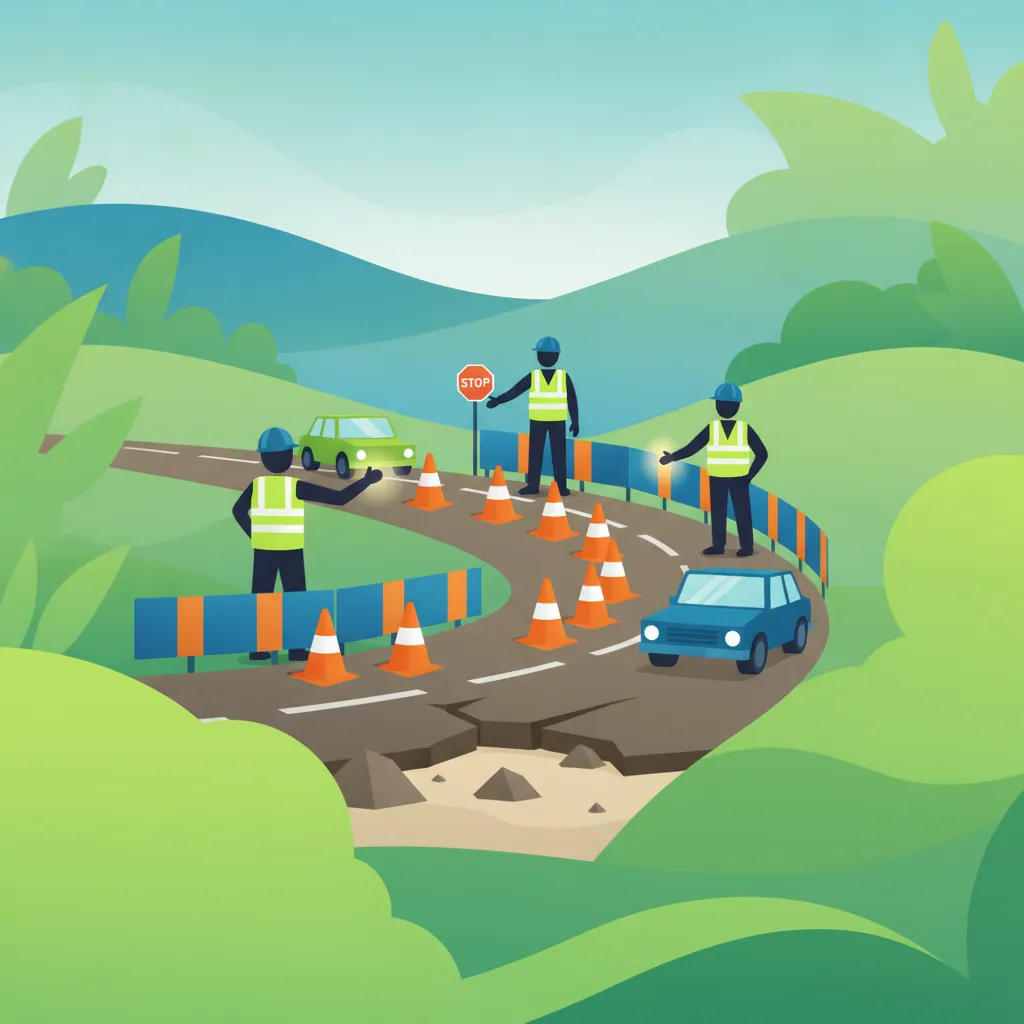
This lesson prepares riders for safely transiting through construction zones ('Baustellen'). It covers the interpretation of temporary signage, adherence to reduced speed limits, and awareness of hazards suchas altered lane markings, abrupt surface changes, and loose gravel. Respecting the safety of road workers and anticipating unpredictable traffic patterns are key themes.

This lesson focuses on the critical role of mirrors, cameras, and other electronic aids in minimizing blind spots around a large vehicle. It provides guidance on how to properly adjust mirrors to maximize visibility. Effective use of these systems is vital for detecting smaller vehicles, cyclists, and pedestrians, especially during manoeuvres.

This lesson reinforces the critical importance of protecting vulnerable road users in dense urban settings. It teaches drivers to be hyper-aware of pedestrians and cyclists, especially near intersections and crosswalks. Key techniques include reducing speed, making eye contact to confirm intentions, and giving ample space.

This lesson details the location and size of the significant blind spots to the front, sides, and rear of large vehicles. It explains how the vehicle's size and articulation create these 'no-zones' where other road users can disappear from view. Recognizing these areas is the first step toward developing safe observation habits.

This lesson addresses the specific danger of right-hand turns, where cyclists and pedestrians in the vehicle's right-side blind spot are at high risk. It covers the defensive driving techniques required, including careful observation, slow speed, and yielding the right-of-way. These procedures are critical for preventing serious accidents in urban areas.

This lesson provides advanced strategies for proactively managing interactions with vulnerable road users to prevent conflicts before they arise. It teaches drivers to predict the likely behavior of pedestrians, cyclists, and e-scooter riders, especially at intersections and in congested areas. Key techniques include maintaining larger safety distances, covering the brake, and making eye contact to ensure mutual awareness and avoid accidents.
This lesson addresses the challenge of manoeuvring a large vehicle through streets not designed for its size. It covers how to assess vertical and horizontal clearances, plan the vehicle's path through tight turns, and heed all restrictive signage. Careful planning and slow, precise control are essential for success.

This lesson addresses the specific challenges of interacting with larger vehicles like buses and trams in an urban environment. It explains how to signal intentions clearly and predictably to avoid conflicts in shared spaces. Key topics include safely crossing tram tracks and maintaining awareness around public transport stops.

This lesson provides practical strategies for safely reversing in challenging environments like narrow streets or busy loading zones. It emphasizes the 'get out and look' principle, the proper use of mirrors and cameras, and the critical safety role of a reliable spotter. Executing these manoeuvres slowly and cautiously is paramount to avoiding collisions.
This lesson focuses on the critical importance of observing posted weight and height limits for bridges and other structures. It explains how to read the relevant signage and stresses the driver's responsibility to know their vehicle's exact height and weight. Ignoring these limits can lead to catastrophic structural failure and severe legal consequences.
Find clear answers to common questions learners have about Interaction with Construction Vehicles and Site Traffic. Learn how the lesson is structured, which driving theory objectives it supports, and how it fits into the overall learning path of units and curriculum progression in Austria. These explanations help you understand key concepts, lesson flow, and exam focused study goals.
General priority rules apply until a marked site entrance or traffic controller dictates otherwise. Always watch for the specific signage and the instructions of the site flagger, as their directions override standard road signals in active zones.
Never assume a worker sees your vehicle. Use your indicators clearly, keep your vehicle at a very low speed, and only proceed when you have established clear visual contact and received a direct, positive signal from the personnel on the ground.
Yes, ensure all marker lights and, where necessary, hazard warning systems are active to maximize visibility. Construction areas often involve low light or dust, and being highly visible is a primary component of site safety compliance.
Do not attempt to pass until there is sufficient clearance and the path is confirmed safe by site personnel. Heavy machinery often has massive blind spots, and you must assume the operator cannot see you if you are in their immediate vicinity.
Refine your study plan by searching for specific Austrian driving theory practice sets. Pinpoint questions related to particular road rules, signs, or challenge levels, and begin practicing immediately to reinforce your knowledge and excel in your official exam with confidence. Get started with focused revision today.