
This lesson explores the physics and practical handling of heavy vehicles when subjected to high crosswinds. You will learn to identify high-risk areas, such as bridges and open plains, and adopt proactive driving strategies to maintain stability and lane position. This knowledge is essential for the C, C1, C1E, and CE theory exams and safe operation on Austria's diverse terrain.

Lesson content overview
Driving a heavy goods vehicle demands constant vigilance and a deep understanding of how various external factors can influence vehicle dynamics. Among these, strong side winds and crosswinds present a significant challenge, capable of destabilizing even the most robust trucks and articulated combinations. This lesson explores the critical impact of these aerodynamic forces on vehicle stability, outlining essential techniques and regulatory requirements to ensure safety on Austrian roads.
For drivers of C, C1, C1E, and CE category vehicles, the effects of side winds are particularly pronounced due to the substantial surface area of trucks, trailers, and their loads. Unlike passenger cars, which offer less resistance to lateral wind forces, heavy vehicles can be significantly pushed sideways, leading to lane departures, loss of control, or even rollovers. Mastering the art of anticipating and reacting to these conditions is not just a matter of comfort; it is a fundamental safety skill crucial for protecting yourself, your cargo, and other road users, especially on exposed sections like bridges, open plains, and mountain passes.
When wind strikes a moving vehicle, it creates aerodynamic forces that can profoundly affect its stability. Understanding these forces is the first step toward effective mitigation.
The primary concern with crosswinds is the aerodynamic side force, which is a lateral (sideways) force that pushes the vehicle perpendicular to its direction of travel. This force can cause lateral drift, where the vehicle moves uncontrollably sideways across the lane. The magnitude of this side force increases significantly with both wind speed and the exposed side surface area of the vehicle.
Another crucial effect, especially for articulated vehicles like semi-trailers, is the yaw moment. This is a rotational force that attempts to twist the vehicle around its vertical axis. A strong yaw moment can cause a trailer to swing or "fishtail," making it extremely difficult to maintain a straight path and potentially leading to a jackknife situation, particularly if the wind hits the trailer unevenly.
The inherent design of heavy goods vehicles, with their tall, flat, and extensive side profiles, makes them highly susceptible to wind forces. The vehicle surface area, specifically the side area exposed to the wind, acts like a sail. The larger this area, the greater the aerodynamic side force generated by a given wind speed.
This is why vehicles with large, box-like trailers, especially when empty or lightly loaded, are particularly vulnerable. An empty trailer has less mass to resist the wind's pushing force, while its large side profile catches more wind, exacerbating the effect. Load distribution also plays a role, as a high centre of gravity or an unevenly loaded trailer can further increase sway susceptibility and overall instability.
Certain road sections are notorious for strong side winds due as they offer minimal natural or artificial shielding. Drivers must develop a keen sense of anticipation to identify these exposed road sections and adjust their driving proactively.
Bridges and viaducts are perhaps the most common locations where heavy goods vehicles encounter significant crosswinds. Elevated above the surrounding terrain, these structures offer no obstructions to block the wind. The wind can sweep across them with full force, often unimpeded for hundreds of metres, creating a continuous lateral push.
Furthermore, wind speeds can sometimes funnel between bridge railings or overpasses, creating localized gusts or "wind shear" where wind direction and intensity change suddenly. Always assume strong winds on bridges, even on a calm day, and be prepared to react.
Vast, flat, and treeless landscapes, known as open plains, provide no natural barriers to deflect or diminish wind. On these sections, crosswinds can buffet heavy vehicles for extended periods. Similar to bridges, areas where dense forests or buildings abruptly end can also create sudden gusts as the vehicle transitions from a sheltered zone to an exposed one. These transitions can be particularly dangerous if a driver is unprepared.
Mountainous regions, with their complex topography, can create highly unpredictable wind conditions. Wind can be channeled through valleys, accelerated over ridgelines, or funneled around peaks, leading to sudden shifts in direction and intensity. A road along a mountain pass might transition rapidly from a sheltered section to an exposed one, making it challenging for drivers to maintain consistent stability. Paying close attention to the immediate terrain and any local weather forecasts is crucial here.
Successfully navigating strong crosswinds requires a combination of awareness, anticipation, and precise driving techniques. Proactive measures are always more effective than reactive ones.
The most effective strategy for mitigating the impact of side winds is to reduce your travel speed. Aerodynamic side force is not directly proportional to wind speed but to the square of the wind speed. This means that even a modest reduction in vehicle speed can significantly diminish the wind's effect on the vehicle's stability. For example, if wind force quadruples when wind speed doubles, the same applies to the interaction with vehicle velocity. Lower speeds also provide the driver with more reaction time to perceive and correct any lateral drift, enhancing overall control and safety.
Proactive vs. Reactive: Always aim to reduce speed before entering an exposed section if you anticipate strong winds, rather than waiting until you feel the vehicle being pushed. This allows for a smoother transition and better control.
When encountering a side wind, gentle and continuous steering corrections are essential to maintain lane position. This typically involves counter-steering, meaning you apply slight steering input into the direction the wind is coming from. For instance, if the wind is pushing your vehicle from the right, you would apply a subtle and steady steering input to the right.
The key is to make these corrections smoothly and proportionally. Abrupt or excessive steering inputs, especially with an articulated vehicle, can lead to oversteer, cause the trailer to swing excessively, or even result in a jackknife. Practice keeping a light but firm grip on the steering wheel, making small, continuous adjustments to counteract the wind's lateral push without creating sudden directional changes.
Developing a heightened sense of awareness is paramount. This includes constantly monitoring weather forecasts, paying attention to wind socks or flags near exposed areas, and observing the behaviour of other vehicles, especially lighter ones. Look for visual cues like trees swaying or dust blowing across the road.
Anticipation means preparing for potential wind impacts well in advance. Before entering a bridge or an open area, mentally prepare yourself for the need to reduce speed and make steering adjustments. A calm and prepared driver is far more capable of handling unexpected gusts than one taken by surprise.
The way a heavy vehicle is loaded plays a significant role in its susceptibility to side winds. Proper load distribution and load securing are not just about preventing cargo damage; they are critical for maintaining vehicle stability.
An improperly loaded vehicle can exacerbate the effects of crosswinds in several ways. A high centre of gravity, for example, makes the vehicle more prone to swaying and increases the risk of rollover when subjected to lateral forces. Similarly, an unevenly distributed load can create an asymmetric aerodynamic profile, leading to uneven drag and side forces that make the vehicle more difficult to control.
A partially loaded trailer, with its large, exposed side area and relatively low mass, acts particularly like a sail in strong winds. The lack of significant weight to anchor the trailer against the wind's force makes it highly unstable.
Beyond distributing weight evenly, it is essential that all cargo is properly secured to prevent shifting during transit. A load that shifts can dramatically alter the vehicle's centre of gravity and aerodynamic profile, suddenly increasing its vulnerability to wind. For example, a tall stack of unsecured goods could topple or move, creating an even larger and more unstable "sail" for the wind to catch. Always ensure that loads are secured according to the relevant regulations (see Lesson 5 for more details on load securing).
Austrian traffic law places clear responsibilities on drivers to adapt their driving behaviour to prevailing weather and road conditions. This includes specific obligations regarding strong winds.
Under Austrian traffic law, drivers are legally required to adapt their speed to prevailing weather conditions, reducing it whenever side winds could affect vehicle stability. Failure to do so may constitute a breach of regulations such as §129a of the Straßenverkehrsordnung (StVO), which pertains to the general duty of care in traffic. Maintaining standard speeds despite strong crosswind warnings is considered reckless and can lead to severe consequences.
Legal Compliance: Always remember that while you may adjust your speed for safety, you must still comply with any minimum speed limits and general traffic rules unless otherwise instructed by signage or emergency personnel.
The obligation to stay within lane markings is continuous and applies to all road types, even under adverse weather conditions. §44 StVO mandates maintaining lane integrity. Side winds do not exempt a driver from this duty. Allowing the vehicle to drift into an adjacent lane or onto the hard shoulder due to wind forces is a traffic violation and a significant safety hazard that can lead to side-swipe accidents or collisions. Gentle, continuous counter-steering is the legally compliant and safe method to remain centered.
Drivers must be aware of and obey specific high-wind warning signs indicating the presence of strong side winds. In Austria, the relevant sign is generally:
Upon seeing such a sign, drivers are legally obliged (§41 StVO) to reduce speed and prepare for steering corrections. Ignoring these warnings significantly increases accident risk and can lead to legal penalties.
As noted, proper load securing is not only about preventing damage but also about maintaining vehicle stability, particularly against wind. §57 StVO outlines mandatory requirements for securing loads. An unsecured or improperly secured load can shift, change the vehicle's aerodynamic profile, and severely compromise its handling in windy conditions, leading to potential loss of control.
Despite careful preparation, drivers may face specific challenges when dealing with side winds. Understanding these scenarios and applying best practices can prevent accidents.
An empty or lightly loaded trailer presents a much larger side area relative to its weight, making it exceptionally vulnerable to crosswinds. It behaves far more like a sail than a stable vehicle component. In very strong winds, it might be advisable to add ballast to the trailer to increase its mass and reduce its susceptibility to lateral forces. If this is not possible, significant speed reduction and extreme vigilance are absolutely critical.
Overcompensating with sharp, sudden steering inputs in response to a gust is a common mistake that can lead to dangerous situations, including oversteer, loss of control, or even a trailer jackknife. Always strive for smooth, gradual corrections.
Wind shear refers to sudden, localized changes in wind speed or direction. This can happen unexpectedly, for example, when exiting a tunnel onto an exposed bridge, or as a vehicle passes the shelter of a building into open air. Be prepared for these abrupt changes by maintaining a moderate speed and being ready to adjust steering instantly but gently.
The dangers of side winds are amplified when combined with other adverse weather conditions:
Let's consider a few practical scenarios that heavy goods vehicle drivers might encounter:
Imagine you are driving a truck with a semi-trailer (CE category) on an Austrian motorway. You are approaching a 500-meter long bridge. The weather forecast warned of strong crosswinds, and you see a Gefahrzeichen 7 (strong side wind) sign. The wind is currently measured at 35 km/h from the left.
Correct Behavior: You proactively reduce your speed from 80 km/h to 60 km/h before entering the bridge. You maintain a firm but relaxed grip on the steering wheel, applying continuous, subtle counter-steering to the left to counteract the wind's push. You monitor for any sudden gusts and are prepared to adjust your steering slightly more.
Incorrect Behavior: You maintain your speed at 80 km/h, ignoring the warning sign and the forecasted conditions. As you enter the bridge, the strong crosswind pushes your vehicle laterally, causing you to drift towards the right guardrail. You make a sudden, sharp steering correction, which causes the trailer to sway dangerously.
Explanation: Reducing speed significantly lessens the wind's aerodynamic force. Proactive, gentle counter-steering allows you to maintain lane discipline without overcorrecting, which could destabilize the articulated combination.
You are navigating an articulated truck (CE) through a winding mountain pass. The terrain is varied, with sections exposed to the wind alternating with sheltered areas. You experience gusts from both the left and right sides, often shifting rapidly.
Correct Behavior: You maintain a reduced and adaptable speed, perhaps around 50 km/h, continuously monitoring the surrounding terrain and the wind's effect on your vehicle. You apply fluid, subtle steering corrections, gently counter-steering into the wind's direction as it shifts, ensuring you do not overcorrect when the wind direction changes. Your focus remains on maintaining a steady line within your lane.
Incorrect Behavior: You try to maintain a consistent speed, ignoring the variable wind. When a gust hits from one side, you overcompensate with a strong steering input, only for the wind to shift, causing you to overcorrect in the opposite direction, leading to a dangerous oscillating sway.
Explanation: Mountain passes require constant vigilance and highly adaptive driving. Smooth, continuous adjustments that match the wind's variability are crucial to prevent oscillations and potential loss of control.
This lesson covers how crosswinds destabilize heavy goods vehicles through aerodynamic side forces and yaw moments, with particular attention to HGV vulnerability due to large surface areas. Learners are taught to identify high-risk zones such as bridges, open plains, and mountain passes, and to apply proactive strategies including speed reduction and smooth counter-steering before and during exposure to wind. The content includes Austrian legal obligations under StVO, load management principles, and practical scenarios demonstrating correct versus incorrect responses. Mastery of these techniques is essential for safe HGV operation on Austria's diverse terrain and for passing the C, C1, C1E, and CE theory examinations.
A short set of high-value points that capture the most important learning from this lesson.
Heavy goods vehicles with large side profiles act like sails in crosswinds, generating significant aerodynamic side forces that push the vehicle sideways
Reducing speed is the most effective mitigation strategy because aerodynamic side force relates to the square of wind speed
Gentle, continuous counter-steering into the wind direction maintains lane position without destabilizing articulated combinations
Empty or lightly loaded trailers are especially vulnerable due to their high surface area combined with low mass
Austrian traffic law requires drivers to adapt speed to weather conditions, with specific obligations under StVO regarding wind hazards
Explore all units and lessons included in this driving theory course.
Bridges, open plains, and mountain passes are high-risk zones where wind funnels unobstructed across the roadway
Aerodynamic side force and yaw moment are the two primary wind effects that destabilize heavy vehicles
Counter-steering means applying steering input into the direction the wind is coming from, not away from it
The Austrian G7 (Gefahrzeichen 7) sign warns of strong side winds and legally obliges speed reduction and steering preparation
Wind shear causes sudden gusts when exiting tunnels or passing from sheltered zones to exposed areas
Maintaining normal speed when high-wind warning signs are displayed, assuming the vehicle can handle it
Making abrupt or excessive steering corrections instead of smooth, gradual adjustments, which can cause trailer sway or jackknife
Failing to anticipate wind effects by not monitoring weather forecasts or visual cues like swaying trees
Allowing load to shift by insufficient securing, which changes the vehicle's centre of gravity and aerodynamic profile
Overcorrecting when wind direction changes, especially on mountain passes with variable gusts, leading to dangerous oscillation
Lesson content overview
A short set of high-value points that capture the most important learning from this lesson.
Heavy goods vehicles with large side profiles act like sails in crosswinds, generating significant aerodynamic side forces that push the vehicle sideways
Reducing speed is the most effective mitigation strategy because aerodynamic side force relates to the square of wind speed
Gentle, continuous counter-steering into the wind direction maintains lane position without destabilizing articulated combinations
Empty or lightly loaded trailers are especially vulnerable due to their high surface area combined with low mass
Austrian traffic law requires drivers to adapt speed to weather conditions, with specific obligations under StVO regarding wind hazards
Explore all units and lessons included in this driving theory course.
Bridges, open plains, and mountain passes are high-risk zones where wind funnels unobstructed across the roadway
Aerodynamic side force and yaw moment are the two primary wind effects that destabilize heavy vehicles
Counter-steering means applying steering input into the direction the wind is coming from, not away from it
The Austrian G7 (Gefahrzeichen 7) sign warns of strong side winds and legally obliges speed reduction and steering preparation
Wind shear causes sudden gusts when exiting tunnels or passing from sheltered zones to exposed areas
Maintaining normal speed when high-wind warning signs are displayed, assuming the vehicle can handle it
Making abrupt or excessive steering corrections instead of smooth, gradual adjustments, which can cause trailer sway or jackknife
Failing to anticipate wind effects by not monitoring weather forecasts or visual cues like swaying trees
Allowing load to shift by insufficient securing, which changes the vehicle's centre of gravity and aerodynamic profile
Overcorrecting when wind direction changes, especially on mountain passes with variable gusts, leading to dangerous oscillation
Explore search topics learners often look for when studying Impact of Side Winds and Crosswinds on Vehicle Stability. These topics reflect common questions about road rules, driving situations, safety guidance, and lesson level theory preparation for learners in Austria.
Browse additional driving theory lessons that cover connected traffic rules, road signs, and common driving situations related to this topic. Improve your understanding of how different rules interact across everyday traffic scenarios.
Explore the physics behind how side winds and crosswinds impact the stability of heavy goods vehicles. Learn about aerodynamic side force, yaw moments, and their effects on trucks and trailers, crucial for safe driving in Austria.

This lesson explains the severe consequences of a load shift while the vehicle is in motion. It details how sudden movement of cargo can drastically alter the vehicle's stability, making it difficult to steer or brake effectively. This can lead to a loss of control or a rollover, highlighting the importance of proper load securing.

This lesson explains the critical relationship between load distribution, the vehicle's centre of gravity, and its stability. It details how incorrect placement of cargo can negatively affect handling, increase the risk of rollovers, and reduce braking efficiency. Achieving a balanced load is a key component of safe heavy vehicle operation.

This lesson explains the physical principles of load distribution and its direct impact on a vehicle's centre of gravity and stability. It details how to arrange cargo to maintain a low centre of gravity and ensure weight is distributed correctly over the axles. Proper load distribution is fundamental to safe handling and preventing rollovers.
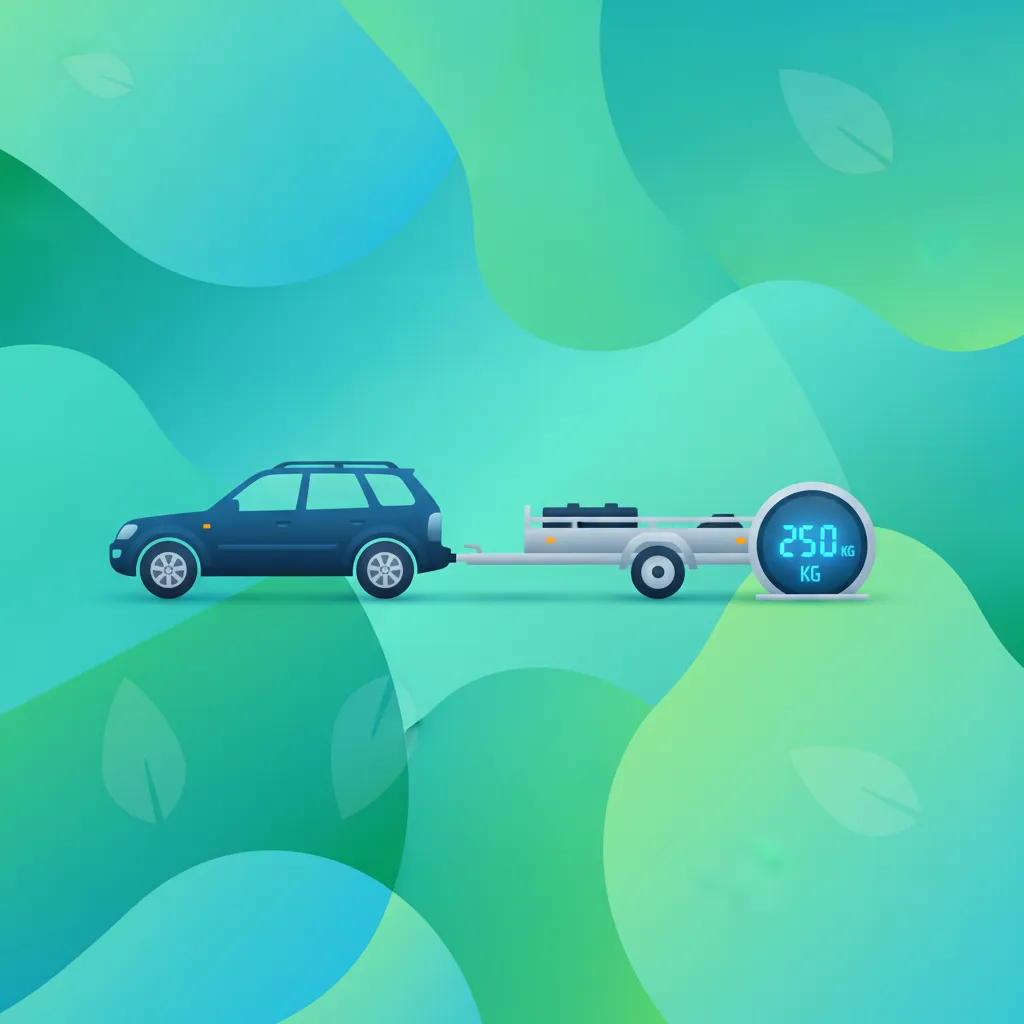
This lesson focuses on the management of tongue load (Stützlast), which is the downward force the trailer coupling exerts on the towing vehicle. It explains how too little or too much tongue load can negatively affect the stability and handling of the entire combination. Achieving the correct Stützlast is vital for safe towing.
Learn essential strategies for managing side winds on exposed roads like bridges and plains. Understand Austrian traffic regulations, warning signs, and speed adaptation techniques for stable heavy vehicle operation.

This lesson focuses on the critical importance of observing posted weight and height limits for bridges and other structures. It explains how to read the relevant signage and stresses the driver's responsibility to know their vehicle's exact height and weight. Ignoring these limits can lead to catastrophic structural failure and severe legal consequences.

This lesson details the regulations for heavy goods vehicles on Austria's high-speed road network. It covers the specific speed limits, rules on lane usage (e.g., when overtaking is permitted), and procedures for entering and exiting the motorway. Adherence to these rules is crucial for safety in a fast-paced environment.

This lesson covers the specific weight restrictions that apply to sensitive infrastructure like Alpine passes and bridges throughout Austria. It explains how to identify these limits through road signage and incorporate them into route planning. Adhering to these restrictions is vital for preventing structural damage and ensuring safety in challenging terrain.

This lesson addresses the challenge of manoeuvring a large vehicle through streets not designed for its size. It covers how to assess vertical and horizontal clearances, plan the vehicle's path through tight turns, and heed all restrictive signage. Careful planning and slow, precise control are essential for success.

This lesson details the general traffic rules applicable to heavy goods vehicles on Austrian roads, highlighting differences from passenger car regulations. It covers key topics such as right-of-way at intersections, specific rules for overtaking, maintaining proper lane discipline, and adhering to designated speed limits. Understanding these rules is critical for safe integration into mixed traffic.
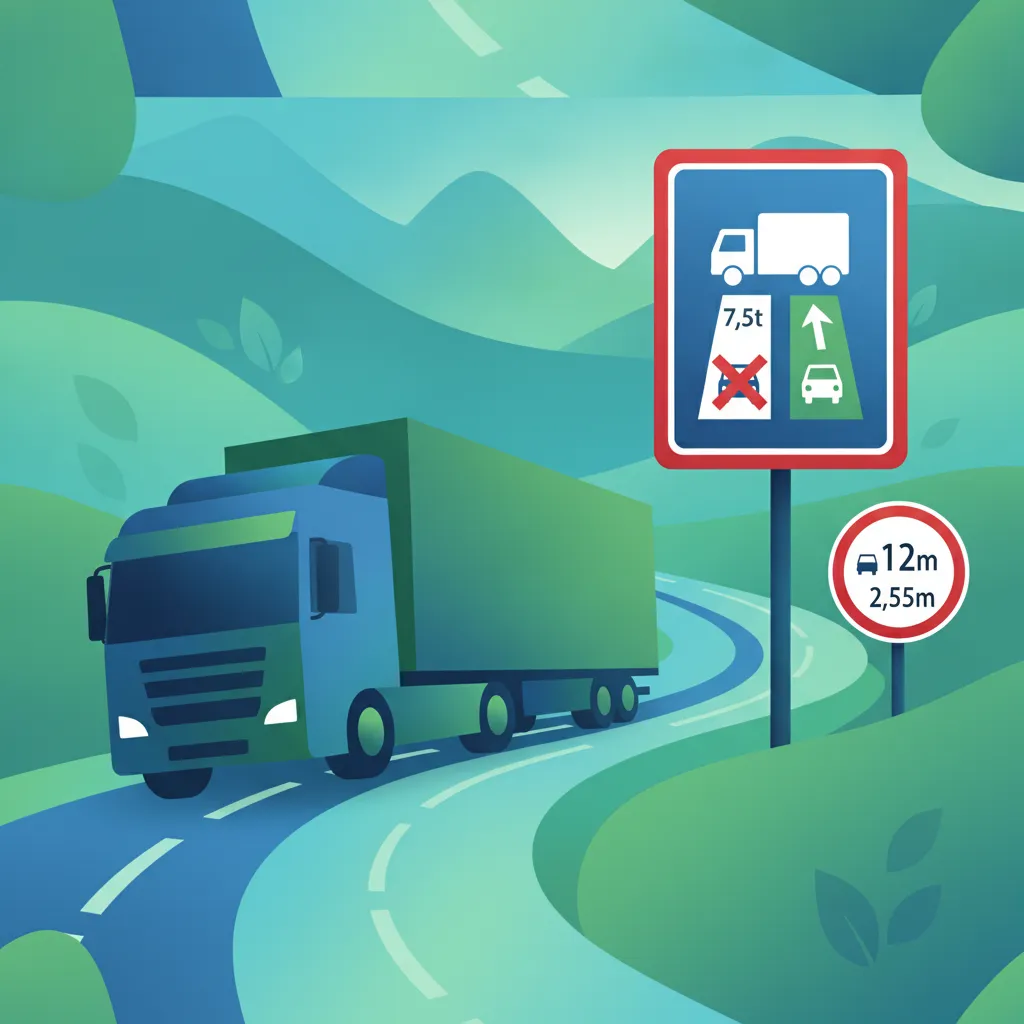
This lesson focuses on the specific Austrian road signs and supplemental plates that apply to heavy goods vehicles. It explains how to interpret signage indicating weight limits, height and width restrictions, lane usage rules, and other critical regulatory information. Correctly understanding these signs is essential for legal compliance and safe navigation on Austria's roads.
This lesson covers the practical aspects of planning a route for a heavy goods vehicle. It explains how to use maps and specialized GPS systems to identify and avoid roads with height, weight, or other restrictions. Proactive route planning is essential for ensuring an efficient, legal, and safe journey.
This lesson focuses on the legal restrictions concerning a heavy vehicle's dimensions, including maximum height, width, and length. It teaches drivers how to interpret road signs and supplemental plates that indicate these limits. This knowledge is crucial for route planning, especially when navigating under bridges, through tunnels, and on restricted roads.

This lesson prepares drivers for the demanding conditions of Alpine driving. It covers techniques for managing speed on steep up-hill and down-hill sections, being prepared for sudden weather changes, and following safety protocols inside mountain tunnels. This specialized knowledge is essential for operating safely in mountainous terrain.

This lesson reinforces the critical importance of protecting vulnerable road users in dense urban settings. It teaches drivers to be hyper-aware of pedestrians and cyclists, especially near intersections and crosswalks. Key techniques include reducing speed, making eye contact to confirm intentions, and giving ample space.
Find clear answers to common questions learners have about Impact of Side Winds and Crosswinds on Vehicle Stability. Learn how the lesson is structured, which driving theory objectives it supports, and how it fits into the overall learning path of units and curriculum progression in Austria. These explanations help you understand key concepts, lesson flow, and exam focused study goals.
HGVs have a much larger lateral surface area, which acts like a sail when hit by strong gusts. This force can push the vehicle off-course, particularly when the vehicle is lightly loaded or empty, increasing the risk of lane deviation.
You should immediately reduce your speed to lower the wind's aerodynamic impact on your vehicle. Avoid abrupt steering movements, stay focused on the road ahead to anticipate wind gusts, and be especially cautious when exiting tunnels or crossing bridges.
An empty or lightly loaded trailer is generally more unstable in crosswinds because it has less downward force to keep the tyres planted. Proper load distribution helps, but speed management remains the primary defence against wind-induced instability.
Yes, warning signs indicating a risk of strong crosswinds are placed in areas where wind gusts are common. Drivers of heavy vehicles must treat these signs as a signal to adjust their speed and prepare for potential vehicle reaction to the wind.
Refine your study plan by searching for specific Austrian driving theory practice sets. Pinpoint questions related to particular road rules, signs, or challenge levels, and begin practicing immediately to reinforce your knowledge and excel in your official exam with confidence. Get started with focused revision today.