
This lesson guides you through the complex requirements of planning long-distance passenger journeys, essential for your professional career as a coach driver. You will learn to integrate French and EU regulations, including mandatory rest periods and tachograph compliance, into your service planning. This knowledge is vital for your D category theory exam and ensures passenger safety and legal compliance on the road.

Lesson content overview
Operating long-distance intercity coach services in France—popularly referred to as "Macron buses" (autocars Macron) following the liberalization of the transport market—demands a rigorous blend of logistical preparation, regulatory compliance, and high-level safety execution. Drivers of heavy passenger vehicles (category D, D1, DE, and D1E licences) carry the ultimate responsibility for dozens of passengers over hundreds of kilometres.
To execute these services safely and legally, drivers must seamlessly integrate European Union (EU) social regulations with real-world variables, such as fuel efficiency, fluctuating weather conditions, terminal layout operations, and passenger comfort. This guide provides an exhaustive breakdown of the knowledge required to successfully plan and conduct long-distance passenger transits across the French and European road networks.
At the core of long-distance passenger transport safety is Regulation (EC) No 561/2006, which dictates the maximum driving limits and mandatory rest periods for professional drivers across all EU member states, including France. These laws are designed to combat driver fatigue, protect worker health, and guarantee public road safety. Compliance is monitored strictly by French enforcement officers using on-board recording equipment.
Drivers must meticulously track their cumulative driving hours to avoid severe legal penalties and prevent cognitive decline during long journeys:
Continuous driving without rest is one of the leading causes of heavy vehicle accidents. Under EU law, a driver must take a mandatory break of at least 45 minutes after a maximum of 4.5 hours of driving.
The Split Break Rule is One-Way: You can split the mandatory 45-minute break into two parts, but they must be taken in a specific order: a break of at least 15 minutes first, followed later by a break of at least 30 minutes. Reversing this order (30 minutes followed by 15 minutes) is a serious regulatory violation and will be flagged as non-compliant during a tachograph audit.
Within every 24-hour period after the end of the previous daily or weekly rest period, a driver must take a new daily rest.
Planning a long-distance coach journey is a multi-layered logistical task. It requires calculating not just the fastest route, but the safest, most legally compliant, and most cost-effective path from departure to arrival.
Route Selection and Road Restrictions: Analyze the itinerary using dedicated heavy-vehicle navigation. Ensure the route avoids weight-restricted bridges, narrow rural lanes, and low-clearance tunnels, while prioritizing motorways (autoroutes) for smoother transit.
Integration of Mandatory Rest Stops: Map out exactly where the 4.5-hour driving marks fall. Identify high-capacity motorway service stations (aires d'autoroute) that feature dedicated coach parking, public facilities, and safe pedestrian pathways for passengers.
Time and Schedule Buffers: Incorporate realistic buffers for peak traffic hours (such as Parisian ring-road congestion, the Boulevard Périphérique), toll plaza queues, and terminal transfer delays. Never design a schedule that requires driving right up to the legal minute limit.
Contingency Routing: Pre-plan alternative pathways around major bottlenecks or mountain passes prone to sudden closures (e.g., in the French Alps or Pyrenees).
Running out of fuel on a public highway is not only an operational failure but a major safety hazard that carries heavy fines under the French Code de la Route. Efficient fuel management directly affects operating costs and environmental impact, complying with the emissions directives of the French Environmental Code (Code de l'Environnement).
A safety margin of extra fuel calculated beyond the baseline journey requirements, typically representing 10% to 15% of the total estimated consumption. This buffer ensures the coach can handle prolonged idling in traffic jams, operate climate control systems during delays, or execute detours without running dry.
When calculating fuel requirements prior to departure, a professional driver must account for several variable operational factors:
Weather conditions in France can vary dramatically over a single long-distance journey. A driver departing a rainy, temperate Paris at dawn may encounter freezing fog in Burgundy or heavy snow in the mountain sectors by afternoon.
Under the French Code de la Route, maximum speed limits for passenger vehicles over 3.5 tonnes are legally reduced during wet weather or periods of low visibility. Professional drivers must strictly adhere to these adjusted speed limits:
| Road Type | Dry Weather Speed Limit | Wet/Rainy Weather Speed Limit | Reduced Visibility (< 50m) |
|---|---|---|---|
| Motorways (Autoroutes) | 100 km/h (standard coach) | 90 km/h | 50 km/h |
| Dual Carriageways / Divided Highways | 90 km/h | 80 km/h | 50 km/h |
| Standard Two-Lane Rural Roads | 80 km/h | 70 km/h | 50 km/h |
When routing through alpine passes or high-elevation roads during winter, drivers must check the status of mountain passes (cols) before departure. In France, certain mountain zones mandate the carriage or use of winter equipment (removable non-skid devices such as snow chains, or winter tyres) under the Loi Montagne II.
If conditions deteriorate rapidly, drivers must adapt by shifting to low gears to utilize engine braking, extending following distances to at least three times the standard length, and scheduling more frequent, shorter breaks to combat the intense mental fatigue of low-grip driving.
Long-distance transit is physically demanding for passengers. Maintaining a comfortable, safe, and accessible cabin environment is a primary duty of the professional driver.
A driver must actively manage the coach's climate control system to maintain a cabin temperature between 19°C and 21°C. Air quality must be constantly refreshed via ventilation systems to prevent the buildup of carbon dioxide, which can cause passenger headaches and accelerate driver drowsiness.
Additionally, drivers should perform regular informational announcements over the public address (PA) system, keeping passengers updated on progress, upcoming stops, and mandatory safety rules (such as the legal requirement to wear seat belts at all times when the coach is in motion).
Under French accessibility laws (stemming from the Loi d'Orientation des Mobilités), long-distance coach operators must guarantee safe access for Passengers with Reduced Mobility (PRMs).
At designated terminal facilities (gares routières), drivers must follow specific safety procedures:
Platform Alignment: Position the coach perfectly parallel to the boarding platform curb, leaving no more than a minimal gap to prevent tripping hazards.
Ramp Deployment: Before deploying the mechanical access ramp for wheelchair users (Usagers en Fauteuil Roulant - UFR), ensure the clearance zone on the platform is completely clear of pedestrians and baggage.
Securement: Once boarded, ensure the wheelchair is locked into the designated accessible space using the vehicle's specialized floor-anchors and safety restraints.
Luggage Distribution: Pack heavy suitcases flat in the lower luggage bays, distributing weight evenly across both sides of the vehicle to preserve the coach's center of gravity and lateral stability.
Compliance with driving and rest regulations is recorded automatically by the digital tachograph (chronotachygraphe numérique), which is mandatory on all modern commercial passenger coaches. This electronic device records vehicle speed, distance, and individual driver activities.
The personal driver card (carte conducteur) is a legal document unique to the driver. It stores up to 28 days of activity data (with modern smart tachographs storing up to 56 days of data).
Drivers must ensure the correct activity is selected whenever the vehicle is stationary:
Monotonous highway driving over long distances naturally induces physical and mental fatigue. Understanding the physiological signs of tiredness and implementing active prevention strategies is critical to avoiding catastrophic accidents.
A professional driver must be highly self-aware and immediately recognize the early indicators of sleep onset:
When fatigue strikes, relying on quick-fix stimulants like caffeine or loud music provides only a brief, deceptive window of alertness. The only true cure for sleep pressure is physical sleep.
To maintain operational compliance and protect their professional licence, category D drivers must avoid the frequent mistakes that lead to administrative and criminal penalties during roadside checks by the French gendarmerie or transport inspectors (inspecteurs des transports terrestres).
To round out your preparation for the passenger transport theory exam and practical operations, continue studying these related topics:
To test your knowledge on driving limits, split breaks, French speed reductions, and tachograph manual entries, try our targeted practice modules:
This lesson covers the complete regulatory and operational framework for long-distance coach services in France under EU social regulations. Drivers must master the strict driving time limits (9 hours daily, 4.5 hours before mandatory breaks) and rest requirements (11-hour regular or 9-hour reduced daily rest). The content details tachograph operation with specific activity symbols, wet weather speed reductions for heavy vehicles, and passenger comfort management including accessibility for wheelchair users. Professional drivers must also recognize fatigue symptoms and implement proper countermeasures, while avoiding common violations such as incorrect split break ordering and inadequate rest accommodation.
A short set of high-value points that capture the most important learning from this lesson.
EU Regulation (EC) No 561/2006 sets maximum driving limits: 9 hours daily (extendable to 10 hours twice weekly), 56 hours weekly, and 90 hours bi-weekly.
A mandatory 45-minute break is required after maximum 4.5 hours of continuous driving to prevent fatigue-related accidents.
Speed limits for coaches over 3.5 tonnes reduce significantly in wet conditions: motorways drop from 100 km/h to 90 km/h, and to 50 km/h in poor visibility.
The digital tachograph automatically records driving time but drivers must manually select correct activity symbols (other work, availability, rest) when stationary.
Fatigue countermeasures include 15-20 minute power naps and microbreaks; caffeine provides only temporary false alertness.
Explore all units and lessons included in this driving theory course.
Split break order is strictly regulated: 15 minutes first, followed by 30 minutes. Reversing this order (30 then 15) is a compliance violation.
Regular daily rest must be at least 11 consecutive hours (or split as 3 + 9 hours totalling 12 hours). Reduced daily rest of 9 hours is permitted maximum three times between weekly rests.
Wet weather speed limits for heavy passenger vehicles: motorways 90 km/h, dual carriageways 80 km/h, rural roads 70 km/h.
Driver card must be inserted before starting work shift, and manual entry of prior 'other work' is required if pre-driving tasks were performed.
Under Loi Montagne II, winter equipment (chains or winter tyres) may be mandatory when driving through designated French mountain passes.
Driving past the 4.5-hour limit while searching for a convenient rest area, creating a regulatory violation.
Forgetting to manually record 'other work' activities performed before inserting the tachograph driver card, leaving undocumented gaps.
Taking weekly rest periods inside the coach cabin, which is prohibited; operators must provide proper accommodation.
Incorrectly reversing the split break order (30-minute break before 15-minute break), which violates tachograph audit requirements.
Failing to maintain the 10-15% fuel buffer, leading to potential fuel exhaustion on motorways and associated safety hazards and fines.
Lesson content overview
A short set of high-value points that capture the most important learning from this lesson.
EU Regulation (EC) No 561/2006 sets maximum driving limits: 9 hours daily (extendable to 10 hours twice weekly), 56 hours weekly, and 90 hours bi-weekly.
A mandatory 45-minute break is required after maximum 4.5 hours of continuous driving to prevent fatigue-related accidents.
Speed limits for coaches over 3.5 tonnes reduce significantly in wet conditions: motorways drop from 100 km/h to 90 km/h, and to 50 km/h in poor visibility.
The digital tachograph automatically records driving time but drivers must manually select correct activity symbols (other work, availability, rest) when stationary.
Fatigue countermeasures include 15-20 minute power naps and microbreaks; caffeine provides only temporary false alertness.
Explore all units and lessons included in this driving theory course.
Split break order is strictly regulated: 15 minutes first, followed by 30 minutes. Reversing this order (30 then 15) is a compliance violation.
Regular daily rest must be at least 11 consecutive hours (or split as 3 + 9 hours totalling 12 hours). Reduced daily rest of 9 hours is permitted maximum three times between weekly rests.
Wet weather speed limits for heavy passenger vehicles: motorways 90 km/h, dual carriageways 80 km/h, rural roads 70 km/h.
Driver card must be inserted before starting work shift, and manual entry of prior 'other work' is required if pre-driving tasks were performed.
Under Loi Montagne II, winter equipment (chains or winter tyres) may be mandatory when driving through designated French mountain passes.
Driving past the 4.5-hour limit while searching for a convenient rest area, creating a regulatory violation.
Forgetting to manually record 'other work' activities performed before inserting the tachograph driver card, leaving undocumented gaps.
Taking weekly rest periods inside the coach cabin, which is prohibited; operators must provide proper accommodation.
Incorrectly reversing the split break order (30-minute break before 15-minute break), which violates tachograph audit requirements.
Failing to maintain the 10-15% fuel buffer, leading to potential fuel exhaustion on motorways and associated safety hazards and fines.
Explore search topics learners often look for when studying Long-Distance Coach Service Planning and Safety. These topics reflect common questions about road rules, driving situations, safety guidance, and lesson level theory preparation for learners in France.
Browse additional driving theory lessons that cover connected traffic rules, road signs, and common driving situations related to this topic. Improve your understanding of how different rules interact across everyday traffic scenarios.
Learn the professional requirements for using digital tachographs in heavy passenger vehicles. This guide explains how to perform manual entries for other work, correctly select activity symbols, and manage your driver card to ensure full compliance with French transport regulations and EU social rules during your daily shift.

This lesson explains the critical documentation required to be kept onboard every passenger vehicle under French and European transport regulations. Learners will explore requirements for passenger manifests, insurance policies, valid transport permits, and official logbooks like the chronotachygraphe. Crucially, the lesson covers proper procedures for presenting these documents during routine roadside inspections by French law enforcement agencies.

In this lesson, drivers will learn about the mandatory documentation required for operating a goods vehicle in France. The content covers the NEPH number needed for licence applications, vehicle registration certificates (carte grise), and proof of insurance. Learners will also explore the technical inspection process, load and customs documentation for cross-border transport, and the importance of maintaining an up-to-date driver logbook.
In this lesson, drivers will learn the specific speed limits that apply to goods vehicles across different road types in France, including urban areas, rural roads, and motorways. The content covers the differences between speed limit signs for heavy vehicles and standard passenger cars, the legal basis for these limits, and the importance of speed adaptation based on vehicle category and load. Learners will also be introduced to speed enforcement methods used in France, such as radar and speed cameras.
This lesson focuses on the operational rules inside major passenger terminals, bus stations (gares routières), and airport transfer zones. Drivers will learn to navigate designated arrival and departure platforms, respecting strict speed limits and pedestrian safety zones within terminal property. Coordinating luggage retrieval, boarding clearances, and communicating with station dispatchers are also detailed.

This lesson covers the rules of driving passenger vehicles on high-speed French motorways (autoroutes). Learners will study entry-ramp merging protocols, lane restrictions for vehicles over 3.5 tonnes, and motorway-specific speed limits. The lesson also highlights the correct use of toll booths (péages), emergency hard-shoulder safety procedures, and accessing dedicated coach rest areas.

This lesson addresses the procedures and expectations when professional drivers encounter law enforcement or customs officials in France. Topics include the types of checks that may be performed, required documentation, rights and obligations of drivers, and the consequences of non-compliance. Learners will be guided on best practices for interacting with authorities, emphasizing cooperation, transparency, and the importance of maintaining valid and up-to-date documents for both the vehicle and driver.

Every driver in France must be able to present official, up-to-date documentation during routine roadside police checks. This lesson details the certificat d'immatriculation (commonly known as the carte grise), valid insurance documents, and the Crit'Air environmental vignette required in low-emission zones. It explains how to complete transfers of ownership and update addresses using the official ANTS digital portal.
This lesson provides guidance on selecting preferred routes for heavy vehicles, taking into account freight corridors, toll roads, and restricted zones. Learners will be introduced to practical tools for route optimization, including GPS systems tailored for goods vehicles, and strategies for minimizing travel time while adhering to legal constraints. Emphasis is placed on balancing delivery efficiency with compliance to French transport policies.
This lesson focuses on the specific considerations for operating goods vehicles on French motorways, including lane selection, speed management, and proper merging techniques. Learners will understand the importance of maintaining lane discipline, using appropriate overtaking practices, and respecting motorway-specific speed limits for heavy vehicles. The content also covers the use of emergency lanes and the handling of traffic flow.
In this lesson, learners will explore the various access restrictions that apply to goods vehicles in France, such as low emission zones and weight-restricted areas. The focus is on understanding the process to obtain necessary access permits and authorisations, and how these restrictions influence route planning and operational decisions. Learners will also be introduced to specific regulations governing vehicle entry into city centres and environmentally sensitive zones.
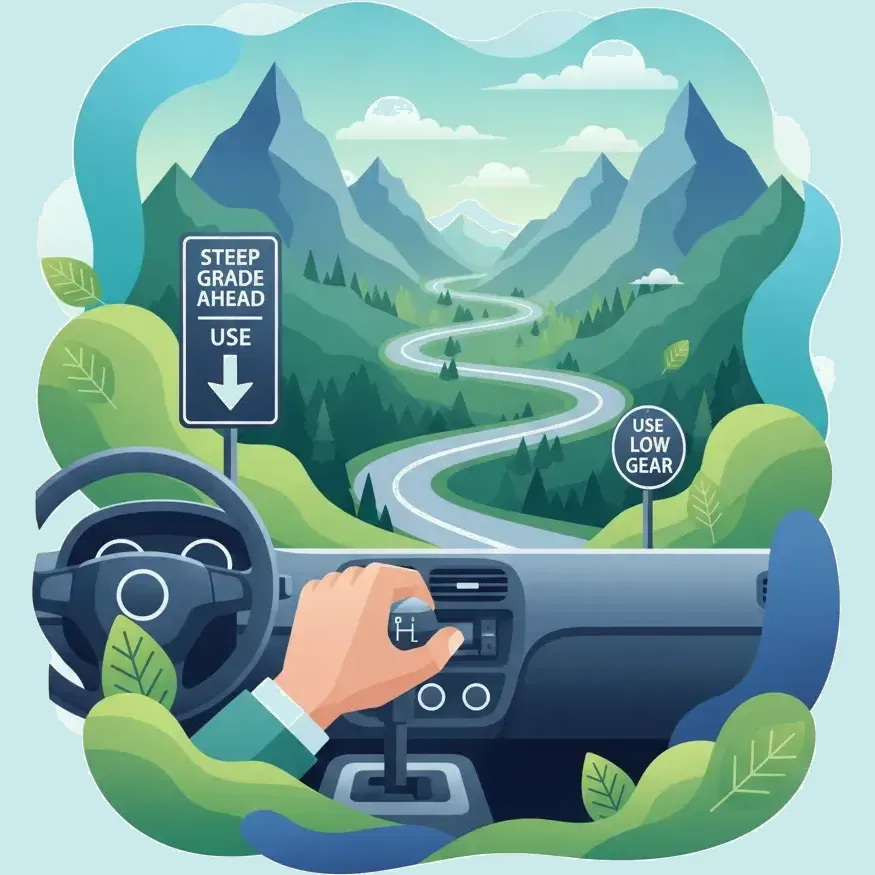
Understand the specific challenges of navigating mountainous terrain with large passenger vehicles, including gear management and braking strategies. This overview covers the application of the Loi Montagne II and how to adjust your driving style and following distances to maintain passenger safety in difficult weather and road conditions.
This lesson covers techniques for managing gradients while driving goods vehicles, focusing on downhill control, engine braking, and appropriate gear selection. Learners will understand how load distribution and vehicle dynamics affect descending performance and the importance of avoiding brake overheating. The content includes practical advice on using hill start assistance systems and maintaining safe speeds on steep slopes.
Find clear answers to common questions learners have about Long-Distance Coach Service Planning and Safety. Learn how the lesson is structured, which driving theory objectives it supports, and how it fits into the overall learning path of units and curriculum progression in France. These explanations help you understand key concepts, lesson flow, and exam focused study goals.
Drivers must adhere to strict daily and weekly driving limits, including mandatory breaks of 45 minutes after 4.5 hours of driving. These breaks can be split into shorter intervals of 15 and 30 minutes, provided they follow EU social legislation.
The exam often features situational questions about route management, including how to handle delayed schedules while respecting legal driving hours. Understanding these regulations is essential for passing the professional conduct section.
Yes, while they operate like regular coach services, they require precise attention to terminal scheduling, passenger boarding, and adherence to regional restrictions, all of which are covered in this curriculum.
Fatigue is a leading cause of accidents. The law mandates rest periods not just as a legal requirement, but as a critical safety intervention to ensure the driver remains alert and the passengers stay safe.
Ready to focus your study? Use the practice search to find exactly the French driving theory questions you need for the Code de la route and permis de conduire ETG. Refine your knowledge on specific topics or challenging rules to boost your confidence and exam readiness.