
This lesson guides you through the complex environment of passenger terminals, bus stations, and transport hubs. You will learn the essential French legal requirements for navigating these areas safely while maintaining professional standards for passenger boarding and alighting.
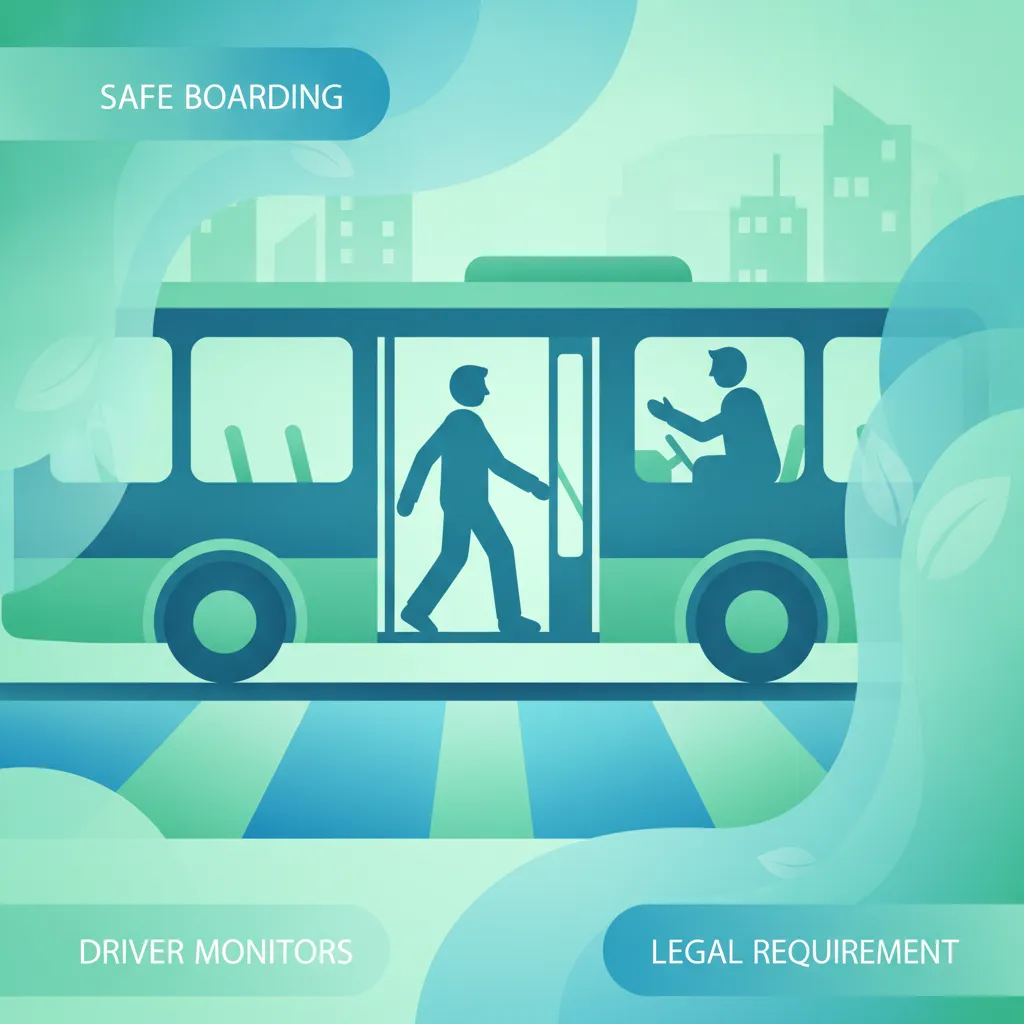
Lesson content overview
An operating license for heavy passenger vehicles (Categories D, D1, DE, and D1E) carries immense responsibility, particularly when navigating high-density passenger zones. While high-speed motorway driving and navigating narrow rural roads present distinct challenges, some of the most complex, high-risk situations occur at very low speeds within passenger terminals, bus stations (gares routières), and airport transfer zones.
This lesson provides an in-depth exploration of terminal operations, focusing on safety protocols, legal speed limitations, platform alignment maneuvers, coordination with terminal dispatchers, and the safe transfer of passengers and their luggage.
A bus terminal or gare routière is a highly concentrated transport hub. It brings together massive multi-axis vehicles, smaller shuttle buses, support staff, and a constant flow of pedestrians—many of whom are distracted, carrying heavy luggage, or traveling with children.
A dedicated facility off the public highway designed for the organized arrival, departure, and transfer of passengers traveling on scheduled coach services, regional lines, or international routes. It features specialized infrastructure such as passenger platforms (quais), ticketing halls, and baggage handling areas.
Because of the physical constraints of these terminals, drivers must operate with heightened situational awareness (vigilance accrue). The blind spots (angles morts) of a 12-to-15-metre coach are amplified in tight spaces. A single miscalculation can lead to terminal gridlock, damage to infrastructure, or, in the worst-case scenario, a collision with a pedestrian.
Terminal platforms are meticulously designed to separate passenger waiting areas from active vehicular lanes. However, the physical act of docking a large passenger vehicle requires precise control and adherence to structural rules.
Arrival platforms are reserved exclusively for unloading passengers and their luggage. When a coach arrives, the driver must:
Departure platforms are where the boarding process occurs. These platforms are often designed in one of two configurations:
| Platform Type | Description | Operational Risk |
|---|---|---|
| Parallel Bays (Quais Parallèles) | The bus stops parallel to the sidewalk. Safest for passenger boarding but requires a long stretch of curb space. | High risk of clipping the rear curb during pull-out maneuvers. |
| Saw-Tooth / Angled Bays (Quais en Épi) | Buses park nose-in at an angle (usually 45° or 60°). This maximizes space but requires reversing out to depart. | Extreme blind spots when reversing; requires visual spotters or terminal backup protocols. |
When using angled platforms, drivers must align the coach precisely within the painted boundary lines. Misalignment can block the adjacent bay, preventing neighboring drivers from safely docking or departing.
Approach at Minimal Speed: Enter the platform lane at a speed below 10 km/h, riding the clutch if necessary (in manual vehicles) to maintain absolute control.
Scan Platform Clearance: Ensure the platform edge is clear of protruding luggage, wheelbarrows, or passengers leaning over the safety yellow line.
Align the Wheels: Align the front and rear wheels relative to the curb. Aim to stop within 15 to 20 cm of the curb to facilitate a seamless, single-step boarding process.
Secure the Vehicle: Once positioned, engage the parking brake (frein de stationnement), shift the transmission to neutral (or park), and shut off the engine if local anti-pollution regulations require it.
Inside terminal premises, the standard speed limits of the public highway do not apply. Instead, private terminal regulations and municipal decrees enforce strict, low-speed thresholds to safeguard the high volume of foot traffic.
The standard speed limit within most French gares routières is 20 km/h, which is frequently reduced to 10 km/h or 5 km/h in active maneuvering and boarding bays.
While 20 km/h may feel exceptionally slow to a professional driver, the physical implications are massive:
Adverse Weather Adjustments: Wet concrete, oil spills (common in bus parking areas), or icy surfaces drastically reduce tire adhesion. If terminal platforms are wet or icy, reduce your speed to a walking pace (5 km/h) to maintain directional control and prevent skidding during tight turns.
The fundamental rule of terminal driving is simple: pedestrians always have absolute priority.
Inside a terminal, passengers are often focused on finding their platforms, reading departure boards, or managing children and bags. They may not hear an approaching hybrid or electric bus, and they frequently misjudge the turning radius and rear-swing of a long-wheelbase coach.
Modern terminals utilize distinct visual cues to isolate pedestrian paths:
Drivers must yield to any pedestrian crossing or intending to cross these zones. Never signal a pedestrian to cross in front of your vehicle using hand gestures, as this may inadvertently invite them to walk into the path of another vehicle in an adjacent lane that you cannot see.
In busy municipal and international terminals, operations are orchestrated by terminal dispatchers (les régulateurs or coordinateurs de quai). Safe and punctual service relies on seamless communication between the driver and these staff members.
Avert (Attention): Marshaller raises both hands vertically with palms facing forward, indicating the driver should prepare to receive guidance.
Directing the Turn: Marshaller extends one arm horizontally to indicate the direction the rear of the bus must swing.
Stop Immediately: Marshaller crosses both arms overhead in an 'X' shape. The driver must stop the vehicle instantly.
Compliance with dispatcher instructions is legally mandated under terminal operating charters. A driver must never bypass a dispatcher's instructions to take a "preferred" platform, as this can trigger a cascade of delays across the entire regional transit network.
The moments when passengers enter or exit the vehicle represent a critical liability window. Drivers must execute a systematic safety routine during every stop.
In accordance with accessibility laws (such as the Loi Handicap in France), drivers must be fully proficient in operating accessibility equipment.
Managing passenger luggage is not just a customer service task—it is a critical safety operation. Unsecured luggage can shift during transit, affecting vehicle dynamics, or fall out of lockers, causing severe injuries at the terminal.
When docking at an arrival or departure bay, drivers must position the vehicle so that the luggage locker doors (portes de soute) can be opened fully without extending into active driving lanes.
To maintain safety standards, terminal operators and law enforcement monitor bus stations closely. Drivers should be aware of common pitfalls that lead to fines, operational suspensions, or accidents.
Reversing a 12-metre or 15-metre coach inside a terminal is one of the most hazardous maneuvers. French terminal rules generally prohibit reversing unless absolutely necessary (e.g., exiting a saw-tooth bay). If reversing is required, the driver must utilize reversing cameras, obstacle sensors, and, ideally, a ground guide (marshaller) to clear blind spots.
Terminals feature designated lanes marked with yellow cross-hatching or "VOIE ENGINS" signage. These lanes must remain completely unobstructed at all times to allow access for fire engines and ambulances. Stopping in these zones to "quickly drop off a passenger" is a serious violation.
A driver must never leave the driver's seat while passengers are on board without fully securing the vehicle. If the driver must step off the bus to load luggage, they must ensure the parking brake is firmly engaged and the engine is shut off (or keys removed) to prevent accidental rollaway or unauthorized vehicle boarding.
| Operation | Crucial Safety Checklist | Key Hazard to Avoid |
|---|---|---|
| Terminal Entry | Reduce speed to under 20 km/h; scan for pedestrians. | Tailgating other buses; missing platform signs. |
| Docking | Maintain parallel alignment; stop 15–20 cm from curb. | Rear-swing clipping platform pillars or signs. |
| Passenger Alighting | Engage parking brake; check door mirrors before opening. | Passengers stepping into gaps or traffic lanes. |
| Luggage Loading | Keep passengers on the curb; secure locks before moving. | Shifting loads; open locker doors hitting obstacles. |
| Departure | Obtain dispatcher clearance; check all blind spots. | Reversing blindly out of angled bays. |
This lesson covers the complex, high-risk environment of French passenger terminals (gares routières) where professional bus and coach drivers must operate at very low speeds while managing dense pedestrian traffic. Key skills include precise platform docking procedures, understanding speed limit thresholds within terminal property, and prioritizing pedestrian safety at all times. Coordination with terminal dispatchers through radio, digital signage, or marshaller hand signals is legally required for safe operations. The lesson also addresses accessibility obligations for passengers with reduced mobility and proper luggage handling protocols to prevent shifting loads and vehicle dynamics issues.
A short set of high-value points that capture the most important learning from this lesson.
Terminal zones are high-risk, low-speed environments where pedestrians always have absolute priority over vehicles.
Speed inside a gare routière is limited to 20 km/h generally, reduced to 10 km/h or 5 km/h in active boarding and docking zones.
Saw-tooth (en épi) platforms maximize terminal space but require reversing maneuvers and create extreme blind spots.
Drivers must never open doors until the vehicle is completely stopped, parking brake engaged, and mirrors checked for pedestrians.
Compliance with dispatcher (régulateur) instructions is legally mandated and bypass can disrupt the entire transit network.
Explore all units and lessons included in this driving theory course.
Parallel bays are safest for boarding; saw-tooth bays require reversing out and a ground guide.
At 20 km/h, stopping distance is 6–7 metres; at 30 km/h it nearly doubles to 13 metres.
Passengers with reduced mobility (PMR) require perfect vehicle alignment, kneeling systems, and floor anchor securement.
Luggage locker doors need 1.2–1.5 metres lateral clearance from pillars or walls before opening.
Never use hand gestures to invite pedestrians to cross, as another vehicle in an adjacent unseen lane may strike them.
Reversing a 12–15 metre coach without a ground guide, risking collision with pedestrians in blind spots.
Opening vehicle doors before securing the parking brake and verifying no pedestrians are near the exit.
Blocking emergency access lanes marked with yellow cross-hatching or VOIE ENGINS signage.
Leaving the vehicle unattended while passengers remain on board without fully securing the coach.
Assuming passengers heard or noticed an approaching vehicle; many are distracted, carrying luggage, or traveling with children.
Lesson content overview
A short set of high-value points that capture the most important learning from this lesson.
Terminal zones are high-risk, low-speed environments where pedestrians always have absolute priority over vehicles.
Speed inside a gare routière is limited to 20 km/h generally, reduced to 10 km/h or 5 km/h in active boarding and docking zones.
Saw-tooth (en épi) platforms maximize terminal space but require reversing maneuvers and create extreme blind spots.
Drivers must never open doors until the vehicle is completely stopped, parking brake engaged, and mirrors checked for pedestrians.
Compliance with dispatcher (régulateur) instructions is legally mandated and bypass can disrupt the entire transit network.
Explore all units and lessons included in this driving theory course.
Parallel bays are safest for boarding; saw-tooth bays require reversing out and a ground guide.
At 20 km/h, stopping distance is 6–7 metres; at 30 km/h it nearly doubles to 13 metres.
Passengers with reduced mobility (PMR) require perfect vehicle alignment, kneeling systems, and floor anchor securement.
Luggage locker doors need 1.2–1.5 metres lateral clearance from pillars or walls before opening.
Never use hand gestures to invite pedestrians to cross, as another vehicle in an adjacent unseen lane may strike them.
Reversing a 12–15 metre coach without a ground guide, risking collision with pedestrians in blind spots.
Opening vehicle doors before securing the parking brake and verifying no pedestrians are near the exit.
Blocking emergency access lanes marked with yellow cross-hatching or VOIE ENGINS signage.
Leaving the vehicle unattended while passengers remain on board without fully securing the coach.
Assuming passengers heard or noticed an approaching vehicle; many are distracted, carrying luggage, or traveling with children.
Explore search topics learners often look for when studying Terminal Operations and Passenger Transfer. These topics reflect common questions about road rules, driving situations, safety guidance, and lesson level theory preparation for learners in France.
Browse additional driving theory lessons that cover connected traffic rules, road signs, and common driving situations related to this topic. Improve your understanding of how different rules interact across everyday traffic scenarios.
Learn the legal requirements for passenger safety during transit including boarding procedures for passengers with reduced mobility and proper usage of vehicle accessibility equipment. This overview covers the mandatory protocols required for professional drivers under the French driving theory regulations to ensure passenger security and comfortable transport operations.

This lesson provides step-by-step instructions for utilizing vehicle accessibility systems, including wheelchair ramps, lifts, and specialized tie-down restraints. Drivers will study French regulatory frameworks mandating equal access to public transport services for all individuals. Crucially, the lesson covers respectful, safe, and efficient communication methods for guiding passengers with sensory, physical, or cognitive impairments.

This lesson examines the flow of passengers entering and exiting the vehicle and how to organize this movement to reduce stop delays safely. Drivers will study the operation of door safety interlocks, sensitive edges, and onboard monitoring cameras to prevent boarding accidents. It also covers coordinating priority boarding for elderly, pregnant, or injured passengers in a polite and structured manner.
The driver of a vehicle is legally responsible for ensuring that all passengers, particularly minors, are safely restrained. This lesson explains seatbelt enforcement laws and the mandatory child safety seat requirements based on height, weight, and age. You will learn to use the standardized ISOFIX system and understand when and how to safely deactivate passenger airbags for rear-facing infant seats.
This lesson introduces the standard interior signage required in passenger vehicles to communicate critical safety and accessibility information clearly. Learners will learn to verify the visibility of handicap symbols, emergency exit markers, and priority seating notifications. Proper maintenance of these visual and auditory warning systems ensures that all passenger groups can navigate the vehicle confidently and safely under any conditions.

This lesson details the emergency protocols for handling mechanical breakdowns or tire blowouts on public highways and motorways. Drivers will learn how to park the vehicle in the safest possible location, activate hazard warning lights, and deploy the reflective warning triangle. It teaches precise commands and steps for evacuating passengers quickly through safety exits, positioning them behind protective guardrails.

This lesson emphasizes the critical importance of maintaining a safe following distance when carrying dozens of passengers. Learners will study how vehicle weight and passenger load dynamically extend braking and total stopping distances compared to standard passenger cars. The lesson provides concrete spacing rules, such as adjusted safety gaps for highway driving and increased distances on slippery roads.

This lesson focuses on the technical skills required to position a large bus or coach parallel to the boarding curb. Drivers will learn to minimize the gap between the vehicle steps and the sidewalk, preventing tripping hazards for boarding passengers. The lesson also covers safe approach angles, mirror alignment, and positioning rules that avoid contact with curbside objects or waiting pedestrians.
This lesson focuses on techniques for monitoring and managing passenger behavior to maintain a calm and safe environment during transit. Drivers will learn how to enforce seatbelt rules, manage noise levels, and de-escalate verbal conflicts between passengers. Proactive safety announcements and a confident, polite professional demeanor are highlighted as key tools to prevent behavioral issues before they compromise road safety.
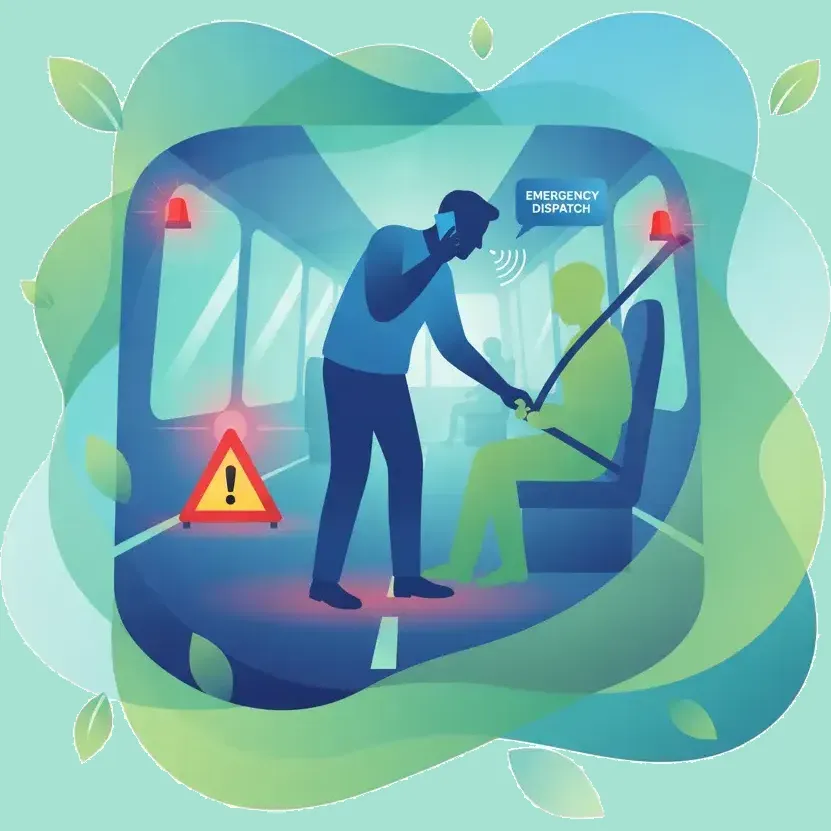
This lesson covers immediate response steps for critical on-board events, including passenger medical emergencies and engine compartment fires. Learners will study the location and proper application of fire extinguishers, safety hammers, and first aid kits. It also explains how to coordinate effectively with French emergency services (SAMU, Fire Brigade) and reassure passengers to maintain calm during an incident.

This lesson outlines the core operational roles that drivers must perform, from ensuring safe passenger boarding to maintaining precise vehicle control throughout the journey. It details the active risk assessments required to identify hazards on the road and handle unexpected delays safely. Additionally, candidates will understand the specific procedures for reporting accidents and communicating effectively with both passengers and operations hubs.
Explore the operational challenges of maneuvering large passenger vehicles in dense urban environments and bus stations. Understand the importance of blind spot management, speed limitations in confined areas, and standard coordination methods with terminal dispatchers to safely navigate complex road infrastructures within the French transport system.
This lesson analyzes the various traffic challenges unique to operating large passenger vehicles in historic and modern French urban areas. Drivers will learn to manage narrow street layouts, double-parked delivery trucks, and high-density multi-lane roundabouts safely. The lesson emphasizes defensive driving strategies, route adjustments, and maintaining mental focus under severe schedule and time pressures.
This lesson focuses on maneuvering in extremely crowded areas, passenger terminals, or narrow streets blocked by parked vehicles and obstacles. Drivers will learn to assess clearance distances precisely before committing to narrow pathways. The content teaches steering techniques that maintain stability, optimize space usage, and prioritize public safety during slow-speed, high-difficulty maneuvers.
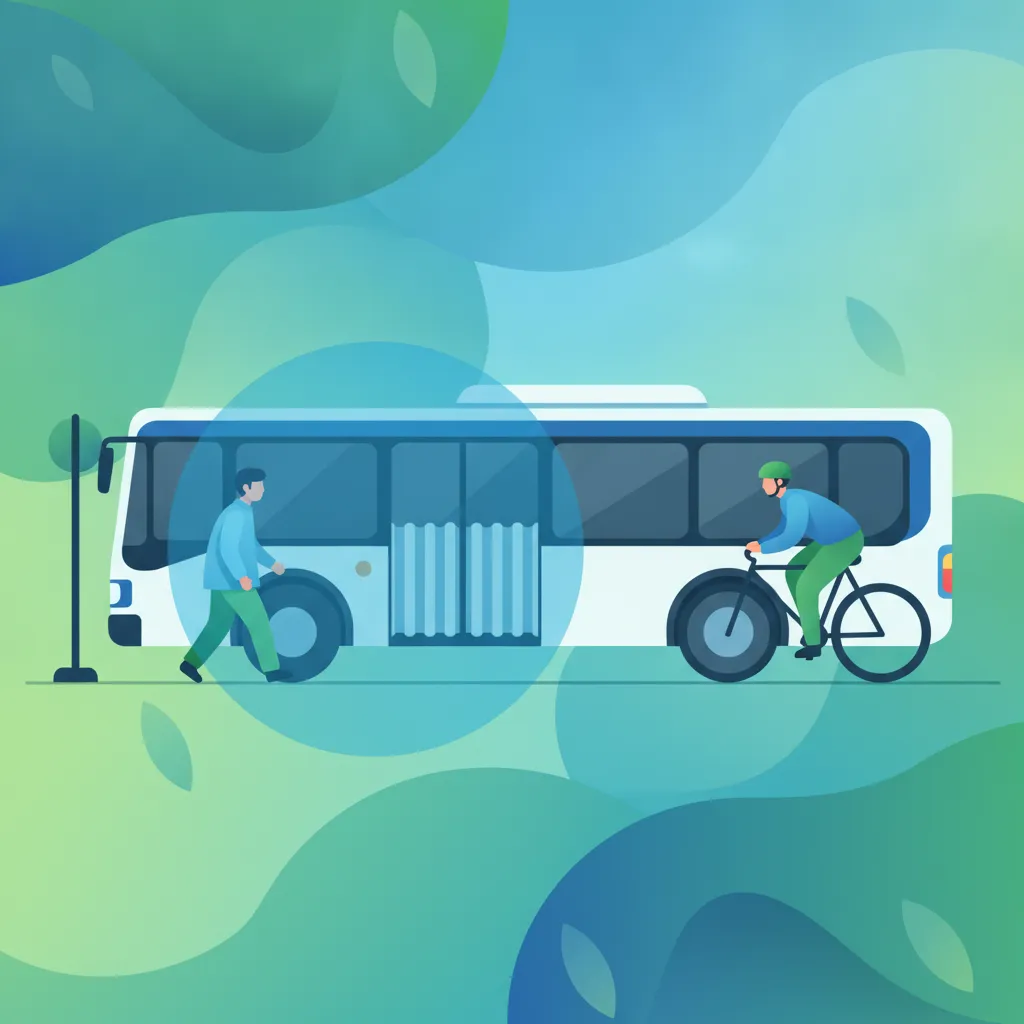
This lesson teaches specific visual scanning methods to detect vulnerable road users, such as children, elderly individuals, and cyclists near stops. Drivers will learn to anticipate sudden movements, like a passenger running to catch a bus or stepping off a sidewalk unexpectedly. Managing the massive blind spots around the front and right-hand sides of passenger vehicles is highlighted as a critical safety duty.
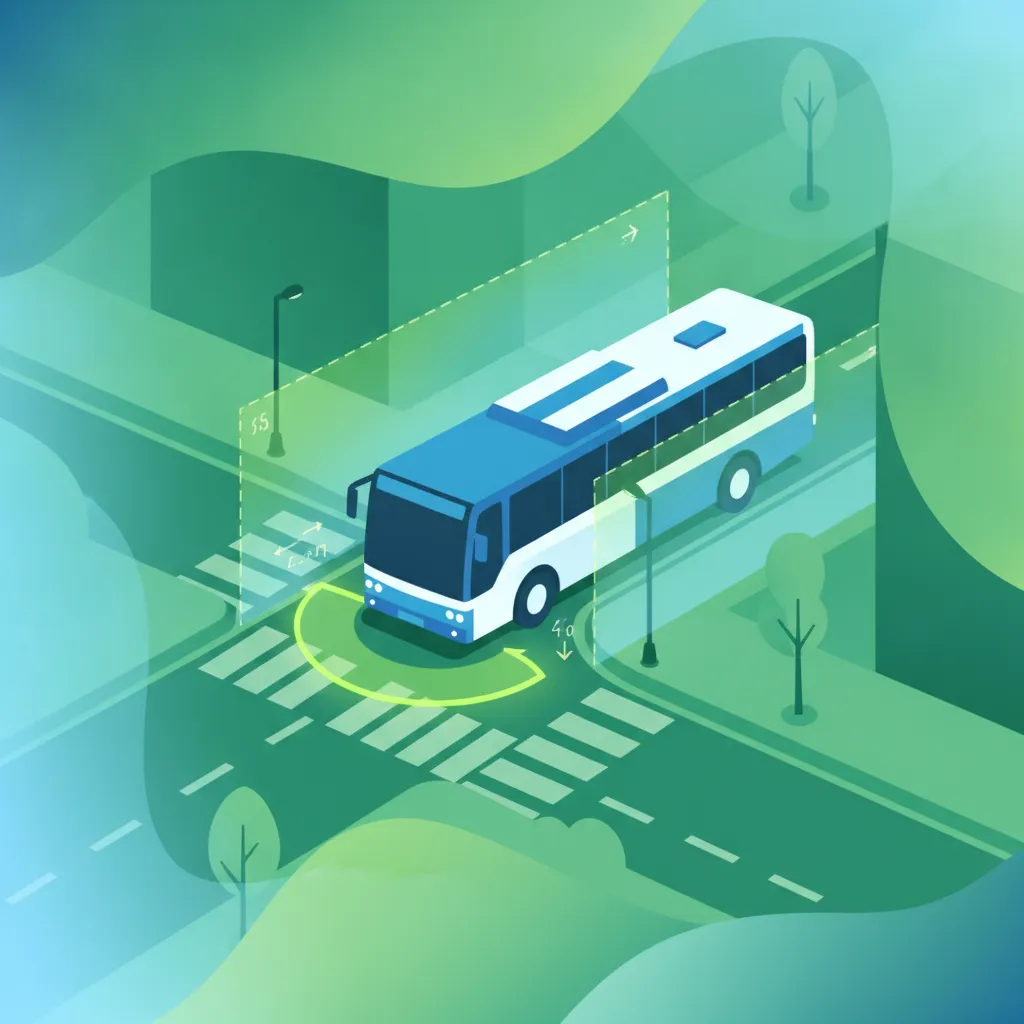
This lesson covers the physical dimensions of passenger vehicles and how their high profile, length, and width alter spatial awareness on the road. Learners will study tail-swing mechanics and track the path of the rear wheels during sharp turns to avoid hitting roadside obstacles. Accurate measurement of overhead structures, bridges, and underpass clearances is taught to prevent catastrophic structural collisions.

This lesson analyzes the technical path a long wheelbase vehicle must take when turning at intersections and navigating roundabouts. Drivers will learn to calculate tail swing and rear-wheel tracking, intentionally swinging wide to clear roadside curbs and poles safely. The lesson emphasizes yielding protocols for pedestrians and cyclists who may be crossing the target street during the turn.
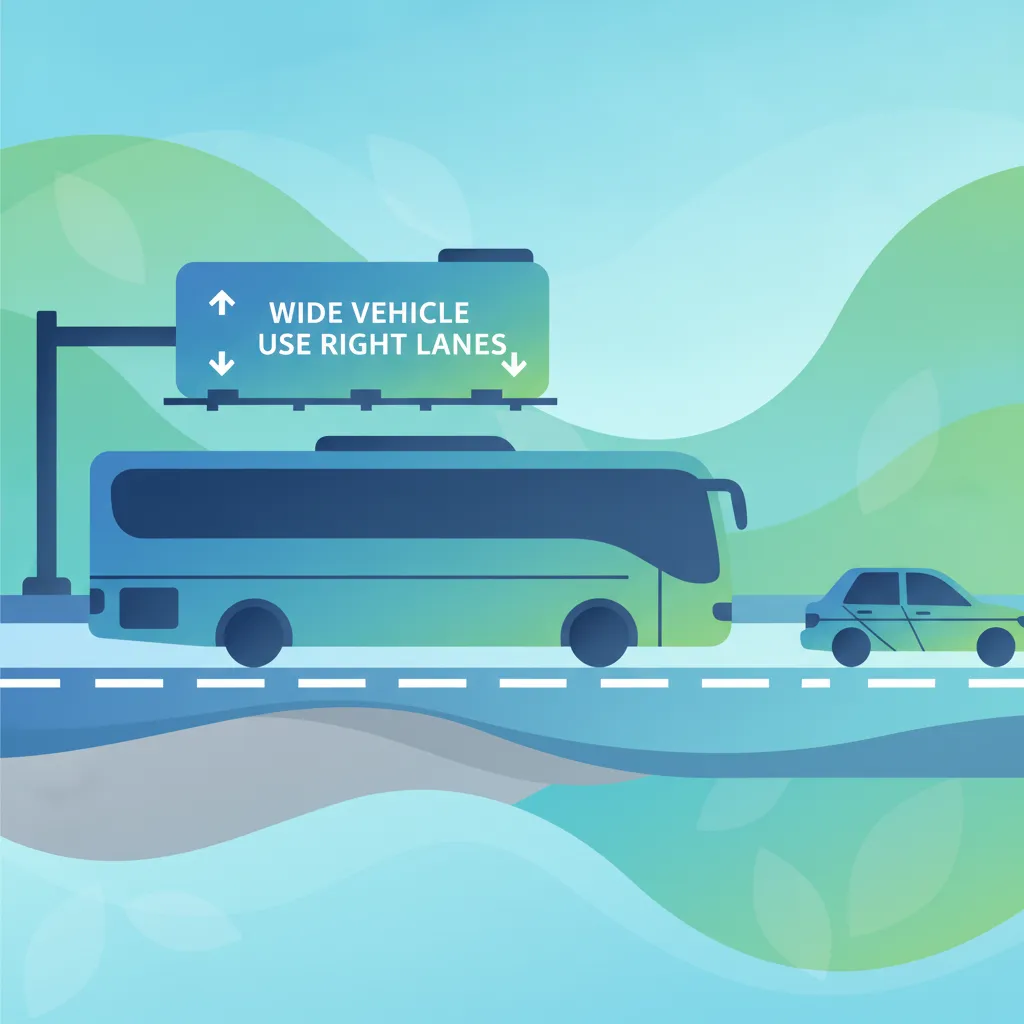
This lesson details the rules of lane discipline for operating wider and longer passenger transport vehicles on highway and city networks. Learners will explore proper lane positioning to prevent encroachment on adjacent lanes or sidewalks. It also covers the step-by-step visual and signaling sequence required to perform safe lane changes, avoiding sudden movements that could startle other drivers.
This lesson focuses on the technical skills required to position a large bus or coach parallel to the boarding curb. Drivers will learn to minimize the gap between the vehicle steps and the sidewalk, preventing tripping hazards for boarding passengers. The lesson also covers safe approach angles, mirror alignment, and positioning rules that avoid contact with curbside objects or waiting pedestrians.
This lesson examines the flow of passengers entering and exiting the vehicle and how to organize this movement to reduce stop delays safely. Drivers will study the operation of door safety interlocks, sensitive edges, and onboard monitoring cameras to prevent boarding accidents. It also covers coordinating priority boarding for elderly, pregnant, or injured passengers in a polite and structured manner.
This lesson emphasizes the critical importance of maintaining a safe following distance when carrying dozens of passengers. Learners will study how vehicle weight and passenger load dynamically extend braking and total stopping distances compared to standard passenger cars. The lesson provides concrete spacing rules, such as adjusted safety gaps for highway driving and increased distances on slippery roads.

This lesson details how to manage high-risk interactions with pedestrians who may step off curbs or cross the road near bus stops. Learners will study French Code de la route laws regarding pedestrian priority at crosswalks and near stopping transit vehicles. Developing heightened spatial awareness around blind zones near the front of the bus is emphasized to prevent tragic pedestrian collisions.
Find clear answers to common questions learners have about Terminal Operations and Passenger Transfer. Learn how the lesson is structured, which driving theory objectives it supports, and how it fits into the overall learning path of units and curriculum progression in France. These explanations help you understand key concepts, lesson flow, and exam focused study goals.
Within a passenger terminal or bus station, drivers must always maintain a very low, controlled speed that allows for an immediate stop, usually well below standard urban limits. You must prioritize pedestrian safety at all times and follow any specific internal site speed signage.
You must align your vehicle precisely with the designated boarding point, ensuring the door is as close as possible to the platform edge for accessibility. Always verify that there is enough space for passengers to board and alight safely without obstruction.
Yes, terminals often feature specific signage indicating zones reserved for coaches, restricted access areas, and pedestrian crossings. Understanding these markers is critical for both the theory exam and safe operation to avoid penalties.
You are responsible for supervising the safe stowage of luggage in the vehicle compartments. At terminals, you must ensure that the loading process does not create hazards for passengers or other vehicles and that weight distribution is maintained.
Ready to focus your study? Use the practice search to find exactly the French driving theory questions you need for the Code de la route and permis de conduire ETG. Refine your knowledge on specific topics or challenging rules to boost your confidence and exam readiness.