
This lesson details the critical requirements for lighting, reflectors, and underrun protection systems on heavy goods vehicles. Understanding these components is vital for ensuring your vehicle is roadworthy and complies with German traffic regulations. You will learn how these features protect other road users and contribute to overall traffic safety.

Lesson content overview
Operating heavy vehicles, such as those requiring a German driving license in categories C1, C1E, C, or CE, demands an intricate understanding of safety systems. Among the most critical components for road safety are the vehicle's lighting, reflectors, and underrun protection. These systems are not merely accessories but fundamental elements ensuring the visibility of large vehicles and safeguarding other road users, particularly in diverse driving conditions.
This lesson provides a comprehensive overview of the mandatory lighting and reflector equipment for heavy vehicles in Germany, detailing their functions, legal requirements, and the profound implications of non-compliance for overall road safety. A solid grasp of vehicle construction, especially concerning front and rear sections, and a keen awareness of visibility requirements are foundational for mastering these topics.
Effective visibility is paramount for heavy vehicles, forming the cornerstone of accident prevention on public roads. Due to their significant size, mass, and often complex maneuvers, heavy vehicles present unique challenges for other road users in terms of detection and judgment of distance, speed, and intentions. Proper lighting and the strategic use of reflectors are the primary means by which a heavy vehicle communicates its presence, dimensions, and actions to its surroundings.
These sophisticated systems function as a continuous visual warning, alerting other drivers, cyclists, and pedestrians to the vehicle's existence and potential movements. By clearly indicating acceleration, deceleration, turning, or the vehicle's stationary presence, these safety features allow all road users to anticipate actions and react safely. The principles discussed here are deeply intertwined with other essential topics within the German heavy vehicle driving license theory, including pre-drive inspection procedures (Section 3.4) and advanced braking systems (Section 4), highlighting their integrated role in overall vehicle safety.
Visibility assurance means guaranteeing that a heavy vehicle can be unequivocally detected by other road users from appropriate distances, regardless of the time of day or prevailing weather conditions. This principle directly mitigates the risk of collisions, which can be particularly devastating given the kinetic energy of heavy vehicles.
Drivers bear the responsibility of regularly inspecting and meticulously maintaining all lighting and reflector components. It is equally crucial that any functional lighting or reflector systems are never obstructed or covered, for instance, by cargo, vehicle accessories, or dirt. Optimal visibility is a constant requirement, not an occasional convenience.
Signaling intentions refers to the critical practice of using various lights—such as position lights, direction indicators (turn signals), and brake lights—to convey the driver’s planned actions to other road users. This proactive communication is vital for maintaining a smooth and safe flow of traffic.
When a driver signals an intention, they enable others to accurately anticipate the heavy vehicle's next move, facilitating safe overtaking maneuvers, seamless lane changes, merging onto motorways, and controlled stops. The timely and correct activation of brake lights, hazard warning lights, and turn signals is not merely good practice but a mandatory requirement under German traffic law.
Underrun protection refers to specially designed structural devices, typically sturdy metal bars or grilles, positioned strategically at the front or rear (and sometimes sides) of heavy vehicles. Their primary purpose is to prevent smaller vehicles, such as passenger cars or motorcycles, from sliding underneath the heavy vehicle during a collision.
This protective measure significantly mitigates the severity of injuries to occupants of lighter vehicles by ensuring that the impact occurs against a strong, rigid structure rather than allowing the smaller vehicle to be crushed beneath the heavier one. Consequently, underrun protection must be correctly installed on all appropriate heavy vehicles and maintained in a condition that ensures its effectiveness and visibility to other road users.
German traffic regulations (StVZO – Straßenverkehrs-Zulassungs-Ordnung) specify a comprehensive set of lighting and reflector requirements for heavy vehicles to ensure maximum safety. Understanding each component's function and legal usage is vital for all professional drivers.
Headlights, known in German as Scheinwerfer, are the primary lighting units located at the front of the vehicle. Their fundamental role is to illuminate the road ahead, providing the driver with sufficient visibility to safely navigate, especially during periods of darkness or reduced visibility. They also serve to make the heavy vehicle visible to oncoming traffic.
The dipped beam, or Abblendlicht, provides adequate illumination for the immediate road ahead without blinding oncoming drivers or those being followed. It is the standard headlight setting for most driving conditions at night or in adverse weather. Drivers must switch to dipped beam when encountering oncoming traffic or when following another vehicle closely.
The main beam, or Fernlicht, offers a high-intensity, long-range illumination that is invaluable on unlit rural roads or motorways where there is no oncoming traffic or vehicles ahead. It significantly extends the driver's field of vision, allowing for earlier detection of hazards. However, its use is strictly regulated; drivers must immediately switch to dipped beam upon the approach of oncoming traffic or when closely following another vehicle to prevent dazzling.
Fog lights, or Nebelscheinwerfer, are auxiliary front lights specifically designed to provide better visibility in conditions of dense fog, heavy rain, or snow. Their low, wide beam helps reduce glare that standard headlights might cause in such conditions. They can only be used when visibility is significantly impaired (typically less than 50 metres, though this rule is more common for rear fog lights) and must be switched off as soon as visibility improves. Auxiliary lamps, beyond standard requirements, may be fitted on heavy vehicles for specific purposes (e.g., additional spot lighting for off-road work), but their use on public roads is often restricted or requires specific approval.
Headlamps are legally required to be used from sunset to sunrise and whenever visibility is reduced, such as during rain, fog, or snow. Even when a vehicle is stationary or parked at night, if it is not sufficiently illuminated by street lighting, specific position lamps must be activated. A common mistake is using only position lamps when road lighting is insufficient, which provides inadequate illumination for driving and compromises safety. Another frequent error is forgetting to switch from main beam to dipped beam when oncoming traffic appears, leading to dangerous glare.
Position lights, also known as Standlichter or Begrenzungsleuchten, are lower-intensity lights designed to indicate the presence and width of the vehicle. White position lights are located at the front, and red position lights at the rear.
These lights must be illuminated whenever the vehicle is stationary or parked on a public road during darkness or periods of reduced visibility if the location is not adequately lit by streetlights. They are also active when the headlights are on. Their purpose is purely to outline the vehicle's position, not to illuminate the road. A practical example is a cargo vehicle parked at a night-time loading bay with its rear red position lamps clearly indicating its presence.
Due to their considerable length, heavy vehicles are required to be fitted with side marker lights and reflectors. These are essential for helping other drivers accurately judge the vehicle's overall dimensions, especially its length and orientation, when viewed from the side.
Side marker lights are typically amber towards the front and red towards the rear, sometimes in combination with white or amber corner markers. These must be visible from the side and remain unobstructed. A common violation involves covering side markers with cargo, advertising, or accessories, rendering the vehicle's full length unclear to other road users, which can lead to unsafe overtaking maneuvers or misjudgments during turns.
Brake lights, or Bremsleuchten, are critical signaling devices that illuminate immediately when the driver applies the braking system. Their instantaneous activation provides a clear visual cue to drivers behind that the heavy vehicle is decelerating or stopping.
Standard brake lights are located at the rear, but heavy vehicles often also feature additional high-mounted stop lamps (e.g., on the cab or trailer), which significantly improve visibility for drivers of taller vehicles following behind. According to German regulations, brake lights must illuminate within 1 second of the foot pressure being applied to the brake pedal. Delayed activation can lead to severe rear-end collisions as following drivers may misjudge stopping distances.
Hazard warning lights, or Warnblinkanlage, are an emergency signaling system that flashes all turn signals simultaneously. They are used to warn other road users of a dangerous situation, such as a breakdown, an accident, or a temporary obstruction caused by the vehicle itself. Activating hazard lights immediately signals a potential hazard to all directions.
Rear reflectors are passive safety devices, usually red, mounted at the rear of heavy vehicles. Unlike lights, they do not emit their own light but reflect light back towards its source, such as the headlights of a following vehicle.
Reflectors are vital for enhancing visibility, particularly if the vehicle's electrical system fails or if it is parked without active lighting. They ensure that even a stationary, unlit heavy vehicle remains detectable at night. These reflectors must always be clean, unobstructed, and correctly positioned to fulfill their safety function. Carrying cargo that obstructs rear reflectors is a significant safety violation, as it compromises the vehicle's visibility from behind.
Underrun protection, known in German as Unterfahrschutz, is a mandatory safety feature for specific categories of heavy vehicles. It is designed to prevent smaller vehicles from sliding underneath the body or chassis of a heavy truck or trailer during a collision.
This device effectively creates a rigid barrier, ensuring that the impact of a smaller vehicle occurs against the main frame of the heavy vehicle rather than beneath it. Without underrun protection, a smaller vehicle could slide underneath, leading to the passenger compartment being compromised, often with catastrophic consequences for its occupants.
While underrun protection is most commonly associated with the rear of heavy vehicles and trailers (rear underrun protection), regulations also mandate front underrun protection (vorderer Unterfahrschutz) for certain vehicle types. Side underrun protection (seitlicher Unterfahrschutz) may also be required for vehicles of specific lengths to protect vulnerable road users like cyclists and pedestrians from being pulled under the vehicle's sides.
The installation of underrun protection is particularly crucial for heavy trucks and trailers with high chassis or ground clearance. It significantly reduces the risk of severe injuries and fatalities in collisions with passenger cars or motorcycles. The design, dimensions, and attachment strength of underrun protection devices are strictly regulated to ensure their effectiveness.
A critical aspect of compliance is ensuring that the underrun protection is not only present but also in good condition. Failure to maintain, repair, or replace damaged underrun protection is a serious violation that directly compromises road safety. For professional heavy vehicle drivers, including those pursuing categories C1, C1E, C, or CE, ensuring the integrity of the Unterfahrschutz is a fundamental aspect of their daily safety checks.
German traffic law, primarily the Straßenverkehrs-Zulassungs-Ordnung (StVZO), specifies stringent requirements for lighting, reflectors, and underrun protection on heavy vehicles. Compliance is mandatory for all vehicles operating on public roads within Germany.
Heavy vehicle drivers must adhere to precise rules regarding headlamp activation.
Position lamps (front white, rear red) are crucial for indicating the vehicle's presence when it is stationary or parked at night, or in low visibility conditions, particularly when not adequately lit by streetlights. Even when the engine is off, these lights must be illuminated to inform other road users of the vehicle's presence and orientation, preventing potential collisions with parked vehicles.
Heavy vehicles, especially those exceeding certain lengths or weights (typical for Category C vehicles), are legally required to be equipped with appropriate side markers and reflectors. These must include amber lights/reflectors towards the front and red lights/reflectors towards the rear on both sides of the vehicle.
The rationale is to provide clear visual cues about the vehicle's overall length and direction when viewed from the side. All side markers and reflectors must be clean, unobstructed, and in good working order. Missing or covered side markers render the vehicle’s dimensions unclear to other drivers, significantly increasing collision risk.
Brake lights are a vital safety feature for warning following traffic. German regulations mandate that brake lights must illuminate within one second of the driver depressing the brake pedal. This rapid activation is crucial for providing an immediate warning to drivers behind, allowing them sufficient time to react and adjust their speed or direction.
Delayed activation, whether due to faulty wiring, a slow-reacting switch, or improperly maintained components, can drastically reduce the reaction time of following drivers, leading to an increased likelihood of rear-end collisions. Regular checks of the braking system, including the functionality and responsiveness of brake lights, are an integral part of pre-drive inspections.
For specific heavy vehicles, primarily trucks and trailers above a certain height or weight class, the installation of underrun protection devices is mandatory. This includes both front and rear underrun protection, with side underrun protection also required for certain vehicle configurations.
Professional heavy vehicle drivers must be acutely aware of common violations related to lighting and reflectors, as well as how to adapt lighting usage to varying conditions. Non-compliance can lead to severe penalties, but more importantly, it poses a direct threat to road safety.
Weather conditions necessitate specific adjustments to lighting usage:
Regular maintenance and thorough pre-drive inspection procedures (as covered in Section 3.4) are crucial for ensuring the roadworthiness of all lighting and reflector systems. Drivers must:
Inspect all exterior light lenses for cracks, dirt, or damage.
Check all bulbs for functionality: headlamps (dipped and main beam), fog lights, position lights (front and rear), side marker lights, turn signals, brake lights, and reverse lights.
Verify brake light activation by pressing the brake pedal while observing the rear lights (or asking a colleague to observe). Ensure immediate illumination.
Ensure all reflectors (front, side, rear) are clean and unobstructed.
Confirm that underrun protection devices are securely mounted and free from damage.
Check for proper aiming of headlamps, particularly after any maintenance or load changes.
The correct functioning and appropriate use of lighting, reflectors, and underrun protection are fundamental pillars of road safety for heavy vehicles. They establish critical cause-and-effect relationships that directly impact collision risk and severity.
These safety measures are not isolated; they interact with other vehicle systems and driving practices. For instance, the performance of braking systems (Section 4) is directly linked to the activation of brake lights, and the loading of a vehicle (Section 5) can affect the visibility of rear lights and reflectors if not properly managed. A holistic understanding of these interdependencies is essential for comprehensive road safety.
Understanding the theory is only the first step; applying this knowledge in real-world driving scenarios is paramount for German heavy vehicle license holders.
For all heavy vehicles operating under German regulations, including those requiring a German Heavy Vehicle Driving License Theory – C1, C1E, C, CE, meticulous attention to lighting, reflectors, and underrun protection is non-negotiable.
Key takeaways include:
By adhering to these principles and regulations, heavy vehicle drivers significantly contribute to safer roads for everyone, minimizing risks associated with the size and operational characteristics of their vehicles.
This lesson covers the mandatory lighting and reflector systems required for heavy vehicles under German traffic law (StVZO), including headlights (dipped beam, main beam, fog lights), position lights, side markers, brake lights, and rear reflectors. It explains that heavy vehicle lighting serves dual purposes: illuminating the road ahead and signaling the vehicle's presence and intentions to other road users. Underrun protection (Unterfahrschutz) is highlighted as a critical safety feature that prevents smaller vehicles from sliding underneath during collisions. The lesson emphasizes that all lighting components must be unobstructed, functional, and used correctly according to prevailing conditions, and that regular pre-drive inspections are essential for roadworthiness compliance and accident prevention.
A short set of high-value points that capture the most important learning from this lesson.
Heavy vehicles require multiple distinct lighting systems: headlights for road illumination, position lights for stationary presence indication, and brake lights for signaling deceleration to following traffic
Underrun protection (Unterfahrschutz) is a mandatory structural safety feature that prevents smaller vehicles from sliding underneath during collisions, dramatically reducing injury severity
Brake lights must activate within one second of pedal depression to provide immediate warning to following drivers, which is critical given heavy vehicles' longer stopping distances
Side marker lights and reflectors must be unobstructed at all times; cargo, accessories, or dirt blocking these components renders the vehicle's dimensions unclear to other road users
Drivers must adjust lighting usage based on conditions: dipped beam is standard at night, main beam only on unlit roads without oncoming traffic, and fog lights reserved for severely reduced visibility
Explore all units and lessons included in this driving theory course.
Abblendlicht (dipped beam) is the standard low-intensity downward beam; Fernlicht (main beam) is the high-intensity long-range beam
Side markers are amber towards the front and red towards the rear, helping other drivers judge vehicle length and orientation
Headlights are legally required from sunset to sunrise AND during any reduced visibility (rain, fog, snow, tunnels)
Fog lights (Nebelscheinwerfer) must only be used when visibility is severely reduced and switched off as soon as conditions improve
Underrun protection creates a rigid barrier so impact forces from smaller vehicles hit the main frame rather than allowing them to slide underneath the chassis
Driving without appropriate headlights during fog, heavy rain, or snow, believing daytime running lights are sufficient
Covering side markers with cargo, advertising, or accessories, making the vehicle's full length unclear to other drivers
Failing to switch from main beam to dipped beam when approaching oncoming traffic or following another vehicle, causing dangerous glare
Using rear fog lights when visibility is better than approximately 50 metres, which can confuse drivers about your vehicle's actual position
Operating a heavy vehicle with damaged, missing, or improperly maintained underrun protection, significantly increasing collision severity risk
Lesson content overview
A short set of high-value points that capture the most important learning from this lesson.
Heavy vehicles require multiple distinct lighting systems: headlights for road illumination, position lights for stationary presence indication, and brake lights for signaling deceleration to following traffic
Underrun protection (Unterfahrschutz) is a mandatory structural safety feature that prevents smaller vehicles from sliding underneath during collisions, dramatically reducing injury severity
Brake lights must activate within one second of pedal depression to provide immediate warning to following drivers, which is critical given heavy vehicles' longer stopping distances
Side marker lights and reflectors must be unobstructed at all times; cargo, accessories, or dirt blocking these components renders the vehicle's dimensions unclear to other road users
Drivers must adjust lighting usage based on conditions: dipped beam is standard at night, main beam only on unlit roads without oncoming traffic, and fog lights reserved for severely reduced visibility
Explore all units and lessons included in this driving theory course.
Abblendlicht (dipped beam) is the standard low-intensity downward beam; Fernlicht (main beam) is the high-intensity long-range beam
Side markers are amber towards the front and red towards the rear, helping other drivers judge vehicle length and orientation
Headlights are legally required from sunset to sunrise AND during any reduced visibility (rain, fog, snow, tunnels)
Fog lights (Nebelscheinwerfer) must only be used when visibility is severely reduced and switched off as soon as conditions improve
Underrun protection creates a rigid barrier so impact forces from smaller vehicles hit the main frame rather than allowing them to slide underneath the chassis
Driving without appropriate headlights during fog, heavy rain, or snow, believing daytime running lights are sufficient
Covering side markers with cargo, advertising, or accessories, making the vehicle's full length unclear to other drivers
Failing to switch from main beam to dipped beam when approaching oncoming traffic or following another vehicle, causing dangerous glare
Using rear fog lights when visibility is better than approximately 50 metres, which can confuse drivers about your vehicle's actual position
Operating a heavy vehicle with damaged, missing, or improperly maintained underrun protection, significantly increasing collision severity risk
Explore search topics learners often look for when studying Lighting, Reflectors, and Underrun Protection. These topics reflect common questions about road rules, driving situations, safety guidance, and lesson level theory preparation for learners in Germany.
Browse additional driving theory lessons that cover connected traffic rules, road signs, and common driving situations related to this topic. Improve your understanding of how different rules interact across everyday traffic scenarios.
Understand the specific legal requirements for vehicle lighting, reflectors, and underrun protection on heavy vehicles in Germany. This lesson covers their critical functions for visibility and road safety, as mandated by traffic law.

This lesson provides a comprehensive guide to a vehicle's lighting systems, explaining the purpose and correct usage of each type of light. It covers dipped and main beam headlights, fog lights, and the legally required use of lights during the day or in poor visibility. You will also review the function of brake lights, indicators, and hazard warning lights for communication and safety.

This lesson details the importance of personal protective equipment for rider safety. It covers the legal standards for helmets in Germany, the benefits of wearing abrasion-resistant jackets and gloves, and the value of high-visibility clothing. It also explains the proper use of vehicle lighting systems to ensure visibility to others.
This lesson explains the specific regulations for operating heavy vehicles on Autobahnen, including speed limits, lane discipline, and overtaking rules. It discusses the use of dedicated truck lanes and the importance of maintaining appropriate following distances. The content also covers procedures for merging and exiting high-speed roads safely.

This lesson teaches the proper adjustment of all required mirrors to maximize the field of vision and minimize blind spots. It discusses the limitations of indirect vision and the importance of aligning mirrors based on the driver's seating position. The content also outlines the typical blind zones for heavy vehicles and strategies to mitigate them.

This lesson covers the dimensional limits for heavy vehicles, focusing on height, width, and length restrictions. It explains how to interpret clearance signage for bridges, tunnels, and overhead obstacles, and discusses the implications for route planning. The content also addresses the importance of understanding turning radii and swept paths to avoid collisions.

This lesson outlines the legal requirements for vehicle roadworthiness, including mandatory periodic inspections (TÜV) and the issuance of safety certificates. It explains the standards for emissions, safety devices, and the proper documentation of defects. The content underscores the importance of complying with inspection intervals and addressing repair obligations promptly.

This lesson explores the critical role of visibility in safe driving, covering topics such as sight distance, managing blind spots, and the correct use of mirrors. It provides guidance on how to adjust your driving in conditions of reduced visibility, such as at night, in fog, or during heavy rain, including the proper use of headlights. The importance of the over-the-shoulder check ('Schulterblick') is also a key focus.
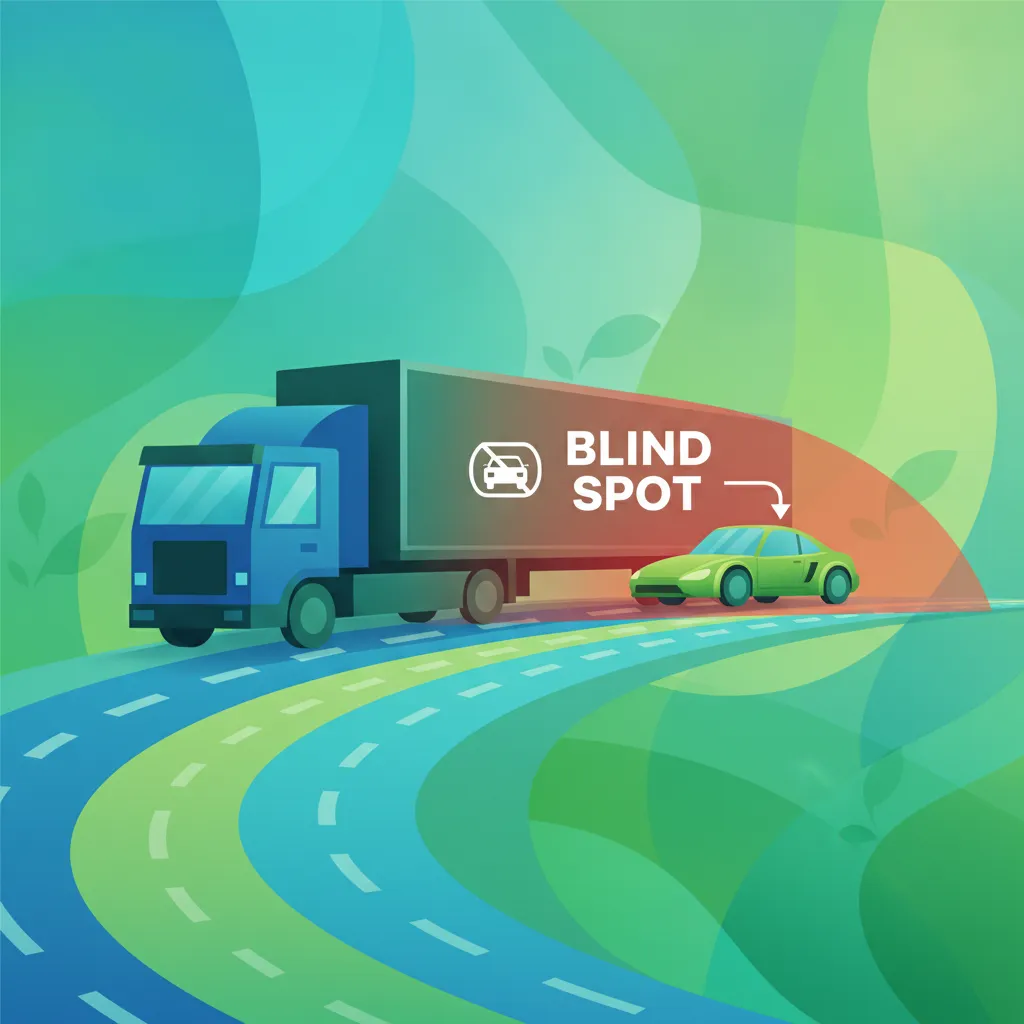
This lesson focuses on the blind spot zones specific to trucks and vehicle combinations, explaining where these zones are located. It covers the use of blind spot mirrors and other aids to enhance driver awareness during lane changes and turns. The content stresses the importance of maintaining safe distances from vulnerable road users.

This lesson focuses on the interaction between heavy vehicles and vulnerable road users at crossings, particularly when turning right. It covers the need for heightened vigilance, the importance of properly using mirrors, and correct signaling to alert others. The content highlights legal responsibilities and safe distance requirements to prevent accidents.

This lesson explores the legal framework governing heavy vehicle operation in Germany, focusing on the Straßenverkehrs-Ordnung (StVO) and specific commercial transport regulations. It details the professional duty of care required from drivers, including responsibilities for vehicle inspection and documentation. You will understand the enforcement mechanisms and potential penalties for non-compliance.
Explore the essential aspects of heavy vehicle roadworthiness, focusing on structural components, safety checks, and legal requirements. This includes understanding the importance of lighting, reflectors, and underrun protection for safe operation.
This lesson outlines the legal requirements for vehicle roadworthiness, including mandatory periodic inspections (TÜV) and the issuance of safety certificates. It explains the standards for emissions, safety devices, and the proper documentation of defects. The content underscores the importance of complying with inspection intervals and addressing repair obligations promptly.
This lesson explains the specific regulations for operating heavy vehicles on Autobahnen, including speed limits, lane discipline, and overtaking rules. It discusses the use of dedicated truck lanes and the importance of maintaining appropriate following distances. The content also covers procedures for merging and exiting high-speed roads safely.
This lesson covers the dimensional limits for heavy vehicles, focusing on height, width, and length restrictions. It explains how to interpret clearance signage for bridges, tunnels, and overhead obstacles, and discusses the implications for route planning. The content also addresses the importance of understanding turning radii and swept paths to avoid collisions.
This lesson outlines the driver's legal responsibility to ensure their vehicle is in a safe and roadworthy condition before every journey. It covers essential pre-drive checks, such as verifying lights, tyres, and fluid levels (oil, coolant, washer fluid). The lesson also explains the mandatory equipment that must be carried in the vehicle, including a warning triangle, high-visibility vest, and first-aid kit.

This lesson provides a systematic approach to pre-drive inspection, outlining a comprehensive checklist to verify fluid levels, brake functionality, and tyre condition. It emphasizes the importance of checking lighting, mirror adjustments, and load securement before every journey. The content highlights safety protocols to ensure the vehicle is roadworthy.
This lesson explores the legal framework governing heavy vehicle operation in Germany, focusing on the Straßenverkehrs-Ordnung (StVO) and specific commercial transport regulations. It details the professional duty of care required from drivers, including responsibilities for vehicle inspection and documentation. You will understand the enforcement mechanisms and potential penalties for non-compliance.

This lesson explains the legal framework for ensuring a passenger vehicle's roadworthiness, focusing on periodic technical inspections (TÜV) and scheduled maintenance. It identifies critical wear components, such as brakes and tires, that require regular monitoring and replacement. The importance of adhering to service intervals and maintaining accurate maintenance logs for regulatory compliance is also thoroughly covered.

This lesson examines the specific height, width, and length constraints that affect heavy vehicle operation, including bridge and tunnel clearances. It discusses how to interpret and comply with traffic signs indicating dimensional limits and the consequences of violating these restrictions. The content also covers practical strategies for route planning to avoid restricted areas.
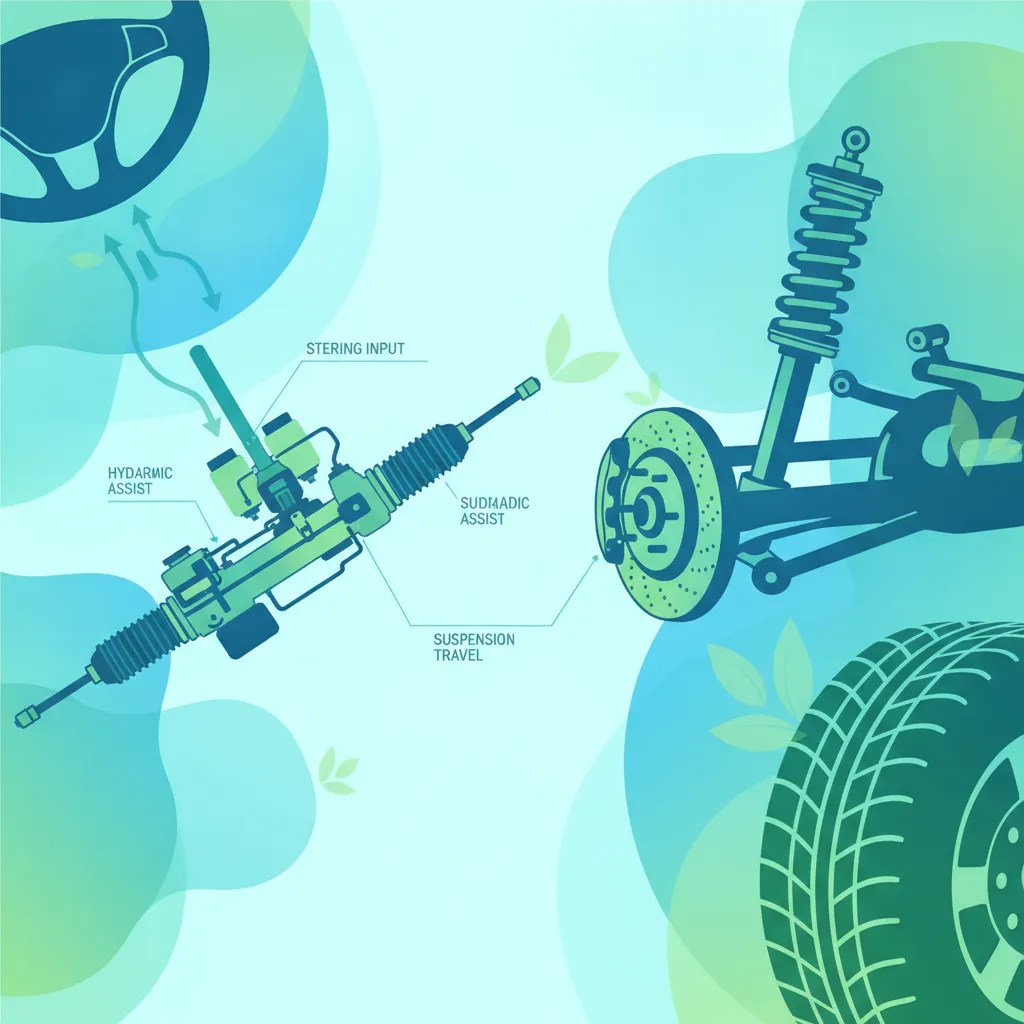
This lesson examines the steering mechanisms in heavy vehicles, including power-assisted systems, and their impact on handling. It also covers tyre technology, focusing on selection, pressure, load rating, and the importance of proper tyre maintenance. The content highlights how suspension components contribute to vehicle stability and control.

This lesson focuses on the importance of thorough route planning for heavy vehicles, taking into account dimensional and weight limits. It discusses how to use mapping tools and road signage to identify bridges, tunnels, and roads with restrictions. The content also covers how to plan alternative routes to avoid impassable areas.
Find clear answers to common questions learners have about Lighting, Reflectors, and Underrun Protection. Learn how the lesson is structured, which driving theory objectives it supports, and how it fits into the overall learning path of units and curriculum progression in Germany. These explanations help you understand key concepts, lesson flow, and exam focused study goals.
Underrun protection prevents smaller vehicles from sliding underneath a truck or trailer in the event of a rear-end or side-impact collision. By providing a structural barrier, it significantly increases the safety of occupants in smaller vehicles.
Yes, trailers have specific lighting and reflector requirements, including side marker lamps and specific rear-end markings, to ensure they remain visible as a separate unit at night or in low-visibility conditions.
Always check for cracked lenses, burnt-out bulbs, and that all lights—including indicators, brake lights, and side markers—are clean and functioning correctly. Ensure all mandatory reflectors are present and not obscured by dirt or cargo.
Begin your targeted revision now. Use our practice search to quickly find specific German driving theory questions. Filter by StVO rules, road signs, or hazard perception to create your focused study plan. Master challenging areas and prepare confidently for your theoretical driving test.