
This lesson explores the essential vehicle technology designed to keep you safe on the road, specifically focusing on braking systems, Anti-lock Braking Systems (ABS), and Electronic Stability Programs (ESP). Understanding how these systems work is vital for passing your Category B theory exam and making informed decisions during emergency maneuvers. This module builds upon your knowledge of vehicle maintenance and prepares you for real-world defensive driving techniques.

Lesson content overview
Driving safely relies heavily on your ability to control your vehicle's speed and bring it to a stop effectively and predictably. This lesson, part of your German Driving License Theory – Comprehensive Category B Course, delves into the essential components of modern vehicle braking systems. We will explore how traditional friction braking works, the critical role of hydraulic pressure, and the advanced electronic safety systems like the Anti-lock Braking System (ABS) and Electronic Stability Program (ESP) that significantly enhance vehicle control and prevent accidents. Understanding these systems is paramount for every driver to react appropriately in everyday traffic and critical emergency situations.
At its core, a vehicle's braking system is designed to convert kinetic energy (the energy of motion) into thermal energy (heat), thereby slowing down or stopping the vehicle. This conversion is achieved through friction braking.
The process by which a vehicle's kinetic energy is transformed into heat through friction generated between dedicated brake components, such as pads and rotors, or shoes and drums.
Modern vehicles primarily use two types of friction brakes:
Disc Brakes: These are the most common type for front wheels and increasingly for rear wheels. They consist of a rotating disc (rotor) attached to the wheel and a caliper that houses brake pads. When the brake pedal is pressed, the pads clamp onto both sides of the rotor, creating friction that slows the wheel. Disc brakes are highly effective due to their excellent heat dissipation, which prevents overheating and maintains braking performance.
Drum Brakes: More commonly found on the rear wheels of older or smaller vehicles, drum brakes use a cylindrical drum that rotates with the wheel. Inside the drum, two curved brake shoes are pushed outwards against the inner surface of the drum when the brakes are applied. While effective, drum brakes tend to dissipate heat less efficiently than disc brakes, making them more susceptible to "brake fade" under heavy use.
The effectiveness of friction braking is directly influenced by the coefficient of friction between the tires and the road surface, as well as between the brake components themselves. Factors like wet roads, ice, loose gravel, or worn tires can drastically reduce available friction, extending stopping distances.
For the driver's foot pressure on the brake pedal to effectively slow down a multi-ton vehicle, a powerful force amplification and transmission system is required. This is achieved through hydraulic pressure, which utilizes the incompressibility of fluids.
The transmission of force from the brake pedal to the brake mechanisms at each wheel, facilitated by an incompressible fluid (brake fluid) contained within a sealed system.
Here's how it works:
This hydraulic system ensures that a relatively small force applied by the driver's foot is amplified and distributed evenly to all wheels, allowing for consistent and powerful braking. Regular inspection of the braking system for leaks in the brake lines or issues with the master cylinder is crucial, as any loss of brake fluid or introduction of air into the system can severely compromise braking effectiveness, potentially leading to complete brake failure. Brake fluid also needs periodic replacement, as it can absorb moisture over time, reducing its boiling point and leading to issues like brake fade.
Not all wheels contribute equally to stopping a vehicle, nor should they. Brake balance refers to the distribution of braking force between the front and rear axles.
The calibrated distribution of braking force applied to the front and rear wheels of a vehicle, typically optimized for stability and efficiency during deceleration.
Under normal conditions, a typical passenger car is designed to apply more braking force to the front wheels, often around 70% front and 30% rear. This distribution is vital due to weight transfer.
The dynamic shift of a vehicle's mass towards the front axle during braking or acceleration, and towards the rear axle during acceleration.
When you brake, the vehicle's inertia causes its weight to shift forward, increasing the load on the front wheels and simultaneously reducing the load on the rear wheels. The front wheels, being more heavily loaded, have a greater grip on the road and can therefore handle more braking force without locking up. If too much braking force were applied to the rear wheels during heavy braking, they would lock up prematurely, causing a loss of stability and potential skidding (oversteer). Conversely, if the front wheels locked up, the driver would lose steering control (understeer).
Modern vehicles often incorporate brake proportioning valves or electronic systems to dynamically adjust this balance based on the braking intensity and vehicle load, ensuring optimal stability and stopping distance. Vehicles towing trailers, for instance, require careful consideration of brake balance, as the additional weight on the rear axle can significantly alter weight distribution during braking.
One of the most significant safety advancements in vehicle technology is the Anti-lock Braking System (ABS). Its primary function is to prevent the wheels from locking up during hard or emergency braking, particularly on slippery surfaces.
An electronic safety system that monitors wheel speed and rapidly modulates brake pressure to individual wheels, preventing them from locking up during aggressive braking and allowing the driver to maintain steering control.
Here’s how ABS typically works:
When ABS activates, press the brake pedal firmly and continuously. You may feel a pulsating sensation, but this is normal and indicates the system is working. Do not release pressure or pump the pedal.
Building upon the foundation of ABS, the Electronic Stability Program (ESP) (also known as Electronic Stability Control or ESC in some regions) is an advanced safety system designed to prevent skids and maintain the vehicle's intended trajectory, especially during sudden maneuvers or on slippery roads.
An electronic system that continuously monitors vehicle stability and intervenes by automatically applying brakes to individual wheels and/or reducing engine power to correct oversteer or understeer and help the driver maintain control.
ESP uses a network of sensors to gather crucial information:
The ESP's ECU continuously compares the driver's steering input with the vehicle's actual movement. If it detects a discrepancy—meaning the vehicle is not going where the driver intends (e.g., beginning to skid)—it intervenes within milliseconds.
ESP typically addresses two main types of vehicle instability:
In addition to braking individual wheels, ESP can also reduce engine torque to further aid in regaining control. This combined action helps to gently nudge the vehicle back onto its desired course, often before the driver even fully realizes a loss of control was imminent.
Never deactivate your vehicle's Electronic Stability Program (ESP) on public roads. It is a critical safety system designed to prevent skids and loss of control, especially during emergency maneuvers or on slippery surfaces.
While modern braking systems are highly efficient, they are not immune to their primary enemy: heat. Brake fade is a reduction in braking effectiveness due to the overheating of brake components.
A phenomenon where the braking performance of a vehicle diminishes due to the excessive heat generated in the brake components, leading to increased stopping distances and reduced pedal feel.
When brakes are used continuously or very aggressively, particularly on long descents or during repeated hard stops, the friction components (pads/shoes) and brake fluid can reach extremely high temperatures.
When driving on long descents, always engage engine braking by selecting a lower gear. This significantly reduces the load on your vehicle's friction brakes and helps prevent dangerous brake fade.
In Germany, strict regulations govern vehicle operation and safety equipment, including braking systems. Adherence to these rules is not just a legal obligation but crucial for road safety.
StVO §1 (Grundregeln – Basic Rules): Emphasizes that every driver must adjust their speed and driving behavior to the prevailing road, traffic, and weather conditions. This implicitly includes the need to brake appropriately and effectively. For instance, modulating speed before entering a sharp curve on a wet road.
StVO §3 (Geschwindigkeit – Speed): Mandates that drivers must always be able to stop their vehicle within a distance that is visible and foreseeable. This directly relates to the effectiveness of braking systems and the driver's ability to use them. Maintaining high speed on a slick surface without adjusting is an incorrect application.
StVO §17 (Beleuchtung – Lighting) – Relevant for brake lights, but not direct braking action: While §17 primarily concerns lighting, other sections and general principles of StVO reinforce proper vehicle control. The principle of not pumping ABS brakes, while not a direct StVO article, is a critical safety recommendation widely accepted and taught.
StVZO §30 (Beschaffenheit der Fahrzeuge – Vehicle Condition): This regulation governs the technical condition of vehicles. It mandates that braking systems, including ABS and ESP where installed, must be in perfect working order.
Understanding how your braking systems work is only half the battle; knowing how to use them correctly and avoiding common pitfalls is equally important.
Hard Braking without ABS on Slippery Surfaces:
Pumping the Brake Pedal During ABS Activation:
Turning Off ESP for Perceived Fuel Savings or "Sportiness":
Ignoring Brake Warning Lights:
Excessive Continuous Braking on Long Descents:
Effective braking is not a one-size-fits-all skill. A responsible driver adapts their braking technique based on a variety of environmental and vehicle-specific factors.
When approaching areas with pedestrians, cyclists, or motorcyclists, early and gentle braking is vital. This provides more reaction time for both the driver and the vulnerable user and prevents sudden, unpredictable braking that could cause a loss of control or endanger others. Sudden wheel lock-up could startle a pedestrian or cause a cyclist to swerve.
The integration of advanced braking systems like ABS and ESP profoundly impacts overall vehicle safety by working in concert with fundamental principles of vehicle dynamics.
By understanding these complex interactions, drivers are better equipped to make informed decisions, anticipate hazards, and maintain control of their vehicles, especially in challenging situations. This knowledge forms a cornerstone of safe driving practice for the German Category B Driving License and beyond.
This lesson covers the fundamentals of vehicle braking systems including friction braking (disc and drum types), hydraulic pressure transmission, and the critical role of brake balance and weight transfer during deceleration. The Anti-lock Braking System (ABS) prevents wheel lock-up by rapidly modulating brake pressure, allowing drivers to maintain steering control during emergency braking, and requires drivers to maintain firm continuous pressure on the pedal rather than pumping. The Electronic Stability Program (ESP) builds on ABS technology by using multiple sensors to detect understeer and oversteer, automatically applying brakes to individual wheels and reducing engine torque to keep the vehicle on its intended path. Understanding these systems, along with brake fade prevention through engine braking and proper maintenance, is essential for both passing the German Category B theory exam and making informed decisions during emergency driving situations.
A short set of high-value points that capture the most important learning from this lesson.
Brake balance is typically 70% front and 30% rear due to weight transfer during deceleration, which increases front wheel grip and prevents rear wheel lock-up.
ABS prevents wheel lock-up by rapidly modulating brake pressure, allowing the driver to maintain steering control during hard braking on slippery surfaces.
ESP continuously compares steering input with vehicle movement and automatically brakes individual wheels to correct understeer or oversteer and maintain intended trajectory.
When ABS activates, you must maintain firm continuous pressure on the brake pedal and never pump it, as the system modulates pressure much faster than human intervention.
Engine braking (downshifting) on long descents is essential to prevent brake fade caused by overheating of friction components.
Explore all units and lessons included in this driving theory course.
ABS maintains steering control but may not always shorten stopping distance on dry surfaces compared to skilled brake modulation by an expert driver.
ESP corrects understeer by braking the inner rear wheel and corrects oversteer by braking the outer front wheel to stabilize vehicle rotation.
Brake fade occurs when excessive heat causes friction material to gas or brake fluid to boil, leading to spongy pedals and reduced braking power.
On slippery surfaces, wet roads, or icy conditions, ABS becomes particularly valuable as it prevents wheel lock-up that would otherwise cause loss of steering.
Dashboard warning lights for ABS, ESP, or brake system malfunctions indicate critical safety systems may be partially or completely ineffective.
Pumping the brake pedal when ABS activates interferes with the system's rapid modulation and can cause temporary wheel lock-up and reduced effectiveness.
Assuming ABS always reduces stopping distance on dry roads, when a skilled driver modulating brake pressure just before lock-up might achieve a slightly shorter distance.
Deactivating ESP on public roads for perceived fuel savings or sportiness significantly increases the risk of losing control during sudden maneuvers or on low-traction surfaces.
Riding the brakes continuously on steep descents causes rapid heat buildup leading to brake fade and potentially complete brake failure.
Ignoring brake warning lights and continuing to drive can result in operating a vehicle with compromised safety systems and drastically increased accident risk.
Lesson content overview
A short set of high-value points that capture the most important learning from this lesson.
Brake balance is typically 70% front and 30% rear due to weight transfer during deceleration, which increases front wheel grip and prevents rear wheel lock-up.
ABS prevents wheel lock-up by rapidly modulating brake pressure, allowing the driver to maintain steering control during hard braking on slippery surfaces.
ESP continuously compares steering input with vehicle movement and automatically brakes individual wheels to correct understeer or oversteer and maintain intended trajectory.
When ABS activates, you must maintain firm continuous pressure on the brake pedal and never pump it, as the system modulates pressure much faster than human intervention.
Engine braking (downshifting) on long descents is essential to prevent brake fade caused by overheating of friction components.
Explore all units and lessons included in this driving theory course.
ABS maintains steering control but may not always shorten stopping distance on dry surfaces compared to skilled brake modulation by an expert driver.
ESP corrects understeer by braking the inner rear wheel and corrects oversteer by braking the outer front wheel to stabilize vehicle rotation.
Brake fade occurs when excessive heat causes friction material to gas or brake fluid to boil, leading to spongy pedals and reduced braking power.
On slippery surfaces, wet roads, or icy conditions, ABS becomes particularly valuable as it prevents wheel lock-up that would otherwise cause loss of steering.
Dashboard warning lights for ABS, ESP, or brake system malfunctions indicate critical safety systems may be partially or completely ineffective.
Pumping the brake pedal when ABS activates interferes with the system's rapid modulation and can cause temporary wheel lock-up and reduced effectiveness.
Assuming ABS always reduces stopping distance on dry roads, when a skilled driver modulating brake pressure just before lock-up might achieve a slightly shorter distance.
Deactivating ESP on public roads for perceived fuel savings or sportiness significantly increases the risk of losing control during sudden maneuvers or on low-traction surfaces.
Riding the brakes continuously on steep descents causes rapid heat buildup leading to brake fade and potentially complete brake failure.
Ignoring brake warning lights and continuing to drive can result in operating a vehicle with compromised safety systems and drastically increased accident risk.
Explore search topics learners often look for when studying Braking Systems, ABS, ESP. These topics reflect common questions about road rules, driving situations, safety guidance, and lesson level theory preparation for learners in Germany.
Browse additional driving theory lessons that cover connected traffic rules, road signs, and common driving situations related to this topic. Improve your understanding of how different rules interact across everyday traffic scenarios.
Understand the technical principles of ABS and ESP in German driving theory. Learn how these systems prevent wheel lock-up and skids during emergency braking, enhancing vehicle control and safety on the road.

This lesson delves into the critical control systems of a passenger vehicle: steering, braking, and acceleration. It explains the mechanics of hydraulic and pneumatic brakes and the function of safety aids like ABS and ESP. Learners will understand how to apply smooth acceleration and deceleration techniques to ensure passenger comfort and maintain vehicle stability under various driving conditions.
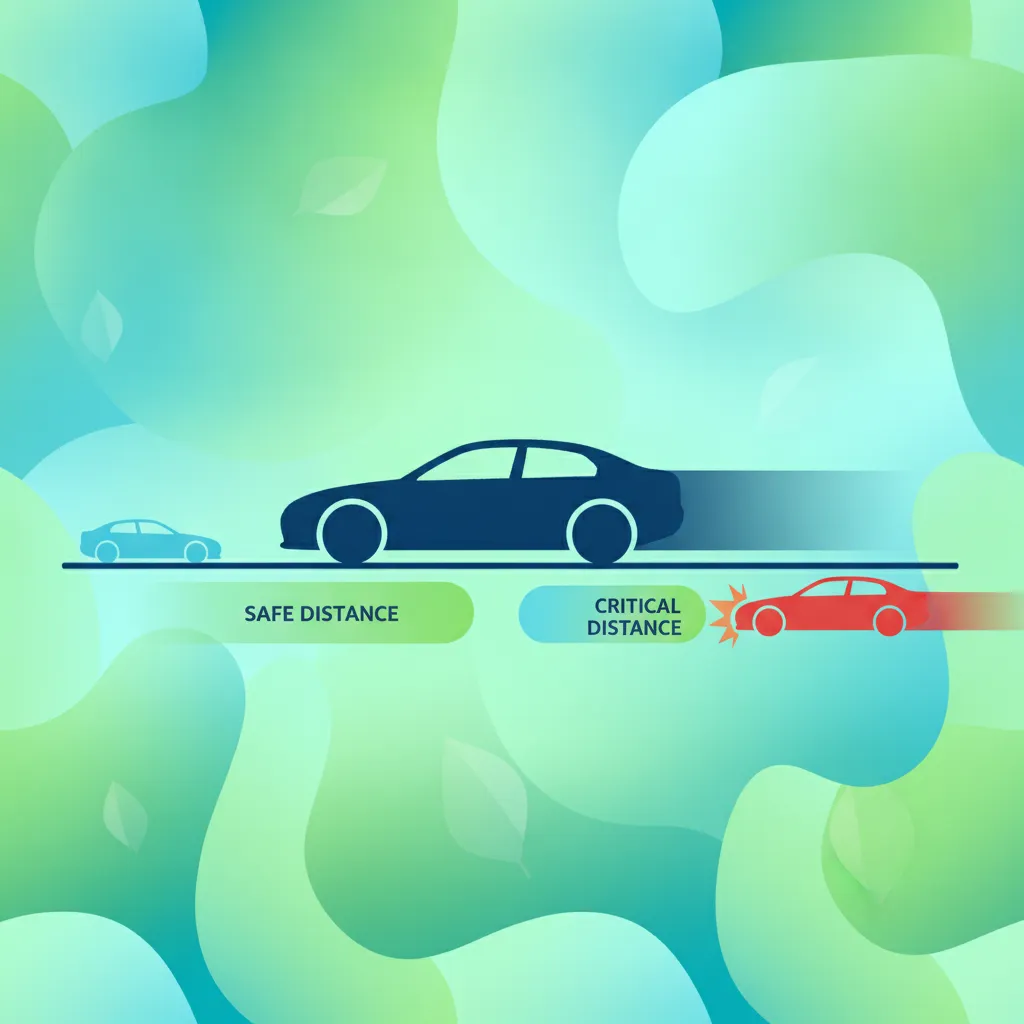
This lesson breaks down the concept of total stopping distance into reaction distance and braking distance. It teaches various braking techniques, including how to perform an emergency stop safely and the function of an Anti-lock Braking System (ABS). The relationship between speed, road condition, and braking effectiveness is a central theme.
This lesson introduces the concept of defensive driving ('vorausschauendes Fahren'), a proactive approach focused on anticipating and mitigating potential risks. It teaches techniques for scanning the road ahead, identifying potential hazards early, and managing the space around your vehicle to create a safety buffer. The goal is to develop a mindset that prioritizes safety and collision avoidance above all else.

This lesson provides instruction on how to react and perform an emergency stop in a critical situation. It covers the technique of applying maximum braking force progressively and firmly without locking the wheels. For motorcycles equipped with an Anti-lock Braking System (ABS), the lesson explains how the system works and how the rider should respond when it activates to maintain steering control.

This lesson serves as an introduction to the driver's interface with the car. It explains the function of the primary controls—steering wheel, accelerator, brake, and clutch—and the gear selector. You will also learn to identify and understand the various symbols and gauges on the dashboard, including the speedometer, fuel gauge, and critical warning lights.

This lesson introduces the essential components of a motorcycle's braking system, including disc brakes, drum brakes, and the function of an Anti-lock Braking System (ABS). It teaches learners how to inspect brake pads and rotors for wear and understand the feel of the brake levers. The concept of balanced braking force distribution between the front and rear wheels is explained for maintaining stability.

This lesson focuses on the risks of jackknifing and trailer swing, particularly during braking and on downhill descents. It provides recommendations for safe speed management, proper braking techniques, and maintaining vehicle stability. The content also addresses safe reversing practices and the importance of monitoring blind spots during maneuvers.

This lesson explores how different weather conditions impact driving safety and vehicle performance. It discusses the risks of hydroplaning in heavy rain, reduced visibility in fog, and loss of traction on snow and ice. Drivers will learn how to adapt their speed, increase following distances, and make smooth control inputs to maintain vehicle stability and prevent skids in these challenging conditions.
This lesson teaches the driving techniques required for smooth operation, which is essential for passenger comfort and vehicle stability. It covers progressive application of the accelerator and brakes to avoid jolts and abrupt movements. The principles of anticipatory driving are also explored, showing how looking ahead and planning maneuvers contributes to a smoother ride, better fuel efficiency, and increased safety.
Explore critical driving theory related to emergency braking situations. This lesson covers how ABS and ESP assist drivers in maintaining steering control and reducing stopping distances in hazardous conditions.
This lesson breaks down the concept of total stopping distance into reaction distance and braking distance. It teaches various braking techniques, including how to perform an emergency stop safely and the function of an Anti-lock Braking System (ABS). The relationship between speed, road condition, and braking effectiveness is a central theme.
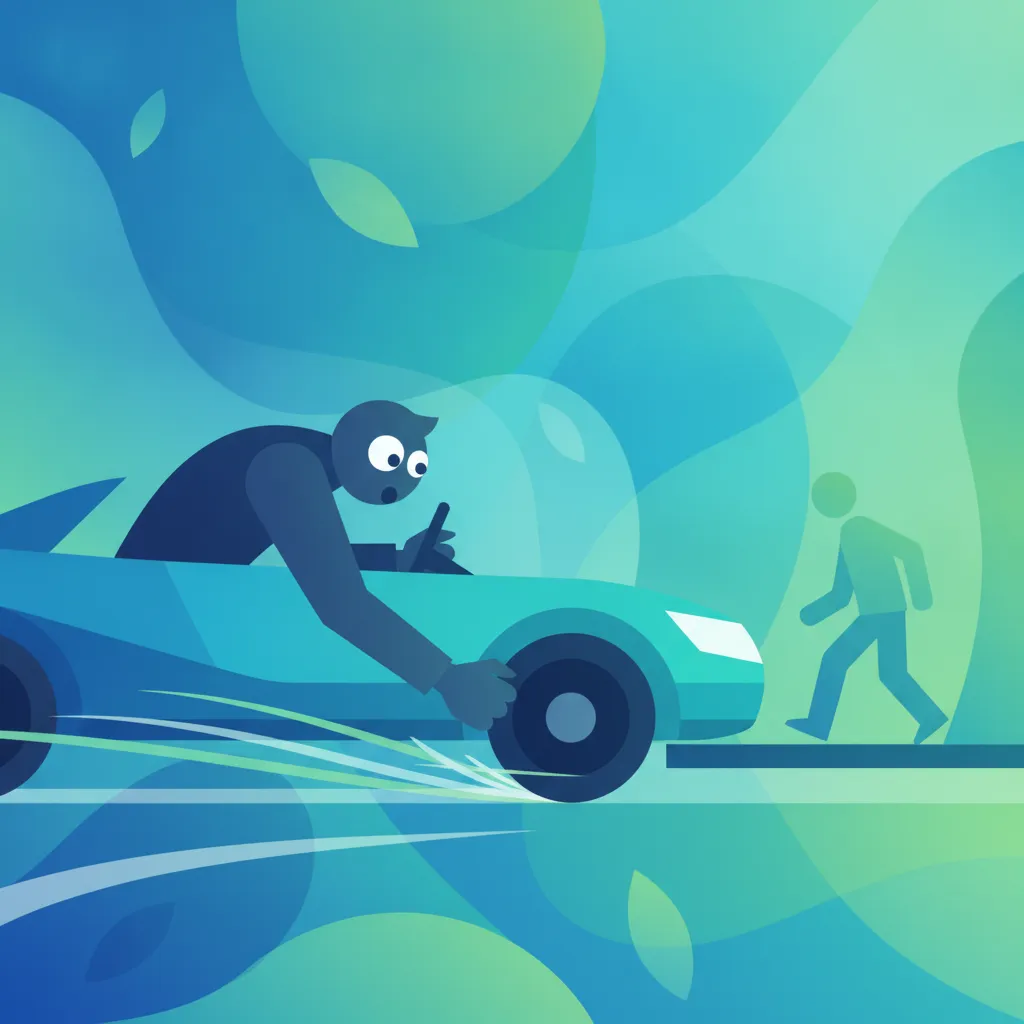
This lesson explains the physics behind stopping a vehicle, breaking down the total stopping distance ('Anhalteweg') into its two key components: reaction distance and braking distance. It provides formulas for estimating these distances at various speeds and discusses the critical factors that can increase them, such as driver fatigue, poor weather, and worn tires. Understanding this relationship is vital for appreciating the need for safe speeds and distances.

This lesson outlines a clear, systematic procedure for managing a vehicle breakdown safely and efficiently. It covers immediate actions such as activating hazard lights, placing a warning triangle, and moving the vehicle to a safe location if possible. Learners will understand how to communicate the situation to passengers, decide if an evacuation is necessary, and contact the appropriate breakdown services for assistance.
This lesson introduces the concept of defensive driving ('vorausschauendes Fahren'), a proactive approach focused on anticipating and mitigating potential risks. It teaches techniques for scanning the road ahead, identifying potential hazards early, and managing the space around your vehicle to create a safety buffer. The goal is to develop a mindset that prioritizes safety and collision avoidance above all else.
This lesson provides instruction on how to react and perform an emergency stop in a critical situation. It covers the technique of applying maximum braking force progressively and firmly without locking the wheels. For motorcycles equipped with an Anti-lock Braking System (ABS), the lesson explains how the system works and how the rider should respond when it activates to maintain steering control.

This lesson covers the appropriate steps to take in the event of a vehicle breakdown or an accident. It details procedures for safely moving the motorcycle out of traffic, making the area visible with hazard warnings, and contacting emergency services. The content emphasizes personal safety and the correct protocol for managing the scene until professional help arrives.
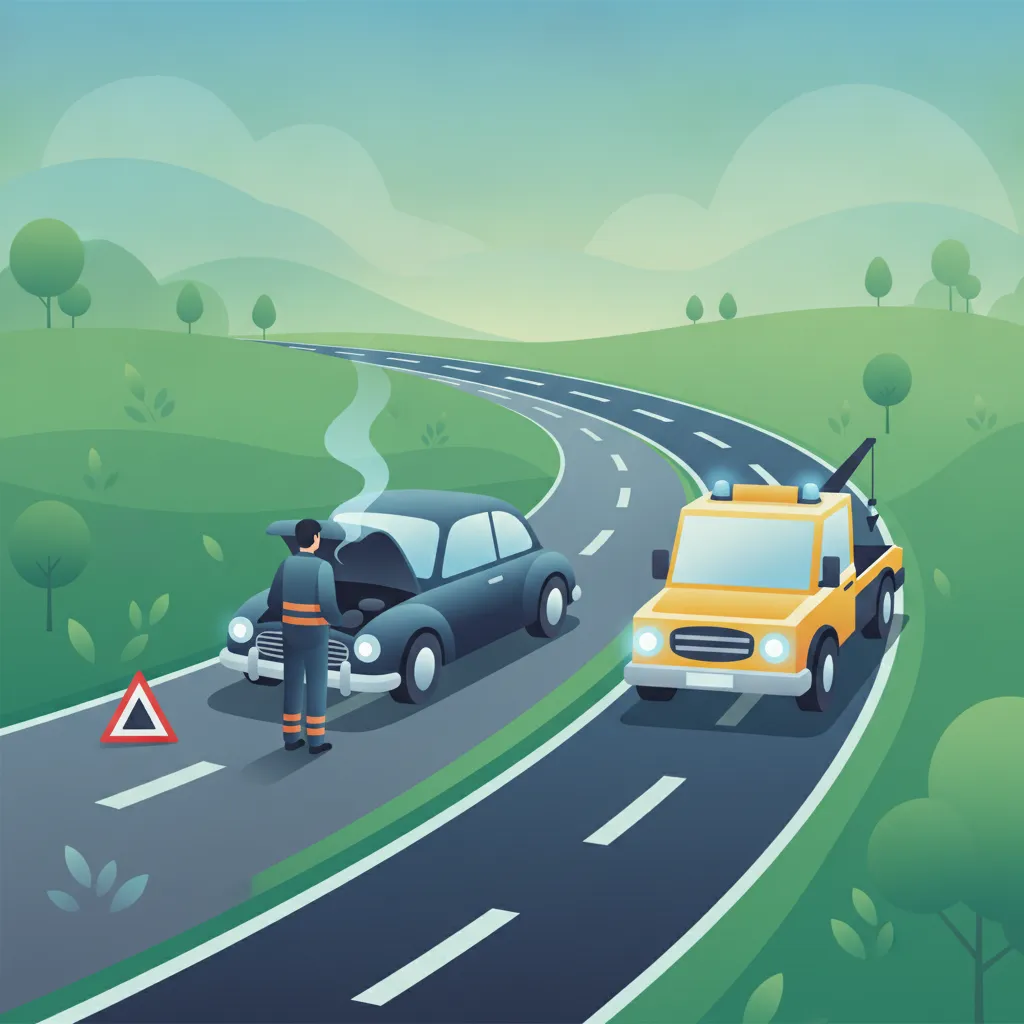
This lesson provides clear, actionable steps for managing a breakdown or being involved in an accident. It covers how to safely move the vehicle off the road, use warning signals, and secure the area. The procedure for contacting roadside assistance and the authorities is also explained in detail.

This lesson introduces the fundamentals of a motorcycle's braking system, emphasizing the dominant role of the front brake due to forward weight transfer during deceleration. It explains how to apply both front and rear brakes in a coordinated manner to achieve maximum, stable stopping power. The content also covers how to modulate brake pressure smoothly and progressively to avoid losing traction and locking a wheel.
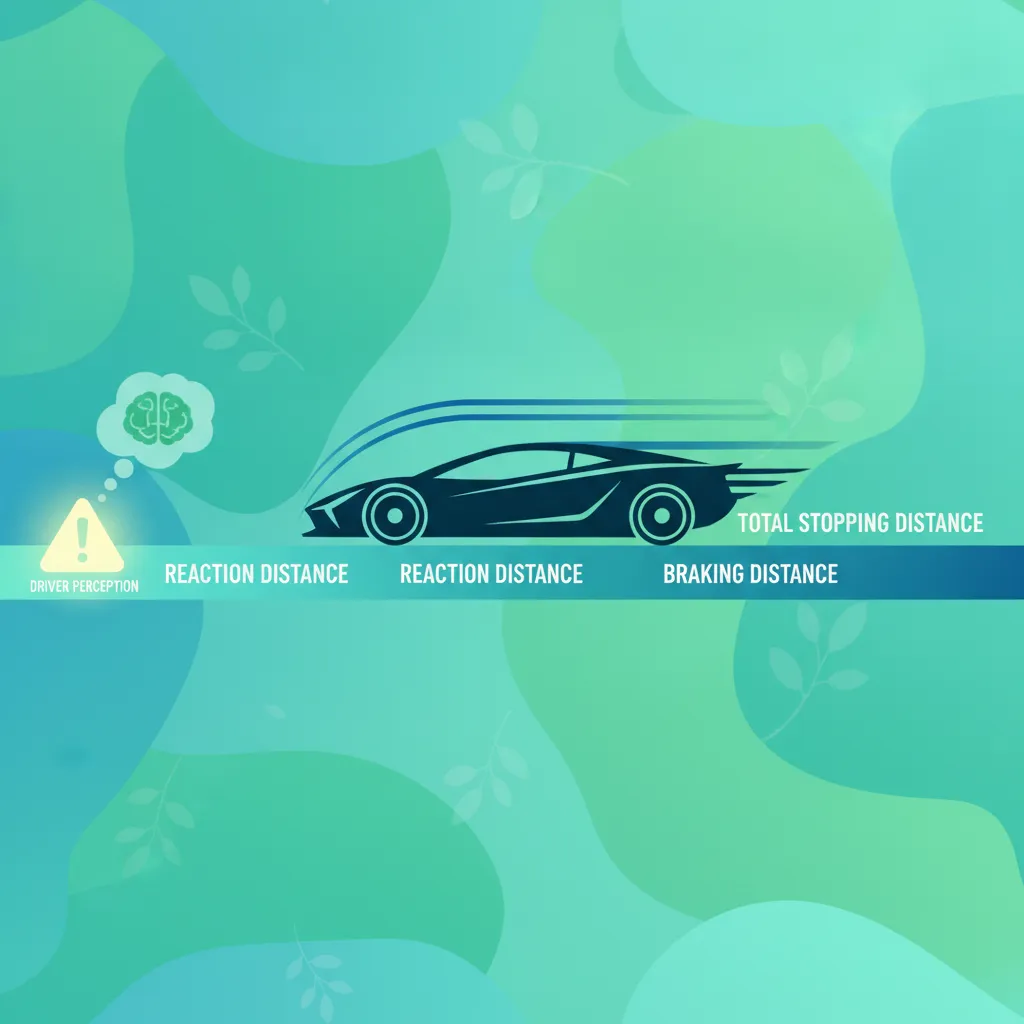
This lesson explains the two components of total stopping distance: reaction distance and braking distance. It teaches learners how factors like speed, road conditions, and rider attentiveness influence how far the motorcycle travels before coming to a complete stop. By understanding these principles, riders can make better decisions about safe speeds and following distances to ensure they can stop in time.
This lesson delves into the critical control systems of a passenger vehicle: steering, braking, and acceleration. It explains the mechanics of hydraulic and pneumatic brakes and the function of safety aids like ABS and ESP. Learners will understand how to apply smooth acceleration and deceleration techniques to ensure passenger comfort and maintain vehicle stability under various driving conditions.
Find clear answers to common questions learners have about Braking Systems, ABS, ESP. Learn how the lesson is structured, which driving theory objectives it supports, and how it fits into the overall learning path of units and curriculum progression in Germany. These explanations help you understand key concepts, lesson flow, and exam focused study goals.
No. ABS primarily allows you to maintain steering control during hard braking by preventing wheel lock-up. While it helps avoid skidding, it does not necessarily reduce the total stopping distance on every road surface.
ESP (Electronic Stability Program) is designed to detect and reduce loss of traction. If it senses that the vehicle is not going where you are steering, it selectively applies the brakes to individual wheels to keep the car on its intended path.
If a red brake warning light appears on your dashboard, you must stop the vehicle as soon as it is safe to do so. It often indicates a critical fault, such as low brake fluid levels or a failure in the braking system.
The exam often uses video clips or static images showing dashboard symbols or asking about the correct behavioral response when a system (like ABS or ESP) is activated. You must understand the practical purpose of these systems to answer correctly.
Begin your targeted revision now. Use our practice search to quickly find specific German driving theory questions. Filter by StVO rules, road signs, or hazard perception to create your focused study plan. Master challenging areas and prepare confidently for your theoretical driving test.