
This lesson focuses on the critical control systems of passenger vehicles, ensuring you understand the mechanics of steering, braking, and acceleration. You will learn how to operate heavy passenger vehicles smoothly and safely, which is vital for maintaining passenger comfort and passing your professional theory exam.

Lesson content overview
Operating a professional passenger vehicle, such as a bus or coach, demands an intricate understanding and masterful control of its fundamental systems: steering, braking, and acceleration. These systems are the primary interface between the driver and the vehicle, directly influencing safety, passenger comfort, and compliance with traffic regulations. This lesson provides an in-depth exploration of their mechanical principles, the role of crucial safety devices like ABS and ESP, and the refined techniques required for their effective application in professional passenger transport.
This lesson is integral to the Professional German Passenger-Vehicle Theory curriculum for Licence Categories D1, D1E, D, and DE. Mastery of these control systems forms the bedrock for ensuring passenger safety and efficient vehicle operation.
The coordinated interplay of steering, braking, and acceleration is paramount for maintaining vehicle stability, ensuring passenger safety, and achieving precise maneuvering. These actions are governed by fundamental physics principles such as forces, friction, inertia, and weight transfer, all of which professional drivers must intuitively grasp. Beyond mechanical understanding, proficient use of these systems is crucial for mitigating the risk of losing control, especially in challenging situations, and for adhering to legal regulations concerning vehicle operation and safety equipment.
Steering is the method by which a driver changes the vehicle’s direction through the manipulation of the steering wheel. Its primary purpose is to allow the vehicle to follow an intended path safely and accurately. For professional drivers, precise and smooth steering input is vital, not only for navigating complex routes but also for ensuring passenger comfort and stability. Improper steering, particularly abrupt or excessive movements, can lead to loss of control, especially during emergency maneuvers or at higher speeds.
The mechanical arrangement that translates steering wheel movements into changes in the direction of the vehicle's wheels.
Braking is the process of slowing down or stopping the vehicle through the application of the brake system. It is essential for hazard avoidance, stopping at traffic controls, and managing speed effectively. The effectiveness of braking relies on creating friction between the brake components and the wheels, which in turn generates friction between the tires and the road surface. Incorrect braking technique can lead to several dangerous outcomes, including skidding, significantly prolonged stopping distances, or a complete loss of vehicle control, especially in adverse conditions or with a heavy passenger load.
The distance a vehicle travels from the moment the brakes are applied until it comes to a complete stop. This distance is influenced by speed, road conditions, vehicle weight, and the effectiveness of the braking system.
Acceleration is the controlled increase of vehicle speed, achieved by supplying power from the engine to the wheels via throttle input. Its purpose is to enable smooth speed adjustments, facilitate merging onto faster traffic lanes, and maintain an appropriate speed for prevailing conditions. For passenger transport, smooth and gradual acceleration is crucial for passenger comfort and to prevent sudden jolts. Abrupt acceleration can cause passenger discomfort, lead to a loss of traction, destabilize the vehicle, and increase fuel consumption.
The rate at which a vehicle's velocity increases, achieved by increasing engine power through the throttle.
The steering system is the primary control for directional changes. Modern passenger vehicles, especially larger ones, utilize sophisticated systems to make steering manageable and precise.
At its core, the steering system translates the rotational movement of the steering wheel into a linear motion that turns the front wheels.
Rack-and-Pinion Steering: This common type uses a pinion gear on the end of the steering column that engages with a horizontal rack. As the steering wheel turns, the pinion rotates, moving the rack left or right, which in turn pushes or pulls the tie rods connected to the front wheels. While efficient for smaller vehicles, larger passenger vehicles often require assistance due to their greater weight.
Power Steering Systems: To reduce the physical effort required from the driver, especially in heavy vehicles or during low-speed maneuvers, power steering systems provide assistance.
Effective steering for a professional driver involves more than just turning the wheel; it encompasses smooth, anticipatory movements and correct hand placement.
In tight maneuvers or when reversing a large passenger vehicle, slight counter-steering might be necessary to position the vehicle accurately, but always ensure movements are controlled and deliberate.
Braking is critical for safety, and large passenger vehicles employ robust systems designed for significant loads and repeated use. Professional drivers must understand the types of braking systems and their associated safety aids.
Hydraulic braking systems are the most common type found in cars and lighter passenger vehicles (like minibuses). They operate on the principle of hydraulic pressure.
When the driver presses the brake pedal, it pushes a piston in the master cylinder.
This action forces brake fluid through brake lines to the brake calipers (for disc brakes) or wheel cylinders (for drum brakes) at each wheel.
In disc brakes, the fluid pressure pushes pistons within the caliper, forcing brake pads to clamp onto a spinning brake disc (rotor).
In drum brakes, the fluid pressure pushes pistons in the wheel cylinder, forcing brake shoes outwards against the inside of a spinning brake drum.
The resulting friction converts the vehicle's kinetic energy into heat, slowing or stopping the vehicle.
Key Characteristics:
Larger professional passenger vehicles, such as coaches and larger buses, predominantly use pneumatic (air) braking systems due to their superior stopping power and reliability under heavy loads.
An air compressor, typically engine-driven, pumps air into one or more air tanks (reservoirs), storing compressed air at high pressure.
When the driver presses the brake pedal, it operates a foot valve that releases compressed air from the tanks.
This air travels through brake lines to brake chambers at each wheel.
Inside the brake chambers, the compressed air pushes a diaphragm, which in turn pushes a pushrod.
The pushrod activates a slack adjuster, which rotates a camshaft.
The camshaft spreads the brake shoes apart, pressing them against the inside of the brake drum, creating friction to slow the vehicle.
Key Characteristics:
The Anti-lock Braking System (ABS) is a crucial safety feature that prevents the wheels from locking up during sudden or hard braking. This allows the driver to maintain steering control while braking, which is vital for avoiding obstacles.
How ABS Works:
A safety system that prevents the wheels from locking up during hard braking, allowing the driver to maintain steering control.
The Electronic Stability Program (ESP), also known as Electronic Stability Control (ESC) in some regions, is an advanced safety system that helps drivers maintain control of their vehicle, especially during critical driving situations such as sudden evasive maneuvers or driving on slippery surfaces. It works in conjunction with ABS and traction control systems.
How ESP Works:
An electronic system that helps maintain vehicle stability by selectively braking individual wheels and/or adjusting engine output to prevent oversteer and understeer.
Both ABS and ESP are active safety systems designed to assist the driver, not to override the laws of physics. They work best when the driver maintains smooth inputs and drives according to road conditions. Ignoring system warning lights, such as those for ABS or ESP faults, is a serious safety concern and can lead to loss of control.
Smooth and controlled acceleration is a hallmark of professional passenger transport. It directly impacts passenger comfort, vehicle stability, and fuel efficiency.
Understanding how vehicle weight shifts during steering, braking, and acceleration is fundamental for professional drivers, especially when operating large vehicles with varying passenger loads.
The shift in a vehicle's weight distribution from front to back, side to side, or diagonally, occurring during acceleration, braking, or cornering.
Compliance with German road traffic regulations (StVO – Straßenverkehrs-Ordnung) is mandatory for professional drivers. Several rules directly pertain to the proper use of steering, braking, and acceleration systems.
Drivers must maintain a safe braking distance that allows them to stop under the prevailing road and traffic conditions. While no fixed legal distance applies to all situations (it varies significantly with speed, road surface, and vehicle type), the principle is clear: always be able to stop within the visible, clear distance ahead. This implies:
For all modern vehicles, especially professional passenger vehicles, ABS and ESP systems are legally mandated safety equipment.
According to German traffic law, drivers are generally prohibited from braking significantly while actively engaged in an overtaking maneuver.
While specific laws on "hands-on-the-wheel" vary, best practices and regulations emphasize maintaining full control of the vehicle at all times.
Professional drivers must be acutely aware of common errors that can compromise safety and passenger comfort.
Mastering steering, braking, and acceleration is not merely about mechanical operation; it's about developing an integrated driving skill that prioritizes safety, stability, and passenger comfort. Professional drivers must understand the underlying physics, the functionality of advanced safety systems, and the legal framework governing these controls. By applying smooth, anticipatory, and adaptive driving techniques, particularly in varied road and weather conditions and with changing passenger loads, drivers uphold the highest standards of professional passenger transport.
This lesson covers the mechanical operation and practical control of steering, braking, and acceleration systems for professional passenger vehicle drivers. It distinguishes between hydraulic brakes common in lighter vehicles and pneumatic air brakes used in heavy buses and coaches, explaining fail-safe designs and air pressure requirements. The safety systems ABS and ESP are detailed: ABS prevents wheel lock-up during hard braking while ESP selectively brakes individual wheels to correct oversteer or understeer. Understanding weight transfer effects—load shifting forward during braking and rearward during acceleration—is essential for managing vehicle stability. For the German theory exam, drivers must know that pneumatic systems require air pressure build-up before driving, safety systems cannot be disabled on public roads, and braking during overtaking is prohibited under StVO.
A short set of high-value points that capture the most important learning from this lesson.
Hydraulic brakes use fluid pressure to actuate brake components, while pneumatic brakes use compressed air stored in reservoirs, making them essential for heavy passenger vehicles
ABS prevents wheel lock-up by rapidly modulating brake pressure, allowing drivers to maintain steering control during emergency braking
ESP maintains vehicle stability by selectively braking individual wheels when it detects oversteer (rear slides out) or understeer (vehicle continues straight)
Weight transfer during braking shifts load to the front wheels, improving front traction but making rear wheels more prone to lock-up
Pneumatic brake systems include fail-safe spring brakes that automatically engage if air pressure drops too low, stopping the vehicle safely
Explore all units and lessons included in this driving theory course.
Pneumatic air brake systems require waiting for the air pressure gauge to reach operating range before driving
Both hands should be placed at the 9 and 3 o'clock positions on the steering wheel for optimal control and reaction time
Understeer occurs when the front tires lose grip and the vehicle turns less than intended, often from entering a curve too fast
When cornering, reduce speed before the curve, steer gently through it, then accelerate smoothly as you straighten out
Drivers must never intentionally disable ABS or ESP systems on public roads; fault warning lights require immediate mechanic attention
Oversteering by turning the wheel too sharply for speed and curve radius, causing the rear wheels to lose grip and swing out
Approaching intersections or hazards too quickly, requiring sudden forceful braking that endangers passengers and risks overshooting stop lines
Ignoring ABS or ESP warning lights and continuing to drive with these safety systems malfunctioning
Starting in too high a gear when moving off, causing sluggish jerky acceleration that strains the engine
Braking during an overtaking maneuver, which prolongs the overtaking process and increases collision risk with oncoming traffic
Lesson content overview
A short set of high-value points that capture the most important learning from this lesson.
Hydraulic brakes use fluid pressure to actuate brake components, while pneumatic brakes use compressed air stored in reservoirs, making them essential for heavy passenger vehicles
ABS prevents wheel lock-up by rapidly modulating brake pressure, allowing drivers to maintain steering control during emergency braking
ESP maintains vehicle stability by selectively braking individual wheels when it detects oversteer (rear slides out) or understeer (vehicle continues straight)
Weight transfer during braking shifts load to the front wheels, improving front traction but making rear wheels more prone to lock-up
Pneumatic brake systems include fail-safe spring brakes that automatically engage if air pressure drops too low, stopping the vehicle safely
Explore all units and lessons included in this driving theory course.
Pneumatic air brake systems require waiting for the air pressure gauge to reach operating range before driving
Both hands should be placed at the 9 and 3 o'clock positions on the steering wheel for optimal control and reaction time
Understeer occurs when the front tires lose grip and the vehicle turns less than intended, often from entering a curve too fast
When cornering, reduce speed before the curve, steer gently through it, then accelerate smoothly as you straighten out
Drivers must never intentionally disable ABS or ESP systems on public roads; fault warning lights require immediate mechanic attention
Oversteering by turning the wheel too sharply for speed and curve radius, causing the rear wheels to lose grip and swing out
Approaching intersections or hazards too quickly, requiring sudden forceful braking that endangers passengers and risks overshooting stop lines
Ignoring ABS or ESP warning lights and continuing to drive with these safety systems malfunctioning
Starting in too high a gear when moving off, causing sluggish jerky acceleration that strains the engine
Braking during an overtaking maneuver, which prolongs the overtaking process and increases collision risk with oncoming traffic
Explore search topics learners often look for when studying Steering, Braking, and Acceleration Systems. These topics reflect common questions about road rules, driving situations, safety guidance, and lesson level theory preparation for learners in Germany.
Browse additional driving theory lessons that cover connected traffic rules, road signs, and common driving situations related to this topic. Improve your understanding of how different rules interact across everyday traffic scenarios.
Understand how to achieve smooth acceleration and deceleration for passenger comfort and stability. Learn the theory behind vehicle control systems like ABS and ESP for safe and efficient driving in German traffic conditions.

This lesson explains the function of a vehicle's braking system and the technology designed to enhance its effectiveness. It describes how the Anti-lock Braking System (ABS) prevents wheels from locking up during hard braking, allowing the driver to maintain steering control. The role of the Electronic Stability Program (ESP) in preventing skids is also covered.

This lesson teaches the driving techniques required for smooth operation, which is essential for passenger comfort and vehicle stability. It covers progressive application of the accelerator and brakes to avoid jolts and abrupt movements. The principles of anticipatory driving are also explored, showing how looking ahead and planning maneuvers contributes to a smoother ride, better fuel efficiency, and increased safety.
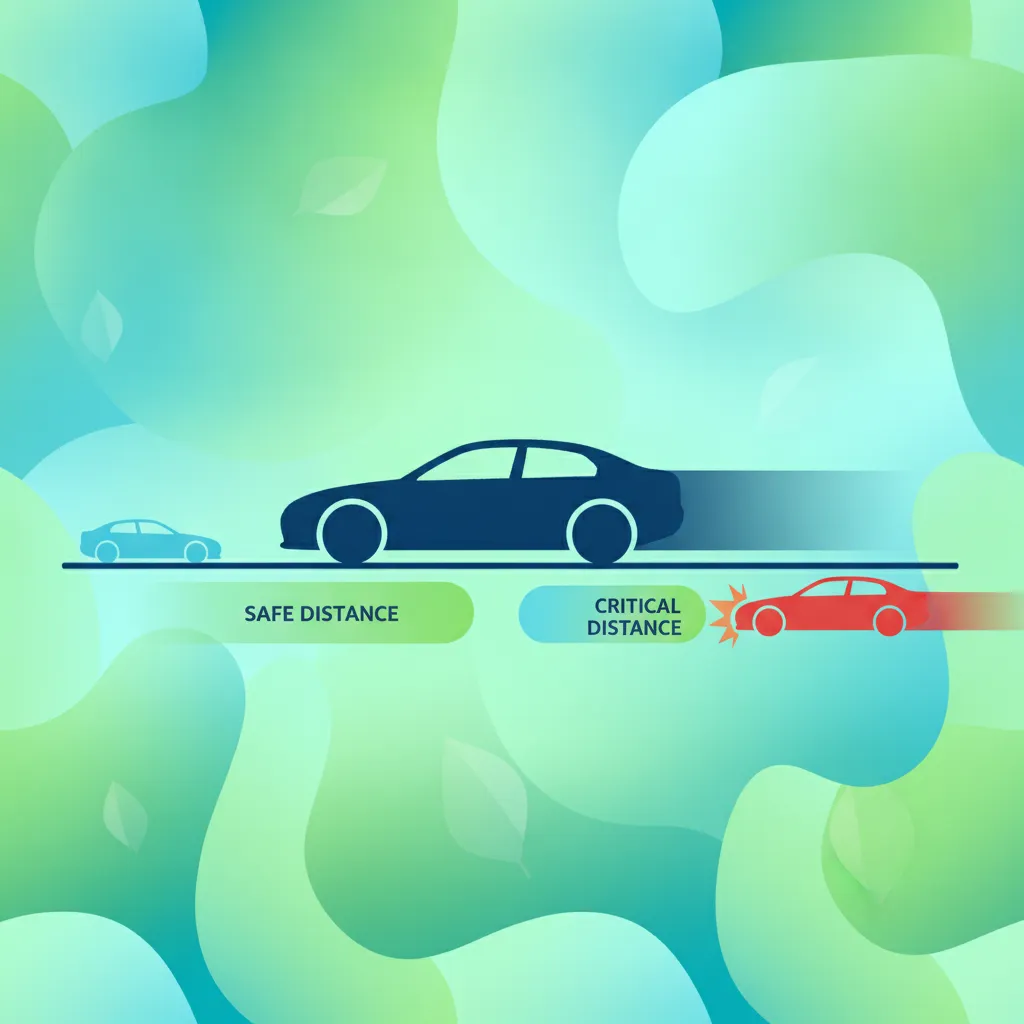
This lesson breaks down the concept of total stopping distance into reaction distance and braking distance. It teaches various braking techniques, including how to perform an emergency stop safely and the function of an Anti-lock Braking System (ABS). The relationship between speed, road condition, and braking effectiveness is a central theme.

This lesson focuses on the use of retarders and engine braking techniques to control vehicle speed without excessive use of the service brake. It explains the different types of retarders, such as hydraulic and exhaust brakes, and their appropriate application. The content also covers gear selection and engine braking strategies for downhill driving.

This lesson provides instruction on how to react and perform an emergency stop in a critical situation. It covers the technique of applying maximum braking force progressively and firmly without locking the wheels. For motorcycles equipped with an Anti-lock Braking System (ABS), the lesson explains how the system works and how the rider should respond when it activates to maintain steering control.

This lesson offers a foundational overview of passenger vehicle construction, focusing on the chassis, engine, and transmission systems. It explains the function of essential components like brakes and steering, which are critical for safe operation. Learners will also understand how vehicle dimensions, weight distribution, and passenger capacity fundamentally influence handling, stability, and overall performance on the road.

This lesson covers the various braking systems used on trailers, including air and electric brakes, and their integration with the towing vehicle. It explains the role of the brake controller, electrical connections for brake lights, and how braking force is distributed. The content also addresses considerations such as brake lag and trailer ABS functionality.

This lesson introduces the essential components of a motorcycle's braking system, including disc brakes, drum brakes, and the function of an Anti-lock Braking System (ABS). It teaches learners how to inspect brake pads and rotors for wear and understand the feel of the brake levers. The concept of balanced braking force distribution between the front and rear wheels is explained for maintaining stability.
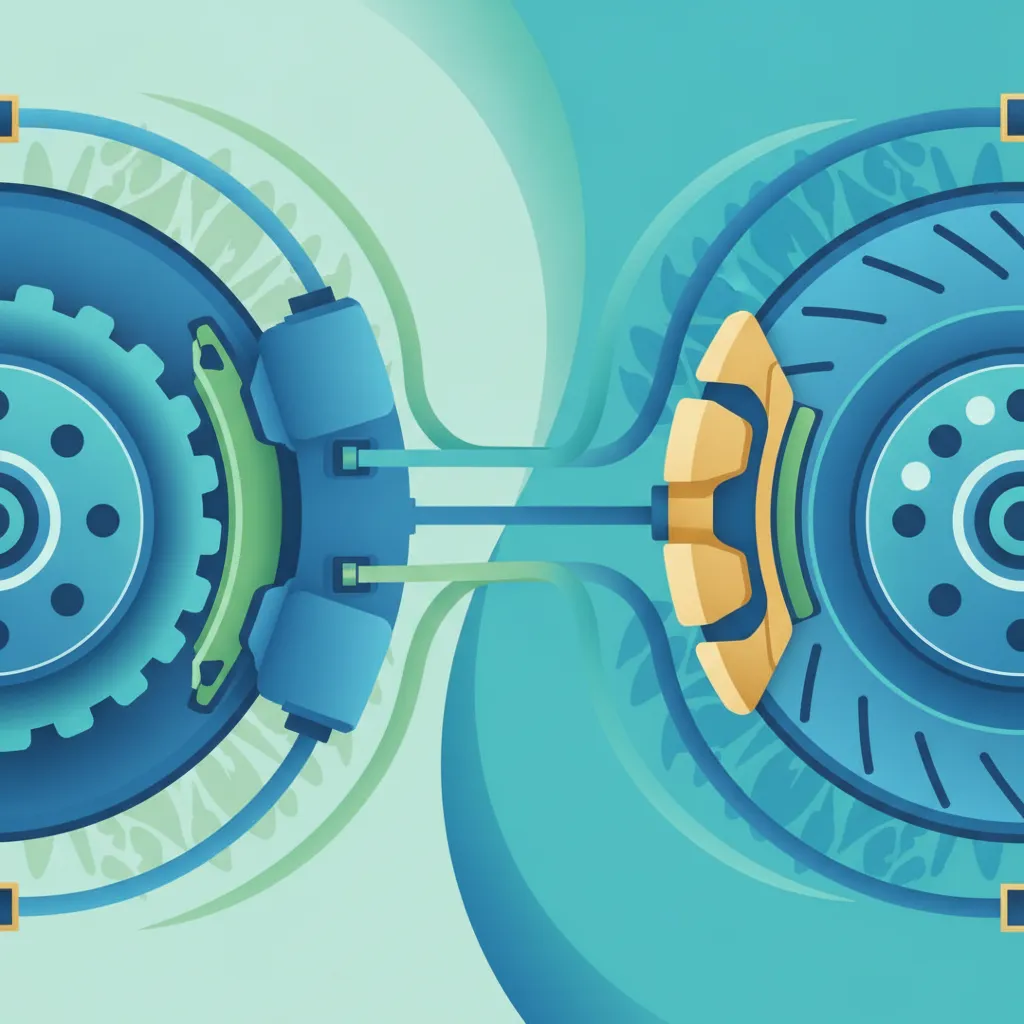
This lesson introduces the various braking systems in heavy vehicles, including service brakes, air brakes, and retarders. It explains the functional principles of each system, such as how compressed air is used and the role of retarders in reducing service brake wear. The content also covers the importance of dual-circuit systems and fail-safe mechanisms.
Delve deeper into the mechanics of steering, hydraulic, and pneumatic braking systems. Explore advanced safety features and their operational principles, crucial for professional passenger vehicle operation in Germany.
This lesson introduces the various braking systems in heavy vehicles, including service brakes, air brakes, and retarders. It explains the functional principles of each system, such as how compressed air is used and the role of retarders in reducing service brake wear. The content also covers the importance of dual-circuit systems and fail-safe mechanisms.
This lesson teaches the driving techniques required for smooth operation, which is essential for passenger comfort and vehicle stability. It covers progressive application of the accelerator and brakes to avoid jolts and abrupt movements. The principles of anticipatory driving are also explored, showing how looking ahead and planning maneuvers contributes to a smoother ride, better fuel efficiency, and increased safety.

This lesson examines the phenomena of brake delay (lag) and brake fade, particularly during prolonged braking on steep gradients. It discusses how brake temperature rises, leading to reduced friction and potential brake failure. The content also covers strategies for preventing overheating, such as using retarders and proper speed management.
This lesson explains the function of a vehicle's braking system and the technology designed to enhance its effectiveness. It describes how the Anti-lock Braking System (ABS) prevents wheels from locking up during hard braking, allowing the driver to maintain steering control. The role of the Electronic Stability Program (ESP) in preventing skids is also covered.
This lesson offers a foundational overview of passenger vehicle construction, focusing on the chassis, engine, and transmission systems. It explains the function of essential components like brakes and steering, which are critical for safe operation. Learners will also understand how vehicle dimensions, weight distribution, and passenger capacity fundamentally influence handling, stability, and overall performance on the road.
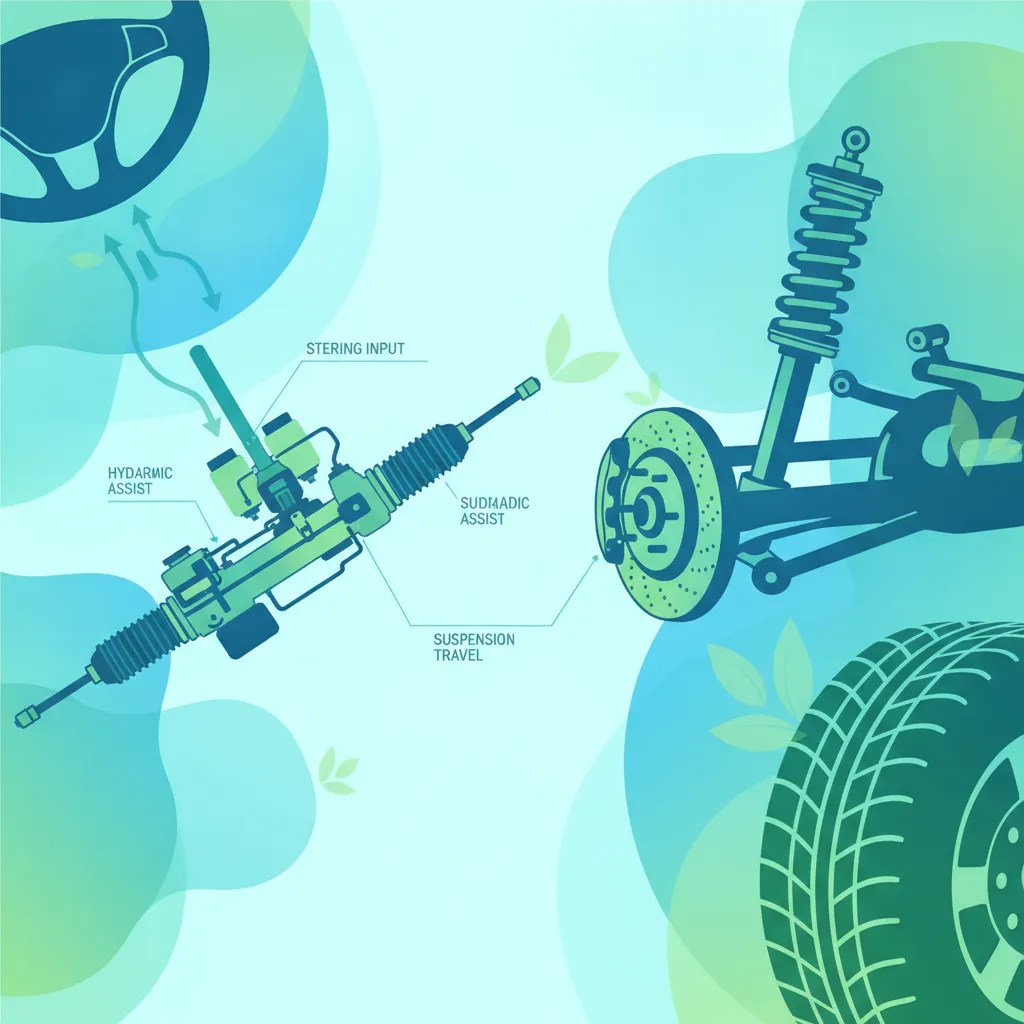
This lesson examines the steering mechanisms in heavy vehicles, including power-assisted systems, and their impact on handling. It also covers tyre technology, focusing on selection, pressure, load rating, and the importance of proper tyre maintenance. The content highlights how suspension components contribute to vehicle stability and control.
This lesson covers the various braking systems used on trailers, including air and electric brakes, and their integration with the towing vehicle. It explains the role of the brake controller, electrical connections for brake lights, and how braking force is distributed. The content also addresses considerations such as brake lag and trailer ABS functionality.

This lesson outlines a clear, systematic procedure for managing a vehicle breakdown safely and efficiently. It covers immediate actions such as activating hazard lights, placing a warning triangle, and moving the vehicle to a safe location if possible. Learners will understand how to communicate the situation to passengers, decide if an evacuation is necessary, and contact the appropriate breakdown services for assistance.

This lesson provides a systematic approach to pre-drive inspection, outlining a comprehensive checklist to verify fluid levels, brake functionality, and tyre condition. It emphasizes the importance of checking lighting, mirror adjustments, and load securement before every journey. The content highlights safety protocols to ensure the vehicle is roadworthy.

This lesson focuses on the risks of jackknifing and trailer swing, particularly during braking and on downhill descents. It provides recommendations for safe speed management, proper braking techniques, and maintaining vehicle stability. The content also addresses safe reversing practices and the importance of monitoring blind spots during maneuvers.
Find clear answers to common questions learners have about Steering, Braking, and Acceleration Systems. Learn how the lesson is structured, which driving theory objectives it supports, and how it fits into the overall learning path of units and curriculum progression in Germany. These explanations help you understand key concepts, lesson flow, and exam focused study goals.
Professional vehicles often use pneumatic (air) braking systems rather than purely hydraulic systems. Understanding how these build pressure is essential for your technical questions regarding air tank levels and the consequences of pressure loss while driving.
ABS prevents wheels from locking during emergency braking, allowing you to maintain steering control, while ESP detects and corrects loss of traction. Knowing exactly how these intervene is a frequent topic in the professional German theory exam.
Smooth deceleration is achieved through progressive pedal pressure and early planning. The exam tests your understanding that jerky movements are not just uncomfortable but can cause standing passengers to fall, making speed management a safety issue.
Yes, you may be tested on the mechanics of power-assisted steering and how steering feel changes under different load conditions. This is vital for maintaining lane discipline and navigating tight city turns safely.
Begin your targeted revision now. Use our practice search to quickly find specific German driving theory questions. Filter by StVO rules, road signs, or hazard perception to create your focused study plan. Master challenging areas and prepare confidently for your theoretical driving test.