
This lesson explores the essential physics of articulation between tractors and trailers, specifically focusing on pivot points and turning radii. As part of our heavy vehicle curriculum, you will learn to predict how your vehicle combination moves, which is vital for safe maneuvering and passing your German theory examination.

Lesson content overview
Operating heavy articulated vehicles safely requires a thorough understanding of their unique dynamic behaviors. Unlike rigid vehicles, combinations consisting of a tractor unit and one or more trailers exhibit complex movements due to their multiple pivot points. This lesson delves into the fundamental principles governing how these vehicles turn, specifically focusing on the pivotal concept of articulation, the phenomenon of off-tracking, and the critical aspect of trailer swing-out. Mastering these dynamics is indispensable for navigating various road environments, ensuring safe maneuvers, and complying with German traffic regulations.
The movement of an articulated vehicle is not a simple extension of a single unit. Instead, it's a coordinated dance between the tractor and trailer(s), governed by the points where they connect and the forces acting upon them. This interaction creates distinct challenges, particularly during turns.
The pivot point is the fundamental concept in understanding articulation dynamics. It represents the central axis around which the tractor unit and its trailer(s) rotate relative to each other during a turn. This point is not static for the entire combination but is specific to each coupling.
The specific point or axis where the tractor unit and the trailer(s) are connected, allowing them to articulate (rotate) relative to one another. It determines the geometric relationship between the units during a turn.
For a tractor-semitrailer combination, the pivot point is typically at the fifth-wheel coupling. For a truck pulling a drawbar trailer, the pivot point is at the coupling hook on the truck's rear. The position and nature of this pivot point profoundly influence the turning characteristics of the entire vehicle combination. A fixed pivot, as seen with a standard fifth-wheel coupling, means the trailer's front axle (or the axle group close to the kingpin) will always follow a path relative to the tractor. Understanding its location is crucial because it directly dictates how the trailer will behave when the tractor begins to turn. Misjudging the pivot point can lead to miscalculations of the trailer's path, potentially causing collisions or encroachments.
Off-tracking, often referred to as "Schleppkurve" in German, is a critical geometric phenomenon observed in articulated vehicles during turns. It describes the effect where the wheels of the trailer, particularly the rear axles, follow a tighter, shorter path than the wheels of the towing tractor unit. This means that as the tractor turns, the trailer does not exactly replicate the tractor's path but instead cuts inside it.
The phenomenon where the rear wheels of an articulated vehicle's trailer(s) follow a shorter and tighter path, closer to the inside of a turn, compared to the path taken by the tractor unit's front wheels.
This geometric reality is a direct consequence of the pivot point. When the tractor turns, it essentially pulls the trailer from the side. The trailer, resisting this lateral pull, pivots around its coupling point and its own axles, resulting in its rear section taking a more acute angle into the turn. The extent of off-tracking depends on several factors: the length of the trailer, the distance between the pivot point and the trailer's rear axles, and the sharpness of the turn. Longer trailers and tighter turns will exhibit greater off-tracking.
The practical implications of off-tracking are significant for heavy vehicle drivers. It means that to prevent the trailer from encroaching on curbs, road signs, other vehicles, or even opposing lanes, the tractor must initiate its turn from a wider position, effectively "swinging out" the tractor to allow the trailer sufficient inner clearance. Neglecting off-tracking is a common cause of accidents, especially in urban environments or on multi-lane roundabouts.
While off-tracking concerns the trailer's inner path, trailer swing-out, or "Ausschwenken", refers to the outward movement of the trailer's rear end relative to the tractor's path during a turn. This dynamic effect is distinct from off-tracking and can also pose significant risks.
The outward lateral movement of the trailer's rear wheels or extreme rear points during a turn, extending beyond the instantaneous path of the tractor unit.
Trailer swing-out occurs because as the tractor turns, the trailer's inertia and the centrifugal forces acting upon it cause its rear section to momentarily move outwards before settling into the off-tracking path. This effect is more pronounced at higher speeds and can be exacerbated by road conditions (e.g., wet or icy surfaces) or an improperly loaded trailer.
The danger of trailer swing-out is the potential for the trailer's rear to strike objects or vehicles on the outside of the turn, such as lampposts, traffic signs, parked cars, or even passing vehicles in an adjacent lane. Drivers must anticipate this outward movement and adjust their speed and turning angle accordingly, allowing sufficient clearance not only on the inside (for off-tracking) but also for the momentary outward swing. Reducing speed significantly mitigates the severity of trailer swing-out, giving the driver more control over the combination's trajectory.
Distinguishing Off-Tracking and Swing-Out:
German heavy vehicle drivers must integrate their understanding of articulation dynamics with the specific legal mandates outlined in the Straßenverkehrs-Ordnung (StVO – Road Traffic Regulations). These regulations are designed to ensure safety for all road users, particularly concerning large vehicle movements.
All vehicles, especially articulated combinations, must be capable of making turns safely within the confines of the road infrastructure. The total turning radius, or "Wendekreis", of an articulated vehicle must account for the maximum off-tracking experienced during a turn.
Legal Requirement (Art. 3 StVO): The general principle under § 3 StVO (Speed) states that drivers must adapt their speed to road, traffic, visibility, and weather conditions, as well as their personal abilities and the characteristics of their vehicle. While § 3 doesn't directly specify turning radius, the requirement to safely navigate turns implies that the driver must stay within the legal and physical bounds of the road, which inherently includes accounting for the turning radius and off-tracking.
Drivers are legally obligated to ensure that their vehicle combination can complete a turn without posing a danger or hindrance to others. This means carefully planning the entry into a turn, often initiating from a wider position on the road to provide adequate space for the trailer's off-tracking path. Misjudging the turning radius can lead to dangerous situations, such as mounting pavements, hitting street furniture, or encroaching into adjacent lanes, which can result in fines or collisions.
Speed is a critical factor in managing articulation dynamics. High speeds amplify the dynamic effects of articulation, particularly trailer swing-out, making it harder to control the vehicle combination.
Legal Requirement (Art. 7 StVO): While § 7 StVO primarily addresses lane changes and usage, the broader principle of safe driving under § 3 StVO (Speed) is directly applicable. Drivers must reduce their speed sufficiently before and during a turn to maintain full control of the vehicle, especially an articulated one. This minimizes the risk of excessive trailer swing-out and maintains stability.
Reducing speed significantly before entering a curve or intersection is not merely a recommendation; it is a mandatory safety practice. Lower speeds reduce the centrifugal forces acting on the trailer, thereby decreasing the extent of trailer swing-out and allowing the driver more time and control to steer the combination accurately, accommodating for off-tracking. Failing to adapt speed to the turning maneuver can lead to loss of control, jackknifing, or the trailer striking obstacles.
Maintaining proper lane discipline is paramount for articulated vehicle drivers. Despite the challenges of off-tracking and trailer swing-out, drivers are responsible for keeping their entire vehicle combination within its designated lane during all maneuvers, including turns.
Legal Requirement (Art. 4 StVO): § 4 StVO (Distance) states that a driver must maintain a sufficient distance from the vehicle in front to be able to stop in time, even if it brakes suddenly. While this doesn't directly address turning, other aspects of the StVO, particularly § 7 (Lane Usage) and § 9 (Turning, Reversing, and Entering Traffic), implicitly demand careful lane management. When turning, drivers must ensure their vehicle combination, including the trailer, does not infringe upon other lanes or traffic, thus maintaining safe lane discipline.
This often requires a counter-intuitive approach: for a right turn, the tractor may need to position itself further to the left within its lane (or even briefly use part of the adjacent lane if safe and necessary, e.g., on a wide road with no opposing traffic, carefully observing § 9 StVO regarding special consideration for wide vehicles) to allow the trailer enough room to off-track without hitting the curb or crossing the centerline. Similarly, for a left turn, the tractor might need to be positioned further right. Proper lane discipline, combined with accurate anticipation of the trailer's path, prevents collisions with other road users, roadside infrastructure, and maintains a smooth flow of traffic.
The dynamics of articulation are not constant; they are influenced by a variety of external and internal factors that heavy vehicle drivers must continuously assess and react to.
Environmental factors play a significant role in how articulated vehicles behave.
The state of the vehicle itself has a profound impact on its dynamics.
Special attention must be paid to vulnerable road users (VRUs) such as cyclists and pedestrians when turning articulated vehicles. Due to off-tracking and trailer swing-out, the area immediately around the vehicle becomes a high-risk zone.
When making a right turn, the off-tracking trailer can easily crush a cyclist or pedestrian who is positioned to the right of the tractor unit, a common blind spot. Similarly, during left turns, the swinging trailer can pose a danger to pedestrians on the pavement or cyclists waiting in an opposing lane. Drivers must always assume the presence of VRUs, use mirrors meticulously, and if necessary, wait for an opportunity to turn when the path is clear. Making eye contact with VRUs, if possible, can also help ensure they are aware of the vehicle's intended movement.
Failing to correctly account for articulation dynamics is a leading cause of incidents involving heavy vehicles. Being aware of common errors is the first step towards prevention.
The safe operation of articulated heavy vehicles hinges on a deep understanding of their unique physical behaviors, particularly the dynamics of articulation. The pivot point serves as the central axis determining how the tractor and trailer move relative to each other. This geometric relationship directly leads to off-tracking (Schleppkurve), where the trailer’s wheels follow a tighter path than the tractor’s, requiring drivers to allow significant inner clearance during turns. Concurrently, trailer swing-out (Ausschwenken) describes the outward movement of the trailer’s rear, a dynamic effect amplified by speed and inertia, which demands attention to the outer clearance.
To safely navigate German roads, heavy vehicle drivers (categories C1, C1E, C, CE) must:
Mastering these concepts is not merely about passing a theory test; it is about cultivating the spatial awareness, predictive judgment, and responsible driving habits necessary to operate a heavy articulated vehicle safely and professionally in diverse traffic environments.
Articulated heavy vehicles behave differently from rigid vehicles due to the pivot point (Drehpunkt) connecting the tractor and trailer. Off-tracking (Schleppkurve) means trailer wheels cut inside the tractor's path during turns, requiring wider entry positions, while trailer swing-out (Ausschwenken) describes the outward rearward movement caused by inertia and speed, demanding attention to outer clearance as well. Under German StVO, drivers must adapt speed for conditions, maintain lane discipline accounting for the full combination width, and prioritize the safety of vulnerable road users who occupy the high-risk zones created by these dynamics. Environmental factors such as wet roads, crosswinds, and load distribution further influence vehicle behavior, making continuous assessment essential for safe maneuvering.
A short set of high-value points that capture the most important learning from this lesson.
The pivot point (Drehpunkt) is the central axis where tractor and trailer articulate, determining how the vehicle combination moves during turns
Off-tracking (Schleppkurve) causes trailer wheels to follow a tighter, inner path than the tractor, requiring drivers to position wider when entering turns
Trailer swing-out (Ausschwenken) is the outward movement of the trailer's rear during turns, driven by inertia and centrifugal forces and amplified by speed
Speed reduction before and during turns is essential to minimize swing-out and maintain full control of the articulated combination
Environmental conditions such as wet roads, strong winds, and uneven surfaces significantly alter articulation dynamics and require adjusted driving techniques
Explore all units and lessons included in this driving theory course.
For a right turn, position the tractor closer to the centerline to give the trailer sufficient room to off-track without hitting the curb
The extent of off-tracking increases with longer trailers and sharper turns
Trailer swing-out is a dynamic effect distinct from off-tracking—both require extra clearance on opposite sides of the turn
Overloaded or improperly loaded trailers increase inertia, making swing-out more severe and harder to control
Drivers must check mirrors before and during turns to account for VRUs (cyclists, pedestrians) in the high-risk zones created by off-tracking and swing-out
Cutting corners too sharply by assuming the trailer will follow the tractor's exact path, causing the trailer to mount curbs or strike street furniture
Entering turns at excessive speed, which amplifies centrifugal forces and leads to exaggerated trailer swing-out beyond the tractor's path
Failing to check mirrors for vulnerable road users positioned on the right side during right turns, where off-tracking trailer paths commonly overlap with cyclists
Underestimating total combination length on narrow roads, resulting in the trailer striking roadside objects, parked vehicles, or buildings during turns
Maintaining normal turning speeds on wet, icy, or snow-covered roads, greatly increasing the risk of jackknifing and loss of control
Lesson content overview
A short set of high-value points that capture the most important learning from this lesson.
The pivot point (Drehpunkt) is the central axis where tractor and trailer articulate, determining how the vehicle combination moves during turns
Off-tracking (Schleppkurve) causes trailer wheels to follow a tighter, inner path than the tractor, requiring drivers to position wider when entering turns
Trailer swing-out (Ausschwenken) is the outward movement of the trailer's rear during turns, driven by inertia and centrifugal forces and amplified by speed
Speed reduction before and during turns is essential to minimize swing-out and maintain full control of the articulated combination
Environmental conditions such as wet roads, strong winds, and uneven surfaces significantly alter articulation dynamics and require adjusted driving techniques
Explore all units and lessons included in this driving theory course.
For a right turn, position the tractor closer to the centerline to give the trailer sufficient room to off-track without hitting the curb
The extent of off-tracking increases with longer trailers and sharper turns
Trailer swing-out is a dynamic effect distinct from off-tracking—both require extra clearance on opposite sides of the turn
Overloaded or improperly loaded trailers increase inertia, making swing-out more severe and harder to control
Drivers must check mirrors before and during turns to account for VRUs (cyclists, pedestrians) in the high-risk zones created by off-tracking and swing-out
Cutting corners too sharply by assuming the trailer will follow the tractor's exact path, causing the trailer to mount curbs or strike street furniture
Entering turns at excessive speed, which amplifies centrifugal forces and leads to exaggerated trailer swing-out beyond the tractor's path
Failing to check mirrors for vulnerable road users positioned on the right side during right turns, where off-tracking trailer paths commonly overlap with cyclists
Underestimating total combination length on narrow roads, resulting in the trailer striking roadside objects, parked vehicles, or buildings during turns
Maintaining normal turning speeds on wet, icy, or snow-covered roads, greatly increasing the risk of jackknifing and loss of control
Explore search topics learners often look for when studying Articulation Dynamics and Off-Tracking. These topics reflect common questions about road rules, driving situations, safety guidance, and lesson level theory preparation for learners in Germany.
Browse additional driving theory lessons that cover connected traffic rules, road signs, and common driving situations related to this topic. Improve your understanding of how different rules interact across everyday traffic scenarios.
Understand the principles of articulation dynamics and off-tracking in heavy vehicle combinations. Learn how the tractor and trailer paths differ during turns and the importance of managing trailer swing for safe maneuvering in German driving theory.

This lesson focuses on the risks of jackknifing and trailer swing, particularly during braking and on downhill descents. It provides recommendations for safe speed management, proper braking techniques, and maintaining vehicle stability. The content also addresses safe reversing practices and the importance of monitoring blind spots during maneuvers.

This lesson examines the concepts of turning radius and swept path, explaining how a heavy vehicle's size influences the space required for a turn. It highlights the importance of maintaining proper lane positioning to accommodate the vehicle's dimensions. The content provides guidance on planning maneuvers and accounting for off-tracking during cornering.

This lesson provides specialized instruction for drivers of D1E and DE category vehicles, which involve towing a trailer. It covers the physics of vehicle combinations, including the effects of the articulation point on turning and reversing. Learners will understand principles of split braking systems, proper load distribution to prevent trailer sway, and the additional safety checks required before operating such a combination.

This lesson examines the risks associated with load shifting during braking and cornering maneuvers. It explains how inertia and weight transfer can cause cargo to move, potentially leading to instability or loss of control. The content emphasizes the importance of proper load securing to mitigate these risks and maintain vehicle stability.

This lesson covers the various braking systems used on trailers, including air and electric brakes, and their integration with the towing vehicle. It explains the role of the brake controller, electrical connections for brake lights, and how braking force is distributed. The content also addresses considerations such as brake lag and trailer ABS functionality.
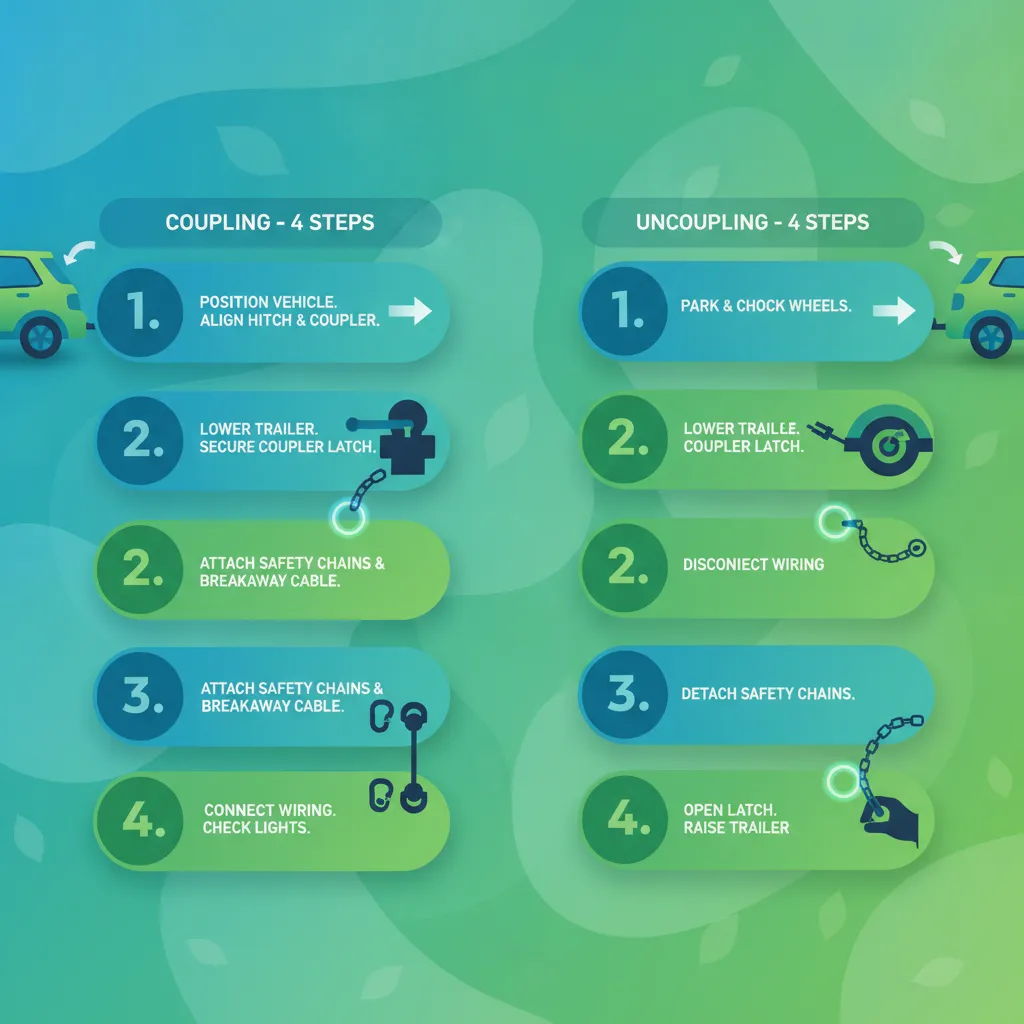
This lesson outlines the standard procedure for coupling and uncoupling trailers, emphasizing safety checks such as verifying the lock, hand brake, and brake connections. It discusses the importance of wheel chocks and correct alignment of the tow vehicle. The content includes a visual inspection checklist to ensure a secure connection.
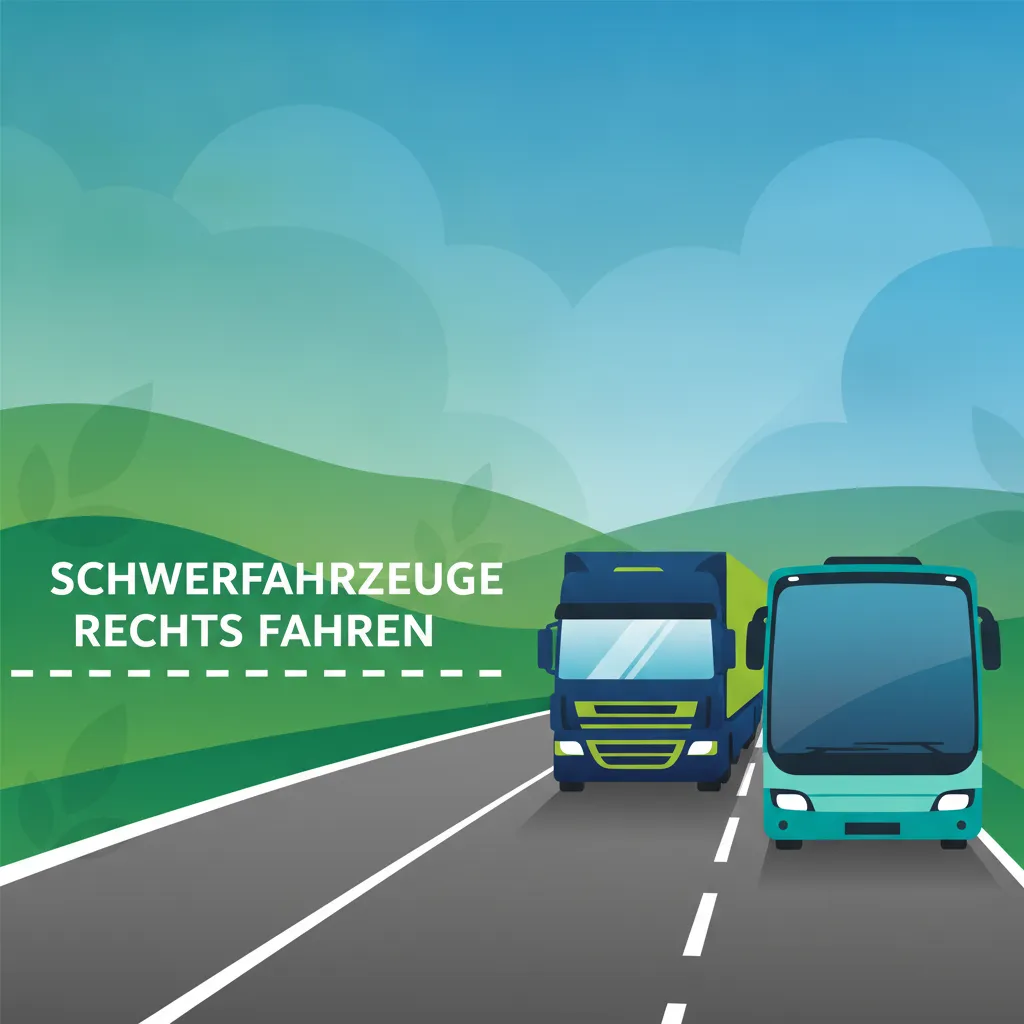
This lesson explains the specific regulations for operating heavy vehicles on Autobahnen, including speed limits, lane discipline, and overtaking rules. It discusses the use of dedicated truck lanes and the importance of maintaining appropriate following distances. The content also covers procedures for merging and exiting high-speed roads safely.

This lesson introduces the various types of trailers, including rigid trailers, low-loaders, and refrigerated units. It explains the different coupling devices, such as fifth wheel couplings and drawbars, and the importance of ensuring compatibility. The content also covers the function of safety latches and kingpin systems.

This lesson teaches the fundamental techniques for safely turning a large passenger vehicle. It explains the concepts of turning radius, swept path, and off-tracking, where the rear wheels follow a tighter path than the front wheels. Learners will understand how to position the vehicle correctly before a turn and manage their speed to navigate corners without encroaching on other lanes or hitting curbs.

This lesson covers safe reversing techniques for both rigid trucks and articulated combinations, emphasizing the use of mirrors and cameras. It discusses the risks of jackknifing during reversal and the importance of speed control and safety checks. The content outlines best practices for planning a safe reversing path, potentially with a guide person.
Learn essential theory for safe cornering and maneuvering heavy vehicle combinations. This lesson covers understanding turning radii, off-tracking, and the specific challenges of articulated vehicles to ensure safe operation on German roads.
This lesson examines the concepts of turning radius and swept path, explaining how a heavy vehicle's size influences the space required for a turn. It highlights the importance of maintaining proper lane positioning to accommodate the vehicle's dimensions. The content provides guidance on planning maneuvers and accounting for off-tracking during cornering.
This lesson teaches the fundamental techniques for safely turning a large passenger vehicle. It explains the concepts of turning radius, swept path, and off-tracking, where the rear wheels follow a tighter path than the front wheels. Learners will understand how to position the vehicle correctly before a turn and manage their speed to navigate corners without encroaching on other lanes or hitting curbs.

This lesson details the correct procedure for executing left turns, right turns, and U-turns. It emphasizes the importance of proper signaling, correct lane positioning before the turn, and managing speed throughout the maneuver. The content also covers fundamental cornering techniques to maintain stability and control.

This lesson examines the direct impact of a passenger vehicle's dimensions on its operation. It explains key concepts such as turning radius, swept path, and rear overhang, which are crucial for safe maneuvering in confined areas. Learners will understand how to account for these characteristics when positioning the vehicle in a lane, making turns, and navigating challenging urban environments to avoid collisions.

This lesson provides a step-by-step guide to executing turns safely at intersections and other locations. It details the full observation sequence (mirrors, signal, blind spot check) required before initiating a turn. The lesson covers correct lane positioning for both left and right turns and explains the rules for performing U-turns or three-point turns where permitted.

This lesson focuses on the interaction between heavy vehicles and vulnerable road users at crossings, particularly when turning right. It covers the need for heightened vigilance, the importance of properly using mirrors, and correct signaling to alert others. The content highlights legal responsibilities and safe distance requirements to prevent accidents.

This lesson covers the dimensional limits for heavy vehicles, focusing on height, width, and length restrictions. It explains how to interpret clearance signage for bridges, tunnels, and overhead obstacles, and discusses the implications for route planning. The content also addresses the importance of understanding turning radii and swept paths to avoid collisions.

This lesson addresses the challenges of maneuvering heavy vehicles in confined spaces such as loading bays and narrow streets. It provides strategies for planning the maneuver, accounting for vehicle dimensions, turning radius, and blind spots. The content emphasizes slow, controlled movements and the need for high situational awareness.
This lesson explains the specific regulations for operating heavy vehicles on Autobahnen, including speed limits, lane discipline, and overtaking rules. It discusses the use of dedicated truck lanes and the importance of maintaining appropriate following distances. The content also covers procedures for merging and exiting high-speed roads safely.
This lesson examines the risks associated with load shifting during braking and cornering maneuvers. It explains how inertia and weight transfer can cause cargo to move, potentially leading to instability or loss of control. The content emphasizes the importance of proper load securing to mitigate these risks and maintain vehicle stability.
Find clear answers to common questions learners have about Articulation Dynamics and Off-Tracking. Learn how the lesson is structured, which driving theory objectives it supports, and how it fits into the overall learning path of units and curriculum progression in Germany. These explanations help you understand key concepts, lesson flow, and exam focused study goals.
Because the trailer is attached via a pivot point, it cannot track directly behind the tractor during a turn. The trailer wheels cut the corner more sharply than the tractor wheels, a phenomenon known as off-tracking, which requires the driver to start the turn wider.
Trailer swing-out occurs when the rear of the trailer moves outwards during a turn. This can hit pedestrians, cyclists, or other vehicles on the outside of the turn, especially in tight urban spaces.
Generally, the longer the trailer or the further the rear axle is from the pivot point, the more severe the off-tracking becomes. Drivers must account for this by taking wider lines on tighter turns.
Yes, the test often features scenarios where you must identify the correct turning path or potential hazards regarding vehicle length and space requirements during maneuvers.
Begin your targeted revision now. Use our practice search to quickly find specific German driving theory questions. Filter by StVO rules, road signs, or hazard perception to create your focused study plan. Master challenging areas and prepare confidently for your theoretical driving test.