
This lesson provides essential training on manoeuvring large vehicles in tight areas like loading bays and urban streets. It builds on your knowledge of vehicle dimensions and blind spots to help you navigate confined environments safely and confidently during your daily professional driving.

Lesson content overview
Operating heavy goods vehicles, whether rigid trucks or tractor-trailer combinations, presents unique challenges, especially when navigating confined spaces. This lesson, part of the German Heavy Vehicle Driving License Theory – C1, C1E, C, CE curriculum, will equip you with the essential knowledge and strategies to execute safe and precise maneuvers in environments such as busy loading bays, narrow urban streets, and tight access routes. Success in these situations relies on meticulous planning, a deep understanding of your vehicle's capabilities, and heightened situational awareness.
Maneuvering large heavy vehicles in restricted areas demands far greater skill and foresight than driving standard passenger cars. The sheer size, length, and weight of trucks and articulated vehicles mean that even minor miscalculations can lead to significant collisions, damage to infrastructure, or serious injury. Unlike open road driving, confined spaces offer minimal margin for error, requiring drivers to operate with extreme precision and control.
For professional heavy vehicle drivers, safe maneuvering in confined spaces is not merely an operational skill; it is a fundamental aspect of road safety, legal compliance, and economic efficiency. Accidents in these environments can result in costly vehicle repairs, delays in deliveries, damage to goods, and severe legal consequences, including fines and license penalties. Mastering these techniques ensures the safety of the driver, other road users, and the cargo, while also protecting the vehicle and infrastructure. This lesson builds upon foundational knowledge from earlier sections of the curriculum, particularly those covering vehicle dimensions, blind spot management, and the principles of load securing.
Executing complex maneuvers in confined spaces requires adherence to a set of core principles. These guidelines form a systematic approach, ensuring drivers can navigate challenging environments safely and efficiently. By internalizing these principles, drivers can minimize risks and improve their overall proficiency.
Before initiating any maneuver in a confined space, thorough planning is paramount. This involves a systematic assessment of the environment and your vehicle's specific characteristics. Drivers must consider the overall length, width, and height of their vehicle, including any trailer, as well as its turning radius and the anticipated swept path. Evaluate the available space, potential obstacles, ground conditions, and the presence of other road users. This initial mental or physical walkthrough helps to identify potential hazards and determine the most appropriate approach, whether it's a forward entry, reverse maneuver, or a multi-point turn.
Assess Vehicle Dimensions: Know your vehicle’s exact length, width, height, and wheelbase. Include trailer dimensions for combinations.
Examine the Environment: Look for fixed obstacles (poles, walls, parked vehicles), moving hazards (pedestrians, cyclists), ground conditions (uneven surfaces, loose gravel), and overhead obstructions.
Estimate Turning Radius and Swept Path: Visually or mentally trace the path your vehicle will take, ensuring sufficient clearance for all parts of the vehicle, including overhangs.
Consider Load Effects: How does the current load (weight, distribution, height) impact the vehicle's handling, stability, and braking performance?
Plan the Sequence: Decide on the precise sequence of movements (forward, reverse, steering inputs). Identify points where you might need to stop and re-evaluate.
Maintaining a very low, controlled speed is perhaps the most crucial factor in safe confined space maneuvering. Low speed provides ample time for the driver to observe changes in the environment, react to unexpected obstacles or movements, and make precise steering adjustments. It allows for smoother inputs and reduces the risk of oversteering or sudden braking, which can destabilize a heavy vehicle, especially with an articulated trailer. Engaging the lowest gear or using engine braking where appropriate can help maintain control without excessive use of the service brakes, which can be less precise.
Always move slower than you think you need to. If you find yourself needing to stop suddenly, you're likely moving too fast.
Heavy vehicles inherently have significant blind spots, areas around the vehicle that cannot be seen directly by the driver or through standard mirrors. These blind spots are exacerbated in confined spaces, where obstacles and other road users may be in close proximity. Continuous and vigilant monitoring of all mirrors (main, wide-angle, curb-view), along with the use of camera systems (rear-view, 360-degree), is essential. In many situations, especially when reversing or making tight turns, utilizing a spotter is indispensable to ensure the path is clear of obstacles, pedestrians, and other vehicles.
The way cargo is loaded and secured significantly influences a heavy vehicle's handling characteristics, especially its stability and turning behavior in confined spaces. An improperly distributed load, particularly one with a high center of gravity or one that is unevenly spread, can alter the vehicle’s turning radius, increase the risk of rollover, and reduce braking effectiveness. Longitudinal distribution (weight on front vs. rear axles) and lateral distribution (weight on sides) both play a role. Drivers must ensure the load is correctly secured and distributed before initiating any maneuver, complying with regulations on permissible axle loads and overall vehicle weight.
The swept path refers to the entire area occupied by a vehicle from its outermost front point to its outermost rear point as it executes a turn. For heavy vehicles, especially those with trailers, the swept path is considerably larger than the vehicle's footprint when moving straight. The rear of a long vehicle or trailer will cut in on an inside turn (often referred to as 'cut-in' or 'off-tracking'), while the front corners will swing wide. Accurately visualizing and calculating this swept path is critical to avoid collisions with fixed objects, parked vehicles, or infrastructure during turns and merges in confined areas.
In extremely tight spaces, a single continuous turn may not be feasible. Progressive maneuvering involves a series of incremental forward and backward movements, often combined with small, precise steering adjustments. Techniques like "pick-and-steer" or multi-point turns allow the driver to reposition the vehicle gradually, gaining small amounts of clearance with each step. This method provides maximum control and reduces the risk of damage, although it requires patience and a clear understanding of the vehicle's dynamic envelope.
Advance Forward: Move forward as far as possible, steering to maximize the initial turn.
Stop and Check: Come to a complete stop. Check all mirrors, blind spots, and confirm clearance.
Reverse Backward: Engage reverse gear, steering in the opposite direction to pivot the vehicle. Move slowly and watch for the tail swing.
Stop and Check Again: Stop the vehicle. Re-assess the environment and plan the next forward movement.
Repeat: Continue alternating forward and backward movements, making small steering adjustments until the vehicle is correctly aligned.
Understanding the specific dimensions of your heavy vehicle and its turning capabilities is fundamental to safe maneuvering. Every truck and tractor-trailer combination has unique characteristics that dictate how it will behave in tight spots.
The turning radius refers to the radius of the smallest circular turn a vehicle can make. It is typically measured from the center of the turning circle to the vehicle's outermost point. This value is influenced by the vehicle's wheelbase and steering geometry. However, the turning radius alone does not fully represent the space required for a turn.
The swept path is the total area that the vehicle occupies during a turn, encompassing the path of the frontmost, rearmost, and outermost parts of the vehicle. For heavy vehicles, particularly those with long wheelbases or trailers, the rear axles often track inside the path of the front axles (off-tracking). This means the actual area covered by the vehicle during a turn is significantly wider than the static width of the vehicle itself. Drivers must always account for the swept path, not just the turning radius, to prevent collisions with obstacles on the inside or outside of the turn.
Never assume the space required for a heavy vehicle turn is simply its length and width. Always factor in the additional area of the swept path, especially for articulated vehicles where the trailer will "cut in."
Compliance with traffic laws and regulations is non-negotiable for professional drivers, particularly when operating heavy vehicles in confined spaces. These rules are designed to prevent accidents and protect all road users.
In Germany, as in most European countries, drivers of heavy vehicles are legally obligated to exercise extreme care during maneuvers, especially when reversing or entering/exiting confined areas. National road traffic codes mandate that drivers must not initiate a maneuver if there is insufficient space to complete it safely, including full consideration of the vehicle's swept path. Failure to assess available space and ensure clearance can result in legal penalties and liability for damages.
Drivers must always prioritize the safety of vulnerable road users such as pedestrians and cyclists, even when maneuvering in restricted environments like loading docks or busy urban streets. Before commencing any maneuver, especially when reversing or turning, the driver must verify that the path is clear. If visibility is limited, using a spotter or relying on rearview cameras is not only a recommended best practice but often a legal requirement. Yielding to pedestrians and cyclists is mandatory and reflects the higher duty of care placed on heavy vehicle drivers.
A critical, often overlooked aspect of safe maneuvering is proper load securing. German regulations require that all cargo be adequately secured within the vehicle to prevent it from shifting during transit. An unsecured load can dramatically alter a vehicle's center of gravity and handling characteristics, making maneuvers in confined spaces extremely dangerous. A sudden shift during a turn could lead to loss of control, an increased turning radius, or even a rollover. Drivers must ensure their load is properly secured before every journey and prior to any complex maneuver.
Even experienced drivers can fall victim to common pitfalls when operating in confined spaces. Recognizing these mistakes and actively implementing mitigation strategies can prevent accidents.
The safe execution of confined space maneuvers is also heavily influenced by external factors. Drivers must adapt their techniques to prevailing conditions.
Applying the theoretical knowledge to real-world situations is key to developing proficiency. Here are common scenarios heavy vehicle drivers face.
Action: The driver first stops the vehicle well before the dock, exits the cab to assess the exact dimensions of the bay and check for any obstacles or pedestrians. They plan the approach, deciding on the angle and the number of small adjustments needed. A spotter is positioned to guide the rear corner of the trailer.
Correct Execution: The driver initiates the reverse maneuver at a very slow speed, constantly monitoring both side mirrors and communicating with the spotter. Small steering inputs are made to correct the angle, stopping as needed to re-evaluate the alignment. The truck smoothly enters the dock without touching the sides or endangering pedestrians.
Incorrect Execution: The driver attempts to reverse quickly, relying solely on mirrors. They misjudge the angle, causing the trailer to scrape against the side of the loading bay, damaging the vehicle and the facility. The spotter, if used, cannot react fast enough due to the high speed.
Action: The driver proceeds with extreme caution, checking the overall height and width clearance against any overhead beams or narrow passages. They prioritize maintaining a safe distance from excavations and temporary structures.
Correct Execution: The driver uses the lowest gear, maintaining a crawling speed. They constantly scan both sides of the vehicle for clearance, using side mirrors to check the proximity to obstacles. When navigating a sharp bend, they anticipate the swept path of the rear wheels to avoid hitting scaffolding.
Incorrect Execution: The driver, feeling rushed, takes a bend too quickly. The rear of the truck off-tracks and clips a scaffolding support, causing minor damage to the vehicle and potentially destabilizing the structure.
Mastering safe maneuvering in confined spaces is a hallmark of a competent heavy vehicle driver. It requires a blend of technical skill, situational awareness, and disciplined execution.
By consistently applying these principles, heavy vehicle drivers can confidently and safely navigate even the most challenging confined spaces, protecting themselves, their cargo, and other road users.
This lesson covers the critical skills needed for maneuvering heavy vehicles (C1, C1E, C, CE) in confined spaces such as loading bays and narrow urban streets. It emphasizes systematic pre-maneuver planning, understanding the difference between turning radius and swept path, and the importance of off-tracking for articulated vehicles. Key techniques include maintaining low controlled speeds, continuous blind spot monitoring with mirrors and spotters, and using progressive maneuvers for extremely tight spaces. The content also addresses how load distribution affects vehicle dynamics and outlines legal requirements for safe reversing and vulnerable road user protection in Germany. Common mistakes include insufficient space assessment, excessive speed, and neglecting blind spots—all of which can be mitigated through careful planning and disciplined execution.
A short set of high-value points that capture the most important learning from this lesson.
Pre-maneuver planning is essential—always assess available space, vehicle dimensions, and potential obstacles before initiating any movement.
The swept path of a heavy vehicle during a turn is significantly larger than its static dimensions, requiring drivers to account for off-tracking and overhangs.
Maintain walking pace or slower speeds during confined maneuvers to allow time for observation and precise steering corrections.
Blind spot monitoring must be continuous and systematic, using all mirrors, cameras, and a spotter when visibility is limited.
Proper load securing and distribution directly affects vehicle stability, turning behavior, and control during confined space maneuvers.
Explore all units and lessons included in this driving theory course.
Off-tracking means the rear wheels track inside the path of the front wheels during turns—always check the inside of tight corners.
Turning radius describes the minimum circle a vehicle can complete, but the swept path is what actually determines space requirements.
Use progressive techniques (small forward and backward movements) rather than attempting continuous turns in extremely tight spaces.
G.O.A.L.—Get Out And Look—when mirrors and cameras are insufficient to confirm clearance.
Weather, lighting, and road surface conditions all demand slower speeds and increased vigilance during confined maneuvers.
Underestimating required space by focusing only on the front of the vehicle and neglecting rear overhangs and trailer swept path.
Failing to continuously monitor all blind spots or not using a spotter during reversing and tight turns.
Attempting maneuvers at excessive speed, which reduces reaction time and makes precise control impossible.
Driving with improperly secured or unevenly distributed loads, which unpredictably alters vehicle handling characteristics.
Relying solely on mirrors or cameras without supplementing with direct visual inspection when uncertainty exists.
Lesson content overview
A short set of high-value points that capture the most important learning from this lesson.
Pre-maneuver planning is essential—always assess available space, vehicle dimensions, and potential obstacles before initiating any movement.
The swept path of a heavy vehicle during a turn is significantly larger than its static dimensions, requiring drivers to account for off-tracking and overhangs.
Maintain walking pace or slower speeds during confined maneuvers to allow time for observation and precise steering corrections.
Blind spot monitoring must be continuous and systematic, using all mirrors, cameras, and a spotter when visibility is limited.
Proper load securing and distribution directly affects vehicle stability, turning behavior, and control during confined space maneuvers.
Explore all units and lessons included in this driving theory course.
Off-tracking means the rear wheels track inside the path of the front wheels during turns—always check the inside of tight corners.
Turning radius describes the minimum circle a vehicle can complete, but the swept path is what actually determines space requirements.
Use progressive techniques (small forward and backward movements) rather than attempting continuous turns in extremely tight spaces.
G.O.A.L.—Get Out And Look—when mirrors and cameras are insufficient to confirm clearance.
Weather, lighting, and road surface conditions all demand slower speeds and increased vigilance during confined maneuvers.
Underestimating required space by focusing only on the front of the vehicle and neglecting rear overhangs and trailer swept path.
Failing to continuously monitor all blind spots or not using a spotter during reversing and tight turns.
Attempting maneuvers at excessive speed, which reduces reaction time and makes precise control impossible.
Driving with improperly secured or unevenly distributed loads, which unpredictably alters vehicle handling characteristics.
Relying solely on mirrors or cameras without supplementing with direct visual inspection when uncertainty exists.
Explore search topics learners often look for when studying Safe Manoeuvring in Confined Spaces. These topics reflect common questions about road rules, driving situations, safety guidance, and lesson level theory preparation for learners in Germany.
Browse additional driving theory lessons that cover connected traffic rules, road signs, and common driving situations related to this topic. Improve your understanding of how different rules interact across everyday traffic scenarios.
Learn essential strategies for planning and executing complex maneuvers in confined German traffic environments like loading bays and narrow industrial sites. This lesson focuses on spatial awareness, vehicle dimensions, and controlled execution for safe driving.
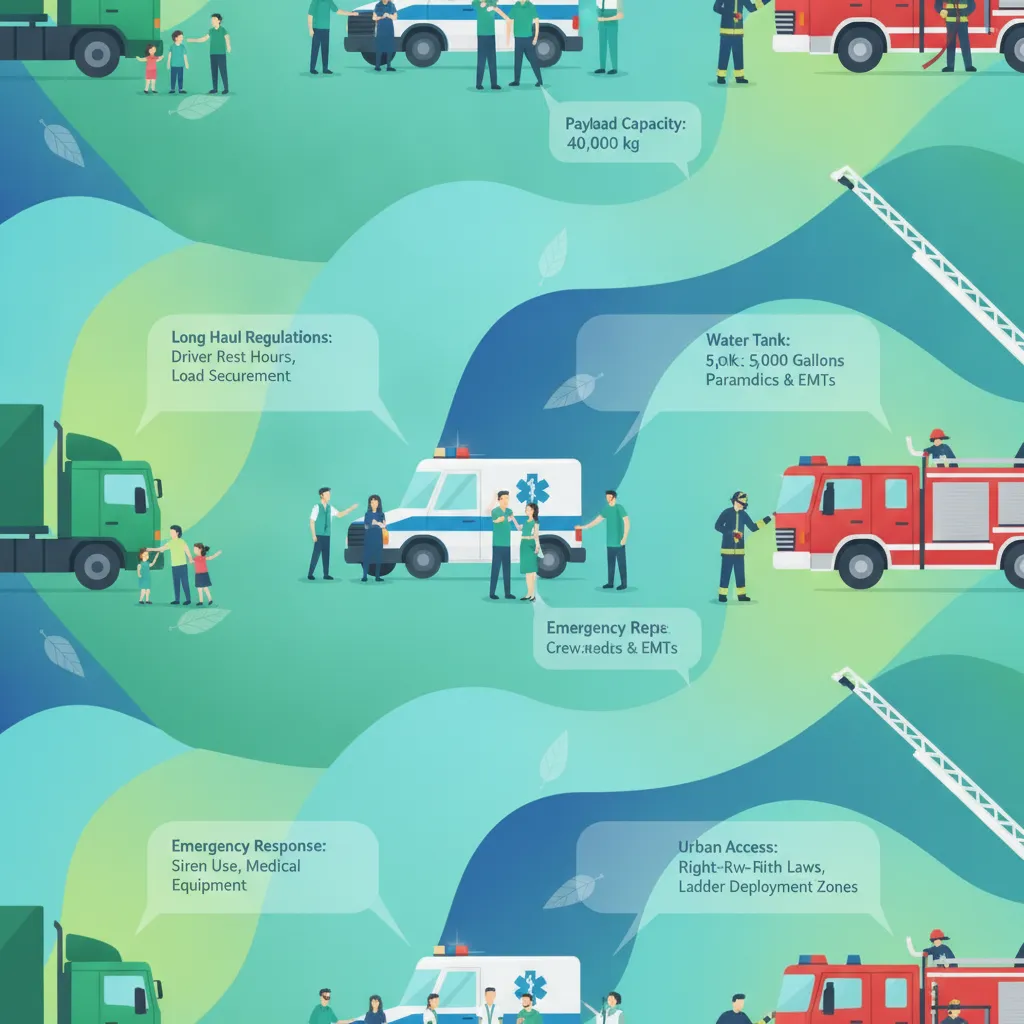
This lesson covers safe interaction with special vehicles. It details the challenges of driving near large trucks (LKW), including their extensive blind spots, longer stopping distances, and the effects of wind turbulence when overtaking them. A critical part of the lesson is explaining the correct procedure for reacting to emergency vehicles by creating an emergency corridor ('Rettungsgasse') on multi-lane roads.
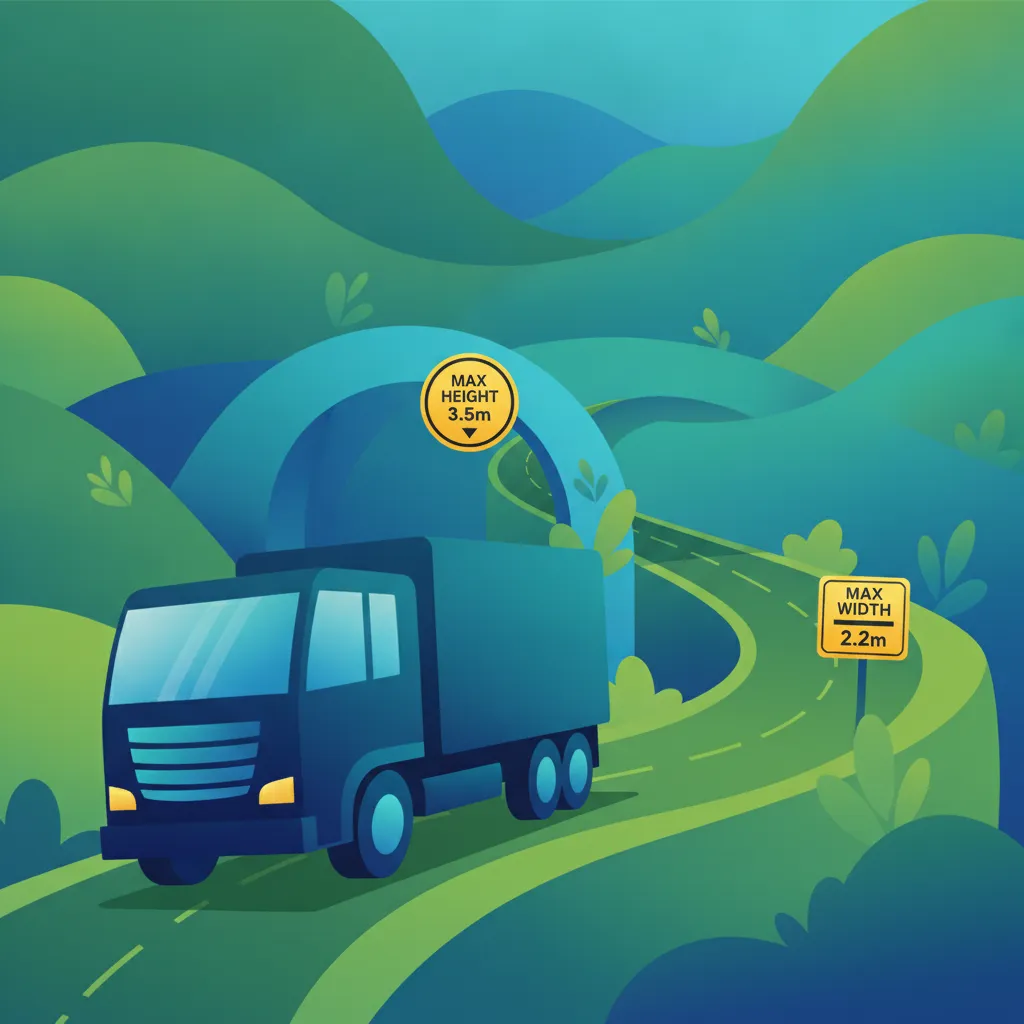
This lesson focuses on the importance of thorough route planning for heavy vehicles, taking into account dimensional and weight limits. It discusses how to use mapping tools and road signage to identify bridges, tunnels, and roads with restrictions. The content also covers how to plan alternative routes to avoid impassable areas.
This lesson addresses the challenges of operating a small AM vehicle in dense, mixed traffic. It provides strategies for increasing visibility to other drivers, positioning oneself defensively, and safely sharing lanes with cyclists. The content emphasizes awareness of larger vehicles' blind spots and maintaining a safe space cushion.

This lesson provides a step-by-step guide to executing turns safely at intersections and other locations. It details the full observation sequence (mirrors, signal, blind spot check) required before initiating a turn. The lesson covers correct lane positioning for both left and right turns and explains the rules for performing U-turns or three-point turns where permitted.

This lesson covers the dimensional limits for heavy vehicles, focusing on height, width, and length restrictions. It explains how to interpret clearance signage for bridges, tunnels, and overhead obstacles, and discusses the implications for route planning. The content also addresses the importance of understanding turning radii and swept paths to avoid collisions.
This lesson focuses on complex traffic environments where different types of road users share the same space. It provides guidance on situations like driving on streets with integrated tram tracks or where bus and bicycle lanes are part of the roadway. The content emphasizes understanding the specific priority rules and being extra vigilant to anticipate potential conflicts in these busy, shared zones.
This lesson explains the specific regulations for operating heavy vehicles on Autobahnen, including speed limits, lane discipline, and overtaking rules. It discusses the use of dedicated truck lanes and the importance of maintaining appropriate following distances. The content also covers procedures for merging and exiting high-speed roads safely.
This lesson provides practical, step-by-step instructions for performing essential parking maneuvers. It breaks down the process of parallel parking and reverse (bay) parking into manageable steps, focusing on observation, steering control, and the use of reference points. The role of modern driver aids like parking sensors and reversing cameras is also discussed.

This lesson covers the high-risk maneuver of reversing a large passenger vehicle. It details a systematic approach that includes using all available aids like mirrors, cameras, and audible alarms. The lesson stresses the need for slow, controlled movements, constant scanning of the surroundings, and conducting thorough clearance checks to prevent collisions with objects or people behind the vehicle, advocating for a spotter whenever possible.

This lesson examines the concepts of turning radius and swept path, explaining how a heavy vehicle's size influences the space required for a turn. It highlights the importance of maintaining proper lane positioning to accommodate the vehicle's dimensions. The content provides guidance on planning maneuvers and accounting for off-tracking during cornering.
Understand the critical importance of managing blind spots for heavy vehicles in German traffic. This lesson provides insights into visibility limitations, mirror usage, and techniques to maintain awareness in confined and complex driving situations.
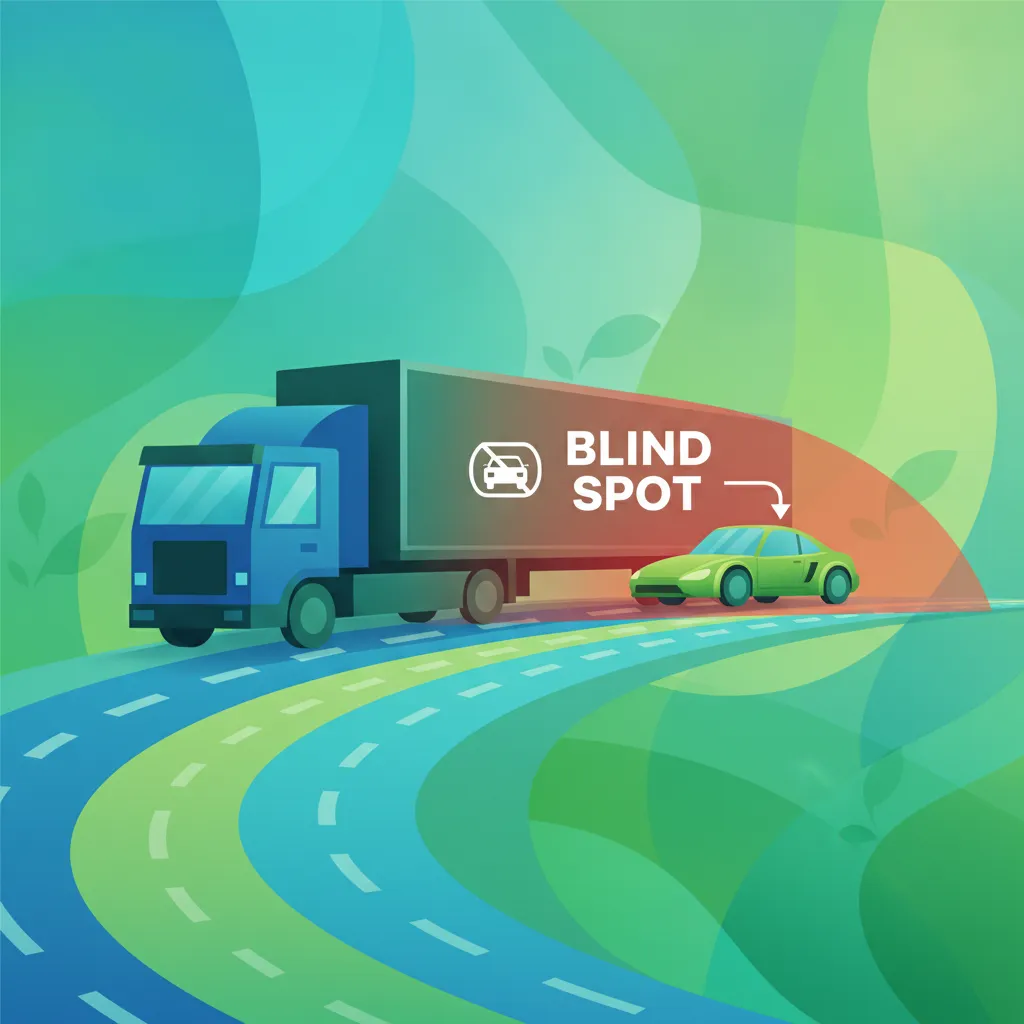
This lesson focuses on the blind spot zones specific to trucks and vehicle combinations, explaining where these zones are located. It covers the use of blind spot mirrors and other aids to enhance driver awareness during lane changes and turns. The content stresses the importance of maintaining safe distances from vulnerable road users.

This lesson explores the critical role of visibility in safe driving, covering topics such as sight distance, managing blind spots, and the correct use of mirrors. It provides guidance on how to adjust your driving in conditions of reduced visibility, such as at night, in fog, or during heavy rain, including the proper use of headlights. The importance of the over-the-shoulder check ('Schulterblick') is also a key focus.

This lesson provides a comprehensive guide to identifying and managing the significant blind spots around a large passenger vehicle. It covers the correct adjustment and use of all mirrors, supplemented by camera systems, to gain maximum visibility. The importance of performing physical checks ('shoulder checks') before turning or changing lanes is emphasized to detect smaller road users like cyclists and pedestrians who may be hidden from view.

This lesson teaches the proper adjustment of all required mirrors to maximize the field of vision and minimize blind spots. It discusses the limitations of indirect vision and the importance of aligning mirrors based on the driver's seating position. The content also outlines the typical blind zones for heavy vehicles and strategies to mitigate them.

This lesson focuses on the interaction between heavy vehicles and vulnerable road users at crossings, particularly when turning right. It covers the need for heightened vigilance, the importance of properly using mirrors, and correct signaling to alert others. The content highlights legal responsibilities and safe distance requirements to prevent accidents.

This lesson focuses on the high-risk maneuver of reversing, emphasizing the importance of all-around observation due to limited visibility. It teaches techniques for controlling the vehicle at very low speeds and using mirrors and direct observation to manage large blind spots behind the car. The priority is to ensure the path is clear of pedestrians and obstacles at all times.
This lesson covers safe interaction with special vehicles. It details the challenges of driving near large trucks (LKW), including their extensive blind spots, longer stopping distances, and the effects of wind turbulence when overtaking them. A critical part of the lesson is explaining the correct procedure for reacting to emergency vehicles by creating an emergency corridor ('Rettungsgasse') on multi-lane roads.
This lesson explores the complex and fast-paced nature of urban traffic environments. It covers topics such as high traffic density, frequent pedestrian crossings, and complex intersections that require heightened awareness. Learners will develop strategies for adapting their speed and lane positioning to navigate these challenges safely, especially during peak rush hour periods and in areas with traffic calming measures.
This lesson teaches riders how to develop strong visual perception skills for the road. It covers systematic scanning patterns, the correct use of mirrors, and the critical importance of performing a head check to cover blind spots. Understanding the larger blind spots of trucks and buses is also a key safety component.

This lesson teaches the systematic observation techniques required for safe driving, starting with how to scan the road far ahead, nearby, and to the sides. It details the correct frequency for checking interior and exterior mirrors to maintain situational awareness. The lesson highlights the indispensable over-the-shoulder check ('Schulterblick') to cover the vehicle's blind spot before any change in direction.
Find clear answers to common questions learners have about Safe Manoeuvring in Confined Spaces. Learn how the lesson is structured, which driving theory objectives it supports, and how it fits into the overall learning path of units and curriculum progression in Germany. These explanations help you understand key concepts, lesson flow, and exam focused study goals.
Even at low speeds, the significant size, mass, and off-tracking of heavy vehicles mean that small errors in judgment can lead to major damage or accidents. You have less reaction time to adjust for the trailer swing or to see vulnerable road users who may enter your path unexpectedly.
The most common error is failing to continuously monitor both mirrors and blind spots throughout the entire duration of the manoeuvre. Over-reliance on one side or failing to account for the pivot point of the trailer often leads to jackknifing or striking objects.
Always assess the environment first: check for overhead clearance, ground stability, and the presence of pedestrians or cyclists. Plan your entry angle to maximise mirror visibility and, if necessary, use a guide or exit the cab to verify clearances before committing to the movement.
Begin your targeted revision now. Use our practice search to quickly find specific German driving theory questions. Filter by StVO rules, road signs, or hazard perception to create your focused study plan. Master challenging areas and prepare confidently for your theoretical driving test.