
This lesson guides you through the essential techniques for executing safe turns and handling corners on your moped or scooter. As part of your AM licence training, you will learn how to communicate your intentions clearly to other road users and maintain vehicle stability throughout every maneuver. Building on basic road navigation, this lesson is crucial for your success in the German driving theory exam and for your safety on public roads.

Lesson content overview
Operating a moped or scooter safely and effectively requires proficiency in a range of maneuvers, with turning and cornering being fundamental. This lesson, part of your German Driving Theory Course for AM Licence, provides comprehensive guidance on executing left turns, right turns, and U-turns. We will delve into the critical role of proper signaling, strategic lane positioning, and astute speed management, all of which are vital for maintaining control and stability. Furthermore, this chapter will equip you with essential cornering techniques to navigate bends securely, ensuring your safety and the predictability of your actions for other road users.
Turning maneuvers involve a complex interplay of rider inputs, vehicle dynamics, and interaction with the surrounding traffic. Mastering these elements ensures a smooth and safe change of direction. Effective communication through indicators, precise vehicle placement, and controlled speed are paramount to preventing accidents and fostering harmonious traffic flow.
A vehicle light or a manual gesture used to signal a driver's planned turn or lane change to other road users. In Germany, vehicle indicators must generally be activated at least 30 meters before the intended maneuver.
Indicators are your primary means of communicating your intentions to other road users. Their purpose is to provide advance warning of your upcoming maneuvers, whether it's a simple turn or a lane change. This allows others ample time to adjust their speed, position, and actions accordingly, significantly reducing the risk of misunderstandings and potential collisions, especially at intersections, junctions, and roundabouts.
Failure to signal or signaling too late is a common traffic violation and a significant safety hazard. It can lead to other drivers or pedestrians being caught off guard, potentially causing sudden braking or swerving, which can escalate into dangerous situations. Even if you believe the visibility is clear and no other vehicles are immediately present, signaling is mandatory and crucial for maintaining predictable traffic behaviour.
Some lightweight scooters or mopeds, particularly older models, may not be equipped with electrical indicators. In such cases, or if vehicle indicators malfunction, German traffic law mandates the use of clear hand signals (Handzeichen). For a right turn, extend your right arm straight out to the side. For a left turn, extend your left arm straight out. Ensure these signals are visible and distinct.
Always develop the habit of signaling early. This demonstrates professionalism and a keen awareness of your surroundings, contributing to overall road safety.
The appropriate placement of a vehicle within its lane prior to a turn, which clearly communicates the intended direction and prepares the vehicle for a smooth entry into the turn.
Your position within the lane before initiating a turn is as crucial as signaling. It serves a dual purpose: it visually reinforces your signaled intention to other road users and optimizes your path for a smooth and safe execution of the turn. Incorrect lane positioning can lead to dangerous lane changes, force you to cut across traffic, or obstruct the flow of other vehicles.
Remember to signal any lane changes required for proper positioning before you actually change lanes. This smooth transition further enhances predictability for everyone on the road.
The deliberate adjustment of a vehicle's speed before and during a turn to ensure the rider maintains optimal control, stability, and traction throughout the maneuver.
Controlling your speed is paramount when navigating turns and bends. Approaching a turn too fast is one of the leading causes of accidents involving two-wheeled vehicles. Excessive speed dramatically increases the centrifugal force that pushes your vehicle outwards, making it difficult to maintain your intended line and increasing the risk of skidding or losing control, particularly on wet, gravelly, or uneven surfaces.
The process of speed management during a turn involves three key phases:
Always adhere to posted speed limits, and be prepared to reduce your speed even further if road conditions (e.g., rain, ice, gravel) or visibility (e.g., fog, night) demand it.
Never apply sudden, hard braking while you are actively turning or leaning into a curve. This can cause the wheels to lose traction, potentially leading to a skid or loss of control, especially with the front brake on two-wheeled vehicles. Finish your braking before you begin to lean.
The systematic method of negotiating bends by synchronizing rider body position, vehicle lean, throttle control, and brake application to maintain balance, maximize traction, and safely navigate the turn.
Beyond basic speed management, developing a refined cornering technique is essential for smooth and safe riding, especially on winding roads. Mopeds and scooters, due to their lighter weight and often higher center of gravity compared to motorcycles, require particular attention to technique.
Key elements of effective cornering include:
Außen-Innen-Außen-Linie) strategy maximizes your line of sight through the curve, allows for a gentler lean angle, and provides a longer path, making the curve effectively "straighter" and easier to manage.Gas geben) through the bend helps to stabilize the suspension and keep the wheels planted firmly on the road, maximizing traction. Avoid abrupt changes in throttle, either accelerating too hard or chopping the throttle, as this can upset the balance of the vehicle and lead to a loss of grip.Bremsen vor der Kurve): As emphasized in speed management, all significant braking should be completed before you enter the lean phase of the turn. This ensures that your tires are solely focused on maintaining lateral grip through the curve, rather than also trying to manage braking forces.Compliance with the Straßenverkehrs-Ordnung (StVO), Germany's road traffic regulations, is mandatory. Ignoring these rules not only carries legal consequences but significantly jeopardizes road safety.
Drivers must signal their intention to turn or change lanes well in advance.
Generally, this means activating your indicator at least 30 meters before the maneuver. This rule applies to all vehicles on public roads, including mopeds and scooters, unless specific circumstances (e.g., immediate short turn-off where 30m is impossible) make it impractical. The rationale is clear: early signaling enhances safety by giving other road users ample time to react and adjust. Failure to signal is a traffic violation and can lead to fines.
The StVO also dictates specific lane positioning for turns:
While specific speed limits for curves are sometimes indicated by signs, drivers are always required to adjust their speed to road, traffic, visibility, and weather conditions. This means even if there isn't a lower posted speed limit for a curve, you must reduce your speed if the bend is sharp, visibility is poor, or the road surface is wet or otherwise hazardous. Excess speed in curves directly reduces your ability to negotiate the turn safely, increasing the risk of losing control.
Although not a direct legal prohibition, it is a critical best practice and safety rule to avoid applying brakes, especially the front brake, while actively turning or leaning into a curve. The StVO implies this by requiring safe vehicle control. Braking while turning significantly increases the risk of losing traction, causing the wheel to skid and leading to a fall. All necessary deceleration should be completed before the moped or scooter begins its lean into the turn.
Understanding common mistakes is crucial for prevention. Riders often make errors that compromise safety during turning and cornering.
The ideal execution of a turn or corner is not static; it must adapt to prevailing conditions.
Let's consider specific examples to illustrate correct and incorrect behaviour.
Setting: You are riding your moped on a residential street during late afternoon. The weather is clear, but there are parked cars lining the street. You need to make a right turn at the upcoming intersection.
Correct Behavior: You activate your right indicator at least 30 meters before the intersection. You check your mirrors and blind spot, then smoothly move your moped to the far right of your lane, close to the parked cars but maintaining a safe distance. You gently reduce your speed using the brakes, completing the deceleration before you begin to lean. You execute a smooth, controlled right turn, maintaining a steady speed through the bend, and gently accelerate as you straighten out into the new street. This communicates your intent clearly to pedestrians and other drivers, allows for safe positioning, and ensures control throughout the turn.
Incorrect Behavior: You don't signal until you are almost at the corner. You stay in the middle of the lane, which could tempt another driver to try to pass you on the right. You approach the turn at your normal street speed and brake sharply as you start to turn. This creates confusion for others, risks a collision with a vehicle trying to pass, and could cause your front wheel to skid due to late braking while turning.
Setting: It's daytime with light traffic at a wide intersection that has a dedicated lane marked for U-turns. You need to perform a U-turn to change direction.
Correct Behavior: Well in advance, you signal your left turn (which includes the U-turn intention). You check your mirrors and blind spot and smoothly position your moped into the clearly marked U-turn lane. You slow down significantly, ensuring you can safely complete the wide arc of the U-turn without stopping in the middle. You execute the turn, yielding to any conflicting traffic as required, and then accelerate gently as you complete the maneuver and join the new direction of travel.
Incorrect Behavior: You attempt the U-turn from a standard left-turn lane, or even worse, from a lane designated for straight traffic, without proper signaling. This causes immediate confusion and could lead to a collision with vehicles expecting you to go straight or turn left. Approaching too fast could also lead to overshooting the turn or losing control.
Setting: You are riding your scooter on a two-lane road during a rainy evening. The road has several moderate bends.
Correct Behavior: You are aware of the reduced grip due to the wet surface. Before approaching each bend, you reduce your speed significantly earlier than you would in dry conditions. You avoid any sudden braking or acceleration. You maintain a very smooth throttle through the curve, ensuring gentle steering inputs and a less aggressive lean angle. You focus on maintaining stability and traction, exiting the bend cautiously before gradually increasing speed.
Incorrect Behavior: You enter a curve at normal speed, as if the road were dry. Halfway through the bend, you realize you're going too fast and instinctively apply the brakes while leaning. This immediately causes your wheels to lose grip on the wet surface, leading to a skid and a potential fall, as the tires cannot cope with both braking and cornering forces simultaneously.
Mastering turning and cornering techniques is fundamental for safe moped and scooter operation under your German AM Licence.
Vorsignalblinker): Always signal your intentions at least 30 meters before a turn or lane change. Use clear Handzeichen if vehicle indicators are absent or malfunctioning.Spurposition): Position your vehicle clearly for the intended turn: far left for left turns, close to the kerb for right turns, and in the appropriate lane for U-turns. This communicates intent and optimizes your turning path.Geschwindigkeitskontrolle): Decelerate before entering a turn, maintain a steady and appropriate speed through the turn, and gently accelerate after completing the maneuver. Never brake sharply or aggressively while steering.Kurventechnik): Adopt proper body positioning, select an optimal line (e.g., Außen-Innen-Außen-Linie), and maintain smooth throttle control to keep the vehicle stable and maximize traction.This lesson covers the essential techniques for executing safe turning maneuvers and cornering on mopeds and scooters for the German AM licence. Key skills include proper indicator use with the mandatory 30-meter advance warning, correct lane positioning that reinforces your signaled intention, and a systematic three-phase speed management approach that emphasizes braking before entering any curve. The Outside-Inside-Outside cornering line technique optimizes your path through bends by maximizing sightlines and minimizing lean angle. The lesson also addresses StVO legal requirements, explains how weather and road conditions affect technique, and uses practical scenarios to illustrate the difference between safe and dangerous riding behavior.
A short set of high-value points that capture the most important learning from this lesson.
Always activate indicators at least 30 meters before turning or changing lanes to give other road users adequate reaction time
Position your vehicle correctly before turns: far left for left turns, near the kerb for right turns, and in the appropriate lane for U-turns
Manage speed through turns in three phases: decelerate before entering, maintain steady speed while leaning, and accelerate after straightening up
Use the Outside-Inside-Outside line when cornering to maximize visibility, reduce lean angle, and maintain better control through curves
Avoid braking while actively turning or leaning; complete all deceleration while the vehicle is upright and traveling straight
Explore all units and lessons included in this driving theory course.
The 30-meter signaling rule is mandatory under StVO for all vehicles including mopeds and scooters on public roads
Hand signals are legally required when electrical indicators are absent or malfunctioning: left arm out for left turns, right arm out for right turns
Incorrect lane positioning before turns can confuse other drivers and invite dangerous overtaking maneuvers on the turning side
Excessive speed in curves dramatically increases centrifugal force, reducing tire grip and making the bike harder to control
Carrying passengers or extra load shifts the vehicle's center of gravity, requiring slower speeds and wider turning radii
Waiting until the last moment to activate indicators leaves other road users with insufficient time to react, increasing collision risk
Turning right from the middle of the lane instead of positioning near the kerb can cause following drivers to misjudge your intentions or attempt dangerous overtakes on your right
Applying brakes while already leaning into a turn transfers weight off the wheels and drastically reduces traction, frequently causing mopeds to skid
Entering curves at normal road speed rather than adjusting for the bend can force excessive lean angles or cause the rider to run wide into other lanes
Failing to use hand signals on mopeds without functioning electrical indicators is both a legal violation and a serious safety oversight
Lesson content overview
A short set of high-value points that capture the most important learning from this lesson.
Always activate indicators at least 30 meters before turning or changing lanes to give other road users adequate reaction time
Position your vehicle correctly before turns: far left for left turns, near the kerb for right turns, and in the appropriate lane for U-turns
Manage speed through turns in three phases: decelerate before entering, maintain steady speed while leaning, and accelerate after straightening up
Use the Outside-Inside-Outside line when cornering to maximize visibility, reduce lean angle, and maintain better control through curves
Avoid braking while actively turning or leaning; complete all deceleration while the vehicle is upright and traveling straight
Explore all units and lessons included in this driving theory course.
The 30-meter signaling rule is mandatory under StVO for all vehicles including mopeds and scooters on public roads
Hand signals are legally required when electrical indicators are absent or malfunctioning: left arm out for left turns, right arm out for right turns
Incorrect lane positioning before turns can confuse other drivers and invite dangerous overtaking maneuvers on the turning side
Excessive speed in curves dramatically increases centrifugal force, reducing tire grip and making the bike harder to control
Carrying passengers or extra load shifts the vehicle's center of gravity, requiring slower speeds and wider turning radii
Waiting until the last moment to activate indicators leaves other road users with insufficient time to react, increasing collision risk
Turning right from the middle of the lane instead of positioning near the kerb can cause following drivers to misjudge your intentions or attempt dangerous overtakes on your right
Applying brakes while already leaning into a turn transfers weight off the wheels and drastically reduces traction, frequently causing mopeds to skid
Entering curves at normal road speed rather than adjusting for the bend can force excessive lean angles or cause the rider to run wide into other lanes
Failing to use hand signals on mopeds without functioning electrical indicators is both a legal violation and a serious safety oversight
Explore search topics learners often look for when studying Turning Maneuvers, Indicator Use, and Cornering Techniques. These topics reflect common questions about road rules, driving situations, safety guidance, and lesson level theory preparation for learners in Germany.
Browse additional driving theory lessons that cover connected traffic rules, road signs, and common driving situations related to this topic. Improve your understanding of how different rules interact across everyday traffic scenarios.
Explore complex and special scenarios at junctions and intersections relevant to the German AM licence. Understand advanced priority rules and decision-making in mixed traffic situations beyond basic turning maneuvers.
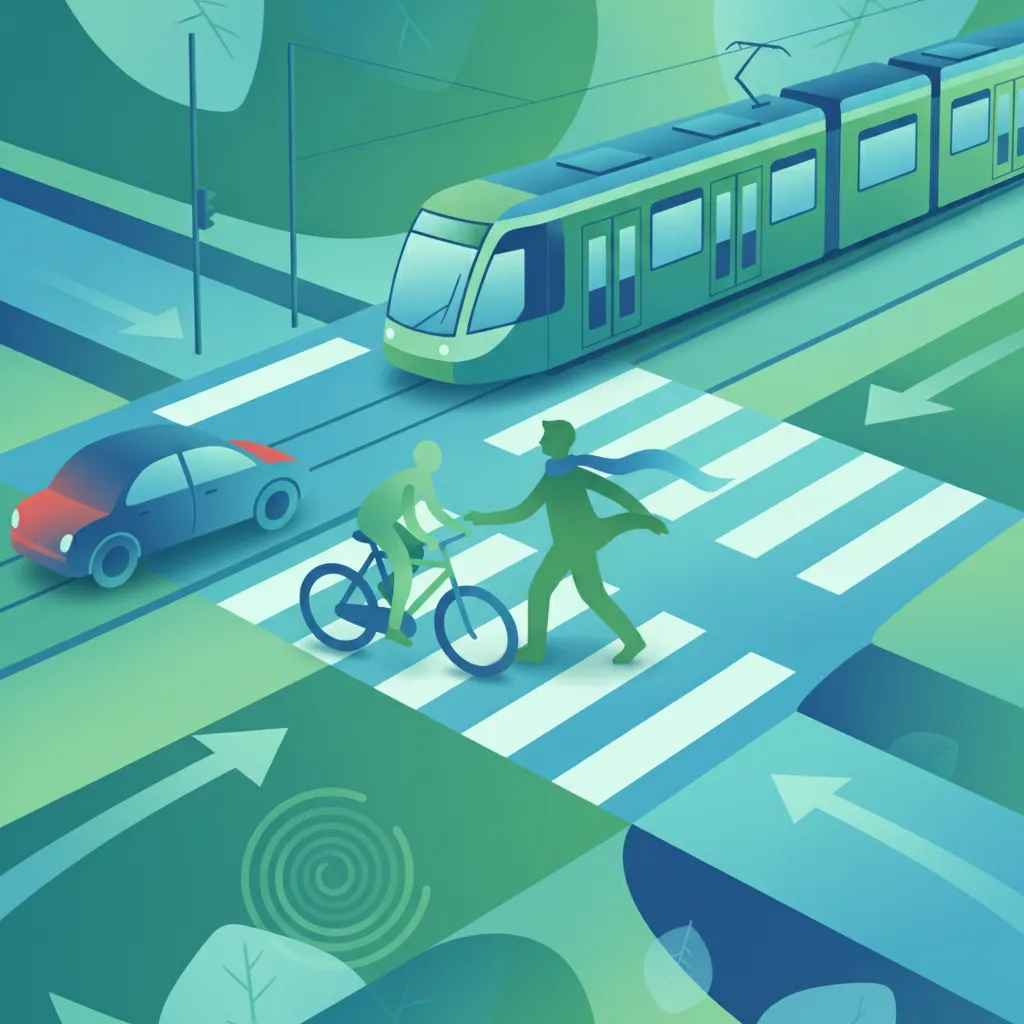
This lesson details the critical right-of-way regulations according to the German StVO. It covers the default 'right before left' rule, the meaning of priority road signs, and specific rules for roundabouts and yielding to pedestrians. A thorough understanding of these priority rules is fundamental for preventing accidents at junctions.

This lesson teaches a structured method for approaching any intersection. It covers identifying the type of junction, determining who has the right-of-way based on signs or rules, and performing thorough visual checks. The focus is on developing a safe and decisive approach to reduce risk in these high-conflict areas.
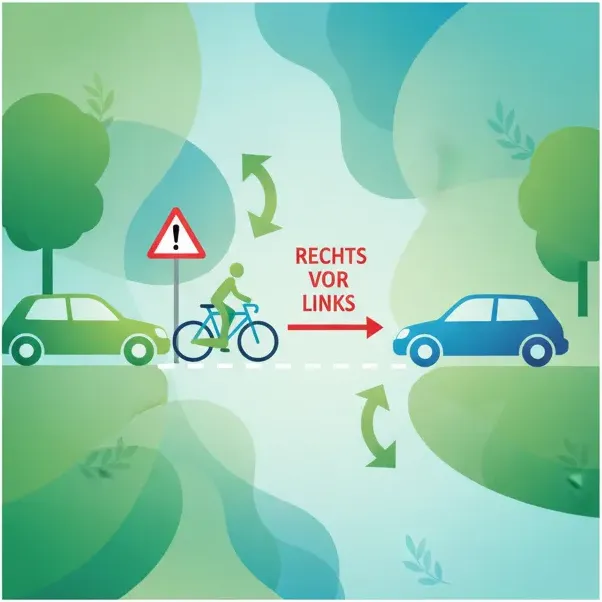
This lesson provides a detailed guide to navigating various types of intersections safely and correctly. It explains how priority is determined by traffic signs (such as the priority road, yield, and stop signs) and traffic lights. The lesson also covers complex scenarios, including the rules for turning left across oncoming traffic, to ensure you can handle any junction with confidence.

This lesson provides a detailed overview of the legal framework governing the AM licence in Germany. It explains the classification of vehicles like mopeds and scooters based on engine displacement, power output, and weight. Learners will understand the official age requirements, licensing procedures, and fundamental StVO regulations.
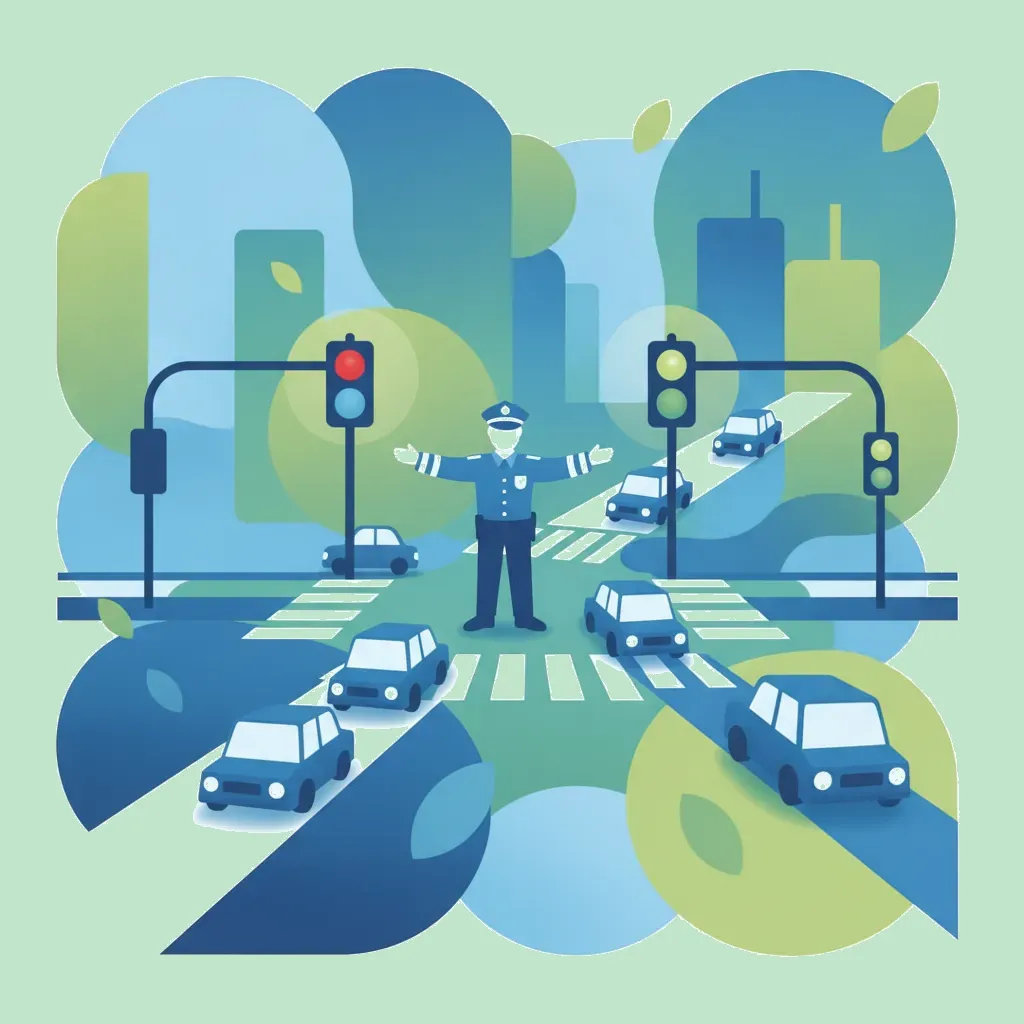
This lesson explains the function and meaning of traffic light signals, including standard cycles, flashing lights, and arrows. It also details how to interpret and obey hand signals given by police officers, which override all other signs and signals. Understanding these instructions is crucial for navigating controlled junctions and emergency situations.
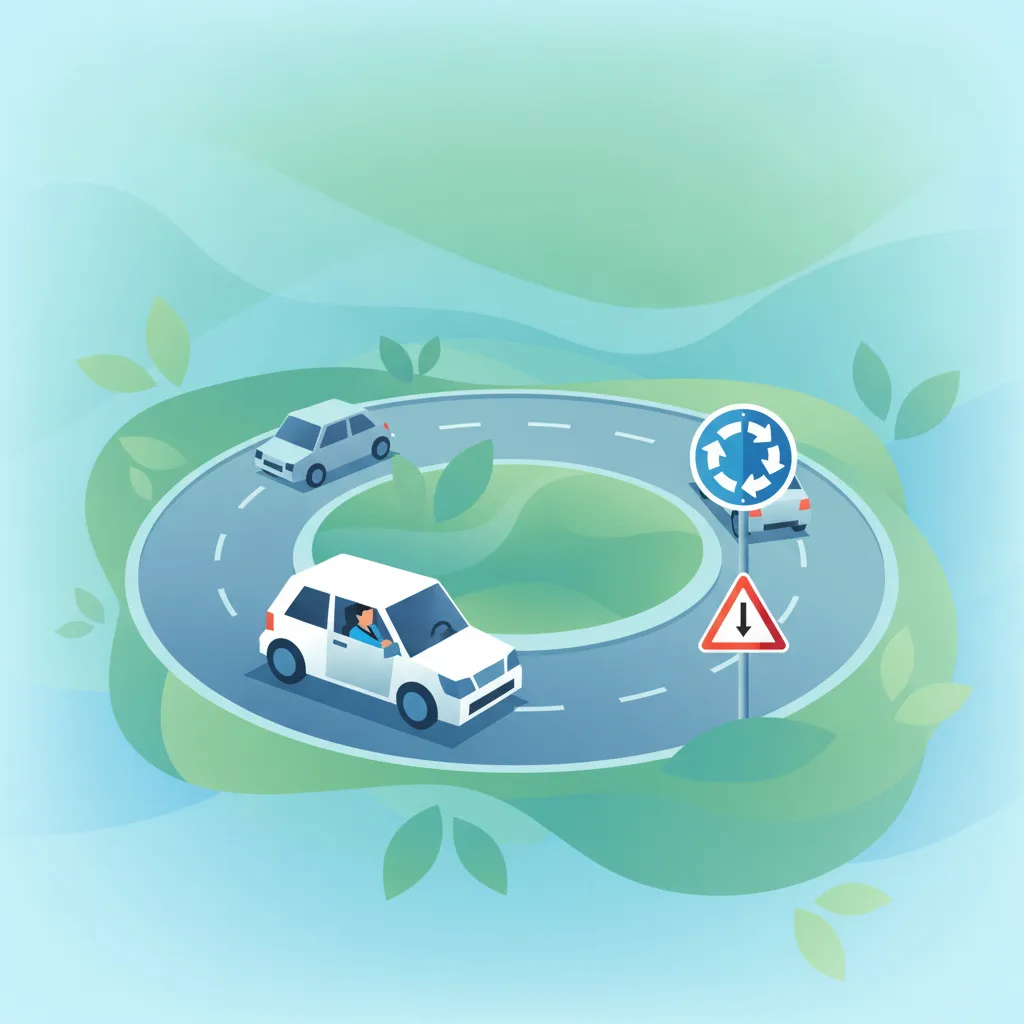
This lesson provides clear instructions on how to navigate roundabouts in Germany. It explains the crucial rule of yielding to traffic already inside the circle, proper lane choice for your intended exit, and the correct use of signals. Safe interaction with cyclists and pedestrians at roundabout exits is also covered.
This lesson introduces the foundational concept of right-of-way ('Vorfahrt') in German traffic law. It explains the default priority rule, 'Rechts vor Links' (right before left), which applies at intersections without any regulating signs or signals. You will learn to identify situations where this rule applies and understand the basic principles of yielding to ensure safe passage at junctions.
This lesson explains the concept of a priority road ('Vorfahrtstraße'), where you have right-of-way over traffic from intersecting roads. You will learn to recognize the signs that mark the beginning and end of a priority road. The lesson also covers how priority is managed through signals, including standard traffic lights, the special 'Grünpfeil' (green arrow) sign, and the overriding authority of a police officer directing traffic.

This lesson clarifies the distinctions between AM-class vehicles and motorcycles in higher licence categories (A1, A2, A). It focuses on the specific limits related to engine capacity, maximum speed, and vehicle dimensions that define the AM category. Learners will also understand differences in training requirements and road usage restrictions.
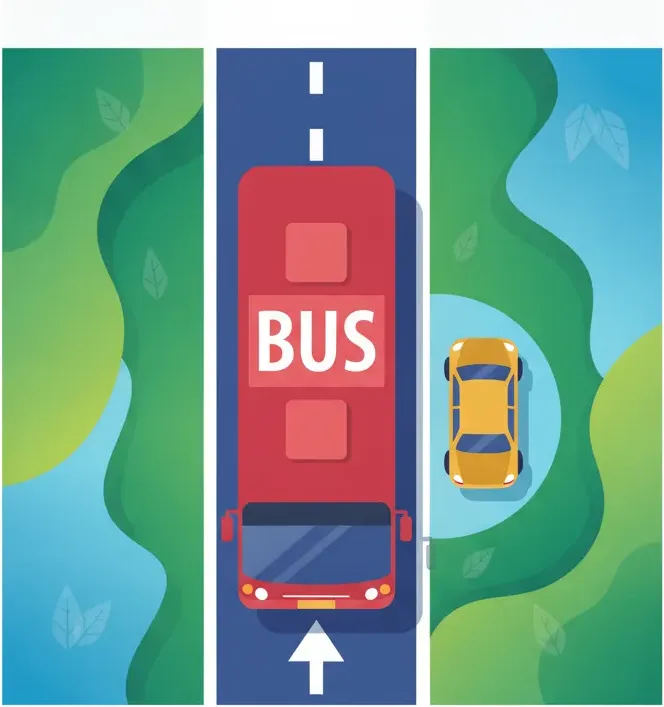
This lesson provides a detailed explanation of the rules governing dedicated bus lanes, including how to interpret markings and adhere to time-based restrictions. It clarifies the priority rules that grant buses precedence in certain traffic situations, such as when pulling out from a stop. Understanding these regulations allows drivers to use bus infrastructure efficiently and legally to maintain schedules and improve traffic flow.
Learn about typical errors and misunderstandings in executing turning maneuvers and cornering techniques. This lesson focuses on theory-based insights to help AM licence riders avoid accidents and ensure safe road behaviour in Germany.
This lesson focuses on identifying and safely managing various road surface imperfections and hazards. It provides techniques for riding over loose surfaces like gravel, dealing with the low traction of wet leaves or manhole covers, and safely crossing tram tracks. The key is to recognize these hazards early and adjust technique accordingly.
This lesson provides clear instructions on how to navigate roundabouts in Germany. It explains the crucial rule of yielding to traffic already inside the circle, proper lane choice for your intended exit, and the correct use of signals. Safe interaction with cyclists and pedestrians at roundabout exits is also covered.
This lesson breaks down the technique of cornering into three distinct phases: entry, apex, and exit. Learners will understand how to assess a corner and select an appropriate entry speed to ensure a smooth and controlled lean. The content explains how to identify the apex for an optimal line and how to apply throttle smoothly for a stable exit, maintaining traction throughout.
This lesson examines the specific hazards posed by different weather conditions. It explains how rain can lead to hydroplaning and reduced grip, how fog impairs visibility, and how strong winds can affect stability. Riders will learn practical strategies, such as reducing speed and increasing following distance, to mitigate these risks.

This lesson provides a systematic approach to safely negotiating blind corners where visibility is limited. It teaches riders to control their entry speed, adopt a defensive lane position, and use visual scanning techniques to assess the road ahead. The content emphasizes adjusting lean angle and being prepared for unexpected hazards that may be hidden around the bend.
This lesson delves into the principles of vehicle dynamics that govern two-wheeled vehicles. It explains the importance of balance, the concept of counter-steering for initiating turns, and how body position influences handling. Understanding these physical forces allows for smoother, safer, and more confident control of the vehicle.
This lesson addresses the critical skill of safely interacting with other road users, particularly vulnerable ones like pedestrians and cyclists. It covers rules for yielding at crosswalks, maintaining a safe passing distance, and being aware of the limited visibility of a moped to car drivers. The focus is on fostering a defensive and cooperative mindset in mixed traffic.
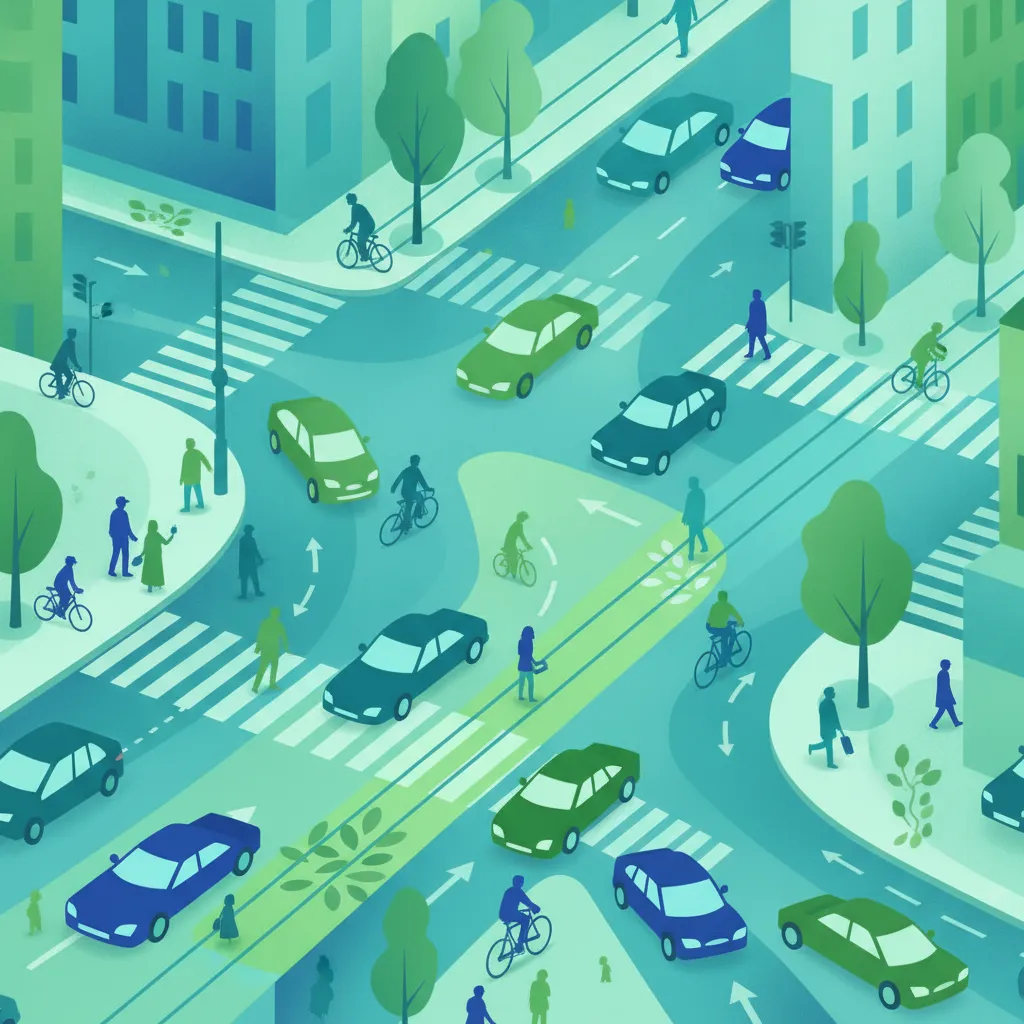
This lesson addresses the challenges of operating a small AM vehicle in dense, mixed traffic. It provides strategies for increasing visibility to other drivers, positioning oneself defensively, and safely sharing lanes with cyclists. The content emphasizes awareness of larger vehicles' blind spots and maintaining a safe space cushion.
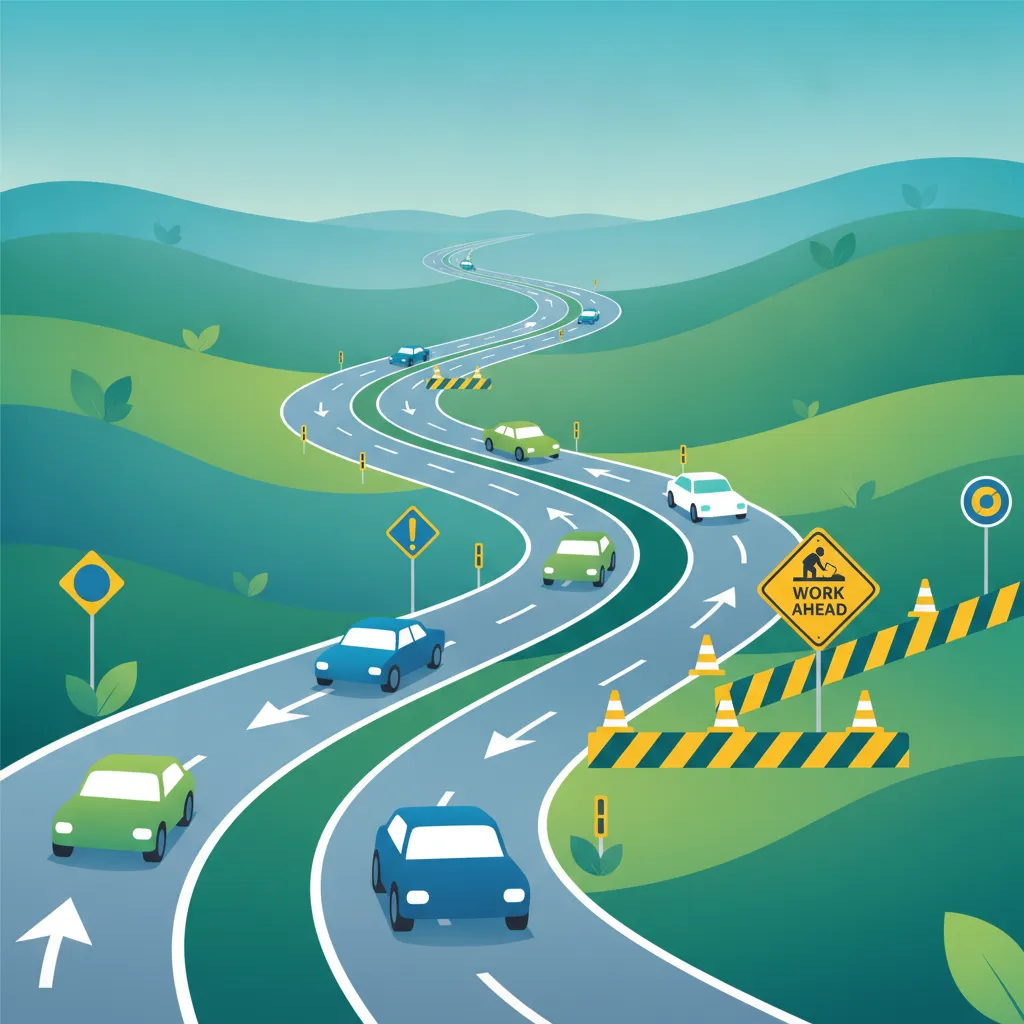
This lesson focuses on interpreting various road markings, from lane lines and directional arrows to stop lines and pedestrian crossings. It explains the rules associated with solid versus broken lines and how to navigate temporary markings found in construction zones. Correctly reading these markings is vital for proper lane discipline and safety.
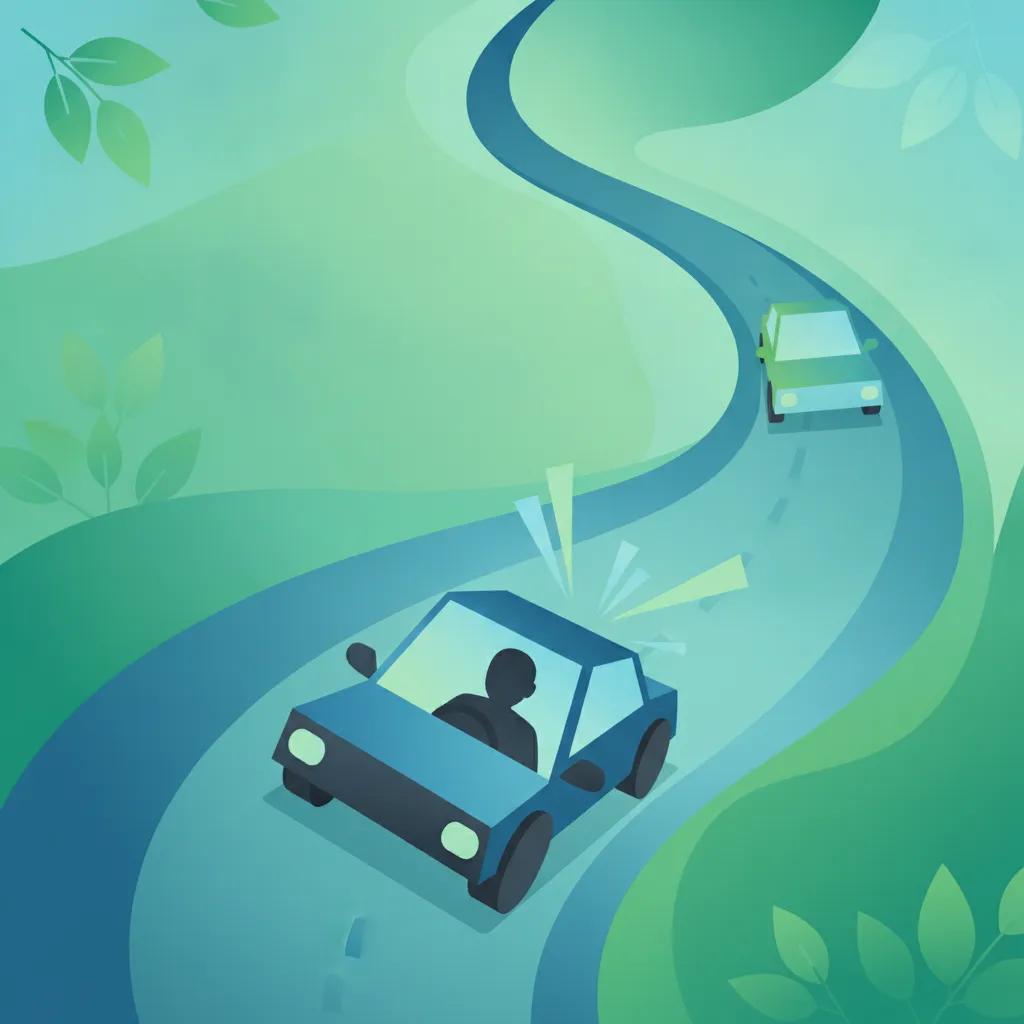
This lesson focuses on maintaining a safe buffer around the vehicle in traffic. It explains the 'two-second rule' as a simple method for ensuring adequate following distance and discusses how to adjust this for adverse conditions. A key focus is on developing hazard anticipation skills through continuous scanning and risk assessment.
Find clear answers to common questions learners have about Turning Maneuvers, Indicator Use, and Cornering Techniques. Learn how the lesson is structured, which driving theory objectives it supports, and how it fits into the overall learning path of units and curriculum progression in Germany. These explanations help you understand key concepts, lesson flow, and exam focused study goals.
You must use your indicators in good time before every change of direction or turn. This includes pulling out from a stationary position, turning into a side street, or changing lanes, to ensure other road users clearly understand your intentions.
You should position your moped far enough to the right to prevent other vehicles from passing you on your right side during the turn, while remaining visible to traffic behind you. Avoid driving too close to the curb to ensure you have enough space for the turn radius.
Excessive speed while entering a corner can lead to loss of stability and drifting into the wrong lane. You should adjust your speed before entering the curve so you can focus entirely on your steering and observation while navigating the turn.
You may perform a U-turn only where it is not prohibited by signs, road markings, or general traffic laws. Always check for oncoming traffic and perform a full visual check of your surroundings before initiating the maneuver.
Begin your targeted revision now. Use our practice search to quickly find specific German driving theory questions. Filter by StVO rules, road signs, or hazard perception to create your focused study plan. Master challenging areas and prepare confidently for your theoretical driving test.