
This lesson focuses on the critical safety interactions between heavy vehicles and vulnerable road users at crossings. You will learn how to manage blind spots and right-of-way rules to navigate urban areas safely as a professional driver, preparing you for both real-world operations and the official theory exam.
Lesson content overview
Operating a heavy vehicle, especially in urban environments, demands exceptional vigilance and a deep understanding of traffic regulations. This is particularly true when interacting with pedestrians and cyclists at crossings and intersections. As a professional driver pursuing your German heavy vehicle driving license (categories C1, C1E, C, CE), you bear a heightened responsibility to protect these vulnerable road users.
This lesson explores the specific challenges heavy vehicles face due to their size, extensive blind spots, and longer stopping distances. We will delve into legal obligations under the German Road Traffic Act (StVO), defensive driving strategies, and practical techniques like proper mirror usage and head checks, all crucial for preventing accidents and ensuring road safety.
Driving a large truck or bus presents a distinct set of challenges compared to passenger cars, especially in congested urban areas. The sheer size and mass of heavy vehicles significantly impact visibility, maneuverability, and stopping distances. These factors necessitate a proactive and defensive approach to driving, particularly when approaching areas where pedestrians and cyclists are present.
Pedestrians and cyclists are among the most vulnerable participants in road traffic. They are unprotected by vehicle structures, making them susceptible to severe injuries or fatalities in the event of a collision. For this reason, road traffic law places a special obligation on drivers of larger, heavier vehicles to exercise extreme caution and anticipate potential hazards. This principle of vulnerable road user protection is central to safe heavy vehicle operation.
Heavy vehicles have significantly larger dimensions and greater mass than other vehicles. This translates into several critical implications at crossings:
These factors underscore the critical need for heavy vehicle drivers to be acutely aware of their surroundings and to continuously scan for vulnerable road users.
German road traffic law, particularly the Straßenverkehrs-Ordnung (StVO), places strict requirements on all drivers, with additional duties for those operating heavy vehicles. Understanding these legal responsibilities and adopting core safety principles is fundamental to preventing accidents at crossings.
This overarching principle dictates that drivers must always anticipate the actions of pedestrians and cyclists and afford them sufficient space and time, especially at designated crossings. It acknowledges the inherent power imbalance between a heavy vehicle and an unprotected road user. Drivers must assume pedestrians or cyclists might act unpredictably and be prepared to react defensively.
Heavy vehicle drivers must strictly adhere to right-of-way rules, yielding to pedestrians and cyclists when legally required. This includes stopping at marked pedestrian crossings (zebra crossings) and giving priority to cyclists at traffic islands or when turning. Failure to yield can lead to severe legal consequences and, more importantly, tragic accidents.
Maintaining an appropriate safe distance is paramount. For heavy vehicles, this means allowing sufficient distance to stop completely before a crossing if a pedestrian or cyclist steps into the path. The stopping distance increases significantly with vehicle load, speed, and adverse weather conditions, which must always be factored into your driving.
Defensive driving is not merely a recommendation but a necessity for heavy vehicle drivers. At crossings, this means:
Understanding and respecting right-of-way rules is the cornerstone of safe interaction with pedestrians and cyclists. Different types of crossings have specific regulations that heavy vehicle drivers must know and follow.
A marked pedestrian crossing identified by alternating white stripes on the road surface, where pedestrians have legal priority over vehicular traffic.
At a Zebra Crossing (in German: Zebrastreifen), pedestrians have absolute right-of-way. According to § 26 StVO, drivers must yield to pedestrians who intend to cross or are already crossing a marked zebra crossing.
Not all places where pedestrians cross the road are marked zebra crossings. At intersections without specific right-of-way signs or traffic lights, general right-of-way rules apply. However, heavy vehicle drivers must still exercise extreme caution.
A raised or marked area at an intersection or in the road, designed to guide traffic flow, separate lanes, or provide a refuge for pedestrians. It can also function as a mini-roundabout.
Traffic islands, including mini-roundabouts, are common in German urban areas and often involve cyclists.
Some areas feature shared paths (gemeinsame Geh- und Radwege), where pedestrians and cyclists share the same space, and sometimes even limited motor vehicle access is permitted (e.g., for deliveries).
Heavy vehicles have inherent blind spots – areas around the vehicle that the driver cannot see directly through the windows or conventional mirrors. These blind spots are a major contributor to accidents involving vulnerable road users, especially cyclists during right turns.
Relying solely on mirrors is insufficient for heavy vehicles. A combination of correctly adjusted mirrors and diligent head checks is essential to cover blind spots.
Adjust Mirrors Correctly: Before starting your journey, ensure all mirrors (rear-view, side mirrors, wide-angle, and front mirrors where equipped) are properly adjusted to provide the widest possible view of your surroundings. They should be set to minimize blind spots, but never eliminate them completely.
Scan Actively and Continuously: Continuously move your gaze between the road ahead, your mirrors, and direct observations. Do not fixate on a single point.
Perform Head Checks (Schulterblick): Before any change in direction, lane change, or turn, always perform a head check (Schulterblick). This means briefly turning your head to directly look over your shoulder into the blind spot area. This is especially crucial before making a right turn to check for cyclists.
Anticipate Hidden Road Users: Assume that there might be a pedestrian or cyclist in your blind spot, especially in urban areas or near crossings.
Never initiate a turn or lane change without first performing a thorough mirror check followed by a head check. A moment of inattention can have severe consequences for a vulnerable road user.
Maneuvering a heavy vehicle, especially turning at intersections, requires precision and an acute awareness of your vehicle's physical limits and the presence of others.
The large turning radius of heavy vehicles demands careful planning and execution of turns, particularly right turns.
Maintaining appropriate distances is a legal requirement and a critical safety measure.
The weight of your cargo significantly influences your vehicle's performance.
Familiarity with the specific paragraphs of the StVO is essential for heavy vehicle drivers. Here are the most relevant sections concerning interactions at crossings:
This paragraph explicitly grants pedestrians the right-of-way at marked pedestrian crossings.
This rule defines priority at intersections where no specific signs or traffic lights regulate the right-of-way.
This paragraph underscores the general duty of all drivers to proceed with caution at intersections and crossing points.
While not a specific paragraph solely on mirrors, the general duty of care and safe driving under § 3 (1) StVO implies the necessity of having an unobstructed view and taking all measures to ensure safety.
Awareness of common mistakes and how different conditions affect driving safety can significantly reduce risks.
Successfully and safely interacting with pedestrians and cyclists at crossings is a core competency for all heavy vehicle drivers. It demands a combination of legal knowledge, practical driving skills, and a strong commitment to safety.
Remember these key safety insights:
By consistently applying these principles, you will contribute significantly to road safety and fulfill your duties as a professional heavy vehicle driver in Germany.
This lesson covers the critical safety interactions between heavy vehicles and vulnerable road users at crossings in Germany, focusing on blind spot management, right-of-way rules under the StVO, and defensive driving techniques. Key regulations include § 26 StVO for zebra crossings where pedestrians have absolute priority, and § 8(2) StVO for yielding to traffic from the right at traffic islands. The lesson emphasizes that heavy vehicles require comprehensive mirror usage combined with physical head checks, earlier braking distances due to increased mass, and awareness of wider turning radii that can encroach on cyclists and pedestrians. Understanding these principles is essential for safe urban operation and passing the German C-category theory examination.
A short set of high-value points that capture the most important learning from this lesson.
Pedestrians have absolute right-of-way at zebra crossings (Zebrastreifen) under § 26 StVO, even before they step onto the road if they clearly indicate intention to cross
Heavy vehicles have extensive blind spots, particularly on the right side, where cyclists are most commonly overlooked during right turns
Effective blind spot management requires correctly adjusted mirrors combined with physical head checks (Schulterblick) before any turn or lane change
The principle of vulnerable road user protection places heightened ethical and legal responsibility on heavy vehicle drivers due to their potential to cause severe injury
Heavy vehicles require significantly longer stopping distances when fully loaded, necessitating earlier anticipation and braking at crossings
Explore all units and lessons included in this driving theory course.
At zebra crossings, stop before the crossing line far enough back to allow pedestrians to cross without obstruction or feeling threatened
When approaching traffic islands or mini-roundabouts, yield to cyclists already within the circulating traffic or approaching from the right under § 8(2) StVO
Maintain at least 1.5 metres lateral distance when passing cyclists in urban areas, and avoid stopping too close to prevent them from being trapped
Cyclists can easily be hidden in your blind spot during right turns—always perform a mirror check followed by a head check before initiating any turn
On shared paths where pedestrians have priority, proceed only at walking pace and be prepared to stop instantly for any pedestrian present
Assuming zebra crossing rules only apply when a pedestrian is already in the driver's lane, when in fact you must yield even to pedestrians who are clearly intending to cross
Relying solely on mirrors without performing physical head checks, leaving blind spots unchecked and cyclists undetected during turns
Positioning too close to the curb before a right turn, giving the impression of going straight or turning left, confusing cyclists who might attempt to pass on the right
Failing to account for the vehicle's wider turning radius, causing the rear wheels to swing wide and potentially strike pedestrians or cyclists on the curb
Not adjusting braking points for vehicle load—a fully loaded heavy vehicle requires considerably longer stopping distances than an empty one
Lesson content overview
A short set of high-value points that capture the most important learning from this lesson.
Pedestrians have absolute right-of-way at zebra crossings (Zebrastreifen) under § 26 StVO, even before they step onto the road if they clearly indicate intention to cross
Heavy vehicles have extensive blind spots, particularly on the right side, where cyclists are most commonly overlooked during right turns
Effective blind spot management requires correctly adjusted mirrors combined with physical head checks (Schulterblick) before any turn or lane change
The principle of vulnerable road user protection places heightened ethical and legal responsibility on heavy vehicle drivers due to their potential to cause severe injury
Heavy vehicles require significantly longer stopping distances when fully loaded, necessitating earlier anticipation and braking at crossings
Explore all units and lessons included in this driving theory course.
At zebra crossings, stop before the crossing line far enough back to allow pedestrians to cross without obstruction or feeling threatened
When approaching traffic islands or mini-roundabouts, yield to cyclists already within the circulating traffic or approaching from the right under § 8(2) StVO
Maintain at least 1.5 metres lateral distance when passing cyclists in urban areas, and avoid stopping too close to prevent them from being trapped
Cyclists can easily be hidden in your blind spot during right turns—always perform a mirror check followed by a head check before initiating any turn
On shared paths where pedestrians have priority, proceed only at walking pace and be prepared to stop instantly for any pedestrian present
Assuming zebra crossing rules only apply when a pedestrian is already in the driver's lane, when in fact you must yield even to pedestrians who are clearly intending to cross
Relying solely on mirrors without performing physical head checks, leaving blind spots unchecked and cyclists undetected during turns
Positioning too close to the curb before a right turn, giving the impression of going straight or turning left, confusing cyclists who might attempt to pass on the right
Failing to account for the vehicle's wider turning radius, causing the rear wheels to swing wide and potentially strike pedestrians or cyclists on the curb
Not adjusting braking points for vehicle load—a fully loaded heavy vehicle requires considerably longer stopping distances than an empty one
Explore search topics learners often look for when studying Interaction with Pedestrians and Cyclists at Crossings. These topics reflect common questions about road rules, driving situations, safety guidance, and lesson level theory preparation for learners in Germany.
Browse additional driving theory lessons that cover connected traffic rules, road signs, and common driving situations related to this topic. Improve your understanding of how different rules interact across everyday traffic scenarios.
Learn essential German driving theory regarding heavy vehicles and vulnerable road users at crossings. Understand right-of-way, mirror usage, and blind spot awareness crucial for C-category driving licence theory.

This lesson focuses on the right-of-way rules that heavy vehicles must follow when interacting with cyclists and pedestrians, particularly at intersections and crossings. It emphasizes the need for trucks to yield appropriately and maintain safe distances. The content also covers the interpretation of traffic signs governing priority in urban areas.
This lesson provides specific guidance on how to safely share the road with pedestrians and cyclists, who are among the most vulnerable road users. It covers the rules of conduct at zebra crossings, traffic lights for pedestrians, and designated cycle lanes. The content emphasizes the importance of vigilance, yielding right-of-way, and maintaining a safe distance to prevent accidents in urban and rural environments.

This lesson focuses on the particular care required when driving near pedestrians, with a special emphasis on children and the elderly, whose behavior can be unpredictable. It covers the rules for yielding at zebra crossings and the importance of reducing speed near schools, playgrounds, and residential areas. The goal is to instill a habit of constant vigilance and readiness to stop.
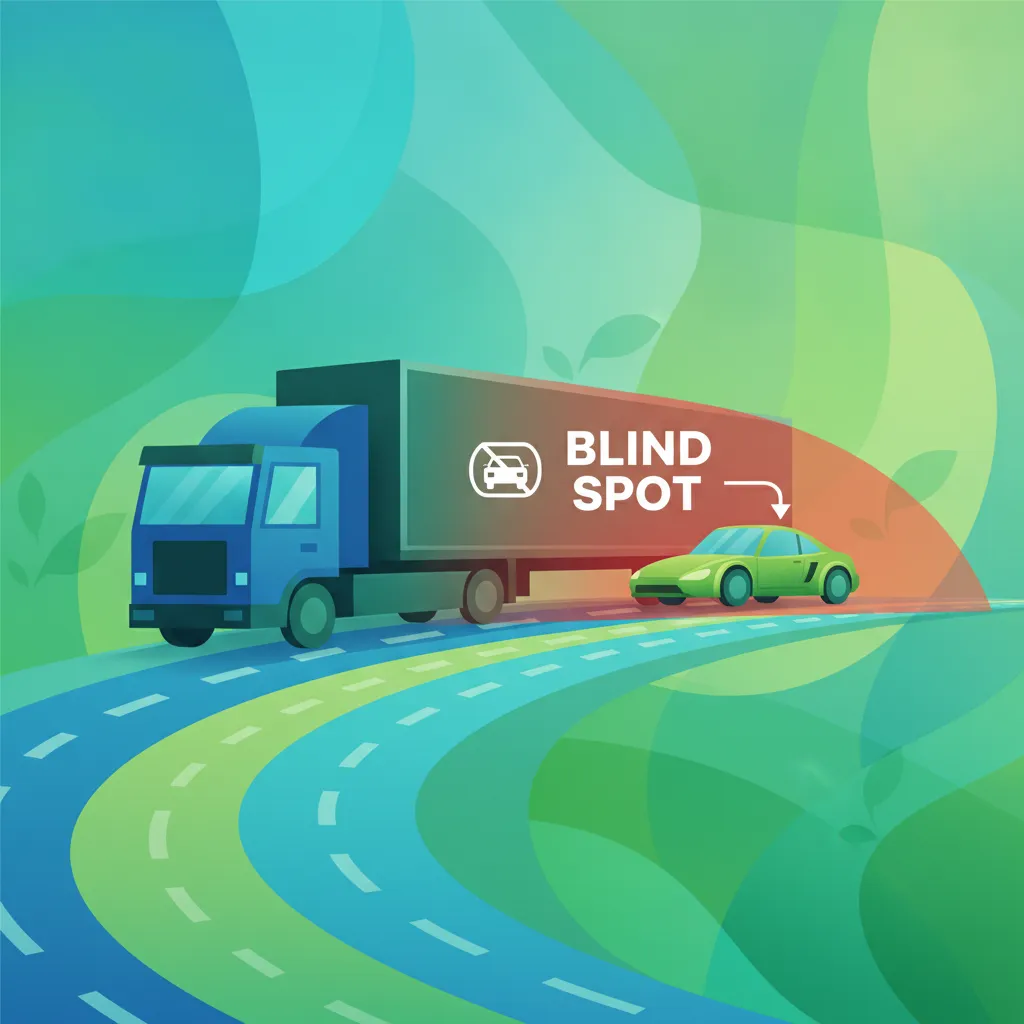
This lesson focuses on the blind spot zones specific to trucks and vehicle combinations, explaining where these zones are located. It covers the use of blind spot mirrors and other aids to enhance driver awareness during lane changes and turns. The content stresses the importance of maintaining safe distances from vulnerable road users.
This lesson focuses on the critical moments of interaction with pedestrians and cyclists near bus stops, a common location for accidents. It reinforces the importance of reducing speed, yielding right-of-way, and constantly monitoring blind spots during the stopping process. Learners will practice techniques like making eye contact and using signals to communicate intentions, creating a safer environment for everyone around the vehicle.

This lesson focuses on the unique challenges and safety protocols required when operating alongside trams and light rail systems. It clarifies the strict right-of-way rules that typically favor trams and explains how to safely navigate shared roadways and cross tracks. Learners will be taught to recognize specific signals and markings related to tramways to prevent conflicts and ensure the safety of all road users.

This lesson covers the dimensional limits for heavy vehicles, focusing on height, width, and length restrictions. It explains how to interpret clearance signage for bridges, tunnels, and overhead obstacles, and discusses the implications for route planning. The content also addresses the importance of understanding turning radii and swept paths to avoid collisions.

This lesson teaches riders how to interact safely and predictably with pedestrians, cyclists, and public transport vehicles. It highlights the importance of yielding at designated crossings, maintaining a safe passing distance, and anticipating the movements of buses and trams. The content emphasizes using eye contact and clear signaling to foster safe and respectful interactions with all road users.
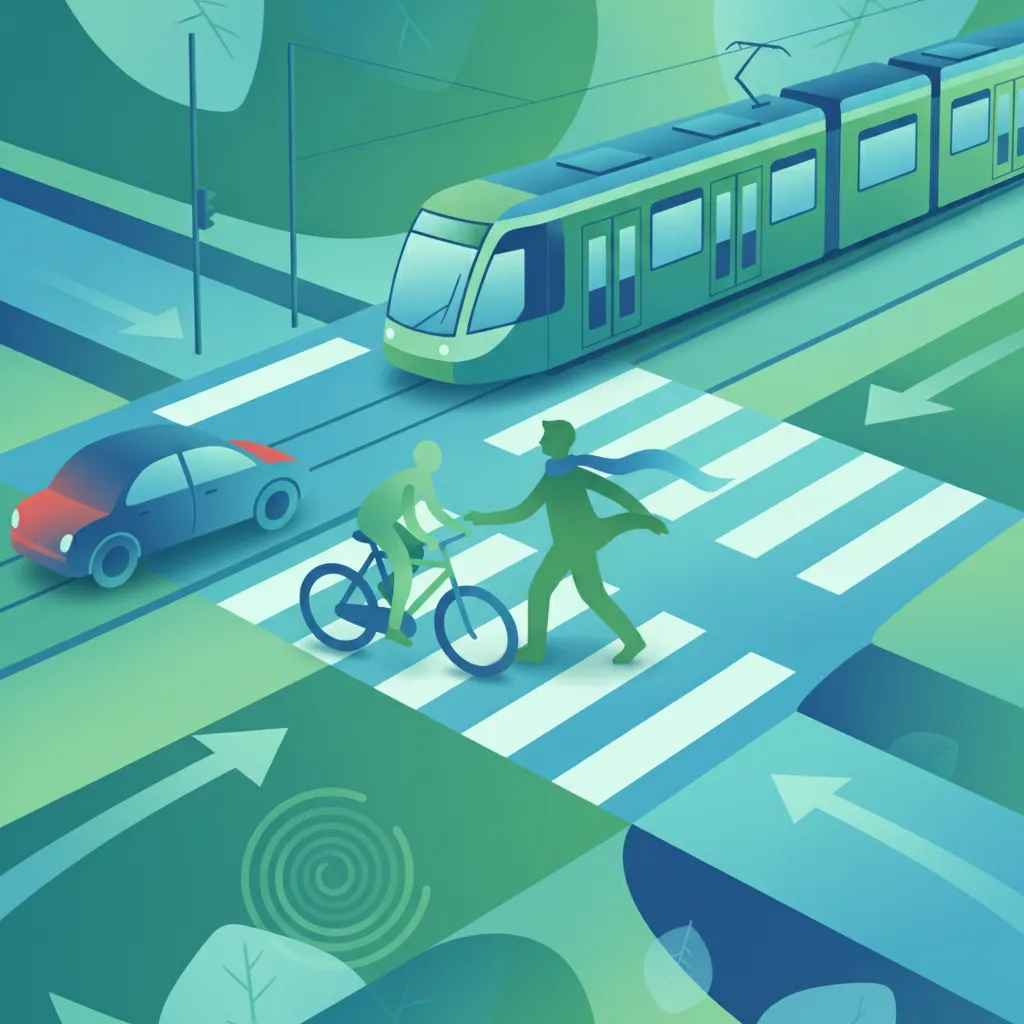
This lesson details the critical right-of-way regulations according to the German StVO. It covers the default 'right before left' rule, the meaning of priority road signs, and specific rules for roundabouts and yielding to pedestrians. A thorough understanding of these priority rules is fundamental for preventing accidents at junctions.
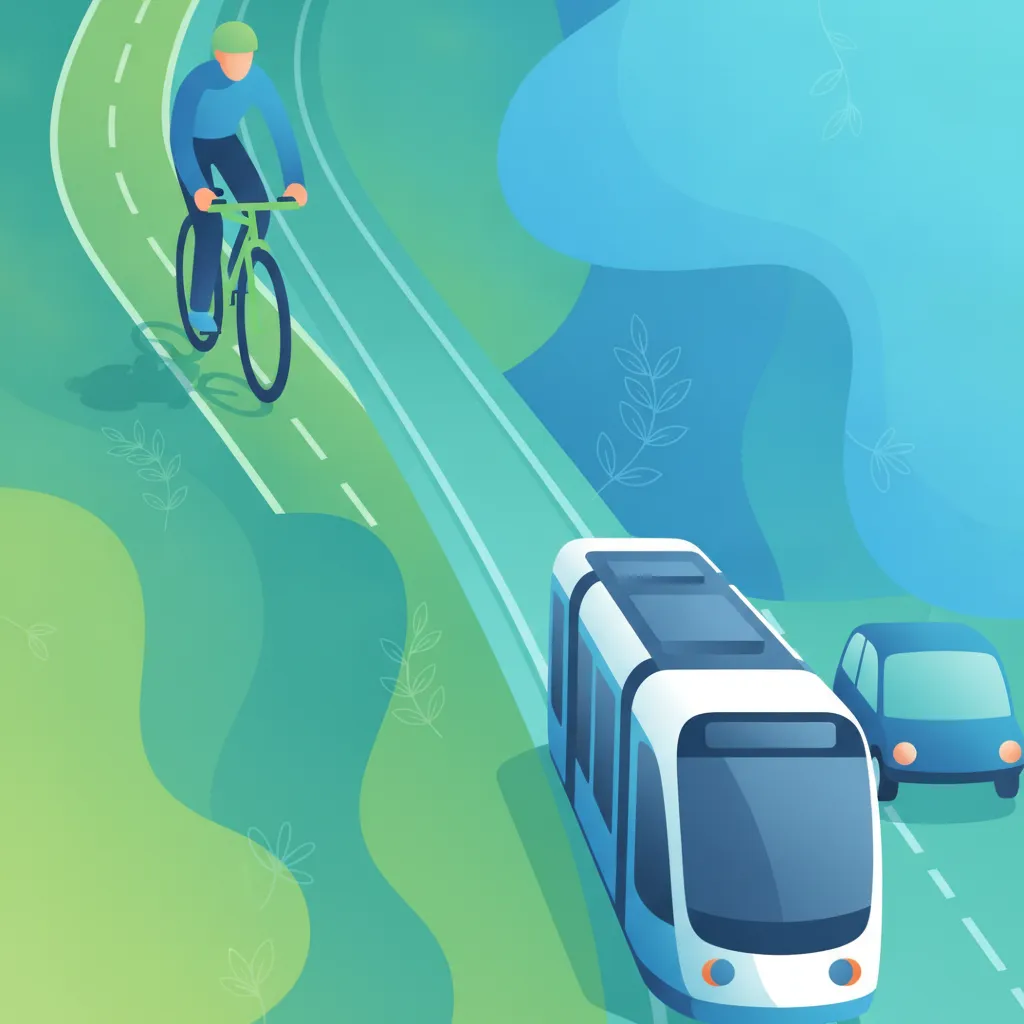
This lesson focuses on complex traffic environments where different types of road users share the same space. It provides guidance on situations like driving on streets with integrated tram tracks or where bus and bicycle lanes are part of the roadway. The content emphasizes understanding the specific priority rules and being extra vigilant to anticipate potential conflicts in these busy, shared zones.
Explore the critical aspects of turning and maneuvering heavy vehicles safely in German urban environments. This theory lesson covers legal responsibilities, signaling, and managing vehicle dynamics to avoid collisions, especially with cyclists and pedestrians.

This lesson addresses the challenges of maneuvering heavy vehicles in confined spaces such as loading bays and narrow streets. It provides strategies for planning the maneuver, accounting for vehicle dimensions, turning radius, and blind spots. The content emphasizes slow, controlled movements and the need for high situational awareness.

This lesson provides a step-by-step guide to executing turns safely at intersections and other locations. It details the full observation sequence (mirrors, signal, blind spot check) required before initiating a turn. The lesson covers correct lane positioning for both left and right turns and explains the rules for performing U-turns or three-point turns where permitted.

This lesson teaches the fundamental techniques for safely turning a large passenger vehicle. It explains the concepts of turning radius, swept path, and off-tracking, where the rear wheels follow a tighter path than the front wheels. Learners will understand how to position the vehicle correctly before a turn and manage their speed to navigate corners without encroaching on other lanes or hitting curbs.

This lesson examines the concepts of turning radius and swept path, explaining how a heavy vehicle's size influences the space required for a turn. It highlights the importance of maintaining proper lane positioning to accommodate the vehicle's dimensions. The content provides guidance on planning maneuvers and accounting for off-tracking during cornering.
This lesson focuses on the blind spot zones specific to trucks and vehicle combinations, explaining where these zones are located. It covers the use of blind spot mirrors and other aids to enhance driver awareness during lane changes and turns. The content stresses the importance of maintaining safe distances from vulnerable road users.
This lesson covers the regulations and safe techniques for overtaking other vehicles in urban environments. It emphasizes the importance of thorough observation, including mirror and blind spot checks, before committing to the maneuver. Learners will understand how to choose a safe gap, manage their speed differential, and maintain strict lane discipline throughout the overtaking process.

This lesson details the correct procedure for executing left turns, right turns, and U-turns. It emphasizes the importance of proper signaling, correct lane positioning before the turn, and managing speed throughout the maneuver. The content also covers fundamental cornering techniques to maintain stability and control.
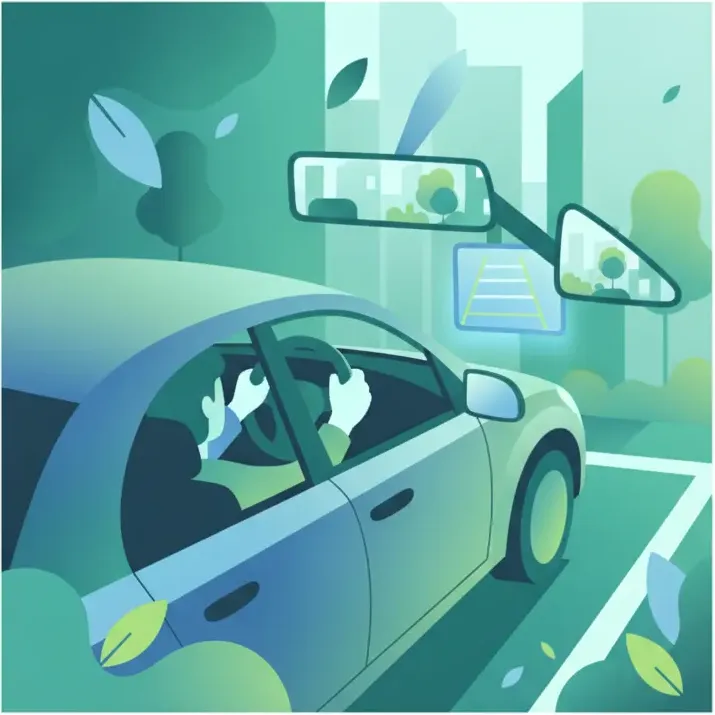
This lesson covers safe reversing techniques for both rigid trucks and articulated combinations, emphasizing the use of mirrors and cameras. It discusses the risks of jackknifing during reversal and the importance of speed control and safety checks. The content outlines best practices for planning a safe reversing path, potentially with a guide person.
This lesson covers the dimensional limits for heavy vehicles, focusing on height, width, and length restrictions. It explains how to interpret clearance signage for bridges, tunnels, and overhead obstacles, and discusses the implications for route planning. The content also addresses the importance of understanding turning radii and swept paths to avoid collisions.

This lesson covers the high-risk maneuver of reversing a large passenger vehicle. It details a systematic approach that includes using all available aids like mirrors, cameras, and audible alarms. The lesson stresses the need for slow, controlled movements, constant scanning of the surroundings, and conducting thorough clearance checks to prevent collisions with objects or people behind the vehicle, advocating for a spotter whenever possible.
Find clear answers to common questions learners have about Interaction with Pedestrians and Cyclists at Crossings. Learn how the lesson is structured, which driving theory objectives it supports, and how it fits into the overall learning path of units and curriculum progression in Germany. These explanations help you understand key concepts, lesson flow, and exam focused study goals.
In Germany, heavy vehicles are strictly required to yield to cyclists who are travelling straight ahead or turning right alongside you. The increased size and blind spots mean the driver has a heightened duty of care to ensure the area is clear before initiating a turn.
The exam uses visual scenarios requiring you to identify potential hazards. You must demonstrate that you are checking your mirrors and blind spots effectively before the truck enters a crossing where pedestrians may be waiting.
Yes, regardless of whether you are driving a C1 or a heavy CE combination, the legal responsibility to protect vulnerable road users remains a fundamental requirement of the German driving theory exam and road law.
Many learners focus only on the front traffic lights and neglect the side-mounted mirrors. Failing to account for a cyclist moving into the side-turning area is a common cause of incorrect answers in the hazard perception portion of the test.
Begin your targeted revision now. Use our practice search to quickly find specific German driving theory questions. Filter by StVO rules, road signs, or hazard perception to create your focused study plan. Master challenging areas and prepare confidently for your theoretical driving test.