
This lesson provides a step-by-step guide to executing turns safely at intersections, ensuring you understand correct lane positioning and the vital mirror-signal-maneuver routine. It builds upon your core behavioral knowledge to prepare you for both the official German theory exam and practical driving challenges.

Lesson content overview
Navigating intersections and changing direction are fundamental aspects of driving. This comprehensive lesson guides you through the essential procedures for executing left turns, right turns, and U-turns safely and legally within the German traffic system, adhering to the StVO (Straßenverkehrs-Ordnung). Mastering these maneuvers is critical not only for passing your German Category B driving license theory exam but, more importantly, for ensuring your safety and the safety of all other road users.
Effective turning and U-turn techniques rely heavily on keen observation, precise vehicle positioning, and clear communication of your intentions. This lesson will detail the systematic steps required, from initial observation to the final execution of the turn, highlighting specific rules and common pitfalls to avoid.
Before initiating any turn or direction change, a driver must perform a systematic observation sequence to ensure the maneuver can be executed safely without endangering other road users. This sequence is designed to provide a comprehensive understanding of your immediate surroundings and anticipate potential hazards.
The standard observation sequence, often referred to as the "mirror-signal-maneuver" principle, is a cornerstone of defensive driving. It involves a precise order of checks:
Rearview Mirror Check: Begin by checking your rearview mirror to assess the traffic behind you. This helps you identify vehicles that might be following closely or attempting to overtake, allowing you to gauge their speed and distance.
Side Mirror Check (Left and Right): Next, check the side mirror corresponding to your intended direction of travel (left mirror for a left turn, right mirror for a right turn). This reveals traffic in adjacent lanes or vehicles moving parallel to you. Also, check the opposite side mirror to be aware of the overall traffic situation.
Signal Your Intention: Clearly indicate your intended turn direction using your vehicle's turn signal. According to StVO regulations, you must signal your intention at least three seconds before initiating the turn. Early signaling gives other drivers, cyclists, and pedestrians ample time to react and adjust their behavior.
Blind Spot Scan: This is a critically important step. After signaling, quickly glance over your shoulder into your blind spot in the direction of your turn.
A blind spot is an area around your vehicle that is not visible through your rearview or side mirrors. These areas commonly hide smaller vehicles like motorcycles, bicycles, or even pedestrians, making a direct shoulder check essential before changing direction.
Many accidents involving cyclists and motorcyclists occur because drivers neglect this crucial check.
Always signal your intentions early and clearly. A late signal can confuse other road users and lead to dangerous situations, as they may not have enough time to react to your planned maneuver.
Executing a left turn correctly in Germany requires careful attention to lane positioning, yielding rules, and awareness of oncoming traffic.
When preparing for a left turn, you must position your vehicle correctly to communicate your intentions clearly and ensure a smooth turn.
Approach in the Correct Lane: As you approach the intersection, move into the leftmost lane designated for your direction of travel, or into a dedicated left-turn lane if available. These lanes are often marked with arrows on the road surface. Avoid cutting across multiple lanes at the last minute.
Signal Early: Activate your left turn signal at least three seconds before the turn.
Adjust Speed and Observe: Reduce your speed to a safe level, allowing you to react to changing traffic conditions. Perform the full observation sequence (mirrors, signal, blind spot check).
Yield to Oncoming Traffic: At most intersections without specific traffic signals, you must yield to oncoming traffic that has the right-of-way. Wait until the oncoming lane is clear or until oncoming vehicles have stopped.
Execute the Turn: Once it is safe to proceed, steer smoothly into the left turn. Aim to enter the leftmost lane of the road you are turning onto, unless road markings or signs indicate otherwise. Avoid turning too sharply or too wide, which could lead you into the wrong lane or obstruct other traffic.
Remember that priority rules (StVO § 10) are paramount at intersections. Even if you have initiated your turn, you might still need to yield if another vehicle has the right-of-way, such as traffic coming from the right on an uncontrolled intersection or specific priority signs.
Right turns are generally simpler than left turns, but they carry their own specific risks, particularly concerning pedestrians and cyclists who may be difficult to see.
The procedure for a right turn emphasizes careful positioning and a heightened awareness of vulnerable road users.
Approach in the Right Lane: Position your vehicle in the rightmost lane of your current road or in a dedicated right-turn lane. Maintain a reasonable distance from the curb, but not so far that another vehicle could attempt to pass you on the right.
Signal Early: Activate your right turn signal at least three seconds before the turn.
Check for Vulnerable Road Users: This step is crucial for right turns. Before and during your turn, meticulously check your right side mirror and your right blind spot for cyclists, electric scooter riders, or pedestrians who might be proceeding straight alongside you or using a crosswalk.
Yield to Pedestrians and Cyclists: You must yield to pedestrians who are crossing the street you are turning into, as well as cyclists who are proceeding straight in a dedicated lane or on the road beside you. Wait until they have safely cleared your path.
Execute the Turn: Once your path is clear, make a smooth, controlled right turn. Aim to enter the rightmost lane of the new road. Be mindful of the rear of your vehicle, especially if it is long, to avoid hitting the curb or other obstacles.
Failing to yield to pedestrians or cyclists during a right turn is a common cause of accidents and can result in significant penalties under StVO. Always assume they might be present, even if you don't immediately see them.
U-turns and three-point turns are maneuvers used to reverse your direction of travel. While seemingly straightforward, they are subject to strict regulations and require careful execution.
The German StVO places specific restrictions on where and how U-turns can be performed to ensure safety and maintain traffic flow.
U-turns are not permitted everywhere. Attempting a U-turn in a prohibited zone can result in fines and dangerous situations. Always check for signs and road markings.
U-turns (Wendemanöver): A U-turn is a single, continuous 180-degree turn that reverses your direction of travel.
U-turns are generally prohibited at:
U-turns are permitted only where:
U-Turn Procedure:
Assess Legality and Space: First, confirm that a U-turn is permitted at your current location and that there is ample space on the road to complete the turn safely in one go. Check for signs, road markings, and road width.
Signal Intention: Activate your left turn signal well in advance to indicate your intention to turn around.
Observe Thoroughly: Perform a comprehensive observation sequence: check your rearview mirror, both side mirrors, and both blind spots. Pay particular attention to oncoming traffic and traffic approaching from behind.
Yield: You must yield to all other road users. Wait until the road is clear of oncoming vehicles and there are no vehicles close behind that could be impeded.
Execute Smoothly: When safe, steer sharply to the left, crossing into the opposite lane to complete the 180-degree turn. Maintain a low, controlled speed throughout the maneuver.
Align Vehicle: Straighten your vehicle in the new direction of travel.
Three-Point Turn (Drei-Punkt-Wende): A three-point turn is used when the road is too narrow for a single continuous U-turn. It involves a series of forward and reverse movements.
Assess Legality and Space: As with a U-turn, ensure the maneuver is permitted and that you have sufficient space and visibility to complete it safely without obstructing traffic for an extended period.
Position and Signal: Pull over to the far right side of the road and activate your left turn signal.
Initial Forward Movement: Check all around for traffic. When clear, steer sharply left, moving forward slowly towards the opposite curb. Stop just before hitting the curb or reaching the edge of the road, leaving space to reverse.
Reverse Movement: Turn your steering wheel fully to the right. Engage reverse gear, check behind you carefully (especially for pedestrians or vehicles), and reverse slowly until your vehicle is at an angle, almost perpendicular to the road, but still allowing space for forward movement.
Final Forward Movement: Shift to a forward gear, steer sharply left, and move forward, straightening your vehicle into the desired direction of travel.
Always prioritize safety and avoid performing these maneuvers if there is heavy traffic, poor visibility, or insufficient space.
The German Road Traffic Act (Straßenverkehrs-Ordnung – StVO) contains specific regulations governing turns and U-turns, which all drivers must adhere to.
Understanding the StVO is fundamental for safe and legal driving in Germany. Violations can lead to fines, points on your license, or even driving bans.
StVO § 9 (Turning, Reversing, and U-Turns):
StVO § 10 (Entry and Exit):
Adhering strictly to these regulations is crucial for preventing collisions and ensuring smooth traffic flow.
Even experienced drivers can sometimes make errors when turning. Being aware of these common mistakes can help you avoid them.
Safe turning is not a one-size-fits-all procedure. Drivers must adapt their techniques based on environmental, road, and vehicle conditions.
By considering these variations, you can significantly enhance your safety and the safety of others while navigating turns and U-turns in diverse driving situations.
Safe turning and U-turn procedures are fundamental skills for any driver in Germany. They require a combination of systematic observation, correct vehicle positioning, clear signaling, and strict adherence to StVO regulations.
Before any turn, consistently perform the observation sequence: check your rearview mirror, then side mirrors, signal your intention early, and critically, check your blind spot. For left turns, position in the leftmost lane and yield to oncoming traffic. For right turns, position in the rightmost lane and meticulously check for and yield to pedestrians and cyclists. U-turns and three-point turns are only permissible where specifically allowed by signs or where there is ample space and visibility, without endangering other road users. Always adapt your turning technique to prevailing weather, road conditions, vehicle type, and the presence of vulnerable road users. By integrating these practices into your driving, you contribute significantly to road safety.
This lesson covers the systematic procedures for executing safe left turns, right turns, and U-turns under German traffic law, centered on the essential mirror-signal-shoulder check routine. It specifies correct lane positioning for each turn type, detailed yielding obligations to oncoming traffic, pedestrians, and cyclists, and the strict legal conditions governing U-turns and three-point turns under StVO § 9. Learners must master the observation sequence, maintain proper lane discipline, and adapt their technique to weather, road conditions, and vehicle type. The lesson also highlights seven common turning errors, including blind spot neglect and illegal U-turns, to help drivers avoid critical mistakes in both the theory exam and real-world driving.
A short set of high-value points that capture the most important learning from this lesson.
The mirror-signal-shoulder check sequence must always be performed in order before initiating any turn, with special attention to blind spots for cyclists and motorcyclists.
Left turns require positioning in the leftmost lane, yielding to oncoming traffic, and entering the leftmost lane of the target road.
Right turns demand heightened awareness of pedestrians and cyclists who may be proceeding straight or using crosswalks adjacent to your path.
U-turns are prohibited at intersections, on one-way streets, and wherever visibility or space is insufficient, unless explicitly permitted by signs.
Always signal at least three seconds before turning and adjust speed appropriately for weather, road conditions, and vehicle type.
Explore all units and lessons included in this driving theory course.
StVO § 9 governs turning, reversing, and U-turns, requiring correct lane positioning, early signaling, and yielding to vulnerable road users.
Lane discipline is critical: approach left turns from the leftmost lane and right turns from the rightmost lane before committing.
Blind spot checks are mandatory because cyclists and motorcyclists are hidden from mirrors and commonly cause accidents when neglected.
U-turns are only permitted where space, visibility, and road conditions allow without endangering others, and never at intersections without explicit signage.
When turning, yield obligations continue even after initiating the maneuver if another vehicle gains unexpected priority.
Signaling too late or omitting the signal entirely, depriving other road users of critical advance notice.
Initiating turns from the wrong lane, such as turning left from a middle lane, which forces other vehicles to swerve or causes side-on collisions.
Neglecting the blind spot check before turning, particularly failing to see cyclists or motorcyclists in adjacent lanes.
Failing to yield to pedestrians crossing the target road during right turns or to oncoming traffic during left turns.
Attempting U-turns at prohibited locations such as intersections or one-way streets, creating dangerous situations and potential fines.
Lesson content overview
A short set of high-value points that capture the most important learning from this lesson.
The mirror-signal-shoulder check sequence must always be performed in order before initiating any turn, with special attention to blind spots for cyclists and motorcyclists.
Left turns require positioning in the leftmost lane, yielding to oncoming traffic, and entering the leftmost lane of the target road.
Right turns demand heightened awareness of pedestrians and cyclists who may be proceeding straight or using crosswalks adjacent to your path.
U-turns are prohibited at intersections, on one-way streets, and wherever visibility or space is insufficient, unless explicitly permitted by signs.
Always signal at least three seconds before turning and adjust speed appropriately for weather, road conditions, and vehicle type.
Explore all units and lessons included in this driving theory course.
StVO § 9 governs turning, reversing, and U-turns, requiring correct lane positioning, early signaling, and yielding to vulnerable road users.
Lane discipline is critical: approach left turns from the leftmost lane and right turns from the rightmost lane before committing.
Blind spot checks are mandatory because cyclists and motorcyclists are hidden from mirrors and commonly cause accidents when neglected.
U-turns are only permitted where space, visibility, and road conditions allow without endangering others, and never at intersections without explicit signage.
When turning, yield obligations continue even after initiating the maneuver if another vehicle gains unexpected priority.
Signaling too late or omitting the signal entirely, depriving other road users of critical advance notice.
Initiating turns from the wrong lane, such as turning left from a middle lane, which forces other vehicles to swerve or causes side-on collisions.
Neglecting the blind spot check before turning, particularly failing to see cyclists or motorcyclists in adjacent lanes.
Failing to yield to pedestrians crossing the target road during right turns or to oncoming traffic during left turns.
Attempting U-turns at prohibited locations such as intersections or one-way streets, creating dangerous situations and potential fines.
Explore search topics learners often look for when studying Turning and U-Turn Procedures. These topics reflect common questions about road rules, driving situations, safety guidance, and lesson level theory preparation for learners in Germany.
Browse additional driving theory lessons that cover connected traffic rules, road signs, and common driving situations related to this topic. Improve your understanding of how different rules interact across everyday traffic scenarios.
Explore advanced turning and U-turn procedures beyond basic intersections. Understand complex scenarios, specific road conditions, and legal U-turn allowances according to German traffic law (StVO). This lesson builds upon fundamental turning techniques.

This lesson explains the specific rules for driving in roundabouts ('Kreisverkehr'), a common feature on German roads. It covers the correct procedure for approaching and entering, the rule that traffic already in the circle has priority, and the requirement to signal before exiting. The lesson also addresses the unique characteristics of mini-roundabouts and how to interact with cyclists and pedestrians around them.
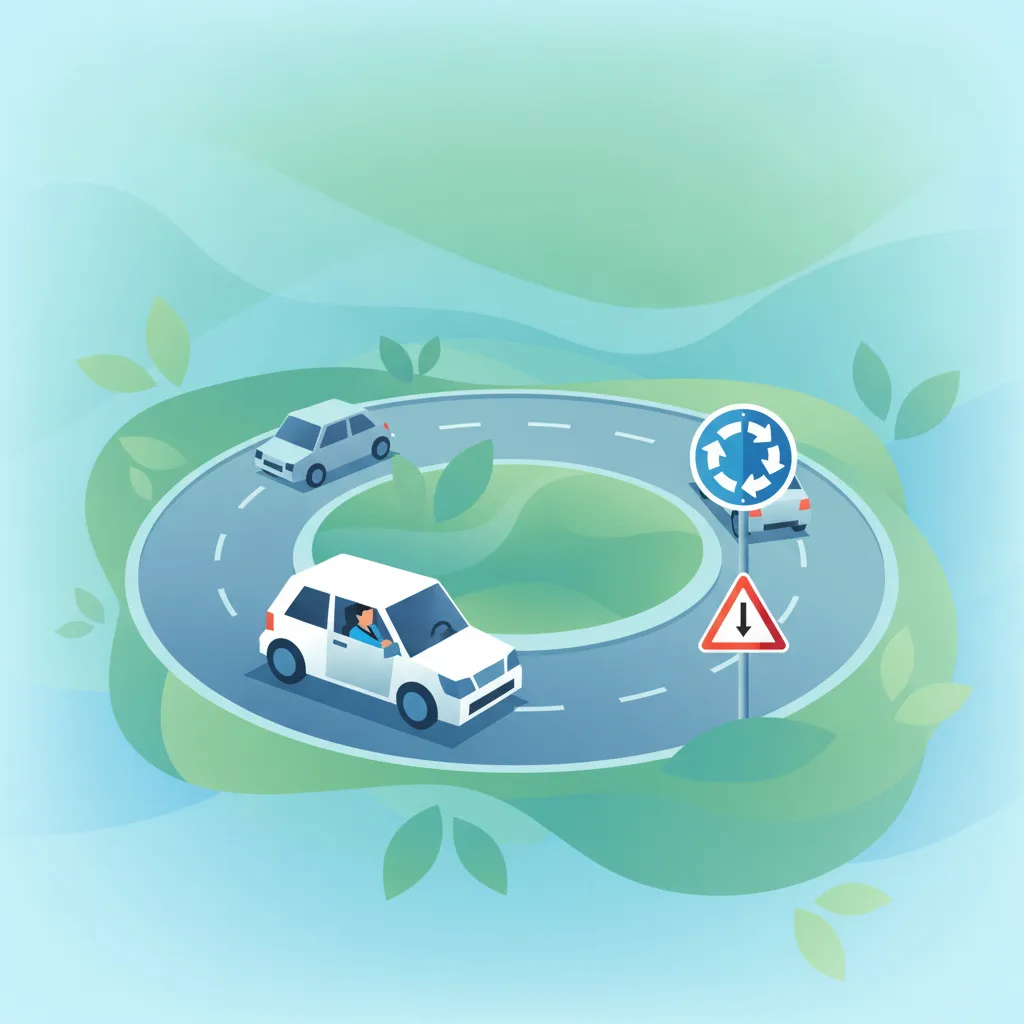
This lesson provides clear instructions on how to navigate roundabouts in Germany. It explains the crucial rule of yielding to traffic already inside the circle, proper lane choice for your intended exit, and the correct use of signals. Safe interaction with cyclists and pedestrians at roundabout exits is also covered.

This lesson details the correct procedure for executing left turns, right turns, and U-turns. It emphasizes the importance of proper signaling, correct lane positioning before the turn, and managing speed throughout the maneuver. The content also covers fundamental cornering techniques to maintain stability and control.
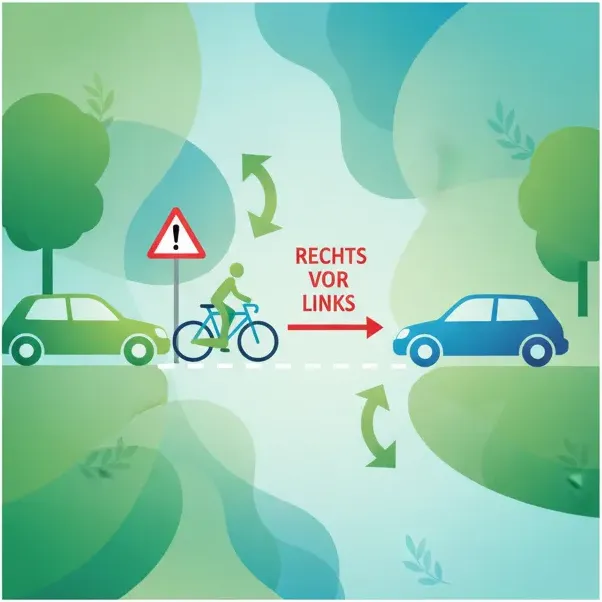
This lesson provides a detailed guide to navigating various types of intersections safely and correctly. It explains how priority is determined by traffic signs (such as the priority road, yield, and stop signs) and traffic lights. The lesson also covers complex scenarios, including the rules for turning left across oncoming traffic, to ensure you can handle any junction with confidence.
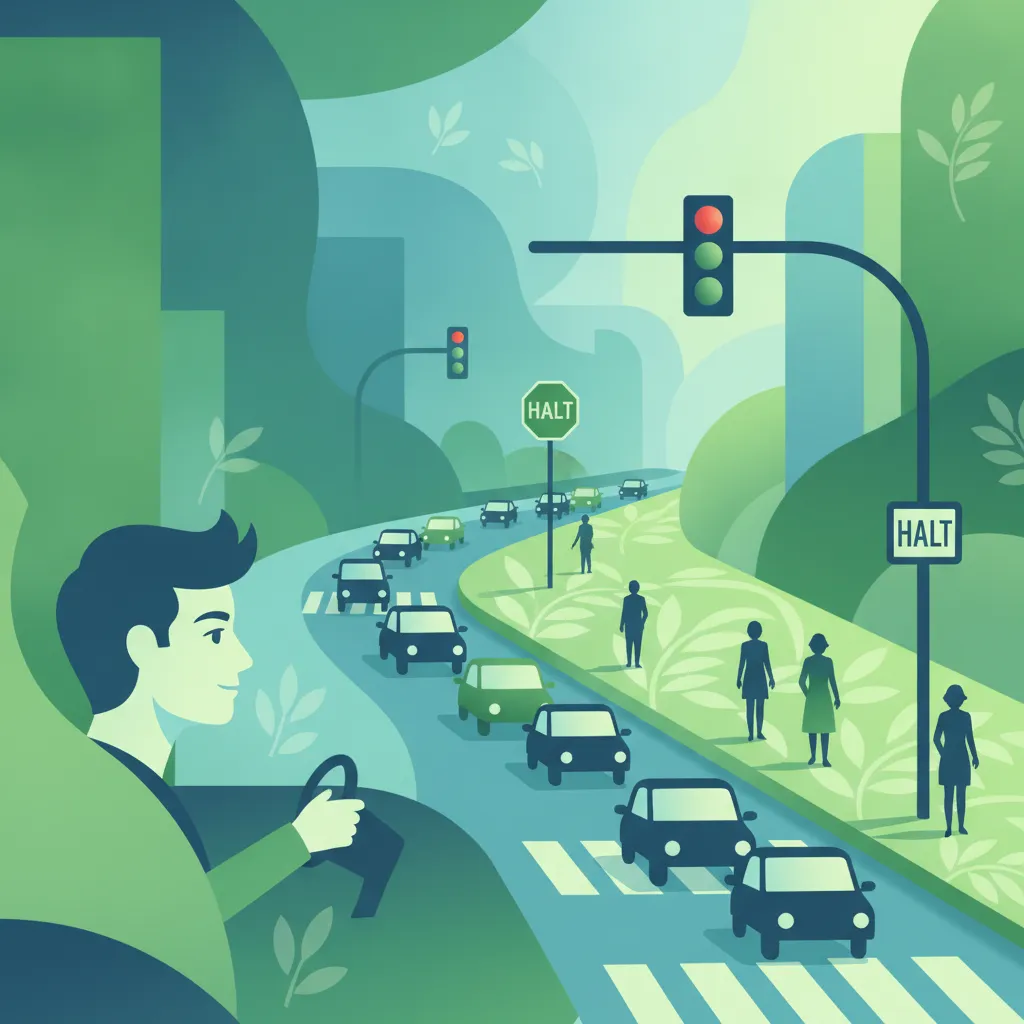
This lesson details the safe approach and navigation of various intersection types, including those controlled by traffic lights, stop signs, and give-way signs. Emphasis is placed on comprehensive observation of traffic flow, establishing eye contact with other road users, and ensuring clear visibility before proceeding. The lesson also covers correct lane positioning for turning and the importance of anticipating pedestrian movements.

This lesson teaches the fundamental techniques for safely turning a large passenger vehicle. It explains the concepts of turning radius, swept path, and off-tracking, where the rear wheels follow a tighter path than the front wheels. Learners will understand how to position the vehicle correctly before a turn and manage their speed to navigate corners without encroaching on other lanes or hitting curbs.

This lesson covers the rules and safety considerations for overtaking ('Überholen'). It explains where overtaking is prohibited and how to assess whether it is safe and necessary to do so. The procedure for checking traffic, signaling, moving out, passing, and safely returning to the lane is detailed, with a strong focus on judging the speed and distance of oncoming traffic.
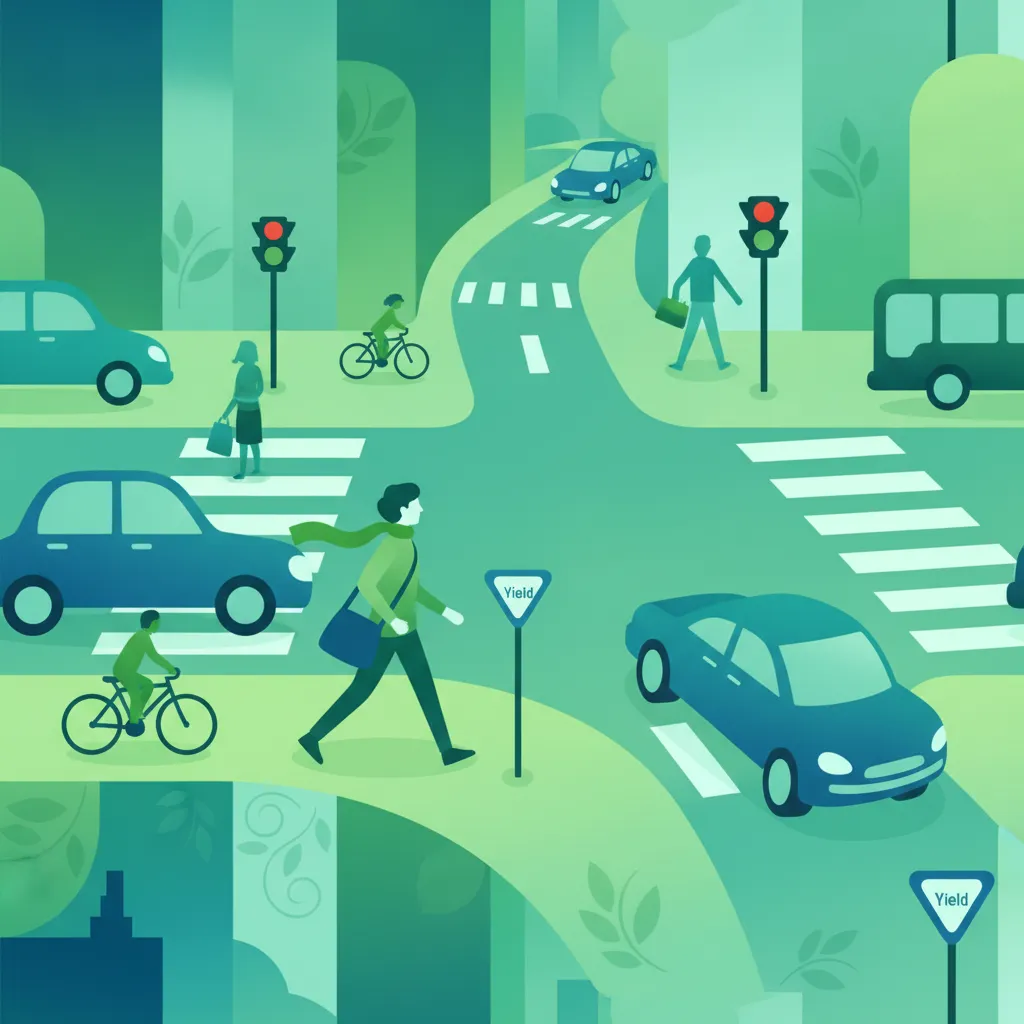
This lesson introduces the foundational concept of right-of-way ('Vorfahrt') in German traffic law. It explains the default priority rule, 'Rechts vor Links' (right before left), which applies at intersections without any regulating signs or signals. You will learn to identify situations where this rule applies and understand the basic principles of yielding to ensure safe passage at junctions.

This lesson details the critical right-of-way regulations according to the German StVO. It covers the default 'right before left' rule, the meaning of priority road signs, and specific rules for roundabouts and yielding to pedestrians. A thorough understanding of these priority rules is fundamental for preventing accidents at junctions.

This lesson teaches a structured method for approaching any intersection. It covers identifying the type of junction, determining who has the right-of-way based on signs or rules, and performing thorough visual checks. The focus is on developing a safe and decisive approach to reduce risk in these high-conflict areas.
Deepen your understanding of crucial observation techniques, including mirror checks and blind spot awareness, essential for executing safe turns and U-turns. Learn optimal lane positioning for various maneuvers and how they relate to German traffic regulations (StVO).

This lesson teaches the systematic observation techniques required for safe driving, starting with how to scan the road far ahead, nearby, and to the sides. It details the correct frequency for checking interior and exterior mirrors to maintain situational awareness. The lesson highlights the indispensable over-the-shoulder check ('Schulterblick') to cover the vehicle's blind spot before any change in direction.

This lesson focuses on the high-risk maneuver of reversing, emphasizing the importance of all-around observation due to limited visibility. It teaches techniques for controlling the vehicle at very low speeds and using mirrors and direct observation to manage large blind spots behind the car. The priority is to ensure the path is clear of pedestrians and obstacles at all times.

This lesson focuses on the critical maneuver of changing lanes ('Fahrstreifenwechsel'), a common cause of accidents if done incorrectly. It teaches a systematic, safe procedure based on thorough observation, clear signaling, and a final blind spot check. You will learn how to assess traffic speed and identify a safe gap before smoothly moving into the adjacent lane.

This lesson teaches the essential observation techniques required for safe riding, focusing on the systematic use of mirrors and shoulder checks to manage blind spots. It emphasizes developing active scanning habits to maintain constant situational awareness of the surrounding traffic environment. Learners will understand how effective head movement and use of peripheral vision are critical for detecting potential hazards early.

This lesson provides a comprehensive guide to identifying and managing the significant blind spots around a large passenger vehicle. It covers the correct adjustment and use of all mirrors, supplemented by camera systems, to gain maximum visibility. The importance of performing physical checks ('shoulder checks') before turning or changing lanes is emphasized to detect smaller road users like cyclists and pedestrians who may be hidden from view.

This lesson explores the critical role of visibility in safe driving, covering topics such as sight distance, managing blind spots, and the correct use of mirrors. It provides guidance on how to adjust your driving in conditions of reduced visibility, such as at night, in fog, or during heavy rain, including the proper use of headlights. The importance of the over-the-shoulder check ('Schulterblick') is also a key focus.
This lesson covers the rules and safety considerations for overtaking ('Überholen'). It explains where overtaking is prohibited and how to assess whether it is safe and necessary to do so. The procedure for checking traffic, signaling, moving out, passing, and safely returning to the lane is detailed, with a strong focus on judging the speed and distance of oncoming traffic.

This lesson covers the regulations and safe techniques for overtaking other vehicles in urban environments. It emphasizes the importance of thorough observation, including mirror and blind spot checks, before committing to the maneuver. Learners will understand how to choose a safe gap, manage their speed differential, and maintain strict lane discipline throughout the overtaking process.

This lesson focuses on the importance of strategic road positioning for enhancing safety and visibility. Learners explore different lane positions and understand when to use them to see, be seen, and create a safety buffer. The content emphasizes maintaining a long visual focus down the road to anticipate hazards and avoid target fixation, particularly when cornering.

This lesson teaches riders how to develop strong visual perception skills for the road. It covers systematic scanning patterns, the correct use of mirrors, and the critical importance of performing a head check to cover blind spots. Understanding the larger blind spots of trucks and buses is also a key safety component.
Find clear answers to common questions learners have about Turning and U-Turn Procedures. Learn how the lesson is structured, which driving theory objectives it supports, and how it fits into the overall learning path of units and curriculum progression in Germany. These explanations help you understand key concepts, lesson flow, and exam focused study goals.
The shoulder check is mandatory in Germany to detect vulnerable road users, such as cyclists or e-scooters, who may be travelling in your blind spot. Failing to check your blind spot before turning is a major safety hazard and a common reason for failure in practical and theoretical exams.
U-turns are allowed unless specific signs prohibit them or if the road layout makes them dangerous. However, you must ensure the maneuver does not obstruct traffic and can be completed without crossing solid white lines or violating priority rules.
Always follow the lane markings and signage. If lanes are unmarked, you generally stay as far right as possible for right turns and as close to the center line as possible for left turns, unless directed otherwise by arrows or signs.
No, you must never cross a solid white line to perform a U-turn. Crossing a solid line is a traffic violation, and you must find an intersection or designated turning area where the road markings allow for such a maneuver.
Begin your targeted revision now. Use our practice search to quickly find specific German driving theory questions. Filter by StVO rules, road signs, or hazard perception to create your focused study plan. Master challenging areas and prepare confidently for your theoretical driving test.